




Abstract

Murderous radio broadcasts prompted violence during the Rwandan genocide.
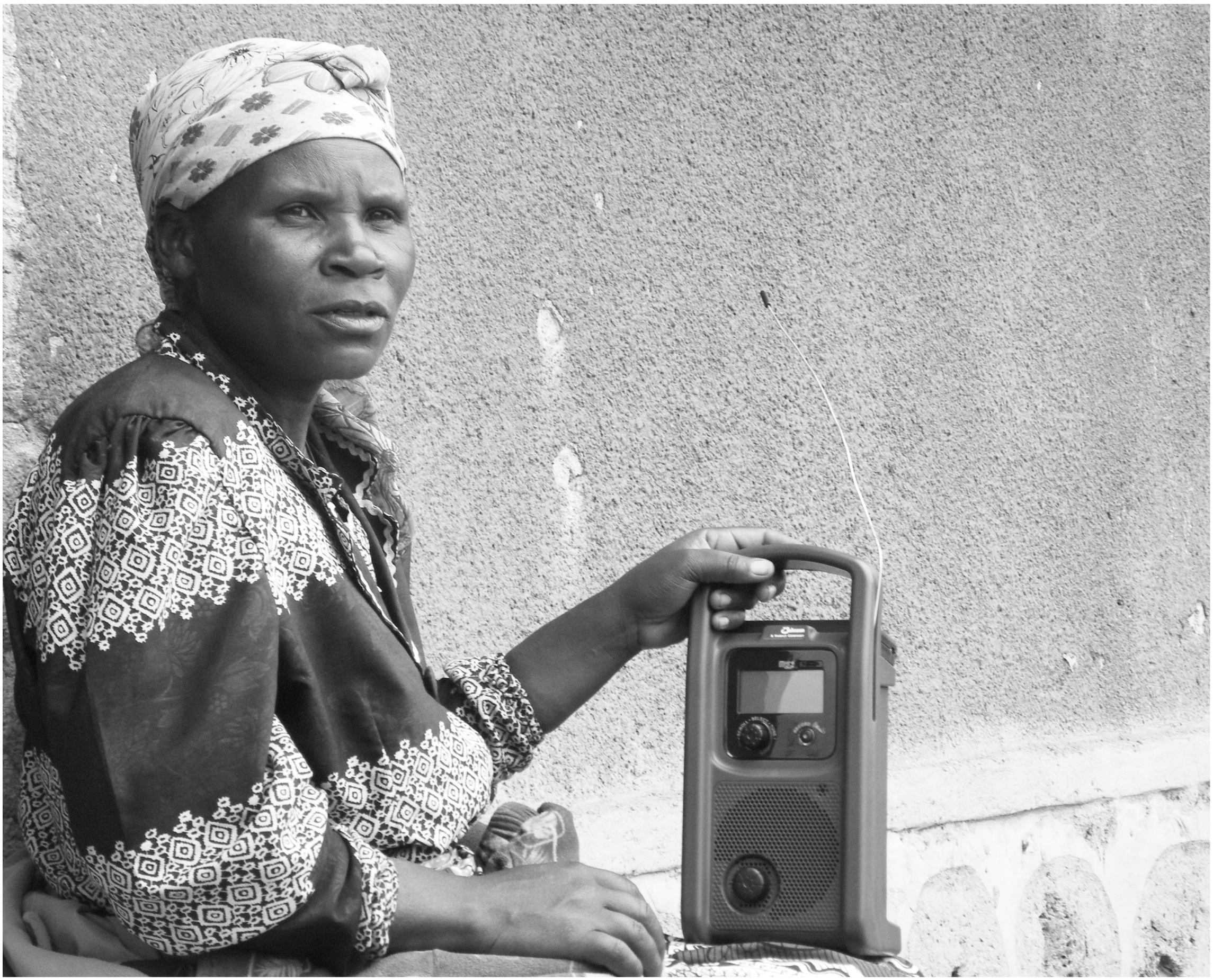
A Rwandan woman listens to a radio distributed by Coffee Lifeline
CREDIT: Peter Kettler
In early May 1994, Alison Des Forges of Human Rights Watch and Romeo Dallaire, the head of the UN peacekeeping mission in Rwanda, both pleaded with Western diplomats, including the White House, to jam RTLM’s radio signal. They were told that Rwanda was a sovereign state and such interference was impossible. Dallaire surmised that jamming RTLM would have saved thousands of lives.
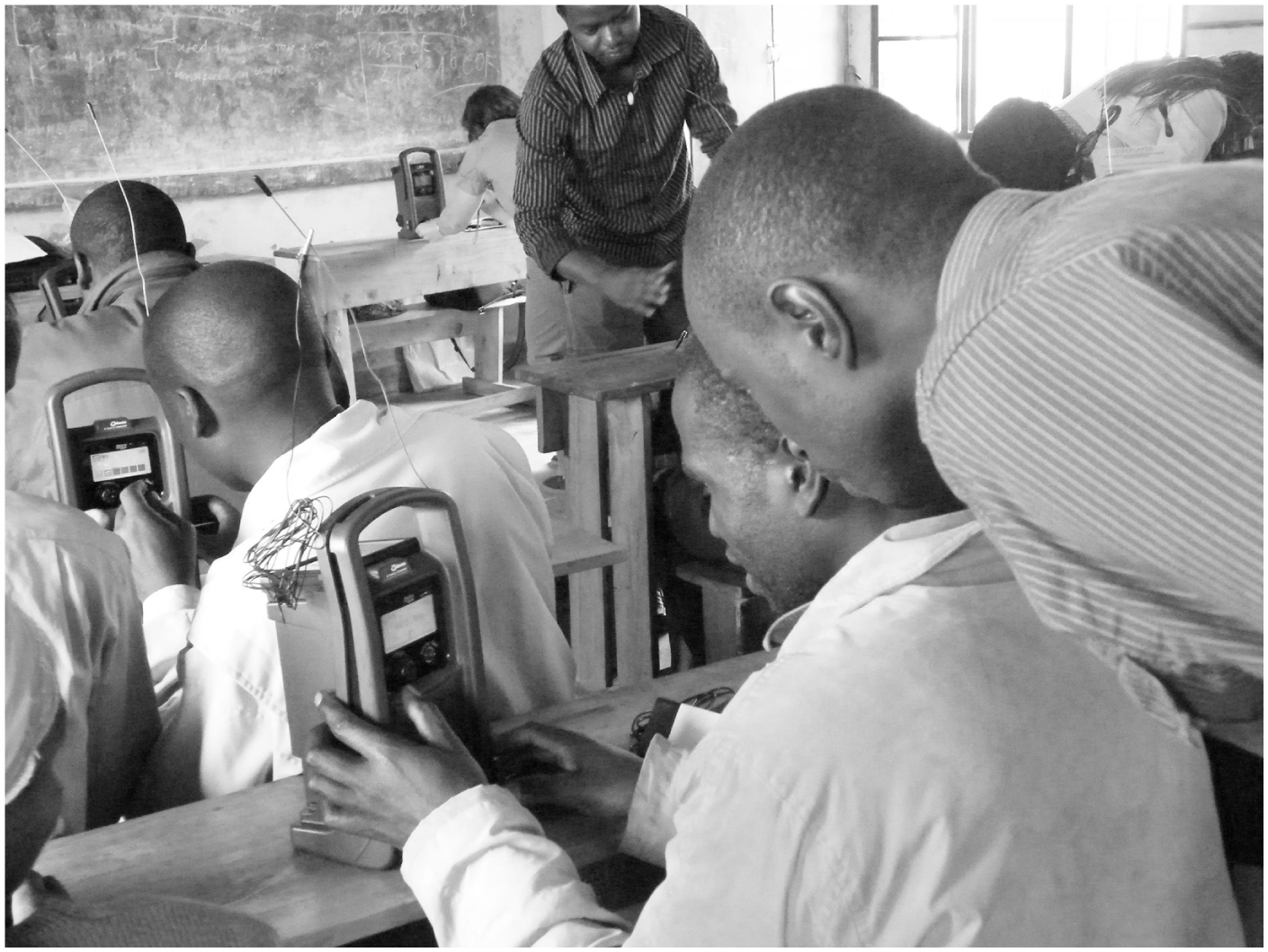
Rwandan men learn how to use radios distributed by Coffee Lifeline
CREDIT: Peter Kettler
In 2017, more than 20 years after the genocide, Rwanda is home to a more diverse media landscape. There are 12 television channels, more than 50 newspapers and magazines, growing use of the internet with over 80 web-based media outlets and 35 radio stations. On the surface, everything has changed, but old habits die hard.
“Despite the arrival of the internet, mobile phones and the emergence of social media, radio remains the most important source of news and information to ordinary citizens,” said Christopher Kayumba, a Kigali-based journalism lecturer who directed the 2016 Rwanda media barometer. “Public meetings come in second and then the internet and social media. Television and traditional newspapers come last.”
To tap into this reliance upon radio, Peter Kettler founded and directed Coffee Lifeline, an NGO that partnered with existing community radio stations in Rwanda to produce weekly broadcasts focusing on the needs of smallholder coffee farmers. The project launched in 2004 and came to a close in 2016.
“In remote places, radio is the only link to the outside world,” said Kettler. “Radio is far more powerful than messages on mobile phones. In Rwanda you are dealing with a heavily illiterate population, but everyone has a radio or access to a shared radio, while messages on phones come across more like instructions to individuals, with little or no involvement from the community.”
While Coffee Lifeline was hugely popular, Kettler hit problems when he tried to introduce a new radio with the ability to record built into it.
“The radios were seized by the government,” said Kettler. “There was a suspicion that they could be taken over the border to Congo where messages could be recorded on them and brought back to Rwanda and disseminated.”
As a result, Kettler had to ask the developer to downgrade the radio software to make the hi-tech kit nothing more than a regular radio. The process took a year.
In 2016, Freedom House rated Rwandan media “not free” and Reporters Sans Frontieres rated Rwanda 159 out of 180 countries on its press freedom index. President Paul Kagame’s ruling RPF party regularly denounces such reports.
“The problem with organisations like RSF is to think that only the government can endanger press freedom,” said Kayumba. “I would say there has been progress, but many factors stand in the way of a truly free and independent media, with economic conditions being the major factor since, to be truly free, media need to first survive by paying bills.”
As radio is so dominant, it is radio journalists who come under pressure to toe the government line more than other journalists.
“Radio is far more compromised and pro-government than print,” said Anjan Sundaram, the author of Bad News: Last Journalists in a Dictatorship, a 2016 book about Rwandan media. “It’s tough to find independent voices.”
One independent voice is Fred Muvunyi, a journalist who worked for Radio Contact FM and Radio Ten, as well as for the pro-government New Times’ sister paper Izuba Rirashe. In 2013, he went on to become the first head of the newly created Rwanda Media Commission, an organisation specifically set up to create a self-regulating media.
“On numerous occasions I received threats against my life,” said Muvunyi. “I was detained by police while covering a story. I saw how the government was taking the work of journalists seriously. The government controls everything.”
Muvunyi felt particularly strong pressure from the government when the BBC Panorama documentary, This World, Rwanda’s Untold Story, was broadcast on television in the UK (but not in Rwanda) in October 2014. President Kagame accused the BBC of “genocide denial”. The government banned both the English language BBC World Service and the Kinyarwanda language service. Rwanda also threatened legal action against the BBC. As head of the RMC at the time, Muvunyi disagreed with the ban.
“I had to take a stand on the BBC case,” said Muvunyi. “And I think every media freedom advocate would do exactly what I did. Shutting down the BBC Kinyarwanda Service was the dumbest decision. My government accused me of working for foreign states to undermine our government. I left Rwanda after so much pressure and intimidation to have me arrested for so-called ‘treasonous acts’.”
The appendix to Anjan Sundaram’s book lists 60 names of journalists who have fled, been imprisoned, killed or disappeared between 1995 to 2014, a rate of three per year, or one every four months for 20 years. According to Amnesty International: “In 2016, at least three journalists were detained after investigating sensitive issues, such as corruption or possible suspicious deaths.” Reporters Without Borders state in their 2017 World Press Freedom Index: “There have been fewer abuses against journalists in recent years, as most of those critical of the regime have fled abroad or practise self-censorship.”
“Self-censorship is incredibly pervasive in Rwanda,” said Sundaram. “But I see it as a natural response to government intimidation. Like anyone, Rwandans want their families to be safe, and self-censorship is a logical attitude when faced with a government that intimidates and harasses individuals and families.”
Some argue that self-censorship works so effectively, in both the media and everyday life, that there is no need for a censor.
“There’s a veneer of freedom in Rwanda,” said one Rwanda-based journalist who preferred to remain anonymous. “We have to be very careful about what we say. We never talk about what we think to anyone, because we don’t know what they think or who they know. There is no need for a kind of censorship process, because everyone self-censors, in public, with friends, even family and certainly in the media.”
Surely, then, he would prefer things to change, a change of government, someone to replace Kagame? “No way. I am 1000% behind Kagame,” he said. “The bigger fear we have here is chaos.”
