




Abstract
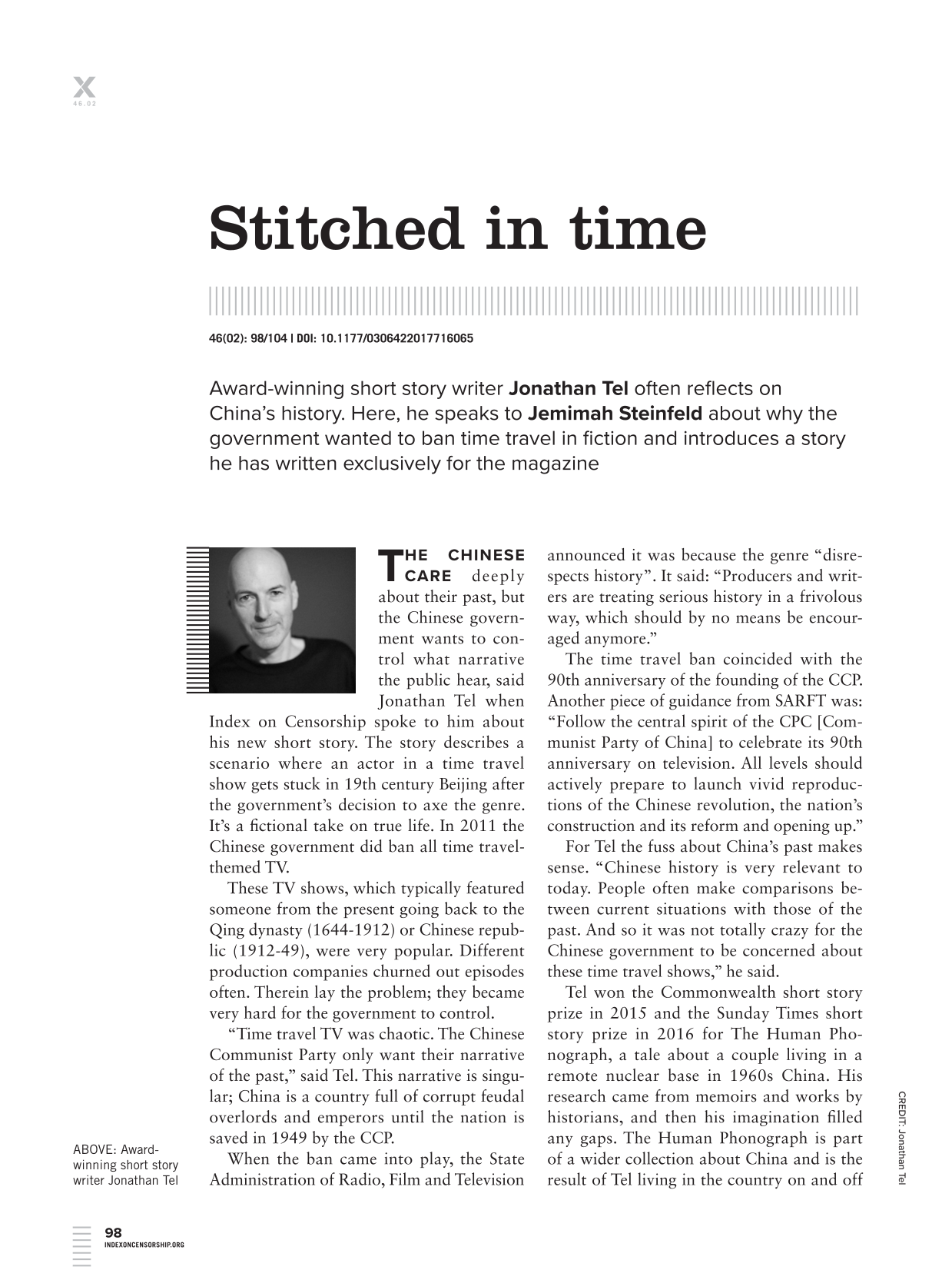
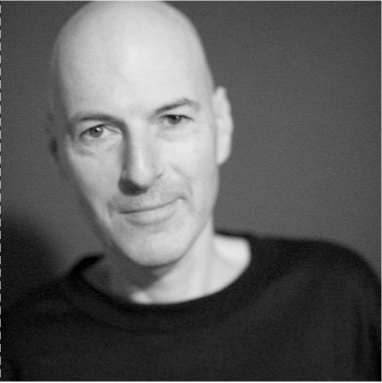
Award-winning short story writer
Award-winning short story writer Jonathan Tel
CREDIT: Jonathan Tel
These TV shows, which typically featured someone from the present going back to the Qing dynasty (1644-1912) or Chinese republic (1912-49), were very popular. Different production companies churned out episodes often. Therein lay the problem; they became very hard for the government to control.
“Time travel TV was chaotic. The Chinese Communist Party only want their narrative of the past,” said Tel. This narrative is singular; China is a country full of corrupt feudal overlords and emperors until the nation is saved in 1949 by the CCP.
When the ban came into play, the State Administration of Radio, Film and Television announced it was because the genre “disrespects history”. It said: “Producers and writers are treating serious history in a frivolous way, which should by no means be encouraged anymore.”
The time travel ban coincided with the 90th anniversary of the founding of the CCP. Another piece of guidance from SARFT was: “Follow the central spirit of the CPC [Communist Party of China] to celebrate its 90th anniversary on television. All levels should actively prepare to launch vivid reproductions of the Chinese revolution, the nation’s construction and its reform and opening up.”
For Tel the fuss about China’s past makes sense. “Chinese history is very relevant to today. People often make comparisons between current situations with those of the past. And so it was not totally crazy for the Chinese government to be concerned about these time travel shows,” he said.
Tel won the Commonwealth short story prize in 2015 and the Sunday Times short story prize in 2016 for The Human Phonograph, a tale about a couple living in a remote nuclear base in 1960s China. His research came from memoirs and works by historians, and then his imagination filled any gaps. The Human Phonograph is part of a wider collection about China and is the result of Tel living in the country on and off for decades. He told Index how censorship has become worse recently. “The things you can read today are less than before. I was reading blogs from Xinjiang and they’ve sort of vanished. A lot of things I read on the web have,” he said, explaining that there’s also a lot more self-censorship.
Despite this gloomy picture, Tel is not completely disparaging of China. “China is totalitarian but it’s also not,” he said “There are elements of freedom within the country too. Corrupt officials do get prosecuted now and again, for example.”
This nuanced take is also visible in his story below, which includes scenes with a Taiwanese production company that cancel the shows, in their case because they’re not profitable. This was an important addition for Tel.
”There’s censorship by the government in China and commercial censorship in Taiwan, so people are not fully free to make TV shows in either countries,” he told Index. As for his own stories, Tel doesn’t believe they’ll get published in China for the foreseeable future, even though their content is not especially controversial.
“I describe complex people doing their best,” he added. But complexity, sadly, doesn’t always make the cut in China.
The illegal time traveller
He pushes forward through the crowd. “My name is Song,” he tells a fat man with a hairless face. “I am a merchant from afar. Could you please direct me to the Forbidden City?” The person pulls out a small shiny object, a silver spigot, and he inserts it into his groin, by means of which he urinates against the wall.
“What’s your problem?” the person squeals at the stranger. “Have you never seen a eunuch before?”
Song looks around desperately. This wasn’t in his script. How come there is no voice shouting “Cut!”? When is this scene going to end?
***
In a conference room on the 17th floor of the National Administration for Radio, Film and Television, a high-ranking cadre is addressing a delegation of producers.
“A decision has been made on the highest level. It is no longer permissible to make TV shows in which characters travel back in time to bygone dynasties. They make changes to history, which is impossible, and this encourages superstitious belief. Furthermore, their opposition to authority, however well-intentioned, sets a poor example.”
A producer calls out: “But there are a dozen series in production right now!”
Another producer objects: “Time travel is one of the most popular memes. If we cancel the shows, this could lead to frustration and public unrest! Not to mention a substantial loss to the studios!”
A third objection: “In our mini-series, the hero enables Qin Shihuang to unify China! What could be more patriotic than that?”
A fourth: “In ours, the time traveller founds the May 4th Movement, giving birth to modern China!”
The cadre swishes his hands as if swatting a fly. “The decision is irrevocable. Both the production and the publication of such material is forbidden henceforth! Time travel is banned!”
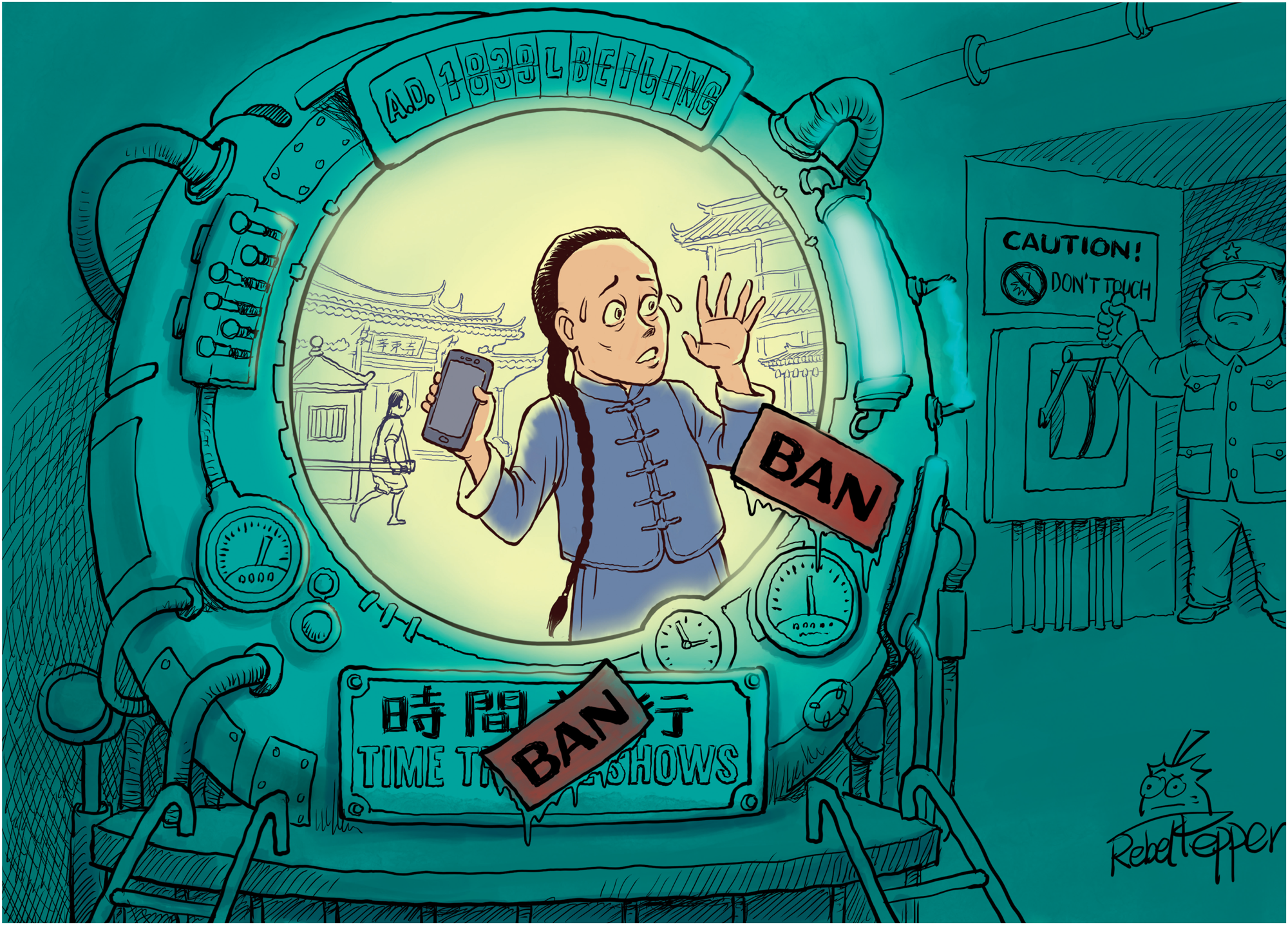
Another producer says weakly, “But we’re filming a pilot for a new show. The hero has just arrived in the Beijing of 1839.”
The cadre slams his fist on the desk. “That is somebody else’s problem!”
CREDIT: Rebel Pepper
***
Song is baffled. The show had a modest budget. How come the set seems to extend so far? He trudges through alley after alley, with no obvious end. And how come there are so many extras, playing so many roles – beggars and prostitutes, kite-flyers and mahjong players, fortune tellers and quacks – plying their trade? The set seems huge and complex, built on the same scale as the Beijing of the period itself.
He knows roughly where he is, at least relative to the modern city. The ancient wall corresponds to what would be the Second Ring Road and a major subway interchange. According to the script, in the next scene he’d be in an establishing shot next to the Forbidden City. Well, he’ll just have to walk there on his own. If he heads north, toward where the Marriot Hotel will be, and then west a couple of kilometres … But the road is blocked by a unit of the imperial guard. A fish ball seller remarks to him: “They’re checking everyone. There’s a rumour a foreign spy is in town. He’s said to be wearing an indigo robe, much like yours.” A guard shouts, “Hey! There he is!” and tries to grab Song by the braided queue at the back of his head, but the entire wig comes off in the guard’s hand.
None of this was in the script. Song tries to run back the way he came. He heads down a side street, squeezing between carts and rickshaws. His only hope is to find his time machine and return to the present day. There it is, where he left it, beside a tavern. It is disguised as a palanquin, resting on the ground. A group of old men are gathered beside it, comparing their cage birds. Song shoves past them; he pulls back the curtains and enters.
From inside, it seems larger. There’s an app on his smartphone that should sync with the time machine. He double-clicks on the icon. Nothing happens. Damn, he’ll have to operate the time machine the old-fashioned way. He rotates a brass ship’s wheel and spins a lever like a starting handle. He gives the machine a good kick. It whines like a mosquito. The palanquin shudders and he feels a sensation something like being in the spin-cycle of a washing machine and something like swallowing himself feet-first… He pulls back the curtain, hoping to find himself on the backlot of the TV company in modern Beijing, but he remains in 1839. The bird aficionados are still gathered outside. A figure in a civil servant’s embroidered surcoat beckons to him.
“I’ve not rehearsed this scene,” Song says.
“Things not working out for you? Yearning to escape? Follow me!”
The civil servant guides Song into the backroom of what appears to be a vegetable shop. He points to a mat on the floor and gestures that Song should lie down. Then the civil servant displays a small lacquered casket, which opens to reveal a sticky black substance. He dips a wire in it and lights a sulphur match. He holds a long pipe and Song sucks on the mouthpiece and inhales the narcotic smoke.
Time shifts and wrinkles. Song relaxes; the Qing dynasty, the People’s Republic - all merge into one …
He becomes aware another man is lying on the mat next to him. This man reaches into a pocket and pulls out a small shiny object, a Samsung smartphone, and taps away on it.
Song says, “You’re a time traveller too? I thought I was the only one. When are you from?”
“2017.”
“Me too!”
“My name’s Tang. You tell me your backstory and I’ll tell you mine.”
“At the opening of the show,” Song says, “I’m a nerdy physics teacher in a Beijing high school and I have a crush on a glamorous history teacher, who’s obsessed with the Qing dynasty. In order to win her heart, I build a time machine, and promise to take her to her favourite epoch. But somehow we’ve lost each other. I’m not exactly sure what happens in subsequent episodes, but I’m pretty sure I’ll show my valour by repelling the British imperialists and winning the Opium War. The history teacher and I are destined to live happily ever after. What about you?”
“You’re quite the romantic hero, aren’t you?” Tang grins. “I’m a comic fool. I get drunk at Spring Festival and stumble into what I think is my Toyota Corolla, but is actually a time machine parked by a visitor from the future, and accidentally I drive off in it. I find myself in a new dynasty every episode. I get into scrapes. I’ve already been in the Shang, Zhou and Han dynasties, and here I am in the Qing! The fellow who’s serving us the opium, he’s my sidekick. He’s reincarnated in all my episodes.”
Song says: “My time machine doesn’t seem to work.”
Tang chuckles: “It’s never going to! Haven’t you heard? Your government has banned time travel! You’re stuck here!”
“What!?” Even in his befuddled state, Song is alarmed. “What do you mean, “your government”? And why do you speak Chinese in that weird accent, like your tongue won’t curl back properly? Where are you from?”
“I’m from the Republic of China, of course. Taiwan.”
“Oh no! I can’t have a conversation with a Taiwanese! I could get into big trouble!”
“Take it easy!” Tang says, “Nobody’s going to notice. Besides, in 1839 we’re on the same side, both trying to help China win the Opium War, right?”
“Yes, but –”
“We time travellers should stick together. I’m the only one who can help you.”
The two men walk through to the yard where Tang’s time machine, which does indeed bear a strong resemblance to a Toyota Corolla, is parked. Song gets in the passenger seat. Tang turns the key in the ignition and releases the brakes. “2017! Here we come!” He laughs, “Oops! I’ve gone too far into the future.” He shifts to reverse gear and the time machine beeps.
***
In a corner office in the headquarters of the TV company in Taipei, a civil servant is having a quiet word with the head of programming. “How are the ratings on that time travel show of yours?”
“Not so good. They’ve been dropping a little. We’re trying to jazz it up.”
“Drunkenness and now illegal drugs too! It sets a bad example.”
“Opium isn’t illegal in 1839.”
“Even so.”
“Plus it’s educational. A history lesson. The moral being: maybe there are some problems nowadays, but things were a lot worse before the Kuomintang took charge!”
“And did you have to make the opium dealer a civil servant?”
“We had a spare costume left over from some other period drama. Rather a fetching outfit, with a pheasant embroidered on the sleeve of his surcoat, no?”
The civil servant clears his throat. “I understand your channel is in the red. In addition to my governmental work, I also assist a company which is looking to provide alternative programming. Lower cost, less risk and increase your profit margin. Drama, reportage, children’s programming, who needs any of it?”
“What’s the deal?”
“Replace the channel with a shopping network. More rewarding for the shareholders and I think we could arrange it so there’s something in it for you personally.”
The men shake hands. “When do we shift to the new format?”
“At once!”
“But the time traveller has just –”
“That is somebody else’s problem.”
***
Tang laughs. “My time machine has suddenly stopped working!”
“I don’t see what’s funny about that,” Song says. “What on earth can we do!?”
“We’ll just have to get out and see what’s going on now.”
“When are we?”
Tang peers at the dashboard chronometer. “The future. Let’s find out what it’s like.”