



Abstract

Somaliland’s rapidly expanding book fair is soon to open as the region copes with one of its worst droughts, reports
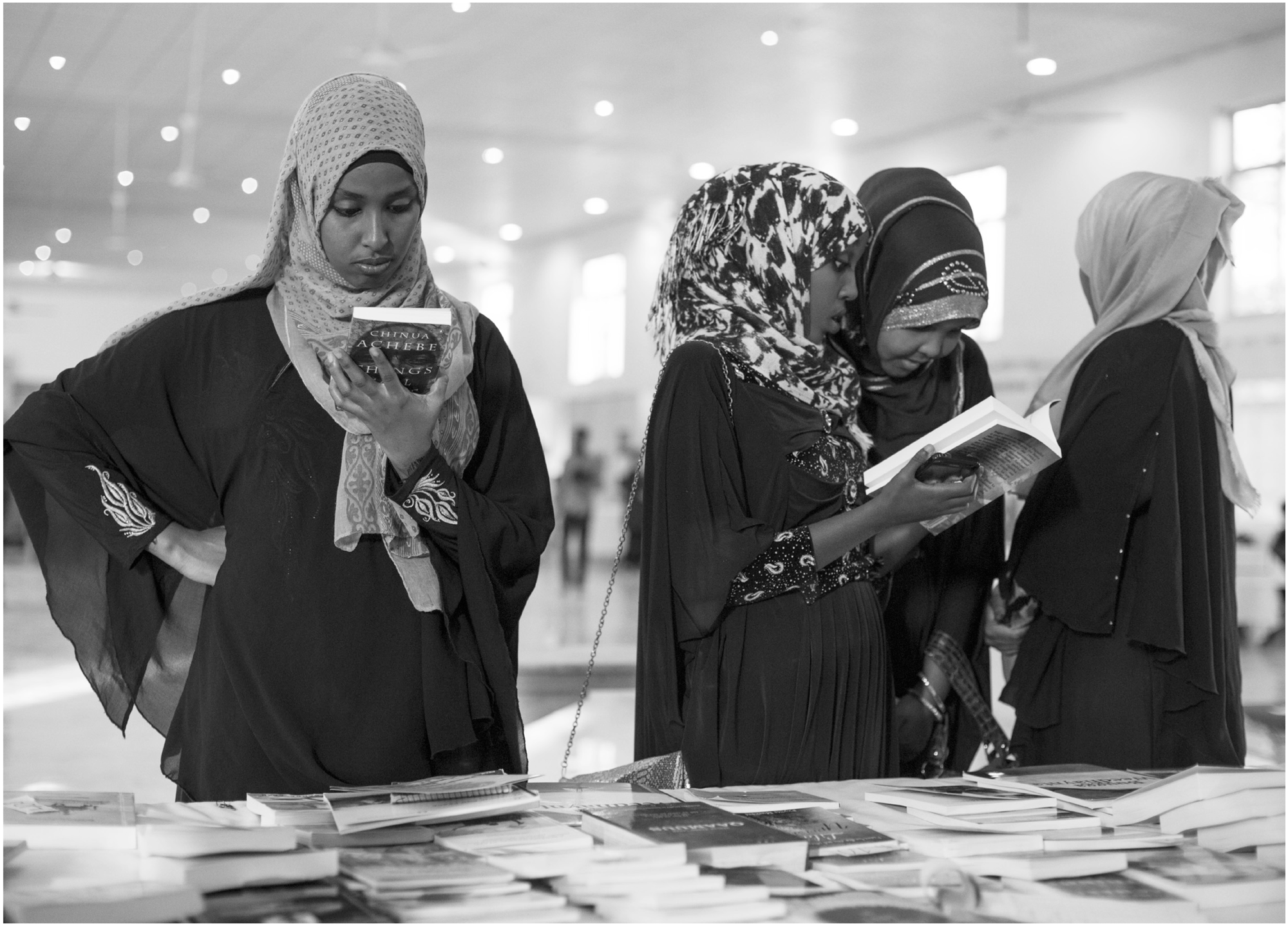
Women browse books at the Hargeysa Book Fair in 2015, which has grown from a few hundred attendees to thousands in a matter of years
CREDIT: Kate Stanworth
Jama Musse Jama, director of Redsea Cultural Foundation and founder of the fair, said that normally they would have launched the fair by now but “all of our volunteers have all gone to the most extremely affected areas of the drought. They are helping where they can, putting up shelters, helping to distribute food and the situation is made worse by disease”.
A view of Hargeysa, Somaliland
CREDIT: HomoCosmicos/iStock

But he and the other organisers hope the situation will improve rapidly, as the first rains have now begun to fall. “The book fair is scheduled and we do not see possibilities to cancel,” Jama assured Index as we went to press.
The drought has been a disaster for Somaliland, a self-declared state that is an autonomous region of Somalia but now has its own parliament and institutions. It considers itself the successor to the British Somaliland protectorate. According to a UN report in March, across Somaliland and wider Somalia more than 2.9 million people were facing crisis conditions and needing emergency food aid in the worst drought to hit the region in decades.
The book fair, however, represents cultural and artistic pride in Somaliland and is aimed at inspiring its large young population. Its significance can be best understood against the backdrop of the state’s ongoing struggle for independence and international recognition as a nation state.
The fair is a success by any standards. It has grown from 200 attendees in 2008 to 11,000 in 2016, despite the ongoing war in the region that threatens its stability and the chilling effect of a fatwa issued against the organisers in 2015.
Jama believes in Somaliland, where there is such a focus on development, humanitarian issues and often pressing needs for basic life necessities such as food, health services and shelter, the risk is forgetting that art and culture is fundamental to society.
He recently wrote: “This risk, in particular, affects disproportionately young people who have little employment opportunities and hence economic means to meet their basic needs, but also lack access to alternative engaging avenues. Take as an example Hargeysa, where almost all of its one million population, mostly young, has no access to art (theatre, libraries, museums etc). In such circumstances it is inevitable that unemployed and disenfranchised youth can be susceptible to radicalisation, criminality and migration as a way out of escaping from hardships of life.”
For the first time the literary festival will take place across the whole city, instead of at just one venue. “It will be a collective celebration of the city and of the people,” Jama explained. “We will run parallel sessions in the university, major hotels, cafes, outside the city, by the sea and sessions for children. We have the new Hargeysa Cultural Centre, which is another reason to celebrate, and hopefully the National Theatre of Hargeysa is ready.”
The fair’s popularity is driven by a vision to inspire new writers and readers of all ages in one of the world’s newest written languages. Somali became a written language in 1973 when the euphoria of the post-colonial period fuelled a cultural renaissance.
But with the catastrophic events of the intervening years, including the destruction of the capital Hargeysa in 1991 and subsequent ensuing conflict, the majority of the country had no access to books until the fair started in 2008. As part of the fair’s wider mission, Redsea created a year-round mobile library programme. The library travels across the country, including to the most remote communities, supporting reading and writing groups. Groups of young people from reading clubs around the country are bussed in to the capital each year to the festival to take part in workshops, panels and lectures.
Every region of Somaliland now has, or plans to have, a library. As Ayan Mayamoud, co-director of the fair, explained: “Cultural spaces make it possible for young people to come together to develop shared values and to grow as responsible citizens. They contribute to development and economic growth but also to peace and stability.”
Acting as a magnet and a conduit for writers, artists, performers, translators, publishers and, of course, books from all over Africa and around the world, the book fair has also triggered huge change in Hargeysa.
Hamdi Ali came to the first fair when still in high school. She is now librarian of the Hargeysa Cultural Centre. She said: “Now there are five amazing bookshops in Hargeysa, stocking titles in Somali and English, where before only religious books were available in Arabic. Lots of books are published locally and there are two main publishing houses.” It is clear that the fair has transformed her life too: “Like you might see a diamond but you might not be interested in it unless someone tells you – this is a diamond and it is really expensive. Books were like that for me and the book fair showed me their value.”
And she’s not the only one. Hamdi claimed the fair has given birth to at least 15 published writers.
Jama said: “The book was always an excuse because we celebrate all forms of arts – music, painting, poetry, of course. Somalilanders believe that they are all poets. Having all these things around the book community is what makes it unique, and connects very strongly with the younger generation.”
With so much to celebrate on the one hand and the scale of the humanitarian disaster on the other, the organisers face a dilemma. Mayamoud, like all the organisers, is deeply affected by the drought, but insists that life must go on. “Art and culture are a fundamental part of human life. If you leave out culture, you leave out a vital part of what it is to be human, and we need poets and artists to bring us together at this time.”