




Abstract

Yemeni journalist
Journalists stand in front of buildings in Taiz, Yemen, which were destroyed during battles between Houthi fighters and pro-government fighters in November 2016
CREDIT: Anees Mahyoub/Reuters
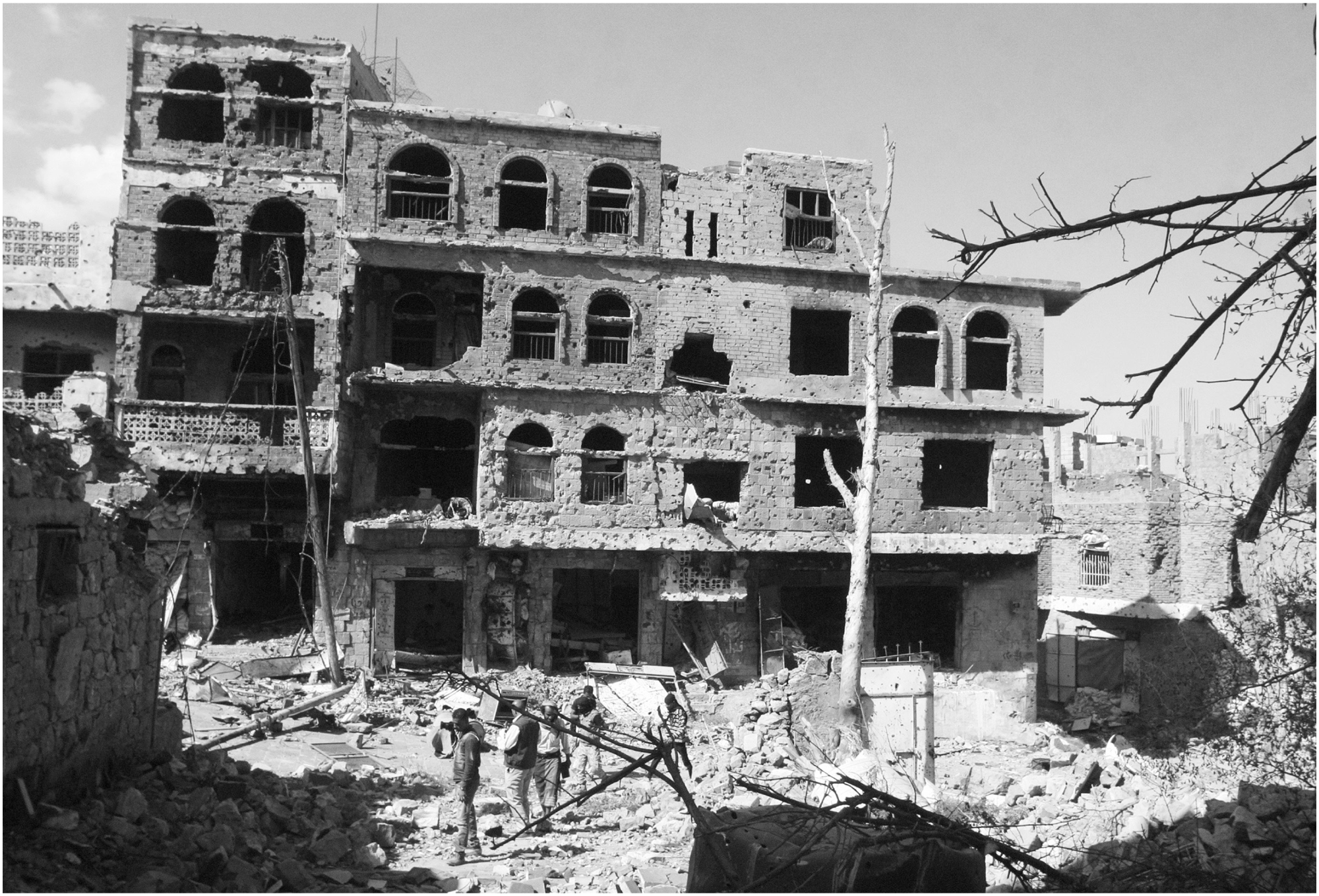
Al-Sabri is a Yemeni journalist, filmmaker and cameraman, and a native of Taiz, the city that was briefly the bloodiest frontline in the country’s civil war. He has worked in the worst hotspots, supplying original material to international media like Reuters and Sky News. “I have always liked working in the field,” he said, “and I was really doing good work from the start of the 2011 revolution.”
But since the beginning of the war, the working environment for Yemeni journalists has progressively deteriorated. In the most recent case, veteran journalist Yahia Abdulraqeeb al-Jubaihi faced a trial behind closed doors and was sentenced to death after he published stories critical of Yemen’s Houthi rebels. Many journalists have disappeared or been detained, and media outlets closed, in the past few years.
“The media industry and those who work in Yemen are coming up against a war machine which slams every door in our faces, and which controls all the local and international media bureaus. Attacks and assaults against us have affected 80% of the people employed in these professions, without counting the journalists who have already been killed, and there have been around 160 cases of assaults, attacks and kidnappings. Many journalists have had to leave the country to save their lives. Like my very dear friend Hamdan al-Bukari, who was working for Al-Jazeera in Taiz.”
Al-Sabri wanted to tell his story to Index on Censorship without leaving out details “because there is nothing left for us to do here except to denounce what is going on, even if nobody is listening to us”. He spoke of systematic intimidation by the Houthi militias in his area against journalists in general, and in particular against those who work for the international media: “In Taiz they have even used us as human shields. Many colleagues have been taken to arms depots, which are under attack from the [Saudi-led, government-allied] coalition, so that once the military target has been hit, the coalition can be accused of killing journalists.”
This sort of intimidation is one of the reasons why researching and reporting on the conflict is very difficult. “In Taiz and in the north, apart from those working for al-Masirah, the Houthis’ TV station, and the pro-Iranian channels, al-Manar and al-Alam, only a few other journalists are able to work from here, and those few, local and international, are putting their necks on the line,” said al-Sabri.
“You’re lucky if you can make it, otherwise you fall victim to a bullet from the militias, attacks, kidnappings. Foreigners are unable even to obtain visas because of the limitations imposed by [Abdrabbuh Man-sour] Hadi’s government and the coalition. The official excuse is that the government ‘fears’ for their lives, since if they were kidnapped, imprisoned or died in a coalition bombardment, it would be the Yemeni government’s responsibility.”
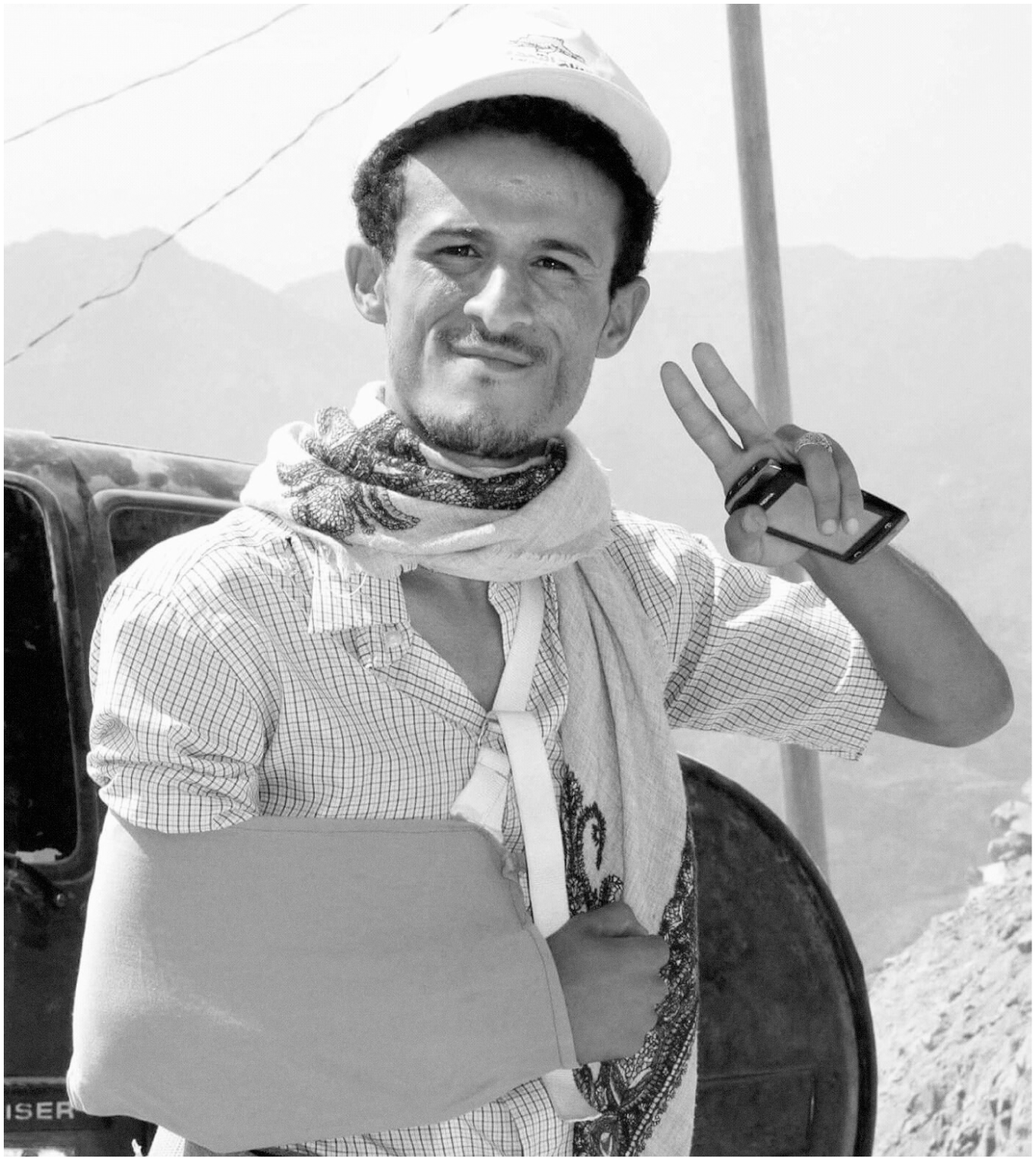
Al-Sabri has personal experience of the violence against journalists in Yemen. In December 2015, he was wounded in the shoulder by a sniper who was aiming at his head. On another occasion, he was kidnapped, held at a secret location for 15 days, blindfolded, threatened with death and tortured.
“I was abducted a second time, together with my colleague Hamdan al-Bukari, an Al Jazeera reporter, and our driver, on 18 January 2016. We had only just left a friend’s house to go back to where we lived, when we were blocked in by a car. A group of masked, armed men forced us to leave, hooded us and took us to an unknown location, probably somewhere near the front line, because we could distinctly hear the sound of artillery shells. At three in the morning the following day, the kidnappers separated us. We were still hooded. As far as I was concerned, they did not allow me to remove the blindfold and had I done so, they said that they would have killed me. They brought me some food and I ate it with my eyes closed. I asked who they were and what they wanted and they replied that they were Houthi militiamen, and that I would learn at the right time what was being asked of me.
Photo of Abdulaziz Muhammad al-Sabri taken after he was shot by a sniper
“The next day they took me to another room for interrogation, and so it went on, every day for 15 days. Whoever interrogated me accused me of betrayal, of working for foreigners, accused me of being a mercenary, someone who took money from the Saudis, Emiratis, Americans and the Muslim Brotherhood, singling me and those like me out as Yemen’s public enemy number one. At the end of the interrogation, they returned me to the room and said that they would execute me.
“And they continued like this: they went out and came back in again and said that they would kill me. Every day. I lived through hell, thinking every moment about dying.”
To this day al-Sabri still bears the scars of those horrendous 15 days: “After my release, my psychological state was so devastated that I stopped working and practising journalism. Even if I wanted to try again, how could I work if they have destroyed my equipment?”
Al-Sabri does not have much faith in the international community to make things change. “We journalists in Yemen are caught between two systems of ferocious military propaganda: the government’s and that of the Houthi rebels. Both factions persecute the journalists who work for the opposite side, besides not recognising the idea of independent journalism. There is no protection whatsoever, either for journalists or for journalism, here. Other than the usual UN representatives who ‘express concerns’, there is no real intervention from abroad at all.
“I believe that the international community should oblige both factions to give journalists the freedom to speak. They should fight for the full activation in Yemen of Article 19 of the Yemeni Law [from 1990], which guarantees freedom of expression and is against censorship of the press. Otherwise, the situation will remain the same and you will hear of us again, but as people who have died.”
Footnotes
Translated by
Award-winning journalist