




Abstract
The ideals of the 1917 Russian Revolution arrived somewhat late in Cuba, but when Fidel Castro seized power in 1959, they took root, not only in politics but in cinema. Leading Cuban film maker
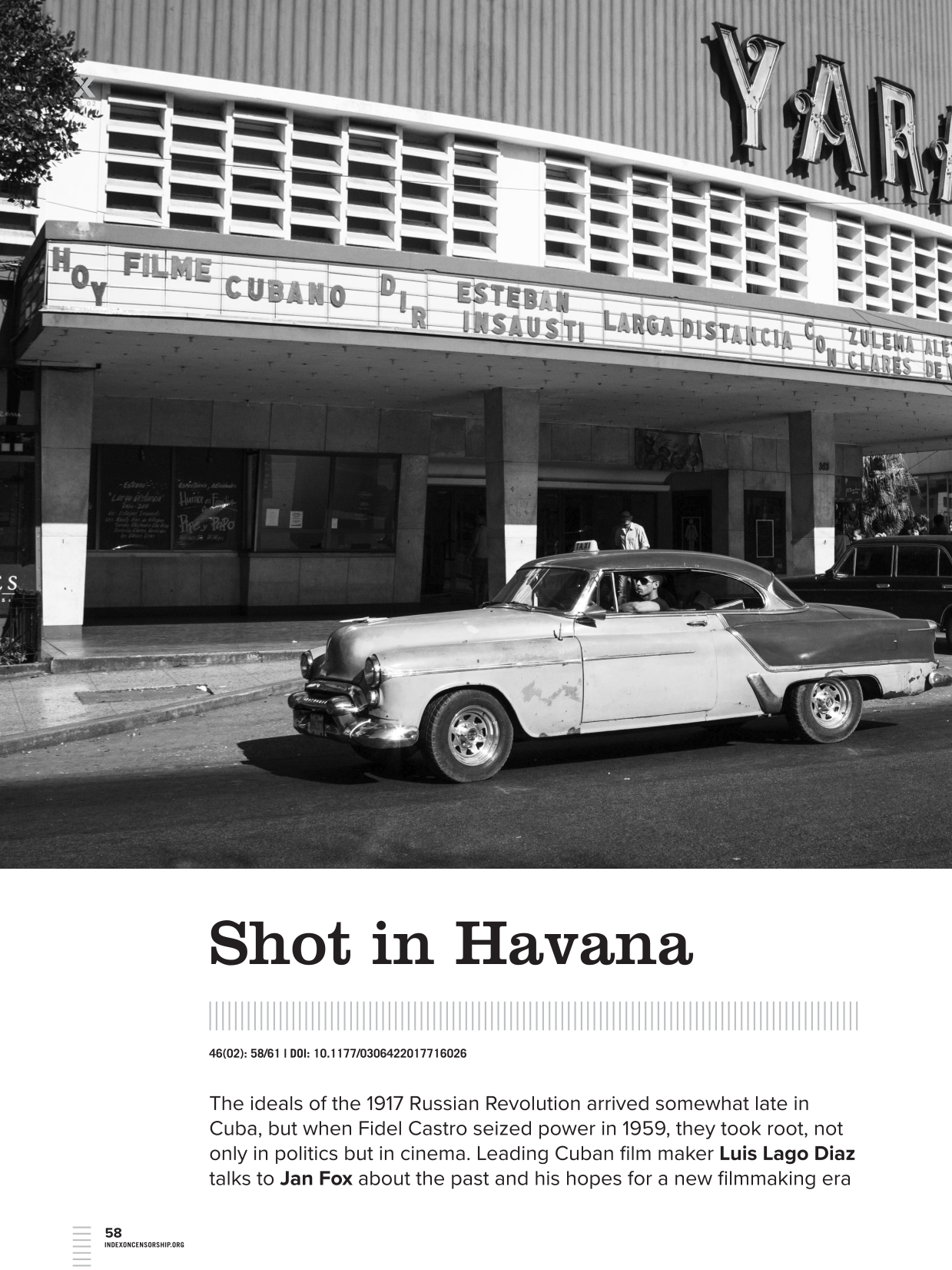
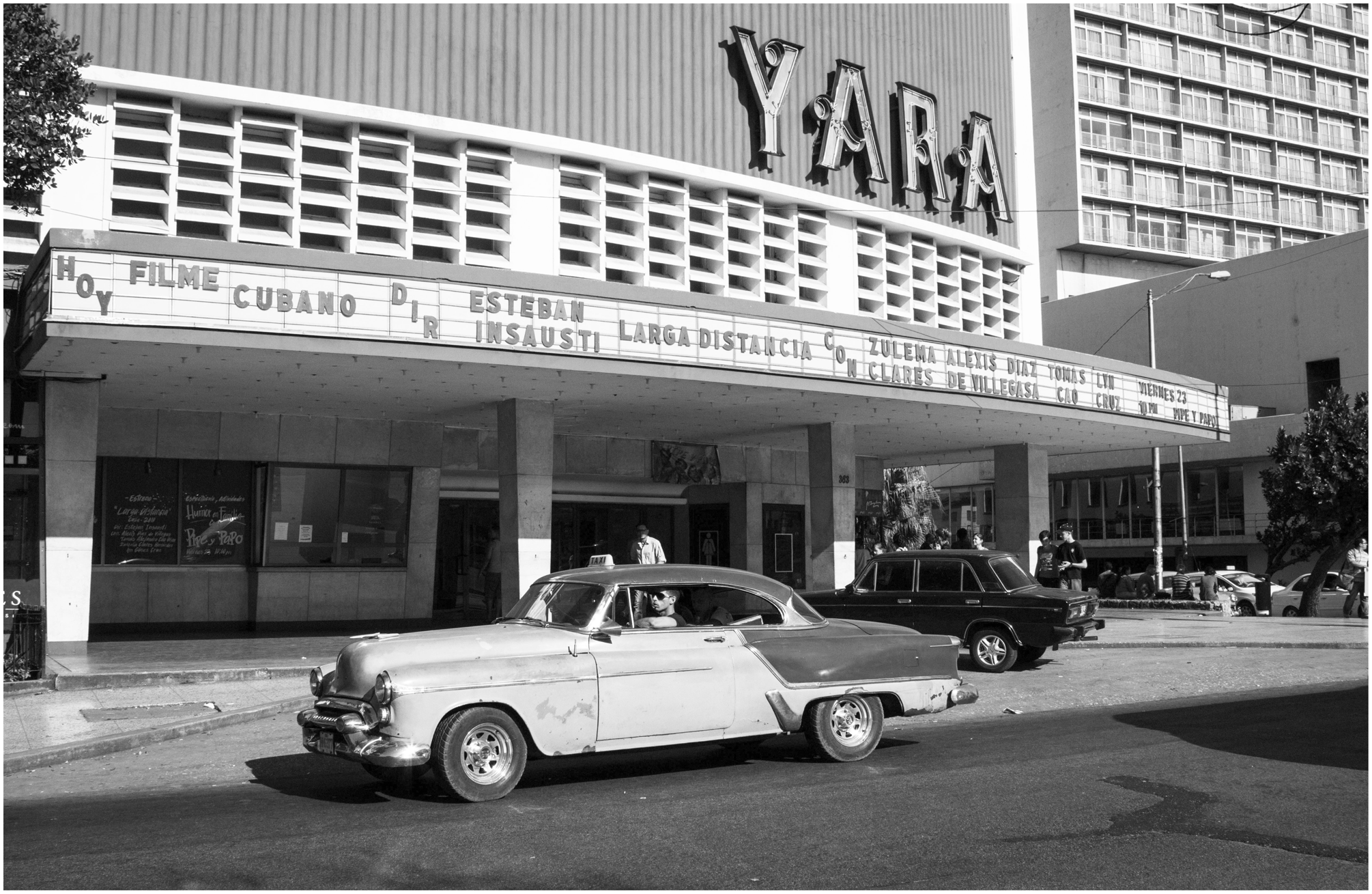
The famous Yara cinema in Havana, Cuba, which hosts the annual International Festival of New Latin American Cinema
CREDIT: Franck Vervial/Flickr
“
Diaz, 49, runs his own production company Shoot Cuba. He learned his craft as a young man at the state controlled Cuban Film Institute (ICAIC), working on scores of films including the landmark movie Strawberry and Chocolate, which was the first Cuban film to be recognised at the Oscars. He struck out on his own as an independent producer in 2001.
But it has not been easy. The state still wields a lot of power over the film industry, a hangover from when the Soviet Union was at its height, and Castro’s Cuba was an outpost of communism in the Caribbean.
And yet, for the first time in decades said Diaz, ordinary Cubans are getting more connected to the wider world. “Two or three years ago, we had no internet – only in some government offices,” he said. “Now Wi-Fi is in some hotels and there are some public Wi-Fi hotspots in Havana, though in the street, not yet in cafes. We are getting more US films too, though many are pirate versions but shown in cinemas – a movie ticket is about $2 Cuban – around 16 cents US.”
And that has led many young Cuban filmmakers, including himself, to try and get the law changed so that independent producers and filmmakers, who are not part of the state machine, are given official recognition.
“We are in the digital era now so it’s getting harder for the government to control everything – I can make a film on my cellphone so why do I have to do everything through the government? Of course, many of the younger filmmakers don’t know about the old times. I’m the guy in the middle, who knows the old times and the new.”
In 1959, after the revolution, when the Cuban Film Institute was first set up under government auspices, the state censors were in total control of filmmaking. The melodramas of previous Cuban cinema were replaced by documentaries and films, which all supported revolutionary ideals.
Despite what would seem to be a curtailment of freedom of expression, this postrevolutionary period of filmmaking was known as the golden age in Cuba because it produced so many films which were much higher quality than before.
“I never thought too much about censorship,” said Diaz who was born eight years after the revolution. “You just accepted it if you wanted to make films. If you opposed the censor you might not be able to make another film or if you did, it wouldn’t get released or they might release it for one showing at 3pm in a town in the middle of nowhere just to say they’d allowed it to be released. The president of the film institute, Alfredo Guevara, [who died in 2013] often fought the censors. He was a founder member of ICAIC, a revolutionary who fought with Fidel, a brave man. He helped the film makers a lot.
“He would get filmmakers to work around the problem, through careful editing, to keep the essence of the film but avoid the censor. That’s what happened with Strawberry and Chocolate, which had gay characters and that was not permitted, though even outside Cuba it was difficult to make a film about gays then,” Diaz pointed out.
Diaz can pinpoint the exact moment his love affair with film began. Working in his first job as a production driver at the film institute, the cameraman he was ferrying around set up a shot of a billboard that read: “To revolution and socialism today we owe everything we are”.
Diaz recalled: “Public transport in Cuba is terrible and so we waited until the worst camel bus [the equivalent of a bendy bus] came by. People were packed in like sardines, some hanging out the windows or clinging onto the outside and as this monster rolled past the sign, he shot it. For me, it was brilliance and I realised at that moment what an image can do and I fell in love with film making.”
Castro also recognised the power of the moving image. “Fidel was a fan of films and was very knowledgeable about them. My former boss Miguel Mendoza was a producer and he would screen films for Fidel at ICAIC at 3am almost every day so that he could see them and check their quality,” said Diaz.
From driving cast and crew around, Diaz moved on to learning about, and making, films in what he calls a dream apprenticeship.
“They gave me projects non-stop – it was crazy,” he said. “I was making five or six films a year and I was very young. Later, in Spain, they accused me of lying about my CV because I had so many credits on it. The Film Institute gave me a tremendous opportunity to learn my craft and work far more than I would have done had I been somewhere like Los Angeles.”
He said: “With regard to censorship, you have to remember that Cuba was like a Russian child and a child sometimes gets a slap on the wrist. Many good and bad things came out of this relationship. It may be hard to understand today, because now things are bad economically, but I’ve spoken to many people who tell me how much worse things were before the revolution. In my own family, there were seven people living in one room and many Cubans were starving.
“But like a child, we were very dependent on our parent and when the Soviet Union collapsed, it was a bad time because we lost all that support and funding. Now we had to grow up and be independent.”
One area that was dramatically affected by this political divorce was filmmaking, and the new opportunities for working with film companies from all over the world that damaged Cuban cinema as an art form, according to Diaz.
“The film institute had no money to spend on film so started to encourage coproductions with international filmmakers. For me this was the worst moment in the history of Cuban film because you had, say, a French-Spanish co-production and they wanted to make something more commercial. The Cuban government just wanted to make pro-revolutionary films but these coproductions were about making a cliché of Cuba – Cuban music, people dancing in the streets, drinking rum, provocative women – which to me was worse. From 1989 to now everything is bad,” said Diaz. “Artistically, I am more proud of my revolutionary years of filmmaking than now.”
Aesthetics aside, Diaz’s own career has flourished and he is a popular go-to for foreign filmmakers shooting in Cuba, facilitating everything from permits to catering, locations to crew. But it’s his skill in making things work where people are used to “making do” that most find invaluable.
“My mother is a big communist who changed her dream of studying physics to be an agronomist because Castro said we needed agronomists. I agree with her on a lot of things and I want to show the world the good side of Cuba. I am an ambassador of Cuba. I have to explain that if you want to make films here, there are certain things you can’t do. It does get hard when I try to make filmmakers understand why you can’t put a corrupt cop or a prostitute in a script. They say ‘but it’s only fiction’ and I say, you still can’t do it but make some changes and you can still have your film. It’s all about working within the system and I try to be transparent about that,” said Diaz.
Diaz walks a diplomatic tightrope, dealing on one hand with international filmmakers eager to shoot in Cuba, and Cuban government officials who must still be seen to toe the party line.
He misses the old days of a film institute that made films with passion and love of craft, as well as the now legendary original members like Miguel Mendoza, Alfredo Guevara and Tomas Gutierrez Alea. It may be true that films had a political message back then, but these days, Diaz believes, the institute’s emphasis is more on politics and bureaucracy than film. “It’s so sad. I want to protect the memories of the original film institute,” said Diaz.
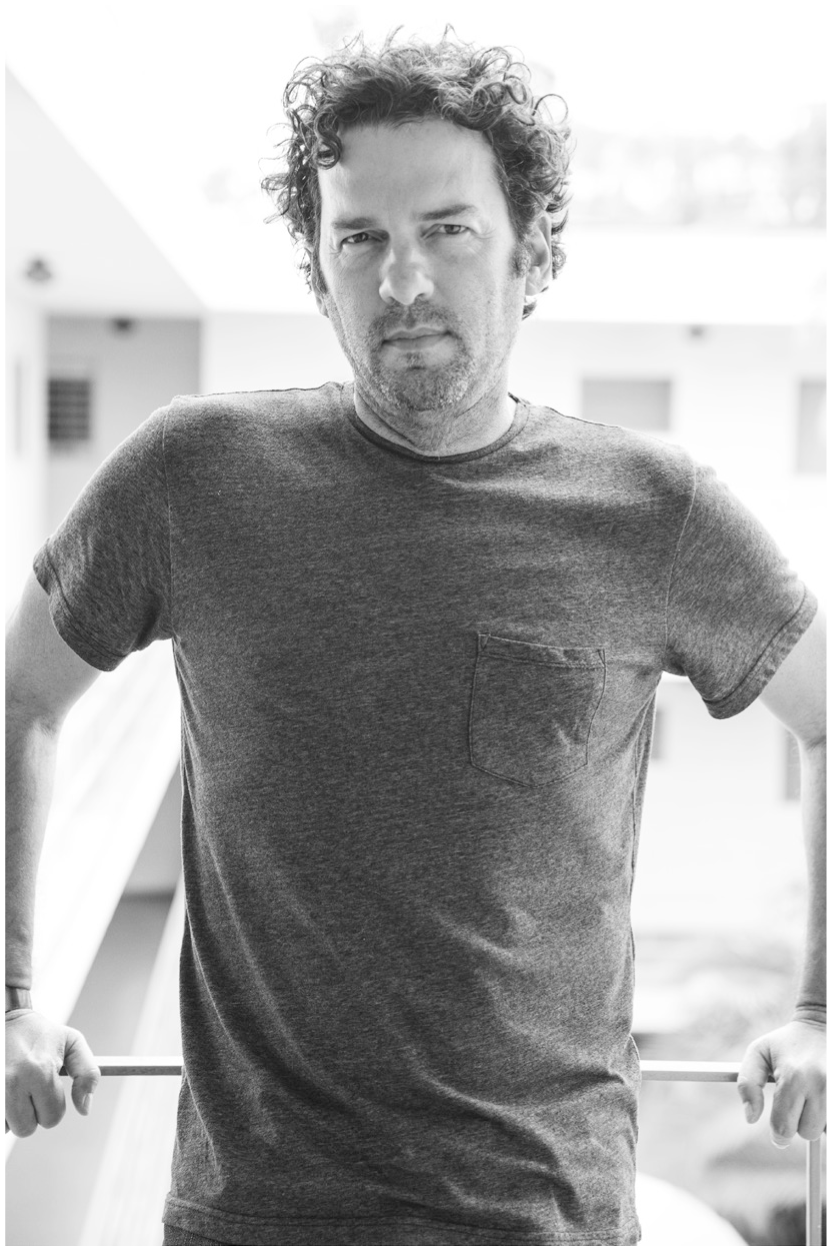
Cuban filmmaker Luis Lago Diaz
CREDIT: Tuan Lee
Nothing, though, in Cuba is simple. Diaz remembers growing up watching Russian cartoons and listening to endless talks by Castro in Revolution Square: “He would talk for four to six hours and we had to stand up the whole time,” said Diaz. Yet the young Diaz was also secretly listening to “subversive” banned rock music under the bedclothes on an old FM radio.
And last year Diaz was among the massive crowd who enjoyed a free Rolling Stones open air concert in Havana, the first-ever rock concert on the island. Diaz recalled: “It was really amazing. Obama visited the same week. Such incredible change. Cubans are excited about the new relations with the US – you need a change after 56 years. But it’s happening very fast and in Cuba we want to keep our integrity and not change because the US dictates terms to us.”
Meanwhile, Diaz will continue to navigate between the old and the new order, while trying always to protect the essence of the country he loves through a changing lens.