Abstract

“In every single one of these cases, they’re all David and Goliath stories,” said Heinemann.
For the past few months judges including actor Noma Dumezweni, lawyer Caoilfhionn Gallagher, magazine editor Tina Brown, technologist Anab Jain and co-founder of Africa Express Stephen Budd, along with Index staff, have been examining this year’s 387 nominations. The shortlist was published on 7 February and the winners will be announced on 19 April at a gala at the Unicorn Theatre, London.
When researching the stories of the hundreds of nominees, Heinemann noticed some trends, one being a clear move towards government internet shutdowns, and even potentially power cuts and shortages in different parts of the world, which are used as a tool to clamp down on free speech. “There is beginning to be a fightback against that as people clock what’s happening,” he said.
“Another trend is the ongoing plight of refugees, who are often struggling not only for a home and for a profession, but for their very identities and to be seen as people in their own right with valued professions and skills of their own.”
In other news, Index on Censorship magazine welcomed its new deputy editor Jemimah Steinfeld in January. Steinfeld, who has been writing for the magazine since 2013 and was also a contributing editor, previously lived and worked in China.
Asked what she thinks her time living in Beijing and Shanghai will bring to Index, she said: “I worked for media that is based in China and so is directly censored, as well as writing for international media where you can speak and write more freely but you always worry about your visa, so I bring a very direct experience of what it means to be censored.”
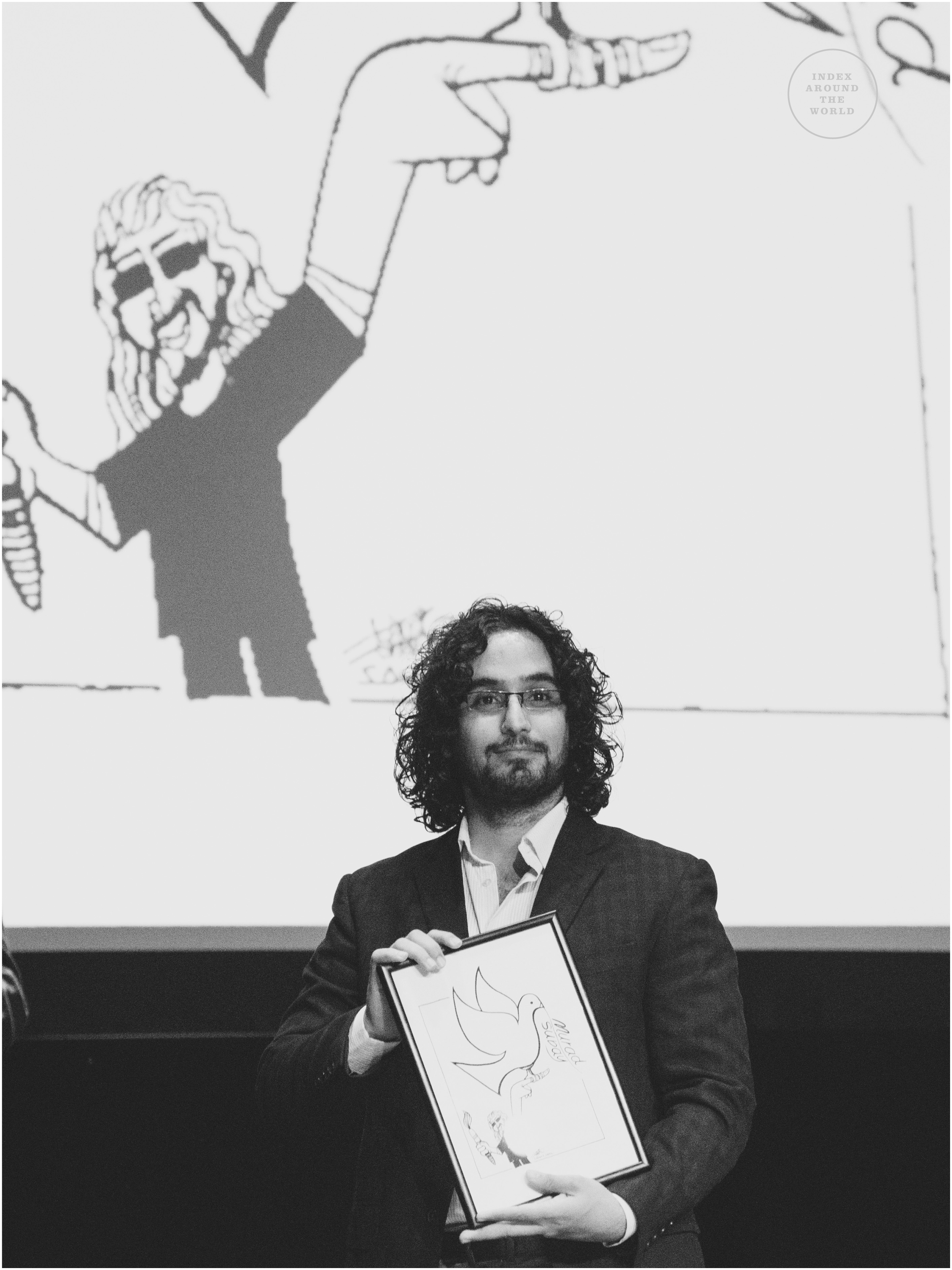
Yemeni street artist Murad Subay accepts his Freedom of Expression Award in 2016
CREDIT: Elina Kansikast
She added: “Having seen the effects of what censorship can do to a society, how it can affect so much, from people’s relationships to the education structure, you realise that this isn’t a trivial matter, this isn’t something to be taken for granted.”
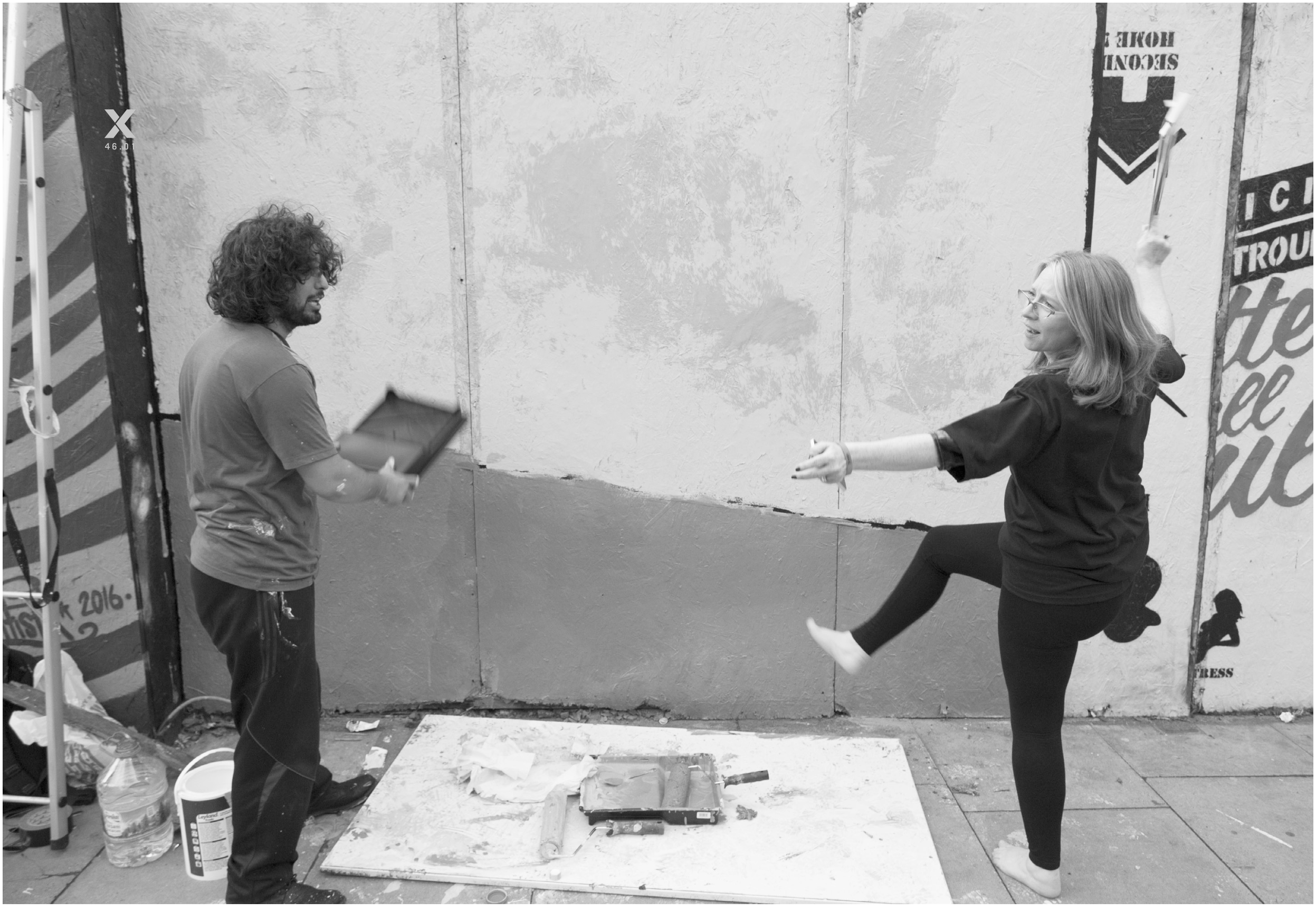
Murad Subay and Index CEO Jodie Ginsberg painting a mural in London, April 2016
CREDIT: Sean Gallagher
Julia Farrington, associate arts producer at Index on Censorship, will lead a new project that looks at art and offence. In partnership with arts network What Next? and the social enterprise Cause4, it will provide training to tackle self-censorship for board members and directors of galleries, theatres, museums and other artistic spaces.
“Our hope is really that we will encourage people to take more risks,” Farrington said. “We have to accept, and I think most people would, that we live in a risk averse culture, that we have let risk aversion be seen as a virtue. I think many people would say that it’s gone too far, that we are over protective in lots of areas.”
The project will work with leaders in the arts to help update them on laws that might affect their ability to produce a show or exhibition.
Farrington said: “When you have a controversial idea, and you don’t want it to just spin out of control into public protest, press furore and that sort of thing, what do you need to do to put that controversial idea into enough context, and get enough voices who are affected by the idea, and give value to the different sides of the argument that may be offended or hostile?”
Another new strand of Index work is the Free Speech on Campus research project. Senior advocacy officer Melody Patry launched this project as free speech at universities is particularly under threat at present. Articles in this issue by Jan Fox on US universities (page 29) and Natasha Joseph on South Africa (page 18) highlight this.
“Recently there has been an increase in incidents of restrictions on speech in universities worldwide,” Patry explained. “Our research project will focus on the UK and USA, and will examine these restrictions and the impact they have.”
As part of a separate project, in April Patry and Hannah Machlin, project officer for Mapping Media Freedom, which charts attacks on journalists in 42 countries, will travel to Ukraine to attend a meeting of the Council of Europe’s Platform for the Protection of Journalism and the Safety of Journalists.
“Every quarter we meet to discuss cases that have been filed, opportunities to re-invest and to identify positive outcomes,” said Patry.
“This time we will meet in Kiev. In the past Ukraine was one of the deadliest countries for reporters. Things have got better, but there are still some problems in places like Crimea. The Council of Europe have taken the matter in hand and want to take the opportunity to make improvements.”
While this platform is focused on Europe, Patry also attended MisinfoCon, a summit held by the Nieman Foundation for Journalism at Harvard and MIT Media Lab in February. The summit looked at trust, verification and fact-checking, with a goal to connect leaders and develop steps to held improve trust and tackle misinformation.
Finally the winter issue of the magazine, featuring the Fashion Rules special report, was launched in an event hosted by Google at their headquarters in London. One of Index’s largest ever audiences for a magazine launch came along to debate with a panel including magazine contributors Maggie Alderson and Laura Silvia Battaglia, plus fashion historian Amber Butchart and New African Woman editor Regina Jane Jere-Malanda. They discussed topics including the misogyny of corporate and religious dress codes, resistance to uniformity, and the recent trend away from rebellion in Western fashion.
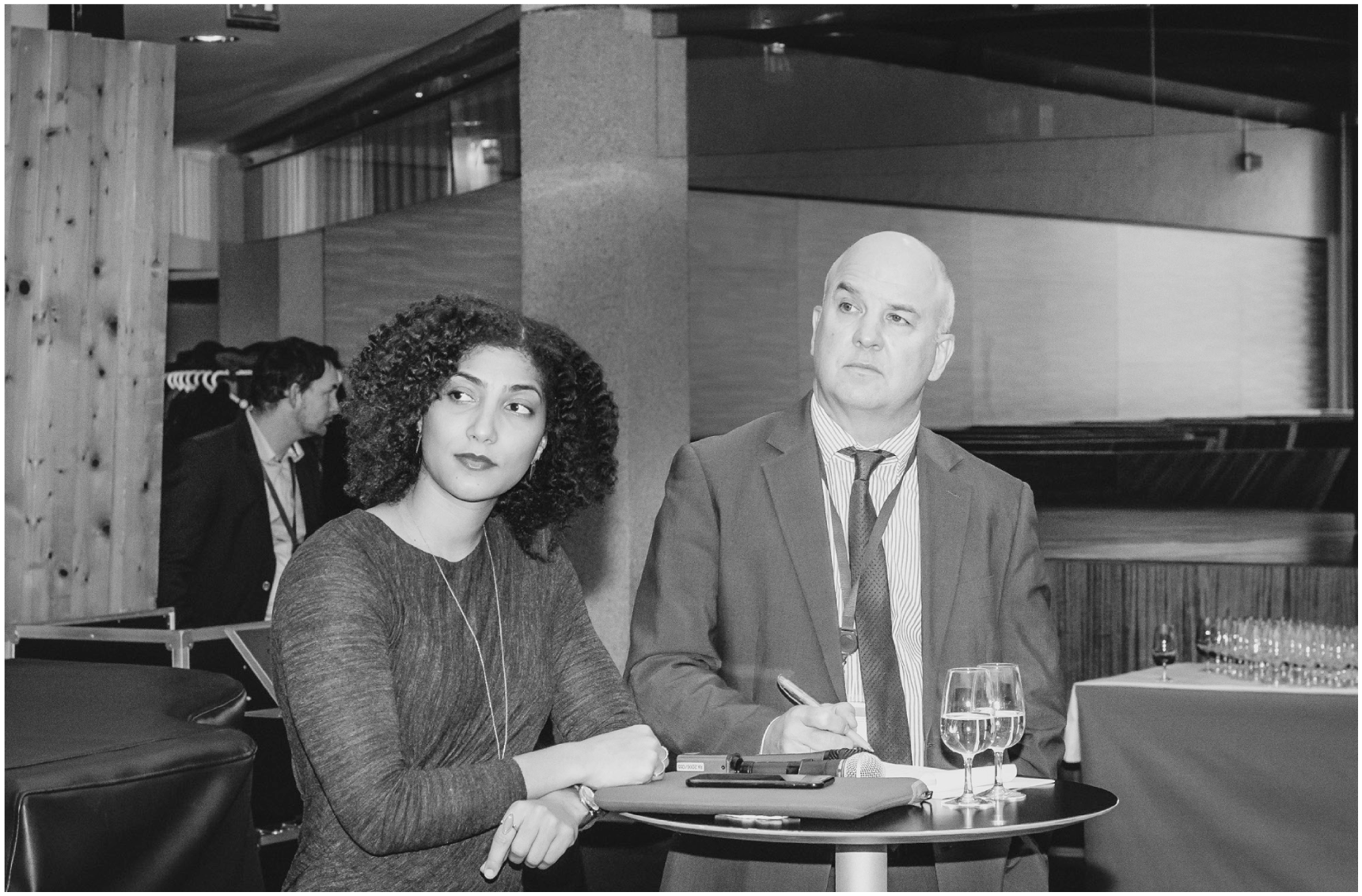
Melody Patry with Council of Europe commissioner for human rights Niels Muiznieks during the Losing Our Rights event in Strasbourg, January 2017
CREDIT: Nigel Smith/Council of Europe