




Abstract
Discussions of difficult subjects are not taking place in the UK’s parliament, says former attorney general
At present, we can see this in the rise of political correctness at universities, with “no platform” policies towards anyone raising any of a range of topics. “Safe space” has become a place not for rational and moderate debate on sensitive subjects but for closing it down altogether. According to the most recent annual survey of UK universities by online magazine Spiked, just under two thirds of student unions have actively censored the free expression of ideas on campus, including on wholly lawful viewpoints such as opposing abortion. Even more worryingly, nearly a quarter of university administrations have joined in this process of banning lawful comment on subjects which they consider might offend the principles of political correctness that they have embraced.
But this trend is not confined to places of learning. At a national political level, it is becoming harder to articulate views that depart from current norms. It is ironic that as we strive to develop a pluralist and tolerant multicultural society, we end up imposing new orthodoxies as substitutes for the old. Thus those who espouse Christian beliefs and ethics, whilst being perfectly tolerant of those who disagree with them, find themselves “tolerated” but sometimes unable to promote publicly their point of view.
A few years ago, I had a constituent who was a street preacher threatened with prosecution under the Public Order Act for saying that if people did not repent and turn to God they were at risk of going to hell. The police told him that the mention of the “risk of going to hell” was abusive and threatening! Fortunately, wiser counsel prevailed and the case was dropped. But it illustrated the risk of how laws thoughtlessly applied can have a chilling effect on expressions of deeply held personal opinion that the individual concerned clearly thought was important to communicate to others.
Twenty years in parliament has also taught me that attempts at avoiding difficult subjects, for the sake of mitigating controversy or giving offence, are often counterproductive. One of the problems with modern politics is that it has become increasingly presentational, so that the messaging becomes an end in itself and a form of advertising that seeks to ingratiate itself with its audience and avoid confrontation. As a result, the proper discussion of difficult subjects never takes place because such debates are not seen as the generator of short-term electoral support. This has happened consistently, for example, over immigration, where mainstream politicians have refused to engage with the public over their concerns. As a result, the issue has been allowed to develop without a reasoned examination of the underlying drivers. The consequence could be clearly seen in the way immigration became a matter of great importance during the EU referendum campaign and by the manner in which the Remain campaign was incapable of responding to the issue.
Yet one of the best features of our human condition should be our ability to communicate and exchange ideas. It is what has taken us in 10,000 years from living in caves to our present state of advancement. This has been underpinned by our ability to moderate each other’s views by open debate, and it is those societies where this has happened the most which have been at the forefront of this process. The extraordinary explosion of information exchange now possible through the internet is accelerating this exponentially. It highlights the counterproductiveness of trying to restrict or censor the free exchange of information and opinion. Yet even today in Britain there are attempts at doing this, often by those who claim to support freedom of expression.
This is not to say that there should be a free-for-all. There are sound reasons for many of our existing laws in this area. We must, of necessity, maintain laws on contempt of court to allow jury trials to proceed without hindrance and ensure fairness in court proceedings. I have no difficulty with libel laws that allow a person to get redress through the courts for serious damage to their reputation. And laws against the incitement to violence or irrational hatred on the basis of race, gender or sexual orientation are plainly needed.
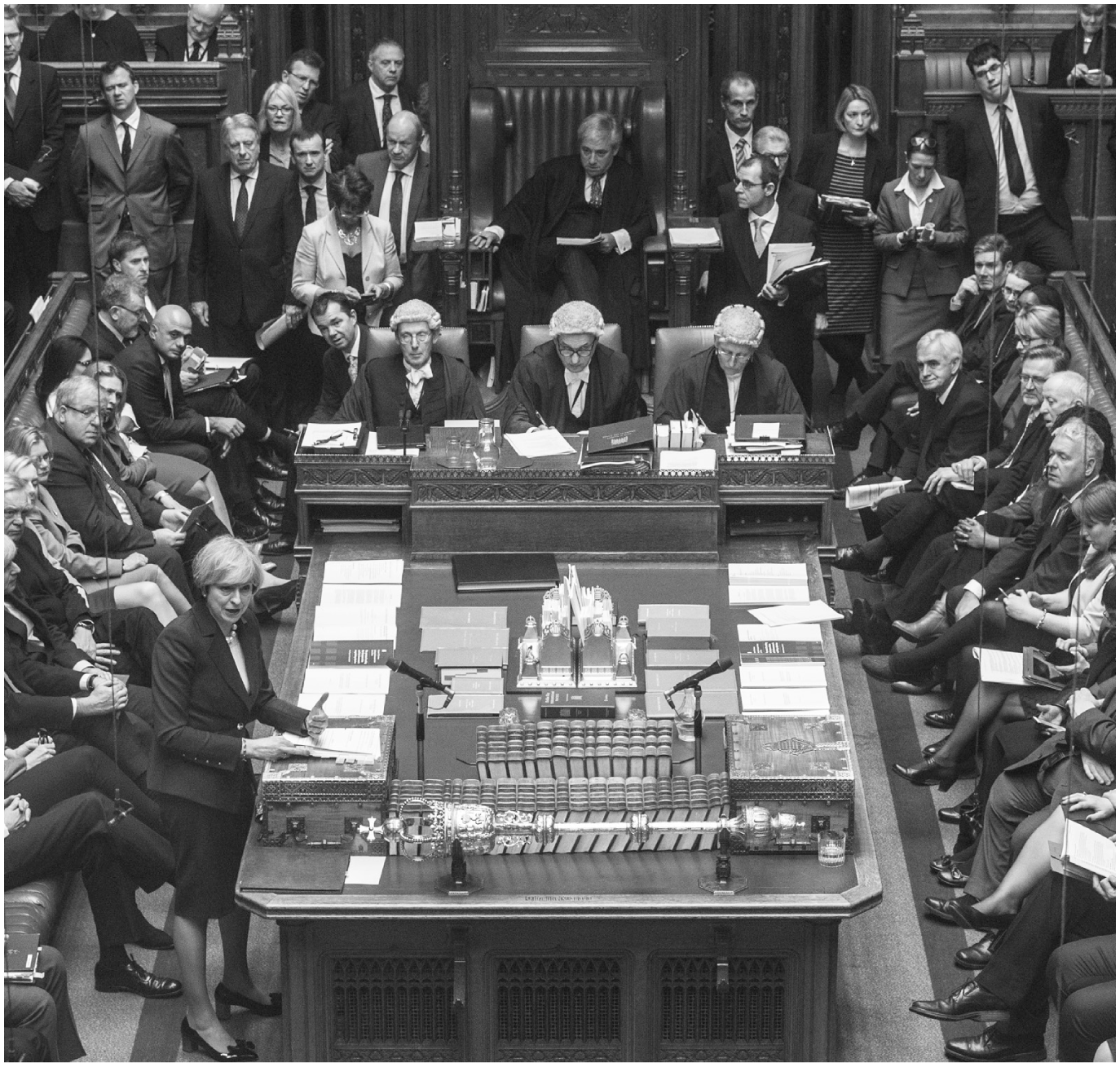
UK Prime Minister Theresa May at the dispatch box in parliament
CREDIT: UK Parliament/Mark Duffy
But we should always be very wary of any extensions on restrictions to freedom of speech. Recent suggestions that expressions of non-violent extremism should be criminalised are likely to encourage the development of extreme views rather than reduce their occurrence. A robust willingness to challenge views with which one profoundly disagrees is much more likely to succeed in the long term.
So there is a great need today for those who see freedom of expression as a key to successful human societies to speak out for what we believe in. It has been one of my greatest pleasures as an MP that when we successfully challenged the original draft of the legislation on incitement to religious hatred so as to remove “insulting words” from the text, it brought together humanists, people of different faiths, and writers and comics in an alliance. We will doubtless need more of this co-operation, as well as common sense, as we continue to face challenges in this area in the future.