




Abstract

Burkina Faso hip-hop star
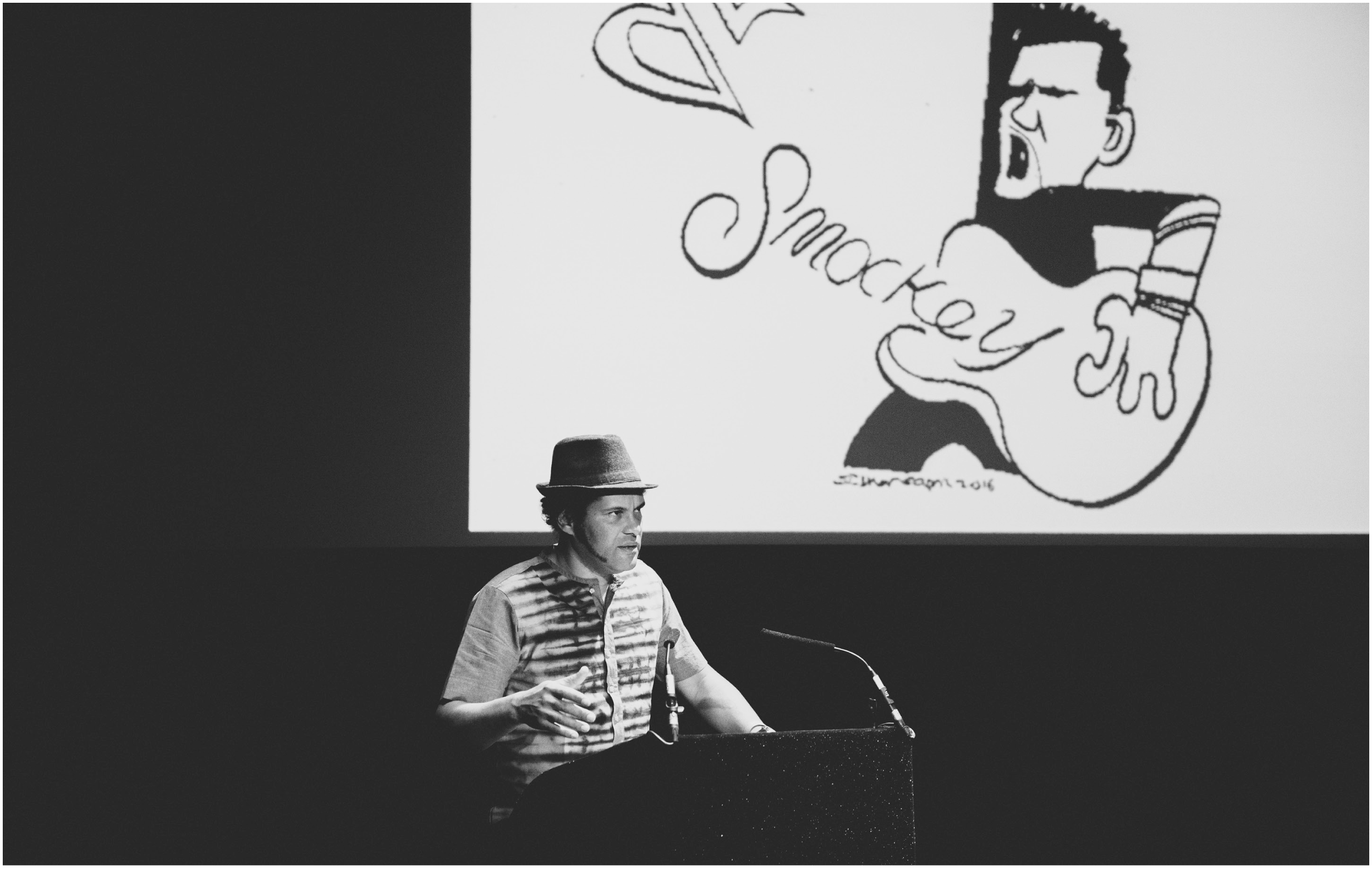
Smockey at Index on Censorship’s Freedom of Expression Awards 2016. His music was the soundtrack to a youth revolution, which saw a peaceful transition to democracy in 2015 in Burkina Faso
CREDIT: Elina Kansikas
Politicians and other important people were going to be there and they wanted to use me as an engaged artist, to give credibility to their events. They wanted my name. It gives a certain cachet, so they could say they’re even working with artists who denounce them. But at the same time, they asked if I would water the wine, so to speak.
Before I played, they said: “Smockey, could you please avoid talking about politics? Can you avoid winding up the authorities?” But that never works. If you tell me that sort of thing, it only makes me want to say everything. They arranged it in such a way that I got to play for only five minutes because they didn’t want to risk me playing for longer. I said: “Give me 10 seconds – that’s all I need!”
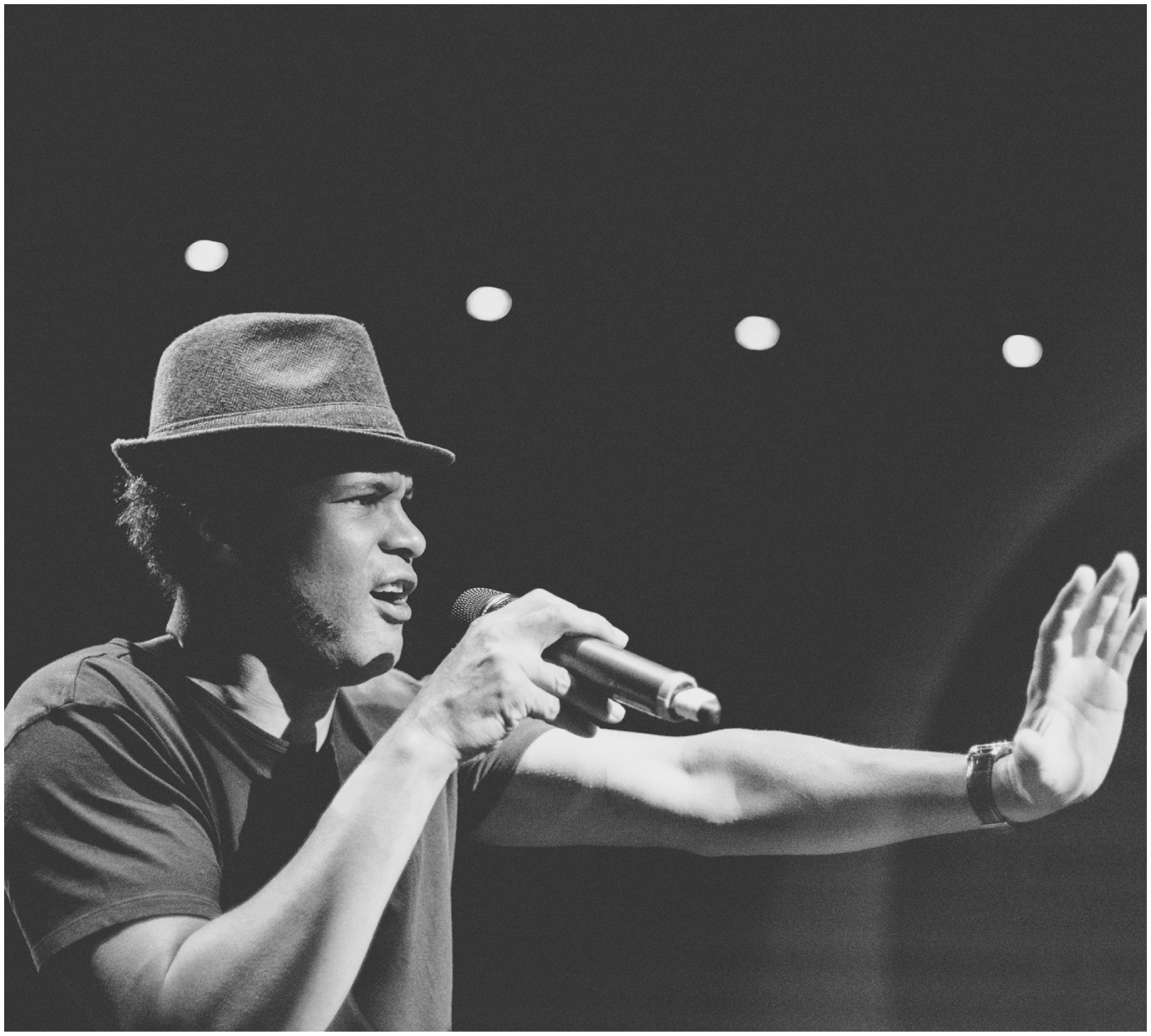
Smockey performs at Index on Censorship’s Freedom of Expression Awards 2016
CREDIT: Elina Kansikast
It is a squeeze on freedom. The artist is a sponge and takes in everything. You speak about what you know. I was born and brought up in Burkina Faso and so I had lots to say about the place, and I realised that the problem was political. If the problem is political then the solution is political. You don’t choose to be an artist or an activist with a political pen – it happens because our universe is extremely politicised, and all the problems that you see are problems of bad public management and of bad governance.
That’s why nothing works. That’s why people are poor, why there is only primary healthcare, why people have poor education and why more than 60% of the population is illiterate. That’s why you have to raise the consciousness of the masses so they understand they don’t have to put up with a system that allows this and stops their development. Music is the best way to raise the consciousness of the people so they can exercise their control as citizens.
They used to try to destroy artists by attempting to stop them expressing themselves, but now they try to destroy artists by discrediting them, by not inviting them to appear on TV programmes or at public events. They force activists to accept compromise, another squeeze. The methods might change, but it’s still the same attempt at preventing people from saying things and exercising the control they should have as citizens.
It’s a problem not just in Burkina Faso. It’s more difficult in countries where the repression is bloody. I’m thinking about Congo in particular; Chad, where there is barely freedom or human rights; and even Cameroon.
Another pressure, or squeeze, is that people want you to sing things that give them pleasure and make them dance, where they don’t have to think. There are people who ask me why I write in gros français [the French spoken by the elite in Africa]. “We don’t need that gros français,” they tell me. And I say: “What do you want me to do – write differently?” I write what I feel. If there is a part of the public that it resonates with, that’s enough.
But even if you have won things, and we have certainly won things in Burkina Faso, in terms of freedom in the public sphere, it is still fragile and you have to convince people that it is not over. It is more difficult today to mobilise citizens because people think they have won. We haven’t won yet.
We are at the part which is called Évolution on my latest album, Pre’volution. The first part is Prémonition, which is about when the events are being prepared and we are getting organised. The second part is Révolution, which is the action itself. Évolution is the most dangerous and delicate part. If it is badly done, if it is badly executed, it is like going back to the start.
But I’m an optimist. We have a constitution that says the president can be elected for only two terms. The Regiment of Presidential Security, a secret service organisation, has been disbanded. The military junta no longer runs the country. It is difficult now to impose things by force and negotiation is needed. I am optimistic about the future in Burkina.
Footnotes
As told to