




Abstract

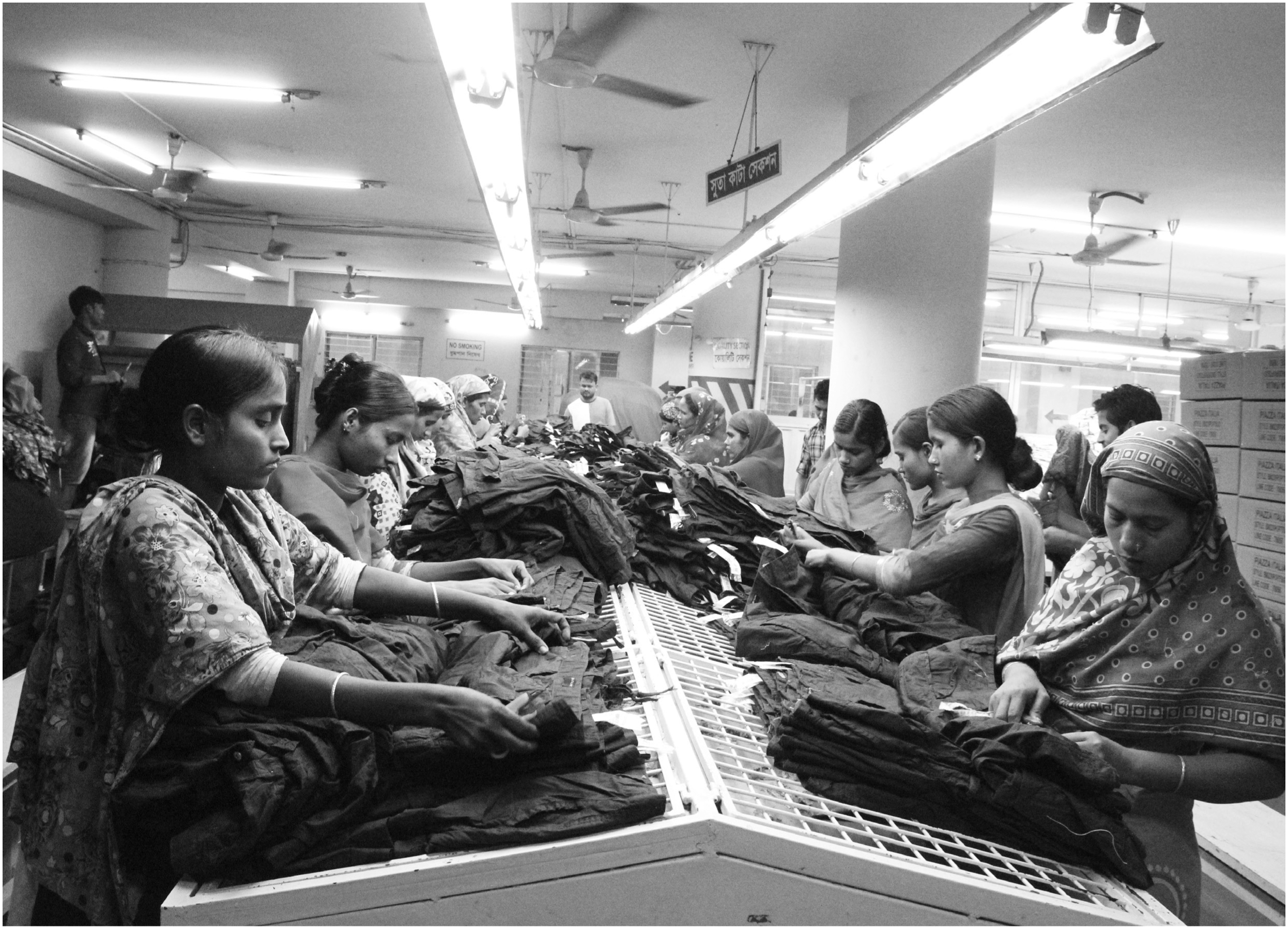
Garment workers wearing colourful fabrics in a clothing factory in Dhaka, Bangladesh
CREDIT: NYU Stern Center for Business & Human Rights/Flickr
Designer
We lived in the old part of Dhaka, and my parents were very much part of the cultural and political scene here, so I was exposed to a mixed culture. We used to travel around Bangladesh a lot, to the villages, and people from the villages would also come to our home.
It was these village people and what they wore that has inspired me the most. I used to hear about Bangladesh being poor, but they would wear the most amazing clothes, beautifully hand-woven and colourful.
When I asked them where they got the clothes, they would say the weavers next door made them. My inspiration for fashion came from them.
In some ways in my time there was much more freedom than today. You would be able to see the beautiful faces and bodies of women moving around. They would all be wearing saris.
The fashion landscape now in Bangladesh is more complicated. In some ways working women are more independent and less hidden now. What is most striking about the Bangladesh fashion scene today is how colourful and brightly printed the clothes ordinary working women wear and how conspicuous they are. It is a big change over the last 10 years, and a sign of women’s growing sense of self-expression.
This has come about mainly because Bangladesh’s economy depends on its female workforce. Women make up 80% of employees in the garment business, Bangladesh’s largest industry. It accounts, according to World Bank figures, for 83% of total exports.
The growth of the clothing industry has given these women financial power and independence for the first time. A sense of this empowerment is shown in the clothes they wear and the fashion they have adopted.
In the past, Bengali women of all social backgrounds and status wore saris. Now, young women between the ages of 15 and 30 who are working or studying wear a salwar kameez (tunic and pyjamas) and a dupatta (scarf), as this is more comfortable and makes it easier to move freely to get to work or to school.
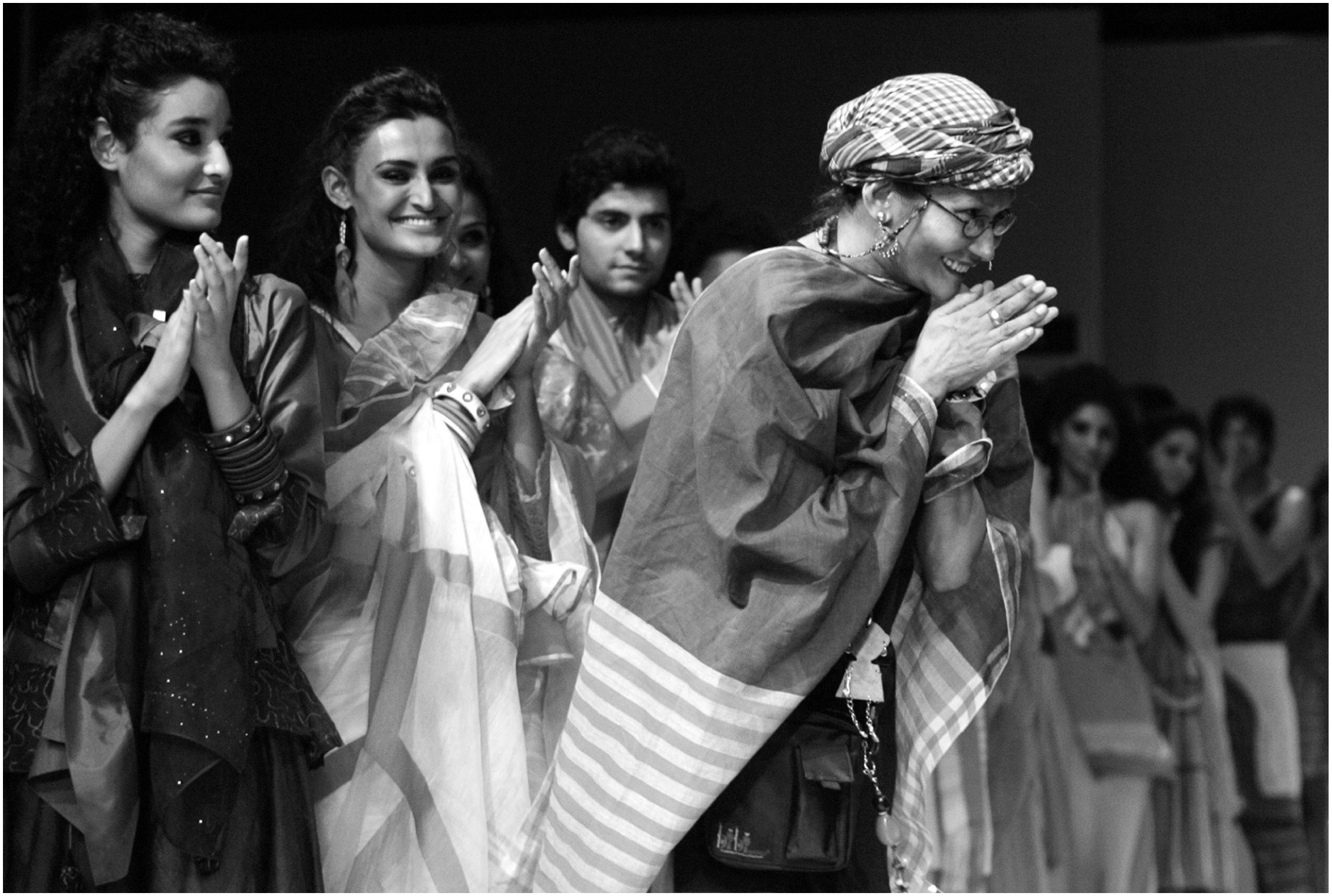
Bibi Russell (on right) greets the audience during Kolkata fashion week, surrounded by models wearing her fashion line
CREDIT: Jayanta Shaw/Reuters
If you visit a garment factory or observe the lines of women walking down the street in Dhaka city, you will see girls in a myriad of bright colours: pinks, oranges, purples, greens, blues, with bright scarves covering their heads or draped over their chest, accessorised with shiny hair clips, earrings and bangles.
In the villages women are also wearing salwar kameez in public, and kaftans at home. There is variety in the fashion as well, with sleeve details of the tunics, and different kinds of salwars.
It was not always like this. In the 1980s and 1990s when women first came from the villages to the cities to work, the change in women’s place in society was met with negativity by people who did not accept that women should out in public.
But a lot has changed since then and in the last decade NGOs and others have tirelessly advocated for women’s empowerment and education, working for human rights and against sexual harassment.
The freedom in clothing women are now enjoying as they work is also clashing with another trend, and that is the increasing number of women who are choosing to wear the hijab. A lot of women in the cities and villages cover their hair and sometimes their faces with a burqa when in public.
But they don’t always wear them for religious reasons. They wear them because they believe it protects them from rape, sexual harassment and acid burn attacks. There were 59 recorded acid attacks last year, according to the Bangladesh-based Acid Survivors Foundation.
The trend for wearing the hijab is an indication that the notion of freedom is ambiguous for women. It is both a symbol of subservience, and a provider of the feeling of protection and safety for women.
When I do my collections, especially abroad, I don’t do traditional outfits, I do whatever I feel like at the time.
My biggest strength is the village people and the younger generation. Though they may be covering their bodies to feel more protected, this is also a way of making themselves more independent to move around in public.
From Model to Designer
Bibi Russell was born in Chittagong and raised in Dhaka. Inspired by vibrant traditional clothing, she had an interest in fashion from a young age. In 1975 she fulfilled her dream of becoming the first Bangladeshi woman to graduate with a degree in fashion design at London School of Fashion. When she wore her own designs at her graduation show, she was approached by modelling agents, and soon appeared in international magazines such as Vogue, Harper’s Bazaar and Cosmopolitan. She spent 20 years modelling all over the world for designers including Giorgio Armani, Karl Lagerfeld and Yves Saint-Laurent. When she returned to Bangladesh in 1994, she started visiting villages around the country for inspiration, before founding her clothing line Bibi Productions, aimed at making traditional fabrics more marketable. Her first European show, in Paris in 1996, brought work to 30,000 weavers in rural areas, according to UNESCO research. Russell develops handloom fabrics with colours that are non-chemically produced and environmentally friendly.