




Abstract

CREDIT: Sergey Melikhov
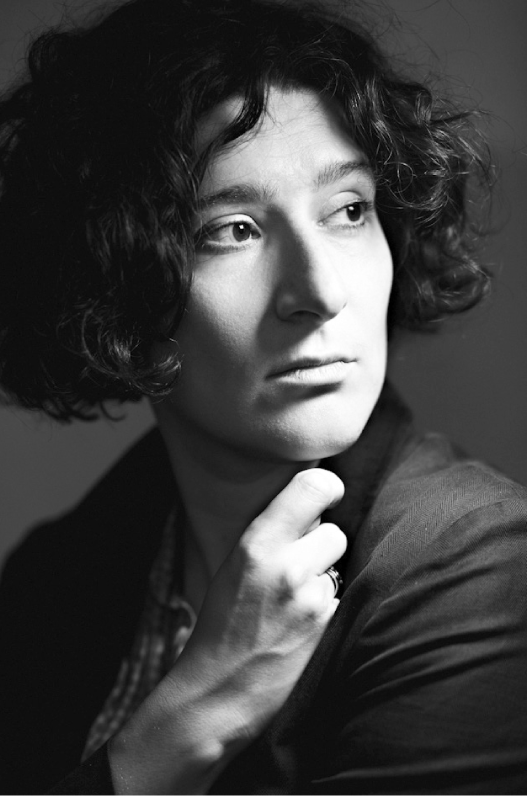
Index publishes the first English translation of a new piece of writing inspired by the reality of Putin’s Russia, from one of the country’s most lauded poets
Born in Moscow, Stepanova has won prizes for her poetry, including the Andrey Bely prize, the Joseph Brodsky fellowship, and was awarded a fellowship at Austria’s Institut für die Wissenschaften vom Menschen. She admits that time for her poetry has been squeezed by her journalism work as editor-in-chief of Colta.ru, one of the few independent news websites operating in Russia. Colta, which attracts about 900,000 visitors a month, is a crowdfunded news operation, and is committed to providing an alternative to state-dominated news. Finding time to write creatively is difficult, she said. “I wonder if it is really possible to find a working balance between journalism and poetry. I guess I could also call the combination useful – in terms of ‘hurting you into poetry’ – but most of the time it simply hurts without any results.”
On the eve of the 10th anniversary of the death of Russian investigative journalist Anna Politkovskaya, as journalism in Russia feels particularly vulnerable, Stepanova is more than busy, flat out is a better description, trying to fulfil all these roles.
Index is publishing, below, Stepanova’s poem, set against the backdrop of what she describes as “Putin’s Russia, penitentiary system, the fragile feeling of brotherhood before the grave”. So how does she describe the influences on the writing of this poem? “There is a very distinct background for everything that is happening in contemporary Russia – firstly and mainly, the war in Ukraine.
“But there is more than that. The common sensibility is changing quite rapidly. We are living in a hybrid, multilayered, challenged reality that is mixing visions of the past, fear of the future and endless possibilities of violence and destruction.”
And at a historic moment, when we are looking back at Politkovskaya’s murder, and all that’s happened since in Russia, does she feel any sense of optimism about the next decade? “I am forcing myself to be optimistic with no real reason for it; the situation in the world is even more dark than it used to be 10 years ago. Still, you never know when the eagles are coming.”
The Way It Is
It can be like a tailor but
instead of the straitjacket
(which since childhood so longed for fulfilment
cried out to be formed from the canvas)
he sews from a picture
cuts on the bias
a dress, not now constricting
but itching
It can be like a court
in session proceeding
with iron gurney
along a long
clinical corridor
meting out tightly swaddled packages
onerous little life sentences
each three and half
kilogram years
penal umbilical
it can be like bewildered you spat out a word
with a hook which lodged
in a comradely body
of wood
in the lip
of a shark
That’ll make the line jerk
a fish caught a fish
but the way that it is
a mound ’neath a snowdrift
signifies nothing
inscription on brass
seeing no body
inscription on stone
no matter. We read
he is no more
but here he is
Footnotes
Translated by