




Abstract

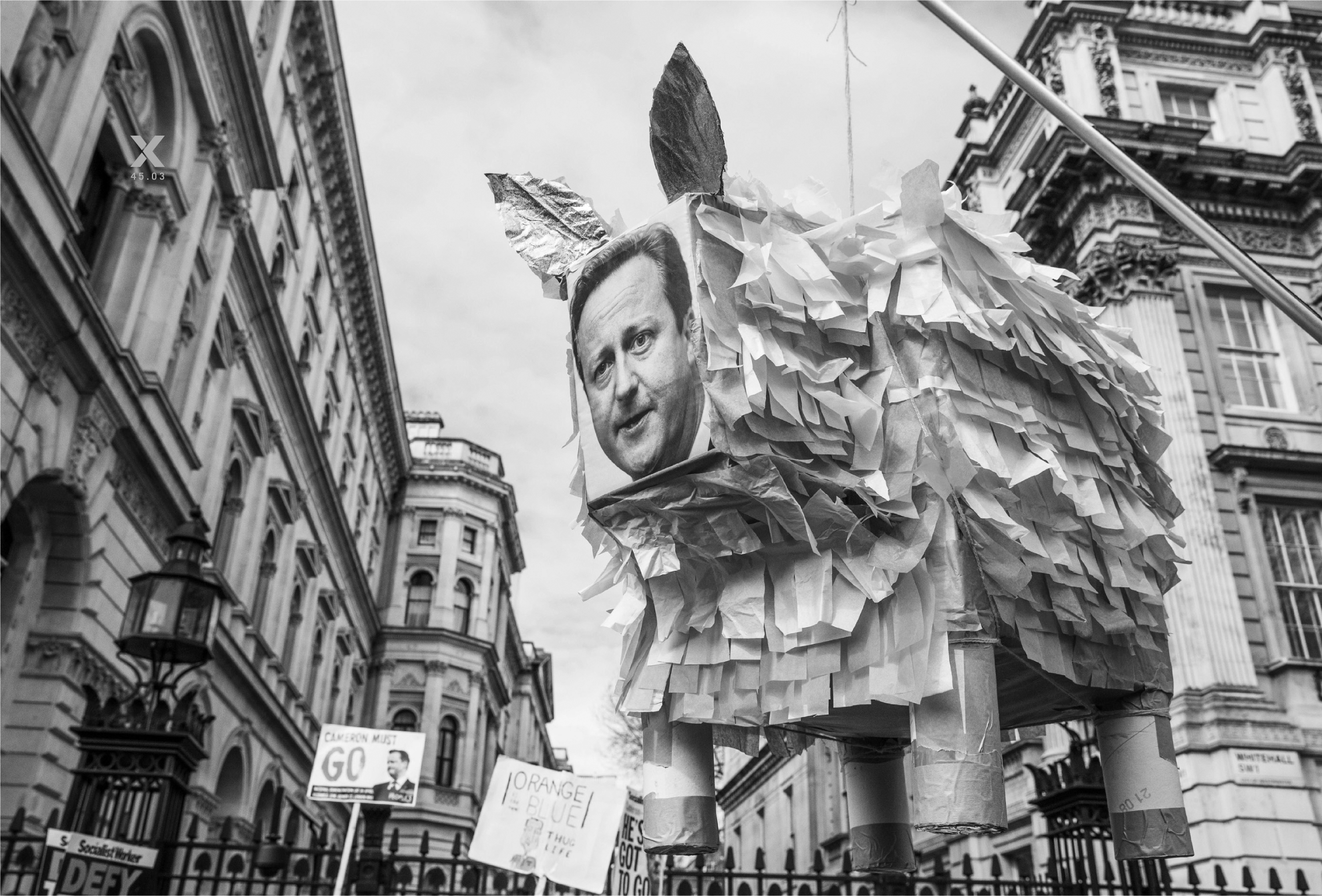
An anonymous smear about former UK Prime Minister David Cameron’s sparked a variety of cartoons and this piñata carried by protesters in London in April 2016
CREDIT Mark Kerrison / Alamy
It’s the conspiracy theory that has never gone away – even after Obama produced his birth certificate to show he was born in Hawaii. A recent NBC News poll claimed that 72% of registered Republican voters still doubt President Obama’s citizenship.
Trump – despite originally questioning the birth certificate himself – has, during his own campaign, taken to suggesting Clinton herself started the rumour. It’s a smear that has been difficult for the Clinton campaign to kill off, because of the anonymous nature of the initial claim.
UK politicians have suffered a similar fate from anonymous allegations. A single anonymous source to David Cameron’s unofficial biographers dented the then prime minister’s reputation in 2015 with the allegation that he had engaged in an ill-judged undergraduate drinking society ritual with the head of a dead pig. In the ensuing days and weeks after the story broke, few if any seemed to care whether the story was in fact true. A survey by UK polling company YouGov found that 66% of people believed the claim, despite not knowing the identity of the single source. Some 30% considered the allegation important to the question of the prime minister’s capacity to lead. That’s just under 20 million people, or around 10 times the gap in the popular vote between the Conservative and Labour parties at the last general election.
Anonymous smears have been proven to carry weight with the public, with percentages of the population believing them often significantly greater than the margins of political victory. In a climate when political rallies boo journalists, and activists can share posts on Facebook that are misleading or inaccurate, the potential reach and harm of a political smear is enormous. When the chances of detection are so slim, and the potential gains so great, why wouldn’t some political campaigns set out to smear their opponents? The widespread availability of secure technology means that it may be impossible to track the source of a smear, or then to do anything about it. Legal action against anonymous trolls is likely to be extremely costly and ineffective as a means of deterrence.
Anonymous accounts can be used to amend Wikipedia, the first place many online researchers turn. They can contact jurors and witnesses, or even fabricate allegations online which jurors may stumble upon. None of this is beyond the capacity of criminals seeking to avoid conviction. The deliberations of juries are secret, and methods like this are necessarily going to be covert. A 2014 survey of US District Court Judges found that 7% had caught jurors doing such research, which suggests that the total numbers are far higher.
In the UK, politician Grant Schapps was caught out in 2015 after a series of amends were made to his Wikipedia page to remove embarrassing stories. Wikipedia banned the anonymous account involved, stating concerns that it was managed by Schapps or one of his team. The same account had also toyed with the pages of other politicians.
Anonymous disinformation and smears can reduce the credibility of politicians in a democracy. And the globalised social media environment adds to the reach of those smears, which travel at speed over borders. The tools of a modern free and open society can be used against it by the state and other players. There are reports that the Kremlin is directly involved in the widespread dissemination of propaganda via online trolls. Trump gains vocal support online from anonymous bots. The Mexican and Turkish governments have also been accused of having armies of bots on social media. At best, these add to the general level of noise and make individuals, and the truth, harder to hear. At worst these methods can channel hatred, lies and abuse. There are many legitimate reasons for anonymity, but the tools we are using to grant it are blunt, obviously open to manipulation, and a threat to the quality of our free speech. Worse, they may have a serious negative impact upon our justice systems, and our democratic processes.