




Abstract
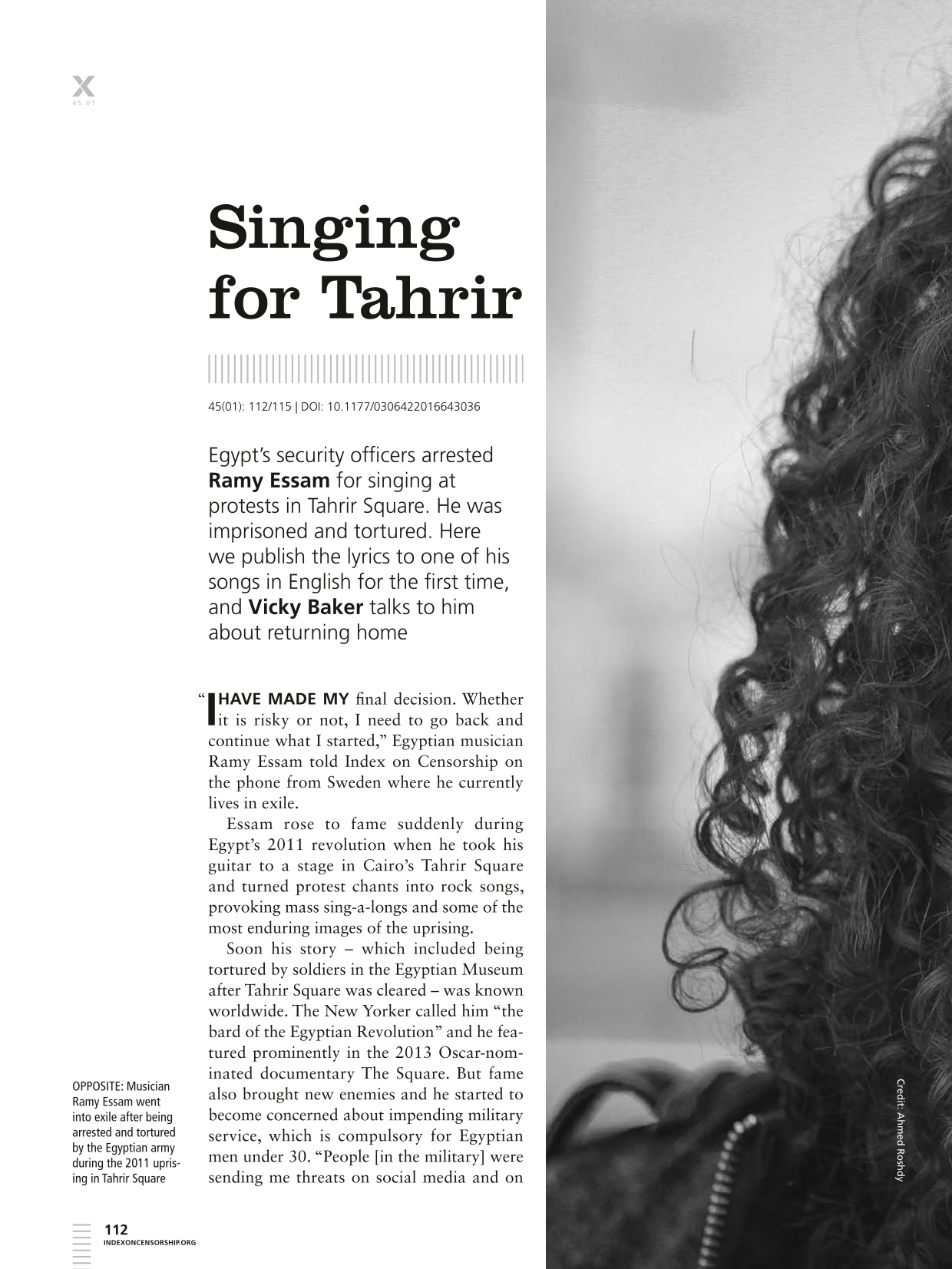
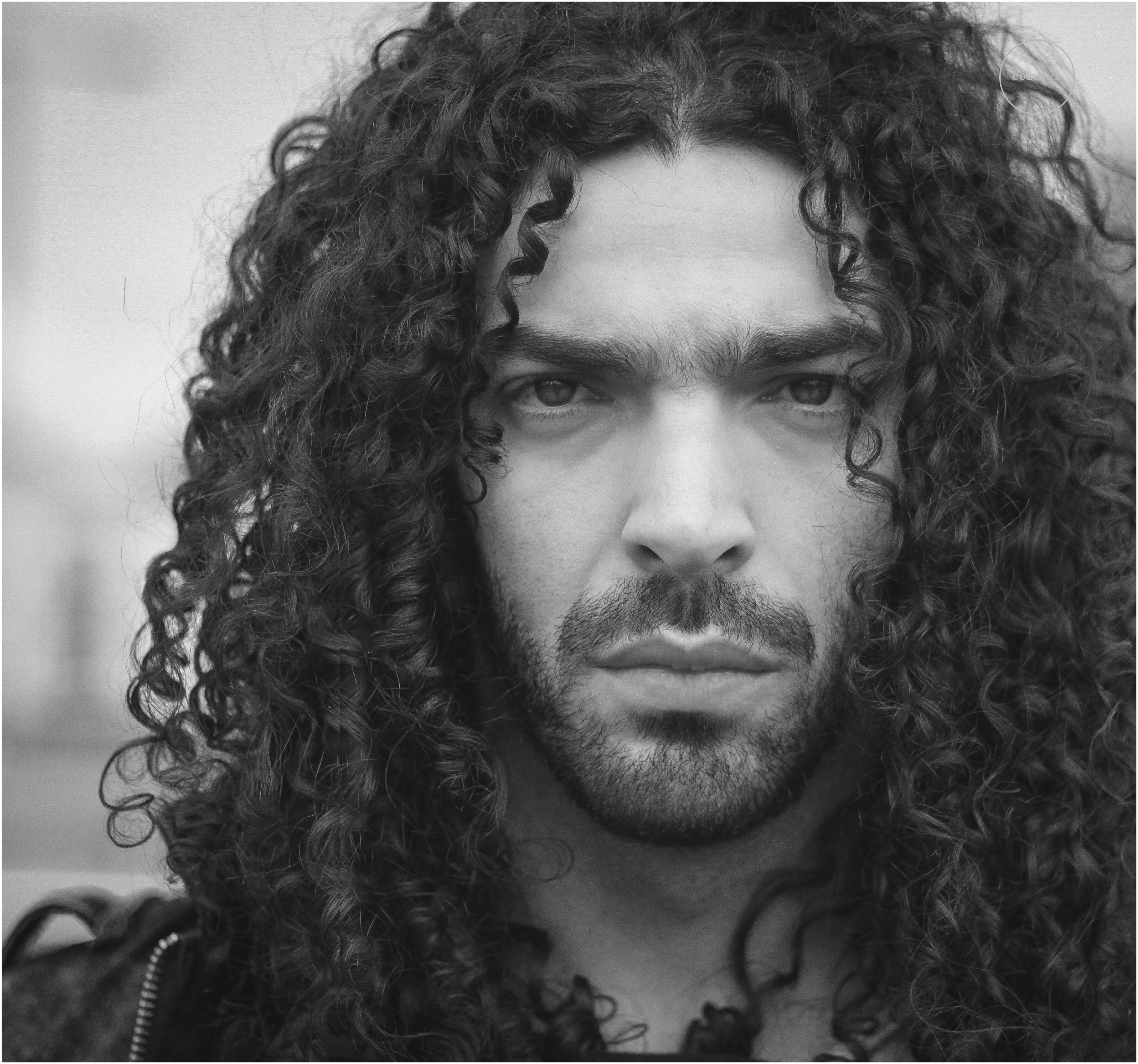
Musician Ramy Essam went into exile after being arrested and tortured by the Egyptian army during the 2011 uprising in Tahrir Square
Credit: Ahmed Roshdy
Egypt’s security officers arrested
Essam rose to fame suddenly during Egypt’s 2011 revolution when he took his guitar to a stage in Cairo’s Tahrir Square and turned protest chants into rock songs, provoking mass sing-a-longs and some of the most enduring images of the uprising.
Soon his story – which included being tortured by soldiers in the Egyptian Museum after Tahrir Square was cleared – was known worldwide. The New Yorker called him “the bard of the Egyptian Revolution” and he featured prominently in the 2013 Oscar-nominated documentary The Square. But fame also brought new enemies and he started to become concerned about impending military service, which is compulsory for Egyptian men under 30. “People [in the military] were sending me threats on social media and on my phone, saying ‘We’re waiting for you’. This is their best chance to catch me. If I am serving as a soldier, they can use military laws on me.”
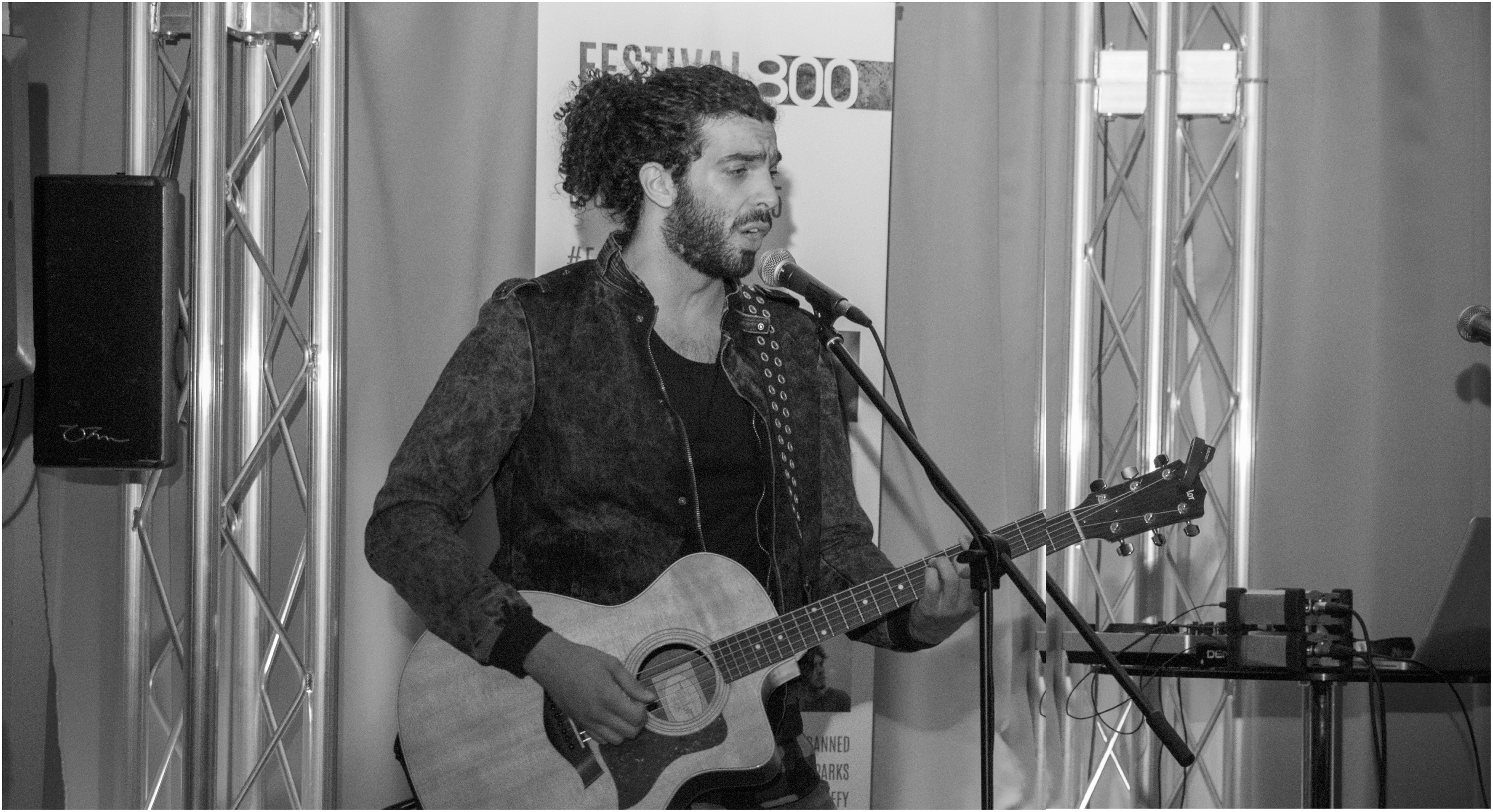
Ramy Essam performs at Lincoln’s Festival 800, a UK celebration of the 800th anniversary of the sealing of the Magna Carta
Credit: David Brook / Festival 800
A two-year Safe Havens arts scholarship, awarded by the Swedish city of Malmö in 2014, came at the right time. Now aged 28, he plans to stay in Europe until he turns 30 in June 2017, and then can return home. “If they won’t let me play and I have to take my guitar to go underground, I’ll do that,” he said. “The first time we called for change instantly, we were very dreamy, but we can be more realistic now. It may take 10 or 20 years, but at least we have started.”
Living abroad means he is less famous now in his homeland, but he keeps in touch with his core fan base online. “I am not there physically, but my music and my voice is still with there with them,” he insisted. This year he plans to release a new album, which will bring together some of his acoustic songs but with higher production values, thanks to support he is receiving in Sweden.
One of the tracks on the album is called A Letter to the Security Council in the UN, which is a collaboration with Egyptian poet Amgad El Qahwagy, who he often works with. (Essam typically writes the melodies, while Qahwagy writes the lyrics.) The lyrics, which are published here in English for the first time, were inspired by the United Nation’s annual day of literacy. “After the revolution we started to lose the battle because of illiterate and uneducated people. Dictators use this to control people,” Essam explained. “This song is about a poor person who is confused about who is an enemy and who is a friend, but just wants to be free. The message is: I don’t know how to write about freedom but I still have it in me.”
Essam’s most famous song Irhal, meaning “leave”, was his 2011 call for then president Hosni Mubarak to resign. He blended chants heard in the square with his own refrains. “I wasn’t politically active at the time,” he confessed. “I was just a guy who didn’t like what was going on, and someone who believes in the power of music to change.”
The musician said he has been criticised for being too optimistic, but he said he is inspired by his fans, who are mostly teenagers. “This new generation aren’t listening to TV or radio, or reading newspapers,” he said. “The ways they controlled my generation no longer work. We have a new kind of freedom. We have the chance to make a difference. This is what gives me hope.”
A letter to the Security Council in the UN
I am pleading that my words reach you.
Despite your concern
To the Security Council of the United Nations
This is not my first message
This is me the bloody human
Rulers sharpening their swords using ignorance over my silence
Out of darkness injustice was created
I became one without any knowledge, following my obsessions
I befriended my enemy
Not even knowing my own flaws
I became stranger in my own journey
Others reading my compasses for me
Ignorance navigating me
Oh, my lord, secretary of the council, and all secretaries betraying my dreams
I might not understand the words on my TV
But I know that prison’s air is heavy
I might not know how to spell freedom
But I carry its meaning with me
I know that today will pass by
But tomorrow I might break free
Oh my lord, watch out for me!