




Abstract

Poet Edin Suljic has spent 24 years in London since leaving former Yugoslavia. His poem My Mate Shakespeare reflects his experience of war and life as a refugee
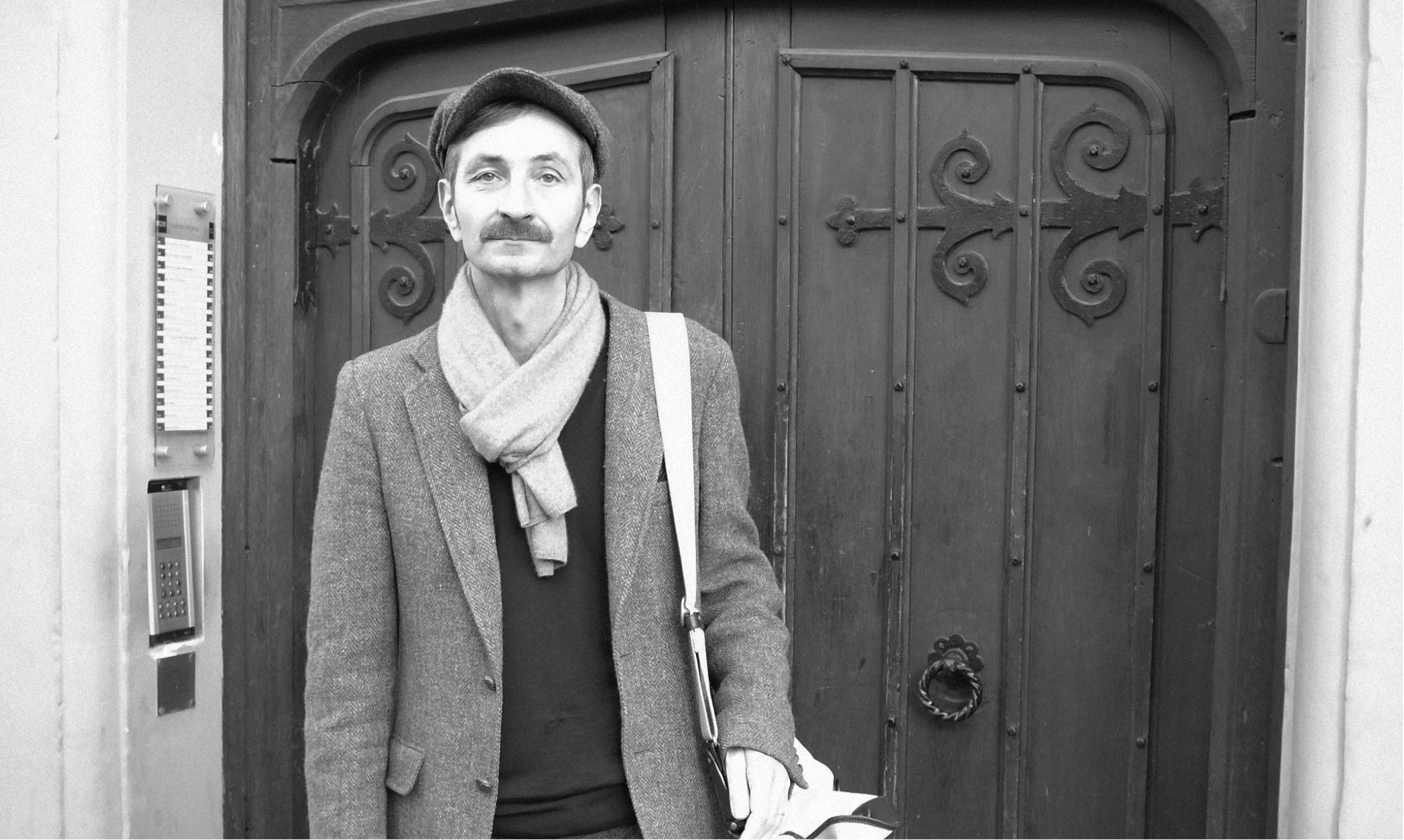
Poet
Having visited his homeland last summer, Edin saw a relentless stream of desperate refugees, and this inspired the poem. “I am begging him, my Mate Shakespeare, to come back to his strength, particularly now when everybody wants to celebrate his life. One portion of the wretched humanity is directly responsible for the misery of the others and he, Shakespeare, needs to be here to show the wretched through the laughter and tears that the suffering of others actually hurts,” he said.
Suljic is involved with theatre group Bards Without Borders, which uses Shakespeare as an inspiration for productions themed around migration. “When I was young I was in a youth group for the national theatre in my home town. We did two productions of Shakespeare plays, A Midsummer Night’s Dream and Comedy of Errors, just like we are doing at Bards Without Borders.”
Shakespeare was known for ridiculing politicians and Suljic believes that theatre is an ideal way to take on such issues, and use comedy. “I think we need more plays which attack these issues,” he said. “The way to do it is to ridicule, to expose it. Through sincere work we constantly have to push these boundaries that the majority imposes on us.”
Suljic said: “In My Mate Shakespeare he’s a broken man because I don’t think we can go much longer with these wars. Even Shakespeare today would be in a state of desperation when he thinks about the world we live in now.”
My Mate Shakespeare
The first time I met Shakespeare, he looked nothing like himself, nothing like that
depiction of a poster boy with a hipster beard one comes across every so often.
No, he was tall, scrawny, flamboyant, thin-moustached and bespectacled, with large
hands into which his guitar almost disappeared as he sang perched on a low
stool, in the theatre’s green room, where we would occasionally be allowed to
sneak into as aspiring writers and actors, to join the post-press-night party.
In those days we shared many breakfasts, mainly a coffee and cigarettes, and
sometimes a boiled egg given to us by a kind cook in the theatre’s canteen.
And our fortunes took many turns …
Some claimed his work as if it was their own, they complained about too many foreigners
in his plays (As if we don’t have our own trulls – they’d say). Others even claimed he
never wrote anything, or worse, that he never existed. My mate Shakespeare …
Every so often he’d ask me if I am still writing, then say:
– Keep writing, keep writing, me duck …
But then, he ripped apart my first play.
That’s too serious boyo – he said, and inserted an innuendo into every second paragraph.
He was madly in love with this blonde, petite, round-eyed actress who was patiently
waiting for her lucky break on stage, and for him to come to her garret.
Almost addicted to bingo and drinking a lot of poor-quality brandy, he got himself into
many troubles by attacking so many kings, offending so many celebrities and ridiculing
politicians; and he wrote too many plays about deformity and cross dressing.
Even his small girlfriend turned out to be a man in disguise.
Then the war tore everything apart, and I haven’t seen him since.
The world entered into this never-ending war.
I heard the stories … He married a very different girl and they had two beautiful
children and they lived somewhere in the outskirts of the City.
He doesn’t go to the theatre anymore.
But then, like most stories about him, these too, turned out to be unreliable.
I saw him once more – in the East End. That last time I saw him, he
looked like a broken man. My friend. My indestructible friend.
Something or somebody managed to do it to him.
I suppressed a cry inside myself. What is left for the rest of us? What
will happen to us if people like him could be broken?
Then he leaned over his glass of cheap brandy and whispered
– Keep writing, keep writing, boyo …