




Abstract
Lies and hoaxes spread like wildfire in the age of social media. How can journalists, and readers, avoid being fooled?
This video was released by anti-government forces in Syria as evidence of war crimes committed by the Assad regime. But it was not what it seemed. The video originated five years previously in Mexico, where drug cartels have a history of violently executing opponents. It had been cleverly over-dubbed for propaganda purposes, and many fell for its message.
Made-up stories don’t just come from lone-wolf hoaxers. Governments from Mexico to Turkey, as well as other political organisations, are becoming adept at using social media for manipulation and misinformation. Journalists have always been expected to use their detective skills to track down sources. But as online reports have the potential to influence the news agenda across the world, far faster than print stories, the potential for falsehoods to circulate as facts is greater than ever. Fortunately, technology has also furnished us with a new set of tools that can help us work out whether those who are telling the story are telling the truth.
Online verification follows the same basic principles established over decades of newsprint: be suspicious of everything, always have more than one source for a claim, and find out the who, what, where, when, why and how. Increasingly, those skills are also being honed by ordinary individuals who want to prod a news story before believing it.
The most common form of digital misinformation is old imagery re-used in the context of a new story. Many major news events are accompanied by recycled pictures. It has happened during the Syrian war with disturbing regularity but was also evident during the Paris attacks in November 2015, the Bamako hostage situation in Mali a week later, and last April’s earthquake in Nepal. (Remember the photo of the hugging toddlers that did the rounds after the quake? It was taken in Vietnam in 2007.)
The quickest way to check the history of a picture on the web is with a reverse image search (that is, a search generated by an image rather than words). Google has archived billions of images, and anyone can upload an image file or paste an image’s URL into its search bar to cross-reference the database for any matches. The net can be cast even wider with a Google Chrome plugin called RevEye, which will check databases at Google, TinEye, Bing, Russian web company Yandex and Chinese search engine Baidu. By using these simple tools, many news organisations could have avoided the embarrassment of publishing old pictures as new.
The process is more difficult for video, as cross-referencing every frame in one video with every frame in every video in a database involves supercomputer levels of number crunching. One alternative is to grab the video’s thumbnail picture and use it for a reverse image search: this can flag up other videos that contain the same image. Otherwise, searching video networks for keywords associated with your video can bring back results.
Thus, with patience and the right tools, one can generally work out whether a supposedly new image or video has in fact been recycled. More difficult is determining whether images that are new are really showing what they claim to. Of course, tracking down the original uploader and speaking to them directly is the surest way of getting closer to the story; ideally, they will send you the original file.
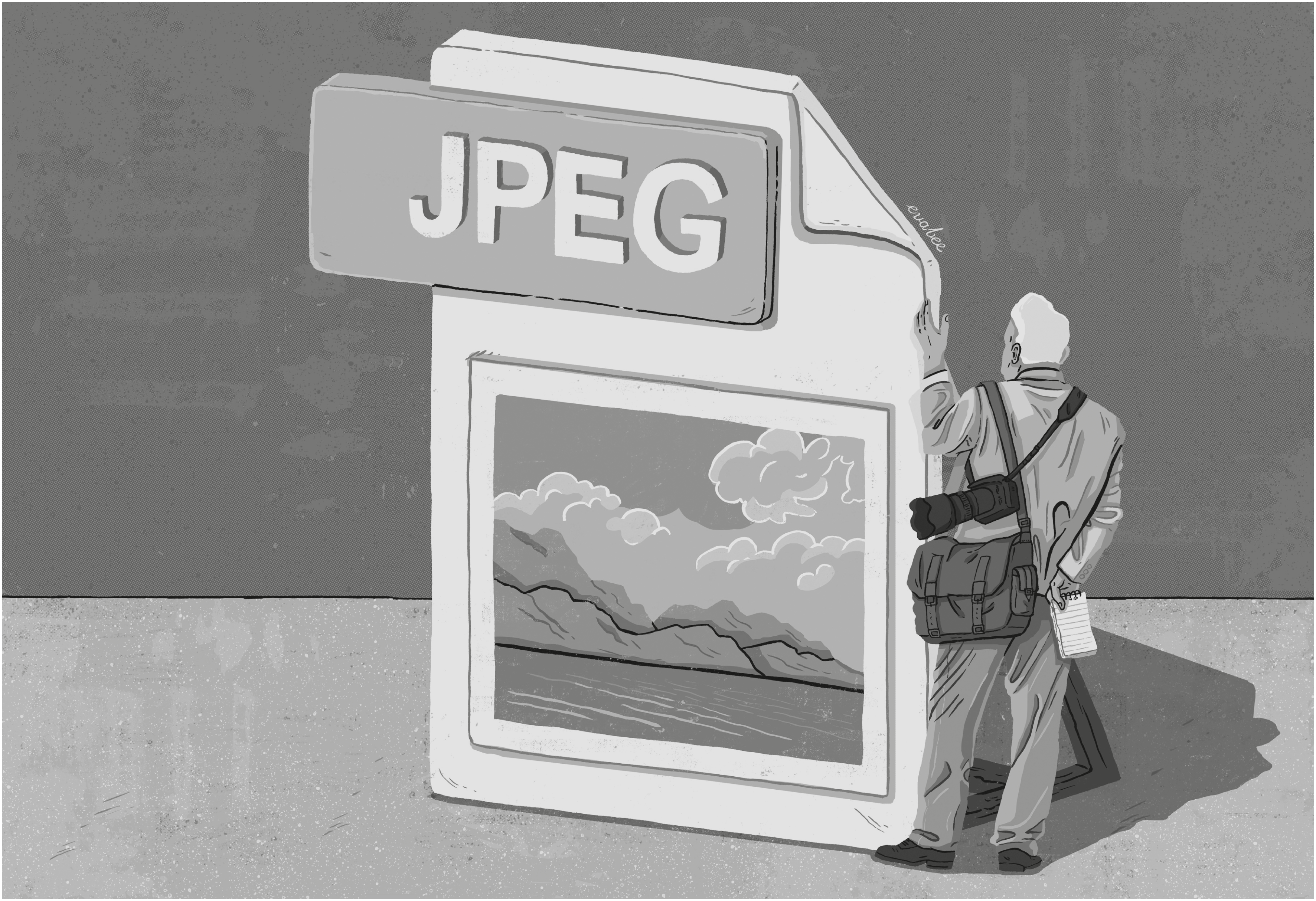
Failing that, it’s worth remembering that every digital camera embeds metadata in the file of a photograph, including the GPS co-ordinates, the time it was taken and the type of camera used – all vital clues in your investigation. These details can often be viewed by uploading the image to a free site like Jeffrey’s Exif Viewer (Exif, which stands for exchangeable image file format, is the technical term for this metadata). Unfortunately no such data is embedded in videos, and social media networks strip out metadata entirely, so that any image which has passed through Facebook, Twitter or the like will have little information to offer. In these cases, more creative techniques are necessary.
Time-consuming as it is, matching locations in footage and reports to satellite imagery often provides the clearest proof of a location. A recent story starkly illustrates this. Russian forces started bombing areas of Syria at the end of September, following a formal request by President Bashar Assad for assistance in fighting rebel and jihadist groups. Soon after, the Russian Ministry of Defence began posting videos of the airstrikes – captured by the bombers as they dropped their payload – to its official YouTube channel.
According to the Russian government, the airstrikes hit IS targets. But following reports from the ground that most of the strikes were targeting non-IS groups, volunteers and journalists at the open-source investigations site Bellingcat decided to investigate. After comparing the ministry’s videos with satellite imagery of the places they purported to show, they found that only 25% of the strikes verifiably landed where they claimed to – and that the majority of those targets weren’t even IS positions to begin with. The rest hit territories held by other groups, in keeping with Assad’s request for military support in the country.
However, most pictures from eyewitnesses are taken at street level, so the street-view services on mapping sites like Google and Yandex can play a key role in verifying images. By identifying landmarks and signage in a picture or video, many news organisations have been able to whittle down the list of potential locations until they get a match.Corroborating reports and images are crucial – which is where free tools like Yomapic, which shows geotagged pictures from social media sites in locations around the world, come in useful.
Establishing that a photo or video was taken at the time claimed by the source is another problem – albeit one that new digital tools can also help establish. The best signifiers of time are those provided by nature: the weather and the angle of the sun. Many have argued that flight MH17 was shot down in July 2014 by a Russian Buk missile. Online sources have provided photos and video of a Buk, and claimed they were taken in the Ukrainian town of Zuhres, some 20 miles from the crash site, on the same day the plane crashed. Maps and landmarks prove the footage was taken in Zuhres, but how can the time be proved?
The website Wolfram Alpha stores, among many other things, historical weather data for every location in the world. Bellingcat looked into the data for Zuhres at the time of the crash: it matched the weather in the pictures. It then turned to Suncalc, an online tool which shows the angle of the sun – and hence shadows – at any location around the world, at any time. Again, the data tallied with the pictures. While not establishing cast-iron proof, Bellingcat build a solid case for a Buk launcher being in the right place and time.
Credit: Eva Bee
The prevalence of smartphones, social media and online connectivity has created powerful new resources for verification of the facts. They also give unprecedented scope for lies and propaganda to spread. As the possibilities for misinformation multiply, it is more important than ever for journalists, and the public generally, to use their analytical and verification skills before they put their trust in the news they are being told.
10 ways journalists can stand up their facts
In a world filled with new digital tricks, journalists shouldn’t forget traditional verification techniques, says former newspaper editor
Can you stand it up? Those five words were the ones I probably uttered more than any other when editing a daily newspaper. Excited reporters would be fed a diet of rumours: a member of parliament has left his wife, the chief constable has been suspended. These snippets would then be thrown into the daily news conference. And, with some exaggerated world-weariness, I would ask the key question. Can you stand it up? I never heard about half of the stories again.
Our advantage was that when a lead emerged at midday, we had nine hours to stand it up. If we couldn’t make it watertight we could give ourselves another 24 hours. In today’s digital world the pressure is on to push the button as soon any unsubstantiated tale flashes across our Twitter feeds. And the rush to publish means half-baked stories, outdated pictures and factual errors appear on websites that should know better. The irony is that verification has never been easier. My staff used to tread a regular path to our library to consult Dod’s Parliamentary Companion, Bartholomew’s Gazetteer and our own cuttings. Now you can check almost everything online. So why don’t we? As Spotlight, the Oscar-winning Hollywood film on investigative journalism shows, sourcing, checking and re-checking is how you nail whether a story stands up. In the world of 24-hour news and digital everything, those traditional techniques should not be forgotten. They include:
Be suspicious of everything. Take nothing at face-value. Check for vested interests. Trust no-one – even good contacts.
Your job is to confirm things. If you can’t, try harder. If you really can’t, don’t publish.
Always go to primary sources. Ask the chief constable if he is being suspended. Ask the authority chairman. If they won’t talk, find the committee members – all of them. When my neighbour was killed the local paper splashed it and got three facts wrong. Nobody from the paper had called the family (or me for that matter). Nobody bothered to make the effort. Shocking.
Follow the two-sources rule. Get everything verified by at least two trustworthy sources. Ideally on the record.
Use experts. There are universities, academics, specialists who will flag up credibility issues. Experts also know other experts.
Every story has a paper trail. There are still archives (try LexisNexis), court papers, Company House, Tracesmart. Has the same mistake been made before?
Ask yourself the key questions. What else can I look at? Who else can I talk to? Is it balanced? Did I write the headline first and make the story fit?
Make sure the readers understand what is opinion and what is fact. And that includes the headline.
Sweat the small stuff. Dates, spelling, names, figures, statistics. Don’t forget the who, what, why, where, when and how.
Evaluate the risk. There are times when with all the rigorous checking, a story might still only be 99%. If instinct and public interest tell you to publish – pass it to the editor. That is what he or she is paid for. And, with the other nine rules followed thoroughly, hopefully the editor won’t need to ask the key question.
