




Abstract

Syrian playwright
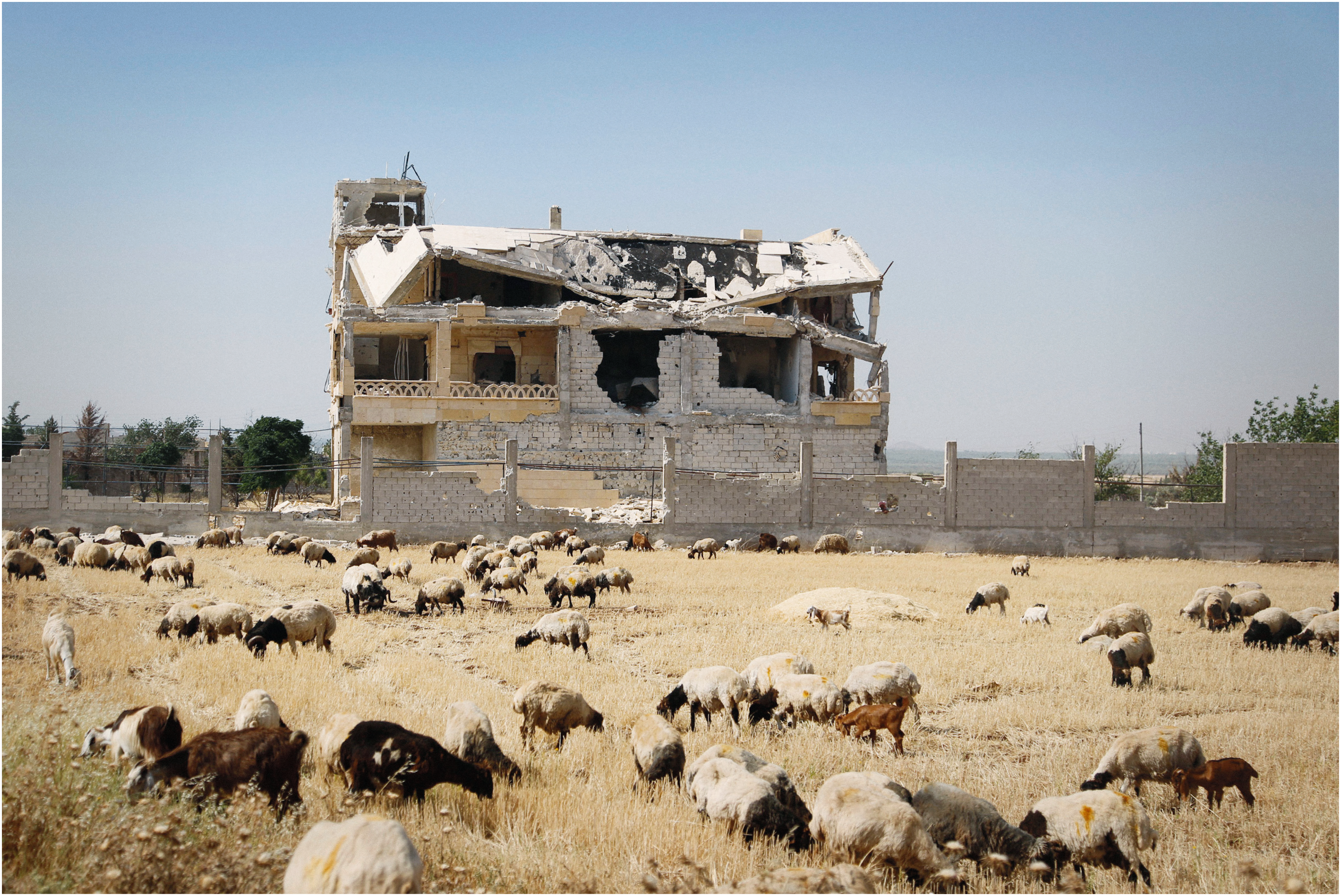
Goats graze in front of a damaged building in the countryside around Aleppo, Syria. In Liwaa Yazji’s play Goats the mayor of a Syrian town devises a compensation plan where families are given an animal for each son lost in the war
Credit: Reuters / Hamid Khatib
Working as a writer gets more complicated when your country is a war zone. There’s pressure not to write, not to criticise, but there’s so much to say. Yazji’s latest play Goats tells the story of a small government-held town in Syria where families are struggling to cope with the impact of the civil war. London’s Royal Court Theatre has just finished presenting her writing as a work-in-progress at the Jerwood Theatre Downstairs; the theatre hopes that it will now tour extensively in the UK.
Goats covers an attempt to compensate families for their losses, with the local mayor offering a goat for each son martyred. As the town fills with goats, the community struggles to hold on to its sanity. “I became interested in following how surreal things can get,” said Yazji, “How far they can go.”
To research the play she travelled and met with people all over Syria. But Yazji, who grew up in Damascus and Aleppo, stressed that it is not a documentary. “The play does not copy-paste conversations,” she said. The imaginative leap facilitated by fiction allows her to shed light on geographies and ideas that can be hidden in traditional news media, she maintains. In pro-regime areas where she conducted her research, for instance, people did not want to speak out against the government. “If I said to people, tell me your situation, because I want to write [about] it, then it would be almost impossible [because people would be afraid].” So instead she worked to “understand the logic and the reasons they use to justify and answer certain complicated ethical questions, and then develop the discourse in the way that suits the text… in a play, you are free to imagine”.
This imaginative piece represents a departure from her last project. In 2012 she directed the documentary Haunted, which explored what it means to flee home. Filming in Damascus was dangerous. The Syrian Network for Human Rights said in a June 2015 report that 22 artists have been killed, and 57 have been arrested or kidnapped since March 2011. The organisation also said reports of violence and crimes against artists peaked in 2011 and 2012, but numbers have since fallen, which they believe is because creative people are either less active, have fled the country, or are keeping quiet.
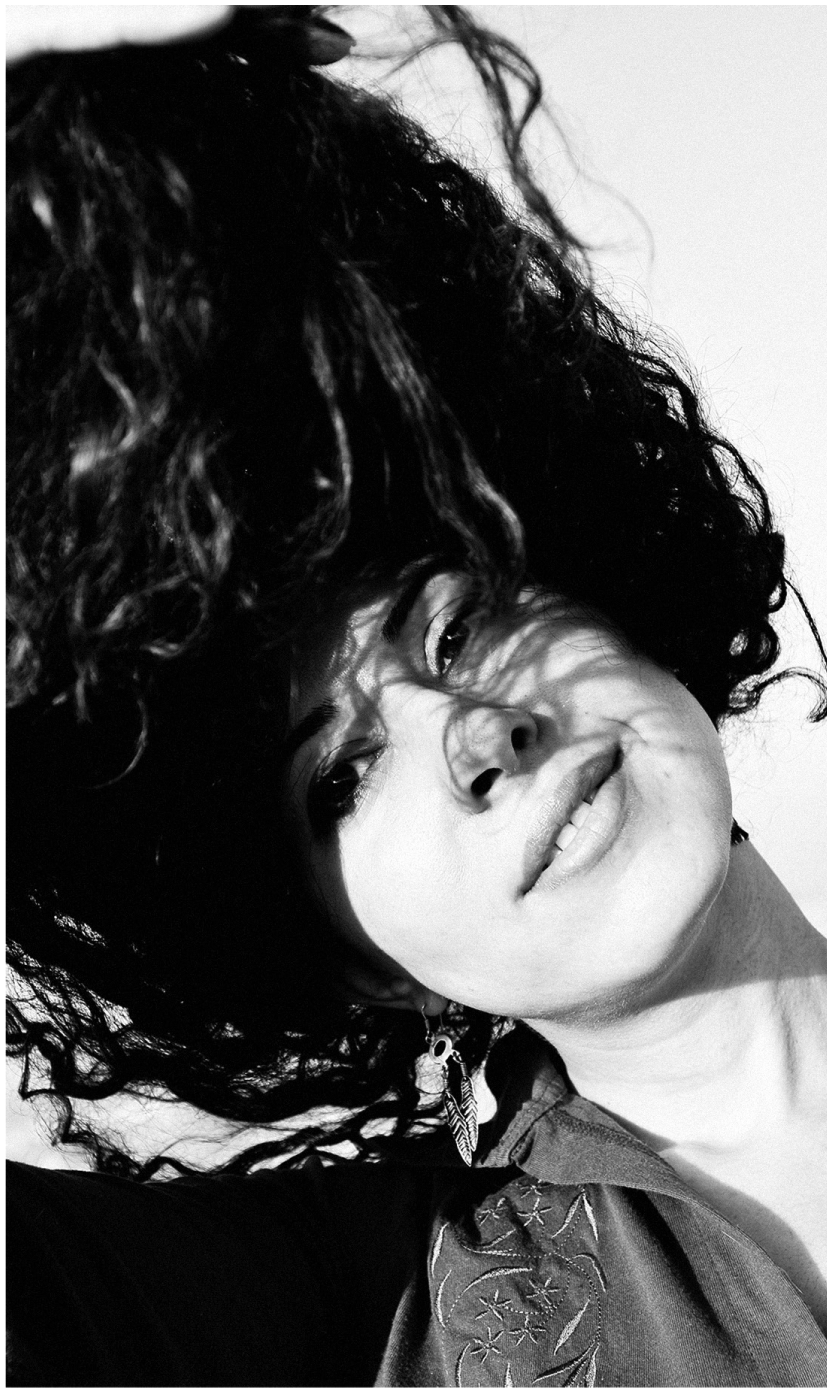
Syrian playwright Liwaa Yazji
Credits: (left) Ayham Deeb; (right) EPA/ Youssef Badawi
The risks associated with Yazji’s film were even higher than with her play: she still fears for the people remaining in Damascus who were featured. “It is a really big responsibility,” she said about using real people in her film. “Whenever there is a screening I am worried.”
When the war first broke out she was afraid of reprisals from the regime, but the situation is now so chaotic and dangerous that attacks could come from anywhere. Yazji now spends most of her time between Beirut and Berlin, where she is working on a play about refugees, but she still travels frequently to Syria – mostly to Damascus – where her library remains.
After studying English literature at Damascus University, she graduated from Syria’s Higher Institute of Dramatic Art in 2003 and has been working in theatre in the country ever since. Despite the war, there are a two official theatres are still open in Damascus: the Higher Institute of Dramatic Art and the Damascus Opera House, as well as a few commercial theatres.
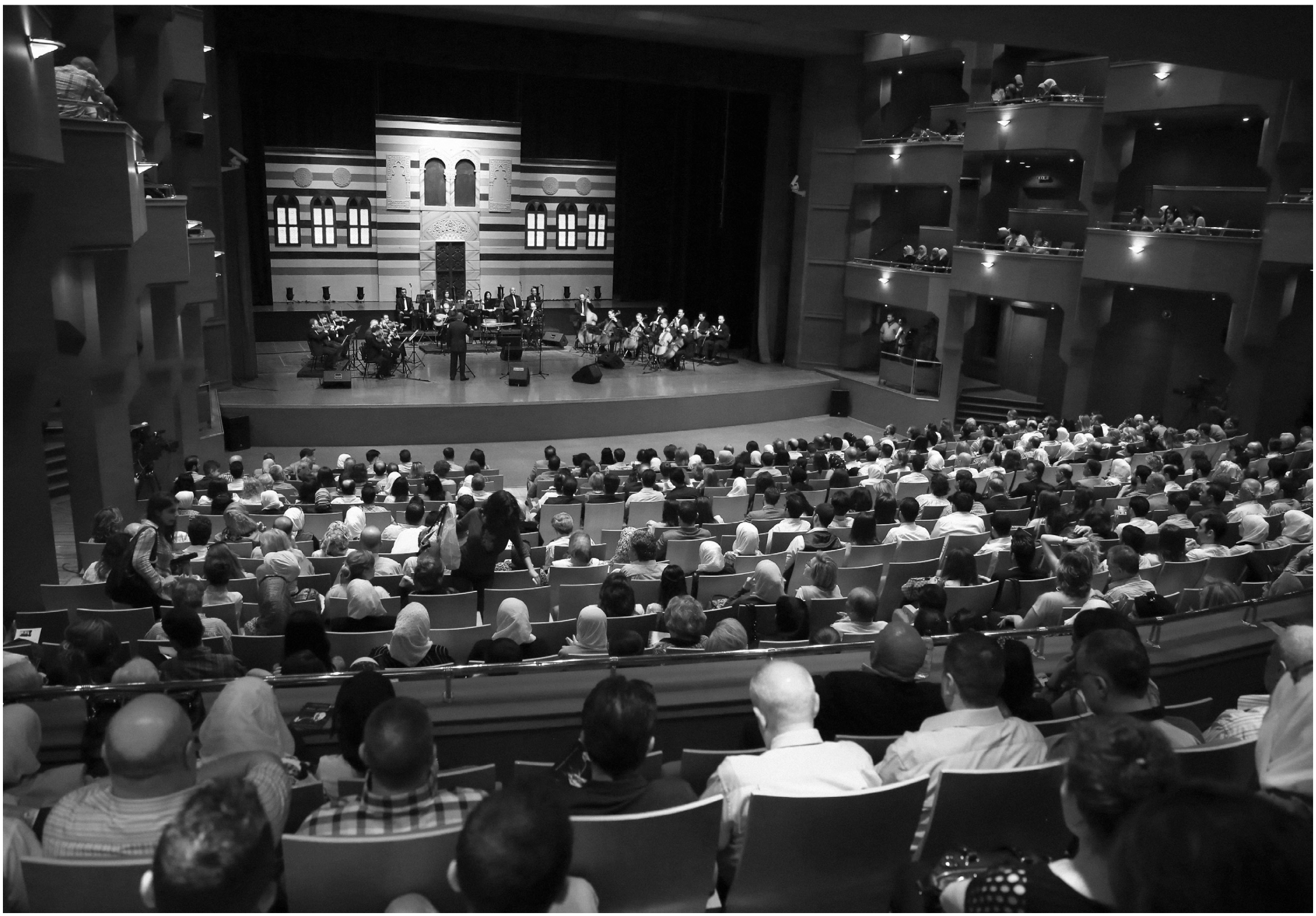
Damascus’s once-thriving Opera House was badly damaged by a mortar attack in April 2014, but its doors remain open. Attendance even briefly swelled to pre-war numbers in the December following the attack, according to Agence France Presse. Yazji said, “A significant number [of people still attend the theatre in Damascus] due to the scarcity of social and cultural events and the need to go to such events in bad times.”
“Of course [people only go] if the security situation permits,” she added. “Needless to say that there are new generations that are growing in this war time and they also need to live and practice social cultural life, since no limits of this war are seen in the near future.”
The Wall Street Journal reported in August last year that the desire to keep the opera house open was “to convey a sense of business as usual”.
Yazji sees herself as lucky that she was not banned from Syria for her film. Her understanding is that the “way the film was interpreted” meant she can still visit the city. Haunted focuses on people living in Damascus as they make the decision to leave their homes – what possessions they choose to take, what they choose to leave behind. While the context and the comments by the people in the film result in a piece critical of the regime, Yazji decided to “show this issue indirectly through the protagonists”.
She said: “Political stands are there in the film if you wanted, as an audience, to follow hints and words, but the protagonists don’t just stand in front of the camera cursing because this is not what the film is about.” This was primarily an artistic choice, not a political one, she said.
She hopes the UK performances of Goats won’t earn her a ban from re-entering her homeland, but the risk remains very real. She currently lives close to a circle of Syrian artists in Berlin; most have been exiled.
Musicians perform during the Arab Music Festival in the Damascus Opera House, also known as the Al Assad for Culture and Arts, in Damascus, Syria, in August 2015
“I believe that a piece of art enlightens,” she said. “It deserves to be read or to be seen, not banned. It might be useful even if you don’t agree with me.”
Liwaa Yazji
Yazji was born in Moscow in 1977, and raised in Aleppo and Damascus in Syria. Her first play Here in the Park was published in 2012, and her first poetry book In Peace, We Leave Home in 2014. Her documentary Haunted was released in 2014 and premiered in FID Marseilles where it received a special mention in the First Film Competition.