




Abstract

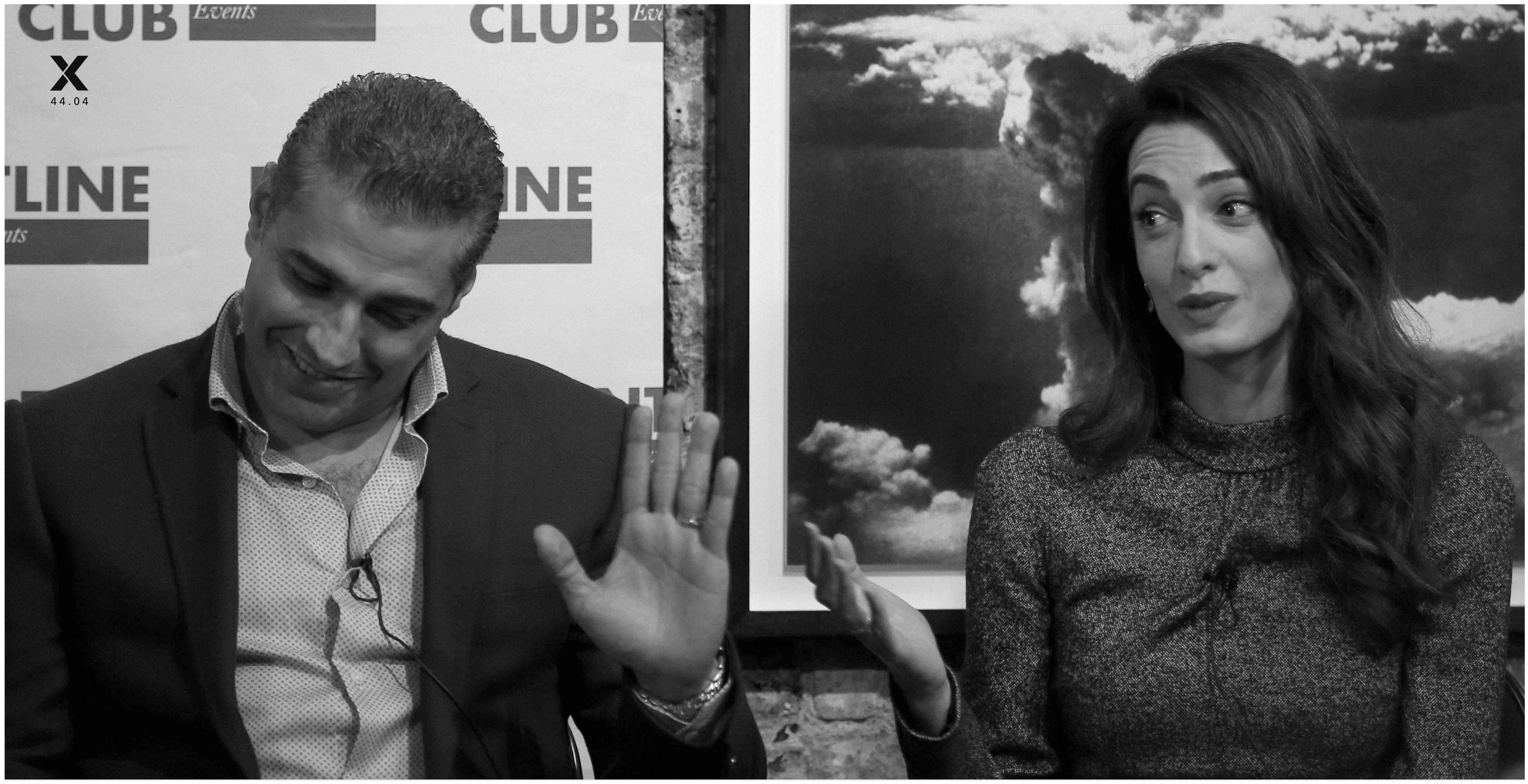
Canadian journalist Mohamed Fahmy, with lawyer Amal Clooney, speaking in London in October 2015. Fahmy had been sentenced to three years in an Egyptian jail for reporting that aided terrorism, and was finally pardoned by Egypt’s President Abdel Fattah Al Sisi in September
Credit: Peter Nicholls / Reuters
Upcoming extremism legislation in Britain seeks to restrict free speech under the cloak of tackling terrorism. This will not allow the appalling ideas at the root of terrorism to be tackled, argues
In May this year, British Prime Minister David Cameron uttered a phrase that ripped a gaping hole in this most basic of concepts. In so doing, he also laid bare thinking that is ushering in a new and frightening era for free expression, not just in Britain, but across the globe – one in which governments seek to tackle national security concerns by stifling free speech.
“For too long, we have been a passively tolerant society, saying to our citizens ‘as long as you obey the law, we will leave you alone’,” Cameron said. “It’s often meant we have stood neutral between different values. And that’s helped foster a narrative of extremism and grievance.”
Restricting free speech as a means of tackling terrorism is nothing new. In the late 1980s and 1990s, during the Northern Irish “Troubles”, the UK government imposed a broadcast ban on Sinn Fein, the political wing of the Irish Republican Army and other loyalist and republican groups. Though broadcasters could still report what these groups said, and even film them, the voices of the speakers themselves had to be dubbed over. Britons got so used to hearing Sinn Fein leader Gerry Adams with someone else’s voice that it was something of a shock to hear his real one when the ban was lifted in 1994.
The government justified its broadcast ban by arguing that it would “deny terrorists the oxygen of publicity” – an argument being used by governments now to justify bans of extremist content on social media and in other outlets.
In the case of the Northern Ireland ban, it was the voices we couldn’t hear, not the views themselves. Now, though, the British government is proposing something much more severe. Plans are afoot for legislation that would include powers to prevent anyone from speaking who undertakes “harmful activities” for the “purpose of overthrowing democracy”. By curbing speech, the government says it will somehow be able to root out the bad ideas that encourage extremism and terrorism.
The idea that we can stamp out violent extremism by tackling speech is becoming increasingly common. And it is dangerous. Apart from the scant evidence linking banning speech with a shift in ideology, such laws are drafted so broadly as to leave them wide open to misuse and abuse. Senior Anglican theologian Rev Mike Ovey warned that traditional Christian teaching could, unless the legal criteria are tightly defined, be criminalised in some settings under Extremism Disruption Orders planned in the UK’s new Extremism Bill. Under such bans, police would be able to apply to the high court for an order to restrict the harmful activities of an “extremist” individual. The definition of “harmful” would include a risk of public disorder, a risk of harassment, alarm or distress, or the ill-defined “threat to the functioning of democracy”. The restrictions imposed could include a ban on broadcasting and a requirement to submit to the police advanced notice of proposed content on the web, social media or in print. Taking part in public protests or speaking at any public event would also be banned.
But it is on the operations of a free and independent media that anti-terrorism legislation has had some of its most damaging effects. Consider the case of the Al Jazeera journalists in Egypt. They were charged with aiding a terrorist organisation just for carrying out their jobs as television reporters. Consider, too, the three Vice News journalists charged in Turkey with similar offences. Dozens of Turkish journalists and media outlets, many of them openly opposed to the country’s president, have also been targeted, and accused of engaging in terrorist propaganda.
Terrorists threaten the hard-won freedoms of liberal democracies, as demonstrated by the terrible attacks in Beirut, Paris and Bamako – all of which have just taken place as I write this. But these same liberal democracies pose a significant threat to those very freedoms when they attempt to tackle terror by slicing away at our civil liberties. The reaction when faced with those who would use violence to silence us must not be to close down the space for free expression, but to open it up. If, like David Cameron, you want to promote to an “actively tolerant” society then ultimately you need to encourage the voicing of all views, even those which, though they do not advocate violence, appear extremist. We need to fight such battles of speech in public – before they lead to violence.