




Abstract
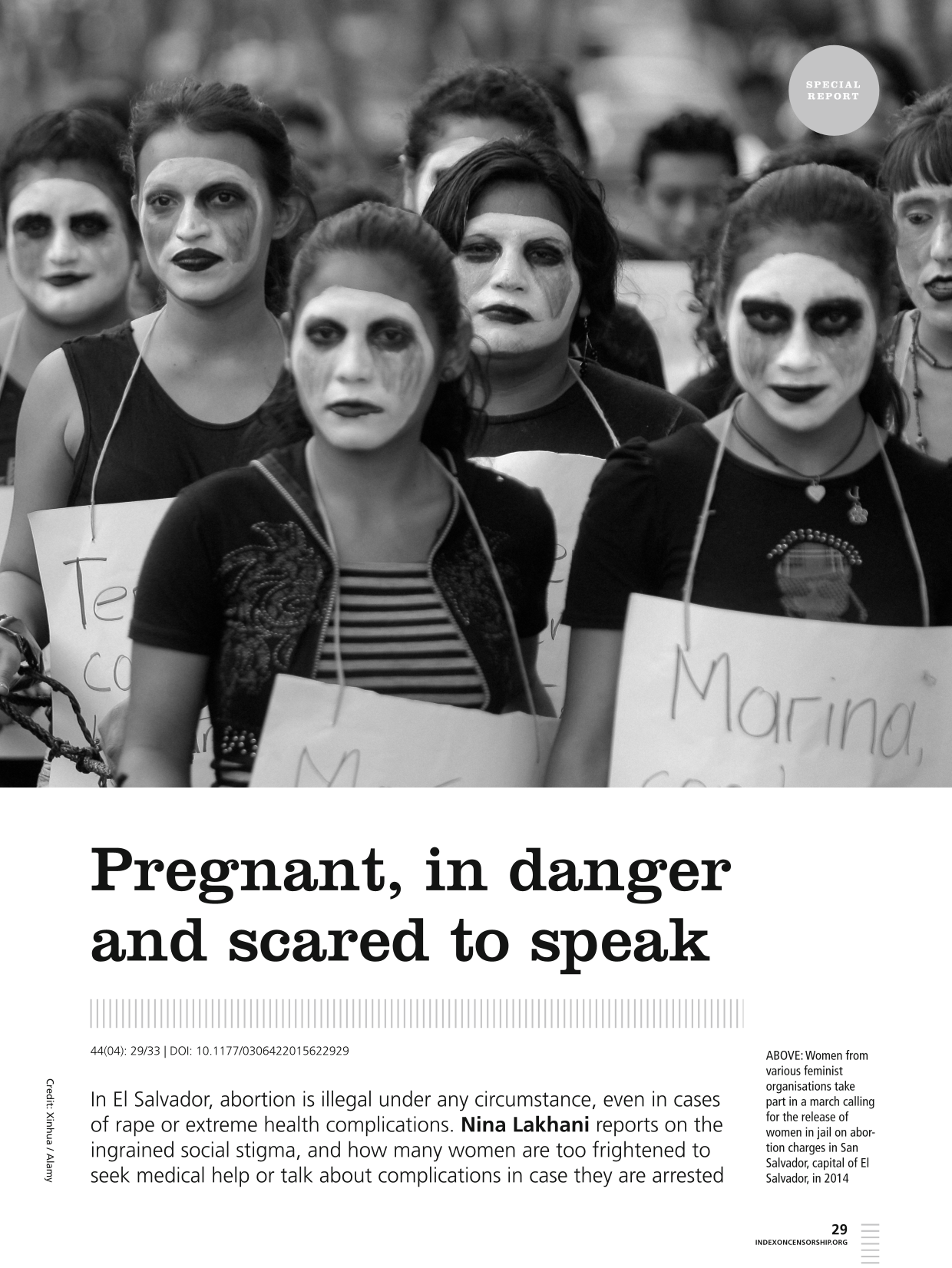
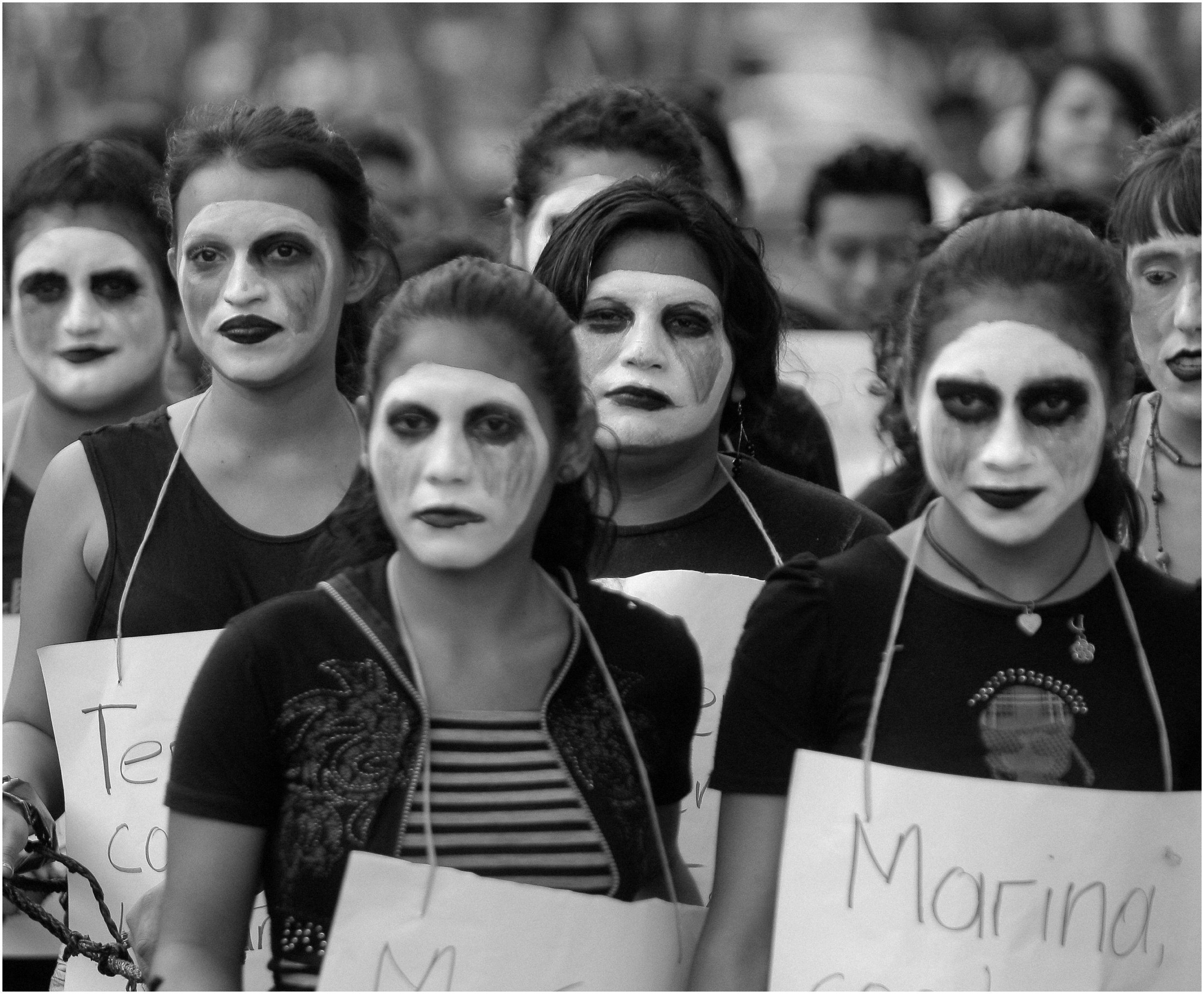
Women from various feminist organisations take part in a march calling for the release of women in jail on abortion charges in San Salvador, capital of El Salvador, in 2014
Credit: Xinhua / Alamy
In El Salvador, abortion is illegal under any circumstance, even in cases of rape or extreme health complications.
“They started asking me personal questions and after a few minutes told me I was under arrest for killing my baby. That’s how I found out that I was no longer pregnant, that my baby had died,” said Quintanilla, now aged 29.
In El Salvador, abortion is illegal in all circumstances. The draconian law, which was passed in 1998 without any public consultation, allows no exceptions. Abortion is illegal even for women who have been raped, whose health or life is at risk or who are carrying a foetus that is seriously deformed. In Quintanilla’s case, she had suffered a spontaneous obstetric complication, which led to a stillbirth, but she was still accused of intentionally failing to save the baby and charged with manslaughter. As she lay in hospital, frightened and alone, she was not allowed to talk to family, and she had no access to a lawyer.
This criminalisation of abortion has endangered the wellbeing of thousands of women and girls, according to the Salvadoran Citizens’ Group for the Decriminalization of Abortion. They say this is in part because many are now too scared to seek medical help or even talk about problems during pregnancy in case they are later accused of harming the baby.
Between 2000 and 2014, more than 250 women were reported to the police. Research by the Citizens’ Group says some 147 were prosecuted and 49 convicted – 26 for murder with sentences up to 50 years, and 23 for abortion. The vast majority of women were young, poor and single, and reported to police by public health hospitals.
El Salvador also has the highest teenage pregnancy rate in Latin America, accounting for 32% of all births, according to ministry of health figures. Amnesty International found deep-rooted taboos relating to young people and sex, which mean that pregnant teenagers are often treated abysmally by their communities and health services. Add to this an alarming rate of sexual violence against girls – two thirds of rape victims are under 15 years old, according to official police figures – and you have a toxic mix of discriminatory policies and attitudes which leave girls with few options. Suicide accounts for almost 60% of deaths of pregnant girls aged 10 to 19, according to official figures.
“Those who do not wish to continue with a pregnancy – regardless of whether their health or life is at risk or they are victims of rape – have to make horrendous decisions often alone as there is so little support and they are often too fearful to talk openly about such a taboo issue as they risk being reported to the police if they confide in the wrong person,” said Esther Major, reproductive rights expert at Amnesty International.
The stigma heaped upon poor, young women is clear. In 2005, Quintanilla was convicted of aggravated murder (the judge unilaterally decided to elevate the charge during the hearing), based on flimsy evidence. She was sentenced to 30 years in jail.
“The prosecutor claimed I had not sought medical help because I was poor, unmarried and didn’t want the baby,” she said. “The judge convicted me even though the autopsy couldn’t determine the cause of death. They had decided I was guilty and didn’t care about the evidence.”
There are currently 16 women serving long sentences, with their only hope of early release being a parliamentary pardon because every other legal avenue has been exhausted. Guadalupe Vásquez, 25, who was sentenced to 30 years for abortion in 2008 after suffering a miscarriage, was released in February 2015 – becoming the first of a group known as The 17 to be pardoned.
Yet any relaxation of the law seems inconceivable at present. El Salvador’s penal code – and the constitution – was reformed after a campaign by the Catholic church and anti-choice groups. A change would need the kind of cross-party support that simply does not exist. There is no groundswell of public opinion demanding reform, as the issue is rarely mentioned in the mainstream media unless it is to report a new criminal case. Reports are largely unsympathetic to the women concerned. Only newer community radio and online outlets have a more balanced approach to reporting that recognises women’s reproductive rights as human rights.
In 2013, people did come out on the street in support of Beatriz – a young woman suffering from the autoimmune disease lupus, who was pregnant with a seriously deformed foetus. Even though doctors recommended an abortion, the supreme court and government refused to approve the procedure. A relentless high-profile campaign by church leaders and anti-choice activists included a publicity drive which saw them taking out full-page adverts promising Beatriz financial support to raise the child.
Doctors maintained that Beatriz’s life was in jeopardy and the foetus had no chance of survival. Hundreds of people took to the streets in support of Beatriz’s right to life, but the conservative mainstream media rarely covered the protests. Amid growing international condemnation, doctors were eventually allowed to induce labour at 27 weeks; the baby died within hours.
Since Beatriz’s case, lawyers and activists defending reproductive rights have been subject to hate campaigns, threats and intimidation as part of a worrying trend targeting the defenders of sexual and reproductive rights across the region. The oppression intensified further when the campaign to pardon The 17 jailed women was launched last year, according to Sara Garcia, a feminist activist from the Citizen’s Group.
Garcia told Index: “This misogynist law promotes a hostile environment … we’ve suffered threats of criminalisation, thefts of information, as well as smear campaigns and defamation in the printed media and on social networks. It makes us feel unsafe and scared of imprisonment.
“We work to strengthen democracy in El Salvador by promoting plurality of thought, yet the stigma generated around what we do by fundamentalist groups means we are treated as apologists for criminality rather than human rights defenders. We keep going because we know that we’re not alone… there are social and feminist organisations at national and international level that agree and sympathise with our struggle.”
Quintanilla found herself an outcast when she was finally released from prison in 2009, after a successful legal battle downgraded the charge to abortion, and after she had served four years. While in prison, she had studied for her high-school certificate, taken courses in law and qualified as an aerobics teacher, but she couldn’t get a job on release. She felt she was ostracised because of the ignominy associated with abortion. She said: “Every newspaper reported my court case but not one wrote about my release, not one journalist came to the press conference where I wanted to explain the injustice I’d suffered. In El Salvador the church is very influential, and many people believe abortion is a sin and women’s lives don’t matter.”
Left with few options, in 2014, Quintanilla made the perilous journey through Mexico to the USA as an undocumented migrant. In Georgia, she recently had a baby with her new partner and was “amazed” that her obstetrician openly discussed potential complications and options, including termination, during prenatal checks. “That would never happen in El Salvador,” she said.
For Quintanilla, the law won’t change until attitudes do. “It’s such a delicate topic even among women and friends that it is too taboo to talk about openly,” she said. “The only way to change this is to talk about reproductive rights and sexual health in schools with children from an early age.”
World’s worst offenders on abortion law
Five of the six countries in the world with a total ban on abortion are in the Americas – El Salvador, Honduras, Chile, Haiti and Nicaragua (the sixth is Malta) – where the church continues to influence stigmatising and discriminatory laws and societal attitudes towards women and their bodies.
In Nicaragua, President Daniel Ortega outlawed abortion without any public consultation, weeks after taking office in 2007. Schools and universities have been effectively banned from mentioning abortion; women’s rights activists report threats and intimidation.
In Mexico, the capital Mexico City held widespread public consultations, opinion polls and televised debates which helped pass a landmark reform in 2007 legalising elective abortions in the first trimester. The fear of similarly open debates and reforms spreading across the country triggered an immediate conservative and religious backlash which led to 17 of the country’s 31 states tightening access to abortion by moving to “protecting foetal rights” at the moment of conception.
There have also been some notable recent gains.
In 2012 amid a wave of progressive policies under former president Jose Mujica, which confronted longstanding taboos on homosexuality and reproductive rights, Uruguay became the second country in the Americas after Cuba to allow elective abortion in the first trimester.
Earlier this year Dominican Republic relaxed its total ban on abortion to allow for some exceptions, and similar reforms are expected in Chile shortly.
Case Study
Red flags
Once abortion was the great taboo in the Republic of Ireland and Northern Ireland. Now direct action by activists is breaking down barriers and politicians are being forced to listen.
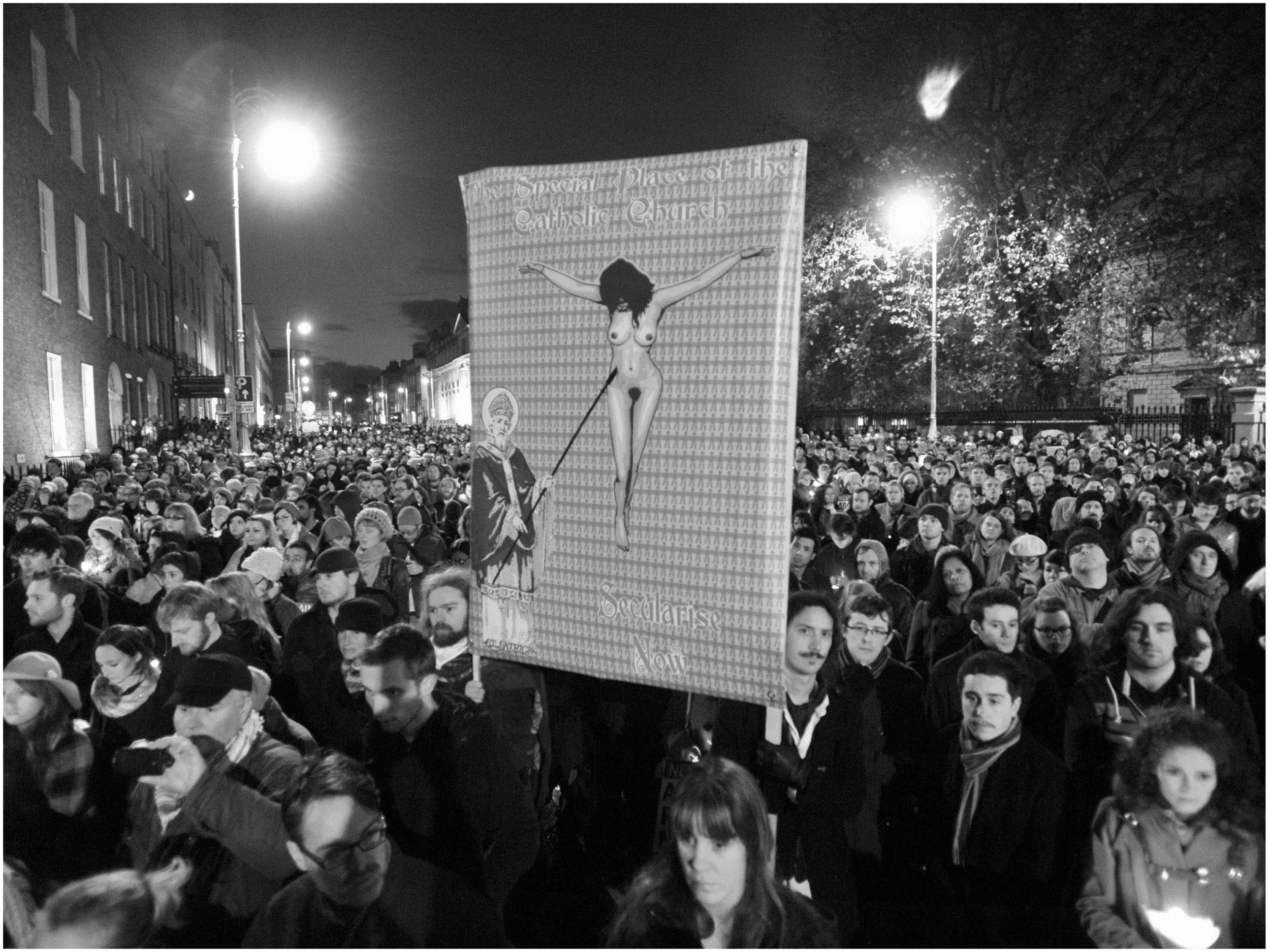
A candlelit vigil is held for Savita Halappanavar, who died after being denied an abortion in 2012
Credit: Lindberg/Rex Shutterstock
There are few more taboo subjects in Ireland, north and south, than abortion. Women have travelled to England for abortions since it became legal there; however until recently few admitted to supporting the right to abortion, still less to having had one. When, in 1981, the late campaigning journalist Mary Holland suggested that Irish women who had had abortions should sign an open letter similar to the 1971 Manifesto of the 343 in which French women admitted to having had illegal abortions, her suggestion was met with stony silence.
Incredibly, even today, information about abortion is still censored in the Republic of Ireland under the Regulation of Information (Services outside the State for Termination of Pregnancies) Act 1995. The dreadful aspect of this censorship is its devastating impact on those women who need abortions for medical reasons, such as foetal abnormality, even fatal foetal abnormalities. Their doctors are not allowed to organise the termination for them in an English hospital, rather they have to make arrangements themselves.
Things are changing however, and the taboo around abortion is starting to be broken. In 2012, just days after news broke of the death of Savita Halappanavar, a dentist who was refused an emergency medical termination, more than 25,000 people took to the streets of Dublin to demand the right to legal abortion.
In the aftermath of the Equal Marriage Referendum in Ireland, several well-known women have written and spoken about their experiences of abortion. Roisin Ingle of the Irish Times and comedian and actor Tara Flynn have both published defiant public testimonies about their own abortions. Many ordinary women have started to break their silence too.
The taboo is being broken also in Northern Ireland, a part of the UK to which the 1967 Abortion Act (allowing legal abortions) was never extended. In March 2013 more than 100 women signed an open letter admitting that they had either taken medication to cause an illegal abortion or they had aided and abetted another woman to do so. Several of the letter’s signatories appeared on television and radio to talk about their experience, but none of the women were questioned by the police, still less charged.
Despite this, in June 2015, a Belfast mother was charged with procuring pills to help her underage daughter end a pregnancy. Within a few days, more than 230 women, and some men, had signed a new open letter admitting to the same “crime” as the woman on trial – getting abortion pills over the internet to help someone who needed an abortion. Again, none of these people have been questioned by police, despite also having spoken on television and radio.
Other groups of activists have adopted an even more subversive approach. The group Speaking of Imelda (standing for Ireland Making England the Legal Destination for Abortion) has sent knickers to Irish politicians, including to the Taoiseach Enda Kenny, to make the case for legal abortion. While women from the Republic of Ireland have recently joined their Northern Irish sisters, tweeting intimate details of their menstruation to politicians who, they say, have demonstrated a profound and intrusive interest in what happens in their uteruses.