




Abstract

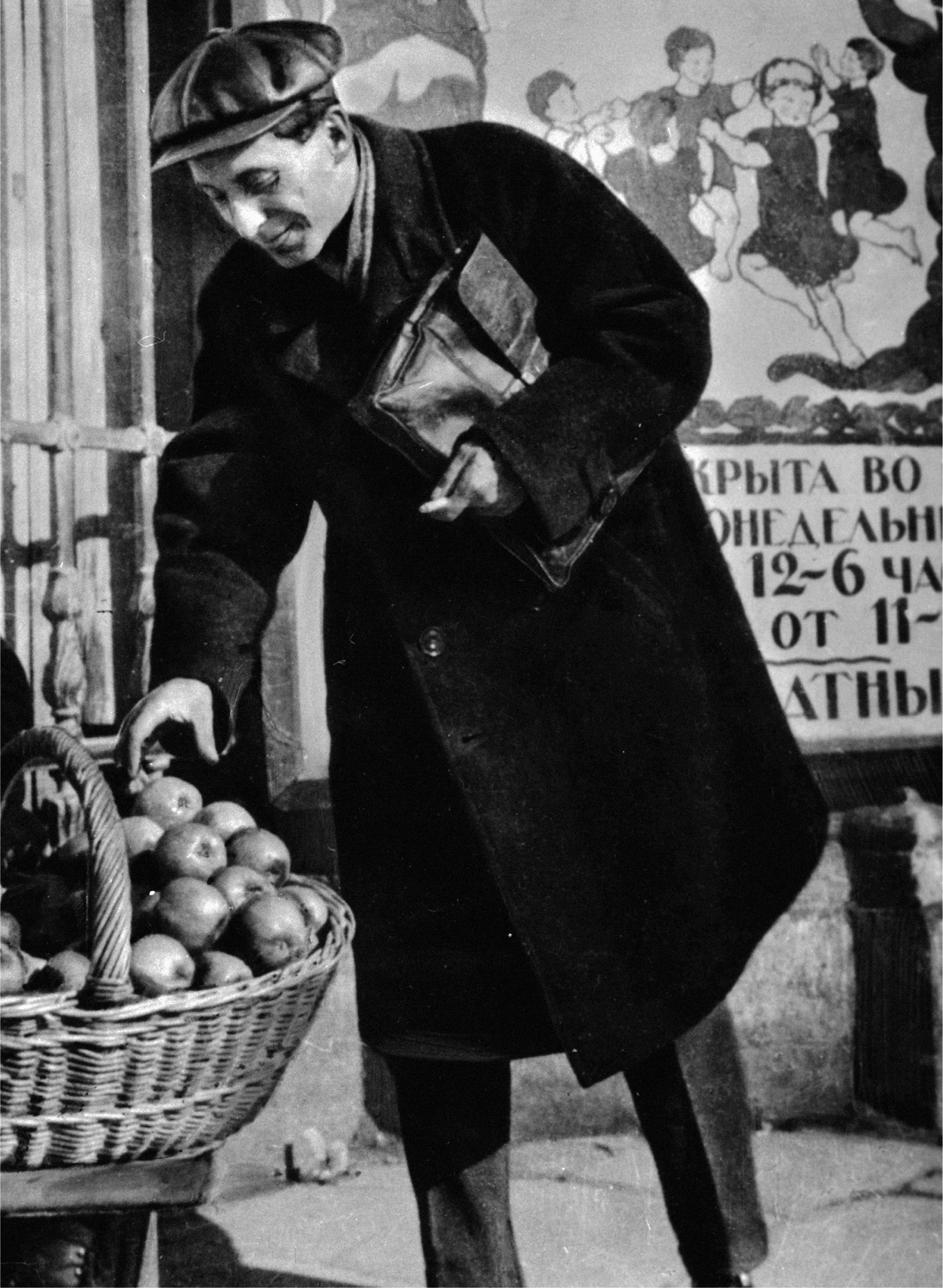
Writer Mikhail Zoshchenko picking apples from a street vendor
Credit: AKG/RIA Nowosti
Russian poet
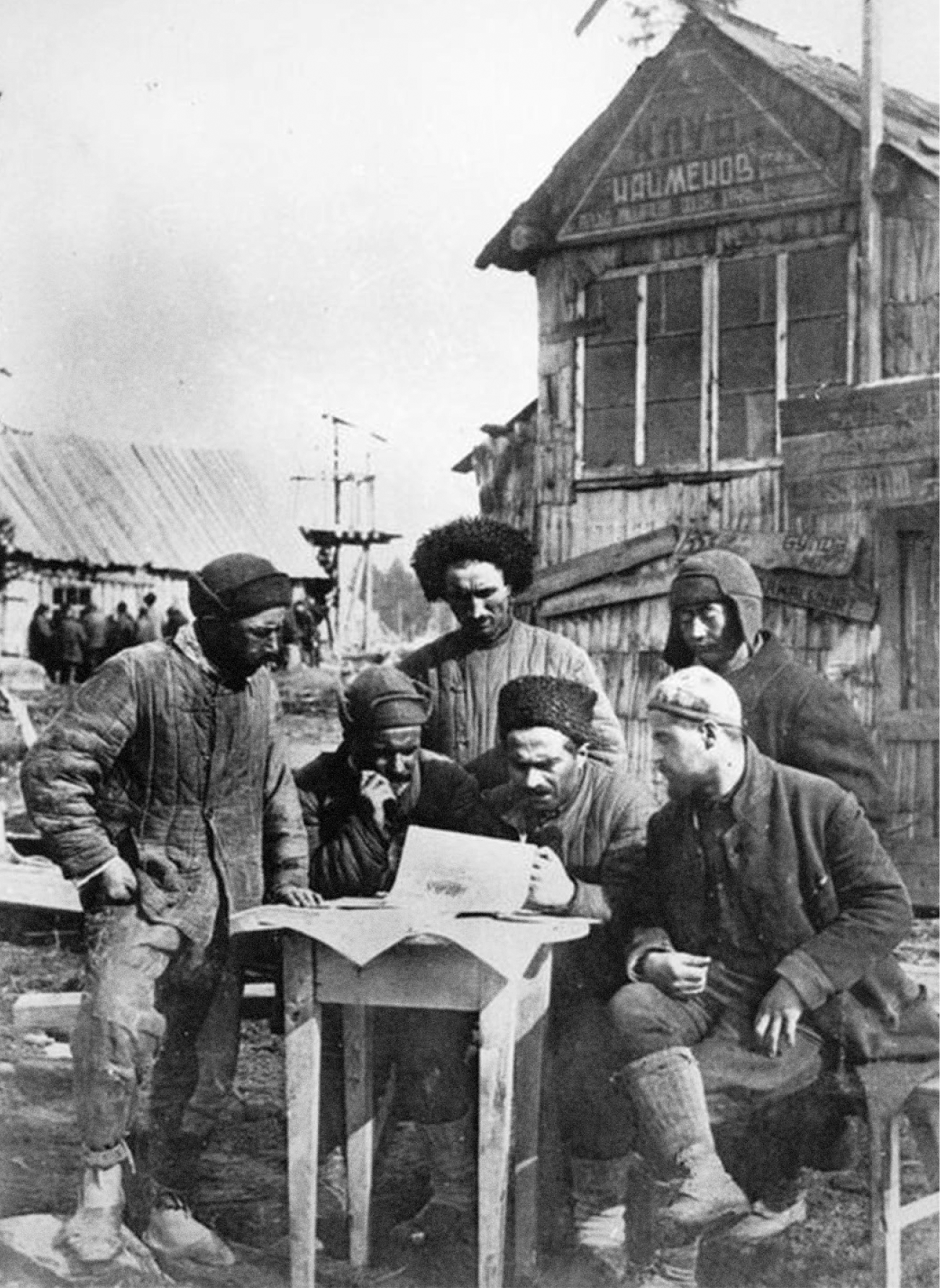
It feels right that this cycle of poems, never well-known, almost forgotten, has “popped out” just now. Somehow, poems always know when to surface. Could there be a better time for reading the poem about Varlam Shalamov (the Russian writer and poet sent to the Gulag) than now, when Stalin has been called “an effective manager” in a school history book? Shalamov, the great writer, back from the Gulag but still carrying all his belongings with him in a sack, keeping a palm under his chin while eating bread, so that not a crumb is lost… Could there be a better time for reading the poem about Shmuel Halkin, the Soviet Yiddish poet, than now, when the Russian parliament is considering whether they should excise War and Peace and other “over-complicated literature” from the secondary school curriculum? Halkin wrote poetry in Yiddish, but there was no paper for him in the Gulag, and when his memory had been exhausted, another prisoner who knew the language volunteered to memorise poems for him. When Halkin died, not long after his release, his “walking manuscript” found the family and dictated all he remembered of Halkin’s last poems.
Poems surface when we most need them as an antidote – when the official lies concentrate dangerously in the atmosphere.
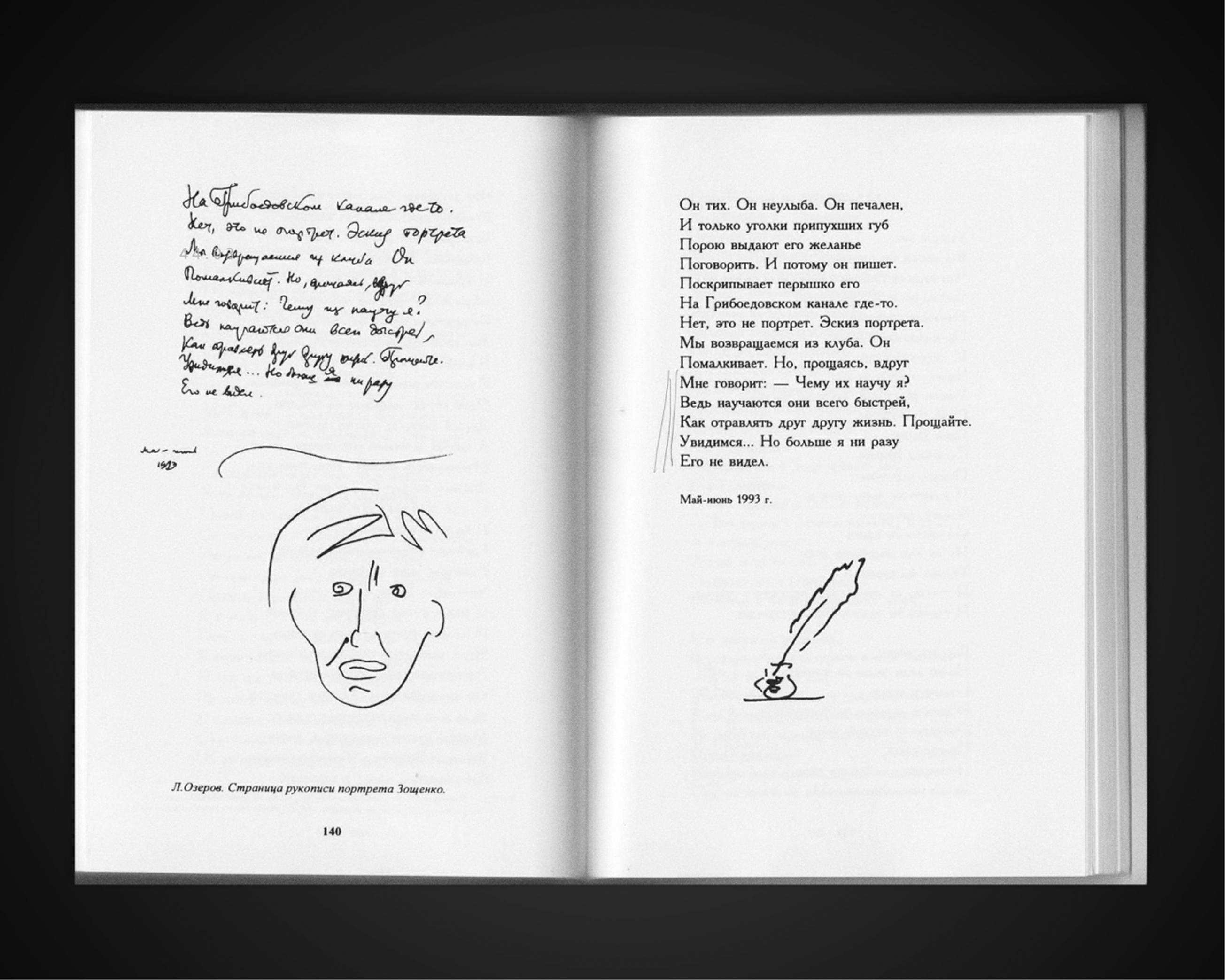
This poem about Mikhail Zoshchenko is one of my favourites. It is a highly realistic piece – every detail is recognisable – and at the same time it is pure magic. Reading it is like being present at a seance – with the poet as medium. I can feel Ozerov’s shocked, almost fascinated disgust at the guffawing audience when he sees it through Zoshchenko’s eyes and then cries out to Breughel and Goya. I can feel Zoshchenko’s sadness – the heaviness, the enormousness of it.
And I can feel an overwhelming guilt that is my own. I was not born under Stalin, I was not there when Zoshchenko’s friends and acquaintances crossed to the other side of the street, scared to be seen greeting him. But somehow it is my fault too.
I do not know how Ozerov managed to create such an impressionistic picture with his crude realistic strokes and colours. But the impression is deep.
© Marina Boroditskaya
A group of prisoners read a newspaper in a Russian gulag in 1932
Credit: AKG images
Lev Ozerov’s “Portrait” of Mikhail Zoshchenko
This is how the story begins. I had had my left eye operated on in the clinic of one of the fastest and most furious of our new businessmen, a truly Soviet caricature of a capitalist, a man, I could see, with an unerring eye for commercial opportunity. There were nine of us patients, crowded into a small ward. I knew everyone’s name. We had already talked about everything there was to talk about, and there was nothing, I think I can say, we didn’t know about one another. We’d exhausted our supply of jokes. Well-wishers had ensured that all of us languishing in the hospital had a clear grasp of the system of bribes: so much for a cataract, so much for a glaucoma, so much for a scratched lens, so much for a detached retina – each item in this list, of course, more expensive than the item before it. And then there was a redoubtable lady, an administrator who could have been a grenadier guard, with a snowplough of a bust and a baritone that would have done her proud on stage. She accepted payment in cash or in French cosmetics – as long as the bottles were not too small. We were all feeling bored and one of the other patients said to me, ‘You, probably, have some books. You look like one of those… intelligentsia. What’s damaged your eyes is books. Get your friends to bring you some so you can read to us.’ My friends brought me some books. I read a little Tolstoy: The Sebastopol Stories. ‘Not bad – but it’s ever so serious. And we’ve all had enough of war.’ I tried Dostoevsky: The Adolescent, Poor Folk. ‘Not bad, but it’s all ever so serious. Enough to make you start to cry. Give us something a bit simpler, something that’ll make us all laugh, even just a little bit.’ And so I read them some Zoshchenko. Everyone was transformed. Everyone was reborn. Laughter’s more powerful than vitamins. The roars of laughter made it difficult to keep reading. We knew joy and a sense of community. ‘Just what we need!’ people were saying. ‘That fellow knows his stuff!’ They were falling off mattresses. Bandages were slipping off eyes. In dashed Sister. ‘What’s going on in here? I’ve never heard such a racket. Stop all this reading at once. You should be ashamed of yourselves!’ I stopped reading. Everyone went back to being bored. Zoshchenko, once again, was forbidden. Of course: what else could we have expected? And so, instead of reading, I talked to them about Zoshchenko. My own thoughts and impressions. Swarthy, quiet, timid. Brown eyes. A man who had kept his counsel among wheeler-dealers and their floozies, among criminals and swindlers – he knew them not from clever books but from the life he’d led. He’d seen enough – more than enough of them. And he had learned to keep his mouth shut. He was a man like no one else. His eyes had a wonderful glitter, almost as if there were tears in them. He seemed to me to be looking somewhere into the depth of the soul, as if the world lying outside the soul were too much for him. He’d been in the War, he’d suffered concussion, he’d been gassed. All this had left him with heart problems. He had bred rabbits and chickens. He had worked as a cobbler, a policeman, an agent for the Criminal Investigation Department. This wealth of professions had come in useful. He’d got to know people. Then it was time to say goodbye to fun and games, time for Zoshchenko to start his real work. How does it start – the mad day, the mad life of a writer? What whim, what overwhelming force presses a pen into some poor fellow’s hand and leads him down through all of Dante’s twisting circles? One day I was walking down Nevsky Prospekt with Slonimsky – not the composer but his father, the writer, one of the ‘Serapion Brothers’. And there, coming towards us, not far from the Anichkov Bridge and Clodt’s famous horses, was Zoshchenko. Two writers, two Serapions, two Mikhails, two old friends. I was introduced. ‘I’ve been wanting to meet you for years!’ I said breathlessly. Zoshchenko said nothing. He seemed to be almost pitying me. Had I said the wrong thing? What was I to do? Best, I thought, to hold my tongue. Which I did. The two Mikhails talked for a long time. And then, as we were saying goodbye, Zoshchenko said, ‘I’m reading this evening. A workers’ club in Vyborgskaya. Do come if you can!’ And he wrote down the address. Slonimsky was doing something else, but I went along. And I didn’t regret it. Zoshchenko and I arrived together. Chance? Sometimes chance is a bearer of gifts. It was early. No one to greet the writer. He invited me backstage. We’d only just met and there I was – in the role of trusted friend. I was all eyes, and I soon realised that Zoshchenko was a lonely man who hid this with great skill. It was my lucky day: The author, Zoshchenko, reading his own work. And me backstage, looking out into the packed hall. Z. read clearly, as if at ease, as if simply chatting, one to one, with individual listeners. He read The Forked Object and The Aristocratic Lady. He sounded sad and thoughtful – and the audience went wild. They roared with laughter. I saw mouths twisted into strange shapes; I heard snorts, neighs and bleats. One man was slapping his hand on his knee; another kept turning his head madly from side to side; a third was trying to silence someone mooing and weeping beside him. A fourth was howling, head thrown back. Where were you, Breughel? O Goya, where were you? I saw these things with my own eyes. And I saw thoughtful looks, expressions of deep alarm; I saw the shining faces of true lovers of the word. And I saw Zoshchenko, calm and pale, retire back stage, a little hunched, as if battered by the waves – those rolling breakers of applause. ‘Why are they all laughing?’ he asked. ‘I’ve been telling them terrible things.’ With a shrug of despair he goes out again. One more story. The story’s creator is swarthy, brown-eyed. Quiet. Unsmiling. Sad. And only now and then do the corners of his slightly swollen mouth betray that he has something to say. And so he writes, his pen scratching away in some room near the Griboyedov canal. No, this is no portrait. Only a first sketch. We leave the club. He says nothing. But then, as we’re saying goodbye: ‘What can I teach them? All they ever learn, and they learn it quicker and quicker, is how to poison one another’s lives. Goodbye. See you soon.’ But I never saw Zoshchenko again.
Drawings of Zoshchenko by Ozerov, published in the Russian edition of Portraits Without Frames
Credit: Estate of Lev Ozerov
On Mikhail Zoshchenko
Mikhail Zoshchenko (1895–1958) is best known for the comic short stories he wrote in the late 1920s. These were hugely popular; 700,000 copies of his books were sold in 1926–7 alone. Zoshchenko also won the admiration of other writers, from Maksim Gorky to Osip Mandelstam. In 1946 he was denounced as an “enemy of Soviet literature” and expelled from the Writers’ Union. After this he wrote little of value. Zoshchenko’ stories perfectly capture the texture of everyday life in Soviet Russia: the inescapable bureaucracy; the constant shortages of everyday necessities, especially living space; and people’s strange eagerness to denounce one another. Zoshchenko is not only one of the funniest of Russian writers but also one of the most sober; no one is more aware of the harm carried out in the name of grand visions of progress. The harsh and cramped world of his stories is a paradoxically eloquent assertion of the importance of what is so strikingly absent from it: acts of kindness.
Profile
Lev Ozerov: the poet and his history
The term “man of letters” has a sadly old-fashioned ring. Lev Ozerov was a man of letters in the best sense of the words. He published books of poetry and criticism. He translated poetry from Yiddish, Hebrew, Ukrainian and Lithuanian. He taught courses in literary translation for around 50 years. He ran The Library of Oral Poetry, a series of more than 200 poetry readings, for around 10 years. As an editor, he was responsible for the publication or republication of many writers, including both Pasternak and Zabolotsky, who had suffered censorship and persecution. In 1946 he published a long poem about Babi Yar, the ravine on the outskirts of Kiev that was the site of the largest of the many Nazi massacres of Jews on Soviet soil.
Ozerov was always open-minded, never programmatic. His finest book, Portraits Without Frames, published after his death, comprises 50 accounts of meetings with important cultural figures, many – though not all – from the literary world. He writes with understanding and compassion not only about such great and courageous writers as Shalamov but also about such writers as Fadeyev, a Soviet literary boss who shot himself when Stalin’s crimes, and his own complicity, began to be exposed under Khrushchev. The Serapion Brothers, mentioned in the poem, was a group of writers formed in Petrograd in 1921. Among its members were Victor Shklovsky, Mikhail Slonimsky and Zoshchenko himself.
Marina Boroditskaya writes with such grace, modesty and simplicity that it is easy to underestimate the breadth of her achievement. But she too, deserves the title of “(wo)man of letters”.
Like Ozerov, she does all she can, in many ways, to support literature in all its manifestations. Poets she has translated include Chaucer (the first Russian translation of his Troilus and Criseyde), Shakespeare, Donne, Burns, Keats and Kipling. Children’s writers she has translated included Hilaire Belloc, Eleanor Farjeon, A. A. Milne and Alan Garner. She has published at least 20 books of poetry for children and six for adults. She runs regular workshops for younger poets, both those writing for adults and those writing for children. She has for many years presented the Russian equivalent of BBC Radio Four’s Poetry Please!, called The Literary First Aid Box, it is inspired by her belief that literature is the best medicine. A recent programme featured several poems by Ozerov. And like Ozerov, she has always, in her quiet, persistent way, been concerned with censorship and human rights. If Russia manages to avoid closing itself off from the world as it did in Ozerov’s day, it will be thanks to people like her.
© Estate of Lev Ozerov estate
Translated and introduction by Robert Chandler
Footnotes
His first article about Vasily Grossman, along with his translations of some brief extracts from Life and Fate, was published in Index on Censorship in the early 1980s