



Abstract

Women who are outspoken online can face a barrage of hate mail, including threats of rape, murder and doxxing, which is when personal details are revealed
Dominic Lipinski/PA
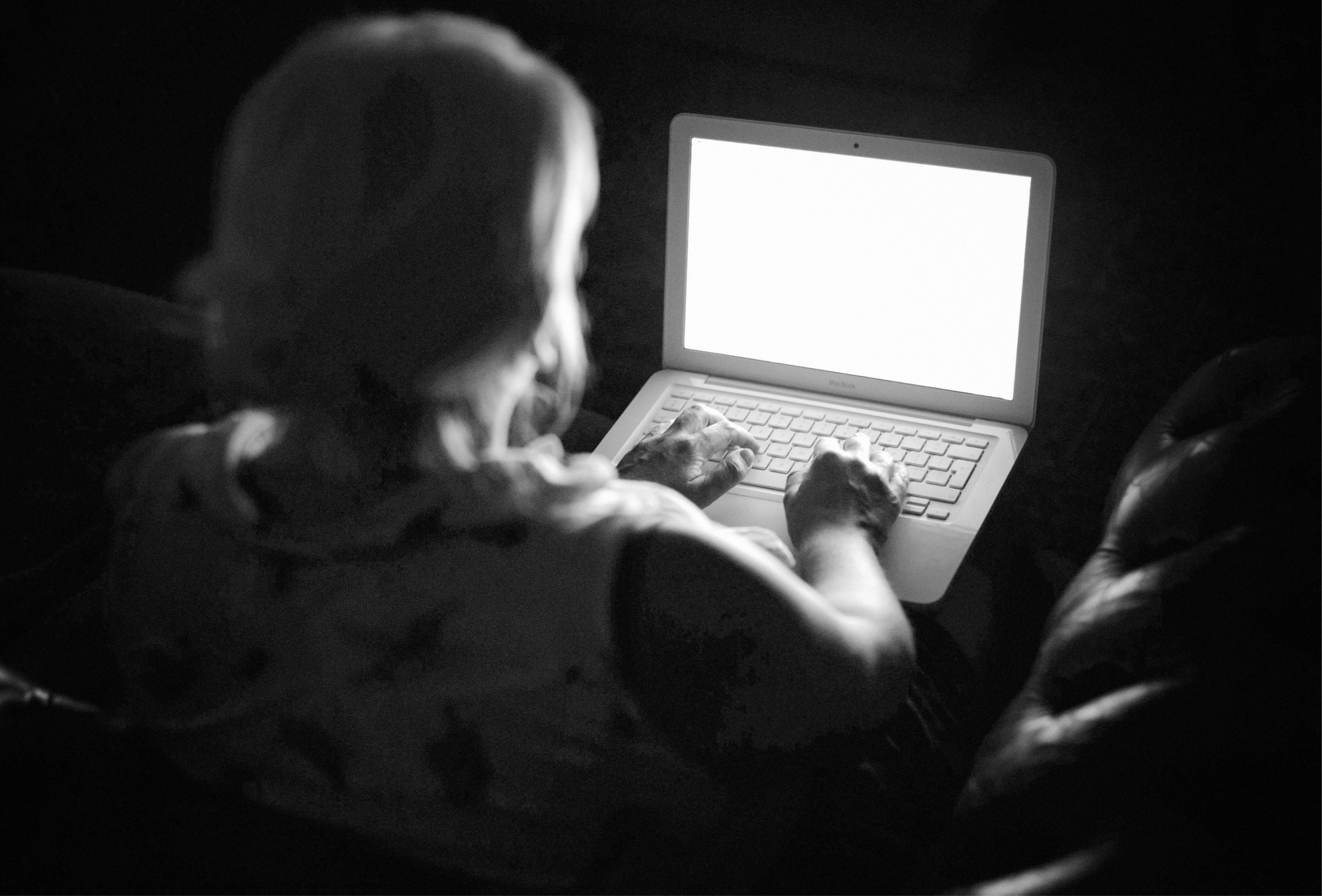
When prominent women express their views online, they can face a torrent of misogynist abuse.
If you’re a high-profile woman like me, you have to constantly ask yourself if your post will put you or your loved ones in danger. After 150 death threats, after people have called your private phone while masturbating, after the stories written about your murder, you worry. You ask yourself if pictures taken will give away addresses, you worry about your pets when you leave your house. Knowing that hate-speech sites continually monitor everything you tweet or write, you constantly second-guess everything you say publicly.
My name is Brianna Wu. I’m a software engineer and head of development at Giant Spacekat, a Boston-based independent games studio. Sometimes, when I’m not making videogames, I have opinions about working in one of the most notoriously sexist fields in the world. For this, I am regularly called a liar, a bitch and a fraud – and those are just the names I laugh off.
It’s a familiar pattern for any woman who works in this industry. A friend of mine just published a game review on one of the biggest sites in the world. Her article has 600 comments, and she’s terrified of what personal attacks lurk there. Another friend had an armed Special Weapons Attack Team sent to her house after someone falsely reported her for criminal activity. Another friend had pictures of her children posted in a paedophile forum.
We all committed the same crime: in the course of our professional lives, we had an opinion and we voiced it. The UK journalist Laurie Penny famously said: “A woman’s opinion is the short skirt of the internet. Having one and flaunting it is somehow asking an amorphous mass of almost-entirely male keyboard-bashers to tell you how they’d like to rape, kill and urinate on you.”
It’s time to have an adult conversation about how people experience “free speech” on the internet when you are not white, straight, or male. The truth is there is no free speech when speaking about your experiences leads to death threats, doxxing and having armed police sent to your house. And yet asking institutions to respond to these kinds of abuses is taken by some to be ushering in an Orwellian state.
The reality is online spaces are not safe for women. I believe some communities deal with it better than others. The photo-sharing network Pinterest has one of the best records, while Twitter has one of the worst. (“We suck at dealing with abuse,” wrote the Twitter CEO, Dick Costolo, in a memo leaked in February.) These online spaces are the public squares of 2015, where we make professional contacts, hang out with our friends and make meaningful connections. Public efforts by feminists, racial-equality advocates and gay-rights leaders to communicate community concerns are met with outright hostility.
The war between free-speech absolutism and those calling for protection against vicious harassment has recently put the future of the Reddit network in question. The 10th most trafficked site in the US, billing itself as “the front page” of the internet, Reddit is favoured by particular types of internet users. More than 60 per cent are under 26; 74 per cent are male. Samantha Allen of the Daily Beast described Reddit as not so much a front page as a “spacious, tricked-out man cave”.
Reddit has become one of the most toxic, abusive places online. It is one of the largest homes of organised white supremacy on the internet. Reddit users have enthusiastically defended forums such as /r/rapingwomen as their God-given right. They worry that blocking /r/fatpeoplehate, a Reddit community dedicated to publicly mocking and harassing overweight people, was akin to government censure. Many of the racists and misogynists have since taken their toys and gone to 8chan and Voat, sites where there is little or no moderation.
It should probably be a relief that the forces of organised harassment, such as Gamergate [see sidebar], can rarely respond to our ideas. So they attack our looks instead. The value that brings to open speech isn’t a gain: it’s a huge loss, as many of us learn it’s easier to stay silent. Death threats bring nothing to a conversation; nor do attacks on a woman’s looks or racist insults.
© Brianna Wu
What is Gamergate?
A targeted sexist attack on women in the videogame world began in August 2014, soon manifesting in a Twitter hashtag, #Gamergate. Anonymous trolls gathered on online forums such as Reddit, 4chan and 8chan, where some issued threats of doxxing, rape and death towards female developers, with Zoe Quinn and Brianna Wu among the primary targets.
Legal Guidelines
“US law protects against violence and threats”
As a US first amendment lawyer, I am surprised to meet people who believe that free speech is out of control, and that the law doesn’t protect those attacked online.
I have to assure them that not all speech is protected by the first amendment to the US constitution. Important exceptions include threats of violence, intimidation, harassment, incitement, and libel. And practices such as falsely reporting people to the police so that SWAT teams descend on their homes (a practice dubbed “swatting”) are certainly not protected for a bevy of reasons.
What US law does have, however, is a strong presumption that statements of opinion are protected, even when hateful or insulting. The US Supreme Court has said that a “bedrock principle” of the first amendment is that offensiveness alone cannot render speech unprotected. (That language comes from a case in which burning the US flag was ruled to be constitutionally protected expression.)
The US first amendment draws a sharp distinction between speech and action. While some legal scholars argue that the boundary is fuzzy, it’s usually not that hard to discern. Harassment, for example, is not so much considered an exception to the first amendment’s protection of speech. Rather, it’s prohibited as a pattern of directed, discriminatory conduct severe and pervasive enough to harm a reasonable person.
Threats in US law are always contextual. (“Say hello to your mother for me” means something different coming from your auntie than it does from a serial killer.) The 2003 Supreme Court case Virginia v Black provides a useful illustration of where the line between protected and unprotected speech/expression is drawn. The case concerned a state law prohibiting cross burning, a tactic used by the Ku Klux Klan to intimidate black families. The law regarded any and all cross burning as presumptive evidence of an intent to unlawfully intimidate others.
The court struck down the law on first amendment grounds. Sometimes, the court found, burning a cross was an attempt to intimidate – but not always. When burned at a Klan rally, the cross served as a symbol of solidarity, albeit a hateful one. A state could lawfully ban the burning of a cross to convey a threat of violence, but could not ban someone from burning a cross in their own backyard solely because it communicated a bad point of view. Because the law failed to distinguish between different possible contexts and purposes, it violated the first amendment. Simply, expressing an offensive idea is protected, conveying a threat is not.
The court defined unlawful intimidation as “a type of true threat, where a speaker directs a threat to a person or group of persons with the intent of placing the victim in fear of bodily harm or death”. Threats of other illegal retaliation are likewise not protected.
Harsh online expression is often protected under the US first amendment, but many horrifying examples concern speech that is not protected. Threats, libel and intimidation are prohibited, as are any number of crimes (such as extortion, invasion of privacy, or fraud) where the fact that words are used to commit a crime is no defence.
© Greg Lukianoff
