



Abstract

Index on Censorship asked four writers –
Juan Luis Cebrián
Journalist Juan Luis Cebrián founded Spanish newspaper El País, which played a vital role in undermining the 1981 coup
Credit: EPA/Sebastiao Moreira

Cebrián exulted in the prospect of freedoms after Franco’s death in 1975 and he helped to found and edit a brilliant new daily newspaper, El País. Following a national referendum, Spain became a free country, headed by a constitutional monarch, King Carlos, but after years of dictatorship the country at all levels had only the vaguest notions of how the freedom was supposed to work. The press, which had learned to live in an authoritarian society but never lost its ideals, was the only institution really capable of teaching democracy to the people.
Spain’s press, which had never lost its ideals, was the only institution really capable of teaching democracy to the people
The test came on 13 February 1981. At 6.30pm, Lieutenant Colonel Antonio Tejero, supported by 200 armed officers, burst into the elected Congress of Deputies. The officers sprayed the ceiling with gunfire and informed the deputies, fearfully crouching on the floor, that they were all hostages pending the arrival of an official to recognise the plotters as the new rulers of Spain. A general took over Madrid’s radio and TV. Tanks commanded the streets in Valencia.
It was an echo of 1939 when Franco won power at gunpoint and ruled Spain for 37 years. Spanish democracy seemed to be over again. Two institutions saved it this time: the constitutional monarchy and the press. Cebrián got out a special edition of El País. It was a passionate call to stand by king and constitution. The king went to the TV studio in full military regalia. The general leading the coup lost his nerve and Cebrián smuggled El País into the locked-down parliament. When the deputies saw Tejero holding a copy of the newspaper they realised he was, in effect, reading his own political obituary.
The next day the coup was over.
© Harold Evans
Yolanda Wang
Author
When five female activists in China were released in April after 37 days in jail, Chinese feminists felt as though they had survived yet another political storm. Yolanda Wang was among them. Although she wasn’t arrested herself, Wang is close friends with those who were and has done her fair share to raise the profile of feminism in China – often rankling officials in the process.
Yolanda is the leader of the Speak Out for Leftover Women Movement in China, an actress in the recent play Leftover Monologues, and head of Lean In Beijing, a new women’s professional network inspired by Facebook chief Sheryl Sandberg.
Yolanda Wang during a performance of The Leftover Monologues at Theater 77 in Beijing, China
Credit: Tribune Content Agency LLC / Alamy
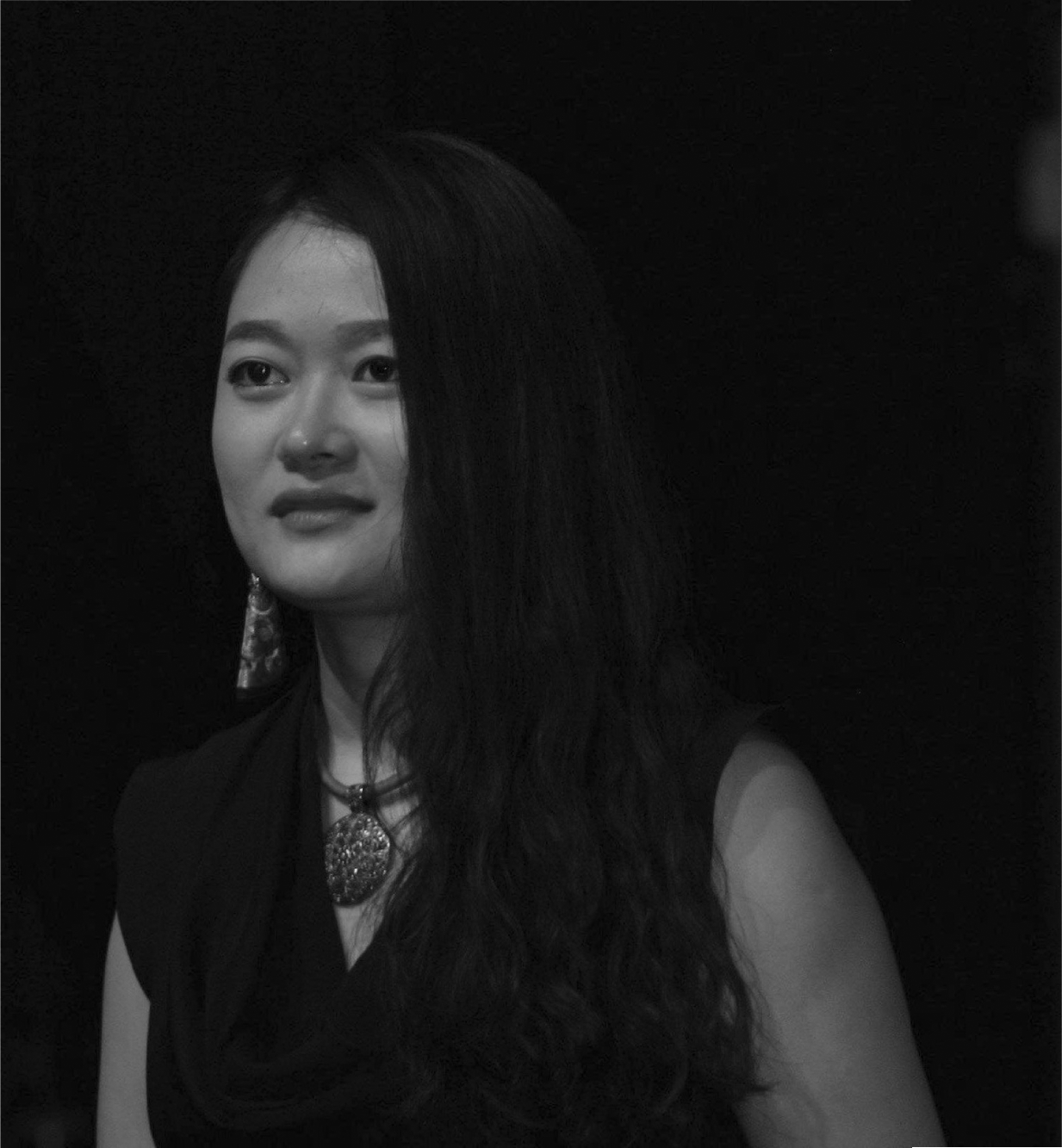
I met Yolanda three years ago when I was researching China’s female activists and she was working on a play with a group of young Chinese single women. Her main battle is to campaign against the idea of being “leftover”, a term referring to women who are above the age of 27 and remain single. While it might sound like the equivalent of “on the shelf”, it has far more negative connotations.
Yolanda, who is in her 30s, has a talent for observation, independent thinking and remarkable courage. I always wondered how long it would take China to hear Yolanda’s call, as in many countries culture-rooted beliefs seem far more powerful than any kind of religious or political rules. It might be a longest war in human history, the one of women trying to speak out for themselves.
“My dear parents, please don’t force me into a marriage when I come home for Chinese New Year!” This sentence was written on the big signs held up by members of the Leftover Women Movement in a Shanghai street as people started crashing into most of China’s train stations and motorways for their journey home for the festivities. In the next 24 hours hundreds and thousands of messages of support flooded Chinese social media.
© Xinran
Cassius Severus
Historian
In reality, though, Augustus’ tolerance of criticism had always had clear limits. For all that he promoted himself as a prince of peace, he ruled as an autocrat. During the civil wars that had enabled him to seize supreme power, he had given the nod to the murder of Cicero, the greatest orator of the collapsed republic. No senator, no polemicist, was likely to forget it. Open critics were put under close surveillance, and even Augustus’ own daughter, when she became too closely identified with the slogan of “liberty”, was exiled to a barren island. The older Augustus grew, the longer grew the shadows of repression.
It took courage, in these circumstances, to remain true to the ancient right of the Roman people to insult whomever they pleased. In AD 12, two years before the death of Augustus, a salutary demonstration of the new limits to the licence of libel was delivered when a witty and waspish orator by the name of Cassius Severus was banished to Crete. The charge was one of diminishing the maiestas, the “majesty”, of the Roman people. Here was a chilling and ominous precedent. The charge of maiestas, as it was known, had long applied to treasonable actions, but never to words. That, though, in effect, was the offence for which Severus was condemned: “defaming with vituperative writings eminent men and women”. What punishment might be imposed for defaming the most eminent of them all – Caesar himself – was left hanging in the air.
Cassius Severus refused to be cowed. In exile, he remained as abrasive and outspoken as ever. Retribution finally caught up with him in the reign of Tiberius, Augustus’ successor. In AD 24, he was retried, and sentenced to an altogether bleaker prison: a tiny rock in the Aegean. His obituary was recorded by Tacitus, that supreme pathologist of tyranny: “Humbly born though he was, and of a vituperative character, he was nevertheless a most powerful speaker, who brought on himself his exile to Crete by never backing down in an argument.” He died as he had lived: true to his rights as a Roman.
© Tom Holland
Sebastien Castellio
Philosopher
In 1553 in Geneva, theologian John Calvin had a man called Michael Servetus burned at the stake for disagreeing with Calvinist doctrine. Servetus was a Unitarian. One man who wrote in powerful protest at Calvin for denying to others what he had claimed for himself when he broke with the Roman Catholic Church, namely liberty of conscience and expression, was Sebastien Castellio. His tract Concerning Heretics: Whether They Are To Be Persecuted was the most powerful blow for both kinds of liberty in the 16th century.
Years before, when Castellio was 25, three Lutherans were burned at the stake in his home town, Lyon. In shock, he had left for Strasbourg, famous for its dissenters, where at that time Calvin was resident. Castellio lodged with Calvin, and they immediately found themselves in agreement on the important question of educating Protestant boys in the classical tongues.
Sebastien Castellio was a French theologian, who became a friend, then an enemy, of Calvin

Castellio soon found that he could not agree with Calvin on certain points of doctrine. He therefore took his family to Basel and worked at new translations of the Bible. He found, as he did so, “the scriptures are full of enigmas and inscrutable questions which have been disputed for over a thousand years” and it made him question how persecutions for heresy could be justified: “on account of these enigmas the earth is filled with innocent blood.” He echoed Erasmus in arguing that decisions over matters of controversy could be left for the time when all things will be made clear: “On controversial points we would do better to defer judgment, even as God, who knows us to be guilty, yet postpones judgment and waits for us to amend our lives.”
Then Servetus was prosecuted by Calvin in Geneva, and burned to death and Castellio’s indignation was vividly roused. He immediately began his work Concerning Heretics. The result was a tumult of controversy. Calvin and theologian Theodore Beza, among others, described Castellio’s defence of liberty of conscience and expression as heresy. Castellio’s central point in response was that the most controversial questions of doctrine were precisely the ones for which people like Servetus were killed. But how, Castellio demanded, could this be justified? To allow people to believe and speak as they saw fit was the demand of reason: “reason is a superior and eternal word of truth always speaking.” Therefore, he said, “to kill a man is not to defend a doctrine but simply to kill a man.” And that was never acceptable.
© AC Grayling