




Abstract

After years as an opposition politician, Jung Jin-woo was used to getting warnings from prosecutors and the police.
The letter contained one shocking fact: the police said they were analysing Jung’s private communications, mostly text messages sent via KakaoTalk, South Korea’s main instant messaging app. Jung’s communications, the letter said, were being considered as evidence in the case against him for leading the press conference.
Jung says, upon reading the letter, he felt the kind of shock and embarrassment that comes with having been unknowingly spied on during what he’d believed to be private moments. “I was shocked to hear that not just my private communications, but those of all the people I’d communicated with had been somehow brought into the open,” Jung said during an interview at his Seoul office.
Jung believed the letter also suggested illegal co-operation between KakaoTalk (now Daum Kakao) and the South Korean government. If prosecutors had his chat records, KakaoTalk must have agreed to hand them over. The government and the company must have colluded as part of a relationship that had never been made public. This violated Jung’s rights under South Korea’s Personal Information Protection Act and if his communications had been seized, presumably he wasn’t the only one.
Jung decided to go public with what he’d learned. He called a press conference in central Seoul where he argued that Daum Kakao, a company to which millions of South Koreans entrust their private communications, had been co-opted by the government and in the process sacrificed its users’ privacy.
He wasn’t arrested that day, but using its strongest Orwellian language, the prosecution called his announcement an incitement to “national chaos”.
The consequences of Jung’s revelations have been a public relations nightmare for the company that owns and operates the country’s largest instant messaging service.
After launching in 2010, KakaoTalk quickly became South Korea’s main platform for instant communication and now boasts more than 100 million users worldwide. It reached a large audience after making the app free to download. It also has a diverse range of unique and popular emoticons, the sale of which provides the company with much of its revenue.
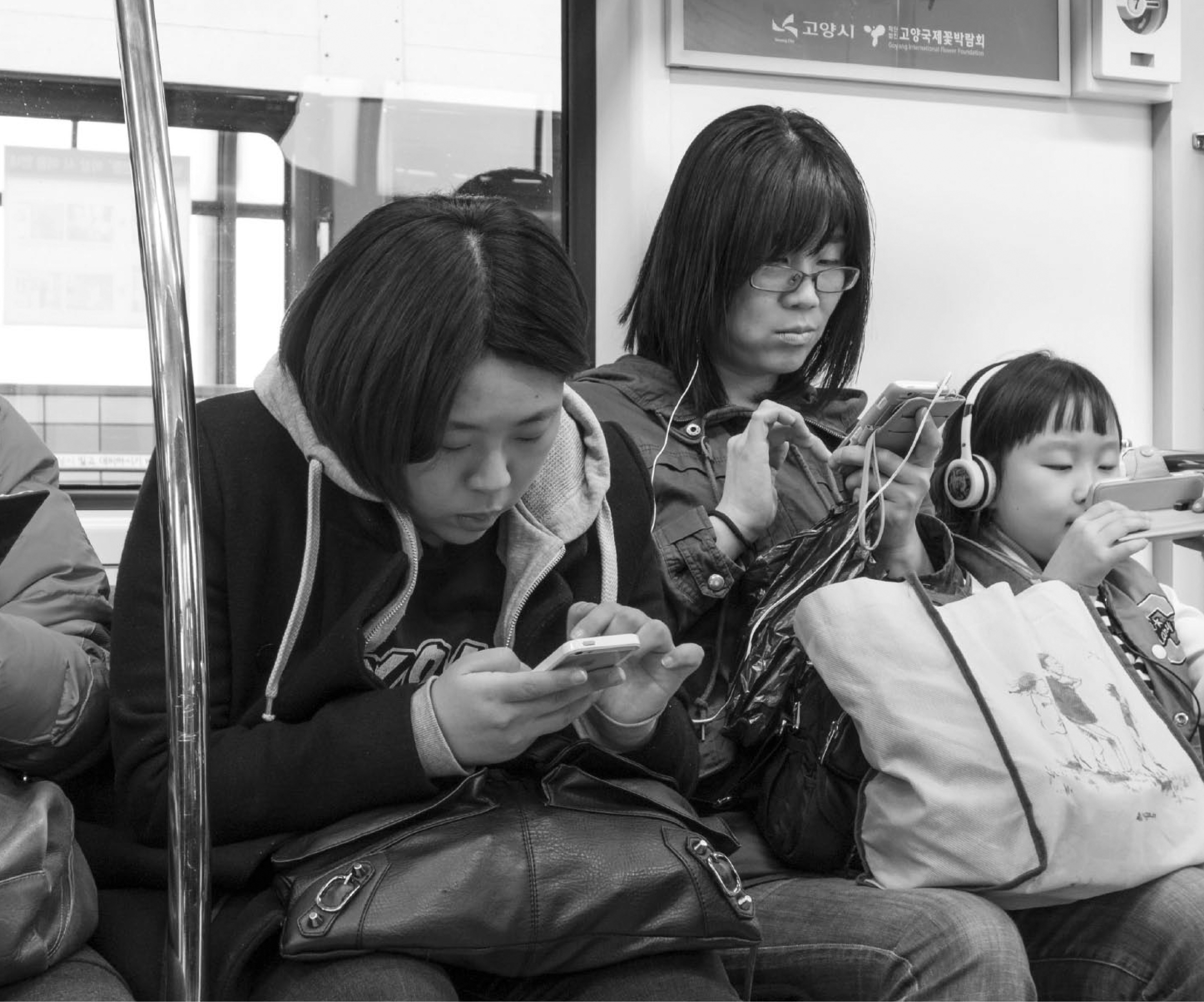
Millions of South Koreans use instant messaging apps. Here, passengers use mobile phones on a Seoul subway train
Credit: SFL Travel/Alamy
KakaoTalk was also attractive to users for its comparatively long storage of chats. That feature is also part of what made KakaoTalk attractive to prosecutors, as it made it possible to acquire extensive chat records.
When Jung came out with his explosive allegations, the company hastily arranged a press conference at its Seoul headquarters where the chief executive Lee Sir-goo admitted to having complied with a request from prosecutors to turn over Jung’s chat records in violation of South Korean law. Lee pledged that they would not co-operate again when authorities asked for a user’s chat records. He also announced that the company would cut the time chats are stored to three days from seven, and that the company had sophisticated security technology that could block any unwanted surveillance.
“When there is no social consensus on the law and privacy, our policy will put privacy first in any case,” Lee said at the press conference, according to the Associated Press.
The press conference ended with Lee performing a near 90-degree bow, a customary Korean gesture of contrition.
Kim Seung-joo, a professor at Korea University Graduate School of Information Security, explained that in South Korea there are three different types of investigative warrants, and only with the type reserved for the most serious cases are prosecutors authorised to seize a citizen’s private communications. Jung was arrested on a lower level warrant.
“Kakao handing over the chat records like they did in Jung’s case is clearly illegal,” Kim said in a telephone interview.
In an apparent illustration of users’ resultant loss of trust in Daum Kakao, Telegram, a German messaging app that provides similar services, added two million new Korean users in two weeks in early October, according to market researcher Rankey.com. In South Korea this is referred to as “cyber exile”, as many felt they couldn’t trust Daum Kakao to keep their communications private.
Daum Kakao has refused to disclose how many users left the service in that period, and has declined to comment to Index.
For many South Koreans, the story of Daum Kakao’s co-operation with prosecutors harks back to the repressive governments that ruled the country in the 1970s and 1980s. Current president Park Geun-hye is the daughter of Park Chung-hee, the military strongman who ruled the country from 1961-79 and suspended most civic and political rights, arguing this would facilitate the country’s economic development.
In 2011, South Korea’s Freedom House press freedom ranking fell from “free” to “partly free” and has remained there ever since. In knocking South Korea down a notch, the Washington-based watchdog pointed to “increasing official censorship, particularly of online content, as well as the government’s attempt to influence media outlets’ news and information content”.
The rule of President Park Geun-hye, in office since February 2013, has had a further chilling effect. In September, Park held a meeting where she said that online insults against her constituted an insult to the country as a whole. Park said such rumours were “deepening divisions” in South Korean society and had to be rooted out. She made comments about the need for the government to monitor the internet in order to prevent false or harmful information being spread.
And Jung’s case is evidence of how South Korea’s political and social development has not kept pace with its rapid technological progress. South Korea has embraced the internet as a means to facilitate its economic development, but authoritarian political instincts sometimes clash with the freedom that widespread online access has unleashed.
Jung believes the government is trying to stifle criticism by eliminating the space for private communication. He says he no longer feels comfortable discussing sensitive topics with friends or colleagues, and believes self-censorship is becoming common. “People will refrain from making any critical statements, online and even in person,” he said.
South Korea’s authoritarian political instincts sometimes clash with the freedom
Prosecutors obtained Jung’s past chat records and have told him that his present communication is not being monitored. Still, Jung isn’t any longer confident that he enjoys the privacy guaranteed by South Korean law. He said, “I’d been acting under the assumption that what I said was private, but now I know that wasn’t the case. There’s a feeling of safety that’s now gone.”