



Abstract

In centuries past, citizens of many countries were thrown into jail for not conforming with the state religion; or for choosing to worship in a way unapproved by their rulers.
Today, some still are.
In centuries past, questioning religious belief was considered heresy; people were afraid to discuss and debate issues with a religious dimension; those who practised non-conformist religions were ostracised and were banned from holding government or other official posts.
Today, to question a religious “truth” or practice can still bring dire consequences; to choose to practise a religion alternative to the accepted or mainstream faith can still mean being beaten, purged, or suffering extreme discrimination.
The freedom to choose what we believe and how we practise our beliefs, and the counterbalancing freedom to discuss and question those beliefs: these are basic freedoms, but they are often not upheld.
There is another, more hidden, threat to freedom. Those who worry about offending another’s religious beliefs in speech, writing or action may practise self-censorship to a level at which they stop themselves tackling a subject. They may constrain their own freedom to question or to challenge from fear of offending those who argue that religious customs must be exempt from question.
History contains many examples of how the state uses accusations of blasphemy to attack its opponents, and critics, and to defend its hierarchy. From Daniel Defoe to Martin Luther to the Scopes “Monkey” Trial, the idea that individuals who argue for change have somehow taken a stand against God has been used to undermine their actions, and make their supporters afraid. So when new “blasphemy” laws are introduced, as they have been recently in Russia, commentators are wary that its purpose is to give extra clout to the Russian government’s existing crackdowns on authors and artists.
Fighters for religious tolerance have usually been defenders of free speech. John Milton, for one, spoke out for freedom of religious choice, and for the right to question, for “the liberty to know, to utter, and to argue according to conscience above all liberties; truth is strong next to the Almighty, she needs no policies, no stratagems, no licensing to make her victorious”. Oxford University, horrified by such views, had Milton’s books burnt in 1683, but the strength of his words lives on to stimulate the idea of freedom of speech and freedom of religion as basic rights. It should be remembered that he wrote at a time when those who practised non-conformist religions – Methodists, Quakers and Ranters among them – were, for religious reasons, not accepted at Oxford and Cambridge universities. Writers such as Defoe, Bunyan and Milton, who spoke up for dissenters, wrote some of their most famous words about freedoms when they faced adversity, and in prison.
Their words will resonate with writers of today who struggle against adversity and threat, and use their pens to work for greater freedoms. Their arguments for justice for those who challenge authority, government and mainstream shibboleths would be recognised by award-winning Belarus journalist Iryna Khalip, who is profiled in this issue by fellow Belarusian journalist Andrei Aliaksandrau. Many things change, and many challenges stay the same.
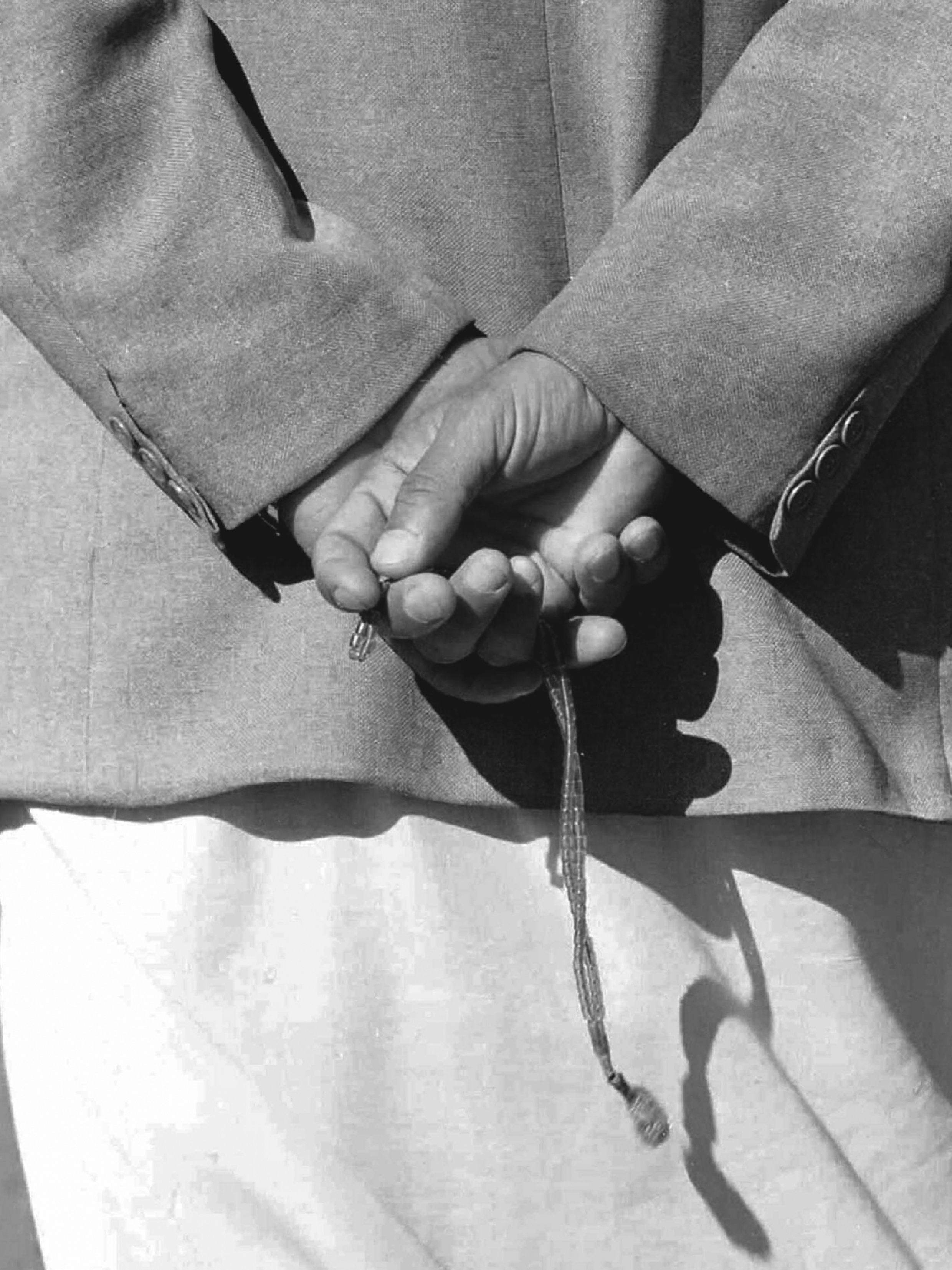
Above: An Afghan demonstrator counts his prayer beads as he marches through the streets of the Afghan capital of Kabul
Credit: Patrick De Noirmont/Reuters
In this special report we look at all angles of these freedoms, from religion and offence to freedom of expression; from those who are banned from practising their religion to those who use religion to stop others from expressing their worries, thoughts or words.
In every corner of the world, there are questions about religion and freedom; and it is likely to be a moot subject for the rest of the century. Every country has its own issues, as well as those that cross over borders and boundaries, about religious freedom and freedom to discuss religion; about the lines between belief and freedoms. Through the centuries religion has been used as an instrument to crack down on practices, attitudes or people that the government would like to repress; in other words, to ensure conformity.
Some governments still operate at that level. In this issue, Alexander Verkhovsky discusses the new “blasphemy” law in Russia and its implications, as well as recent incidents where the government has banned art works or speech because religious offence may be caused or perceived. In China the Uighur Muslims have been terrorised by a campaign that stigmatises them as terrorists, and does not allow them to live as other citizens do.
For centuries small religious groups have been persecuted by larger ones, leading to mass immigration in search of a better, freer life. To some setting up new post-revolution states, such as India and the United States, the answer was a secular state where church and state were separated. In both those countries, the cornerstone of secular separation is under challenge. In the US, state boards of education want more powers to edit the content of school textbooks in line with particular religious views, and in India we see the rise of a strain of Hindu nationalism, which tries to place Hinduism above other religions in Indian society.
Is there a subject that a comedian or satirist should stop him or herself addressing? Are some religions more off limits than others? Should we worry about religious offence? Martin Rowson takes on this complex subject with his customary humour in words and cartoons.
And in her article for this issue, Samira Ahmed considers why liberals in democracies are so nervous about offending someone’s culture or religion and whether they shy away from criticising policies or practices that are unlawful or unacceptable.
Looking back across the centuries, we might learn from what has happened in the past, and realise that we should be better prepared for the next attempt to curtail our freedoms and liberties. John Stuart Mill puts the point well when he argues that in silencing an opinion we rob the human race; in debating it, we learn either of its truth or of its errors.
Footnotes
**
In November Index on Censorship was awarded the prestigious Hermann Kesten prize by German PEN for outstanding efforts in support of persecuted writers. The award was presented by Belarus journalist Iryna Khalip