




Abstract

As the United Nations opens with a tribute to Malian musicians this month, documentary maker
Mali is the only country in the world to have a special class in society reserved for musicians – they are known as the griots. Griots are given the responsibility of communicating the oral history of the tribe or village, as well as entertaining with song and stories. And unlike other developing or middle-income nations, women and men are equally revered. These musicians have passed their lyrical storytelling on to their sons and daughters for generations. They are the lifeblood of Malian society. But that changed on 22 August 2012 – the day that Osama Ould Abdel Kader, a spokesperson for MUJAO, the Movement for Oneness and Jihad in West Africa, proclaimed that music was forbidden.
Members of MUJAO and a loose association of other extremist groups attacked mosques, libraries and mobile phone towers. By July 2012, as many as half of Timbuktu’s ancient shrines were destroyed. In addition, there were attacks on Mali’s most powerful cultural and political commentators – the griots.
Before this summer’s elections, musicians had their instruments and equipment smashed, radio stations were torched and even young people with musical-sounding ringtones on their mobile phones were beaten. At the same time those accused of adultery were being stoned to death, and there were public whippings for failing to wear the veil. Many Malians had fled over the borders, creating the largest mass migration the southern Sahara has ever seen. Those who stayed were shocked into submission, complying with strict sharia principles.
Mali’s cultural class were on the run, fleeing to refugee camps in Mauritania or Burkina Faso and, for those who had European record labels, to Paris. Fatoumata Diawara, a relative newcomer to the Mali music scene, immediately began to organise her fellow musicians from her base in Paris. The result was the Voices United for Mali, a super group of more than 40 singers and musicians. Their single, “Mali-Ko”, urges all Malians to stand up for peace in the wake of the extremist occupation.
The lyrics argue:
The world adored our country, so why now are we tearing each other apart before their very eyes? Our Mali will never belong to those people. This great nation will not be their victim. Listen to me: we must take care now or our children will never know the real story of our country.
As cultural freedom suffered, so did journalistic freedom. Reporters Sans Frontières Press Freedom Index 2013 showed that Mali suffered the biggest annual fall in freedom of the press of any country in the past year.
In the capital, Bamako, Mali’s temporary president Dioncounda Traoré, in place after a bungled coup attempt earlier in the year, tried to combat these groups with an untrained and even more undisciplined army. In just a few short months, Mali was out of control.
Music teaches you how to live, how society can grow and change. The world without music is impossible to imagine
How did this all begin? And how did the freedom of Mali’s citizens disappear almost overnight?
Travelling into Mali from Algeria in the north, opportunistic extremists from MUJAO and AQUIM (al Qaeda in the Islamic Maghreb) joined forces with the MNLA (National Movement for the Liberation of Azawad), a group of northern Tuareg separatists. The extremists quickly turned the fight from a movement for Tuareg separatism into a battle for the establishment of a full-blown fundamentalist state.
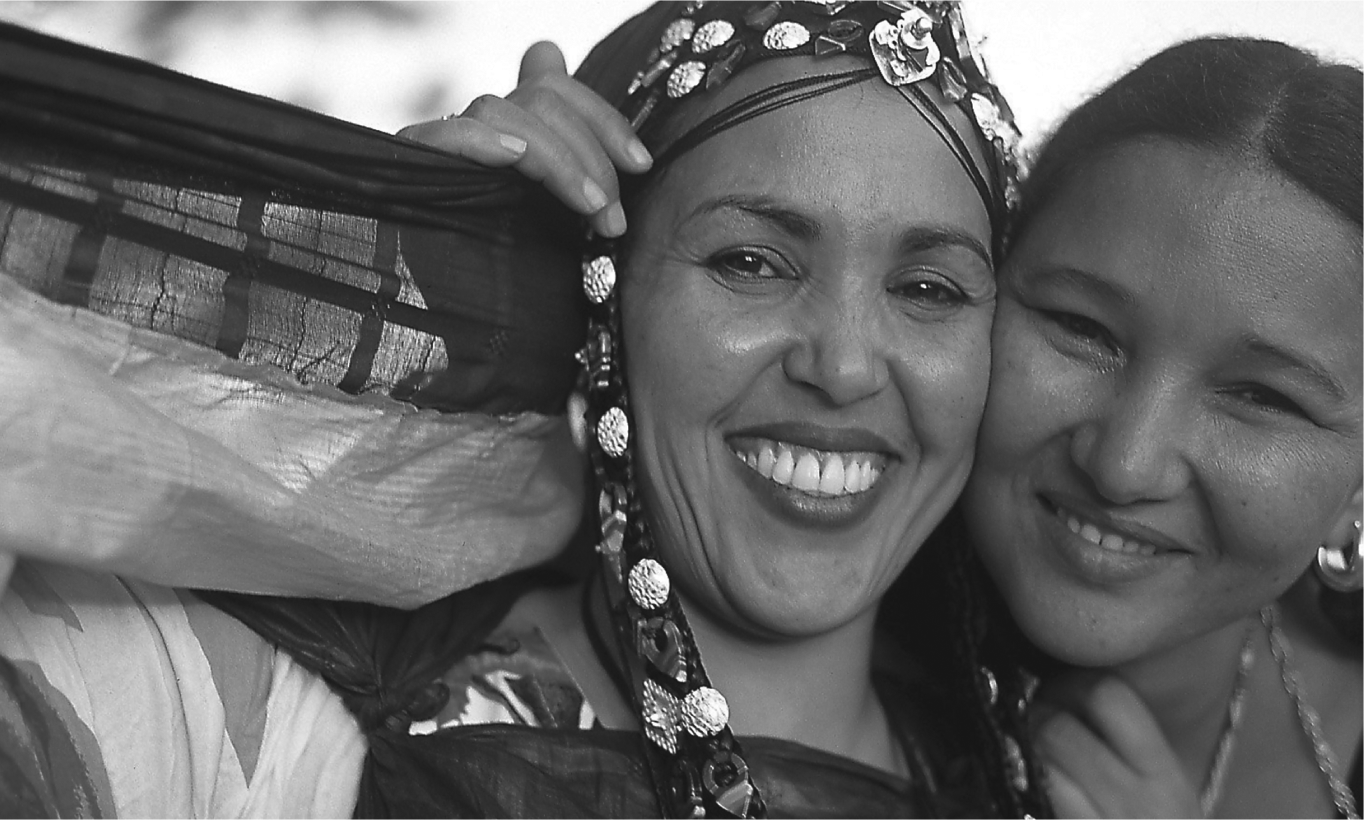
ABOVE: Musician Fadimata “Disco” Walet Oumar fled Mali as the extremists took power
Credit: Brave Festival
After just a few short months, the bold and public-facing Salafist takeover was complete and the Tuareg cause completely sidelined. The New Yorker described it thus: “For decades, al Qaeda had acted as a largely rootless and amorphous agent of terror. Now its brash new affiliate had secured itself a state.”
For Malians, and especially its musicians, this meant that their way of life was over, and their ancient culture was in the process of being destroyed forever. By January 2013, a year after the start of the conflict, the French and ECOWAS armies had arrived and the uprising and invasion had escalated into a fully-fledged war. However, now, with attention from around the world focused on the struggle, there are some signs that musicians in Mali can start to feel a little more confident.
Malian musician Fadimata “Disco” Walet Oumar was one of those who fled at the start of the conflict. “I could never in my life imagine that they would ban music. I could not think it. I did not believe it was even possible. It happened so fast, and I truly believed that life as we knew it in Mali was over.”
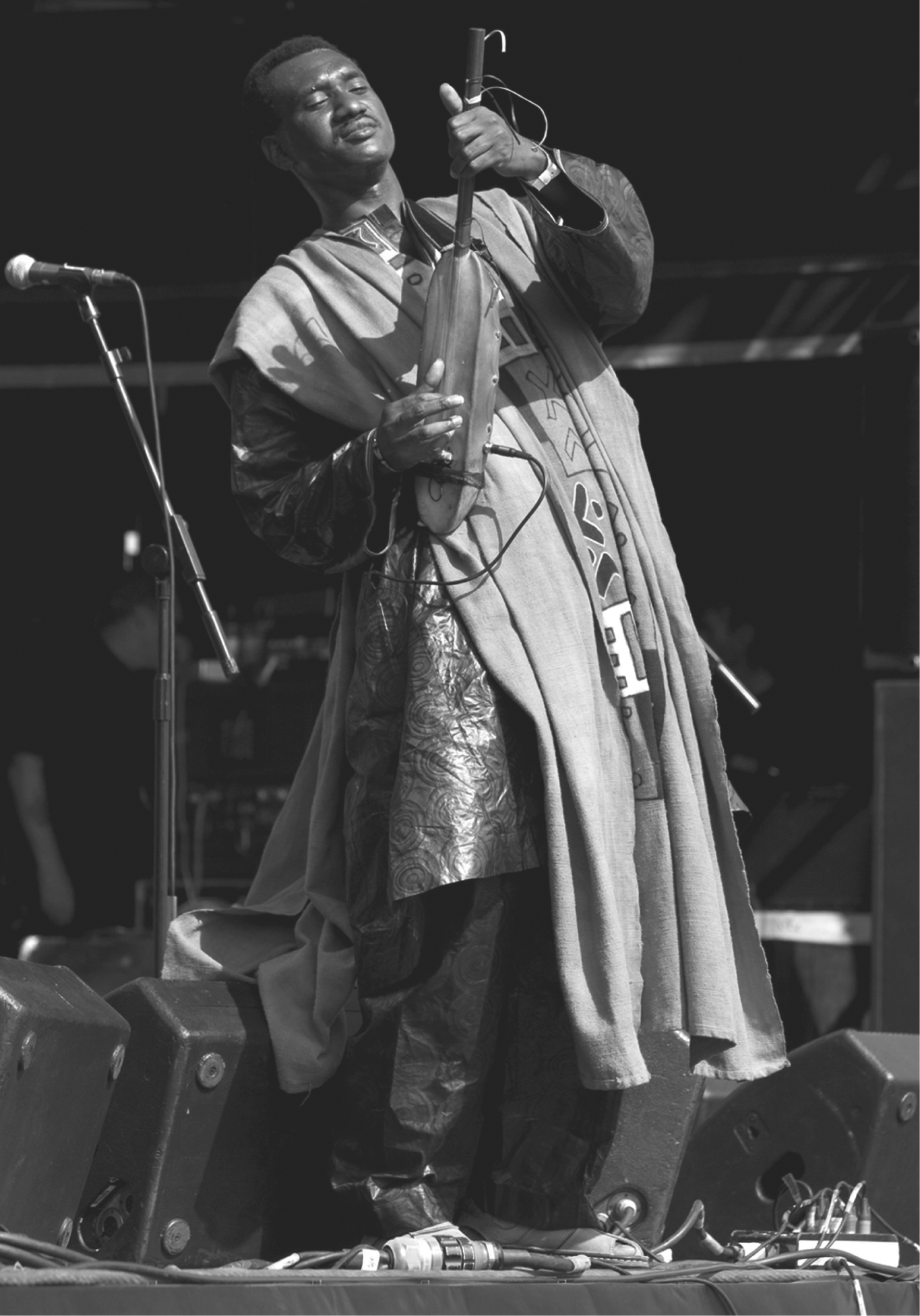
Also featured on the “Mali-Ko” peace single is Bassekou Kouyate, a Jimi Hendrix-style master of the ngoni, an ancient traditional lute found throughout West Africa. Bassekou has worked with international superstars such as Nitin Sawhney and Arcade Fire. On the day fighting broke out in Bamako he was in the recording studio with his band, which is comprised of his wife, sons and brother.
He says: “The day of the coup I got to the studio around noon and began working on my new album. Around four we started to hear very loud gunfire – ‘boom, boom, boom, boom’ – and I said: ‘What’s going on?”’ We went outside the studio and there were armed soldiers everywhere. They said they were carrying out a coup d’état because the army wasn’t happy because the president wanted to negotiate with the Tuareg [separatists].
“I closed the door. I was so angry. And then I said: “I’m not going to let this get to me. We’re here to make music.” There were lots of foreigners here who had come because of my new album – Germans, English people and others – and then suddenly Mali was under lockdown. It’s all down to the Islamists – they caused all these problems in Mali.” Before the start of the conflict, music was everywhere in Mali. At weddings, nightclubs and feasts, impromptu sessions on street corners, nomad camps in the desert, and the courtyard gardens of the griots.”
“In Mali it is the music that is the people’s source of information, music is the press, it is the news. In Mali we don’t have a free press and instead it is the musicians who pass on information and tell the stories of our history. All the information and news is passed on to the people through music,” says Fadimata “Disco” Walet Oumar.
At the centre of Mali’s music culture in recent years has been the famous Festival in the Desert. For 12 years, it brought some of the world’s top musicians to the desert outside of Timbuktu. Though small groups of musicians have been meeting in the desert for centuries, the Festival in the Desert was officially founded in 1991 to create a cultural, and curative, bridge between the northern Tuareg musicians and those in the south. Over the years it has attracted a huge amount of press attention, as well as stars such as Bono and Robert Plant.
Musicians are beginning to trickle back into Mali, and the state of emergency has officially been lifted
Manny Ansar, director of the Festival in the Desert, was born near Timbuktu into a nomadic Tuareg family. Before joining the group that began the Festival in the Desert, he worked in the humanitarian aid field. He remembers the decision to cancel 2013’s festival was a necessity, as Timbuktu was one of the three cities where the fighting was the most intense.
But six months later, those battles were won by the Malian armies, in large part due to the expertise of the 4,000 French soldiers who intervened in January 2013, after a plea from Mali’s government. And although small numbers of the 374,000 displaced people are beginning to return home, many believe that the mujahedeen are in hiding, biding their time, plotting their next moves.
Musicians had their instruments and equipment smashed, radio stations were torched and even young people with musical- sounding ringtones on their mobile phones were beaten
ABOVE: Bassekou Kouyate performs a ngoni solo during the Womad Festival
Credit: Soody Ahmad/EMPICS Entertainment
Manny has to decide whether it is safe enough for the 2014 show to go on or not. Should they return to their desert home outside of Timbuktu, or move the festival to Bamako where security can be controlled? Will things have calmed down enough by the beginning of 2014 or will it be 2015, or even later? Many see the festival returning as a benchmark for “things returning to normal” and are eager to show the world that Mali has been restored.
Meanwhile, Manny, as well as many of Mali’s more successful artists, are working to keep the music scene together by staging awareness-raising concerts around the world, including the Fuji Rock Festival in Japan, a Festival of the Desert in exile, and a concert at the opening of the United Nations General Assembly in September 2013.
“People have grown desperate and weary of talks of amicable solutions to the crisis one day, armed intervention and UN resolutions the day after, then back to prospects of peaceful negotiations a short while later. Above these frustrations, we are gathering our artists and fans to sing for peace and demonstrate that in Mali not everybody is at war. The brutal sound of weapons and the cries of intolerance are not able to silence the singing of the griots,” Ansar told Ceasefire magazine.
Historically, armed Islamist groups in Africa do not tend to disappear as quickly as they emerge. Many saw this summer’s elections as a benchmark to restore faith in Mali and its government. After the result of the second election in August was declared new president Ibrahim Boubacar Keita told news channels the way the elections were carried out, without significant problems, were a symbol of the new Mali. The nation’s citizens are now waiting to see what that new era will bring. Though musicians are beginning to trickle back into Mali now, and the state of emergency has officially been lifted, there is a fear that the freedoms may not be so easily restored and that Mali’s musical culture has seen its golden age come and go.
Despite this, the keepers of Mali’s history and wisdom, the musicians, refuse to give up. On stage with his family at the Glastonbury Festival in June 2013, Bassekou Kouyate took a break to entreat the enthusiastic crowd in broken English:
“I am very happy now. There is no sharia in Mali, okay? Sharia is finished. It’s all done, Mali is good. You all should come to Mali, okay? Mali is the best place in Africa!”
And with that, the band burst into “Ne Me Fatigue Pas”, a song they wrote in the midst of the coup attempt. The title translates as “Don’t Wear Me Down”.
“We don’t have a free press, instead we have musicians” …………………………
I became a musician after being involved with humanitarian work and living abroad. I was contacted by a festival who wanted an all-female Tuareg band to perform and at this time there was no such thing. They asked if we could form a band and I said of course, nothing is impossible – it could be hard but we can try. And so we did. I found performing at the festival very liberating, as we were able to share our story with so many different people. As musicians, we could tell the entire world about our culture, our lives and the problems of our people. Music is a miracle, it is an important part of how a civilisation develops. Music teaches you how to live, how society can grow and change. The world without music is impossible to imagine. Before the Islamists had even reached Timbuktu, I had left Mali and gone to a refugee camp in Burkina Faso. I somehow knew this was going to be a dark time for Mali – especially for its musicians. My band ended up being split between Mauritania and Burkina Faso, because when we chose to flee we headed for the closest border. At that time, some of the band were closer to Mauritania and I was closer to Burkina Faso. I went to the camp on 2 February 2012 and whilst I knew the situation was very bad, I could never have imagined just how cruel and dark the conflict would become. I could never in my life imagine that they would ban music. I could not think it – I did not believe it was even possible. It happened so fast, and I truly believed that life as we knew it in Mali was over. All the information and news is passed on to the people through music. These groups wanted to stop the people from being given information and they wanted to stop us telling our history to the next generation. Life without music is not possible, and for me personally I would rather die than never be able to perform, create or listen to music again in my life. At the refugee camp we continued to play music, organising dances and parties. One of the important things about music is that it allows you to forget, to put your problems out of your mind for a little while. But sometimes I would get so upset, seeing more and more people arrive at the refugee camp every day, and hearing the news from Mali, that I would lose my voice, my throat would just close up. I had to be careful to cover my face and not be identified whilst I was performing as I am well known in Mali – my father and other members of my family are still living in the north and I was very afraid for them. I did not want them to be punished in retaliation for my music. These events are like the end of the world. These men [who imposed sharia law] are not good, they come from a very bad place. Our culture and our music cannot be separated. Music plays an important role in the lives of Tuareg women. Our music gives women liberty. Traditionally women play our music, and that gives us power and rights. We have an important role to play in society and it is through music that we can be heard. These men were seeking to prevent women from participating in their traditional roles. Freedom of expression is the most important thing in the world, and music is a part of freedom. If we don’t have freedom of expression, how can you genuinely have music?