



Abstract

Greenpeace International executive director
For Kumi Naidoo, climate change is the biggest challenge humanity faces today. He believes that people have ‘a moral responsibility’ to protect the environment and, as he has stated publicly on a number of occasions, he is willing to pay the ultimate price in the fight against climate change.
Often local media outlets are too afraid of losing advertising support from the very company that is causing havoc
In 2011, Naidoo spent four days in a Greenland prison cell after he staged a demonstration against Arctic deep-sea oil drilling on an oil platform owned by Cairn Energy. He was deported to Denmark and released after a short time in custody. As a result of the action, a Dutch court ruled in favour of the company in June 2011, granting an injunction against Greenpeace and banning protesters from disrupting drilling processes.
Since his teenage years in South Africa, Naidoo has been campaigning against injustice and for the right to speak freely. He was only 15 when he became an anti-apartheid activist, and at the age of 22 he fled to England to avoid a prison sentence. He has been Global Call to Action Against Poverty (GCAP) secretary general and, more recently, chair of the Global Campaign for Climate Action (GCCA).
In this interview, he talks to Index about the importance of free expression for himself and for his organisation, and about what free expression challenges activists face around the globe.
Can you give examples of when Greenpeace’s free expression has been under threat?
What we’re seeing today, layered on top of the government censorship in repressive regimes, are new forms of corporate censorship.
We saw a clear example of this when [in 2010], we released a parody video, which named and shamed a Nestlé brand, Kit Kat, for refusing to shift their supply chain away from rainforest destruction. Nestlé pressured YouTube to remove the video, claiming trademark violation, and YouTube immediately complied without asking judge or jury. Fortunately, online communities are truly allergic to that kind of censorship, and the resulting attention it brought to our cause, and widespread samizdat posts to Vimeo and other video outlets by our supporters meant Nestlé only fanned the flames and eventually had to relent.
But in fact YouTube was entirely in the wrong to comply with that request – we’re well-schooled in the legalities of parody, and our right to use the Kit Kat logo to criticise Kit Kat is, and ought to be, protected as free speech. In case after case where we’ve been challenged on logo subversion we’ve won, even at one point against the mighty legal team of ExxonMobil. But none of those court battles matter if a corporation can switch off our access to services like YouTube simply by demanding we be switched off. [The video was restored on YouTube a day after it was removed.]
Networked technologies are empowering organisations. Greenpeace has made good use of these technologies to mobilise people and win some campaigns. How do you go about counteracting the mighty power of communication that companies and governments possess?
We use corporations’ own language, their own marketing, their own strength, against them whenever we can – which is sometimes the only way that an entirely supporter-funded operation like ours can afford to put a spotlight on the negative side of their operations. It’s a bit like judo. When a company like Coca-Cola puts huge advertising money into associating their brand with polar bears, and we set out to expose, for example, that their use of climate-killing chemicals in their refrigerants is destroying the habitat of those very bears, we twist their own ads – with the humour and creativity and cheeky parody that the internet loves. All their advertising and marketing budgets are suddenly working for us. If we’re clever enough, those efforts make the conventional press and travel widely on social media, riding the familiarity that Coke itself has created.
In fact, with regard to the phase-out of F-gases, after we encouraged Coca-Cola to commit to phase them out by 2015 and move to natural refrigerants, Greenpeace staff, together with staff from Coca-Cola and Unilever, jointly collaborated at the Consumer Goods Forum, an industry-wide body, to get the group as a whole to adopt a resolution to begin phasing out HFC refrigerants as of 2015 and replace them with climate-friendly refrigeration.
And in the best possible scenario, as with this campaign, the company not only sits down with us to talk about a phase-out, but brings industry partners along with them. When companies invest millions – sometimes billions – in marketing their brands, the cost of making a change to an industrial process can sometimes pale in comparison with the reputational damage caused by not doing the right thing.
Greenpeace says climate change is probably the biggest challenge that humanity faces today. The evidence is there. Why do we not read about it or hear about it more in the mainstream media?
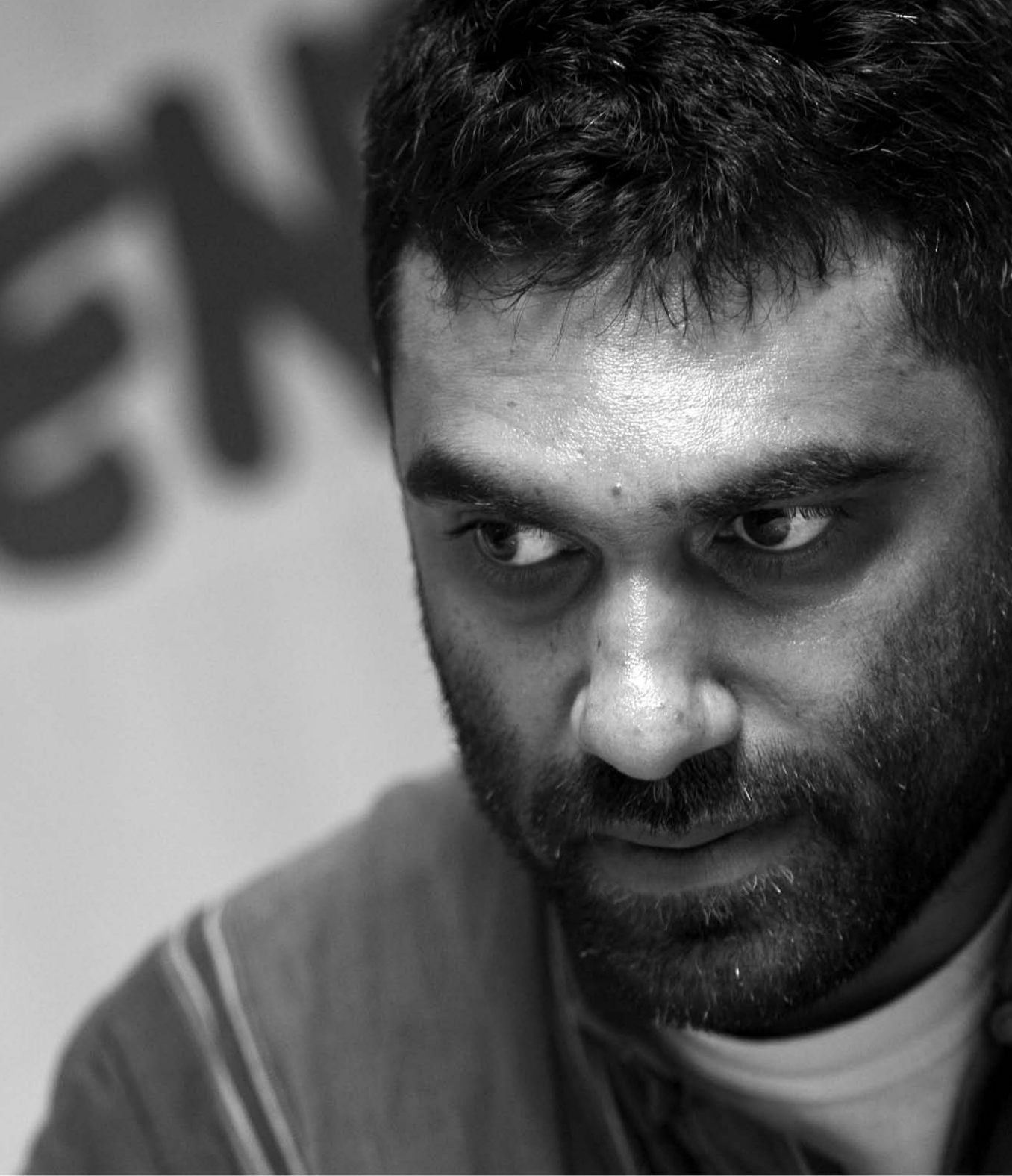
Kumi Naidoo, executive director of Greenpeace International, at a news conference about the arrest of activists, January 2010
You have to wonder about the influence of advertising on corporate media. I was struck that the coverage of Hurricane Sandy on CNN, for example, kept being interrupted by advertising by the coal industry – the very industry that is heavily responsible for more extreme weather events. Is such advertising one reason why even when a hurricane like Sandy hits, relatively few of the stories about the hurricane mention the potential links to climate change?
I have also heard many stories from local communities around the world – from Sweden to South Africa – that claim their plight is not being covered as the local media outlet is too afraid of losing advertising support from the very company that is causing the havoc locally. With the money for investigative journalism being reduced in many outlets, the more complex stories of how climate change is being fuelled by specific industries and companies also fail to be analysed as often as we would wish. We at Greenpeace therefore often ourselves shed light on the murky world of fossil fuel corporations buying influence and preventing effective climate action. Many journalists have thanked us for websites such as exxonsecrets.org, which show the links between, in this case, ExxonMobil and climate deniers, including politicians.
Nevertheless, the reality is that sensitising global citizenry on the immense dangers of climate change is significantly more difficult than trying to raise public sensitivity on, say, human rights violations or poverty and social exclusion. With human rights, say somebody has been tortured, one can see a person who has been a victim of torture, and the scars tell a clear, irrefutable story. Similarly with poverty, you can show someone suffering from malnutrition and people can see immediately the injustice of social exclusion. With climate change, because it is something that has happened over a long period of time, attributing an extreme weather event to climate change is not an easy connection to make and it requires a louder voice on the part of activists from all sectors of civil society.
About the controversies over free speech and climate change, some say that both sides tend to claim they’re being censored, with climate sceptics claiming the liberal establishment is stifling their voices. What do you say to that?
All studies show that climate sceptics still get disproportionate attention in the media, given how increasingly intellectually bankrupt their position is becoming as climate impacts begin to take lives, destroy agriculture, affect water security.
Even the normally positive desire for media to be ‘balanced’ seems to result in too many outlets feeling the need to give space to climate sceptics. Of course, certain outlets give more space to sceptics than others and a recent study [published by Environmental Research Letters] has shown that sceptical voices are particularly prevalent in the US and UK media markets. We welcome fierce debate, but I do hope that very soon everybody will view sceptical statements about climate change in the same way that people today view the statement ‘smoking doesn’t cause cancer’. We all know now that this was a self-interested lie when the tobacco industry paid for research ‘proving’ tobacco wasn’t harmful. It is time that the mainly fossil fuel-funded climate sceptics are treated the same way as tobacco’s apologists. Another comparison can be made with HIV/AIDS denialists who argued against the connection between being HIV positive and full-blown AIDS when the scientific consensus was overwhelmingly clear, as it has been with climate change for a long time.
Many argue that the economic crisis has had dramatic consequences for free expression in the Western world: we have seen less diversity in media; less public money for diversity and alternative perspectives; the ascent of extremism in Europe. What does this mean for an organisation like Greenpeace?
The challenge we face in any economic crisis is to get people and policy-makers to focus both on the short-term imperatives as well as the long-term sustainability goals and the economic opportunities, such as the power that the renewable energy industry has to offer in terms of jobs and growth. We’ve been failing at this, frankly, and will continue to have an uphill battle for as long as the fossil fuel industry continues to pour in money, in the form of advertising, lobbying, and outright bribery of the public discourse around climate change.
On the other hand, we look more and more to our 24 million subscribers and their social media networks to carry our message, peer-to-peer, person-to-person. The fossil fuel industry managed to delay action on climate change with a deliberate and heavy assault on the free press, insisting for years that a ‘balanced view’ be presented of what was in fact an unmitigated cry of alarm from the scientific community. As voices of dissent in the real scientific community became fewer and fewer, they simply funded pseudo-scientific institutes to market untruths as science. We did our best to expose some of these ‘paid for by big oil’ spokespersons through exxonsecrets.org as a service to the media, but we shouldn’t have to do the job of journalism in sorting out real research from paid agents.
In Britain, the government proposed legislation (the Communications Data Bill, also known as the ‘Snoopers’ Charter’) that would have granted the Home Secretary the power to retain data on every citizen. The bill will have to be rewritten after receiving criticism from MPs, but has Greenpeace considered the consequences of similar legislation being introduced?
For the most part, we rely on our colleague organisations who are dedicated to stopping censorship to vigorously defend everyone’s right to free speech, while we focus on defending their right to a sustainable future. But we do what we can. Back in January, 25 Greenpeace websites worldwide went dark in solidarity with activists all over the world to oppose the Stop Online Piracy Act (SOPA) and the Protect IP Act (PIPA) in the United States, and we will stand up with our free speech colleagues again. That was a thrilling expression of people power, one which frankly I wish we could muster to prompt action on climate change: the number of people who stood up to defend the internet puts to shame the numbers we were able to take to the Copenhagen climate summit (in 2009) to defend the planet.
When it comes to governments spying on their own people, this is a disgusting inversion of the tenet that people should never fear their own government, it’s the governments which should fear their people. Ultimately, history teaches us that people will find ways to oppose and undermine the forces of repression expressed by government and big business; we will continue to campaign for what we believe in, whatever the constraints or whatever the opposition might be. When the UK government tries to enforce compliance of their citizenry they’re simply deluded if they think they can quash activism that way. Activism is a profoundly creative force, and it adapts to the environment in which it operates.
It is ironic that George Orwell’s 1984, which was speaking about a Big Brother watching you type of control, was read at that time as a concern about what authoritarian communist regimes might put in place. It’s interesting that we are seeing governments that say they are the promoters of democracy are in fact the ones that are actually giving the most frightening expression of the surveillance society.