



Abstract
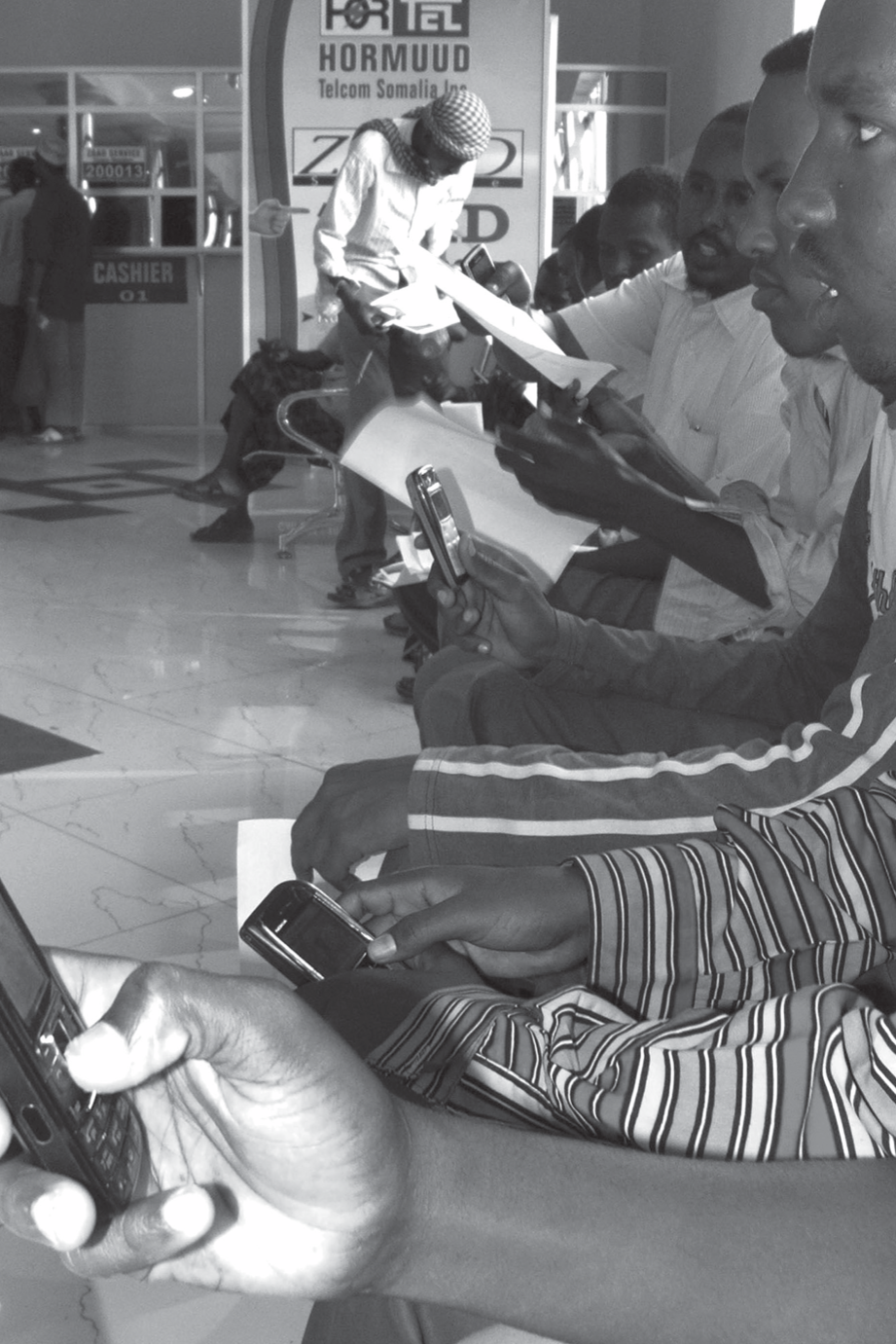
Mobile phones in Mogadishu, March 2010
Credit: Ismail Taxta/Reuters

Frontline SMS is an open source desktop application that uses text messages to share information. The software allows for two-way communication and is designed to be intuitive and simple to use. Users, which include groups working against violence in Benin and Haiti, campaigners for reproductive healthcare in India and election monitoring initiatives in Nigeria, can access the service without an internet connection using a mobile phone and a computer.
FrontlineSMS was released in late October 2005 when Facebook, YouTube and Google Maps were in their infancy and Twitter didn’t even exist. Seven years is a long time for technology. How has the platform changed during this time?
When FrontlineSMS first started, it was a stand-alone product, which was used primarily in the developing world. It started strictly as a desktop application that operated over SMS. In the ensuing five years, we started to realise how important it would be to link SMS to the web and to other tools such as Ushahidi and social interaction platforms such as Twitter. The goal for us has been to integrate SMS so that it’s a meaningful and useful tool. The impact for us is not ‘are more people using SMS?’, it’s ‘are its communities being supported? Are accounts of election violence being filtered to platforms, visualisations and organisations that make them discernible and usable information?’. Over time, our client base has changed a lot. At FrontlineSMS we view technology as a vehicle to more effective human behaviour. When we first started we didn’t have the World Bank or USAID or the UK’s Department of International Development knocking on our door. But now there’s global recognition that SMS has six billion users – almost three times that of the internet. SMS gives users the potential not only to integrate new voices but also to create collaborative communal communication platforms that realise that potential. Simply put, there’s nothing like SMS that touches six billion people in the world. And there are some great stats, like there are more mobile phones than toothbrushes.
How is it being used and how does it empower specific local communities in the developing world, especially in terms of freedom of expression?
There’s a difference between freedom of expression and working against censorship. FrontlineSMS is being used in both respects. When you’re talking about censorship, by and large, you’re talking about domestic censorship. At a local level, people can use it to create their own information services, so they’re still getting information that could be censored. So you can use FrontlineSMS as a distribution platform that is wholly separate from traditional news agencies or traditional media actors, which helps promote freedom of expression.
Then you have some more interesting applications where you’re looking at radio stations or broadcast and publication outlets of some type getting crowdsourced reports of incidents. FrontlineSMS has been used in a variety of ways: to help people avoid instances of police crackdowns in Tunisia, as an early warning system, as a contact management system or to help verify information using citizen journalists. For example, in Kenya the police are known for asking for bribes, so a friend has set up another SMS system that alerts traders when a police officer has been spotted in a market trying to make a round.
The radio project uses radio and SMS, which are two of the most ubiquitous communication platforms in the world. When tied together you get a participatory communication environment that takes advantage of the cost efficiency for each. This enhances the role that journalists are able to play as hosts of dialogue and as representatives of their community. Then the journalism project looks at one of the big challenges facing journalism today: verification of information. The project is focused on building tools that help journalists access the information that they need as quickly as possible.
Imagine that you’re at al Jazeera in Uganda and you get a report about an outbreak of violence in the south. You have 25,000 people in the country who you are connected to in some way. The tools we’re in the process of building will allow you to assign custom fields to a person’s contact information. So all of a sudden you can target people who are in the area, sorted by their area of expertise. You can locate government officials and religious leaders. You can add a rating system. So if you don’t know someone in the beginning but they reliably report news to you 10 times over a two-week period, you will be able to rate them and note that they are of a certain quality.
So all of a sudden your contact database has shrunk to 60 people who can be reached via mobile phone. Then you can type out a single message: ‘looking for more information on the events transpiring, please text back with any information’. All of a sudden you are communicating with your 60 highest-value sources on a platform that is most likely to reach them in real-time, in their pocket. You’re not having one-to-one interactions but one-to-many interactions.
What is it that allows users to do something different than you would have with people simply making phone calls to a radio station? Does it change the interaction between presenter and audience?
It saves time. FrontlineSMS allows you to do things like aggregate interactions. For example, if you put out a poll asking people how concerned they were about water and sanitation and 600 people respond in a period of 20 minutes, you can immediately aggregate and broadcast the information. A user can also create word clouds, which is a very powerful data-sorting tool. If you get 10,000 emails you aren’t able to read all of them. But if you put 10,000 text messages into FrontlineSMS, you can navigate them individually and organise word clouds to see which the most prevalent words are in aggregate. You can then really start to understand what the community is saying as a whole. It allows you to aggregate the voices of a community as much as possible.
It sounds like the kind of thing that, in a city where virtually everybody is online, news organisations would ask these kinds of questions on a web-based system. This allows you to do something similar in an environment where people don’t have personal computers or internet access but everybody has a phone.
People have always seen SMS as a bridge technology. But SMS is distinct from broadband interaction. What’s the process of voting in a poll on the internet? You have to navigate to the site and you have to have good connectivity on whatever device you’re on. By and large the place where most people listen to the radio in the US is in the car, so it’s not a great idea to be doing a lot of typing and connectivity on the roads. It’s functionally easier if you have the number saved to pull up a contact and send a message. You don’t have to download any software or zoom into a particular feature. SMS is an easier platform to use and that’s true of everywhere in the world.
The future that we’re going towards is not one where everything is broadband internet or smartphone apps. It’s not because these things aren’t growing, and I don’t mean to diminish their role at all, but we’re going to a place where you have the opportunity to vote on that poll via broadband, via text messaging, via voice or any other platform. SMS won’t disappear because it’s still the easiest of all those tools to use.
On the one hand, a text message is more anonymous than hearing someone’s voice and the aggregation of messages is in some ways more anonymous. But with SMS you’re also talking about a local network that can be shut down by local governments. The data being transmitted isn’t entirely secure either. What are some of the challenges around anonymity and security when people are expressing themselves over SMS and how does FrontlineSMS respond to these challenges?
There are very few pieces of human infrastructure that you can make use of anonymously. If you want to be part of the power grid, you have to sign up for an account. If you want to use the roads, you have to get a licence and buy a car. The possibility of anonymity becomes more and more remote as processes become more digital, whether you’re talking about closed-circuit cameras all over London or the Chinese government filtering the internet. Anonymity can go two ways. You want the ability for someone to be anonymous because then they can give you whistleblowing-style information. Conversely, if you allow someone to be anonymous, a government secret agent can give you wrong information. Anonymity isn’t a net win in either direction.
It’s worth pointing out too that, although there are lots of great uses for SMS, it’s also important to acknowledge that it isn’t a secure platform and that every situation or context comes with its own unique threats and challenges.
Your Data Integrity Guide mentions a case study that used FrontlineSMS to report election experiences. The project was worried about the lack of encryption and the possibility of interception. The solution proposed was the use of a numeric code instead of relaying the information in words.
Alphanumeric codes are a significantly better approach to security than encryption. It’s a human solution instead of a technological one.
Can you talk about the example of Radio Free Europe/Radio Liberty (RFE/RL) operating in Balochistan from Prague and trying to get local feedback via SMS?
It’s not something that was previously technologically possible. RFE/RL has an office in Islamabad, where they’ve installed FrontlineSMS and connected it to the internet. They work through that connection from Prague. Creating globally accessible local interactions is not something that predates SMS and I don’t know of any other tool being used in this way. By virtue of combining the functionalities of the internet with the functionalities of SMS, RFE/RL is able to reach a region without a free press.
There are so many barriers: barriers to communication, to infrastructural access, to accessing government, to accessing professional services like banking, to ensuring your family doesn’t get kicked off their land through land rights and property rights. We exist in a world of formal systems in predominantly urbanised environments. What those anchors essentially ignore is the vast number of people who are left behind by the fact that roads aren’t good enough to allow them to interact. Mechanisms aren’t good enough so that information reaches them. Or social perspective or social bias means that people don’t care what’s happening in a suburb when there’s so much happening in the city. What falls through the cracks is immense. You lose culture, lives, empowerment, your land and your wealth. What SMS does for the first time ever is connect people who would otherwise not be connected to the things they need the most when they need them the most.