



Abstract
Logbooks are used by engineers and students to record a wide range of information relating to a specific task or project. With the development of digital technologies, engineers and students now use both paper and electronic logbooks to document relevant project details. However, there is a general lack of research outlining the preferred project documentation methods used by professional engineers and students. To gain insights around the current usage of engineering logbooks, an anonymous survey was completed by 57 professional engineers and 41 fourth year engineering students. The results revealed that preferences around logbook type were generally mixed among both engineers and students, with 51% of engineers using both paper and electronic logbooks in their work. Both engineers and students noted broadly similar advantages for using each logbook type. In the responses collected, OneNote was the most popular software used by engineers to record information electronically, with Notability being the most popular software among students. Cost was the main barrier to using an electronic logbook for students, while accessibility and familiarity were common barriers for engineers. This study provides new insights into engineering logbook use by engineers and students in New Zealand.
Introduction
Traditionally, engineering logbooks were a paper-based tool used by engineers to record a range of informal information relating to a particular task, activity or project. 1 The use of logbooks enable engineers to record both textual and graphical information such as written notes, calculations, sketches, detailed drawings, tables and figures. 2 Engineering logbooks also allow a place for engineers to record and develop their ideas in a graphical setting. Engineer's sketches have multiple uses as they can be used to communicate the idea, act as a base for further development, and as a record of idea generation. This clear chronological record of the work is valuable as the information held within logbooks can serve as a legal record of work that has been completed if an accountability or intellectual property (IP) issue arises. 1 For this reason, some companies require managers to sign and date engineering logbooks, with some requiring logbooks to be officially notarised. 3
Throughout the engineering design process, engineers will integrate and apply information from a range of sources to develop a final product.4–6 Hence, engineering design has been described as an information transformation process. 7 For this process to be successful, information relating to the development of a product must be recorded, communicated, and stored using a method that is appropriate for the situation. Effective utilisation of data, information and knowledge within an organisation is essential for companies to gain and sustain a competitive advantage over their competitors. 7 However, previous work has shown that engineering designers spend almost one-fifth of their time searching for information. 8 Thus, designers working in design offices utilise the experience and other informal information of their colleagues to streamline phases of the engineering design process such as component selection during the embodiment phase. 9 As knowledge learned through experience is stored in the heads of individuals and not recorded, this knowledge is lost when the individual leaves the organisation. A method to capture this knowledge is a key issue for engineering knowledge management. 10
With the development of technology, digital tools such as iPads, tablets and computers are used by many students and engineers. The Covid-19 pandemic highlighted the usefulness of online tools to enable engineers to develop, record and share concepts as a team remotely. 11 From as early as 1991, researchers have been developing web based electronic logbooks to organise and present information. 12 Many companies view an investment in digital technology as a way to remain competitive by improving productivity, profitability, and the quality of operations. 13 For engineers, the integration of digital technology with personal information management (PIM) tools make them an attractive option. 14 Online notetaking and file management software such as OneNote and Google Docs enable individuals and teams to manage, share and backup their work. 15 Recent studies investigating the differences between the use of paper and digital tools for sketching found no difference in the quantity or understandability of sketches, design novelty, and overall concept evolution.16,17 Oehlberg et al. 18 found that hybrid journals (containing both tangible and digital media) contained a higher level of detail which correlated with improved project performance. The integration of different media types within electronic logbooks has the potential to improve intellectual property management through capturing a more detailed and complete record. 19 However, the admissibility of electronic logbook in courts of law has caused legal issues, with some companies opting to play it safe by printing out, signing and securely archiving electronic logbooks. 20
In university education, many design courses have required students to maintain an effective logbook to gain experience of common practices in industry.18,21,22 With the developments and adoption of digital technology, there is currently a lack of information and guidance around the best practices for how the use engineering logbooks should be taught to replicate how professional engineers use logbooks in industry. A general strategy for the deployment of e-logbooks in companies was outlined by McAlpine. 19 However, PIM, including notebooks and diaries, is a domain where prescribed ‘best practices’ resist standardisation. 23
Currently, in the age of readily available digital tools, few studies have reported the engineering project documentation preferences of students and engineers. To fill this gap in the literature, the focus of this study is to explore the current practices and preferences relating to the use of engineering logbooks of undergraduate mechanical engineering students and professional engineers in New Zealand. Insights into the two groups will enable differences to be investigated and refinements to be made into how the use of logbooks and project documentation is taught to undergraduate students to aid students as they transition to becoming practicing engineers. It is hoped that results of this descriptive study can be used to enhance the methods that are used to keep an accurate, chronological record of engineering design projects.
Methodology
A survey was prepared to investigate the type of logbooks that are used by fourth year engineering students and this was compared with a similar group of practicing engineers. The fourth year engineering students who were enrolled in the ENME401 Mechanical Systems Design course at the University of Canterbury (UC) were eligible for the study. This course included a concept development assignment, in which students were required to use a logbook to record the development of their engineering solutions to the given design problem. Practicing mechanical engineers were eligible to participate in the study. Before the survey window was opened to collect responses, the study was reviewed and accepted by the Human Research Ethics Committee at UC (Ref: HREC 2023/40/LR-PS). The survey questions for the study were approved by the Evaluation & Student Insights (ESI) team at UC and are available as Supplementary Material. Students were invited to participate in the study through a post made to the ENME401 learning management system which included the information sheet for the study. The information sheet outlined the key details for the study and highlighted that participation in the study was not linked to any course grades. Snowball sampling was used to recruit professional engineers via email, with initial participants forwarding the study invitation through their professional networks. Emails were sent by the research team to practicing engineers with details of the study and the information sheet. One extra question was included in the survey for professional engineers to gain insight into the roles of the respondents. Both cohorts of potential participants were invited to take part in the study simultaneously. Once invited, the study was open for one month to record responses. All participation was voluntary; no incentives were provided to respondents of the survey. All survey data was recorded online anonymously using Qualtrics. Participants accessed the survey on a digital device using a web link and completed the survey in one session. There was no requirement to answer all survey questions. As such, some participants did not answer all of the survey questions. All partial responses were included for analysis in the results, with all presented results indicating the number of responses from each cohort. The results from the survey were processed using Microsoft Excel. To analyse and consolidate short-answer responses outlining the perceived advantages of paper-based and electronic logbooks, thematic categories were developed with the frequency of each theme noted. The thematic categories were developed systematically, with each short answer reviewed and coded inductively to identify recurring concepts. A single researcher independently coded all responses and generated preliminary themes. These were subsequently reviewed and refined in consultation with the co-author. Any discrepancies in coding were resolved by consensus.
Results
In total 57 professional engineers and 41 fourth year engineering students (out of a cohort of 141 students) participated in the survey. Of the 57 engineers that started the survey, 6 engineers abandoned the survey before reaching the final survey question. Similarly, of the 41 fourth year engineering students, one student abandoned the survey before reaching the final survey question. As some participants did not complete all the survey questions, the number of respondents has been indicated on each of the presented results.
Professional engineers came from a variety of backgrounds as shown in Figure 1. As some engineers worked in a role that spanned more than one of the predefined work areas, multiple background areas could be selected. As such, the percentages presented in Figure 1 were calculated using the total number of responses (N = 95).
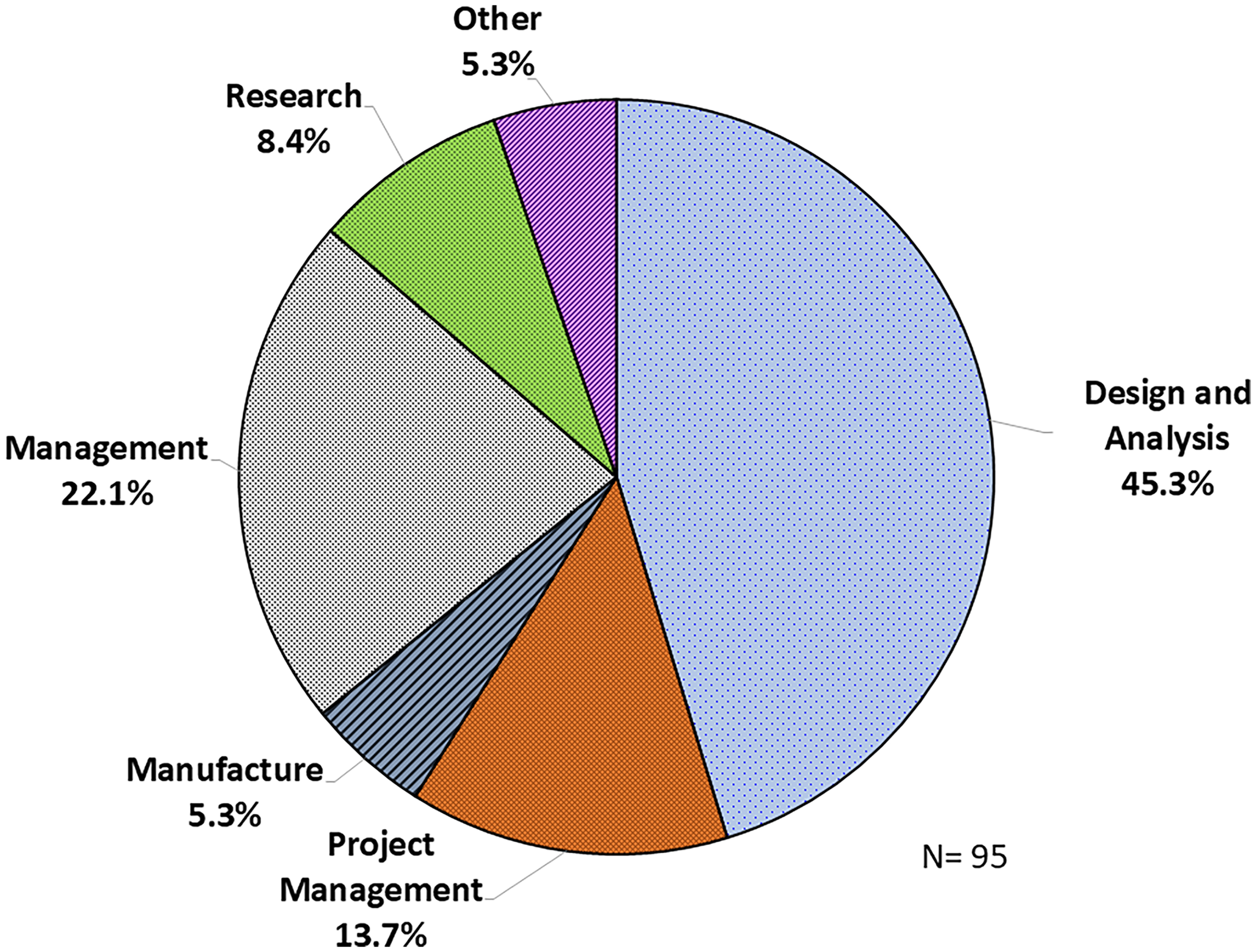
Backgrounds of respondents who were professional engineers (N = 95).
The type of logbooks that were used by students and professional engineers are shown in Figures 2 and 3. Of the students who used an electronic logbook for the first time, 16 of 17 students indicated that they would use an electronic logbook again.
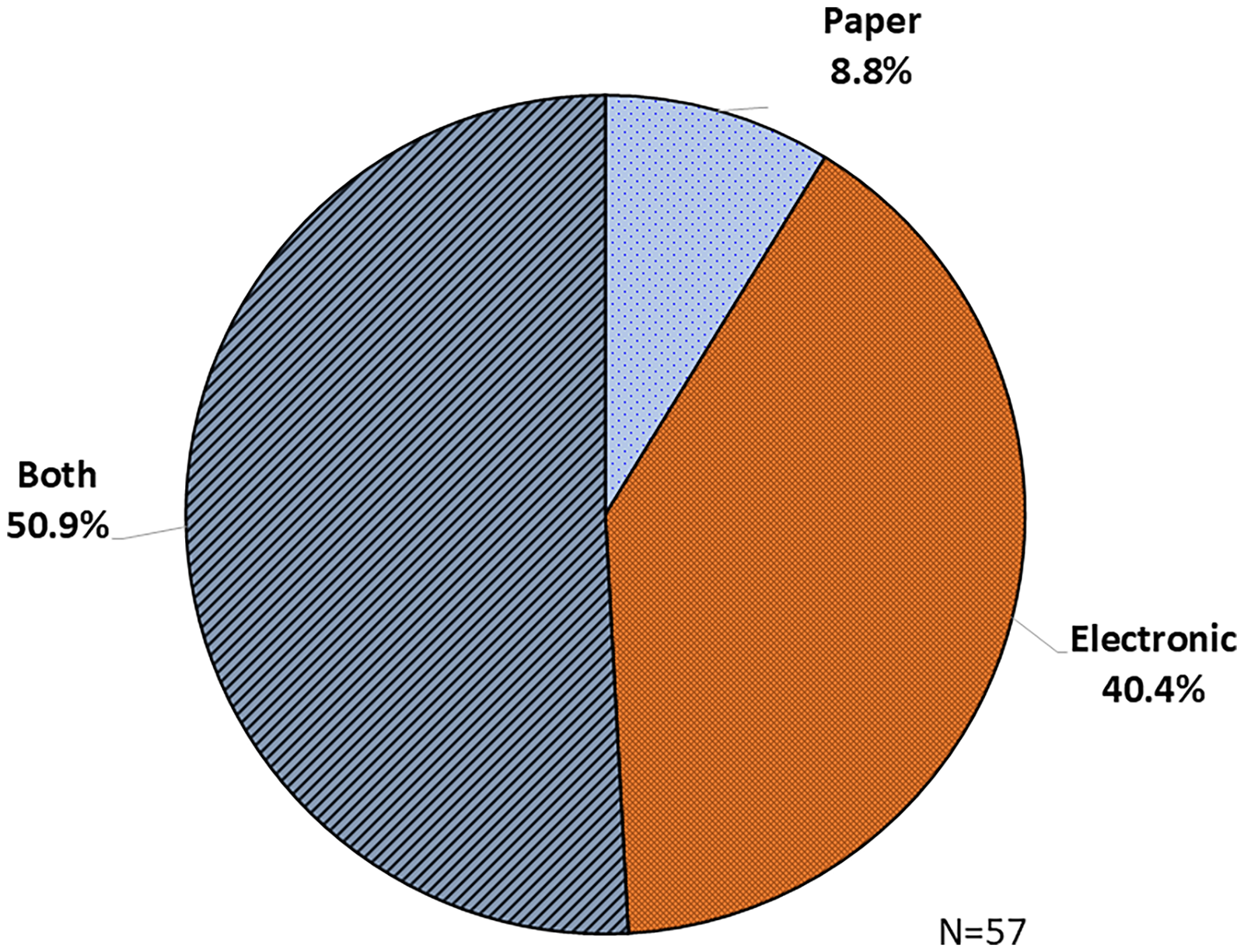
Type of logbook used by engineers (N = 57).
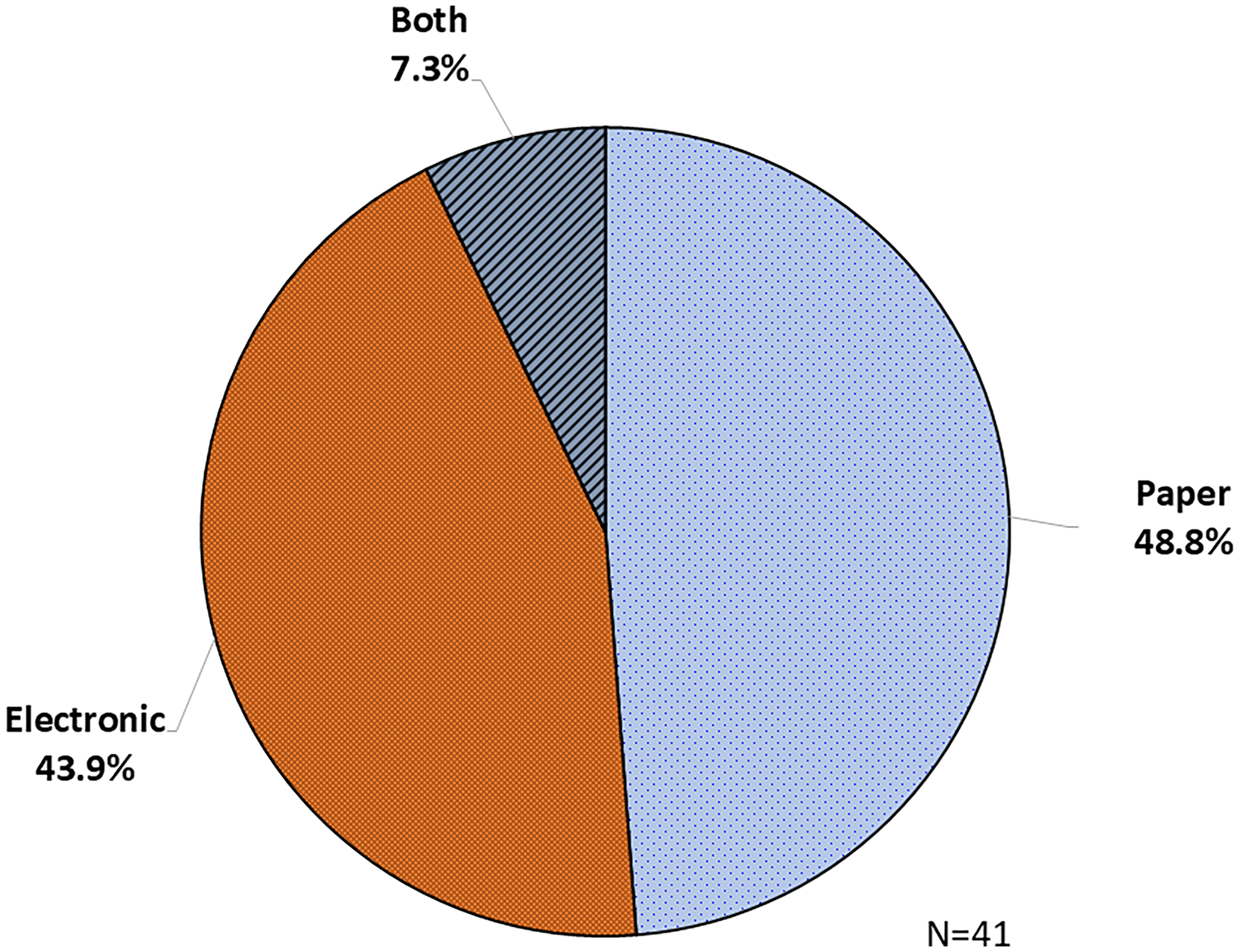
Type of logbook used by students (N = 41).
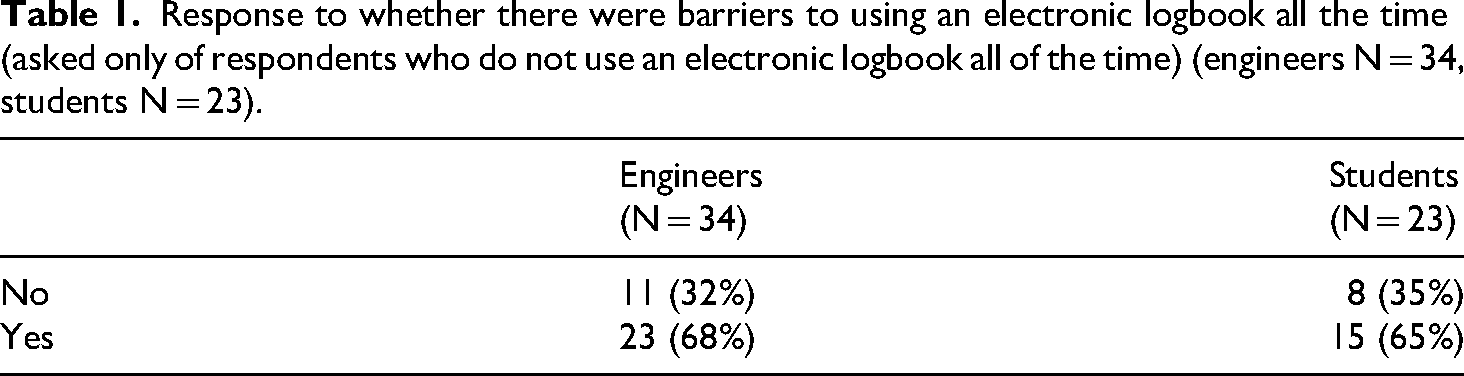
The breakdown of responses to whether there were barriers to using electronic logbooks for participants who used paper logbooks all or some of the time are outlined in Table 1.
Response to whether there were barriers to using an electronic logbook all the time (asked only of respondents who do not use an electronic logbook all of the time) (engineers N = 34, students N = 23).
A breakdown of the types of barriers to using an electronic logbook all of the time are presented in Figure 4. The software that was used for electronic logbooks is shown in Figure 5. An overview on the type of media included in engineering logbooks from all participants is shown in Figure 6. No media is selected by the participant when none of the other options are applicable to their logbook.
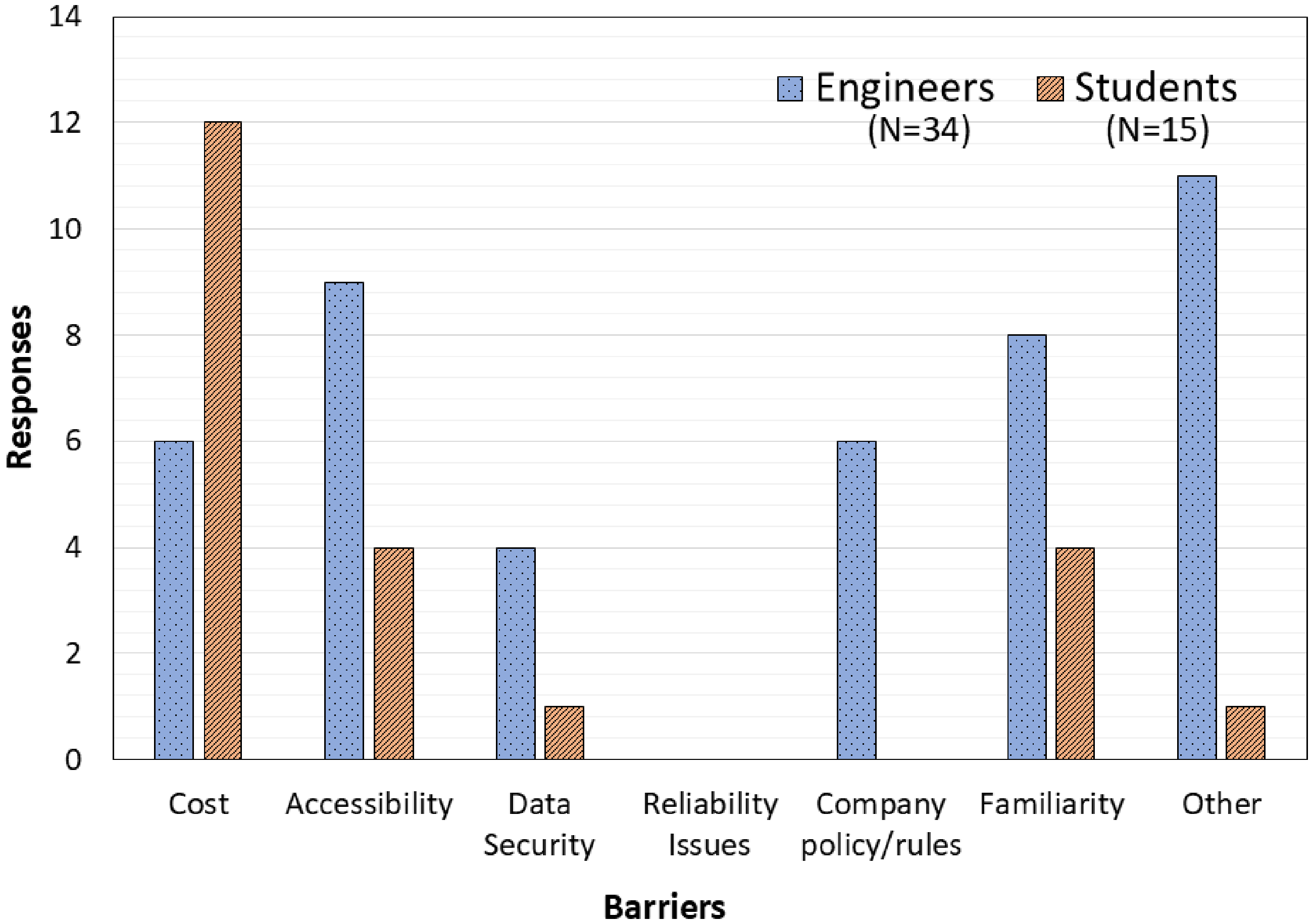
Barriers to using electronic logbooks (asked only of respondents who indicated barriers indicated in Table 1) (engineers N = 34, students N = 15).
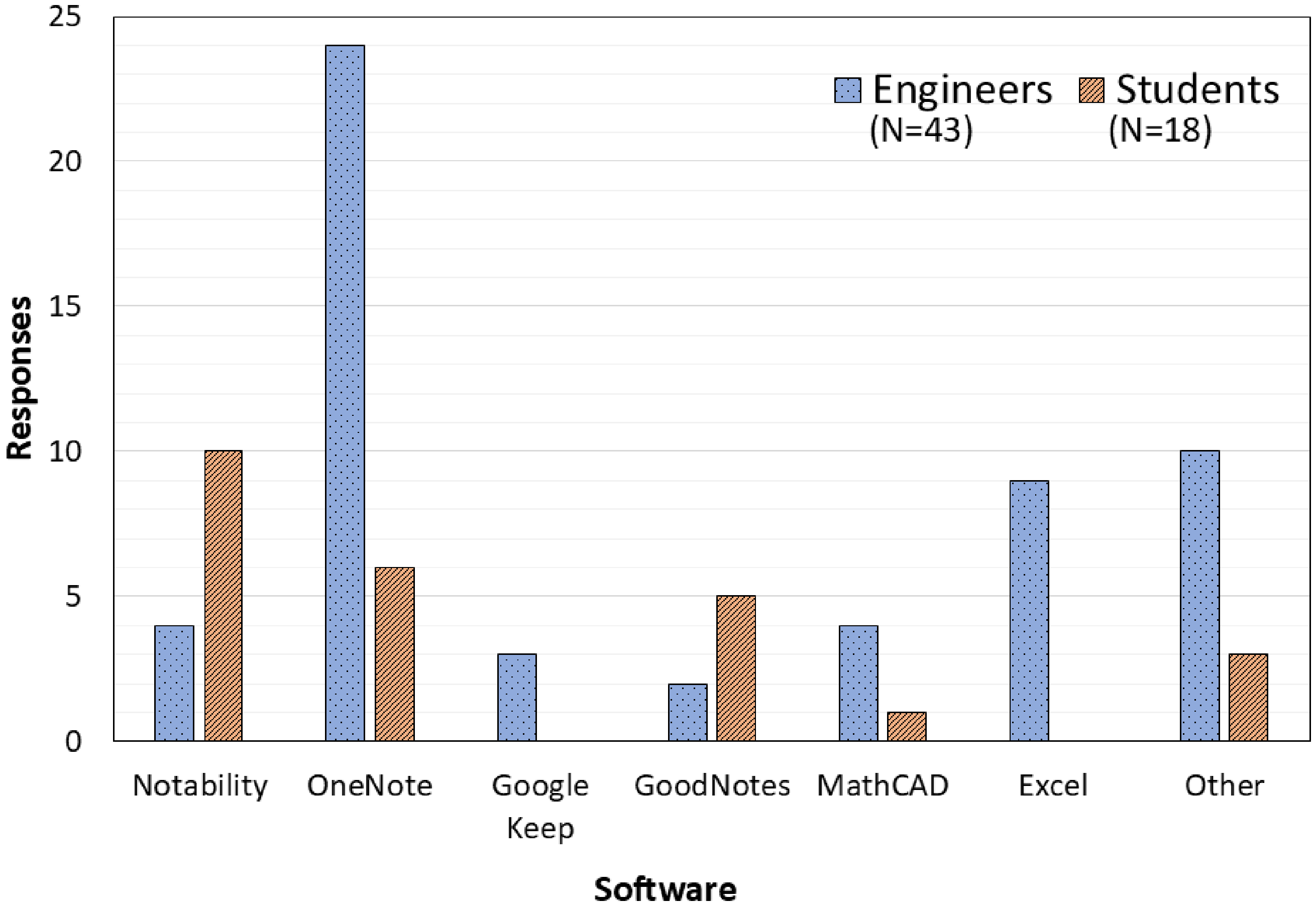
Software used for electronic logbooks (engineers N = 43, students N = 18).
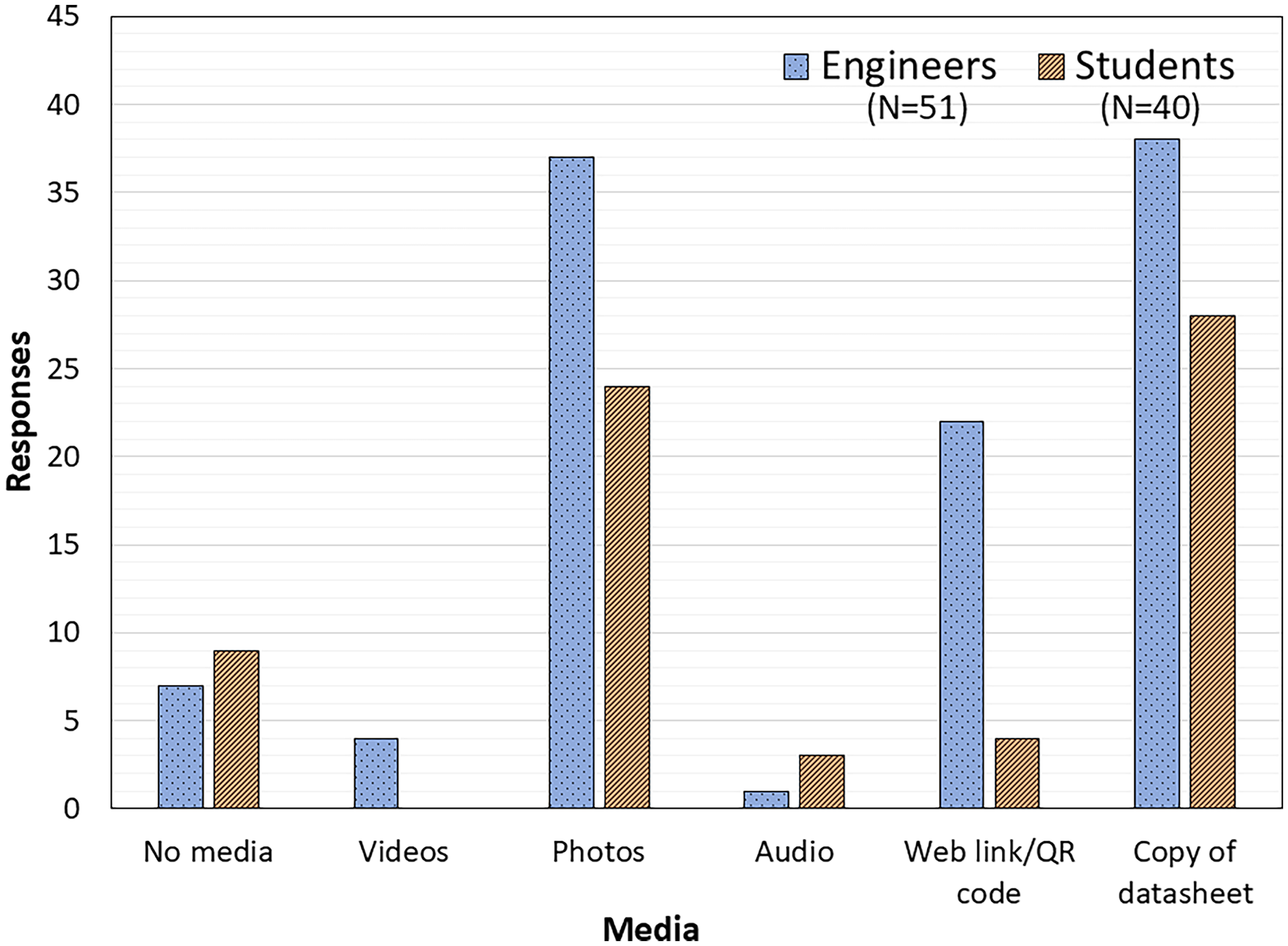
Types of media included in all logbooks (engineers N = 51, students N = 40).
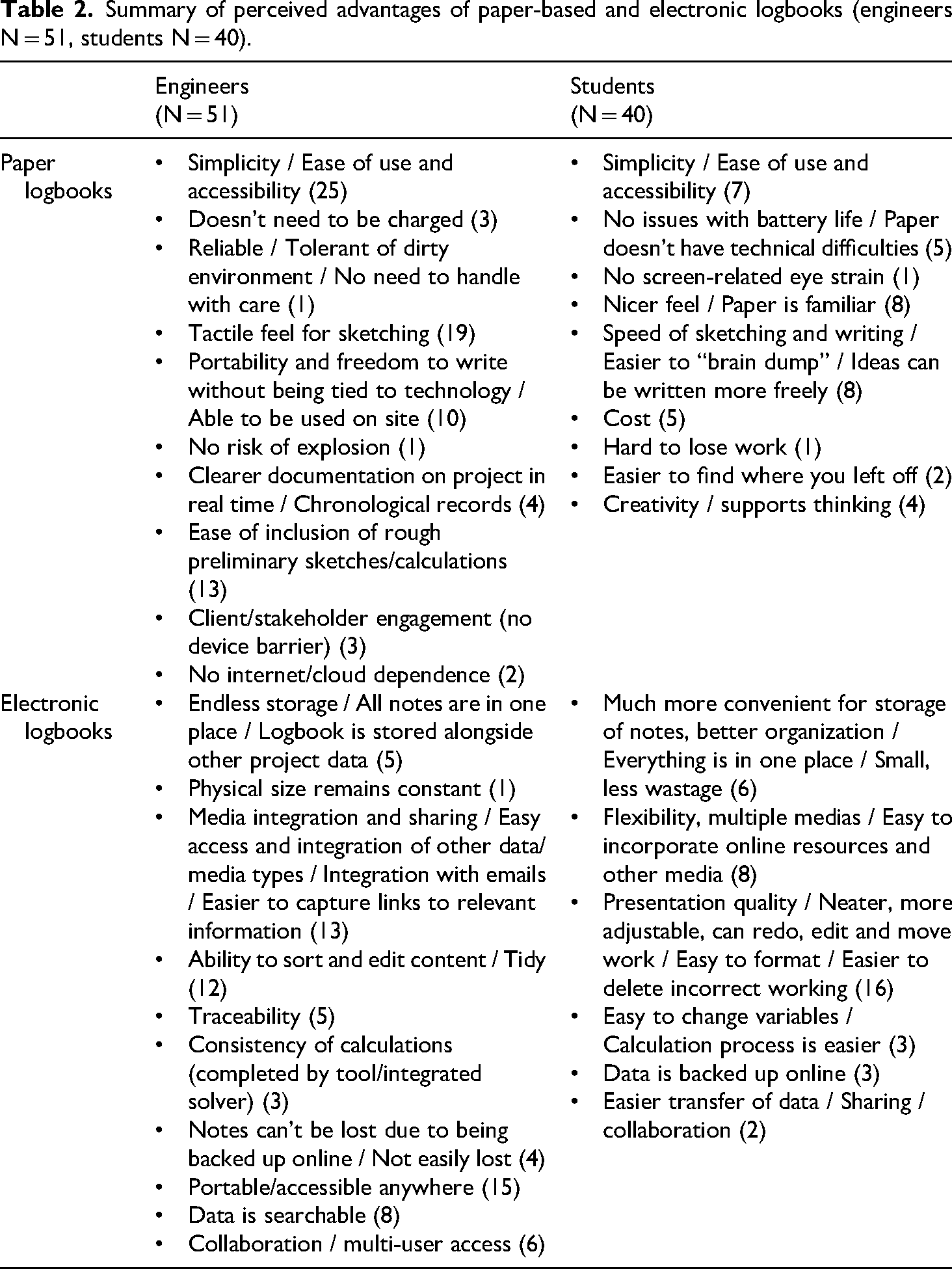
A consolidation of thematic categories (and frequency) from the short-answer responses outlining the perceived advantages of paper-based and electronic logbooks are presented in Table 2. To illustrate how respondents expressed these themes and how they were coded, three exemplar quotes are provided below. “Neater, more adjustable, can make better use of space, can copy and paste and add images from other sources. (Student, advantage of electronic logbook, coded “presentation quality” and “multiple medias”) “Easy to sketch ideas and take quick notes, typically show chronological developments” (Engineer, advantage of paper-based logbook, coded “tactile feel for sketching” and “chronological records”) “The ability to keep a huge amount of data and easily search through it.” (Engineer, advantage of electronic logbook, coded “endless storage” and “data is searchable”)
Summary of perceived advantages of paper-based and electronic logbooks (engineers N = 51, students N = 40).
Discussion
General discussion
The anonymous survey enabled the current logbook practices and preferences of fourth year engineering students and 57 practicing engineers to be recorded. The results in this study provide useful insights into the preferences logbooks used by professional engineers and students in New Zealand. Figure 1 shows that the mechanical engineers who participated in the study came from a range of backgrounds, with 45.3% of respondents currently in a design and analysis role. As all respondents were familiar with engineering logbooks, it is likely that their recent professional experiences influenced the medium or tools they chose to complete their work. This may help explain why student respondents and engineers with a ‘Design and Analysis’ background might tend to use paper-based logbooks, whereas those with a ‘Management’ or ‘Project Management’ background might be expected to rely on digital tools to fulfil their professional responsibilities. The results in Figures 2 and 3 showed that students and engineers use both paper and electronic logbooks. Interestingly, company policy/standard practice was a reason noted by engineer to explain why they use both logbook types. In this study, approximately 50% of the students solely used a paper logbook, with only 8.8% of engineers using paper logbooks all the time. The high use of paper-based logbooks among students may be influenced by their prior experience in engineering design and mechanics of materials courses, where handwritten calculations are typically required. This experience may make students reluctant to learn and adopt a new system for a single project. Additionally, the availability of devices that closely replicate the experience of writing in a notebook, such as iPads or tablets, may also have influenced this result. Figure 2 highlights that engineers often use a combination of paper-based and electronic tools to record information relating to their work. This result is not surprising as engineering companies are known to use various classes of information ranging from logbooks to computer models and files. 24 Previous work by McAlpine et al. 14 has detailed the interconnection of logbooks and other PIM systems. Contrastingly, only 7.3% of the student respondents used both paper-based and electronic logbooks for their assignment, with one student noting that diagrams and sketches were hand drawn one paper before being integrated into an electronic logbook on Mathcad.
Students and engineers provided broadly similar views relating to the advantages of each logbook type as detailed in Table 2. This result supports the current practice of requiring students to maintain a logbook while completing an engineering design task. The variety of logbook preference from professional engineers indicate that due to the changing environments engineers work in, there are several use cases where using an electronic logbook is impractical/hazardous. This supports the teaching practice of letting students use both digital and paper logbooks, provided they have gained experience using both types of logbooks over the course of their tertiary education. Respondents of the survey also provided useful comments explaining their reasoning for the type of logbook they use. Generally, paper logbooks were used by engineers in companies which required this record for auditing purposes, for site note and scenarios where quick sketches and notes were useful and a practical method of recording information. When logbooks were used on site, some engineers noted that paper logbooks are more useful as they are less fragile and do not require charging. Mcalpine, et al. 25 also noted that portability, survivability and the degree of autonomy as key issues for the practicality of electronic logbooks. Many engineers who used paper logbooks all or some of the time noted that paper is simple, easy and reliable to use, with information all in one place. One respondent noted that it is “almost impossible to delete things accidentally” when using a paper logbook. The main reasons that students chose paper logbooks tended to be the ease of use and the tactile feel of writing things down on paper compared to an electronic device. Of the students who used paper logbooks, nine commented that they used a paper logbook due to fact that they did not own an iPad or similar electronic writing device. This response is supported by the results in Figure 4 which highlights that cost was the main barrier to students using electronic logbooks.
Regarding electronic logbooks, engineers commented that electronic logbooks were easy to use, especially when it came to tracking, filing and sharing documents. Electronic logbooks enabled all the information relating to engineers’ projects to be backed up and accessible on all their devices in one place. This means that engineers are not able to misplace their work. The editability of electronic logbooks was commented on by many engineers, logbooks could easily be updated and reformatted as required, including easily incorporating screenshot into their work. Some engineers commented that due to travelling a lot, it is more difficult to maintain a paper logbook, with others commenting that paper logbooks can be easily damaged. Like the comments from engineers, students who used an electronic logbook also commented that electronic logbooks were easier to use, especially when adjusting text and editing conceptual sketches and copying and pasting images and information from the internet. These comments are supported by work from Malik et al., 26 who reported that students viewed electronic logbooks to be a flexible tool to collect and share work, with some students commenting that the logistics of using an electronic logbook was better than the paper-based alternative. Many students stated that they were able to keep their logbook tidier through the ability to adjust the layout of their work without the need to rewrite sections. Similar to the responses from engineers, some students felt it was difficult to lose their work as it was automatically backed up in a centralised storage systems. Many respondents highlighted the usefulness of the searchability and shareability of information within electronic logbooks as well as the fact that their data can be backed up online. However, for logbook data to be retrievable, both paper and digital documents need be organised appropriately. A previous investigation into the use of engineering logbooks found that 20–30% of engineer's time used completing searching and retrieving information-based activities. 1 McAlpine et al. 27 made similar comments noting that a lack of organisation was a common issue for engineers when completing personal information management (PIM).
Engineers who used both paper and electronic logbooks indicated a number of reasons for this decision. Many respondents highlighted that there are advantages for each type depending on the project or task they were completing. For this reason, these engineers would switch between paper and electronic logbooks depending on type of work they were doing. Some engineers commented that the flexibility of electronic logbooks made it easier to share and report their work, where paper was more traceable and better suited for their field work. Other engineers noted that paper was used for quick reference notes (including quick notes, ‘scribbles,’ and recording conversations and calls) which were later used when completing more detailed digital reporting. The small number of students who used a both paper and electronic logbooks for their assignment commented that paper was often done for rough working, with this information subsequently being incorporated into an electronic workbook, such as a Mathcad document.
Survey respondents were also asked if there were any implications to keeping an accurate record. Many respondents made comments surrounding the limitations of paper logbook in terms of the ability to easily adjust and update notes, as well as retrieve information were consistent with previous frustrations of paper-based notebooks reported by Wilcox et al. 28 One student commented that “documentation was either really messy or very time consuming to write it out nicely.” Engineers noted similar implications, commenting that that having no distinction between quick notes and important sections of work and poor handwriting can make paper logbooks difficult to interpret at a later date.
Generally, students and engineers reported less implications to keeping an accurate record with electronic logbooks, especially once an appropriate application was found and learned. This is an interesting observation, as paper is generally considered a “more accurate” record as it is more difficult to retrospectively edit the contents of a paper-based logbook. The ease of editing media on an electronic logbook caused one student to accidentally lose information, however, this should not be an issue when using adequate cloud-based backups. Engineers noted the usefulness of electronic logbooks to be backed up online, show changes, and review document history. One engineer commented that “the digital notes (in OneNote) may not be sufficiently indelible to use as legal evidence.” Interestingly, there were a number of conflicting comments from engineers about whether paper or electronic logbooks were easier to lose, with comments from both sides noting that they thought the other logbook type was easier to lose. Some engineers noted that electronic systems sometimes duplicated work when synchronising issue occurred.
Barriers
The results in Table 1 highlight that many students and professional engineers noted that there were barriers to using an electronic logbook all the time. Figure 4 breaks down the barriers by type. The results indicate that for students, the most common barrier to using an electronic logbook all of the time was cost. In contrast, the results from professional engineers suggest cost may not be the most common barrier. Instead, responses form engineers indicate accessibility and familiarity are common barriers to using electronic logbooks. Engineers who selected “other” made comments related to the portability and applicability of paper to quickly write things down, including in environments where electronic devices are too fragile, potentially hazardous, difficult to use or at risk of getting dirty. The results in Figure 4 also highlight that data security and company policy are potential barriers to using electronic logbooks for some engineers. However, it should be noted that detailed contextual descriptors (e.g., organisation size, regulatory context) were not collected in this study, and would be beneficial to add depth to this discussion point. The finding that data security and company policy can be barriers for engineers is supported by McAlpine et al., 2 who noted that keeping a record for the organisation, organisational policy and legal record are all reasons for engineers to maintaining a logbook. Hyman 3 outlined that many organisations mandate the use of logbooks to ensure a record of ideas in case of intellectual property claims. The finding of data security and company policy as current barriers for electronic logbooks suggests some companies’ information management systems and policies have not integrated advances in digital technology. To mitigate integration issues of paper and digital PIM systems, previous work by McAlpine et al. 27 recommended industry attempt to bridge the ‘digital divide’ between these systems through strategy and training. Although some engineers may resist moving away from paper logbooks, future work could explore ways to support integration between paper and digital material.
Software and media types
The results in Figure 5 reveal the common software that is used by students and engineers to record information in electronic logbooks. Figure 5 showed that OneNote and Notability were the most popular software used by engineers and students respectively. OneNote (Microsoft) has been available for engineers to use for more than 20 years. 25 For this reason, it is not unexpected OneNote is commonly used by professional engineers, also noting it is available through Microsoft 365 Business Standard subscriptions. 29 Students’ use of Notability, Goodnotes and OneNote are consistent with previous results from researchers when incorporating digital technologies into electrical and computer engineering, and organic chemistry courses.30,31
The results in Figure 6 provide an overview of the types of media that were included in all logbooks. No media was selected by seven engineers and nine students, indicating that the contents of the logbooks of these participants only included written notes, calculations, sketches and drawings. The other media types included in logbooks by engineers and students were similar, with copies of data sheets and photos being the two most common media types for both engineers and students. Web links and QR codes were included in logbooks by engineers more that five times more often than students. This is an interesting result, but could be explained by the lack of convenience to store URLs on paper logbooks, as commented by Malik. 32 In future, students may need more guidance about including web links as reference to where information was gathered within their logbooks. This additional guidance could be helpful for students to accurately record information in logbooks as they transition to working in industry.
Implications for educators
The results of this study are useful for mechanical engineering educators who enable informed choices to be made regarding how students document their engineering design projects to align with common practices in industry. Students should be aware of the implications of keeping an accurate record of their work. Insights from respondents in industry highlight that contemporary methodologies are often used, and that the adoption of digital integration when recording project information may be influenced by company policy relating to safety (when recording information in a dirty or explosion risk environment), traceability and keeping an accurate record of idea generation and IP. As the majority of engineers use a combination of paper-based and electronic logbooks, educators should ensure that engineering students gain effective experience in recording project information using both methods. As cost was the most common barrier for students in recording project information using an electronic logbook, guidance should be provided to students about what software can be accessed easily using a university computer. Software used by engineers such OneNote and Google Keep may be appropriate to give students experience in using electronic software that is used in industry, without cost being a barrier to adoption.
Limitations and future work
Overall, the online survey was successful in providing insights into the current logbook practices and preferences of professional engineers and undergraduate students. The responses from engineers and students suggested that students generally used paper and electronic logbooks similarly. However, there were several limitations of the study that could be improved in future work. Recording further demographic variables as part of the survey would enable participant responses to be contextualised; however, these items were intentionally excluded to minimise respondent burden and reduce the risk that participants may either not start the survey or abandon it before completion. As the student sample was from one institution, there is a risk that results were influenced by factors such as the course requirements, instruction and availability of devices. Similarly, as snowball sampling was used to recruit professional engineers, the insights gained are susceptible to network bias. As 45.3% of respondents are currently in a “Design and Analysis” role, the insights from the survey results will be influenced by the perceptions of these engineers. Future work could look expand on this work through increasing the sample size of both students (from more than one organisation) and professional engineers. Incorporating focus groups of students and engineers would enable more detailed insights into understanding each group's approach to project documentation using logbooks, including the impact of recent developments in generative artificial intelligence and large language models.
Conclusion
This paper contributes towards advancing the knowledge of current engineering logbook practices and preferences through a survey completed by 41 undergraduate students and 57 professional engineers in New Zealand. The online survey was successful in capturing a data related to the types of logbooks that were used by students and engineers. The survey enabled insights into the reasons, perceived advantages, and barrier for each type of logbook. The results of this study suggested that compared to students, a larger proportion of engineers tend to use a combination of paper and electronic logbooks. Students and engineers provided broadly similar justification for each logbook type, with similar advantages for each logbook type outlined in Table 2 as reported by respondents. Unsurprisingly, the main barrier to using an electronic logbook was cost for students, with accessibility being the most common barrier for engineers based on the responses collected. Common software and included media were also revealed by the survey, with Notability and OneNote being the most popular software used by students and engineers respectively. Included media was similar between engineers and students, although few students included web links in their logbooks. This difference highlights an area where students may need more guidance to improve the quality of the documentation in their logbooks. The results of this study support the current teaching practice requiring students to maintain an engineering logbook when completing an engineering design task.
Supplemental Material
sj-docx-1-ijj-10.1177_03064190261439776 - Supplemental material for A descriptive study investigating current practices and preferences of paper and electronic engineering logbooks
Supplemental material, sj-docx-1-ijj-10.1177_03064190261439776 for A descriptive study investigating current practices and preferences of paper and electronic engineering logbooks by George Stilwell and Shayne Gooch in International Journal of Mechanical Engineering Education
Footnotes
Acknowledgements
All the students and professional engineers who granted their time to participate in the study are acknowledged for their valuable responses.

Ethical considerations
The details of this study were reviewed and accepted by the Human Research Ethics Committee at UC (Ref: HREC 2023/40/LR-PS). The survey questions for the study were approved by the Evaluation & Student Insights (ESI) team at UC and are available as supplementary material.
Consent to participate
Information about the study was provided in the information sheet that was given to all participants. By participating in the study, survey respondents consented to their comments being used in a publication.
Consent for publication
The authors confirm that we have obtained written informed consent to publish this manuscript. As the survey is anonymous, no individual details are included in the manuscript.
Author contributions
G.S. and S.G. were involved in planning and distributing the survey for the experiment. G.S. processed the experimental data, performed the analysis, drafted the manuscript and designed the figures and tables. All authors discussed the results and commented on the manuscript prior to submission.
Funding
The authors received no financial support for the research, authorship, and/or publication of this article.
Declaration of conflicting interests
The authors declared no potential conflicts of interest with respect to the research, authorship, and/or publication of this article.
Data availability statement
The datasets generated during and/or analyzed during the current study are available from the corresponding author on request.
Supplemental material
Supplemental material for this article is available online.