



Abstract
This study developed and evaluated a STEM-based digital learning module on the Anti-lock braking system (ABS) for Technical and Vocational Education and Training (TVET), implemented in a Light Vehicle Engineering (LVE) program. This pilot study uses a Research and Development (R&D) approach guided by the ADDIE (Analysis, Design, Development, Implementation, and Evaluation) model. Prior to implementation, expert review was conducted to establish media and content quality. Media experts rated the module at 86.95%, highlighting strengths in interface design, software, and usefulness. Content experts rated the module at 79.68%, indicating satisfactory conceptual accuracy and pedagogical usefulness for supporting automotive competency learning, while identifying curricular alignment as the primary area requiring further improvement. The module was then piloted with 35 vocational students using a one-group pre-post test design. Learning outcomes demonstrated a statistically significant improvement in ABS knowledge, with the average score increasing from 51.49 on the pre-test to 71.81 on the post-test. The average gain was 20.32 points, representing a 39.46% improvement relative to the pre-test mean, with a very large effect size (Cohen's d = 3.67). Assuming a maximum score of 100, the normalized gain was 0.42, indicating a moderate learning gain. Overall, these results provide quantitative evidence that a STEM-oriented digital ABS module can enhance learning outcomes and support structured, interactive, and industry-relevant instruction in vocational automotive education.
Introduction
Technical and Vocational Education and Training (TVET) plays a vital role globally in preparing skilled workers who can adapt to rapid technological changes in industry. Recent studies highlight that countries such as Finland, Germany, and Singapore have successfully aligned their TVET systems with Industry 4.0 demands by implementing competency-based and technology-integrated learning models.1–3 These advancements demonstrate the global shift from traditional technical instruction toward digital, innovation-driven, and problem-based learning environments. Moreover, new technologies should be tailored to the practices and requirements of the specific domain. 4 However, in many developing contexts, including Indonesia, the integration of digital pedagogy into TVET remains uneven and often limited to theoretical instruction rather than practice-based learning.5–7 Therefore, it is essential to strengthen TVET learning strategies that foster students’ technological, analytical, and problem-solving competencies through innovative and interactive digital learning tools.
Learning media are central to improving instructional quality in vocational education, as they facilitate conceptual knowledge and bridge the gap between theory and practice. Numerous studies have demonstrated that interactive and multimedia-based learning materials enhance engagement, retention, and skill acquisition among vocational students.8–11 The integration of digital media has also been shown to support self-paced and inquiry-driven learning environments that align well with modern industry needs. Despite this, the implementation of STEM-based digital modules in vocational education remains scarce, 12 particularly in automotive subjects where practical simulations and problem-solving tasks are essential. Thus, there is a pressing need to design and validate STEM-based learning media that can support TVET students in mastering both theoretical and applied concepts.
The Anti-lock braking system (ABS) represents an important modern automotive technology designed to enhance safety by preventing wheel lock during braking. Understanding how ABS functions requires integrated knowledge of science (physics of motion), technology (electronic sensors), 13 engineering (mechanical and hydraulic components), and mathematics (force–friction relationships and wheel slip calculations), making ABS a strong fit for a STEM-based learning approach. Recent research suggests that STEM-integrated instruction can deepen conceptual understanding and strengthen learners’ ability to apply interdisciplinary knowledge to technical problem solving.14,15 Importantly, braking-related topics are also widely recognized as conceptually challenging for learners; for example, the “braking car problem” has been used to surface persistent misconceptions and test students’ understanding of fundamental mechanics principles. 16 At the same time, prior work shows that braking contexts are well-suited for simulation- and design-oriented learning activities, supporting the pedagogical value of interactive visualization. 17 However, conventional automotive education still relies heavily on teacher-centered explanations and printed manuals, offering limited opportunities for students to explore ABS systems interactively. Consequently, there is an urgent need for a STEM-based digital module that contextualizes ABS learning through simulation and visualization.
Building upon these challenges and opportunities, the present study aims to develop and evaluate a STEM-based digital learning module on the ABS for vocational automotive education. Specifically, this study seeks to determine: (a) the feasibility of the module based on expert validation of content and media design, and (b) the extent to which the digital module improves students’ understanding of ABS after implementation in this pilot study. By combining STEM pedagogy with digital interactivity, this research contributes to the enhancement of competency-based learning in automotive TVET. Furthermore, the study provides empirical evidence in support of integrating STEM-oriented digital modules into vocational classrooms. Overall, the outcomes are expected to inform educators and policymakers about innovative strategies for embedding technological literacy and innovation in vocational education.
Literature review
Anti-lock brake system in vocational education
The brake system components are a crucial system in an automotive vehicle.18,19 ABS have emerged in the automotive industry as a key active safety technology. As Industry 4.0 pushes vehicle systems toward higher electronic integration, TVET institutions are expected to mirror these technological shifts in their curricula. Recent analyses of TVET responsiveness to industrial change indicate that many countries are updating technical programs to reflect digitalized and sensor-based systems, enabling graduates to operate and service modern vehicles. 20 In the automotive field, this means moving beyond conventional hydraulic brakes to systems governed by electronic control units, wheel-speed sensors, and modulator valves—technologies now standard in workshops. However, studies also note that TVET in developing contexts often lags behind industry adoption, creating a skills gap between what students learn at school and what garages or dealerships actually use (Magagula & Awodiji, 2024). This gap highlights the need for structured learning resources that explicitly transfer ABS technology from industrial practice to vocational classrooms.
Within vocational automotive education, up-to-date vehicle technologies are taught to ensure graduates can diagnose, repair, and explain safety systems such as ABS, electronic brake force distribution, and stability control. Training devices and simulators for ABS have been shown to help learners visualize the hydraulic–electronic interaction and practice fault-finding procedures similar to those in real workshop conditions.21,22 At the same time, road-safety research confirms that ABS contributes to vehicle control and crash-injury reduction when users understand how the system operates, underscoring the importance of instruction that links theory to actual braking behaviour.23,24 Yet in many vocational schools, ABS is still delivered mainly through teacher explanation and printed manuals, with limited interactive or problem-based materials. This indicates a pedagogical gap between existing ABS teaching practices and the kinds of digitally supported, practice-oriented learning that current vehicles demand.
Because ABS inherently combines physics of motion, sensor technology, hydraulic/mechanical engineering, and quantitative analysis, it is an excellent candidate for a STEM-integrated digital module in TVET. STEM-based approaches in automotive and engineering vocational programs have been shown to improve problem-solving, multidisciplinary thinking, and students’ ability to apply concepts to realistic technical tasks.25–28 A digital STEM module can make ABS operation visible (science), show how electronic control units process signals (technology), connect components and system architecture (engineering), and guide learners through braking-force or wheel-speed calculations (mathematics). However, existing ABS resources tend to focus either on mechanical description or on stand-alone training benches, and rarely on a validated, curriculum-ready STEM digital module for vocational automotive students. Therefore, developing and testing a STEM-based digital ABS module becomes a logical next step to close the gap between industry-level braking technology and school-level instructional practice.
STEM-based digital module in education
STEM-based digital modules have become a prominent approach for making integrated science, technology, engineering, and mathematics learning more accessible, interactive, and student-centered. Systematic reviews on STEM integration show that teachers recognize the value of STEM but often lack concrete, ready-to-use materials that support authentic and interdisciplinary tasks in digital form. 29 Digital STEM environments such as interactive e-modules, virtual field trips, and simulation-based activities have been shown to increase engagement and support inquiry processes by allowing students to visualize abstract concepts and connect them to real-world problems. 30 Meta-analytic evidence also suggests that STEM learning achievement and motivation improve when it is delivered through digital or game-based platforms compared to traditional instruction.30,31 However, much of this research is situated in general K–12 science or mathematics classrooms, indicating a gap in STEM-based digital modules designed for vocational or technical education.
Furthermore, recent discussions on e-learning in STEM education emphasize that digital modules are most effective when they include problem-solving, engineering design, and data interpretation tasks rather than simply digitizing textbook content. 32 Such modules make disciplinary connections explicit by linking physics principles to sensor readings or mathematics to system optimization, which is highly relevant for learners with technical and engineering backgrounds. Studies in technology-enhanced STEM learning environments also report that structured digital modules help teachers implement integrated STEM even when their pedagogical confidence is limited, as the modules already contain scaffolds, multimedia resources, and assessment tools.29,31 Despite these advantages, there remains limited documentation of STEM-based digital modules developed for specific technical systems, such as automotive braking, CNC machining, or mechatronics that vocational students encounter in industry. This highlights the need for context-specific STEM-oriented digital modules, such as one focusing on the ABS, that align with vocational curricula and industrial technologies.
Methodology
This pilot study employed a Research and Development (R&D) approach using the ADDIE model. According to Branch, 33 the ADDIE approach consists of five stages: Analysis, Design, Development, Implementation, and Evaluation. The strength of the ADDIE model lies in its systematic and iterative process, which allows for continuous improvement at each stage. This makes it highly relevant to the present study, which focuses on developing and assessing the feasibility of a STEM-based digital module on the ABS while measuring students’ learning improvement. The pilot project used purposive sampling, involving vocational students in the automotive field in Indonesia.
Participants
The participants of this study were 12th-grade students majoring in Light Vehicle Engineering (LVE) at an Indonesian vocational high school who had completed the course on the ABS. The population consisted of 72 students, divided into two classes, with 36 students selected as the research sample. Class A was used for validity instruments, whereas Class B was assigned for a try-out assessment, including both a pre-test and post-test, which received the same learning treatment. This sample was chosen because the developed e-module is intended for use by teachers as a learning resource in teaching the ABS on automotive vehicles.
Procedures
The ABS digital module was developed using FlipHTML5 over a period of three months. It can be accessed easily through a web-based platform, allowing students to learn flexibly and interactively using smartphones, computers, laptops, or tablets. The use of FlipHTML5 was chosen because it is an open-access, user-friendly technology that supports multimedia integration and interactive design. ABS. Figure 1 shows the interface of the STEM-based digital ABS module.
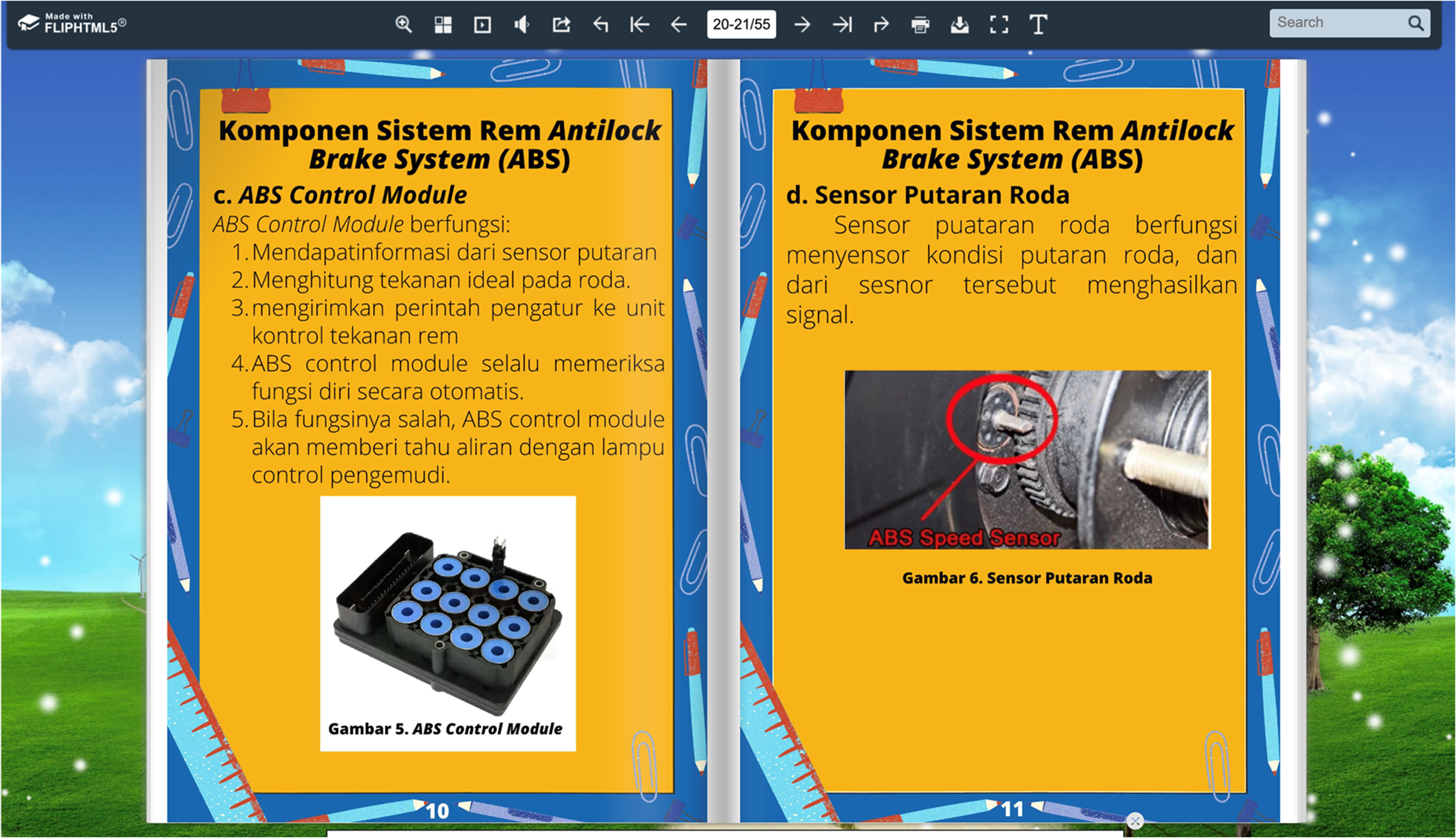
The design interface of STEM-based digital modules in the Indonesian language.
The ABS digital module was developed to address the limited availability of technology-based learning media in vocational education, particularly within automotive engineering programs, and it is not intended to function as a static digital book. In addition to presenting ABS concepts in a structured format, the module was designed with interactive and instructional features that support active learning, including non-linear navigation, embedded multimedia to visualize system operation, hyperlinks to supporting resources, and guided learning tasks and short formative checks that prompt students to apply concepts rather than only read explanations. To consolidate learning and provide immediate feedback, the module includes a quiz at the end that students complete after working through the content.
In this module, science explains the principles of motion, friction, and hydraulic pressure that influence braking performance. Technology is reflected in the digital sensors and control systems within the ABS, showing how electronic components enhance vehicle safety. Engineering connects these scientific and technological principles to the design and functioning of braking components in real vehicles. Finally, Mathematics supports the analysis and calculation of braking forces, wheel speed, and sensor data, helping students understand the system quantitatively. The developed module was evaluated through expert review and a limited try-out in a vocational high school to assess its feasibility and to examine preliminary learning gains following its use.
Research instruments
Expert instruments
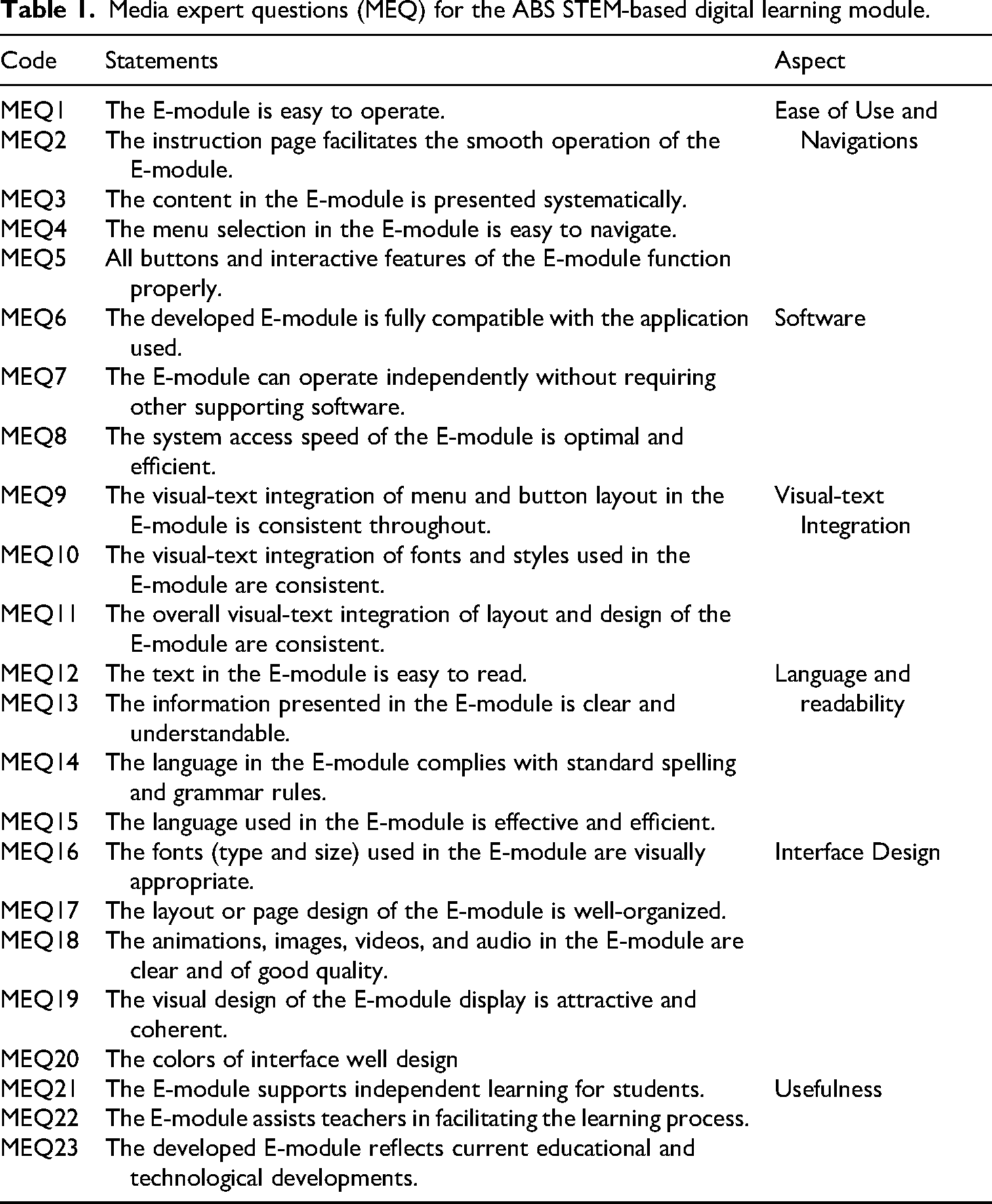
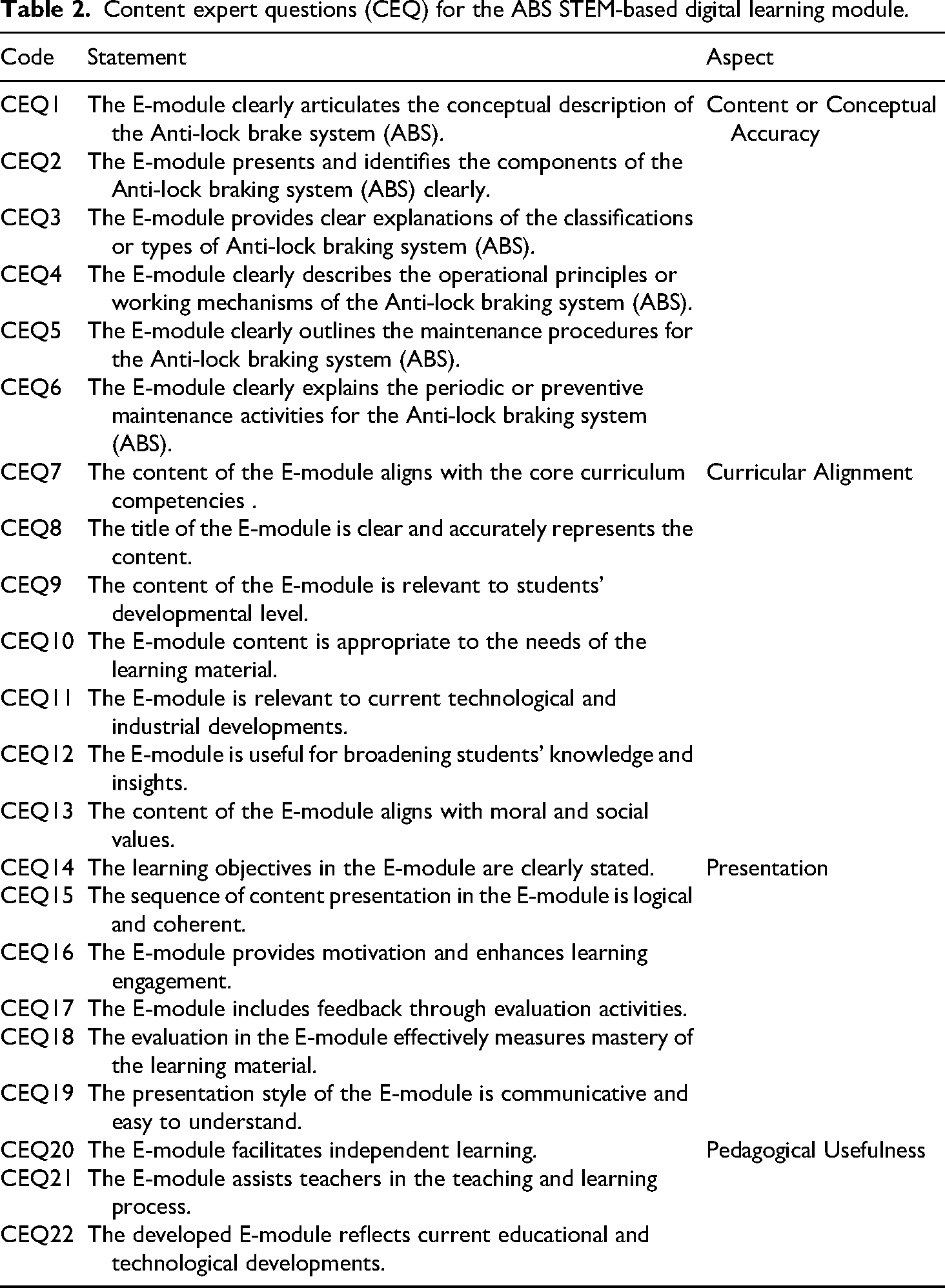
The expert instrument was used to gather data on the validity and feasibility of the e-module learning material for the ABS. Content experts (CE) and media experts (ME) completed this instrument to assess the appropriateness of the developed ABS e-module for use in the learning process. The content expert validators consisted of teachers who teach the ABS braking system at vocational high schools, lecturers from higher education institutions, and practitioners from the automotive industry. Meanwhile, the media expert validator came from the Educational Media Development Center in Semarang, Indonesia. Table 1 and Table 2 present the blueprint of the media expert and material expert instruments developed based on the Ministry of National Education (2008:28):
Media expert questions (MEQ) for the ABS STEM-based digital learning module.
Content expert questions (CEQ) for the ABS STEM-based digital learning module.
ABS knowledge instruments
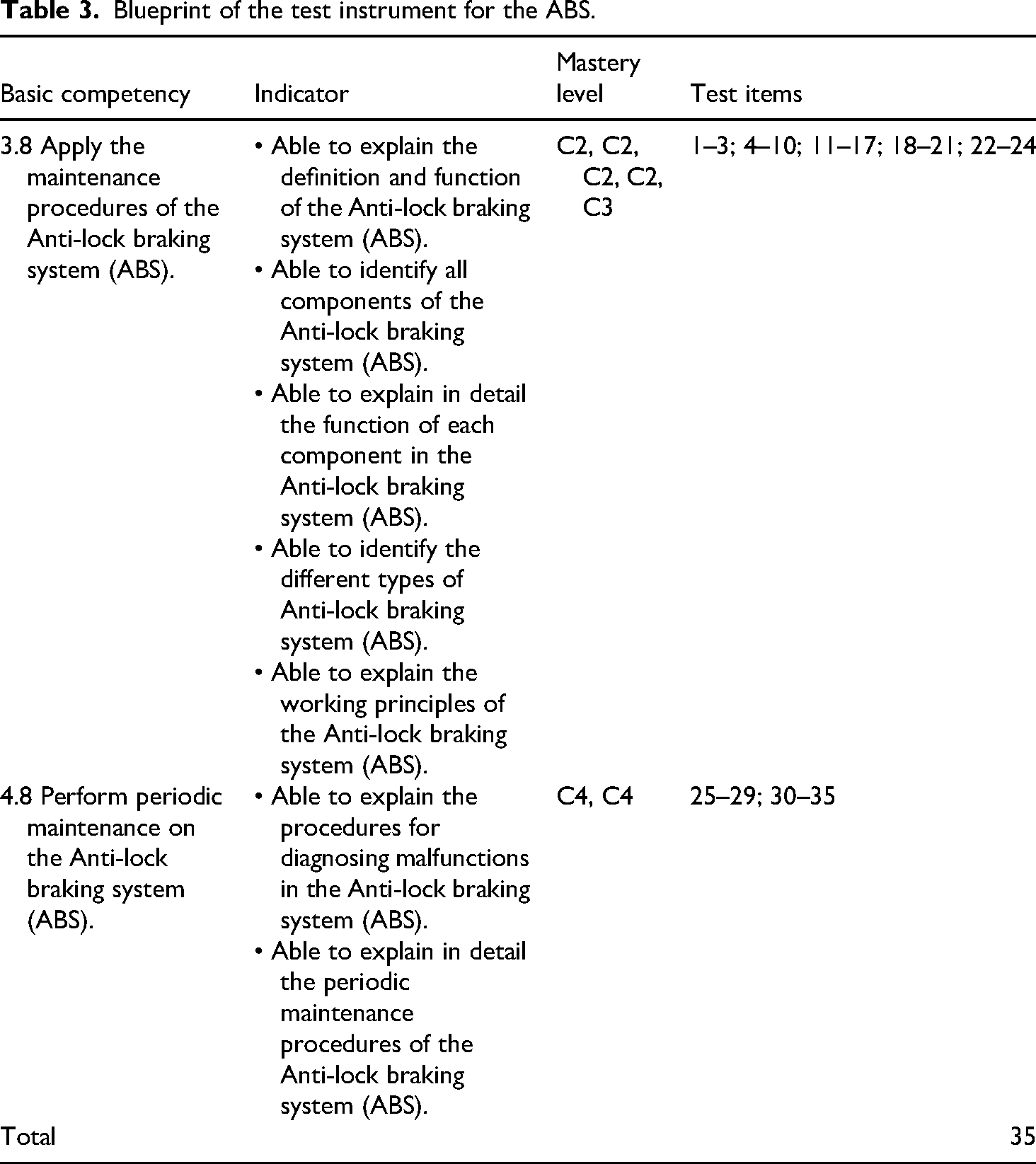
The student test instrument was used to measure the level of knowledge of the ABS material before and after the learning process using the ABS e-module. Prior to data collection, the test instrument was first tested for validity and reliability to ensure its quality. The test instrument used in this study consisted of multiple-choice questions. During data collection, the test items were developed based on the blueprint of the ABS braking system material. Table 3 presents the blueprint of the test instrument for the ABS course.
Blueprint of the test instrument for the ABS.
Data analysis
The experts involved in the validation stage were selected using purposive sampling rather than random selection, as the evaluation required specialized knowledge of vocational pedagogy, automotive competencies, and digital learning media. Specifically, experts were recruited from four stakeholder groups to ensure content, curriculum, and media perspectives were adequately represented: vocational school teachers with direct experience teaching automotive systems, vocational teacher training lecturers with expertise in curriculum and pedagogy, industry practitioners familiar with ABS related workplace standards and applications, and personnel from an Educational Media Development Center with professional experience in reviewing the quality of digital instructional materials. Selection was based on documented professional roles and experience in vocational education and training. All experts evaluated the module using a standardized instrument to enhance consistency and transparency in the review process.
Instrument testing in this study comprised both validity and reliability analyses. In validation studies, the Pearson Product Moment correlation coefficient is widely used to examine the relationship between each item score and the total test score; an item is deemed valid when the obtained correlation coefficient (r-count) is greater than the critical value in the r-table, which is determined by the sample size and the chosen significance level (typically p < .05).34,35 In this study, item validity was analyzed using IBM SPSS Statistics 25. Reliability was then tested using Cronbach's alpha in the same software. A Cronbach's alpha value above 0.70 indicates acceptable internal consistency, and values above 0.80 are generally considered good, which is consistent with recommendations in the measurement literature. 36
The feasibility of the e-module was interpreted using the percentage criteria. Based on these criteria, an e-module that obtains a feasibility score between 76% and 100% is categorized as valid and considered highly feasible for use in learning. A score between 51% and 75% is classified as reasonably valid and regarded as feasible, although minor revisions may be needed. Scores in the range of 26% to 50% fall into the less valid category, indicating that the e-module is less feasible and requires substantial improvement. Meanwhile, a score below 26% is categorized as invalid and therefore not feasible to use as a learning resource. This interpretation follows the assessment guideline proposed by Sugiyono. 37
To determine whether the STEM-based ABS digital module led to a significant improvement in students’ knowledge, a paired-samples t-test was conducted. This test is appropriate when the same group of students is measured twice, before (pre-test and after (post-test) an instructional intervention, and the aim is to test whether the mean difference is statistically different from zero. 38 Before conducting the t-test, the normality of the difference scores was examined (e.g., using the Shapiro–Wilk test) because the paired t-test assumes that these difference scores are approximately normally distributed. When this assumption is met, the paired t-test is a powerful and commonly used procedure in educational research to evaluate a learning intervention. 39 Moreover, previous studies have demonstrated that parametric tests, such as the t-test, are reasonably robust to mild deviations from normality, particularly when sample sizes are comparable to those in this study. 40 In the event of noticeable variance or distributional issues, literature also notes that adjusted or alternative t-procedures can be considered. 41 A statistically significant result (e.g., p < .001) in this context indicates that the ABS digital module produced a meaningful learning gain.
In addition, learning improvement was quantified using gain scores, calculated as the difference between post-test and pre-test scores, and normalized gain was computed to account for the maximum possible score using
Results
Feasibility of STEM-based digital ABS module
Feasibility of STEM-based digital ABS module by Media experts
The media validation was carried out by three ME with backgrounds in education and vocational training. Each expert independently assessed the quality and feasibility of the developed digital module. Table 4 presents the evaluation scores as determined by media experts.). Three media experts evaluated the module in six aspects.
The evaluation of STEM-based digital ABS by media experts.
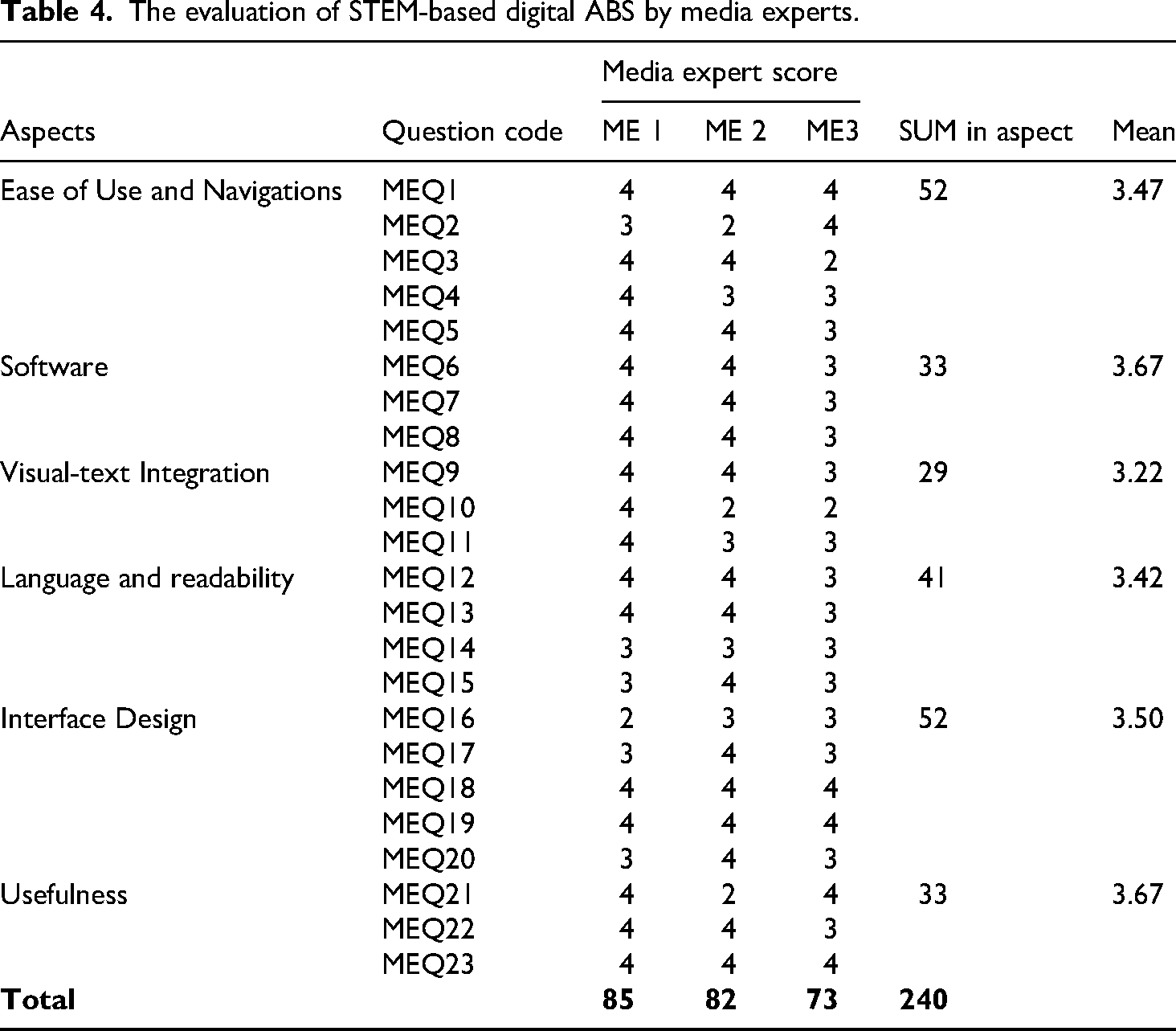
Based on Table 4, the STEM-based ABS digital module was evaluated positively overall, with consistently high scores across most aspects, while also revealing several item-specific areas for improvement. The strongest area was Software, with a mean of 3.67, indicating solid technical performance and reliable functionality, as most items were rated 3 to 4 by all experts. Ease of use and navigation in the second set also achieved a mean of 3.67, suggesting that the module is generally easy to operate; however, a lower rating on MEQ21 from a single expert indicates that a navigation element or user flow still needs refinement. Interface design was rated well, with a mean of 3.50, supported by uniformly high scores on key items such as MEQ18 and MEQ19. However, a comparatively low score on MEQ16 indicates that one specific layout or visual component should be improved to increase consistency and clarity. Ease of use and navigation in the first set obtained a mean of 3.47 and was generally strong, yet variability on items such as MEQ2 and MEQ3 suggests that some instructions or navigation cues may not be equally intuitive for all users. Language and readability reached a mean of 3.42, indicating that the text is largely clear and accessible. However, repeated ratings of 3 on several items suggest that terminology consistency and phrasing could be further refined. The aspect requiring the most attention is visual text integration, with the lowest mean of 3.22, as lower scores on items such as MEQ10 indicate that the alignment between visuals and explanations should be strengthened through clearer labeling, better placement of figures, and tighter links between diagrams and the accompanying instructional text.
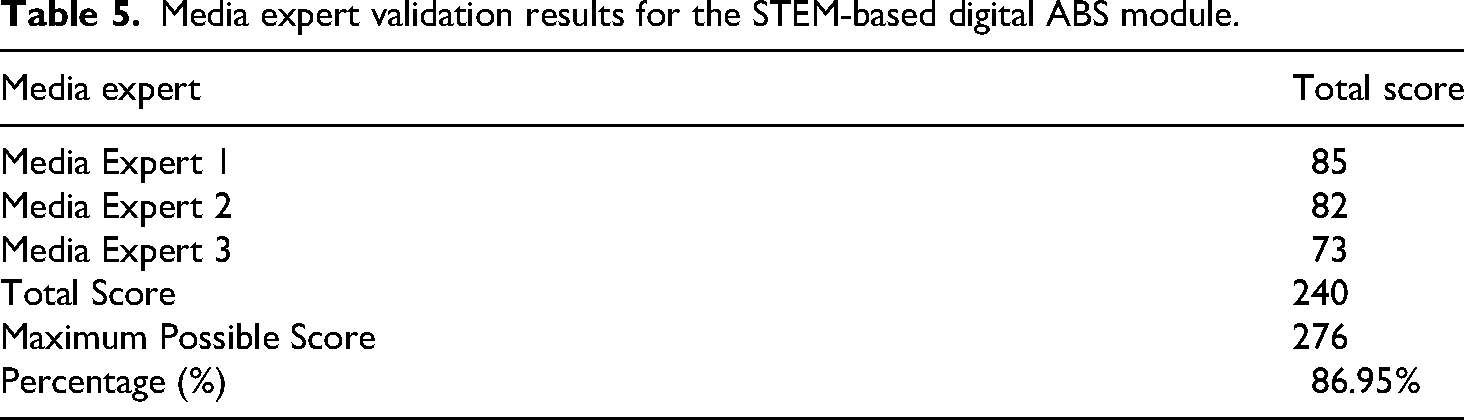
Table 5 shows the three media experts awarded total scores of 85, 82, and 73, resulting in a combined score of 240 out of a maximum possible 276, which corresponds to 86.95%. This percentage indicates that the STEM-based ABS digital module achieved a high level of media quality and is generally considered feasible for classroom use, reflecting strong performance in key design and usability criteria. Although Media Expert 3 provided a comparatively lower score than the other two experts, the overall agreement still indicates a positive evaluation, suggesting the module is well-developed while leaving room for targeted refinements based on the more critical feedback to further improve consistency and user experience.
Media expert validation results for the STEM-based digital ABS module.
Media expert evaluation and refinement
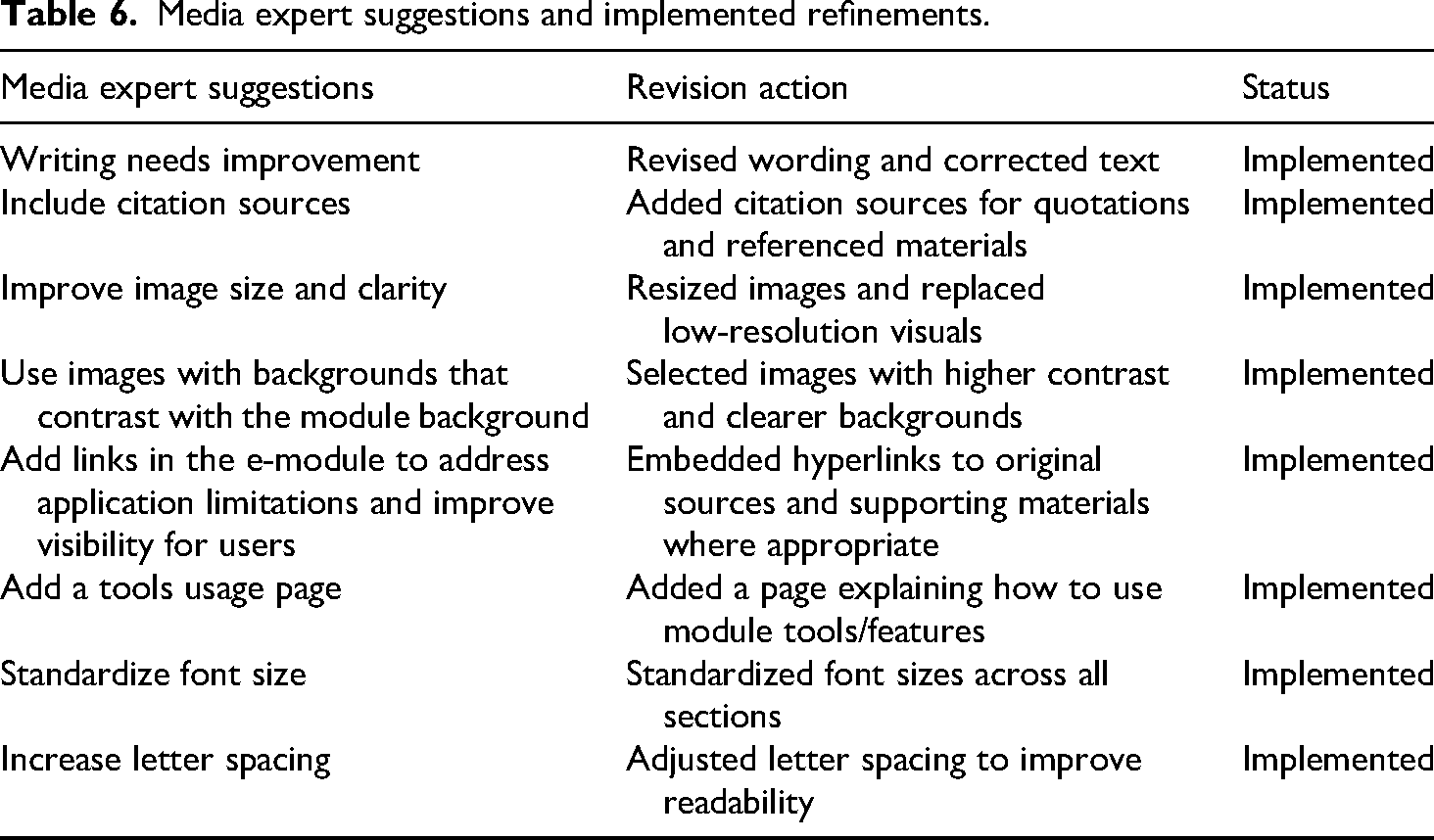
As summarized in Table 6, nine recommendations were provided, and all were implemented in the revised version of the e-module. The refinements focused on improving text accuracy and readability, strengthening academic credibility through proper citation, enhancing visual consistency and clarity, and supporting student use through additional navigation aids and tool guidance. Collectively, these revisions enhanced the module's professional appearance and user experience by ensuring that written content was more readable, visual elements were clearer and more consistent, and students could access supplementary information through embedded links when needed. The completed modification is provided in Appendix 1.
Media expert suggestions and implemented refinements.
Feasibility of STEM-based digital ABS module by content experts
The feasibility of the e-module for teaching the ABS was assessed by two content experts with backgrounds in vocational automotive education and mechanical engineering, as shown in Table 7. They evaluated the content in terms of accuracy, alignment with the learning objectives, clarity of explanations, and suitability for vocational high school students. Overall, the material aspect of the e-module received a positive evaluation, indicating that the content can be used to support learning with only minor improvements if needed.
The evaluation of STEM-based digital ABS by content experts.
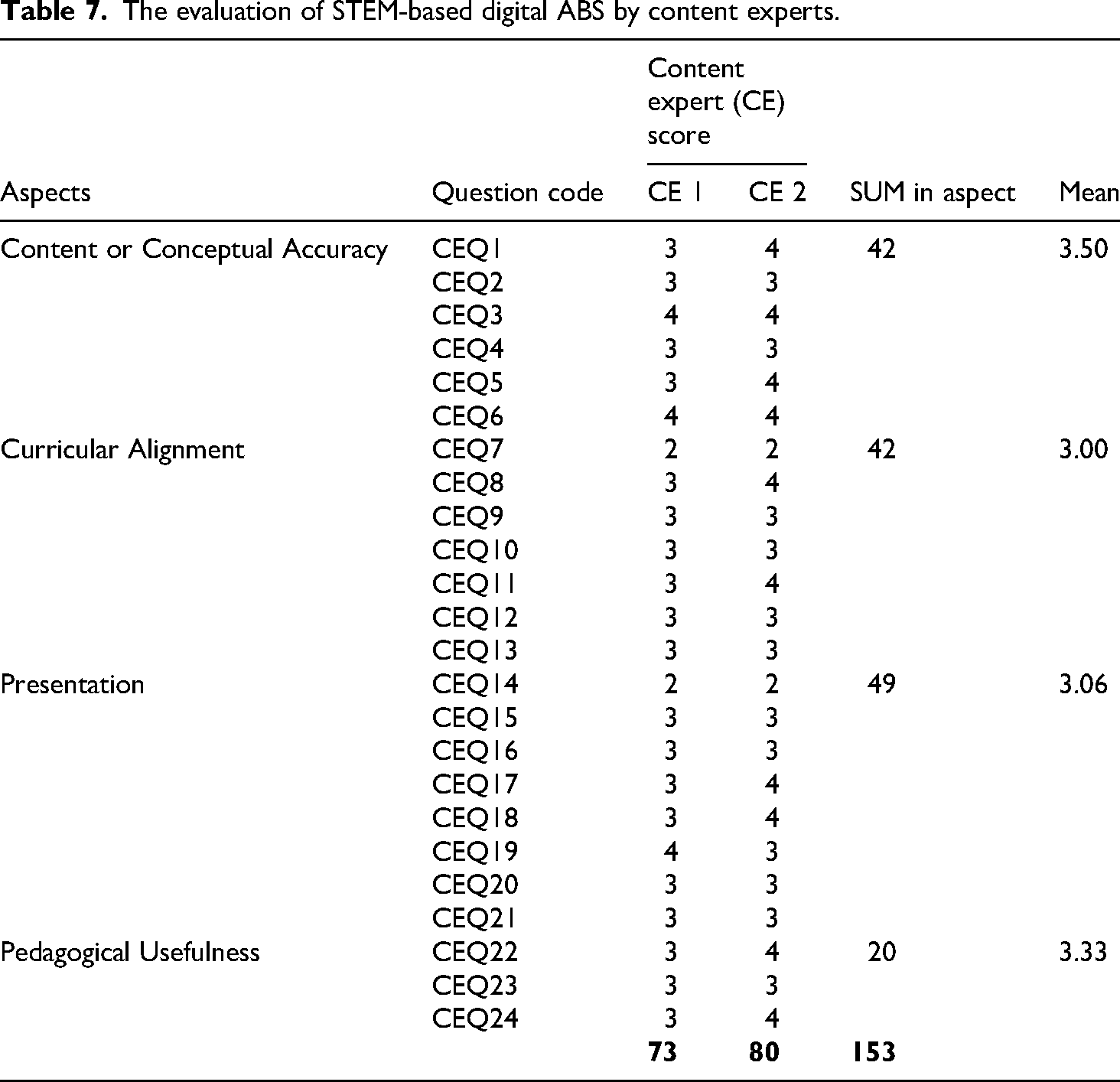
Based on the Table 7, the STEM-based ABS digital module was judged to be strongest in content quality, with Content or Conceptual Accuracy achieving the highest mean score of 3.50. This suggests that the ABS concepts are generally correct, scientifically sound, and consistently explained across sections, as several items received ratings of 4 from both experts. Pedagogical usefulness was also rated positively with a mean of 3.33, indicating that the module is considered helpful for supporting learning through activities, explanations, and competency-oriented tasks, although some items remained at level 3, implying that instructional guidance or learning supports could be strengthened further. In contrast, curricular alignment received the lowest mean score of 3.00, mainly due to consistently low ratings on CEQ7 with scores of 2 from both experts, which signals a clear weakness in how explicitly the module maps to curriculum standards, learning objectives, or assessment indicators and suggests the need for clearer links to competencies and lesson outcomes. The presentation was rated slightly above adequate, with a mean of 3.06. However, the low scores on CEQ14 from both indicate that specific presentation elements, such as organization, sequencing, or the clarity of content structure, should be improved to enhance readability and instructional flow. Overall, the scoring pattern indicates that the module's main strengths lie in conceptual accuracy and instructional usefulness, while refinements are most needed to make curriculum alignment more explicit and improve selected aspects of presentation and structure.
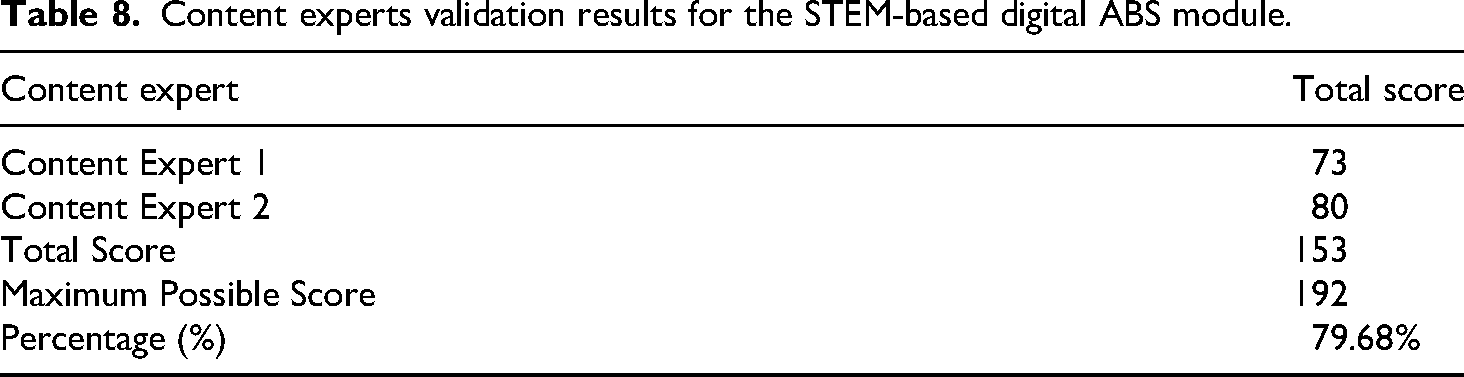
Based on Table 8, the two content experts assigned total scores of 73 and 80, resulting in a combined score of 153 out of a maximum possible 192, which corresponds to 79.68%. This result indicates that the STEM-based ABS digital module demonstrates a good level of content quality and is generally appropriate for instructional use, particularly in terms of conceptual coverage and relevance. The difference between the two experts’ totals suggests some variation in judgment, implying that while the module is acceptable overall, certain elements may require refinement to achieve stronger agreement and higher quality, such as improving the clarity of curriculum mapping, strengthening instructional sequencing, or enhancing the presentation of key concepts based on the more critical feedback.
Content experts validation results for the STEM-based digital ABS module.
Content experts evaluation and refinement
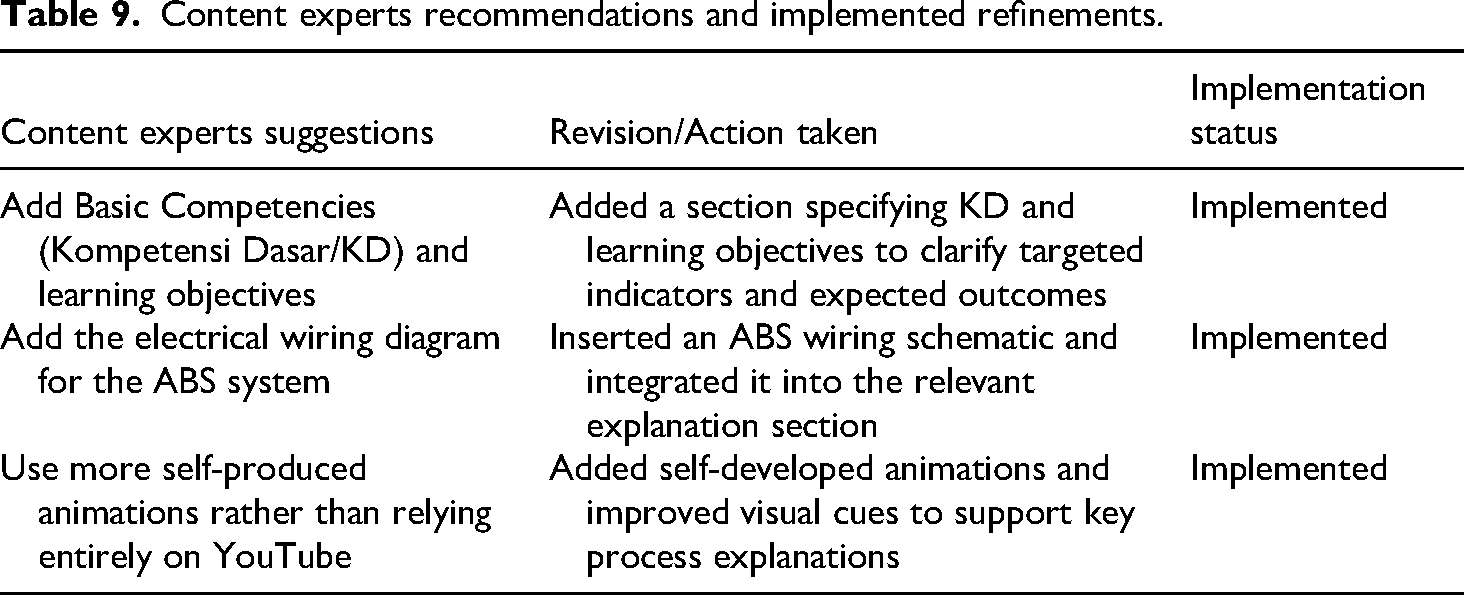
Beyond the numerical scores, the experts’ open-ended comments led to three concrete refinements implemented before the classroom try-out: adding the Basic Competencies and learning objectives to strengthen curricular transparency, adding an ABS electrical wiring diagram to improve technical completeness, and increasing the use of self-developed animations to enhance instructional coherence and originality. Table 9 summarizes the major recommendations and the corresponding revisions made in the final version of the module. The completed modification is provided in Appendix 1.
Content experts recommendations and implemented refinements.
The improvement of vocational students’ knowledge of ABS through the digital module
Before evaluating students’ understanding of ABS through the digital module, we first conducted an instrument validity test to ensure that the questions were appropriate for collecting research data. The test consisted of 35 multiple-choice items, which were administered to 35 students in the LVE program at the vocational high school. The results of the validity analysis are presented in Table 10.
The validity of the instrument of ABS knowledge.
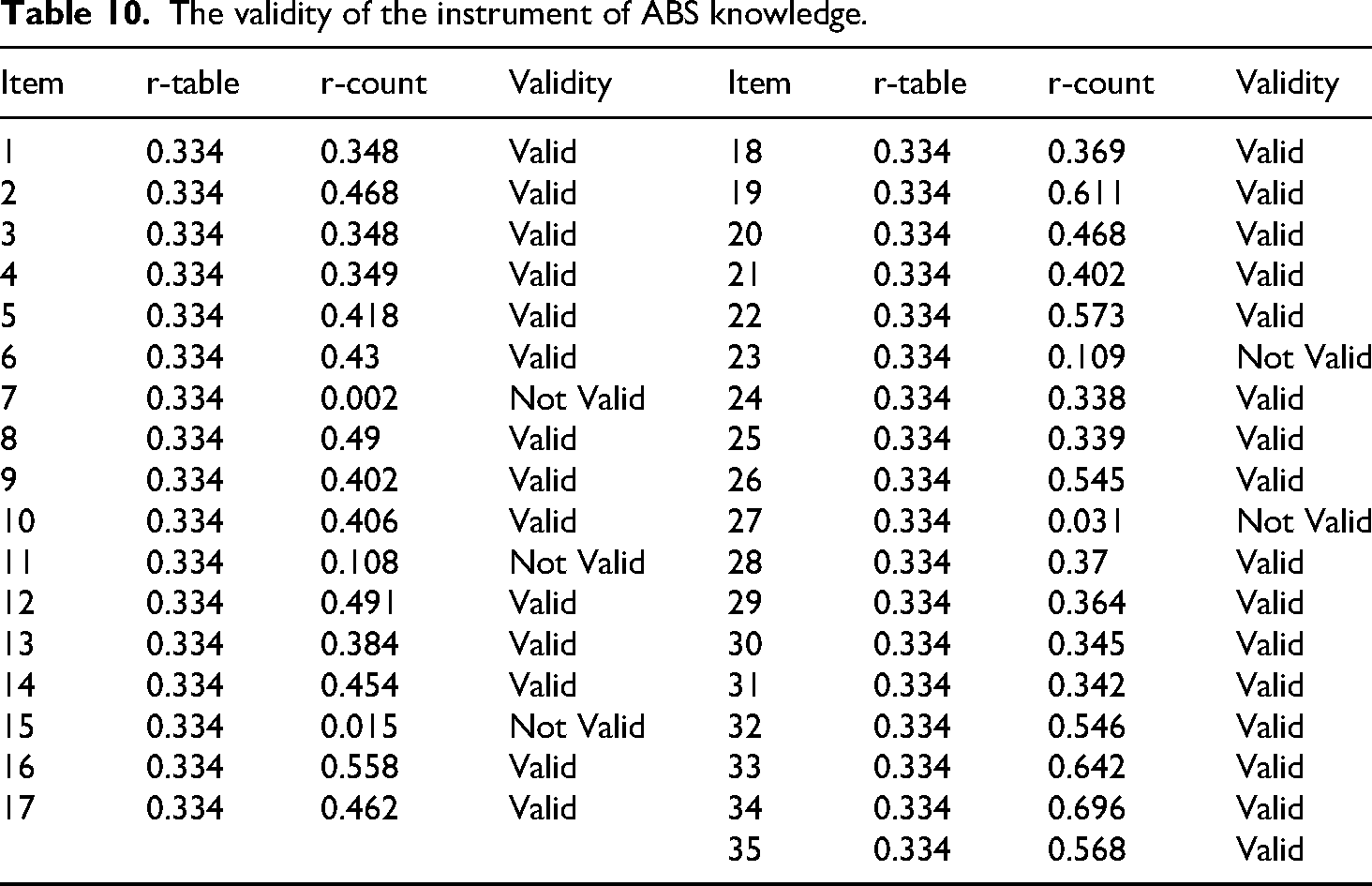
The validity test results showed that several items were identified as invalid, namely items 7, 11, 15, 23, and 27. An item was classified as invalid because its r-count value was lower than the r-table value. These items were then re-examined against the test blueprint that had been developed. Item 7 was mapped to the indicator “identifying the components of the Anti-lock brakig system (ABS),” for which seven items were created, so six valid items remained. Items 11 and 15 were linked to the indicator “understanding the function of ABS components,” which consisted of seven items, leaving five valid items. Item 23 was connected to the indicator “understanding the working principle of the ABS,” which had three items, leaving two valid items. Item 27 was linked to the indicator “identifying faults in the ABS,” which had five items, leaving four valid items. Based on the test blueprint for the competency of maintaining the ABS, 30 valid questions were selected from the total of valid items to measure students’ knowledge competence in ABS maintenance, serving as instruments for both the pre-test and post-test evaluations. Furthermore, a reliability test was conducted using Cronbach's alpha, which yielded a reliability coefficient of 0.83, indicating that the test items had good internal consistency and were reliable for use in the study.
Students’ knowledge of the ABS concept was evaluated through the digital module using a test. Pre- and post-tests were administered to determine the difference in students’ knowledge of ABS material after using the digital module. The Shapiro–Wilk test indicated that the difference scores (p = .158) were not significantly different from a normal distribution. Therefore, the normality assumption was met, and paired-sample t-tests were deemed appropriate for analyzing the differences between the pre- and post-tests. A paired-sample t-test was then conducted to evaluate the ABS digital module's impact on improving vocational students’ knowledge. (Table 11)
A paired-sample t-test of ABS knowledge.

The results indicated that the pilot study improve students’ knowledge after using the ABS Digital Module, with scores increasing from pre-test (M = 51.49, SD = 12.32) to post-test (M = 71.81, SD = 10.01), t(34) = −20.33, p < .001. The mean difference of −9.72 suggests a substantial gain in performance, supported by a large effect size (Cohen's d = 3.67). Assuming a maximum score of 100, the normalized gain was g 0.42, which falls in the moderate range and indicates that students achieved about 42% of the possible improvement beyond their pre-test level. These findings demonstrate that the STEM-based ABS Digital Module had a substantial positive impact on students’ learning outcomes in vocational automotive education.
Discussion
Feasibility of STEM-based digital ABS module
The results of the media expert validation showed that the STEM-based digital ABS module achieved a score of 86.95%, placing it in the “Highly Feasible” category, which indicates that the layout, navigation, and multimedia elements were considered appropriate for vocational students. This aligns with the view that media or instructional design validation is a critical stage in R&D-based learning product development because it ensures that the digital environment supports cognitive processing and does not overload learners.33,43 Studies on technology-enhanced learning similarly report that expert review of interface, readability, and interactivity improves user acceptance and learning performance, especially when students access content through multiple devices such as smartphones and laptops.44,45 In the context of vocational education, where students often prefer practice-oriented and visual materials, media validation helps ensure that simulations, images, and step-by-step displays align with workshop practices (Cheng & Tsai, 2019). Thus, the high feasibility score from media experts confirms that the module is ready for classroom use with only minor refinement; however, it also highlights the need for future usability testing with students to complement expert judgment.
The content expert validation yielded an average score of 79.68%, also falling within the “Highly Feasible” category, indicating that the material on ABS was deemed accurate, relevant to vocational automotive curricula, and clearly presented. Content validation is particularly important in technical subjects because misconceptions about hydraulic circuits, sensor functions, or Electronic Control Unit (ECU) logic can easily be transmitted to learners if materials are not checked by practitioners or subject specialists.25,46 Prior research on module and e-textbook development in TVET shows that involving both school teachers and higher education or industry experts strengthens alignment with competency standards and actual workplace technology.29,47 Moreover, Expert-validated content is a prerequisite for subsequent learning-outcome testing because it helps ensure that observed score changes are less likely to be driven by inaccurate or poorly aligned materials. However, attributing gains to an intervention requires an appropriate comparison condition (Campbell & Stanley, 1963; Shadish et al., 2002). Therefore, the positive validation from content experts supports the claim that the STEM-based digital ABS module is pedagogically sound and technically accurate, while also highlighting a common gap in the literature: few studies report both media and content validation data together for STEM-oriented vocational digital modules.
The improvement of vocational students’ knowledge of ABS through the digital module
Paired-samples t-test results indicated that students’ post-test scores were higher than their pre-test scores following the implementation of the STEM-based digital ABS module. The average score increased from 51.49 (SD = 12.32) on the pre-test to 71.81 (SD = 10.01) on the post-test. The mean difference was −20.32, corresponding to an average gain of 20.32 points (39.46% relative to the pre-test mean) and a very large effect size, Cohen's d = 3.67. Because the study used a one-group pre-test/post-test design without a comparison group, the observed gain should be interpreted as preliminary and cannot be attributed uniquely to the module (Campbell & Stanley, 1963; Shadish et al., 2002). This result aligns with previous studies that demonstrate the enhancement of conceptual knowledge in technical and vocational education settings through interactive and multimedia-based learning resources, supporting their future work.43,47–49 Similar improvements have been reported in digital STEM modules across mechanical and electrical engineering education,50,51 where learners demonstrated better retention and transfer of complex technical concepts.30,31
Furthermore, the observed pre-post gain suggests that the instructional sequence that incorporated the digital module was associated with higher short-term ABS test performance and may support integrated thinking across science, technology, engineering, and mathematics domains. This interpretation is consistent with research indicating that STEM-based learning can promote analytical reasoning, problem solving, and system-level understanding in vocational contexts, and aligns with calls for digital transformation in vocational education (UNESCO, 2023) The module activities encouraged students to connect motion and friction concepts with technological control systems, which resonates with experiential learning perspectives emphasizing contextualized, hands-on learning. 52 Nevertheless, because the implementation did not include a comparison group, the results do not provide evidence of causal effectiveness or added value over conventional instruction (Campbell & Stanley, 1963; Shadish et al., 2002). Future research should employ quasi-experimental or experimental comparisons and include longer-term retention and performance-based assessments to examine whether gains are sustained in vocational settings.
Limitations and future directions
This study was limited by the sample size and single-site implementation, which may restrict the generalizability of the findings to other vocational contexts or technical subjects. In addition, the classroom evaluation employed a one-group pre-test/post-test design without a comparison group; therefore, the observed score gains cannot be attributed uniquely to the digital module and may reflect factors such as maturation, teacher explanation, repetition, or the test itself. The study primarily focused on short-term cognitive outcomes and did not examine psychomotor skills or real-world workshop performance. Additionally, long-term retention and transfer of learning were not measured. Future research should involve larger and more diverse samples, including multiple vocational institutions, and employ quasi-experimental or experimental comparisons with conventional instruction or alternative learning resources to examine the module's added value. Further investigations could integrate practical performance assessments and learning analytics to support formative feedback and personalization.
Conclusion
The development and validation of the STEM-based digital ABS module indicate that it is pedagogically and technically feasible for use in vocational automotive education. Media and content expert evaluations confirmed the quality, clarity, and relevance of the learning materials, aligning with digital learning standards for TVET. In this pilot study, the students’ post-test scores were higher than their pre-test scores after using the module, suggesting short-term learning gains during implementation. However, because the study did not include a comparison group, it cannot establish that the observed gains were caused by the module or that the module provides added value relative to conventional instruction. This study provides design and feasibility evidence, as well as initial learning-outcome data, that can inform future controlled evaluations of STEM-oriented digital modules in vocational automotive education.
Supplemental Material
sj-docx-1-ijj-10.1177_03064190261420832 - Supplemental material for Developing and evaluating anti-lock braking systems (ABS) through a STEM-based digital learning module for vocational automotive education
Supplemental material, sj-docx-1-ijj-10.1177_03064190261420832 for Developing and evaluating anti-lock braking systems (ABS) through a STEM-based digital learning module for vocational automotive education by Andri Setiyawan and Muhammad Syamsuddin Nurul Iman in International Journal of Mechanical Engineering Education
Footnotes

Ethical approval
Ethical research approval was obtained from the Ethics Committee of the IRB at the Faculty of Engineering, Universitas Negeri Semarang, under Reference Number 47/15/UN37.1.5/KM/2022. This study is part of a broader research project in collaboration with Johannes Kepler University and Universitas Negeri Semarang. The research was conducted in accordance with the ethical principles outlined in the Declaration of Helsinki and complies with the requirements set by the Ministry of Research and Higher Education in Indonesia. Data, including participant information, were handled with confidentiality, and the anonymity of the collected data was ensured to protect participants’ privacy.
Informed consent
For the realization of the research, permission (consent) was sought from university students. Participation in the study was voluntary. The data was collected, saved and analyzed anonymously.
Consent for publication
All authors have read and approved the final version of the article.
Research involving human participants - rights
The study involved human participants who voluntarily chose to participate in the research. All research participants are guaranteed privacy and anonymity.
Credit authorship contribution statement
Open access funding
The authors disclosed receipt of the following financial support for the research, authorship, and/or publication of this article: This research was supported by Johannes Kepler University Open Access Publishing Fund and the Federal State Upper Austria.
Declaration of conflicting interests
The authors declared no potential conflicts of interest with respect to the research, authorship, and/or publication of this article.
Data availability statement and material
All data materials as well as software applications support published claims and comply with field standards. Data that supports the findings of this study are available from the corresponding author, Andri Setiyawan upon reasonable request.
Supplemental material
Supplemental material for this article is available online.