



Abstract
The traditional method of product design emphasizes structural development and detailed documentation. However, simulation-based design methods, such as multi-body, thermal or strength analysis, can add more value to the design process. Traditionally, product design courses have been offered as two separate courses: one covering the theory and processes of machine design, while the other covers computer-aided design and simulation tools. The new master-level course presented here combines both approaches in a single, comprehensive course.
The course follows a systematic product design process, starting from the definition of a requirement list, followed by the development of a functional block diagram and product structure. Simulations are then used to test different solutions and help narrow down design choices. This paper introduces an iterative course development method that successfully incorporates these varied elements into the course.
The study demonstrates that an iterative course development cycle, responsive to student feedback, is an effective method for continuously improving the integration of theoretical and practical components in engineering education.
Introduction
The digitalization of industry, combined with the growing complexity of products and their associated information, poses major challenges for educating the next generation of engineers. To remain competitive and deliver cost-effective products, companies are increasingly adopting simulation-based design methods. Often referred to as simulation-driven product development, this approach has gained widespread use in industries such as semiconductors, aerospace, and automotive, and is now being explored in emerging fields like biomechanics due to its potential to enhance product development and innovation.1–5
In contrast to traditional product design methods, which focus primarily on the structure and documentation of design work, simulation-based design enriches the process by integrating techniques such as multi-body, thermal, and strength analyses. This approach emphasizes the inherently iterative nature of design and supports more comprehensive and dynamic development (Figure 1).
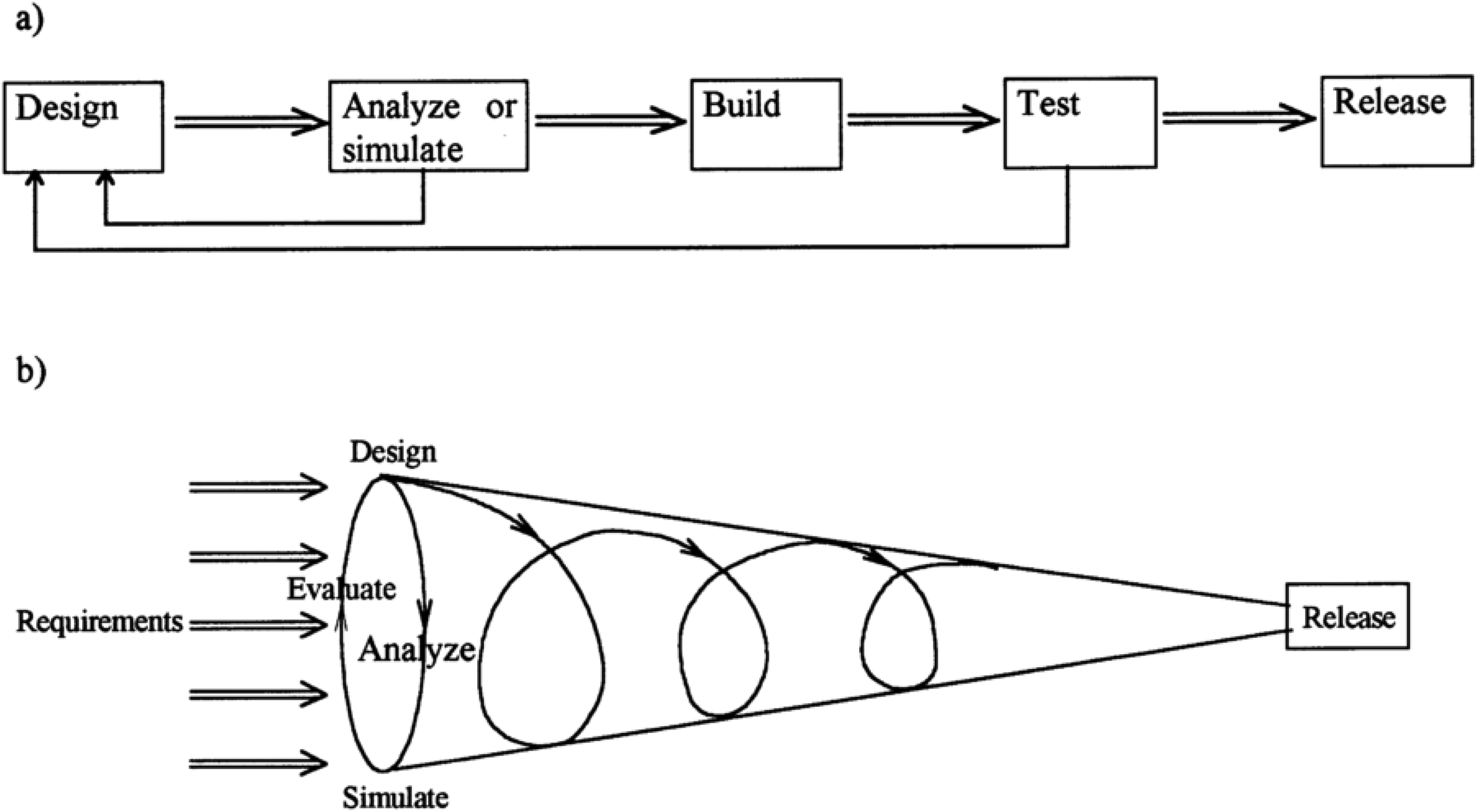
The planar (a) and spatial (b) approaches to the simulation-based design. 1
When implemented properly, simulation-based design offers several advantages. It can reduce the need for physical prototypes and tests, enable faster and more straightforward virtual prototyping, shorten lead times in the design process, and lead to improved solutions through a more exhaustive exploration of the solution space. Additionally, it facilitates earlier identification of design errors in the product life cycle and provides designers with immediate feedback on design decisions.6–9
Simulation tools are particularly valuable in the concept design phase, where they help designers identify optimal solutions. As Computer-Aided Design (CAD) and Computer-Aided Engineering (CAE) tools continue to advance, simulation-based design methods are becoming increasingly efficient. They support an iterative design cycle in which various concepts are evaluated and refined using behavioral modelling. 10 Numerous commercial software packages offer integrated design and simulation capabilities within a single environment.
It is important to integrate simulations into the design process from the outset, as early use helps designers better understand product behavior and the impact of design changes. 7 Once the product is fully assembled, simulations tend to function mainly as verification checks rather than as proactive design support. Simulations are especially valuable in the design of multidisciplinary systems, where components from different domains must be integrated to achieve optimal overall performance. By enabling the analysis of interactions and dependencies across disciplines, simulations help designers evaluate and refine complex systems to achieve the desired balance and functionality. 8
The increased availability of computing power has made simulation and optimization tools more effective across different phases of engineering design. At the same time, however, the growing complexity of products introduces challenges for product data management. The expanding volume of product-related information—such as CAD models, manufacturing drawings, simulation models and results, and user manuals—must be stored and managed systematically. Product Data Management (PDM) systems address this need by providing an environment for storing and sharing product-related data. 11
Over time, PDM has evolved into Product Lifecycle Management (PLM), which encompasses all data associated with a product from initial requirements through to end-of-life and recycling. The scope of PLM has expanded beyond the traditional engineering domain to cover the entire product lifecycle, including marketing, sales, support, and after-sales services. Managing all product-related data within a single system improves information flow and efficiency, while also enhancing collaboration across cross-functional teams.12,13
Traditionally, design methods and computer-aided tools have often been taught separately. Courses on machine design theory typically focused on physical prototypes, while simulation tools were viewed mainly as replacements for these prototypes and used during or after the detailed design phase. Separate courses would then cover CAD and the use of Multi-Body Simulation (MBS) and the Finite Element Method (FEM). To fully demonstrate the potential of simulation-based design, it is essential to integrate courses on design theory with those on simulation tools. Such integration enables students to gain both the methodological foundations and the practical skills needed to use these tools effectively.
This leads to the research question addressed in this paper:
− How does an iterative course development model impact student learning outcomes and perceptions in a simulation-based design course?
This paper presents an iterative course development method grounded in the concept of simulation-based design. The method was tested in three implementations of a master's-level Machine Design course that introduces students to simulation tools and simulation-based design methods. The paper describes these three course design iterations and analyses their impact on student learning. The proposed approach provides a more integrated and comprehensive way of teaching simulation tools and design methodology, thereby better preparing future engineers to address the complexity of modern products and engineering challenges.
The case course
The course is a six-week, single-period course worth 5 ECTS credits. It is targeted at first-year students in the two-year Master's Program in Mechanical Engineering. Each year, approximately 100 students, including exchange students, enroll in this elective course, which was first introduced into the curriculum in autumn 2016.
The course comprises two two-hour lectures and two four-hour computer-lab exercise sessions per week. In addition to supporting group work, the lectures may feature guest speakers from industry who demonstrate the practical application of the tools and methods used in companies and help motivate students. Attendance at lectures and exercise sessions is optional and is not assessed.
The course is designed to introduce mechanical engineering students to simulation-based design approaches. It has two primary learning outcomes:
- to enable students to identify the fundamental elements, concepts, and methodologies of machine design. - to develop students’ proficiency in using computer-aided tools for mechanical engineering tasks.
The course assumes that students already have a basic understanding of traditional design methods,14,15 as well as prior exposure to CAD and mechanics of materials. It introduces simulation tools with a focus on mechanism and strength analysis techniques. In parallel, a 5 ECTS project course running over two periods is offered, and most students are expected to take both courses simultaneously. This parallel structure allows students to immediately apply their newly acquired skills in a practical project context. By the end of the course, students are expected to have developed a deeper understanding of simulation-based design methodologies and the practical use of simulation tools in machine design.
The core of the course is a continuous group exercise. Student teams of three to four members study and redesign a one-degree-of-freedom planar linkage mechanism through four phases (as illustrated in Figure 2). Each group chooses its own case, such as a lifting mechanism, providing a hands-on opportunity to apply the concepts learned in the course.
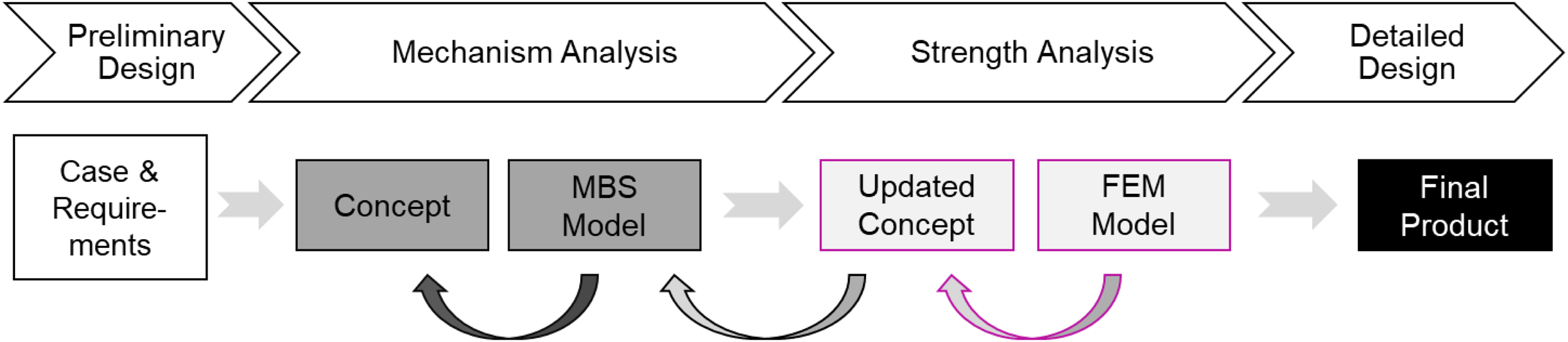
The four phases of the group exercise.
In the Preliminary Design phase, students define the product requirements (operating cycle, motions, loads) and overall functionality. Because the mechanism is selected during this phase, students also review existing mechanisms and products as references.
In the Mechanism Analysis phase, students develop a preliminary MBS model of their mechanism. They investigate its behavior, define connections and joint types, and select preliminary materials for the links. They calculate the forces acting on the mechanism and determine the power required to operate it with the desired load and speed. The CAD models are iteratively refined to meet the requirements established in the previous phase.
In the Strength Analysis phase, students use the MBS results as input for strength analysis with FEM. They evaluate whether the parts can withstand the applied loads and further refine the part geometries. This phase includes geometry optimization and a comparison of how the CAD models have improved relative to those used in the previous phase.
The final Detailed Design phase focuses on the selection of machine elements, such as bearings and actuators, and the detailed design of the mechanism. Students prepare a preliminary cost estimate and analyse how well the design satisfies the requirements defined in the first phase.
Each phase concludes with the submission of a written report, graded on a scale from 0 (fail) to 5 (excellent). Students are also required to reflect on their learning in each phase. The final course grade is calculated as a weighted average of these phase reports, thereby emphasizing both technical performance and the individual learning process.
By the end of the group exercise, students are expected to have a comprehensive understanding of the simulation-based design process and the use of simulation tools in machine design. They should appreciate the iterative nature of design and recognize the critical role of simulation tools in supporting and enhancing this process.
The course development cycle
The course development cycle shares foundational principles with simulation-based design, as illustrated in Figure 3. This cyclical process begins with Course Iteration, where insights from previous iterations inform the new course design. During Course Implementation, the planned iteration is carried out, with necessary adjustments made to address emerging challenges. Student feedback is gathered through surveys and group reports. In the Results Analysis phase, these inputs are combined and examined. Most critical is the Course Reflection phase, where teaching staff evaluate the iteration, reflect the previous phase's findings, and brainstorm ideas for improvement. Promising concepts are fed back into Course Iteration for future implementation, and survey questions for the forthcoming iteration are also formulated here.
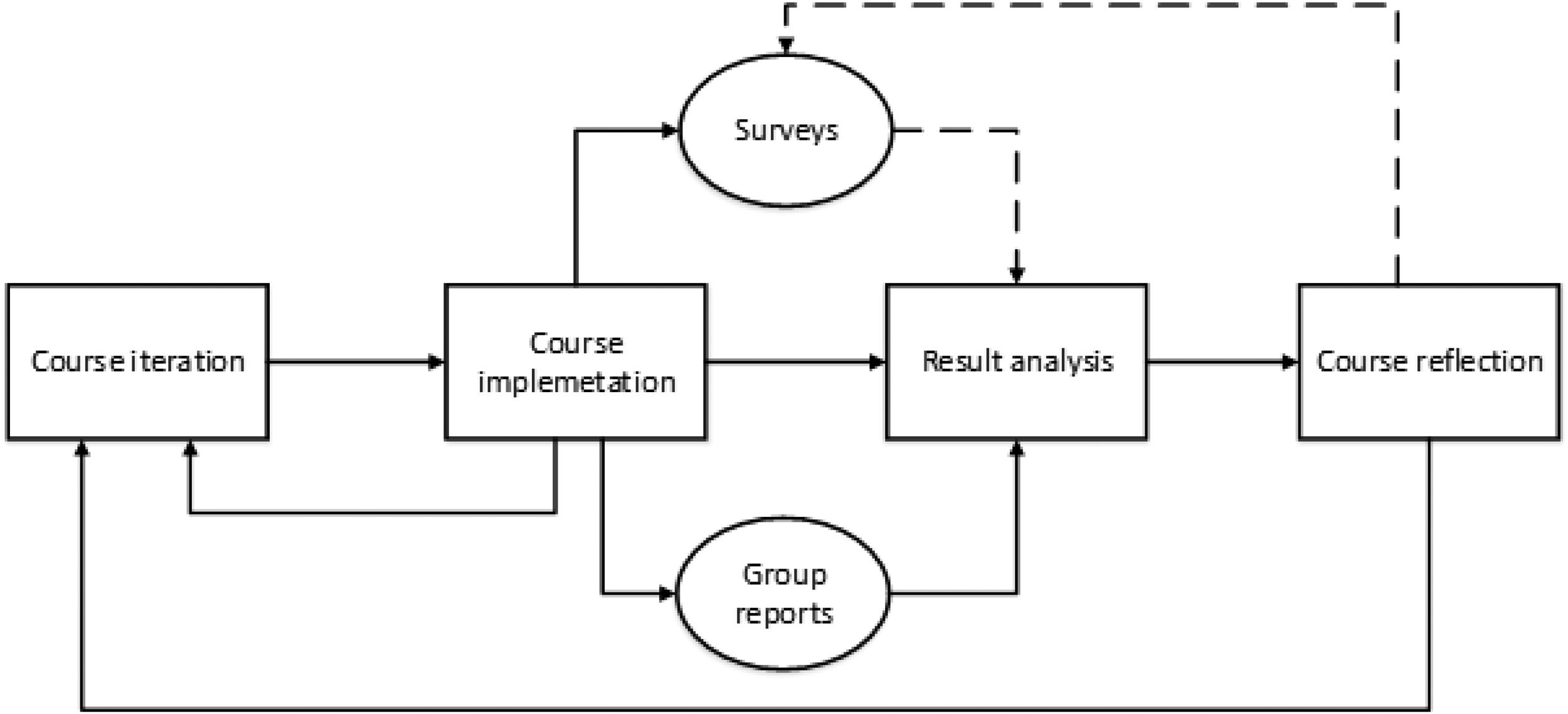
Visualization of the course development model iteration cycle, with solid lines indicating actions during the course and dashed lines post-course activities.
Data collection
To understand students’ backgrounds and perceptions regarding design methods, two mandatory online surveys are conducted. The initial survey takes place in the first week, collecting data on students’ previous experience with design tools and simulation methods. The final survey at course conclusion assesses skill development and group performance. Aggregated survey results from the first (N = 91), second (N = 86), and third (N = 73) course iterations provide insight into student feedback and learning outcomes. A key limitation is the reliance on self-assessment data, which can introduce biases due to varying levels of self-awareness among participants.
In addition to the mandatory surveys, a voluntary feedback survey is offered at the course's end (1st N = 42, 2nd N = 49 and 3rd N = 30) to evaluate overall student sentiments regarding course modifications.
First iteration
Debuting in autumn 2016, the course spanned five weeks and was segmented into four phases, as seen in Figure 2. Each phase spanned one week, with the exception of the final phase, which extended over two weeks. Each phase lasted a week, except the final phase which extended over two. During the preliminary design phase, students were grouped based on self-assessments from the initial survey, ensuring diverse skillsets within each group to foster collaborative learning. In addition to learning design methods, students honed their software skills. PTC Creo and Mathcad facilitated mechanism analysis, whilst Siemens NX was utilized for strength analysis and detailed design phases. Employing dual software tools aimed to push students towards simplified models, ultimately broadening their understanding of design functionalities.
Figure 4 presents students’ self-assessed competencies with different computer tools, ranging from 1 (no experience) to 10 (excellent). Notably, students were unfamiliar with simulation tools, complicating group formation as high-skill students were sparse. Feedback suggested adopting a less teacher-led group formation method for future iterations, allowing students to self-organize—an approach substantiated by written student feedback.
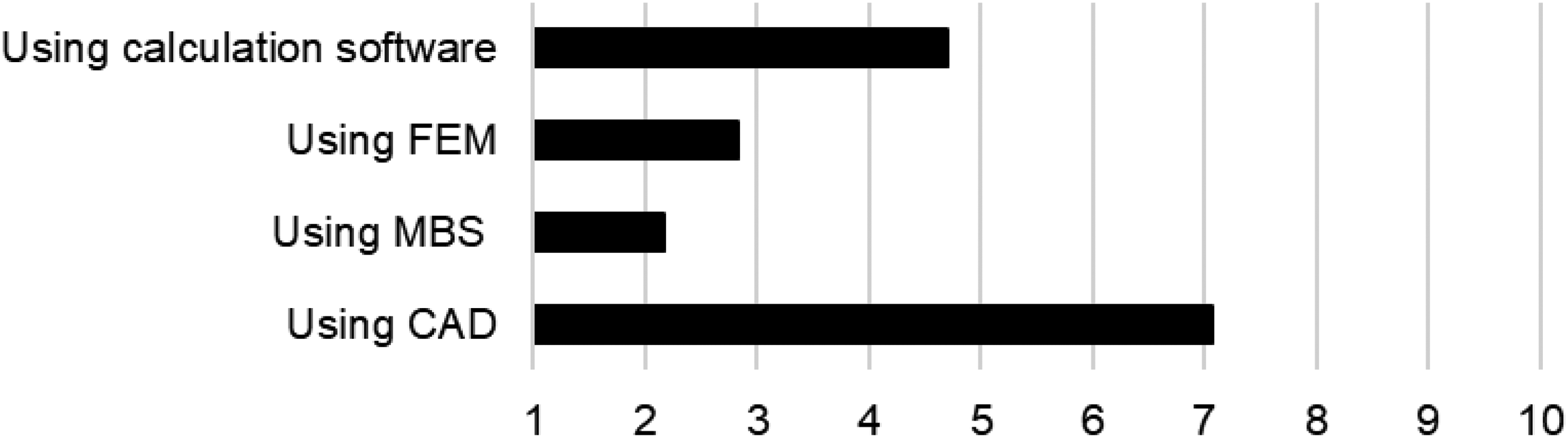
The 1st iteration's students’ self-assessed software skills, on scale from 1 (no skill) to 10 (excellent).
Students recommended using a single CAD program throughout the course and integrating additional CAD-related tools. Survey data (Table 1) indicated that Creo was most familiar due to its inclusion in introductory CAD courses. Given the diversity of master's program entries, selecting an unfamiliar CAD tool ensured fair starting ground for all students. Thus, Siemens NX was selected as the sole tool, offering comprehensive CAD/CAE capabilities and enabling the use of skeleton design technique 16 to enhance assembly work.
Students’ familiarity with commercial CAD software. Scale 1 to 4, where 1 is “not familiar” and 4 is “use regularly”.

Challenges arose during mechanism selection for study cases, with some groups opting for overly simple mechanisms or mechanisms unsuitable for strength analysis, leading to added workload. A validation process is preferred for future iterations to prevent such issues from recurring.
Second iteration
In autumn 2017, the course was extended to six weeks due to curriculum changes, providing students more time for preliminary design. During the preliminary design phase, students were tasked with creating a moving skeleton to illustrate their selected mechanism. The skeleton design required constructing a frame assembly or part that served as the base to which all other parts were attached (Figure 5). The additional parts were dependent on the geometries and dimensions of the skeleton but were not interconnected with each other, facilitating easy interchangeability within assemblies. This approach streamlined collaboration, allowing multiple individuals to work simultaneously on the same model, thereby enhancing teamwork and design efficiency.
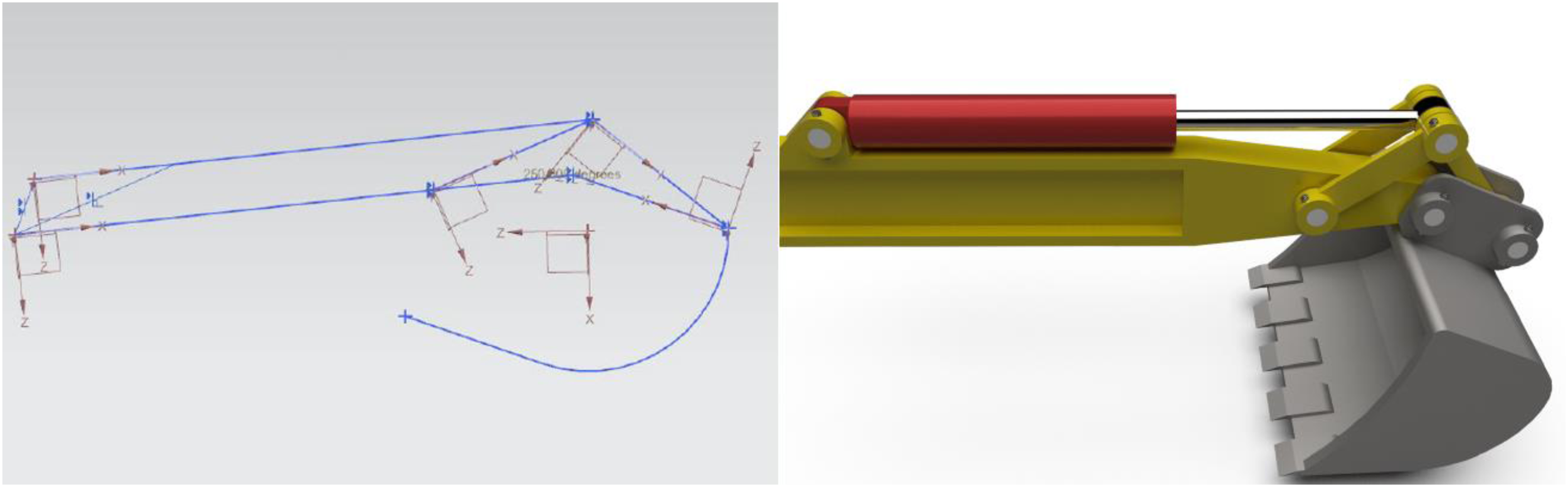
An example of a skeleton model on the left, the final design of an excavator bucket mechanism on the right.
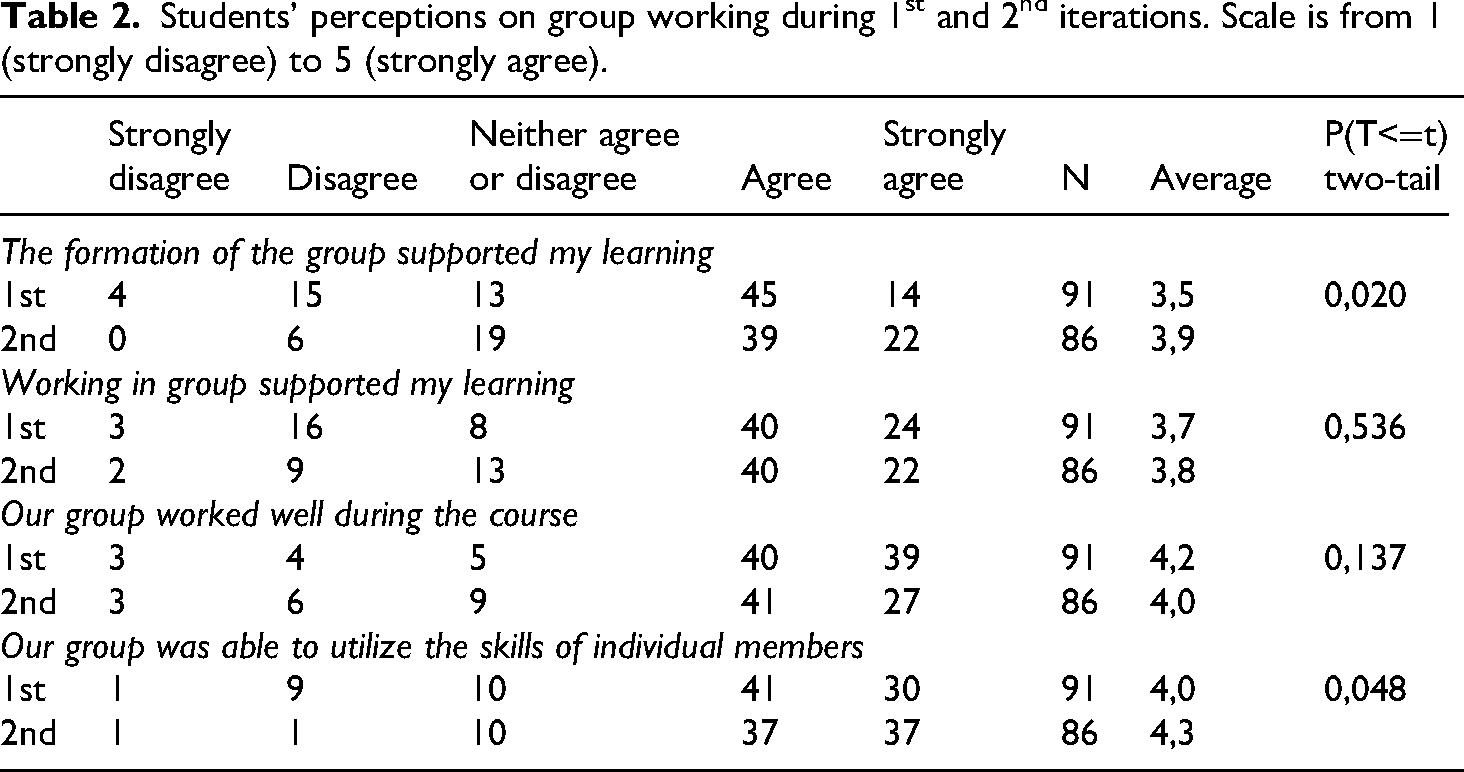
Group formation shifted to student-led, with survey results indicating improved collaboration compared to the first iteration (Table 2). Despite slightly lower ratings for group cooperation, the self-formation method supported learning better, warranting no changes for future iterations. Instead, additional tools and support will be provided.
Students’ perceptions on group working during 1st and 2nd iterations. Scale is from 1 (strongly disagree) to 5 (strongly agree).
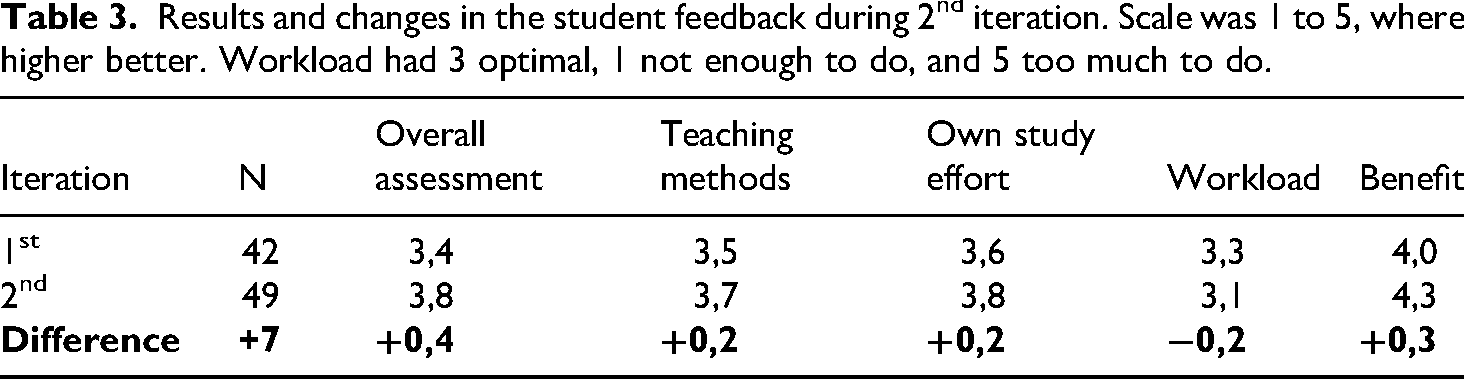
Enhanced student feedback (Table 3) supported changes made for the second iteration, with marginal improvements in teaching methods and perceived course benefits. The workload was optimal, and students demonstrated increased enthusiasm, validating the current course structure.
Results and changes in the student feedback during 2nd iteration. Scale was 1 to 5, where higher better. Workload had 3 optimal, 1 not enough to do, and 5 too much to do.
Third iteration
The third iteration in autumn 2018 featured revised group work requirements, emphasizing simulation-based design comparisons. Student groups developed two mechanisms for their study cases, running parallel analyses and finalizing the most promising design. Increased emphasis on simulations lengthened related phases, maintaining overall course duration while fostering effective division of work among student groups. Figure 6 presents the structure and schedule of the third course iteration.
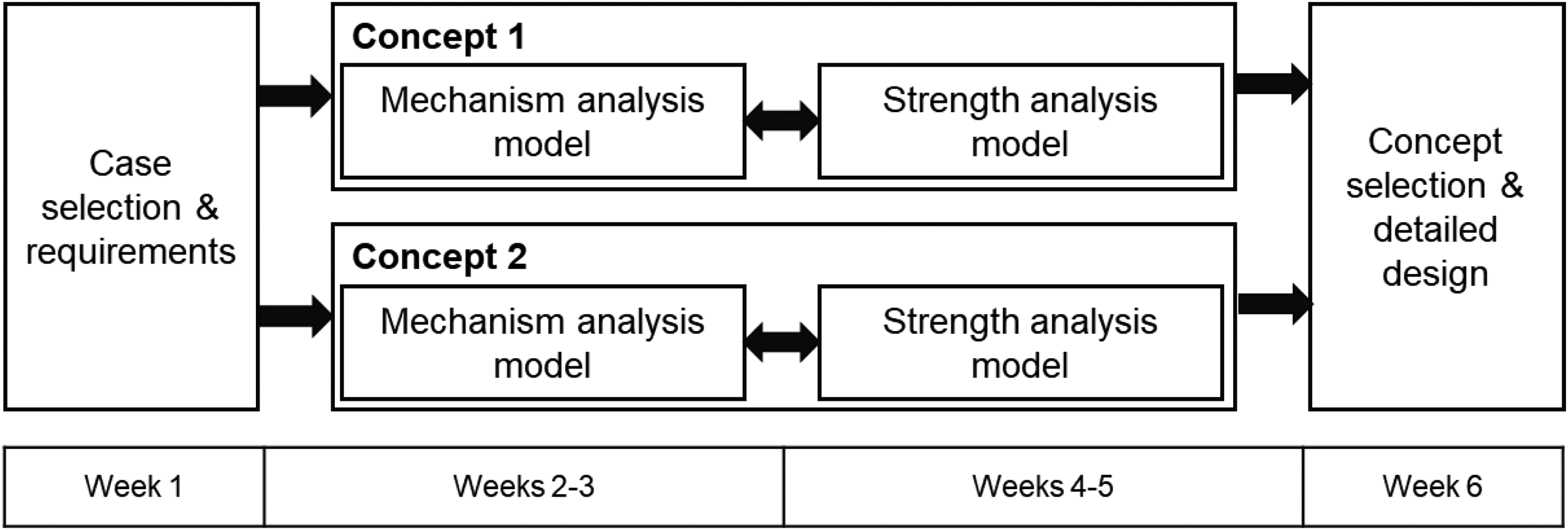
The structure and the schedule of 3rd course iteration.
In the group work, the introduction of a Product Data Management (PDM) system was implemented to streamline information organization. Siemens Teamcenter was selected as the PDM system primarily because of its seamless integration with our CAD/CAE software. Using Teamcenter, nearly all information related to the students’ group work was centralized, with the exception of written reports, which were handled separately. Each project group was assigned its own project folder with appropriate access permissions, ensuring that other groups’ folders remained hidden. It is important to highlight that this data management approach deviates from common industry practices, where design engineers typically have unrestricted access to all data related to engineering items. This distinction is due to the fact that students retain copyright rights to their work.
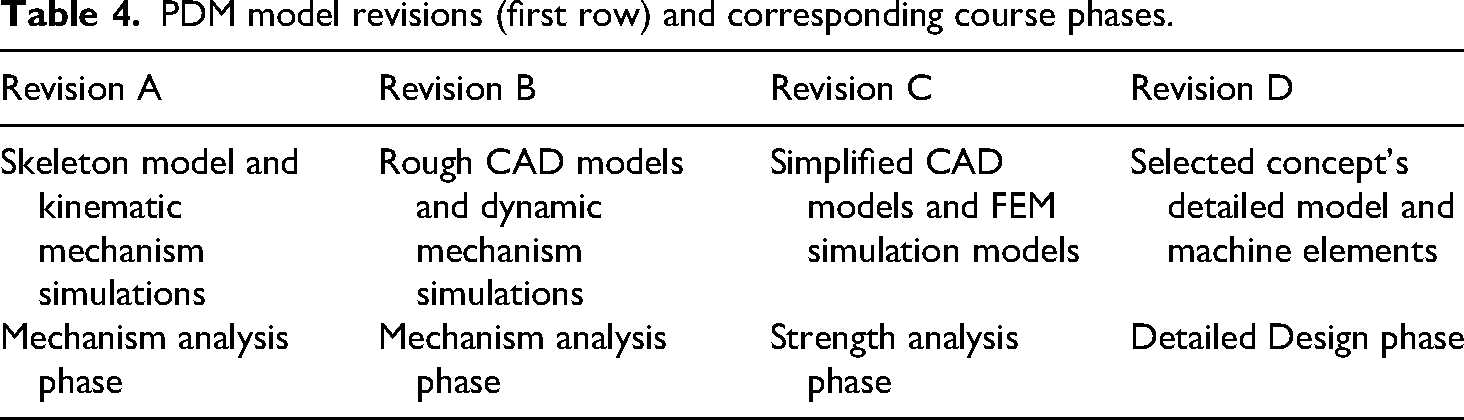
Throughout the project, students submitted multiple design-level revisions of their mechanisms to the PDM system, as shown in Table 4. The implementation of this PDM system aimed to provide students with practical experience in using such tools, aligning with industry standards, and fostering a deeper understanding of information management within engineering projects.
PDM model revisions (first row) and corresponding course phases.
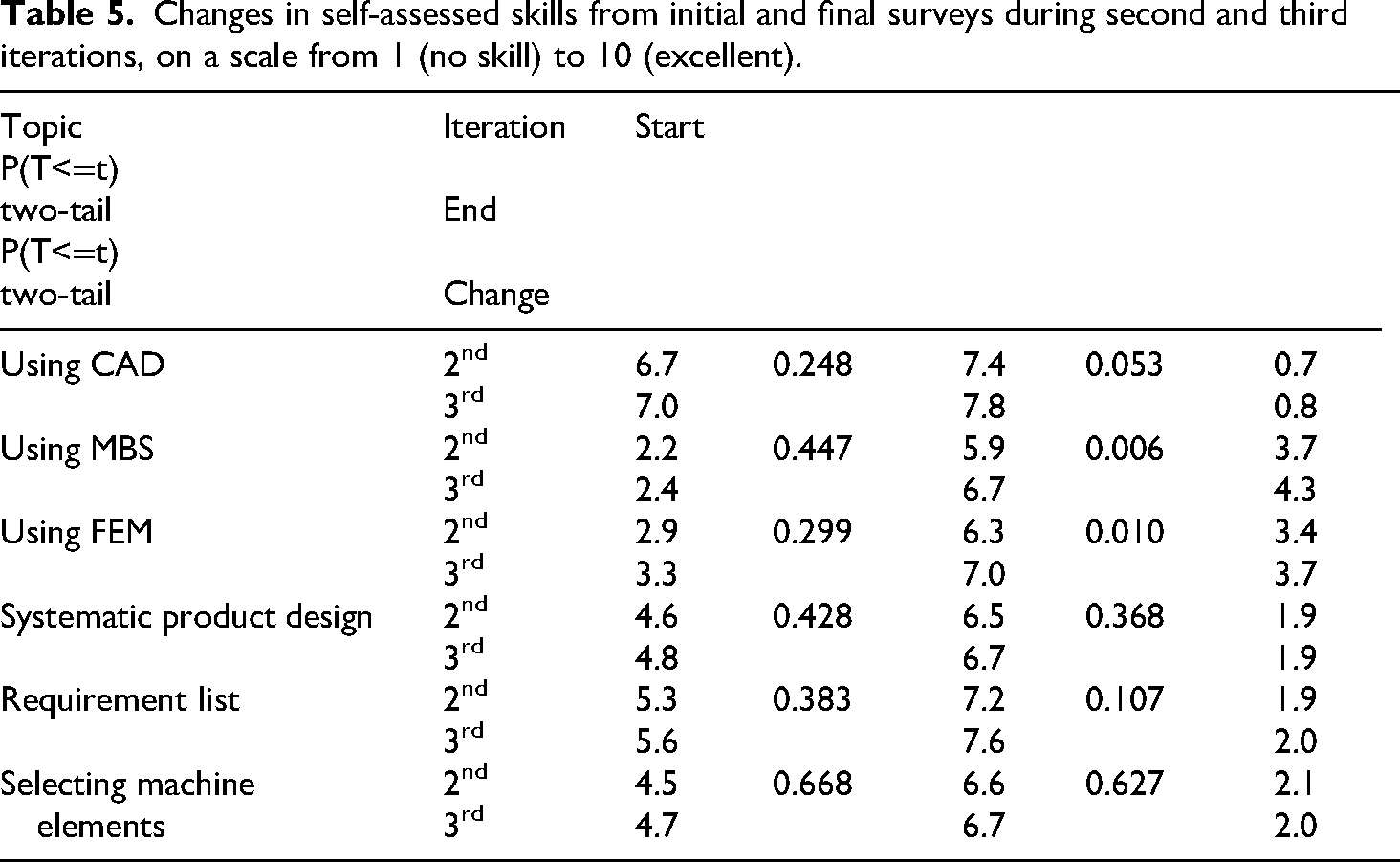
The third iteration underscored simulation tools, improving student skills (Table 5). Reduced emphasis on preliminary and detailed design aspects did not impair skill development, indicating that changes enhanced overall learning.
Changes in self-assessed skills from initial and final surveys during second and third iterations, on a scale from 1 (no skill) to 10 (excellent).
Student feedback (Table 6) indicated minor changes in study efforts and perceived course benefits. Notably, workload slightly increased due to PDM constraints, prompting consideration of adjustments to better balance student obligations across concurrent courses.
Results and changes in the student feedback during 3rd iteration. Scale was 1 to 5, where higher better. Workload had 3 optimal, 1 not enough to do, and 5 too much to do.
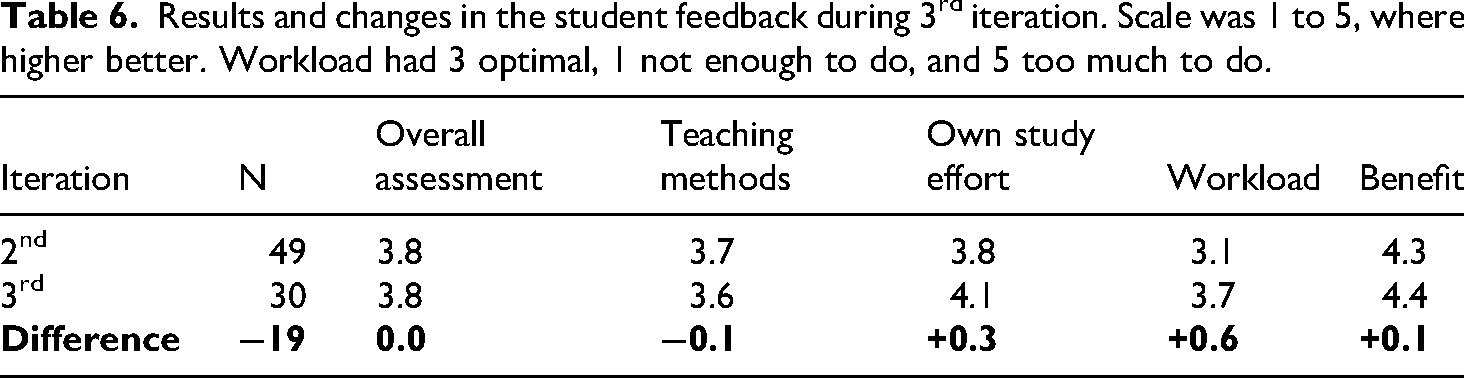
The increased workload experienced by students may also be attributed to the PDM system. While design software is available for students to use at home, the PDM system can only be accessed from the university campus. Although it is possible for students to export models from the PDM system to continue working on them using their own computers, this export-import cycle can introduce additional non-design related work, thereby increasing the workload.
During the 2nd iteration, 62% of the students installed the design software on their own computers. However, during the 3rd iteration, this percentage dropped to 49%, which may indicate a lack of installation opportunities. To address this issue, measures should be taken to enable home installations of the PDM system or provide additional means of access, such as a virtual desktop connection to a computer with a pre-installed design environment.
Common results
Overall, student groups showed a tendency towards learning-oriented approaches (average 6.1 in the 1st iteration, 6.2 in the 2nd and 6.3 in the 3rd) rather than grade-oriented, indicating a shift towards deeper engagement (Figure 7).
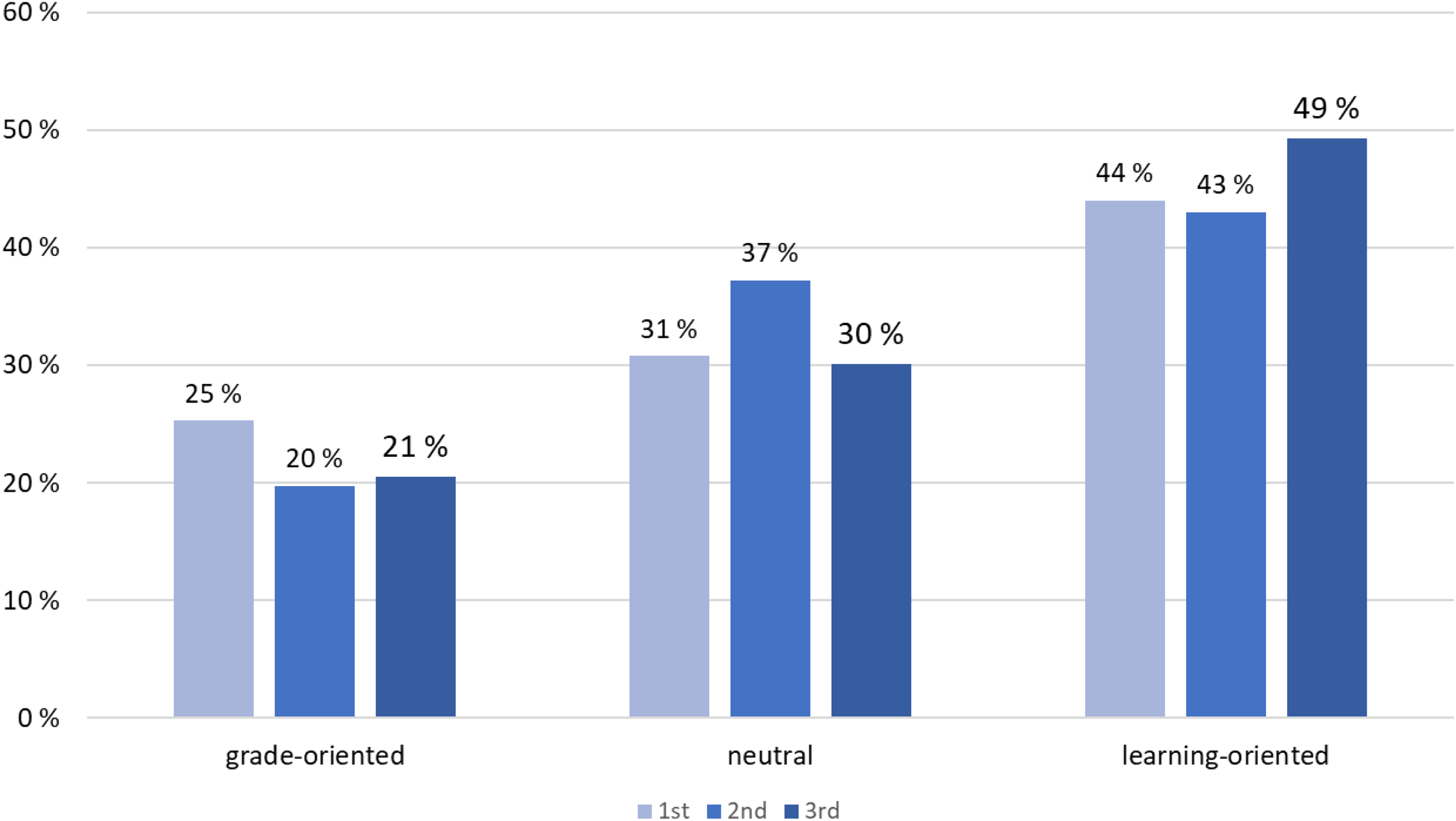
The student group attitudes toward grade-oriented (left). neutral (middle) and learning-oriented (right) approaches. 1st iteration on the left, 2nd on the middle and 3rd on the right.
The participation in lectures and exercise sessions was voluntary, and no extra credits were offered. Students participated in about half of the lectures (59% in the 1st iteration, 49% in the 2nd and 52% in the 3rd) and about two-thirds of the computer sessions (67% in the 1st iteration, 66% in the 2nd, and 73% in the 3rd iteration).
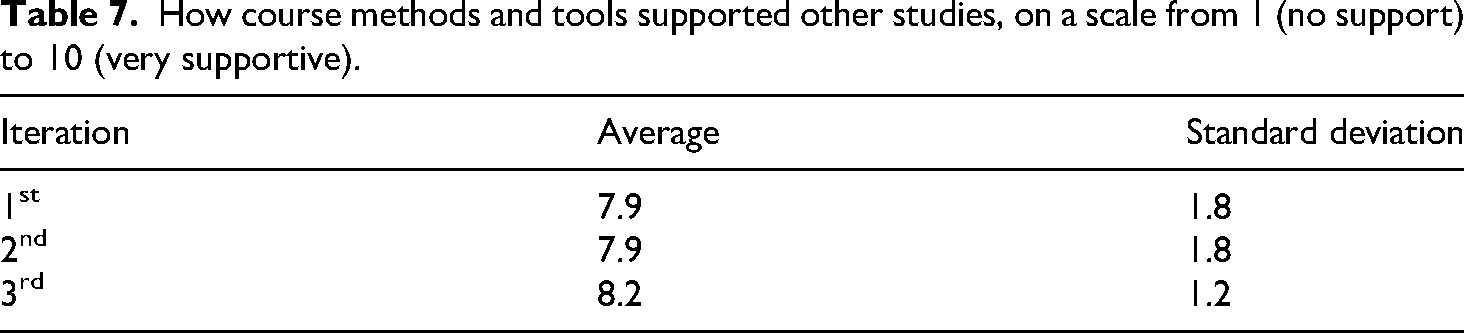
The simulation tools and methods taught during the course were reported to have supported students’ other studies quite well (Table 7). It is evident from the results that the increased emphasis on simulation tools in the 3rd iteration significantly improved the perceived benefit of the course. Furthermore, the high recommendation rate from students (91.2% in the 1st iteration, 94.2% in the 2nd, and 93.2% in the 3rd) reflects their overall satisfaction with the course and underscores their willingness to recommend it to fellow students.
How course methods and tools supported other studies, on a scale from 1 (no support) to 10 (very supportive).
Grade averages remained consistent across iterations (1st 3.81, 2nd 3.81, 3rd 3.75), albeit grading criteria evolved alongside course development, challenging direct comparisons. Higher grade criteria slightly increased over the years, aligning grading with course progression.
Discussion
The iterative course development cycle has been successfully implemented over three iterations, effectively clarifying and structuring the process of course development. This approach, with clearly defined phases and tasks, has significantly improved documentation and communication among the teaching staff. Systematic documentation of course changes, efficient use of surveys, and ongoing development are practices that should be integral to every course. Despite the common oversight due to time or resource constraints, these practices are achievable with proper planning. This study aims to demonstrate that with a solid structure, course development can become more efficient than ever before. The structured and timely surveys have yielded valuable data, enabling a thorough examination of both student perceptions and the effectiveness of new implementations in the course.
In their first year of the master's program, students tend to have limited skills in applying simulation-based design, suggesting that these tools were not part of their earlier studies. However, they generally possess stronger theoretical skills in machine design processes and proficiency with CAD tools. Throughout the course iterations, student skill levels have improved across all areas. Notably, there have been statistically significant advancements (p < 0.05) in the use of simulation tools such as Multibody Systems (MBS) and Finite Element Methods (FEM), as seen in Table 5. Given the students’ limited prior exposure to these tools, this progression was anticipated. Additionally, skills related to product design—such as defining requirement lists, selecting machine elements, and systematic product design—also showed significant improvement. The smallest change was observed in CAD skills, as CAD tools were primarily used during group work to create geometry for simulation models.
Introducing simulation tools and methods at the bachelor level can greatly support the mindset of simulation-based design. Integrating computer exercises into basic engineering courses can provide students with early exposure. For instance, analyzing system kinematics using MBS in dynamics courses, or comparing FEM results with hand calculations in strength of materials courses, can help build a solid foundation in simulation-based design, preparing students for more advanced studies.
The group formation method (Table 2) has demonstrated a clear impact on learning and skill utilization within groups, with an increase of 0.4 (p < 0.05) for supported learning and 0.3 (p < 0.05) for leveraging individual skills. Despite relatively small differences between teacher-formed groups (first iteration) and self-formed groups (second iteration), students preferred forming groups themselves. This preference might stem from a focus on ease of communication and collaboration over work quality, as noted in previous studies. 17 Incidentally, teacher-formed groups often produce higher quality results, 17 presenting an intriguing area for further research. Students raised concerns in feedback about the preparedness of group members, particularly during simulation phases. To address this, online quizzes about basic simulation methods and tools are being planned for the next iteration. These quizzes aim to ensure that all group members are adequately prepared and familiar with the necessary tools, enhancing the group work experience.
Overall student feedback has reached a commendable level. The most notable change occurred in the third iteration (Table 6), where increased emphasis on simulations led to a perceived workload increase. However, this was based on student perceptions rather than empirical data. The lower response rate in this iteration limits further analysis. To gather more precise data on workload, future phases may require students to log work hours for phase reports, offering quantifiable insights into workload and aiding in future course adjustments.
Future efforts will focus on implementing the developed methodology into another course. Continuous course development will include new online quizzes, as mentioned earlier, and explore utilizing virtual desktop connections, allowing students to run complex simulations remotely via browsers or terminal programs on their own devices. This approach could improve the use of the PDM system and enhance overall quality and communication in group work.
Footnotes

Ethical considerations
Not applicable.
Consent to participate
The students had to answer to question “I allow my answers to be used to develop teaching and in research” in the beginning of the anonymous surveys, and only allowed answers were utilized in this study.
Consent for publication
Not applicable.
Funding
The authors received no financial support for the research, authorship, and/or publication of this article.
Declaration of conflicting interests
The authors declared no potential conflicts of interest with respect to the research, authorship, and/or publication of this article.
Data availability statement
Data sharing not applicable to this article as no datasets were generated or analyzed during the current study.