



Abstract
Active learning (AL) has become a key methodology for student engagement in engineering courses, particularly in STEM-related subjects. Despite the existence of numerous documented educational practices employing this methodology, the introductory courses in the area of bioengineering and chemical processes, such as material balances, could still benefit from its adoption. This article explores the implementation of active learning, specifically problem-based learning (PBL), in the material balances (MB) course from an innovative approach. The implemented educational practice, defined in five key moments (Introduction, Context, Application, Reinforcement, and Consolidation with Teamwork), offers a comprehensive guide, encompassing practical ideas and strategies that educators of similar courses can readily adapt and implement. The educational practice was tested in two groups of the MB course taught in 2024 (n = 54 students), where the students’ scores in written exams, demonstration of competencies and satisfaction with the course, were compared with those from before the methodology was applied in 2023 (n = 53 students). The results show an overall improvement in all aspects evaluated, highlighting the benefits of introducing this educational practice in the students’ performance and satisfaction with the course. This work contributes to the growing body of literature on AL and PBL in STEM education, offering a model to improve pedagogical practices and promote student success in challenging technical courses.
Keywords
Introduction
Active learning (AL) is an educational approach that has gained relevance in the context of STEM (science, technology, engineering, and mathematics) in middle and higher education. It refers to making students the protagonists of their learning process, opposite to what has been traditionally done with teacher-centered instruction. With this novel approach, the students are no longer passive receivers and repeaters of information but become engaged in meaningful activities and think critically about what they are doing. The teacher, on the other hand, is no longer the sole source of knowledge and information, but becomes a guide or facilitator that helps the students to acquire the defined knowledge and skills for themselves. The available evidence suggests that active learning approaches are indeed effective for improving student learning and performance in STEM disciplines, compared to traditional lecture-based instruction. 1 However, not everyone is yet comfortable with doing things differently and some resistance can be encountered by students and teachers alike when faced with it for the first time. M. Prince and R. Felder2,3 argue that students’ resistance can be reduced if the instructor is aware of this possibility during the planning stages of the course. Sneha Tharayil 4 and collaborators studied strategies to mitigate student resistance to AL, by interviewing teachers that usually apply AL and by surveying their students, as well as conducting classroom observations in different moments of the courses. They found that the students’ engagement and more positive course evaluation correlate with the instructors’ use of strategies to clarify the purpose and expectations of the activities along with strategies that encourage students’ participation with inviting questions and using incremental steps. Therefore, the switch should be gradual, with all course lessons, activities, assignments, and assessments pointing towards the learning objectives or curriculum goals. 5
The gradual integration of active learning into a university-level STEM course can be a multifaceted process that needs to be carefully designed and implemented. For example, instructors should provide clear guidelines and expectations for students on their expected level of engagement, and how they will be assessed throughout the course. Additionally, the choice of learning activities needs to be aligned with the course objectives and the students’ learning needs and preferences. Student feedback is also crucial to monitor their perceptions and acceptance of the new teaching approach, as some may be more comfortable with the traditional lecture format. However, studies have shown that it is possible to overcome student resistance to active learning through well-designed strategies.2–5
Material and energy balances is a fundamental course in most chemical engineering programs taught at universities worldwide, that in many cases, set the foundations for more advanced courses like thermodynamics, unit operations and transport phenomena, kinetics and reactor design, and process dynamics and control. This course requires basic knowledge of chemistry, algebra, and thermodynamics, to combine with competencies that are developed during the course, like systematic thinking and decision making, to understand the principles of conservation of matter and energy and solve related problems. At Tecnologico de Monterrey, in Mexico, the courses material and energy balances are taught separately but sequentially in the third semester to students in the general area of bioengineering and chemical processes at the school of engineering and sciences, 6 who find the competencies listed above difficult to acquire and develop through traditional lecture-based instruction. AL methodology can aid teachers in empowering students to develop the required skills and successfully meet the learning objectives.
The aim of this work is to document the gradual application of active learning, specifically problem-based learning strategy, into the material balance course at Tecnologico de Monterrey (TEC). Unlike conventional approaches, this implementation systematically redesigns the course structure by embedding active learning principles into lectures, class activities, assignments, and assessments, ensuring a more effective skill development process. The study introduces a novel methodology that strategically aligns learning objectives with innovative teaching techniques, providing a structured framework for gradual implementation. Additionally, it presents a detailed chronological account of the applied strategies, including the duration, materials, and resources used at each stage. Finally, the research offers preliminary insights into the impact of this transformation on students’ competency development and their overall learning experience, contributing valuable knowledge to the field of engineering education. The main results indicate a notable increase in student’s scores in exams with failure rates decreasing from 60% to 27%. A general improvement in percentage of students achieving higher mastery levels of the declared competencies and improved student’s satisfaction with the structured exercises, feedback provided and overall perception of the course and the teacher, according to the satisfaction survey.
Theoretical framework
Active learning (AL)
Active Learning (AL) is a teaching method that actively involves students in the learning process. This approach requires students to engage in meaningful activities and think critically about what they are doing, rather than passively receiving information from lectures. 7 This method emphasizes student autonomy and fosters a more individualized learning path, encouraging students to take responsibility for their own learning. To this end, a key feature of the method is the necessity for students to apply their knowledge of the subject matter actively, rather than merely acquiring it. 8 Active learning practices are characterized by students involved in solving problems, reading, writing, and discussing. For instance, AL activities include student participation in hands-on activities, which extends beyond listening and note-taking; collaboration in group work, discussions, and peer-to-peer learning, which encourages participants to articulate and defend ideas; real-time feedback, which allows students to assess their understanding as they learn; and formative assessments, which help identify and close comprehension gaps. 9 In this approach, the teacher acts as a facilitator rather than a primary source of information. What is more, the teacher becomes a facilitator, designer, and guide, creating an environment that fosters active student engagement (Figure 1).
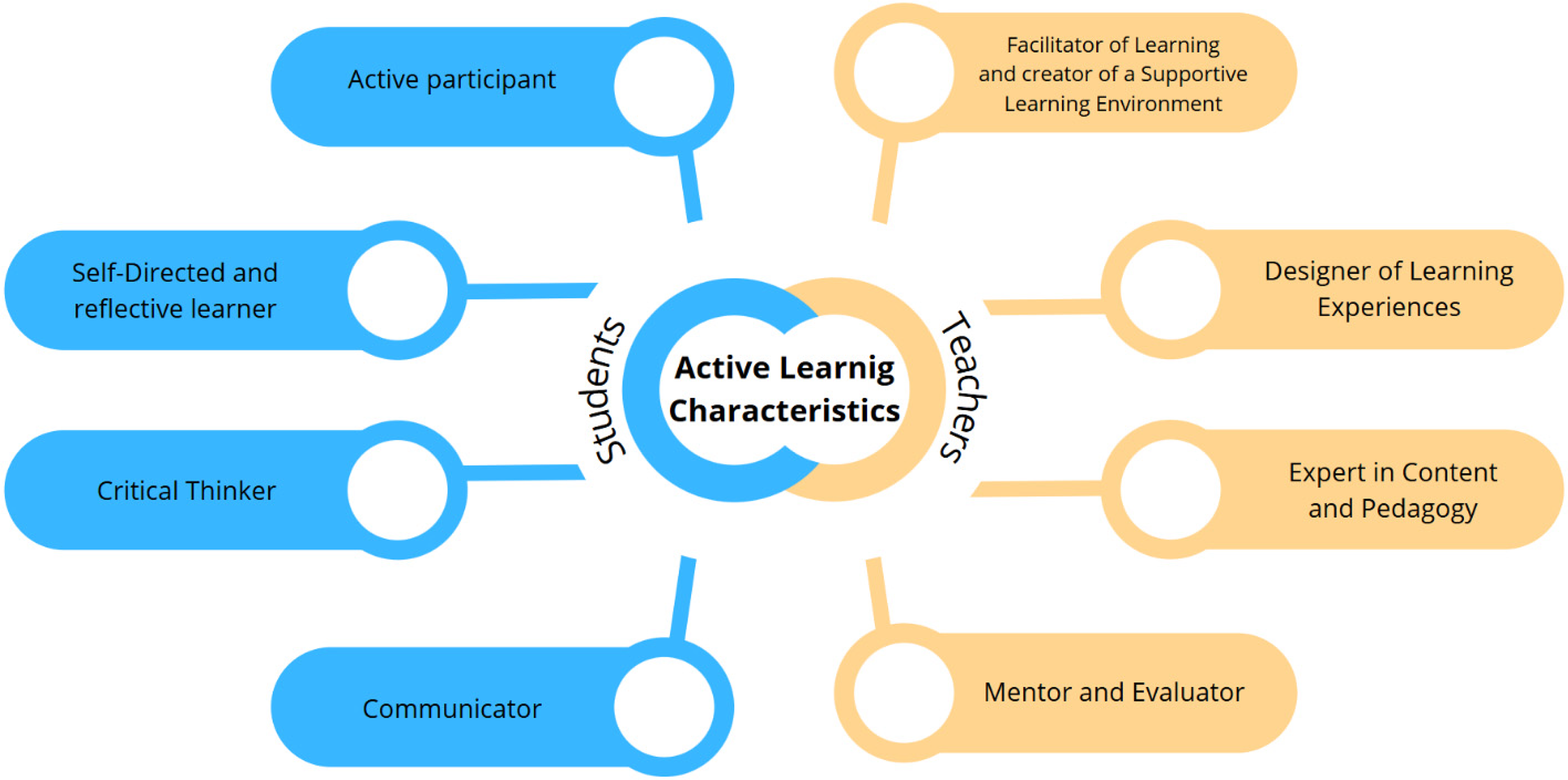
Teacher and student characteristics in a classroom with Active Learning methodology.
Active learning includes several types of instructional activities or strategies, ranging from simple actions like pausing lectures for students to discuss and organize ideas with a peer, to more complex tasks such as analyzing case studies to facilitate decision-making. Simple AL techniques, such as interactive questions, think-pair-share, and one-minute paper, can be integrated into traditional lectures. 5 More complex AL methods include project-based, cooperative, team-based, competence-based, challenge-based and problem-based learning, where students have the opportunity for hands-on experience, critical thinking, and collaboration (Figure 2). 10
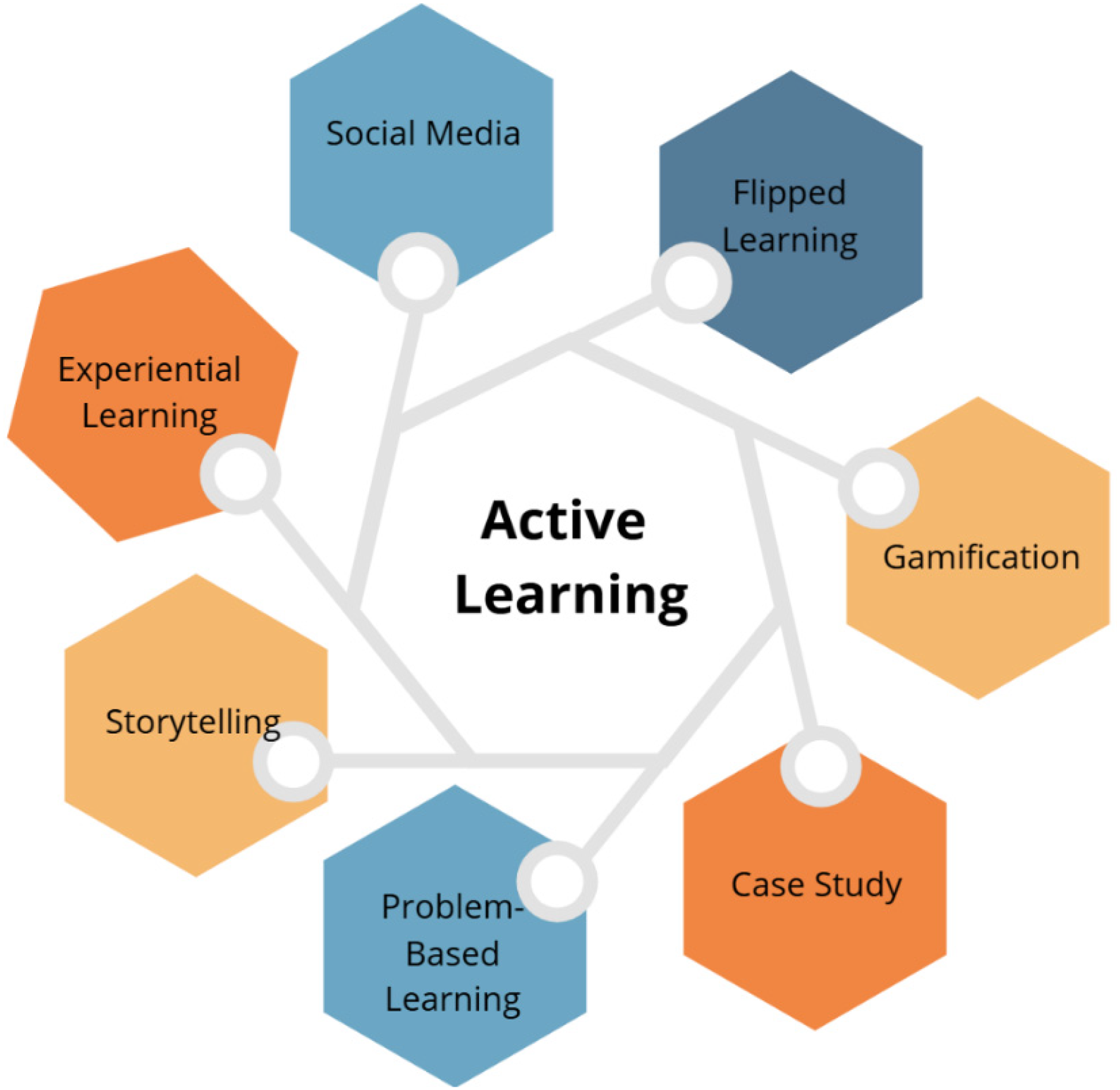
Active learning educational techniques. 5
Problem-based learning (PBL)
While active learning is a broad term encompassing a range of teaching methods that engage students in the learning process through activities, discussion, and problem-solving; problem-based learning (PBL), the specific technique selected for this research, is an approach where students learn by working on open-ended, real-world problems. In problem-based learning, students are presented with a problem and work in small groups to identify what they need to learn in order to solve the problem. Additionally, students research relevant information, propose solutions, and reflect on their learning process. This activates students’ prior knowledge and involves them in defining their own learning objectives. Ströbel and van Barneveld 11 conducted a meta-analysis of the effectiveness of PBL compared to traditional teaching, finding that PBL led to higher long-term knowledge retention, skill development and student and teacher satisfaction, while traditional methods were better for short-term retention as measured by standardized tests.
PBL aligns well with the principles of active learning, as it promotes student engagement, critical thinking, and self-directed learning. By working collaboratively to solve complex, real-world problems, students develop important skills such as problem-solving, communication, teamwork, and self-directed learning - all of which are highly valued in the workplace. This approach mirrors the challenges engineers often face in the field, where they must identify problems, gather data, and devise innovative solutions. 12
A highly relevant aspect is feedback to students. In this case, real-time feedback (RTF) refers to immediate responses provided to students regarding their work or performance. This feedback can come from peers or instructors and is designed to help students understand their strengths and areas for improvement as they engage in tasks. The feedback is provided in a low-stakes environment, meaning that students can take risks and experiment without fear of scores penalties. This encourages a culture of learning where students feel safe exploring creative solutions and learning from their mistakes. 13 Real-time feedback in problem-based learning enhances student engagement and learning outcomes by providing immediate responses to learners’ actions and queries. This approach fosters a dynamic learning environment where students can reflect on their understanding and adjust their strategies accordingly. While real-time feedback is beneficial, some educators argue that it may overwhelm students if not managed properly, potentially leading to anxiety rather than supporting learning. Established feedback guidelines from researchers such as Kluger and DeNisi, 14 Hattie and Timperley, 15 and Shute, 16 help structure the feedback process, ensuring that it is constructive and focused on enhancing student learning.
PBL in university STEM courses
Universities and international organizations are increasingly adopting and promoting AL strategies, 17 recognizing their effectiveness in preparing students to tackle complex societal problems once they enter the labor market. Leading universities such as Massachusetts Institute of Technology (MIT), 18 with its study about learning environment transformation for physics courses; North Carolina State University (NCSU) with a program to develop competences such as problem-solving in introductory undergraduate programs; 19 and Aalborg University have implemented AL concepts and practices successfully for the development of crucial competencies like teamwork, problem-solving, and analysis, enhancing student performance and retention rates. 20 Tecnologico de Monterrey, the main private university in Mexico, has also incorporated AL into its engineering curriculum to improve student performance and retention rates. Using a combination of classroom design, technology, and innovative teaching methods to create a conducive environment for AL. Examples of AL activities include interactive questionnaires, group discussions, concept mapping, and role-playing, where professors act as mentors and evaluators, with a focus on formative assessments to identify gaps and adapt teaching strategies. 21 This has shown to enhance student motivation, engagement, and positive attitudes towards learning which improves the development of key competencies such as teamwork, problem-solving, critical thinking, and effective communication. 5
The adoption and implementation of AL in STEM courses can lead to improved learning outcomes and higher student engagement compared to traditional lecture-based instruction. For example, a large-scale meta-analysis found that active learning increased student performance and decreased failure rates in STEM courses relative to traditional lecturing. 22 In the same way, Borda et al. 23 investigated the initial implementation of active learning strategies in large STEM lecture courses, drawing lessons from a multi-institutional, interdisciplinary faculty development program. The research highlights the importance of institutional context and faculty support in promoting student-centered pedagogies, particularly within large lecture settings often dominated by traditional lecture formats. The findings contribute to a broader understanding of STEM education reform and offer practical guidance for faculty development programs seeking to promote active learning adoption. Applying student-centered strategies in materials and energy balance courses, Lisa G. Bullard and Richard M. Felder authored a two-part article series, focusing on the stoichiometry course at North Carolina State University (NCSU) in 2007. In this work, the authors emphasized the use of nontraditional teaching methods, such as active, cooperative, and inquiry-based learning, to enhance student engagement and understanding. The first part of the series outlines the course structure, policies, and the preparation provided to teaching assistants, who play a crucial role in delivering the course. 24 The second part focused on the instructional methods and assessment strategies used in the course. 25 The authors aimed to provide insights and suggestions for other faculty members who may wish to adopt similar approaches in their own teaching practices.
Similarly, this work aims to document the implementation of AL methods such as PBL and RTF into the material balances course at Tecnologico de Monterrey. A structured, innovative, and student-centered approach to teaching material balances, along with effective assessment strategies that can be adopted by other educators, has the potential to increase the students’ uptake of the competences and skills declared in the learning objectives of this and similar courses. Moreover, it can improve the motivation and perceived satisfaction of the students with their overall learning experience.
Methodology
In the following section, the characteristics of the courses in which the educational practice was carried out are detailed. In addition, the step-by-step methodology of this educational practice is presented and explained. Finally, the impact of the practice is evaluated by comparing students’ performance and satisfaction before and after its implementation.
Material balances course
The educational model “Tec21” was implemented by Tecnológico de Monterrey in 2019 across its 20+ campuses nationwide to integrate innovation in the social, economic, political and technological educational environments at undergraduate level. 26 It divides the universities’ engineering careers into broad areas where students can explore the general aspects before choosing a definitive path. Within the bioengineering and chemical processes (BCP) area, there is a course titled “Application of the Principles of Conservation of Matter in Chemical and Biological Processes”, 6 which builds on the typical Material Balances (MB) course traditionally taught at chemical engineering programs in universities worldwide. For simplicity, the abbreviation MB will be used thereafter to refer to the course taught at Tecnologico de Monterrey. The MB course is imparted each year over 10 weeks in 4-h sessions, 3 times a week (12 h per week) to 3 or 4 groups having each between 20 to 35 students of third semester of BCP engineering careers (chemical engineering, biotechnology, sustainable development engineering, food engineering and agricultural biosystems engineering).
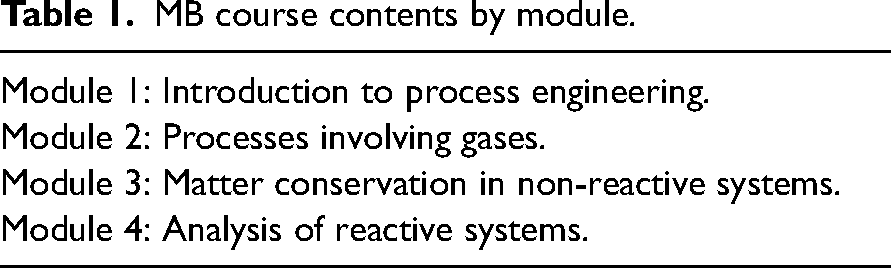
Although the educational practice described in this work could be applied to several engineering courses, the contents or topics covered in the MB course at Tecnologico de Monterrey are briefly outlined in Table 1 for the benefit of the readers.
MB course contents by module.
The suggested literature for this course includes typical textbooks employed in teaching chemical engineering, such as Richard Felder's Elementary Principles of Chemical Processes, 27 David M. Himmelblau's Basic principles and calculations in chemical engineering, 28 and Y. Cengel, M. Boiles and M. Kanoglu's Thermodynamics: An engineering approach. 29
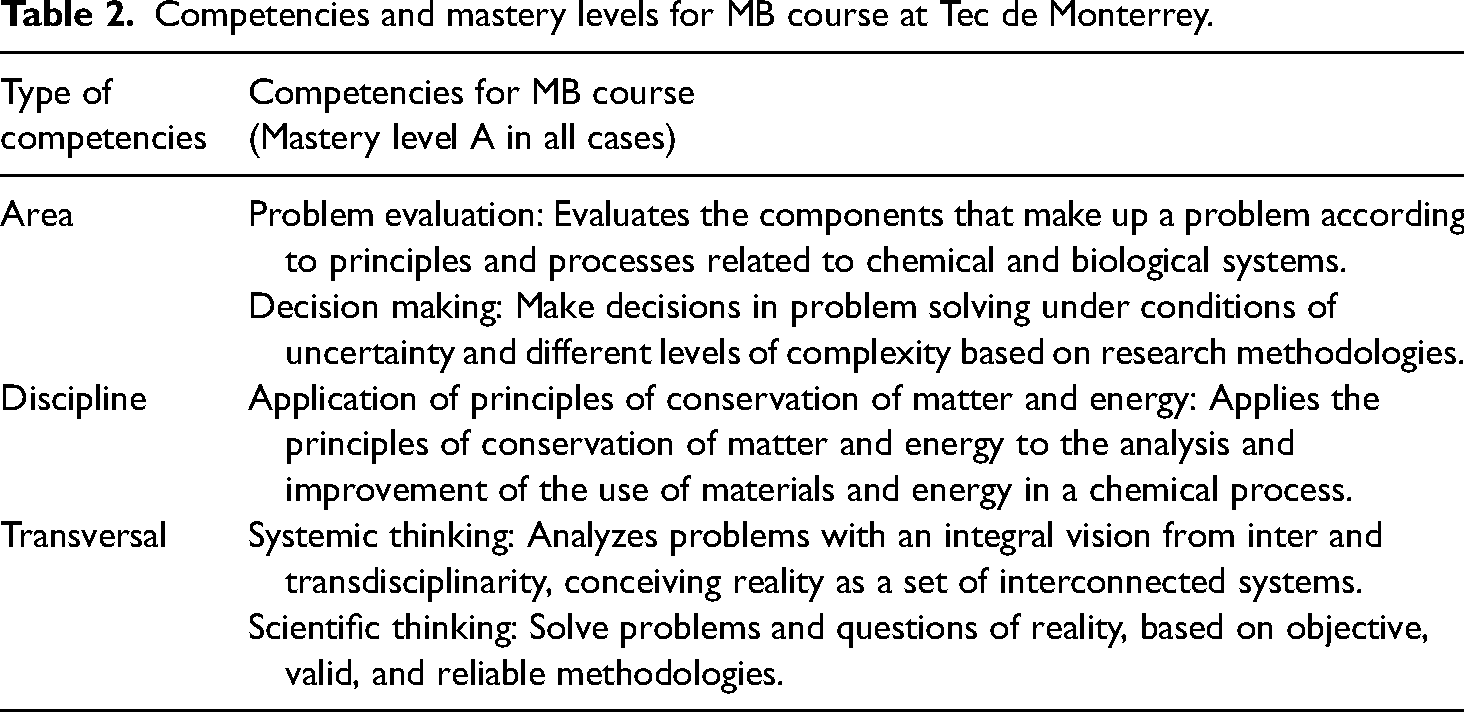
The MB course is structured around a select group of desirable competencies (learning objectives) the students should acquire; these competencies are presented in Table 2. In general, the competencies can be identified as mastery levels A, B and C, which describe the performance of the students demonstrated in each competence, the last being the highest in complexity, depth of knowledge and autonomy. To pass this course, it is required to demonstrate level A. Levels B and C are expected to be reached in subsequent more advanced courses.
Competencies and mastery levels for MB course at Tec de Monterrey.
Educational practice description
Considering the limited time available for the students to attain and demonstrate the competencies of Table 2, the optimization of AL strategies becomes decisive, since its design and execution should not imply an additional burden to the evaluative activities inherent to the teacher's work, rather, real time feedback activities are strongly recommended. Herein, a five-moments PBL approach is described with the advantage that it can be applied for each module of the course contents, but also in multiple contexts in a variety of disciplines.
Moment (1) Introduction of the course contents, learning objectives, levels of mastery and active learning techniques to be used to the students (20 min only during the first session of the course).
Moment (2) Introduction of the basic concepts providing context and applications for the type of phenomena implied in the topic to be studied, sometimes by posing a question, watching a short video, discussing daily life events, or a combination of these (15 min).
Moment (3) Demonstration of the application of the discussed concepts and definitions with the solution of a simple problem by the teacher on the white board, this moment is used to introduce the typical MB problem-solving techniques (15 min).
Moment (4) Reinforcement of basic concepts and problem-solving techniques by the solution of a simple introductory problem by teams of students using portable whiteboards (not strictly necessary) available in the classroom for these purposes. This serves a double purpose; allows teachers to assess students’ uptake of concepts and competencies and to provide real-time feedback if needed and enables the development of the competencies declared in Table 2 along with some additional, like collaborative work and effective communication, while boosting students’ confidence in their own abilities and fulfilling the principle of progressivity to reduce possible resistance (20 min).
Moment (5) Consolidating concepts and techniques by posing a middle difficulty problem to be completely solved by teams of students using portable whiteboards (not strictly necessary) available in the classroom for these purposes. This last activity can be divided into two stages:
Moment (5.A) Teams are given 5 to 8 min to read, analyze and elaborate a proposal to tackle the problem, once the time elapses, one or two teams are asked to share their proposal to the class and the remaining teams are asked to suggest ways to improve the proposals (5 min are assigned for sharing).
Moment (5.B) The teams are given 20 to 30 min to finish the problem. In the meantime, the teacher must mentor and monitor the progress and participation of the members of each team, giving real-time feedback on their progress. This is illustrated in Figure 3. Depending on the degree of engagement, and the suitability of the proposals, more time can be assigned to this activity, on the contrary, if general stagnation is detected, the teacher should “declare a break” to ask the group to interchange ideas to identify the misconceptions or the issues hindering the problem-solving process.
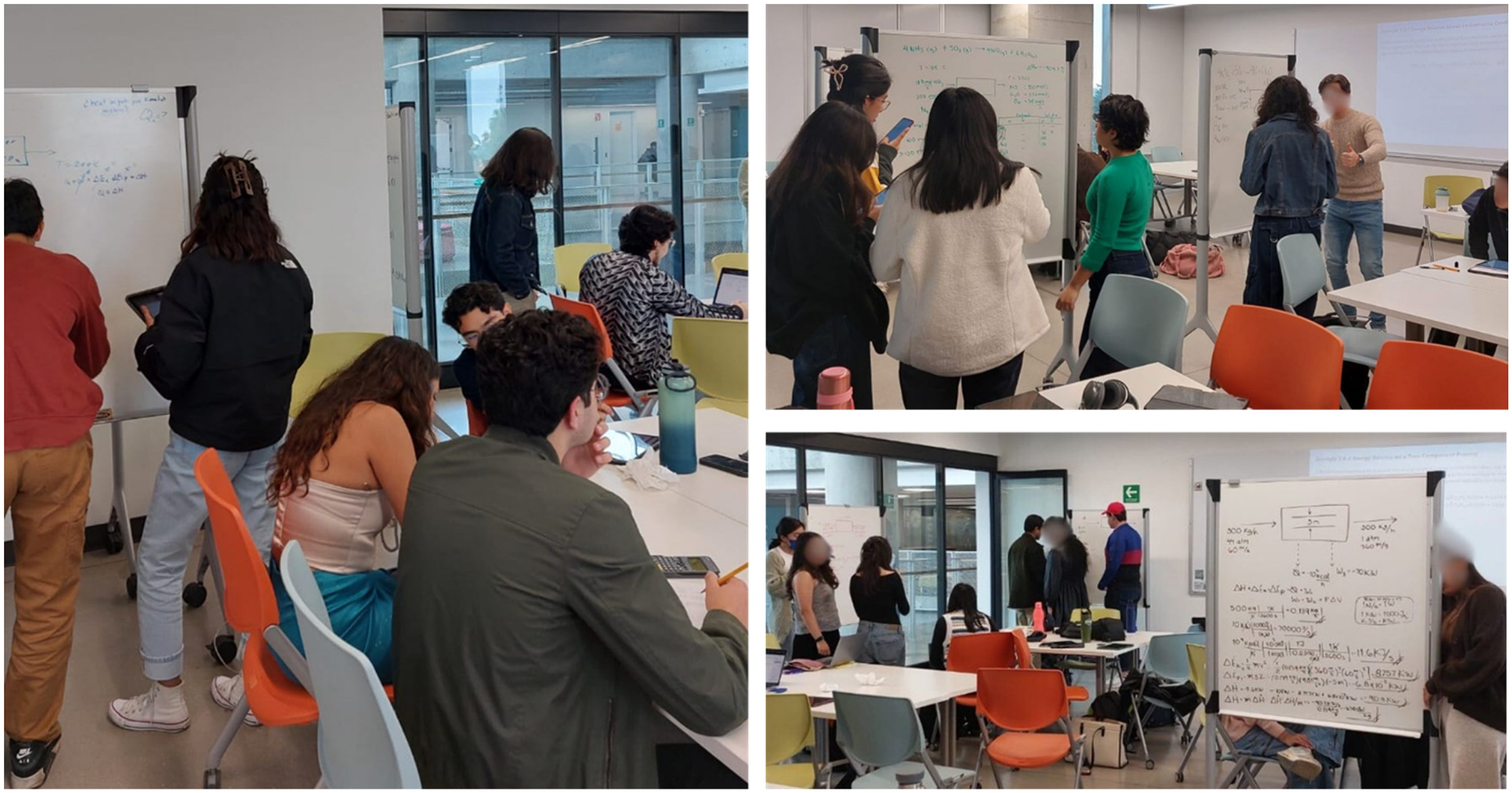
Application of problem-solving techniques by teams of students using portable whiteboards in the classroom.
A general 20 to 30 min break can be declared midway through the 4-h sessions to allow the students to rest and eat something. Then, the process can be repeated as necessary for each topic or module of the course.
It is recommended that the educational practice implemented in the classroom is complemented with homework and tutoring so the students can practice the competencies acquired and ask for further feedback after having time to reflect.
Evaluation of the educational practice implementation
The evaluation of the educational practice involved the comparison of the performance of groups taught in 2023 and 2024, corresponding to before and after its implementation. Two groups of students (28 + 25 = 53 students, constituted by 31 women and 22 men) from the 2023 cohort were designated as a control group (before), in which the practices were not yet applied, and another two groups from the 2024 cohort (26 + 28 = 54 students, constituted by 29 women and 25 men), were designated as the experimental group (after), in which the practices were implemented, all groups were in the age range between 19 and 21 years old. The parameters selected for this comparison were the student's scores in written exams, the mastery levels attained by the students on the course's competencies, and the teacher's scores in the feedback survey as described below.
Students’ scores in written exams
The evaluation plan for the MB course consists of several assessment activities aligned with the learning objectives or competencies. These include online quizzes, homework exercises to be solved in teams, and individual written exams. The latter being the most useful to individually assess students’ real progress and was therefore selected as a valid parameter to monitor the effectiveness of this PBL educational practice in developing the desired competencies in the students.
The written exams typically consist of two to four problems that require the students to apply the competencies (Table 2) they developed solving similar problems, working individually and in teams in class, however, during the exam, students must solve the problems individually and with limited time and resources (they may consult tables of physicochemical properties and formulas or use technological tools such as scientific calculators, but online consulting or peer communications are not permitted). Two of these written exams are applied to each group of students every year. Despite the exams being different for the different groups involved in this study, care was taken to ensure the same level of difficulty in each version, while maintaining the same applicable competencies. This was achieved by establishing a number of characteristics for each exercise constituting each exam, according to the competencies and the mastery levels to be evaluated. For instance, the first partial exam focused on material balances on non-reactive systems where phase transition-based separation processes were applied. Thus, the exam was designed with two exercises, the first one providing the flow diagram in order to concentrate on a three units separation system with three components where the student identified mathematical relationships and used them into the degrees of freedom analysis to identify the best way to solve the entire problem. The second exercise provided only a full description of a two units separation system with a recoverable volatile component distributed between two immiscible phases, where students had to draw the corresponding flow diagram and apply the Antoine’s equation, ideal gas equation, relative saturation and solve with total or species balances. Three different versions of this exam were created for each group, changing some aspects like the order of the exercises, the numerical values of the data provided, the units system or the variable(s) to be calculated, to prevent students from cheating by copying the answers from each other or from groups taking the exam on different days. For this study's purpose, the student's scores obtained by the two groups of each cohort in the written exams were anonymized before performing descriptive statistical analyses on them to better understand their behavior before and after implementing the educational practice. The results were graphically represented by box and whiskers plots for easier comparisons and analysis of values such as mean, median, and lower and upper quartiles. The following is an example of a typical reactive in an exam.
It is desired to recover trichlorethylene (C2HCl3) from soybean flakes obtained from a previous extraction process. Soybean flakes with a concentration of 0.96 lb of C2HCl3/lb of dried soybean flakes are fed to a dryer and the amount of solvent is reduced to a final concentration of 0.05 lb of C2HCl3/lb of dry flakes. To remove the solvent (trichloroethylene), a stream of pure N2 is fed to the system and leaves at 86°C with a relative saturation of 60%. The dryer pressure is 780 mm Hg, the molecular weight of trichlorethylene is 131.38 g/mol. The gaseous stream leaving the dryer is fed to an isobaric condenser unit from which two streams emerge in equilibrium at 5°C, one of pure liquid solvent and another in gas state that is sent to treatment. Taking a basis of 1000 lb/h of dry flakes, solve:
Draw and label the flowchart of the entire process. Establish the analysis of degrees of freedom globally and in each unit. Calculate the inlet and outlet flows (lb/h) for the dryer. Calculate all mass fractions of all streams. At the condenser, calculate the flows of recovered solvent and solvent loss (lb/h).
Students’ procedures are taken into account. So, full or partial marks can be obtained for each question in the exam.
Competencies performance assessment
Competencies can also be assessed by exercises like the previously given example, since the student demonstrates “area competencies” (see Table 2) by identifying the elements in the statement necessary to solve each question as well as by deciding which correlations and laws must apply to progressively evaluate the solutions. “Transversal competencies” are demonstrated by properly applying MB methodologies such as flow charts drawing and degrees of freedom analysis. And finally, “discipline competencies” are shown by suitably applying the principles of conservation of matter around each frontier for the general balance and/or for species balances. As part of the research methodology, the student performance was analyzed in the five competencies given in Table 2: Problem Evaluation, Decision Making, Application of principles of conservation of matter, Systemic Thinking and Scientific Thinking. The table states the expected mastery level as A since no simultaneous energy balance is required in this course as it is planned for the following course. However, a good understanding of the fundamentals and full mastery level of the MB strategies and tools is expected. Thus, the performance levels were categorized into five different ranges or categories: Outstanding, Solid, Basic, Incipient, and Not Delivered. By systematically examining the percentage of students performing in each of these categories before and after implementation, the evaluation seeks to determine the impact of the proposed pedagogical practice on the acquisition of the course competencies. The results of this analysis will provide valuable insights into whether the observed trends reflect broader systemic changes or isolated fluctuations within specific areas. It will also contribute to a deeper understanding of how students develop competencies over time and how PBL practices can enhance teaching strategies to promote more consistent academic growth.
Teachers’ scores in feedback survey
Tecnológico de Monterrey's Student feedback survey, called ECOA (Encuesta de Opinión de Alumnos) for its acronym in Spanish, is a tool used by the institution to collect students’ opinions on various aspects related to their educational experience. This includes the quality of professors, subject content, facilities and other services provided by the university. The results of this survey are often used to improve and adjust TEC's educational policies and practices.
The survey is historically conducted anonymously near the end of each course (before students know their final grades, to avoid biases). So, there is data from before and after the implementation of this educational practice that is useful for comparisons. The survey for this course consists of 5 scoring questions and an additional one for comments. The first group is designed to track aspects where the students must score teachers on a scale from 0 to 10, where 0 means terrible and 10 means exceptional. The questions are identified by Spanish acronyms as shown in Table 3.
Aspects evaluated in the student feedback survey (ECOA).
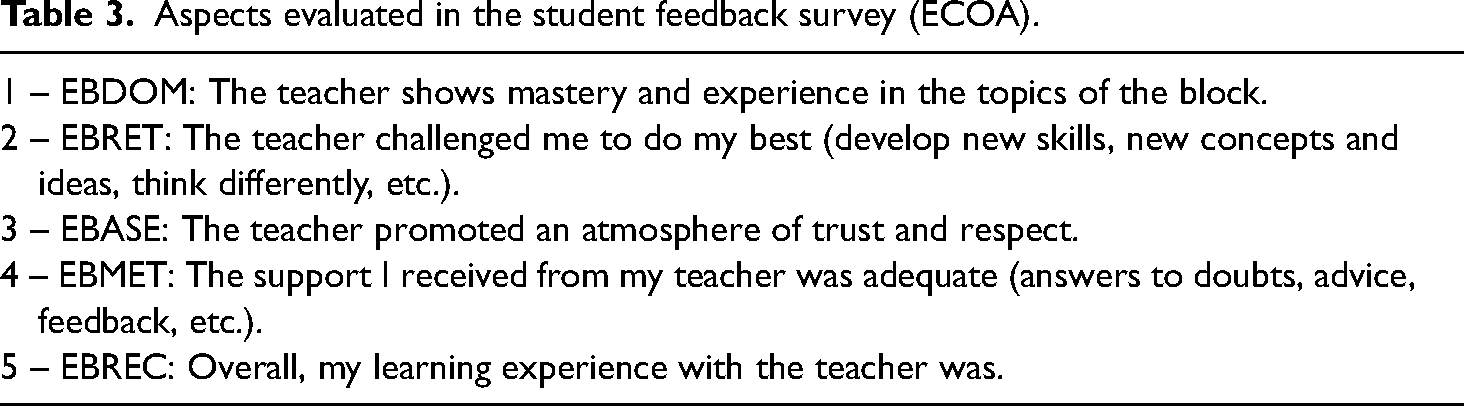
Aspects from 2 to 5 were selected as the most appropriate to reflect the effects of the implementation of the PBL techniques on the students’ satisfaction since aspect 1 did not show sensible variations. The average scores obtained by the teacher before and after are visually analyzed in dispersion plots in the results section.
Students’ satisfaction perception
To have a better understanding of the scores given to the teachers in the five preceding questions and to have a more complete view, the ECOA's comment question asks the students “What would you recommend to a fellow who wanted to enroll in this course with the same teacher?”. Usually there's a fraction of polarized comments that coincide with the fractions of best and worst scores; however, there are common factors observable most opinions, even in those belonging to the group of polarized answers. In the case of the answers analyzed for this research (32) since not all of the survey respondents wrote comments), a group of five factors were identified and classified as follows: (a) “Time”, related to the time given to complete tasks or the time available to master the academic content, (b) “Speed”, related to the pace of the class, (c) “Complexity”, associated to the amount of new content implied in one class session or the variety of steps involved in a methodology, (d) “Feedback”, the planned moments to answer questions and dispel confusions in and out of the classroom, and (e) “Perception” associated to the way students perceive the course and the teacher. A matrix was elaborated with the previously described factors applied to the students’ comments to track changes attributable to the implementation of PBL activities. It must be emphasized that the sole application of this matrix to the answers of a class group could serve as a starting point to design strategies aimed at boosting the learning process.
Results and discussion
To assess the impact of implementing the described educational practice, student's performance on two partial exams was analyzed before and after PBL implementation. Furthermore, an analysis of the achievement of the competencies in the respective periods was conducted. Finally, the perception of the student was evaluated by the teacher's results on the institutional satisfaction survey near the end of the course (ECOA).
Figure 4 presents the scores of the two exams applied before and after implementation, demonstrating a general improvement in performance on the second exam compared to the first, regardless of whether the educational practice had been implemented or not, which is attributable to the students’ familiarization with the teachers’ working style. However, a more significant improvement is observed when comparing scores between before (2023) and after (2024), which is related to the benefit of the implementation of the educational practice. For the first exam, the mean score increased from 52.1 in 2023 to 63.0 in 2024, with the lower and upper quartiles also rising from 38.8 and 71.3 to 50.0 and 84.0, respectively. Similar improvements were observed for the second exam: the lower quartile increased from 37.3 to 64.6, and the mean score rose from 58.6 to 78.9. Importantly, the student failure rate, based on exam scores taking 70.0 as the minimum approbatory score, decreased significantly, particularly for the second exam, dropping from 60% in 2023 to 27% in 2024. These results suggest that the implemented PBL strategy positively impacted student comprehension of concepts and acquisition of competencies.
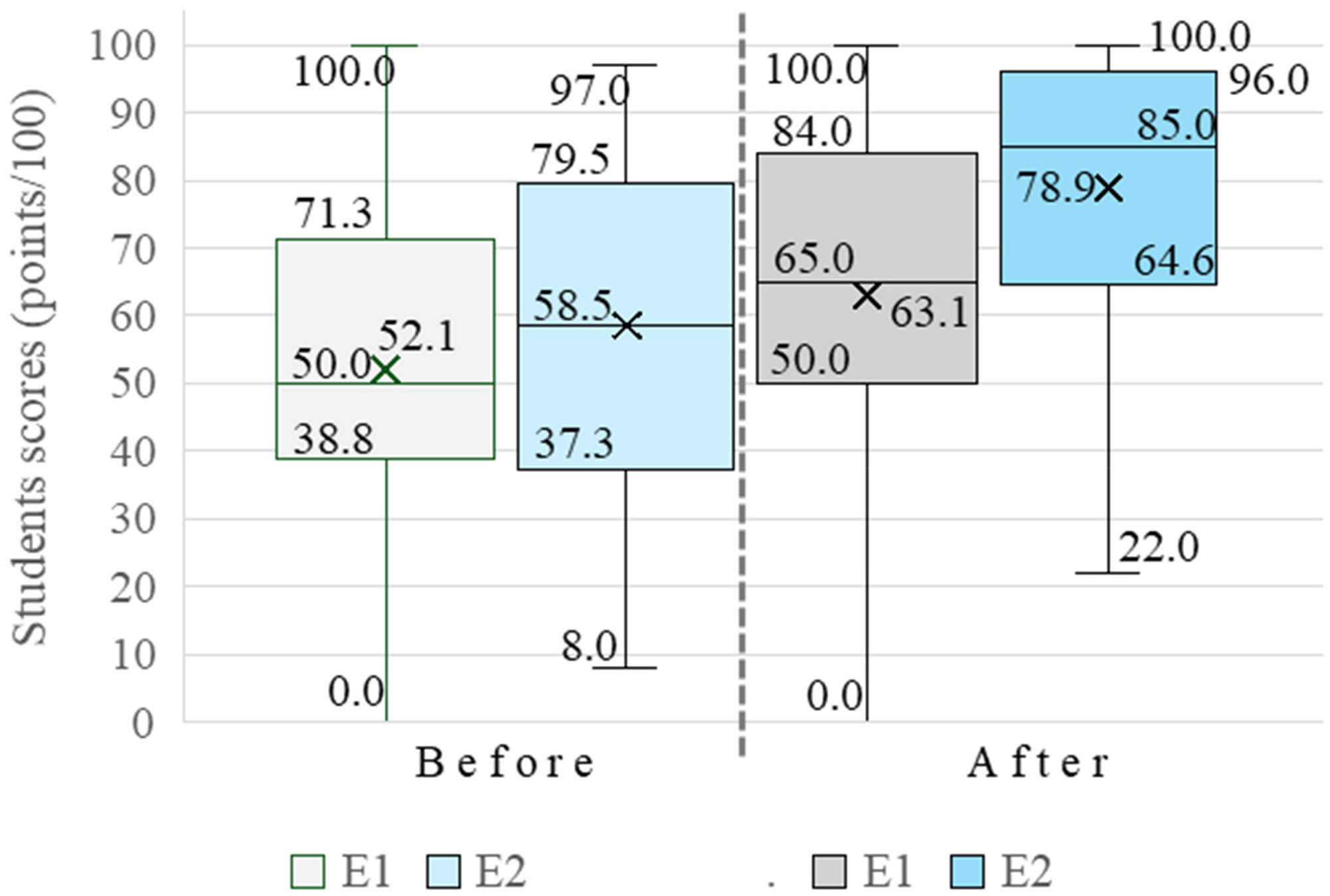
Comparison of the partial examinations (E1 and E2) scores of the material balances groups before (2023) and after (2024) of the integration of PBL.
When the performance across the competencies declared for this course was analyzed, some trends, patterns, and key insights were observed. For the competencies related to the “area”, problem evaluation and decision making, an increase in the percentage of students with outstanding and basic performances (Figure 5) is evident after PBL implementation. The outstanding category demonstrated an increase from 0.0% to 17.7% for problem evaluation, and from 42.9% to 46.8% for decision making, while the basic category exhibited an increase from 28.6% to 57.0% and from 8.2% to 35.4%, respectively. These observations are indicative of a consolidation of skills within the high and middle performance ranges following the implementation of the practical educational practice. Conversely, a decline in the number of students demonstrating solid and incipient competence was observed. The hypothesis is that students enhance their competencies by progressing to the next level when the PBL strategy is implemented.
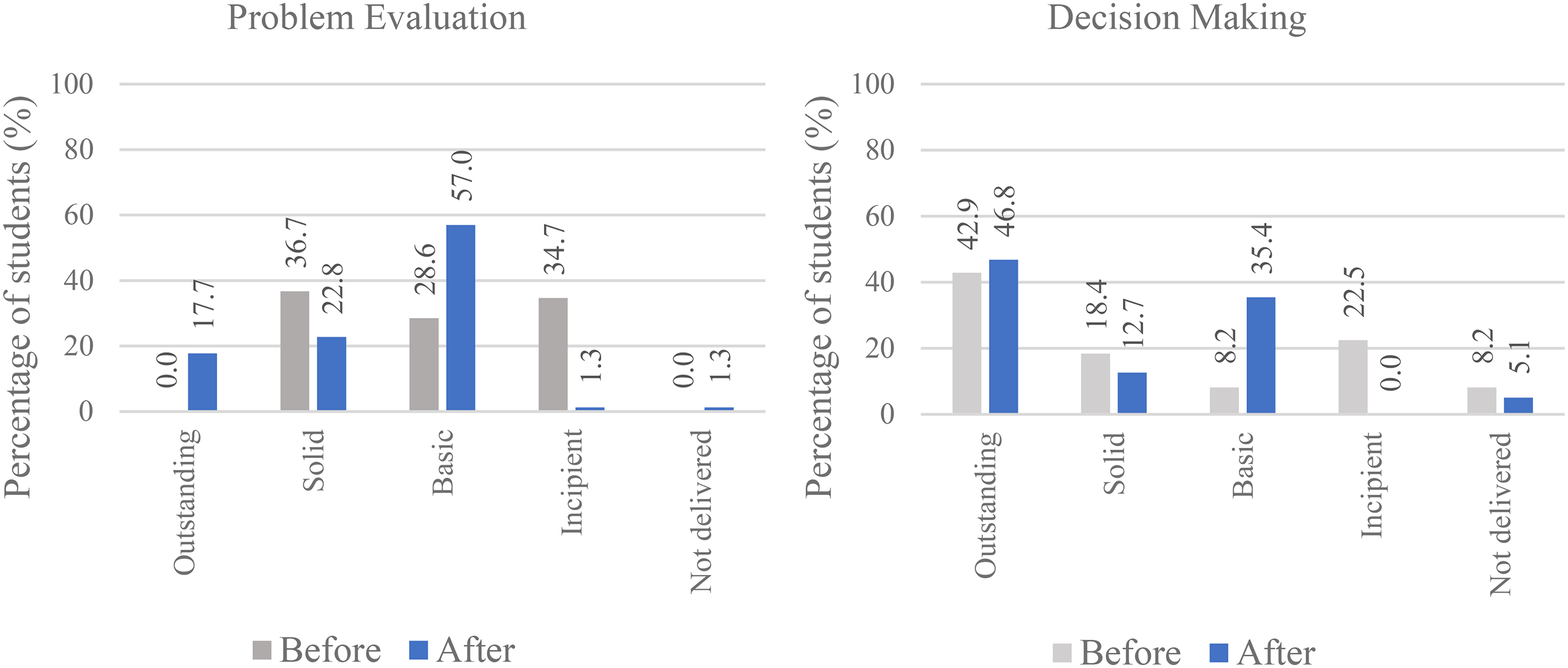
Comparison of the performance of students in the area's competencies.
In relation to “discipline competence”, the application of the principles of conservation of matter and energy, a variable pattern was identified. Outstanding performance exhibited a slight decline from 44.9% to 40.5%, while the Solid and Basic category demonstrated a significant increase from 16.3% to 31.7% and from 8.2% to 22.8%, respectively. More remarkably, the incipient category dropped from 22.5% to 0.0% (Figure 6). This suggests a gradual overall transition to better performances. In the case of the “transversal competencies” related to systematic and scientific thinking, (Figure 7), once again a consolidation in the outstanding and basic levels was observed, as was the case in the area competencies. In this instance, following the implementation of the educational practice, a shift was noted from 8.2% to 22.8% in the outstanding level for systematic thinking, and from 24.5% to 39.2% in the outstanding level for scientific thinking. Conversely, a dramatic (61.2% to 26.6%) and slight (36.7% to 26.6%) drop was observed in the solid category, for these same competencies, respectively.
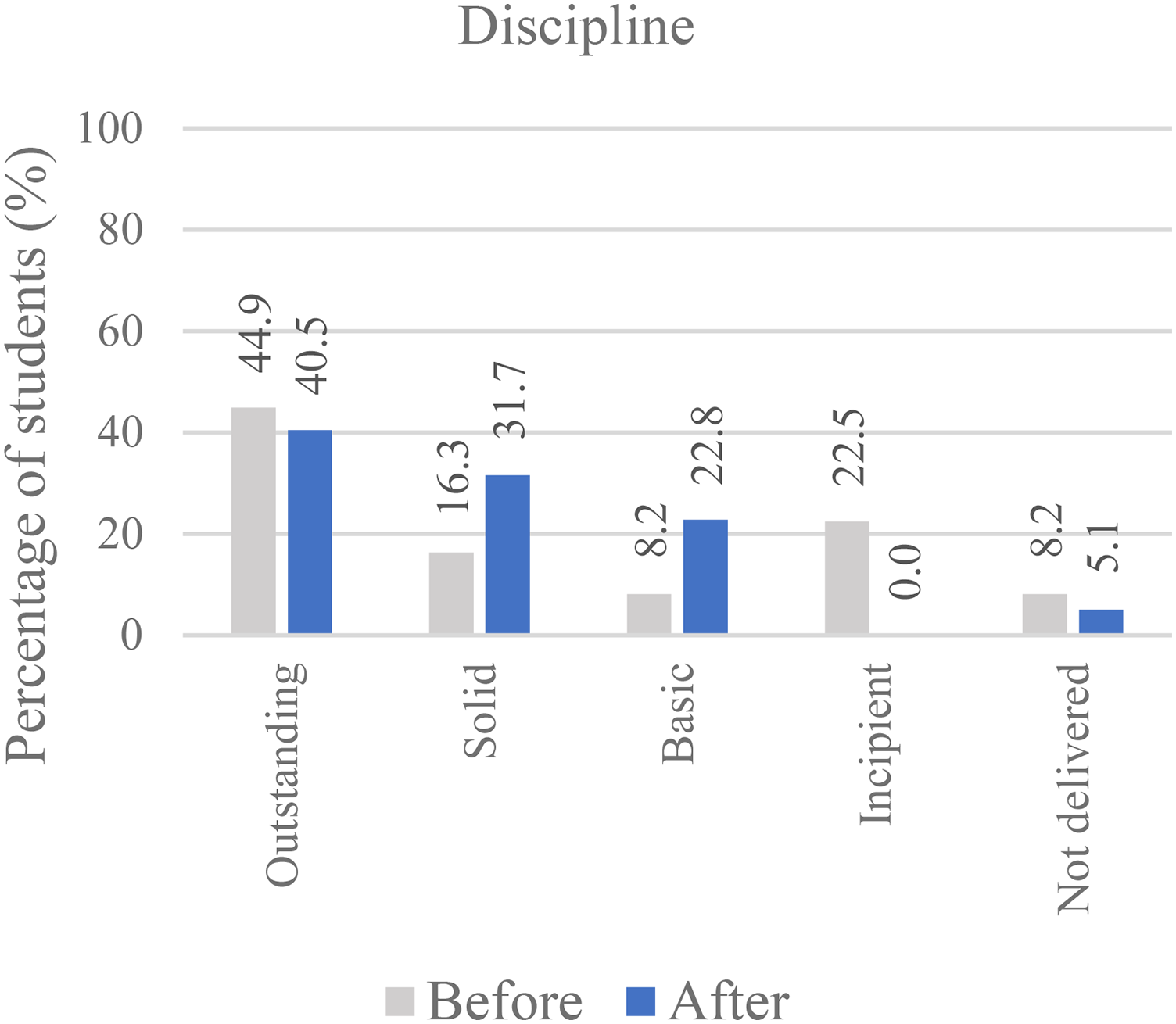
Comparison of the performance of students in discipline competency.
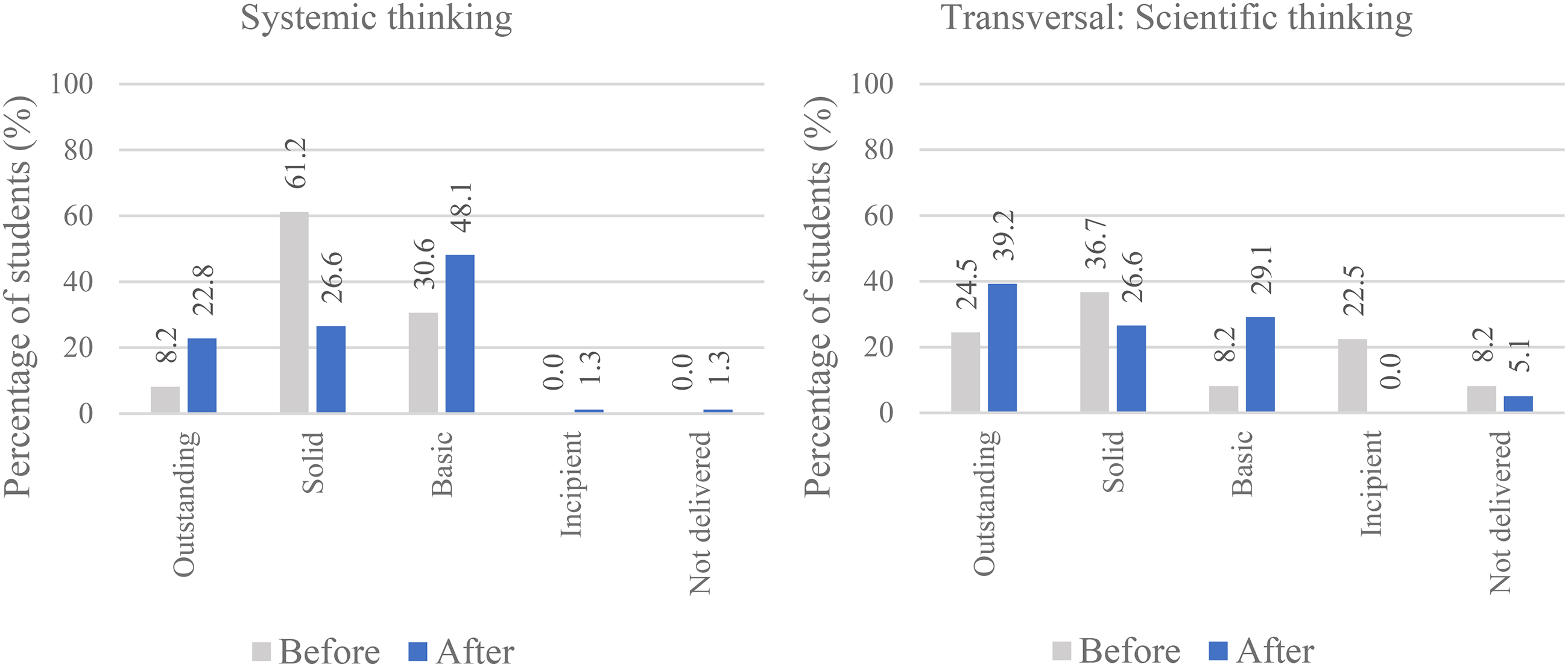
Comparison of the performance of students in the transversal's competencies.
In general, an increase in the percentage of students performing outstandingly was observed, except for the “discipline competence”, which exhibited a slight decline. Additionally, a consistent improvement pattern was identified across the basic level, at the expense of the solid and incipient levels. This result suggests a more balanced middle-tier competency level was achieved in the course, as well as a greater number of students attaining the highest level of competence following the implementation of the educational practice.
Student perceptions of the learning experience were also assessed using the ECOA survey, administered before and after implementation of the PBL methodology. The survey results, presented in Figure 8, show a positive shift in the teacher's score across all categories after the introduction of active learning. Most notably, student satisfaction with teacher accompaniment (EBMET) and satisfaction with the learning experience (EBREC) increased substantially. In 2023, EBMET averaged 6.0 out of 10.0, this score rose significantly to 8.6 in 2024. Similarly, EBREC climbed from around 6.1 in 2023 to 8.3 in 2024. Other areas, such as teachers’ ability to challenge students’ thinking and developing new abilities, ideas and concepts (EBRET) and how the teacher promoted an environment of trust and respect (EBASE), also saw improvement, increasing from 8.0 and 7.9 in 2023 to 8.8 and 9.0 in 2024, respectively. These results indicate that the implemented PBL strategies not only improved exam scores and competencies development but also enhanced students’ overall perception of the course and their learning experience.
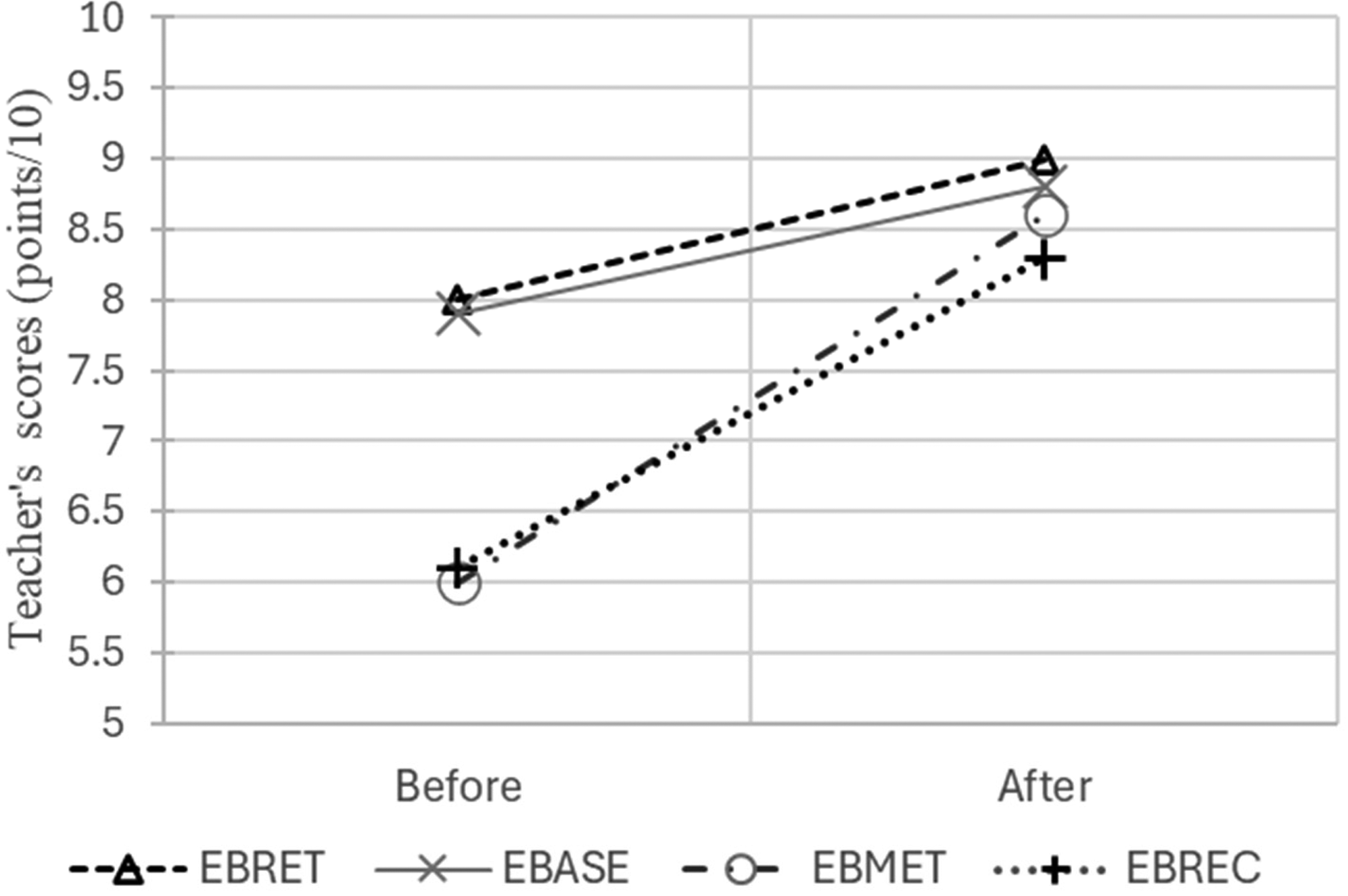
Average scores of the final satisfaction surveys (ECOA) answered by the students of the corresponding groups.
Table 4 summarizes student responses to the open-ended question, “What would you recommend to a fellow student considering this course with the same teacher?” This feedback, collected before and after implementing PBL, reveals key themes. To denote negative impacts observable in the comments a mark (X) was assigned, in contrast positive impacts were denoted with (√). It is observed that before the implementation of the practice, students expressed negative feedback, highlighting issues such as fast-paced lectures, time constraints that hindered asking questions, and a focus on quantity over depth of content. These comments indicate a struggle with the speed and complexity of the course, as well as dissatisfaction with the limited opportunities for feedback and interaction. In contrast, the comments gathered after implementation show an overwhelmingly positive shift. Students praised the teacher's ability to explain complex topics simply, their patience and enthusiasm, and effective resolution of questions during tutoring hours. Despite some continued concerns about the fast pace, the qualitative analysis reveals that the teacher's approachability, clarity, and structured real-time feedback significantly improved the learning experience and overall perception of the course. Furthermore, the teacher implementing the educational practice received fewer requests for tutoring outside of class time to go deeper into the topics.
Summary of comments to the question: what would you recommend to a fellow who wanted to enroll in this course with the same teacher? (also, in the satisfaction survey) for the MB course.
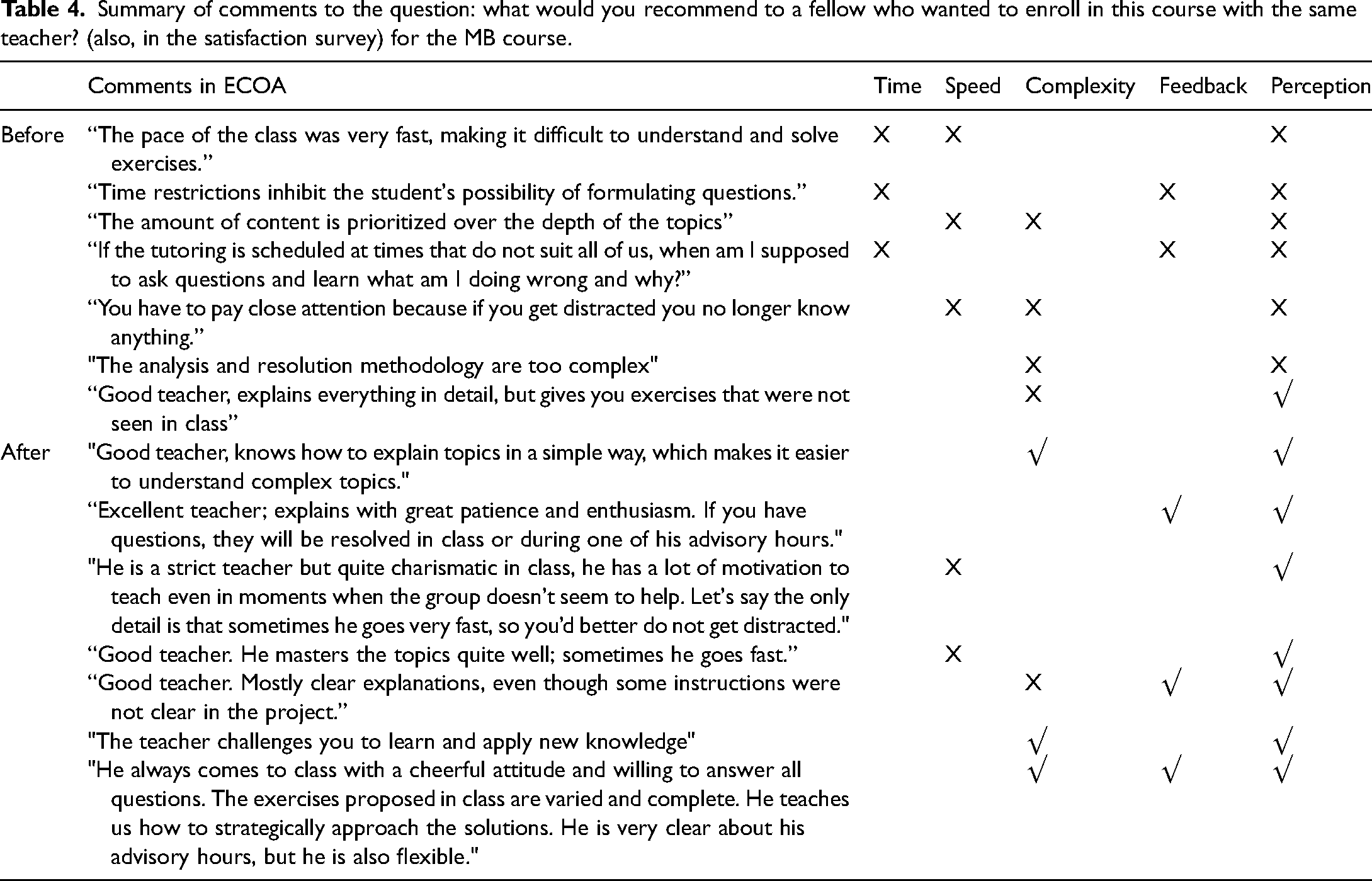
The combined results from exam scores, competencies assessments, ECOA surveys, and open-ended feedback clearly demonstrate the positive impact of active learning strategies. Moreover, the human relationships established in the classroom promoted a student's higher level of engagement and satisfaction. Furthermore, the comparison of both sections of Table 4 makes evident the positive impact induced by the implementation of PBL activities on how the students perceive the course and the teacher. Before PBL activities were included in the course, most of the students experienced the complexity of the content, the limitations of time and the pace of the classes, as negative aspects that came into a generalized negative perception. In contrast, when PBL activities were adopted, the students were able to separate individual negative aspects such as speed or complexity, from the general experience or perception of the course, furthermore, the dimension of time disappeared from their comments.
Teacher's experience, recommendations for implementation and institutional support
As mentioned in the book “Teaching and learning STEM: A practical guide” 7 teaching can be very challenging and not many educators receive formal pedagogical training. For this reason, designing or implementing innovative educational practices may seem difficult and doubtful. However, nowadays there is a wealth of materials and information available for support. The mentioned book itself, and other bibliographies cited here were a source of inspiration, practical tips and scientific evidence that the efforts are worthwhile. Like any other innovation, educational innovations arise from necessity, in this case, students' struggle with acquiring the necessary competencies by means of teacher centered lectures. This motivated the authors to seek alternatives and remember that during their own education, those activities that require them to take an active approach were the most meaningful and memorable. Of course, challenges like students' or colleagues' resistance, lack of resources, time, or the sense of being lost can arise, especially if you try to change too many things at once. For this reason, we recommend starting with a gradual approach in which one or two active learning activities alternate with traditional lectures so teachers and students can feel more comfortable and confident.
The reader could be tempted to think that the implementation of an approach like the presented in this work would demand a full redesign of the activities and assessment instruments of the course. However, a progressive implementation, consisting of a minimum of two PBL scenarios and a closing course comments survey, is preferred and strongly recommended, since the formulation of the whole instruments and materials demands significant time investment. Moreover, this permits the adaptation of the five moments PBL approach described in this work, into an ongoing course where the first five moments PBL scenario, would serve to track the students and teachers reactions to the new learning situation, and the second PBL scenario would be useful to refine weak points detected on the first application as well as generate confidence on the teacher. Applying satisfaction surveys with open-ended questions for comments from the very beginning is highly recommended, since the information obtained can be used to construct a matrix of attributes capable of revealing weaknesses and strengths of the “business as usual” educative practice, thus permitting the elaboration of academic activities designed to promote learning, while minimizing the detected negative aspects. New editions of the same course will result in the accumulation of more PBL activities with increased quality. The authors also suggest not to spend too much time looking for the PBL scenarios since these can be easily adapted from textbooks problems sections, and it is more time worthy to get a good alignment between the objectives, timing, concepts, scientific laws, methodologies, and introductory exercises associated to each moment of this approach.
Finally, institutional support is key. We are fortunate that our university has created the Institute for the Future of Education, which has many initiatives that encourage and support innovative education by different means, for example, training courses with different formats, durations and levels of complexity, funding for research and publication, digital resources and a dedicated conference where teachers and researcher can exchange and discuss practices and experiences.
Conclusions
This work outlines a step-by-step educational practice to incorporate the principles of AL, specifically problem-based learning, into the STEM curricula of university courses, along with proposed evaluation mechanisms to assess its impact that are aligned with the learning objectives. The innovative approach utilized in this study provides a comprehensive guide for educators looking to enhance student engagement and performance in STEM courses. The implementation of the practice yields noteworthy results, which are outlined below:
The implementation of this new educational practice led to a notable increase in exam scores, with the mean scores rising from 52.1 to 63.0 for the first exam, and from 58.6 to 78.9 for the second exam. Additionally, the student failure rate decreased significantly, dropping from 60% in 2023 to 27% in 2024 for the second exam. There was a marked enhancement in student performance across various competencies, including problem evaluation and decision-making. The study observed an increase in the percentage of students achieving both basic and outstanding levels of performance. Overall, the shift from incipient to higher mastery levels suggests a balanced improvement in competency development. The ECOA survey results indicated a substantial improvement in student satisfaction, with scores for teacher accompaniment and overall learning experience rising from around 6.0 to 8.6. Students expressed appreciation for the structured approach to exercises and the real-time feedback provided, which significantly enhanced their perception of the course and the teacher.
Despite the successful application of the educational practice proposed in this research, there is still work to do to achieve a better mastery of the systemic thinking competence. This could include variations of PBL practice, by introducing individual initial stages, where students are asked to propose problem solving approaches, to be then compared and discussed with their peers before moving on to the next stage. Additionally, it is recommended in future research to explore scalability for larger groups and different educational contexts and adapt the model to diverse educational settings. Furthermore, implementing and validating similar AL strategies in other STEM courses would be useful to generalize the findings and refine the approach.
Based on all the above, it is clear that the findings of this study contribute to the growing body of literature on active learning in STEM education and provide valuable insights for improving pedagogical practices to promote student success in challenging technical courses.
Footnotes
Acknowledgments
The authors thank Tecnológico de Monterrey for supporting and encouraging the documentation of educational practices through the “Academic Publishing course” aimed at teachers of engineering careers and in particular to the instructor José Carlos Vázquez Parra for his guidance and accompaniment.
Credit authorship contribution statement
Declaration of competing interest
The authors declared no potential conflicts of interest with respect to the research, authorship, and/or publication of this article.
Ethical considerations
All student information was de-identified and participant consent or for publication was not required. Individual student data will not be shared with third parties.
Funding
The authors thank Tecnologico de Monterrey's publications supporg fund for covering the article processing charges.

Data availability statement
The original contributions presented in the study are included in the article, further inquiries can be directed to the corresponding author.