



Abstract
As engineering dynamics remains a difficult subject to teach and learn, this study was initiated by an observation from the authors’ experience of how students pass dynamics without necessarily understanding all the fundamental concepts. This observation motivates the research on ‘pattern recognition’ as a learning strategy that emphasizes practising sample problems and solving similar problems in assessments. This research consisted of two parts. First, we analysed the notion of pattern recognition from two angles: (a) how it is contrasted with conceptual understanding in view of mental simulation and (b) how it is defined in the fields of computer science and cognitive psychology. We found that pattern recognition could be characterized using three features: (a) use of sample cases, (b) learning through practice, and (c) emphasis on correct patterns. Subsequently, we conducted a survey to identify evidence of pattern recognition from students as their learning strategy. With Cronbach’s alpha coefficient value at 0.649, a moderate but acceptable value, we discovered that our survey instrument was able to distinguish learners who tend to use pattern recognition as a strategy to solve problems, which is considered reasonable for a pilot investigation. We also found evidence that learners using pattern recognition tend to emphasize practice problems and memorization and de-emphasize the learning of fundamental concepts. We consider that pattern recognition could provide a new aspect to understand how learners learn technical subjects in engineering education.
Introduction
Dynamics is a classical and important subject in engineering education. It demonstrates how scientific and mathematical rigour can be applied to practical engineering work. It formalizes fundamental concepts to describe the motions of objects, and students need to understand these concepts to design mechanical systems. For example, the subject of dynamics defines the notions of velocity and acceleration using the calculus concept and relates force and acceleration using Newton's second law. After understanding dynamics, students can use scientific principles to describe, interpret and explain the motions of engineering systems.
Dynamics is a difficult subject to teach and learn. Earlier research has reported that students (or novices) tend to use ‘surface features’ and their everyday experience to interpret the scientific concepts of motions.1,2 Researchers have also explored the landscape of scientific misconceptions. For example, Chi 3 classified misconceptions at three ‘grain sizes’: false beliefs, flawed mental models, and category mistakes. Through this classification, Chi explained why category mistakes are robust and suggested an instructional approach for each grain size. The review by Liu and Fang 4 listed 38 misconceptions about force and 15 about acceleration. They explained these misconceptions with four reasons which include preconceived misunderstanding, incomplete or partial understanding, wrong interpretations/comprehensions, and vernacular misunderstanding. In addition to classifying misconceptions of different science subjects, Soeharto et al. 5 also studied the instruments that assess misconceptions. They classified four types of instruments (i.e. interviews, simple multiple-choice tests, multiple-tier tests, and open-ended tests) and explained their pros and cons.
To address the issue of misconceptions, several pedagogical approaches have been proposed to help students understand dynamics, and they can be generally classified into three categories. The first one is the experimentation approach, where students need to complete specific tasks that require direct observations and measurements of an object's motions.6–8 The idea is to let the real-world responses educate students for correct understanding. The second approach is visualization and stimulation which assists students to see and feel an object's motions. Computer tools are commonly used in this approach which can include interactive animation,9–11 computer-based simulation with visual and haptic feedback, 12 and augmented reality. 13 The third approach utilizes the social aspect in learning, where students support and correct each other's concepts. Some examples of this approach can include peer instruction 14 and collaborative learning which can be based on the social constructivist perspective. 15
Despite these continual efforts, misconceptions in dynamics continue to remain common.16,17 From the student's perspective, it leads to a practical question: How can I pass dynamics given that I may not grasp the full conceptual understanding of this difficult subject? One possible learning approach for students is to work hard on the problems from the assignments (usually listed at the back of each textbook's chapter). After perceiving some problem-solving patterns, they could pass and even receive good grades in dynamics.
Now when we try to characterize this learning approach, it may not look exactly the same as rote memorization since problems in dynamics often need the analysis for new situations. At the same time, we also find that it is not quite equivalent to conceptual understanding since students can still easily fail to answer conceptual questions. Further, we also observe the following behaviours when we teach technical subjects in engineering:
Students ask for more examples (or previous test papers) to prepare for exams. Students would complain if the midterm assessments were not similar (enough) to the practice problems and examples. Students insist that memorization is important.
18
When we try to describe this kind of learning approach, the term pattern recognition (PR) emerges, and it becomes the research theme of this paper. Since PR as a phenomenon in student learning has not been much discussed in the teaching of dynamics, we conducted two lines of research in this pilot study: theoretical development and empirical observations. In theoretical development, we first revisited and refined the notion of conceptual understanding in view of mental simulation in the context of dynamics. With this as a reference point, we examined the notion of PR from computer science and cognitive psychology and then we characterized the features of PR as a learning strategy. This characterization is one intended contribution of this paper. In empirical observations, we conducted a survey study to examine how students think and behave if they tend to use PR in learning. In another intended contribution, this survey study can distinguish learners who tend to use PR for problem-solving.
In the rest of this paper, section ‘Conceptual understanding in dynamics’ first re-visits the notion of conceptual understanding from the aspect of mental simulation. In the section ‘Characterization of PR in learning’, we define and characterize the notion of PR as a learning strategy. In the section ‘Survey study’, we discuss our survey study that can outline a tendency of students who may use more PR as their learning approach. Section ‘Conclusion’ provides some closing remarks of this work.
Conceptual understanding of dynamics
This section intends to outline our interpretation of conceptual understanding in dynamics. By clarifying the notion of conceptual understanding, we can better distinguish the features of PR in learning in the next section. In the literature, Streveler et al. 19 discussed the importance of conceptual understanding in engineering and outlined some common student misconceptions in three different domains (i.e. mechanics, thermal science, and direct current circuits). They analysed conceptual understanding in view of two aspects: basic quantities (e.g. definitions of velocity, acceleration, and force) and relationships of quantities (e.g. equations of particle motions and conservation of momentum). As observed, they took scientific quantities as an important perspective to interpret conceptual understanding.
In addition to scientific quantities, Moore et al. 20 took the perspective of modelling and representation to describe conceptual understanding, which involves integration of quantities and interpretation of contexts. They observed how representational fluency (e.g. the ability of a student to translate and exchange pictorial and symbolic representations of a phenomenon) is positively associated with the conceptual understanding of students. In an ethnographic fieldwork study, Bornasal et al. 21 investigated how engineers (as experts) developed and applied conceptual understanding in an engineering project. In our interpretation of this study, conceptual understanding of engineers involves contextualization (e.g. situating concepts with the problem's context, constraints, and material resources), representational fluency (e.g. use of multiple representations), and social interactions (e.g. establishing a common and correct understanding of concepts in a team).
To distinguish the notion of conceptual understanding for dynamics more clearly, we reference the notion of mental simulation by Hegarty. 22 To Hegarty, mental simulation is ‘constructed piecemeal’ (in contrast to ‘holistic visual image’), and it involves ‘representations of non-visible properties’ that can be used for ‘task decomposition and rule-based reasoning’ (p. 280). In this paper, we define mental simulation in dynamics as a cognitive and reasoning skill to see and describe an object's motion through the language of scientific concepts and principles. To elaborate on this definition, consider a projectile problem in particle dynamics. First, our definition distinguishes mental simulation from pure imaginary visualization, which can be obtained by simply throwing a ball. Instead, after learning dynamics, a student should be able to describe the projectile motion using scientific terms such as velocity and acceleration and then explain (which is a reasoning skill) different motions in vertical and horizontal directions.
This definition of mental simulation also aligns with the above discussions about conceptual understanding. First, the language of scientific concepts and principles supports the use of quantities. 19 The imagery of a projectile's motion is only one representation, whereas representational fluency would imply a person taking equations as another representation (or as a model) and integrating both representations to describe the motion. 20 For contextualization, it would require a person to imagine the projectile's motion with contextual information such as air resistance assumption, initial speed and launch angle, and gravity. 21
While it could be natural for instructors to use mental simulation for their explanation in dynamics, one theme of this paper is that students cannot easily perform mental simulations for solving problems. Notably, Hegarty 22 has already highlighted that ‘reasoning based on descriptive knowledge’ (p. 280) is not a mental simulation. If we interpret equations and solution procedures as descriptive knowledge, students could find that using descriptive knowledge is easier in problem-solving. Consequently, the use of descriptive knowledge can easily lead to PR as a learning strategy for students.
Characterization of PR in learning
While PR has been used as a technical term in two different but related fields, that is, computer science and cognitive psychology, it has not been well discussed as a learning strategy in dynamics. For the theoretical development of this paper, the purpose of this section is to explore the characteristics of PR from these two fields and relate them to the context of learning. From this, we can define the notion of PR with observable learning behaviours in the study of dynamics.
PR in computer science
In the domain of computer science, the study of PR seeks to utilize the strengths of computers (e.g. fast computing speed and large memory) to identify patterns from seemingly chaotic data. The recognition techniques are often associated with two related fields: statistics 23 and machine learning. 24 PR can be interpreted as a process to classify (or label) the input data. For example, consider a computer vision problem where we ask the computer if a given picture shows a human's face. In this example, the input data is the digitized picture that contains an array of pixels, and each pixel has a colour value. After the PR process, the computer can classify the picture with two possible results: the presence of a human's face or not. Computer-based PR has a wide range of applications. Besides computer vision, other common examples of applications include document classification (e.g. identifying spam emails and searching internet websites), market research (e.g. identifying purchasing patterns of consumers), and biometric security (e.g. recognize fingerprints for computer login).
Generally, computer-based PR consists of three major steps,23–25 which are shown in Figure 1. To illustrate, consider how a smartphone's camera recognizes the presence of a human's face in a picture. The step of sensing is about converting the reflected light (raw data) received from the camera lens into the pixel information of a picture (coded information). In the step of feature extraction, the notion of feature can be interpreted as a specific lens (or tool) to measure the pixel information. For example, one feature can be the number of pixels that have a colour similar to a human's skin, and this feature can be one attribute to estimate the chance of having a human's face in a picture. Once the pixel information is converted into a set of features, the step of ‘classification’ will make the final call on whether the picture shows a human's face and if so, where it is. The notion of classified information in Figure 1 can be interpreted as information with labels that can be meaningfully understood in a context (e.g. the presence of a human's face or not in a picture).
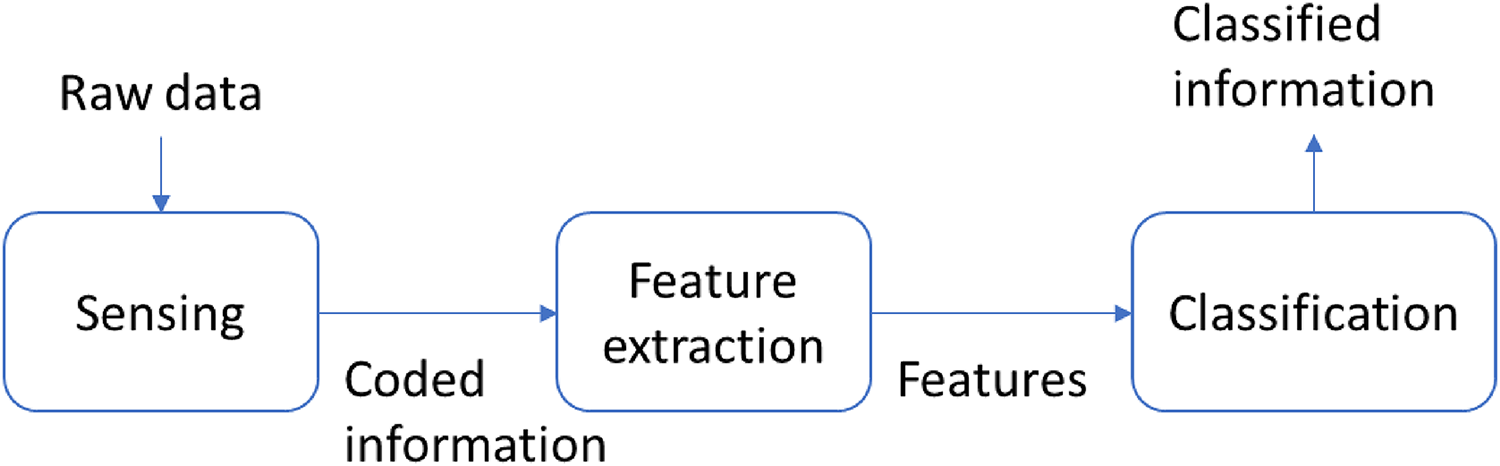
Computer-based pattern recognition (PR) process.
How can we describe the intelligence of a computer for the PR tasks? Intuitively, we can describe it in two aspects: the use of training data and the mapping ability. 26 Training data can be interpreted as a set of standard answers (samples) that contain input data with classified information (e.g. a set of 100 pictures and we know in each picture whether it shows a human's face or not). Then, the computer tries to learn from the training data, where the notion of learning can be interpreted as constructing the mapping mechanism between input data and classified information. The mapping mechanism is often represented as logical or mathematical models such as Bayes decision rules and neural networks.
At this point, we want to summarize the following five properties of computers (analogous to learners) when they solve the PR problems.
Independence of contexts (context-free): Computers only take symbols and numbers when they execute the algorithmic procedures and construct the mapping models. The processing of contextual information depends on the human interpretation of features and classified information. Dependence on training data: Due to their context-free nature, computers depend on the availability of training data to explicitly learn what is right. In particular, the quantity of training data, as noted in the popular notion of big data, could be essential to the PR performance. Learning through statistics (or replications): Computers can infer the correct patterns because they have seen similar patterns before. Statistical reasoning is utilized by capturing the replications of the matching pairs of input data and associated patterns to compile the inference model in the learning process. Result-oriented assessment: The quality of a PR program is often assessed with its accuracy to match the correct patterns. Besides, it may be assessed with its computational efficiency (e.g. recognition speed and required memory capacity). Utilization of the cognitive advantages of a computer: Computers are good at speedy calculations with large memory capacity. The computer algorithms for PR try to utilize these advantages to approximate intelligent responses.
PR in cognitive psychology
In cognitive psychology, the study of PR can be found under the topic of perception (i.e. how humans make sense of sensory information). Typically, two mechanisms are identified: template matching and feature detection.27,28 Since a template can be imagined as a standard or representative of a known concept (or label), template matching is about examining how close the received information (or input data) is compared to a template. In contrast, feature detection analyses the received information in terms of a set of features (e.g. size and colour), which are used to describe the characteristics or attributes of a known concept or category. Then, the received information can be classified as a known category if it satisfies the criteria of the category's features.
PR can also be relevant to another cognitive concept known as categorization. 27 Rosch 29 described two principles behind categorization: cognitive economy and perceived world structure. Cognitive economy articulates a tension between using minimum cognitive effort and getting most information (after categorization). Considering that concepts and categories can be organized in a hierarchical (or vertical) manner (e.g. engineering → mechanical → solid mechanics → finite element), the deeper level would require more cognitive effort to distinguish the details. Then, people tend to settle for the right level according to the context or their purpose. The second principle, perceived world structure, advocates that the attributes (or features) of objects in the world are often correlated 28 rather than independent. This principle tries to distinguish the difference in cognitive tasks in the research laboratory (where object's attributes tend to be context-free and independent such as letters, geometric shapes, and colours) and in the world environment (where humans tend to perceive object's attributes in a group and identify their relationships).
By comparing computer-based and human-based PR, we notice some similarities. First, the use of training data and statistics by computers is similar to template matching and feature detection by humans. For example, both computers and children learn to recognize English letters by reading different writings and then noticing the structural features of English letters. At the same time, the performance of PR will still be assessed through the accuracy and efficiency of getting the right patterns (i.e. result-oriented assessment).
At the same time, we also notice that the two categorization principles by Rosch
29
seem to reveal some unique properties associated with human-based PR, which we want to elaborate on as follows:
Dependence of contexts: It is rather difficult for humans to recognize patterns without learning the context. For example, when a picture is presented, humans tend to first comprehend the context of the picture before searching for a human's face. This is aligned with the above notion of perceived world structure. Limitation of cognitive capacity: As the computing and memory capacities of humans are limited, humans tend to utilize their cognitive capacity that is just good enough for the given tasks (i.e. cognitive economy).
PR as a learning strategy
After outlining the notions of PR from two fields, we want to interpret these notions in the context of student learning in dynamics. As a result, we came up with three characteristics of PR as a learning strategy.
Characteristic 1: use of sample cases
In both computer-based and human-based PR, the learner needs the sample cases (e.g. training data for computers and templates for humans) so that they can recognize the correct results for given problems. In other words, no PR is possible for learners if they do not know sample cases before. In the context of dynamics, sample cases include work examples (in lectures) and homework problems.
Characteristic 2: learning through practice
There are differences between computers and humans in how they use sample cases in their training (or learning) processes, where their differences could be explained by their cognitive properties. As computers can make speedy calculations with a large amount of memory, they can utilize many sample cases and build PR models. In contrast, humans are good at reasoning in contexts and take advantage of the principle of perceived world structure, so that they can generalize the features of patterns with relatively few sample cases. Though their learning mechanisms are different, both computers and humans still rely on practices with sample cases to develop the PR skills. In the study of dynamics, learning through practice can be observed by asking students to work on homework exercises, and mock examinations can be seen as one practice to prepare for critical assessments.
Characteristic 3: emphasis on correct patterns
With PR, the learner tends to focus on yielding the correct answers (or patterns), while the quality of thinking towards conceptual understanding is less concerned. In dynamics, correct patterns include standard problem-solving procedures (e.g. summation of forces), correct use of tools (e.g. free body diagrams), and correct results (e.g. final quantitative answers for the problem). One question could be whether these correct patterns imply a proper conceptual understanding of students.
By reflecting on these characteristics, we should note that PR is a good (and necessary) learning strategy for students. 30 We should be proud of the students if they pay attention to lecture examples (use of sample cases), do homework problems (learning through practice), and focus on obtaining the right solutions (emphasis on correct patterns). Yet, if PR becomes the goal in learning, students would have lesser chances of developing higher cognitive skills (e.g. creativity and critical thinking, which differentiate humans from computers). In addition, we argue that the purpose of dynamics should not be only about applying the equations correctly to the problems. Instead, students should be able to see the dynamic motions of the world through Newtonian theory. This learning and understanding will differentiate students from laypersons when they perceive the dynamic motions around them.
Survey study
The notion of PR as a learning strategy is rather a hypothesis as we cannot easily observe this cognitive process among students in a direct manner. Thus, we ran a survey study to collect some information that could be associated with PR. Based on the characterization of conceptual understanding (section ‘Conceptual understanding of dynamics’) and PR (section ‘Characterization of PR in learning’), we designed a survey that seeks to answer two research questions (RQs):
RQ 1: Is there any evidence that learners use PR as a learning strategy to study the subject of particle dynamics without the need to pursue conceptual understanding? RQ 2: If the previous question (RQ 1) is positive, are there any profiles of learners associated with this type of learning?
Methodology
This study used descriptive research methods to collect quantitative data through a survey to measure patterns of problem–solution strategies utilized by students. Since ‘the purpose of descriptive studies is to describe, and interpret, the current status of individuals, settings, conditions, or events’, 31 descriptive survey research allows selecting participants randomly through a probability sampling technique to describe the characteristics of a sample that represents a population under study. 32 Following Mertler's 31 suggestion, the survey (Supplemental Appendix 1) was developed after the discussion of conceptual understanding and PR in sections ‘Conceptual understanding of dynamics’ and ‘Characterization of PR in learning’ and consultation with one co-author who has been teaching and is familiar with dynamics in the program where this study was conducted. After receiving the institute's ethics approval (ID: RED22-1038) and identifying the target population (i.e. students enrolled in two courses with dynamics content during winter 2023 semester) and mode of data collection (direct administration of the survey in person), 31 the instrument was piloted with two senior students who had previously taken dynamics and were randomly selected for convenience to seek feedback about the length of the survey, clarity of questions, and overall organization of the instrument. Following suggested revisions, the researchers scheduled visits to two randomly selected classes and administered the survey in person. The researchers were not the instructors of the selected classes. To decrease influence, the researchers either stepped outside the class when students were responding to the survey or took an ‘invisible’ spot within the classroom.
The survey consisted of three parts: (a) problem-solving or technical questions, (b) reflection questions, and (c) perspective questions with a total of 16 questions. In part 1 (questions 1–5), we wanted the participants to exercise their mind by solving technical questions in particle dynamics. In part 2 (questions 6–10), we invited the participants to carry out their problem-solving experience immediately and reflect on their approaches to solving these problems. In part 3 (questions 11–16), we wanted to learn how the participants perceive and prepare the subject of Dynamics. These survey questions can be found in the Supplemental Appendix.
In total, 53 students participated in the study. After removing incomplete surveys (n = 14), 39 responses remained. Although this number did not represent the entire student population registered in dynamics, it was considered sufficient (a) to develop a general understanding of PR strategies employed by students to solve given problems and (b) to call for future research to investigate this learning practice and its implications for engineering education.
To analyse the data and answer the two RQs, Cronbach's alpha (α) coefficient 33 and simple frequency distributions were calculated. 34 Cronbach's alpha (α) coefficient allowed measuring the internal consistency of the PR tendency of participants by analysing their responses in part 2 (i.e. questions 6–10, participant reflections on solving the question and employment of problem-solution strategies). From there, we formulated a score of PR for individual participants. With the PR scores, simple frequency distributions were used to categorize participant responses in questions of part 1 (related to competency in solving technical problems) and part 3 (related to the perspectives of participants towards the subject of dynamics and the learning environment).
PR scores based on part 2
In the design of this study, we asked the participants to solve technical questions first as they were cognitively demanding. Also, we expected that the challenge of technical questions could situate their mind to reflect on how they solve technical questions in dynamics. This became the context behind the formulation of the PR score using the questions in part 2 (i.e. questions 6–10). Among these questions, we assumed some items of responses implicate a tendency of PR. Then, the PR score was based on how many PR items were chosen by a participant. Table 1 lists these PR items for each question along with the rationale.
Pattern recognition items in questions 6–10 (Q = question).
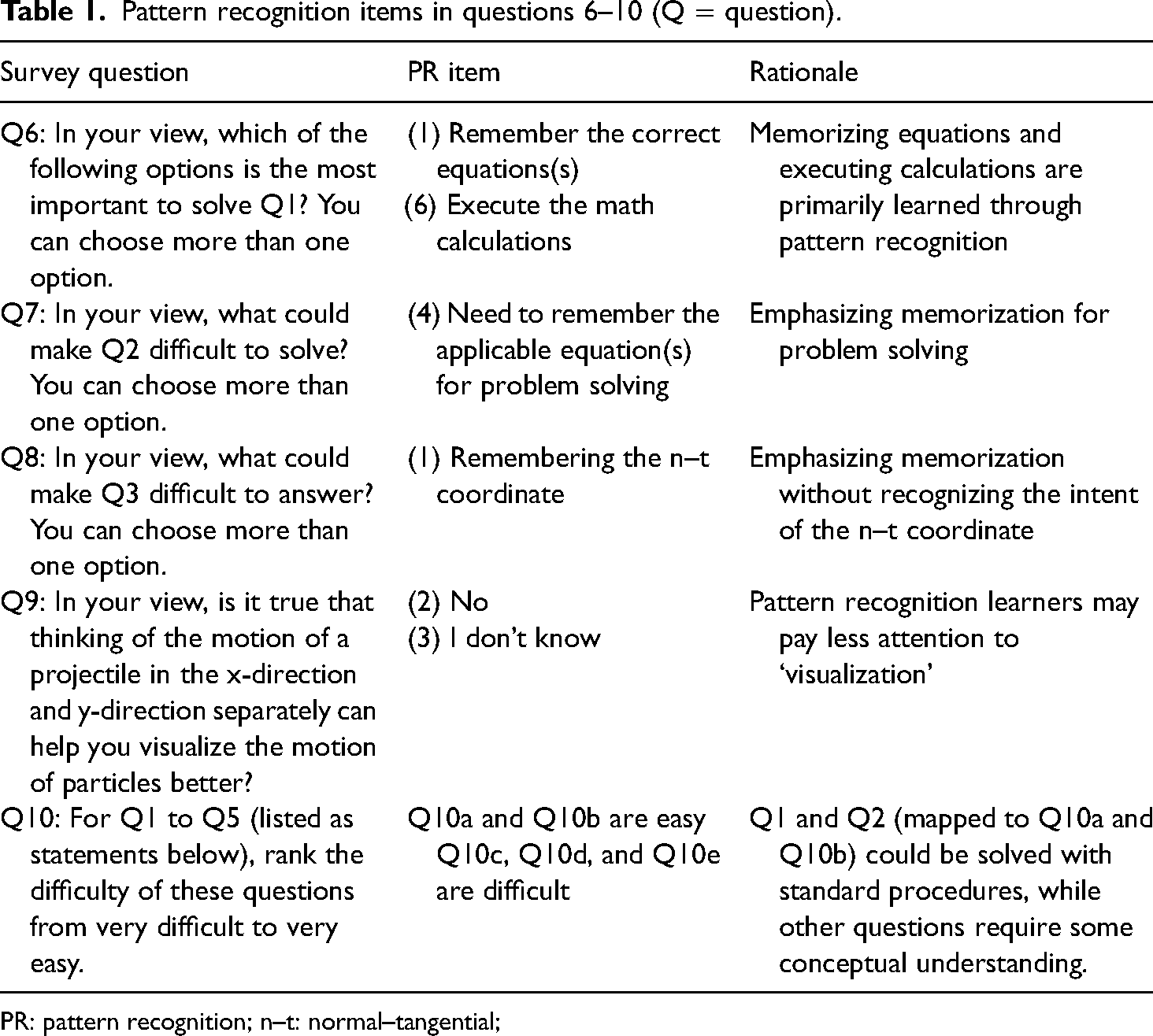
PR: pattern recognition; n–t: normal–tangential;
Note that participants can choose more than one item for questions 6–8. To evaluate the PR score for a participant, let ntotal be the total number of items chosen by a participant in a question and nPR be the number of chosen PR items (i.e. nPR ≤ ntotal). Then, the PR score of a participant reflected in a question can be calculated as a ratio using the following equation:
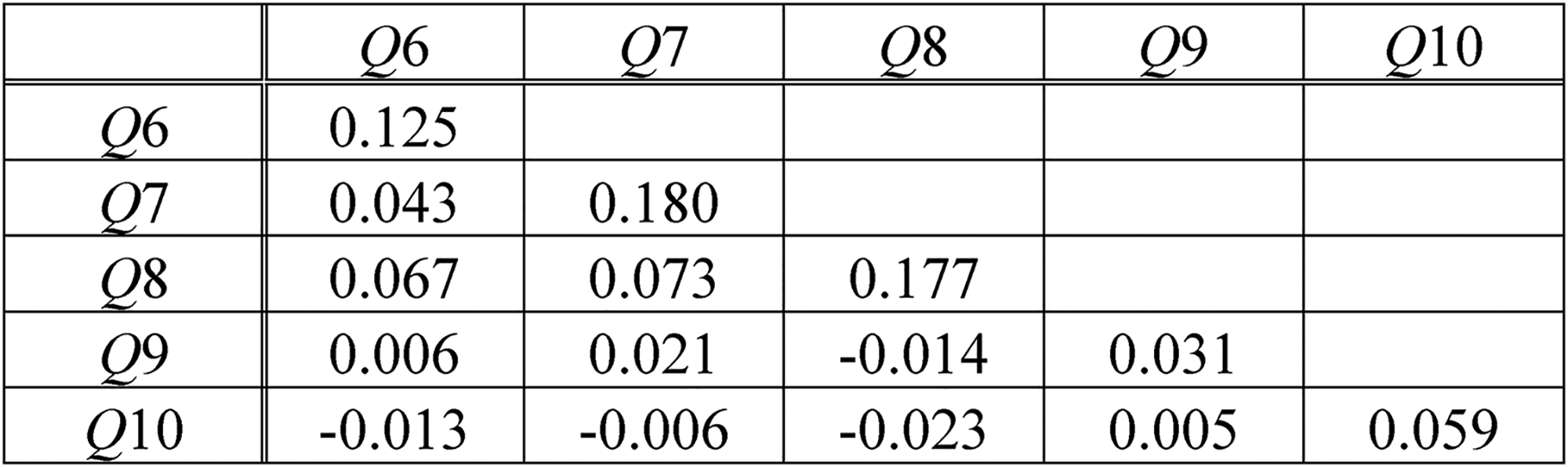
Covariance matrix of pattern recognition (PR) scores.
After these observations, we only took questions 6–8 to evaluate the PR scores of participants. By doing so, the α value increased to 0.649, which was close to the lower bound of the acceptable range (i.e. 0.70). Consider that this is a pilot study to initially explore the notion of PR in learning. As stated by Tavakol and Dennick, 33 the low number of questions can also make the α value low, and therefore we considered that it was acceptable to use this PR score for further analysis in this paper.
To obtain an overall PR score for each participant, we simply summed their PR scores from questions 6–8, where the range of the summed score was between 0 (lowest on PR) and 3 (highest). Then, we divided the participants into three bins according to their summed scores, along with the total number of participants in each bin:
Bin of high PR: 2 ≤ summed PR score ≤ 3 → 10 participants Bin of medium PR: 1 ≤ summed PR score < 2 → 16 participants Bin of low PR: 0 ≤ summed PR score < 1 → 13 participants
Notably, this group of participants demonstrated a varying tendency of PR with a relatively even number of participants in each bin. Also, the PR items were less than the non-PR items in questions 6–8. To get a high PR score, the participant needed to choose PR items relatively exclusively (e.g. without choosing many non-PR items to keep the value of ntotal small in equation (1)). Thus, receiving high PR scores should be a good indication of a high tendency for PR in learning.
Analysis of technical competency based on part 1
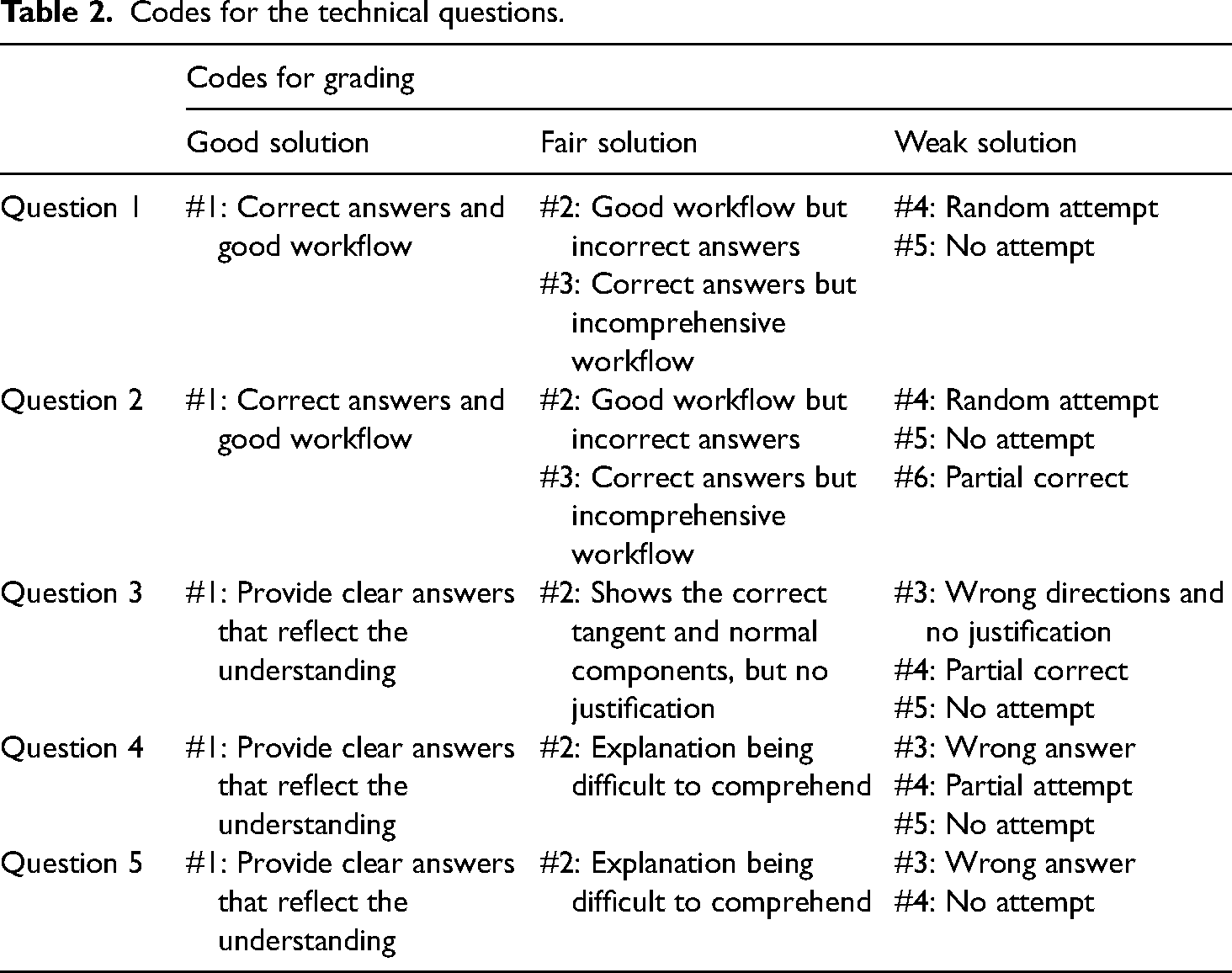
Questions 1–5 in part 1 are technical questions that students could receive in an examination. They required participants to solve numerical problems and provide explanations. Then, how well participants can answer these questions could be an indication of their technical competency (or more generally, academic performance). With this interpretation, we wanted to investigate how the tendency of PR could be related to the technical competency of participants in the subject of dynamics. One co-author, without knowing the findings in part 2, worked as a grader to mark the questions in part 1 of the survey using the numbered codes (e.g. #1 and #2) in Table 2. After the grading, we classified three levels of the solution quality, also shown in Table 2, for data analysis.
Codes for the technical questions.
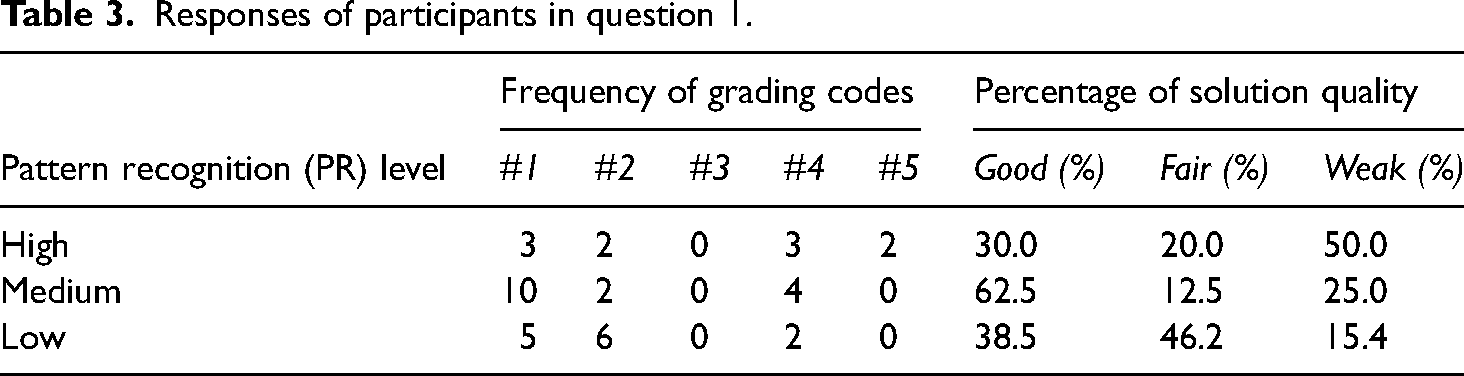
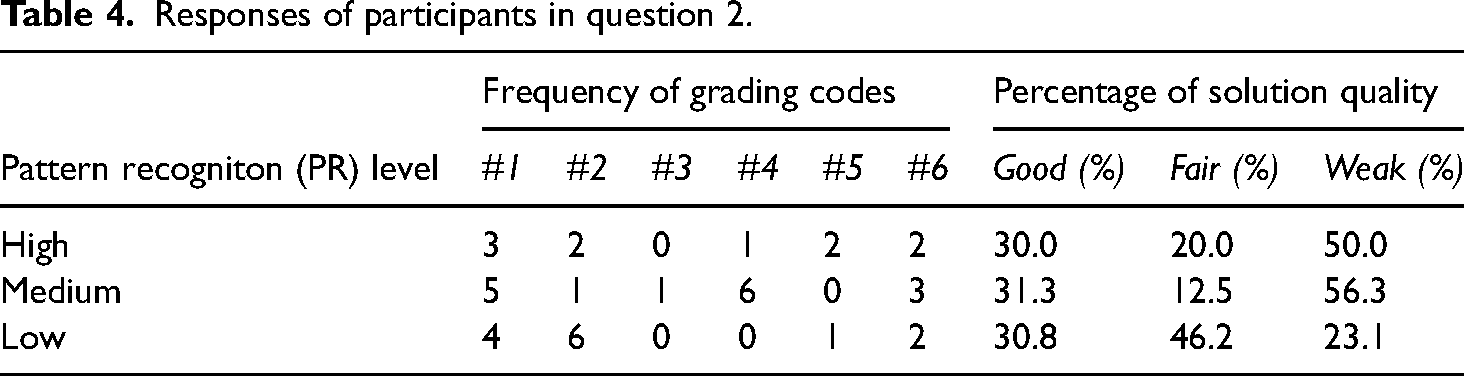
Questions 1 and 2 were considered calculation questions, where participants needed to apply the right equations for correct answers. The results of the participants’ responses are listed in Tables 3 and 4, respectively. Generally, the results of these two questions reveal some common observations, which are listed and elaborated below.
The tendency of PR (i.e. PR level) is not correlated to the good level of solution quality. In both questions, about 30.0% to 38.5% of the participants of high and low PR levels provided good quality solutions. It implies that PR in learning would not hinder participants from getting good grades in calculation questions. There is only one participant who was given code #3 (i.e. correct answers but incomprehensive workflow) in both questions. This reflects the nature of calculation questions; that is, if participants are not clear with their solution workflows, they will not get the correct numerical answers easily. Along with the above observation, we interpreted that participants using PR can remember not just the answers but also the solution procedures. While we did not see the distinction in the category of good solutions, the data in Tables 3 and 4 show that more participants of high PR level tended to yield weak-quality solutions than participants of low PR level (50.0% vs. 15.4% and 23.1%). In our interpretation, participants who are less dependent on PR can retain some understanding of problem-solving (though it may not be sufficient for good-quality solutions). In contrast, if participants with a high PR level cannot remember the related content, they cannot solve the problems even partially.
Responses of participants in question 1.
Responses of participants in question 2.
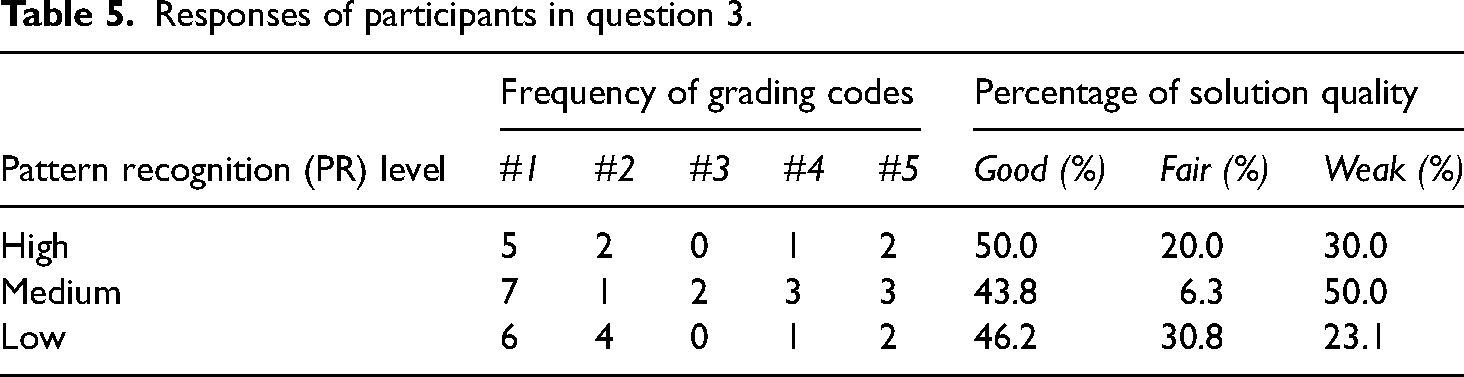
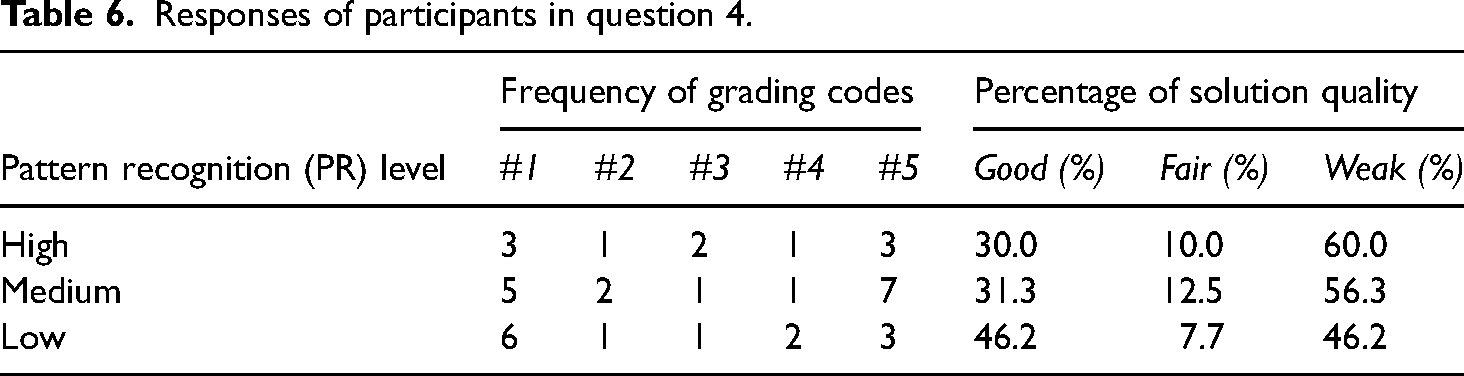
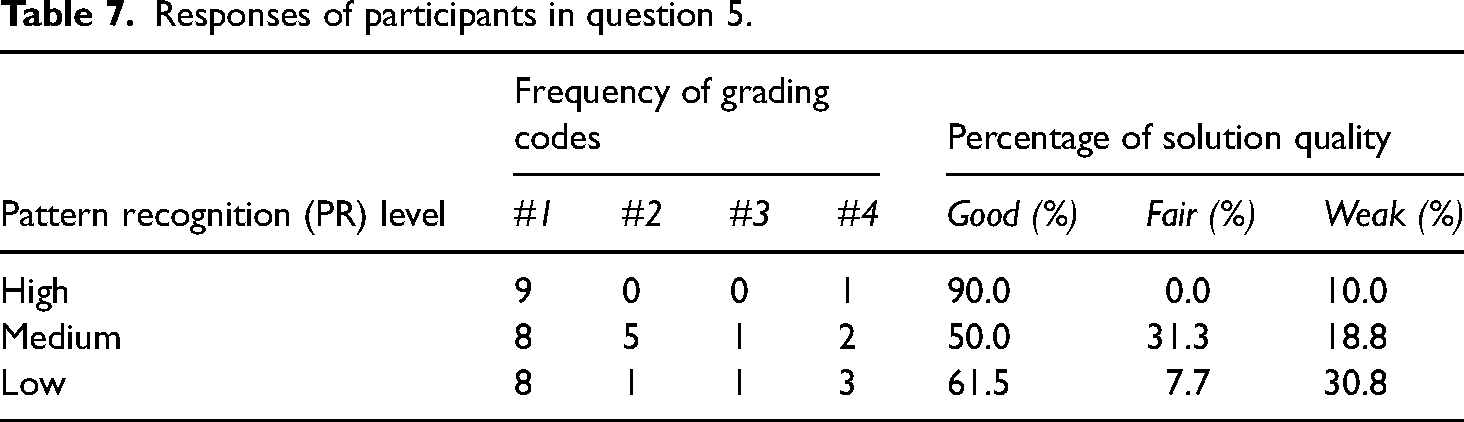
Questions 3–5 were considered conceptual questions, where participants needed to demonstrate a good understanding of some concepts for correct answers. The results of the participants’ responses are listed in Tables 5 to 7, respectively. Originally, we thought that participants with a high PR level should show solutions of weaker quality. Yet, our current data does not support this thought, and we elaborate our observations for each question as follows.
Question 3 was concerned with the understanding and application of the normal–tangential (n–t) coordinate system. In this question, we did not see a significant difference among participants of high and low PR levels. When teaching this concept, one common issue among students is that they do not see the reason for having another coordinate system (implying that the Cartesian coordinate system is already sufficient). With this background, we interpreted that the levels of PR would not influence students’ perception of this issue. In question 4, if participants got the concept of a falling object, they could reuse the numerical results calculated earlier and promptly answer this question. Participants of low PR levels tend to do a better job than participants of high PR levels (46.2% vs. 30.0%). This question may demonstrate a problem's type, which participants of high PR level tend to struggle with. In question 5, the trend reversed, where participants of high PR level tended to do a better job (90.0% vs. 61.5%). As a retrospective reflection, this question (which asked why there is no change in the velocity vector in the x-direction) is common and typical when learning dynamics since participants only need to recall the explanation without in-depth conceptual understanding. In this view, participants of high PR level are more effective in recalling the learned concept and answering the question correctly.
Responses of participants in question 3.
Responses of participants in question 4.
Responses of participants in question 5.
Analysis of learning perspective based on part 3
Questions 11–16 in part 3 were multiple-choice questions that investigated the perspectives of participants when they learned the subject of dynamics in view of learning resources, professional practice, study preparation, and assessments. The frequency data of the questions in part 3 are listed in Table 8. Note that participants were able to choose more than one item in questions 11, 13 and 14. Listed below are our observations for each question.
In question 11, when participants indicated their preferences for learning resources, the choice of textbook (#1) showed the largest difference, where participants with high PR levels tended Question 12 was concerned with the perceived importance of the subject of dynamics in engineering practice. Most participants (about 76.9%) indicated that dynamics was either ‘very important’ (#1) or ‘important’ (#2) for engineering practice, while distinction of choices among different PR levels was not observed. In question 13, participants with high and medium PR levels did not show any preference for hands-on projects. In contrast, more participants with low PR levels (about 69.2%) stated that hands-on projects were either very helpful (#1) or helpful (#2) for solving problems in dynamics. In question 14, participants of three PR levels tended to state the ‘connection of particle motions and equations’ (#3) as the most difficult. As a comparison, only one participant with a high PR level considered the ‘concepts of velocity and acceleration’ (#1) as difficult, and only one participant with a low PR level considered the ‘memorization of equations’ (#2) as difficult. In question 15, while participants with medium PR levels did not show any preference for the given assessment methods, participants with high and low PR levels seemed to show an opposite trend. Participants with high PR levels tended to consider ‘calculation questions in exams’ (#1) as a fair assessment. In contrast, participants with a low PR level tended to consider others (i.e. concept questions, homework assignments and design projects) as fair assessments. In question 16, only two participants (out of 39) responded that ‘solving a lot of examples before the exam’ did not match their learning habits (items #1 and #2).
Responses of participants in the questions of part 3.
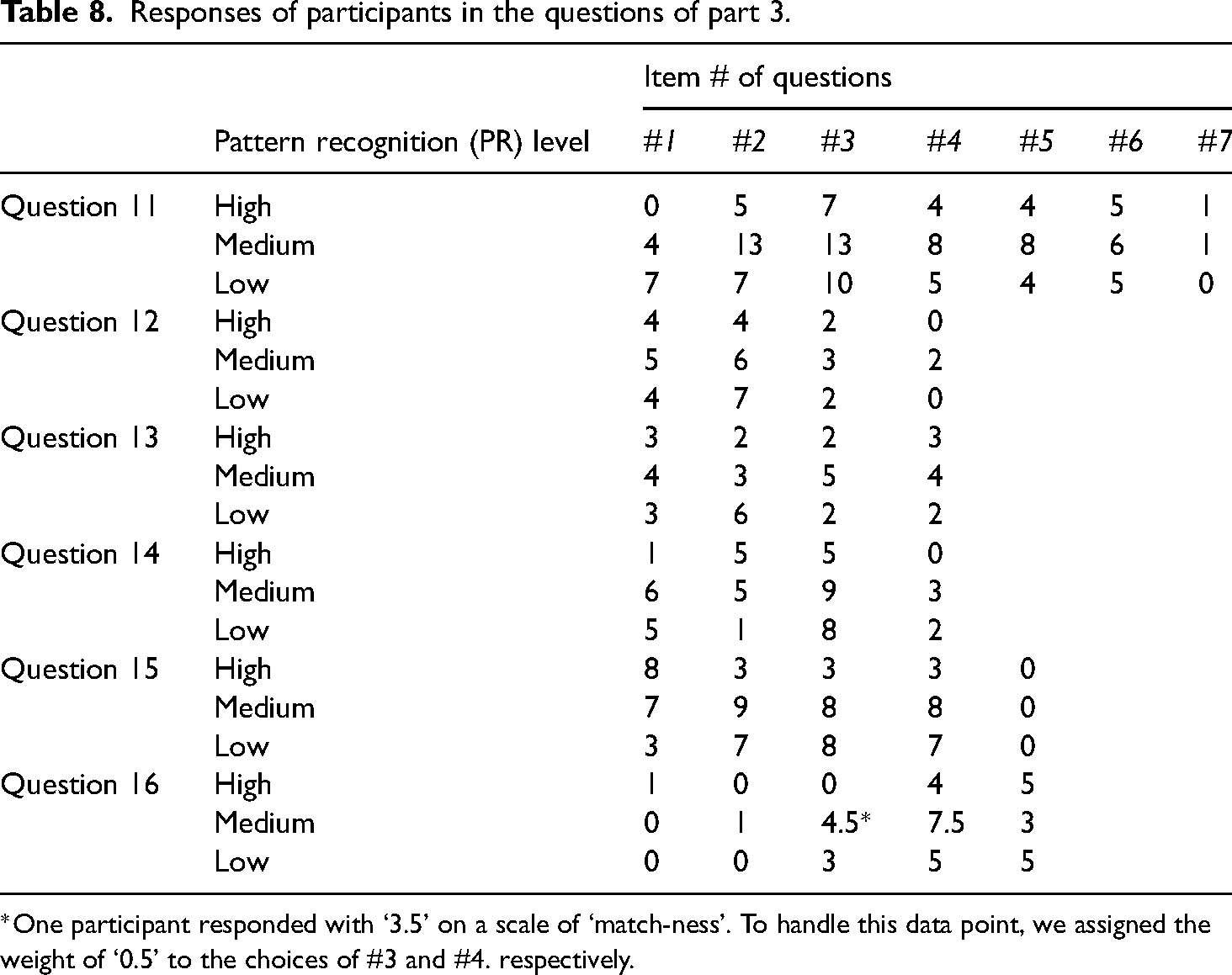
*One participant responded with ‘3.5’ on a scale of ‘match-ness’. To handle this data point, we assigned the weight of ‘0.5’ to the choices of #3 and #4. respectively.
Discussion and limitations of the survey study
Based on the analysed survey data, we were able to answer the two RQs stated at the beginning of this section. For RQ 1, we identified two lines of evidence that some learners use PR as a learning strategy when they study dynamics. First, Cronbach's α value on the internal consistency of the PR measure is 0.649, which we consider acceptable, given the pilot stage of this study. Second, different PR levels have demonstrated different patterns of responses in some survey questions (more distinctive in questions 11, 14 and 15), which support the classification of PR as a type of learning strategy for research investigation.
With the positive answer to RQ 1, we wanted to investigate further on the possible profiles of learners with high PR levels (or high-PR learners), and these profiles are elaborated below.
From question 11, high-PR learners did not find textbooks as a helpful resource. In our interpretation, while textbooks tend to focus on theories, derivations and explanations, such information is not particularly helpful for high-PR learners to develop problem-solving skills. From question 14, high-PR learners showed a noticeable contrast with low-PR learners. Specifically, more high-PR learners tended to express memorization of equations as a difficult part of the study, and fewer of them expressed the concepts of velocity and acceleration as difficult. As one interpretation, the ‘difficult part’ of the study can be perceived as the ‘essential part’ to the success of the course. In this interpretation, high-PR learners may perceive that memorization is more important than understanding concepts. From question 15, high-PR learners indicated that calculation questions in exams were the fairest assessment, while fewer low-PR learners expressed this view. High-PR learners can learn patterns with standard procedures and answers, disregarding whether the questions are conceptual or not. If conceptual questions can be answered by ‘remembering’ relevant concepts, high-PR learners can still perform well. In this study, the distinction between medium-PR and low-PR learners is less clear. They can be brilliant learners who acquire a conceptual understanding or weak learners who simply do not work hard even on PR. If these brilliant and weak learners are mixed and classified into medium and low PR levels, we cannot easily distinguish the academic performance of medium-PR and low-PR learners.
If we consider questions in part 1 as an indicator of academic performance, it is worth noting that PR tendency in our measure did not demonstrate a significant difference in academic performance between high-PR and low-PR learners. Although we assumed that high-PR learners could be weak in answering conceptual questions (i.e. questions 3–5) before conducting the survey, we did not observe this from our survey data. With this observation, we have two tentative reasons for explanation, which are discussed below.
One observation that arises from this study is that if traditional examination questions cannot effectively distinguish high-PR and low-PR learners, high-PR learners may not have a strong incentive to seek conceptual understanding. Simply put, high-PR learners do not see the advantage in their course grades if they pursue conceptual understanding. The indifference of the results in part 1 somewhat supports this view.
This survey study had several limitations. First, the sample size (n = 39) is relatively small. Thus, we cannot effectively infer the proportion of learners who tend to use PR in their learning. Second, the small sample size could be explained by the technical questions in part 1, which could have turned the potential participants away. Though we have tested the survey with a small set of students, it seems that the required time and cognitive loads of participants to solve these technical questions can vary significantly. Other research methods such as focus groups should be considered for in-depth investigations of the cognitive process. Third, after this study, we recognize that PR should not be an exclusive phenomenon, where competent learners can engage in PR and conceptual understanding interchangeably according to the nature of the problems. While the PR level defined in this study should indicate a strong tendency of learners to use PR in learning dynamics, it cannot effectively indicate if learners (strong PR tendency or not) acquire conceptual understanding.
Conclusions
As dynamics remains a difficult subject for engineering students, this paper aims to identify and characterize a learning strategy between rote memorization and conceptual understanding, and we refer to this as PR. This paper implemented two approaches to characterize PR in learning. First, we examined the theoretical aspect of the meaning of conceptual understanding in view of mental simulation and the characteristics of PR in view of computer science and cognitive psychology. The key difference is that learners in PR do not need to engage an imagination of an object's motion with scientific principles (or equations) when solving Dynamics problems. With PR, learners would find it sufficient to solve a finite set of practice problems and recognize the patterns of problem-solving strategies. In the second approach, we conducted a survey study, from which we can identify participants with a strong tendency for PR. Though they may not be engaged in conceptual understanding (e.g. perceiving textbooks as not helpful and emphasizing practice problems and memorization), they are not weak in answering technical questions. This could explain why learners adopt PR in learning Dynamics, especially when they find it difficult to acquire conceptual understanding.
The education environment (from instructions to assessments) can encourage learners (though implicitly) to adopt pattern-recognition learning skills. In this case, learners could disengage their mental simulation capacities (including abstraction and imagination), causing their deficiency in conceptual understanding. Based on this study, we would consider the following as future research directions.
Exploration of the relationships of rote memorization, PR and conceptual understanding: While rote memorization is basically not good, PR can be viewed as a smart way to utilize our memory for problem solving (which is a valid and good learning strategy). Yet, PR alone is not equivalent to conceptual understanding. Thus, one research direction is to investigate how learners can avoid rote memorization and utilize PR to promote conceptual understanding (as one way to articulate their relationships). Investigation of pattern-recognition learning in other subjects: Our current study calls for the improvement of instruments to measure and investigate different aspects of PR (e.g. cognition, attitude, value, and competency). Also, we can explore pattern-recognition learning in other subjects such as thermodynamics and fluid mechanics. Development of instructional approaches to promote mental simulation (or conceptual understanding): As discussed in the Introduction section, this direction is traditional due to scientific misconception. Yet, we want to highlight that mental simulation is not an imaginary replication (which the hands-on exercises and computer tools tend to provide). For example, we believe most learners have no problem imagining the motion of a projectile (e.g. they can just throw a ball and observe). Mental simulation requires learners to integrate equations (or scientific principles) in their imaginary thinking. Development of assessment tools that recognize the need for mental simulation: While we used to think that conceptual questions can perform fair assessments in conceptual understanding, our study shows that it is not that straightforward. The power of PR (just as the artificial intelligence tools) can replicate the correct answers to conceptual questions without understanding. Thus, more ‘difficult’ problems may not be an effective approach to assessing conceptual understanding. Currently, we are considering a sociocultural approach,
35
where the content of Dynamics can be viewed as a cognitive tool (for learners to understand the world) rather than the ‘truth’ of the world. Then, the assessment focus will not be just on the ‘right’ answers to the questions but also on the fluency of using the language of Dynamics (e.g. force, velocity, acceleration) or simply representational fluency
20
to describe the world's phenomena (e.g. how and why a car slides on an icy road).
Supplemental Material
sj-docx-1-ijj-10.1177_03064190231203692 - Supplemental material for Pattern recognition as a learning strategy in the study of engineering dynamics
Supplemental material, sj-docx-1-ijj-10.1177_03064190231203692 for Pattern recognition as a learning strategy in the study of engineering dynamics by Simon Li, Kashif Raza, Ahmad Ghasemloonia and Catherine Chua in International Journal of Mechanical Engineering Education
Footnotes
Acknowledgements
We acknowledge the support from the Engineering Education Innovation Chairs from the Schulich School of Engineering, University of Calgary.
Declaration of conflicting interests
The authors declared no potential conflicts of interest with respect to the research, authorship, and/or publication of this article.
Funding
The authors disclosed receipt of the following financial support for the research, authorship, and/or publication of this article: This work was supported by the Engineering Education Innovation Chairs from Schulich School of Engineering, University of Calgary.

Data availability statement
The datasets generated during and/or analysed during the current study are available from the corresponding author upon reasonable request.
Supplemental material
Supplemental material for this article is available online.
References
Supplementary Material
Please find the following supplemental material available below.
For Open Access articles published under a Creative Commons License, all supplemental material carries the same license as the article it is associated with.
For non-Open Access articles published, all supplemental material carries a non-exclusive license, and permission requests for re-use of supplemental material or any part of supplemental material shall be sent directly to the copyright owner as specified in the copyright notice associated with the article.
