



Abstract
The process of opportunity recognition is pivotal to engineering design, fostering technological innovation and entrepreneurship. Although there are multiple studies conducted in the area of opportunity recognition studying the behaviors of entrepreneurs, examining engineering students’ approaches have been underexplored. There is a lack of research in regards to opportunity recognition processes among engineering students, particularly in the context of design education. The presented study addresses this gap by qualitatively examining approaches to opportunity recognition among mechanical engineering students enrolled in an engineering design course. Using a sample of 23 mechanical engineering students, the approaches to opportunity recognition were analyzed using students’ responses to open-ended survey questions and student group discussions. From the analysis of the qualitative data, four key themes emerged regarding the improvement of the device and process, user consideration, environmental sustainability, and information and resources accessed by students. The findings provide a deeper understanding that can be used to inform educational practices and further research in the area of opportunity recognition in engineering education settings.
Introduction
In recent decades, engineering education has observed increased emphasis on identifying and developing learning outcomes in students, which are needed to successfully compete in today's global, technology-driven markets.1,2 In addition to core technical knowledge, emerging curricular and pedagogical efforts increasingly focus on developing students’ ability to solve ‘real-world’ problems through innovation, invention, and entrepreneurship. Accreditation bodies have also equally responded by introducing several professional skill-based outcomes in the accreditation process. 3 For instance, in the U.S., Accreditation Board for Engineering and Technology (ABET) has transformed its program outcomes to include professional skills-based outcomes (e.g., teamwork, ethical responsibility, communication, and life-long learning) in addition to technical discipline-based outcomes. 3 ABET is an accreditor of college and university degree programs in the fields of engineering, engineering technology, science, and computing. Outside U.S., ABET evaluates international programs through mutual memorandums of understanding.
To address these needs and requirements, engineering institutions continue to iteratively reconceptualize outcomes for future engineers and identify effective ways of instilling them in their students. National reports (e.g., educating future engineers from national academy of engineering) and changes in the accreditation process have accelerated reform initiatives to equip students with the skills needed to perform effectively in their future career roles. Particularly, working within the typical bounds of four years of undergraduate education, educators have transformed engineering education by implementing experiential and student-centered learning environments that aim to develop unique skillsets, (e.g., problem-identification, innovativeness, and problem-solving) along with imparting key disciplinary knowledge.4,5 While several evidence-based instructional practices have been developed, engineering design education has emerged as one major innovation that has received widespread attention.6,7 Typically taught in project-and problem-based learning formats, 8 design-based courses expose and engage students in design processes to devise engineering solutions to real-world programs.
Design is essential to the engineering profession and numerous reports have called for engineering students to develop the ability to design innovative solutions to today's complex problems. 9 Design process models include steps for defining the problem, generating potential solutions, evaluation, and communication.10–14 Additionally, design process models frequently include iterative returns to earlier stages.14,15 Researchers have documented various approaches to design, as well as novice to expert trends in executing design skills.16–18 Findings from examining design behaviors have led to the development of strategies and tools used to scaffold design practices for engineering students. A number of these strategies and tools are highly advantageous in supporting best practices in design.19–21
While extensive research has been conducted to examine different aspects of engineering design such as problem framing,22,23 design ethnography, 24 concept generation,19,20,25 concept selection, 26 prototyping,27,28 and iteration, 29 research has underexplored the opportunity recognition/problem identification aspect of engineering design education. The presented exploratory work addresses this gap by qualitatively examining the research question: how do mechanical engineering students approach the opportunity recognition process?
Literature review
Engineering education initiatives are increasingly focusing on the academic as well as professional preparation of engineering students to succeed in today's technology-driven economy. In regard to professional preparation, the overlapping aspects of problem identification and opportunity recognition have garnered significant attention through initiatives in engineering design and engineering entrepreneurship education respectively.17,30 Overarchingly, these two aspects focus on recognizing and understanding problems from a user's perspective as part of engineering practice. They both require divergent thinking, which is taking into account a multitude of appropriate alternatives, 31 that ultimately lead to the identification of an opportunity to solve. In the context of engineering design, problem identification holds importance because it lays the foundation for designing effective solutions. In the context of entrepreneurship, opportunity recognition is critical because it aids in identifying opportunities that will foster entrepreneurial ventures and contribute to the advancement and growth of businesses. A brief overview of these two aspects and relevant literature is presented in the sections below.
Problem identification in engineering design
A design problem is ill-structured with changing requirements and there is no single solution to the problem. 32 Exploring and identifying an initial problem has been emphasized as a starting point that drives the search for solutions in many design process models and has a significant impact on outcomes. 17 The primary reason for product failures has been attributed to addressing a problem without a clear need 33 ; engineers may solve the wrong problems and improve products in ways that are irrelevant to their customers’ needs. Thus, in the early stages, engineers must identify a good problem and understand if it is worth solving. 34
Within engineering design, different approaches to identifying and examining problems have been demonstrated as shown in Figure 1. Engineers can be given problems to solve by others, 10 which means engineers can seek out other people's problems from stakeholders including clients, management, or product users. Engineers can also identify problems through ethnography, which attempts to understand the actions, words, and thoughts of users and stakeholders to inform design decisions.24,35,36 In ethnography, designers typically make observations and interview users and stakeholders as they go about their regular activities to understand their priorities and preferences. Making observations and conducting in-depth interviews can help designers uncover needs and problems that may not be obvious. Engineers can also identify problems by leveraging technologies and ‘matching’ problems to these technologies.37,38
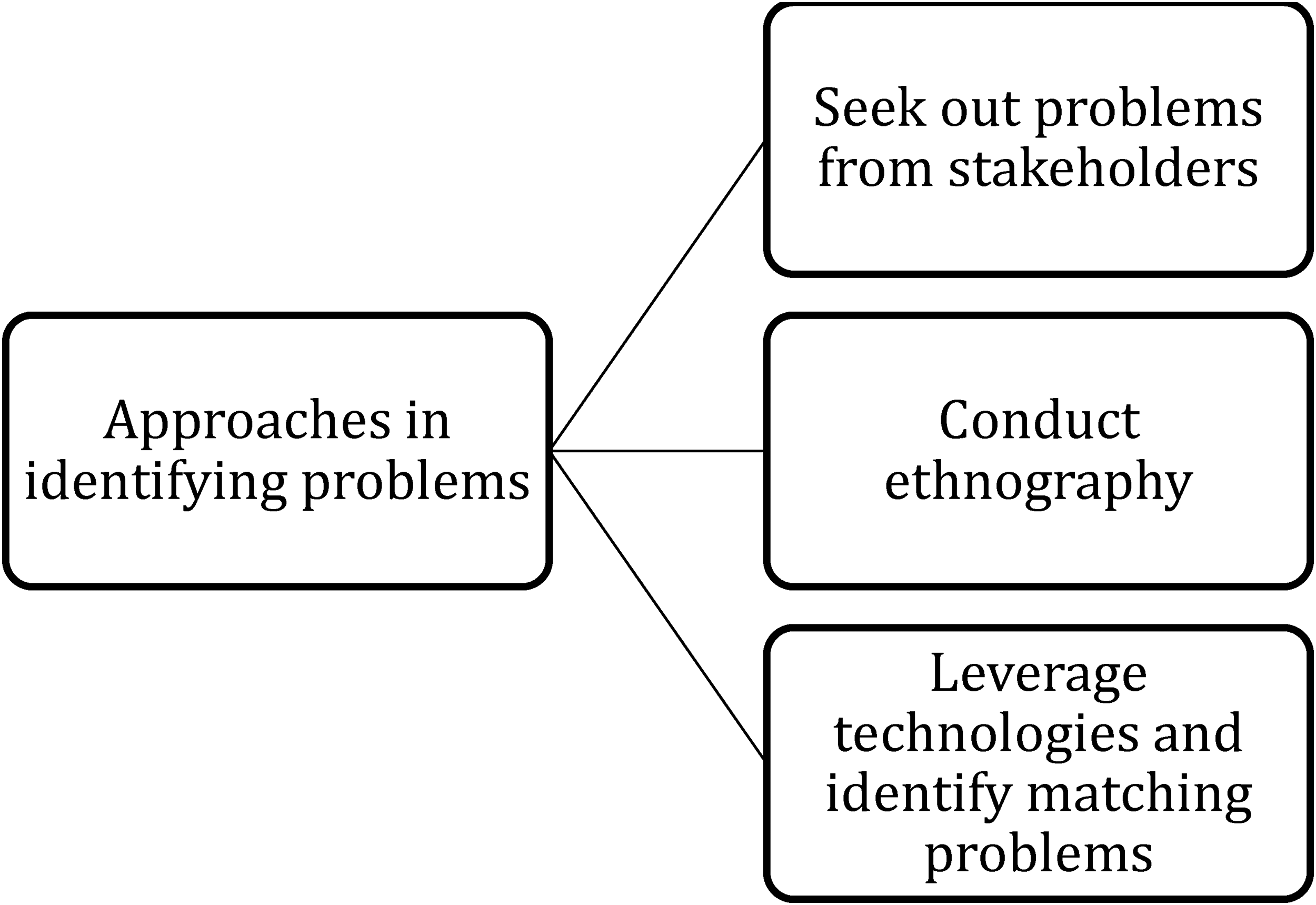
Different approaches to identifying problems.
After identifying a problem, designers iterate on the problem to clarify its purpose and better understand its context. 39 Engineers can reframe a problem that transforms problem characteristics and view the problem from a different perspective. 40 For example, engineers often leverage the “5 Whys” that repeatedly asks “Why?” to discover the root causes of a problem. Studies in problem and solution co-evolution have demonstrated how solutions inform problems. Engineers have shown that the problem space and solution space impact each other and evolve through iteration; the problem statement is modified based on their exploration of possible solutions as the solution attempts can modify the requirements that define the problem. Designers capture the real underlying issues beneath the problem through iteration.41,42 Without exploring and understanding a problem, designers run the risk of solving the “wrong problem”. 43
Opportunity recognition
Related literature on problem identification in business entrepreneurship has examined factors that contribute to recognizing opportunities. Literature often defines an opportunity as a way to produce profit in a way that was beforehand and is currently not being explored. 44 Recognizing opportunities often require divergent thinking, defined as considering as many appropriate alternatives as possible, 31 that encourages one to explore a wide variety of options. 37 Identifying a large number of opportunities through divergent thinking is associated with the advancement and growth of businesses. 45 Within higher education context, limited studies have explored opportunity recognition process for students. 46 conducted a quantitative analysis to demonstrate that students have the ability to recognize opportunities and the opportunity recognition process may be influenced by their traits, and social capital. Similarly, 47 found that senior level undergraduate students have a moderate level of finding opportunities and their abilities were influenced by their alertness and social capital.
Although identifying opportunities is important, Shane (2000) described that recognizing opportunities is not an obvious process; individuals can identify opportunities that are different and some find unique opportunities that others cannot identify. To provide a better understanding, several researchers have examined detailed factors that contribute to recognizing opportunities. Research has shown that prior knowledge and experience play a critical role in the ability to identify opportunities48–52; experienced entrepreneurs are able to identify and define more opportunities compared to beginner entrepreneurs. 1 Huber 53 further elaborated on the importance of prior knowledge gained through experiential learning, either intentionally or unintentionally. Additionally, thinking about an idea unconsciously and drawing on past experience can lead to eureka moments in identifying problems and opportunities. 45 Entrepreneurs also use cognitive processes of structural alignment, making comparisons of objects and identifying opportunities from the comparisons. 54 Executive entrepreneurs found opportunities by matching their technology and market in aligning the superficial features and structural relations of technology and market to one another. Recognizing patterns is another method in identifying opportunities. 9 Pattern recognition is the process that individuals use to create connections between independent events or concepts. Barron suggested that recognizing opportunities through pattern recognition is a result of the continuous changes that occur in society and an individual's perceptions of how events relate to each other. 9 Baron, 44 St-Jean and Tremblay 55 identified mentors and social networks as an important factor in supporting entrepreneurs in recognizing opportunities; novice entrepreneurs who learn with their mentors and gain new information are more likely to identify opportunities. In sum, several factors contribute to recognizing opportunities. However, most studies conducted in the area of opportunity recognition have examined the behaviors of entrepreneurs, and studies examining mechanical engineering students’ approaches have been underexplored.
Methodology
Participants and setting
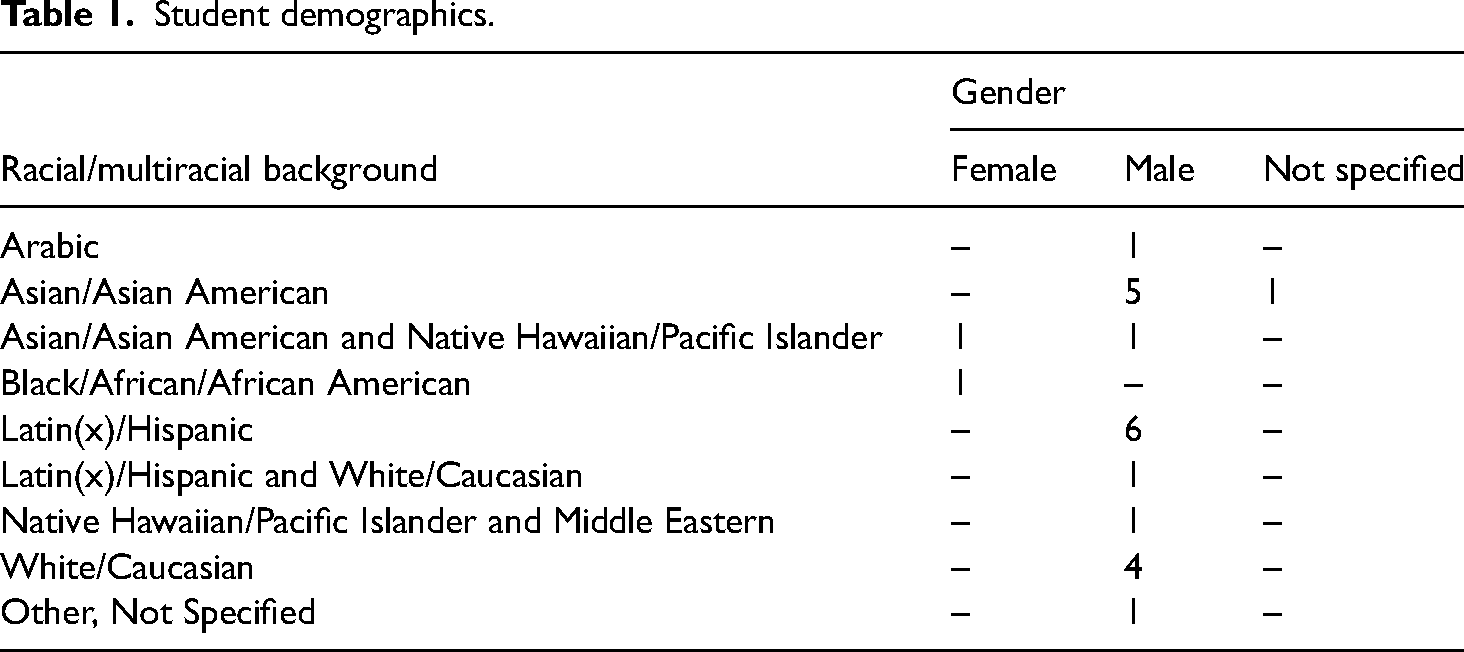
Participants of this study were undergraduate mechanical engineering students at a large institution located in the United States. The mechanical engineering department enrolled more than 800 students in 2020. The institution enrolled approximately 37,000 undergraduate students with 50% Hispanic or Latinx, 22% Asian, and 16% Caucasian students, being designated as a Hispanic-Serving Institution. As an initial study of an opportunity recognition process, this study includes a small sample of students and limits a broader understanding across more diverse students and institutions. The study aims to provide a detailed understanding of a small number of students and intends to guide future large-scale studies. Data collection occurred during the first two weeks of a two-semester capstone design class for mechanical engineering students. The course focuses on going through a design process starting with identifying a problem to delivering a physical prototype at the end. Students have received little to no training in design processes through coursework prior to participating in the study. Our intention was to examine student approaches naturally occurring prior to the training provided through the course. Twenty-three students agreed to participate in the study. Nineteen of the students reported that they were seniors or in their 4th year of university, while four students did not provide an answer. All the students participating in the survey reported that they were Mechanical Engineering majors. Regarding their gender, 87% (n = 20) of the students identified as male, 9% (n = 2) as female, and 4% (n = 1) did not specify. The student demographics (race/ethnicity and gender) is presented in Table 1. The highest percentages of students being 26% (n = 6) for Latin(x)/Hispanic or Asian/Asian-American students. This small sample size is not representative of the total population of the institution under study.
Student demographics.
Data collection
This study utilizes a qualitative methods to analyze the approaches to opportunity recognition among the study participants. 56 Qualitative methods are beneficial in answering how and why questions, in contrast to quantitative approaches. Qualitative methods are suitable for unpacking participants thoughts, perspectives, approaches, and opinions. The two data sources included a student survey and audio recordings of student discussions (summarized in Figure 2). In total, the dataset included 23 student responses to the open-ended survey and five group discussions, which each lasted for approximately 30 min. Students completed these tasks as a part of the class assignment and no financial incentive was provided.
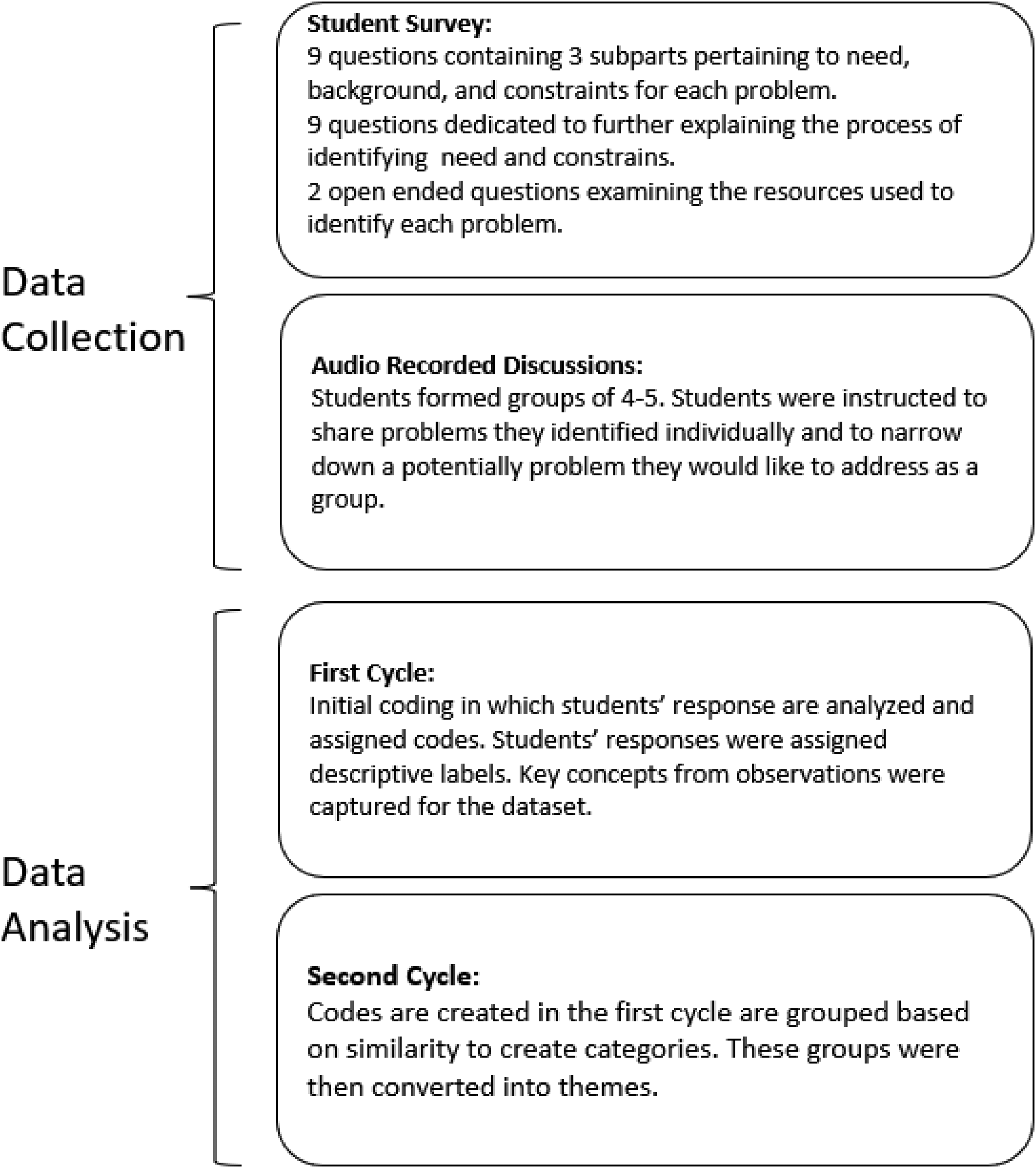
Data collection and analysis.
The survey consisted of 20 open-ended questions which examined students’ opportunity recognition process. Specifically, the first set of nine questions asked students to describe three problems, which were divided into three subparts wherein students were asked to report the need, background, and constraint for each problem. The second set of nine questions were created to further understand the approach of the three problems identified in the first set. Using a similar format, the questions asked students to further explain the process of identifying the need and constraint, and the process students followed to learn about the background of the problem. Lastly, the two remaining open-ended questions examined the resources the students’ used to identify each problem and the problem they consider most suitable for the class. In addition, the survey also included questions regarding the students’ demographic and academic backgrounds.
For the discussions, students formed groups of 4–5. Students were instructed to share the problems they have identified individually. In addition, students were asked to narrow down a potential problem they want to address as a group, which led to discussions regarding their topics and thinking processes. It is to note that in the discussion-based data collection students interacted in their own subgroups with limited intervention from the instructor or the researcher team. All discussions were held on an online video platform and were audio-recorded and transcribed for future reference and analysis.
Data analysis
The survey and video responses were inductively analyzed in two separate cycles. 57 The first-cycle coding involved initial coding, in which the students’ responses are analyzed and assigned distinct codes. This was performed at the segment-level wherein students’ responses were assigned descriptive labels that identified the underlying aspect in the response. In this process, two researchers individually read through the responses and developed codes out of key segments observed in the responses. This was performed in a manner such that the key emergent concepts are captured from the dataset. An example of the coding emergent concept is as follows, the code, ‘Additional Functionality’, which was ascribed to all instances in which students reported adding some functionality to existing device/system/process in their opportunity recognition process. This allowed capturing the overarching aspect of the opportunity recognition entailing the idea of adding a functionality irrespective of the device or system where it is applied. To ensure reliability in the coding process, two researchers individually coded a subset of responses and discussed their codes and coding process. The coding process was repeated until an allowable level of agreement was achieved which involved coding independently, comparing the codes, and resolving discrepancies. An intraclass correlation coefficient of 0.916 ensured strong inter-rater reliability.
In second-cycle coding, focused coding was used in which the codes that were created in the first-cycle coding were grouped based on similarity to create categories. This was done to analyze the patterns presented in the list of initial codes that emerged from the responses of the students. For instance, the category “Improvement of Device” was developed based on first cycle codes in which students described their observations regarding the state of the device and identified ways to improve the device's functionality, efficiency, and usability. The next level of this analysis pertained to the conversion of second-cycle categories into themes. This was performed for conceptual understanding of the key concepts emerging from student responses. For example, the category “Improvement of Device”, would fall under the theme, “Device and Process Improvement”, which represents student approaches into recognizing the ‘device and process improvement’ as an opportunity to be pursued.
Findings
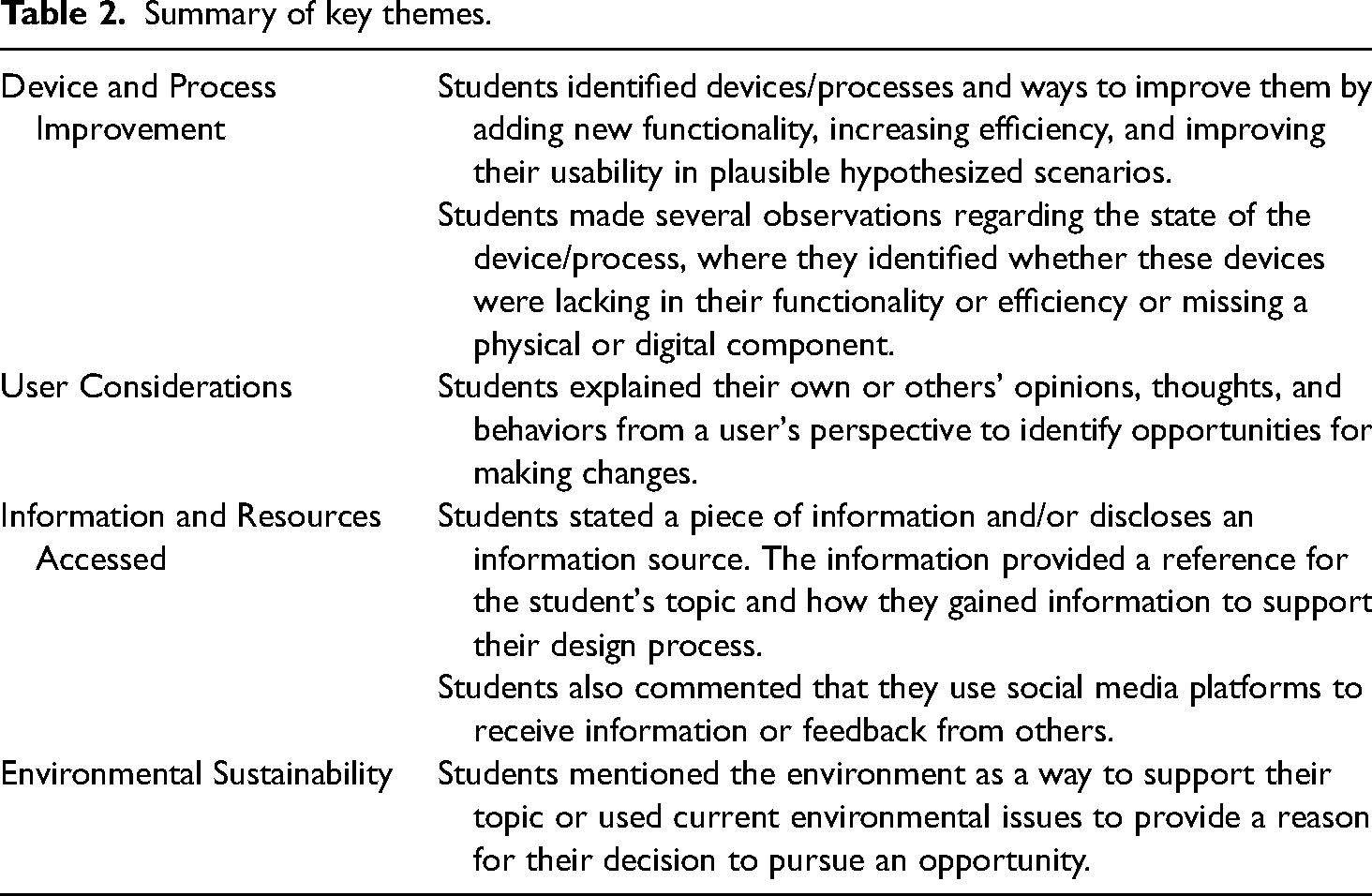
Table 2 describes the four key themes that emerged from the qualitative analysis and observations of student responses to the 20 open-ended questions and group discussions. The table summarizes the key themes pertaining to the identification of the problems, backgrounds, and constraints described in the students’ design processes. The themes also provide insight into the approaches to opportunity recognition among engineering students.
Summary of key themes.
Device and process improvement
One key theme that emerged from students’ responses was centered around device and process improvement, in which the students made numerous comments concerning the different states of the device and/or processes and how they can be improved. This theme pertains to students’ approaches to opportunity recognition that dealt with a device and/or process that could be either enhanced from its current state or was lacking some aspect that needed improvement. Within this theme, two key aspects emerged. First, students’ identified devices/processes and ways to improve them by adding new functionality, increasing efficiency, and improving their usability in plausible hypothesized scenarios. Specifically, in regard to additional functionality, students identified a new function that needs to be added to the device to improve the device. For example, a student explained that they need to add a heating mechanism (additional functionality) to a footrest for use in the winter season; as evident in this student quote “Design a footrest that can be installed underneath a desk. Add a heating mechanism to help during the winter season. It has to be powered by batteries or regular electric cord.”
In regard to improving efficiency, students suggested a method to upgrade the device/process’ existing functions to enable it to be more efficient. For instance, a student who had previous experience working for a medical device company, explained that they are dealing with the issue surrounding the inefficiency of pricking a finger to monitor the patient's health. The student further explained that to solve this issue, it would be more efficient to place special monitoring devices into the body to eliminate the step of pricking one's finger (improving the efficiency of device/process), as noted in this comment, “Finding a way to place monitors into the body instead of a one-time use prick of the finger would be better”.
Following closely with the idea of additional functionality and improving efficiency, students also commented on the devices/processes’ capability to function in other scenarios. Particularly, students hypothesized scenarios in which the device/process would need additional functionality or improvement to operate successfully. For example, when designing a ladder, students hypothesized scenarios involving an accident and suggested to “create a system in which the ladder can have extra support arms that can attach to the ceiling, the floor, and the walls. Also, the system should have a safety design mechanism in case of a fall. The design must have sensors for weight distribution”.
Second, students made several observations regarding the state of the device/process, where they identified whether or not these devices were lacking in their functionality or efficiency and missing a physical or digital component. It is to note that this theme was ‘deficit-centered’ in which students recognized opportunities by identifying ‘lack’ of some attribute rather than adding something to improve from the already existing state (as described in the paragraph above). Particularly, the students identified a lack of function or capability in the devices/processes to complete the desired task. For instance, a student who decided to create an element that would enable the “1st generation front wheel Mopar cars” to have increased rear suspension tunability later described that this kind of car could not change its height and spring rate (Addressing a Lack of Functionality/Efficiency). They suggested that “The original turbo mopar/approach cars lack a method to adjust rear ride height and spring rate. These adjustments are vital for performance in front wheel drive cars because it can alter traction to the drive wheels”.
Lastly, another aspect that dealt with the students observing the state of the device, is that they reported that a device/process is missing a digital or physical component that prevents it from performing the job the user aspires to. An example of this is when a student wanted to design a method that can enable someone to add to their 3D printer. After analyzing their printer, they noticed that they could not make the necessary improvements to their printer to be able to complete specific projects (Addressing a Lack of Additional Component (Physical or Digital)); as stated, “I recently started making upgrades to my 3D printer and noticed certain projects that I wanted to do were not possible. It started after I got a clogged on my nozzle which led to my extruder not being powerful enough. And started to look at alternatives”.
User considerations
The theme of User Considerations represents students recognizing opportunities by examining the potential circumstances of their users. In simple words, the students either explain their own or others’ opinions, thoughts, and behaviors from a user's perspective as a way to identify opportunities for making changes. The first aspect of this theme catered to the students’ descriptions of their lives and also the experiences of others that can support their claim. For example, a student (Considering Self as a User) who wanted to improve the water filters for fish aquariums explained that they prefer to have smaller-sized fish and a type of filter solution that will not injure their fish. They stated, “The constraints that I defined were more specific to my personal situation. I prefer to keep smaller fish and tanks due to spatial restrictions. As a result, I would prefer a filtration solution that doesn’t harm smaller creatures”.
Aside from their own opinion or preferences, students also gave examples of the experiences of others that can contribute to the topic. These responses explained the lifestyles of others and gave the audience a broader perspective of the situation from the lens of another individual (intended user). Whether it was an organization or the student's friend, several responses used these individuals or groups as a subject to support their recognized opportunities. For example, a student who wanted to design a footrest that can be placed under a desk explained their reasoning by stating that they observed that people who have to work from home would prefer to have a footrest to accommodate them stretching (Considering Others as a User). They commented, “During this quarantine due to COVID-19, most people who work in an office have to work from home as well as students. When working for long periods, people like to stretch. Therefore, most people decide to purchase a footrest”. Interestingly, when considering the user's perspectives, students often evaluated the cost of these projects, and this helped to shape their decisions and formulation of opportunities. Students frequently considered the user's capability to purchase or fund a device or process. For example, a student who wanted to design more aesthetic-looking prosthetic limbs, explained that they felt that it would be better if the “replacement panels” were cheaper “so they can be replaced cost effectively.”
The second aspect of this theme catered to the students’ comments pertaining to the safety of the users. The students described the situations themselves or others experienced that impacted their well-being or safety. This is unique because it holds ‘user safety’ central in the opportunity recognition process. Overall, this aspect of the theme captured all instances in which the students’ described or considered a dangerous/uncomfortable situation that can potentially harm the user or another individual or living being. For example, a student who desired to discover a way to deliver clean water to people around the world explained that there are communities that cannot readily receive clean water. For this reason, these communities have to drink unclean/contaminated water which can lead to different illnesses. The student expressed, “Many remote groups of people throughout the world have no access to clean water. Any reasonably close bodies of water may be contaminated and may cause illness when consumed. This can be further exacerbated by dry periods removing any quality sources of [water]”.
Information and resources accessed
Emergent students’ responses noted a variety of information and resources that the students accessed in the opportunity recognition process. Therefore, this theme captures instances whenever a student states a piece of information and/or discloses an information source. The information provides a reference for the student's topic and how they gained information to support their design process. Overall, student responses note that students accessed information from a variety of sources: their perceptions, social media, movies, books, online or offline resources, family members, and their experiences. For example, a student researching how to place monitors into patients’ bodies explained that they received most of their information from their company, friends, and movies, they said, “My resources include my company, my friends and many science fiction movies. My company allows me to learn about human anatomy and how technology can help us monitor/advance our personal performance and health. My friends have allowed me to understand.” This example illustrated that students relied on a variety of sources of information in the opportunity recognition process.
However, it is to note that the major source of information noted in students’ responses were online and offline sources, where students mentioned that they referenced a physical or digital information source to gain more information for their topic or device/process. These included newspapers, books, movies, and magazines. A student who wanted to improve their printer's capabilities, revealed that the source of their information was internet sources. (Online/Offline Research). The student described that “I’m not sure I could elaborate on the resources adequately because I used mostly prior knowledge of my hobbies. This knowledge mostly came from informal internet sources”.
In addition, another source of information that students used was social media. There were several instances moments when the students commented that they use social media platforms to receive information or feedback from others. For example, one student who wanted to create a method to add on upgrades to a 3D printer, explained how they used Facebook to receive views and information from other interested parties. They wrote that “I personally would like to pursue the first problem I mentioned, which is related to the 3D printer. I am part of a group on Facebook, where everyone shares ideas and issues they faced when getting a 3D printer. The group is specific to the 3D printers”. This theme is interesting for opportunity recognition because it reveals not only how students identify an opportunity but also how they gathered information about potential users’ perspectives. For instance, a student who was interested in creating keyboards, stated that they are part of a forum where another member often posts about their keyboards and more to see who is interested (Social Media Influencer). They explained, “And basically you guys can see like, this is an interest check forum where like the guy who made this, you know, he designed it posted the pictures or the renders, or like, these are prototypes, these are prototypes, the renders right here, more renders.”
Interestingly, several students also relied on their own perceptions or ‘common knowledge.’ For instance, a student who wanted to create a replacement for plastic did not do a lot of research on the topic and stated that “Although I haven’t done extensive research on the subject, I know global warming has taken a strong position the last couple of years.” Along similar lines, students also made references to their experiences which provided information and clarity regarding their situation and connection to the topic. For example, a student described his/her experience of living in an apartment that contained multiple plants that they felt “they get in the way and look bulky.”
Lastly, another emergent aspect present in some of the students’ writing was that they mentioned their family members as a source of information. An example is when a student wrote about a ladder project that they were researching on because they felt that the ladders sold today did not have enough safety measures. They supported their statement by stating that “My step-dad is a painter and usually complains how in some jobs he has to paint at really high places and doesn’t feel secure enough on the ladders he uses.”
Environment and sustainability
An interesting theme that arose in the opportunity recognition process revolved around addressing environmental and sustainability issues. Students mentioned the environment or an issue currently affecting the environment as a way to support their topic, or used current environmental issues to provide reasoning to their decision to pursue an opportunity. These issues included pollution, climate change, or any other situations regarding the environment. For example, a student with intentions to develop a more environmentally friendly version of plastic reported that the Earth is currently undergoing problems that are impacting climate change and deteriorating the condition of the planet. The student intended to find a solution to the problem by replacing plastic with another material that would lessen the impact on the environment; as noted in this quote, “Earth has been going through a lot of thermal changes and pollution of all kinds have been taking a big part in that. One way to minimize the damage being done is to create/implement a replacement for plastic.”
Discussion
This study aimed to unpack the process mechanical engineering students used in opportunity recognition. The findings identify four different themes and complement the findings from previous studies while providing more in-depth insights that can be leveraged in informing practice and further research in the area. For example, Arentz and colleagues 46 identified that leveraging prior knowledge, developed through individuals’ unique life experiences, can aid in opportunity recognition, but did not provide explicit ways that leverage prior experiences to find the opportunity. 48 The results identified how students leveraged prior experiences or knowledge to identify a solution or recognize an opportunity. Based on the result regarding the improvements of devices and processes, the presented study suggests that students can utilize prior knowledge to identify and/or consider ways to improve familiar devices and processes by adding new functionalities or missing features. These findings imply that students’ prior knowledge may be assessed and used as a platform to devise better design. In addition, our findings align with research on Social Cognitive Theory, which indicates that an individual's knowledge acquisition through social interactions and experiences is used to guide future behaviors. 58 Current studies have underexplored how prior knowledge and past experiences can aid opportunity recognition and additional studies are needed to provide explicit scaffolding to support opportunity recognition. Thus, further in-depth understanding of how students experience different events in their social and academic environments and how those experiences culminate into opportunity recognition can provide valuable empirical insights.
In the presented study, engineering students emphasized the importance of identifying opportunities based on considering users’ perspectives. Their observations of intended users’ experiences align with using ethnography in engineering design. 36 Ethnography attempts to understand and represent the perspectives of users and stakeholders to inform design decisions using techniques such as observations and interviews. 59 Ethnography is used throughout design processes from problem definition to testing and validation as designers seek to gain information to make their designs successful. 60 Students in the study demonstrated the importance of gathering information through understanding others’ needs and perceptions, instead of only focusing on their own needs as a way to diverge and identify additional opportunities. In their qualitative work, Denis et al. discovered that opportunity recognition does involve “structural alignment”, which is defined as a process that individuals utilize to make comparisons between certain factors and determine the suggested outcome. 54 The researchers report that the method of discovering opportunities requires more attention to adjust “structural relationships” or the various connections people make mentally that lead them to discover opportunities. Further engagement with end-users through the development of design tools and emphasis on the course elements may assist students in making structural connections and being fully immersed in the process. The Business Model Canvas extensively used in entrepreneurship education offers a way to scaffold students in understanding user needs and create structural relationship between different aspects associated with users’ value proposition such as newness, performance, design, cost and accessibility. It is to note entrepreneurship education is not solely ‘about, in or for’ entrepreneurship, rather also serve as a platform for instilling skills and mindsets ‘through’ entrepreneurship. 61 The ‘education through entrepreneurship’ approach embeds entrepreneurial practice in the learning process 62 and can thus serve as a medium for effectively engaging students in user/customer-focused opportunity recognition process.
Engineering students also indicated the importance of seeking information through existing networks and social media platforms. Students often used their networks to receive feedback on their ideas and understand others’ perceptions about the opportunities they identified. These results align with previous literature that has documented the importance of information exchange between individuals. Previous research has documented the benefits of mentors and personal contacts in collecting new information. 55 Students in the presented study not only leveraged personal contacts, but they sought out additional information through internet platforms designed to exchange information. The proliferation of social media in students’ everyday lives is bound to continue. Educators may leverage this as a platform for students to engage with potential users to gather feedback on problem identification and subsequent product designs. Research has shown that social media has been used as a tool to transfer knowledge, conduct idea crowdsourcing, and build communities with various stakeholder groups.63,64 Providing structured methods to sharing ideas and building communities on social media may lead to recognizing and validating opportunities. While social media is increasingly becoming pervasive, research-based strategies for meaningfully engaging students in the social media environment particularly in academic settings are scarce. In the future, researchers may focus on approaches and new tools, and devote more theoretical attention to better understand student engagement with social media when pursuing academic tasks (e.g., opportunity recognition in design courses) from a cognitive and, behavioral standpoint. This research may assist in identifying effective ways for using social media as a platform for fostering student learning as they engage in the opportunity recognition process.
Interestingly, in the presented study, several engineering students identified environmental sustainability as an important area of consideration for design projects. Particularly, the findings show that students recognized current global environmental challenges such as pollution and climate change as opportunities to make a difference in society using their engineering skills and entrepreneurial knowledge. Researchers have noted that entrepreneurs focusing on social, sustainable, and environmental issues differ from traditional entrepreneurs in regard to their motivations. While the former is motivated by non-economic factors, the latter is driven by the creation of economic value generates from commercial entrepreneurship. 65 The results show that engineering students may also be driven by non-economic motivations as they engage in recognizing opportunities for future goods and services for the greater good of society and the world. In light of these findings, we encourage further research in the area where students’ motivations are studied to understand how it impacts the type of opportunities they discover and/or pursue.
From a practitioner's perspective, Shepherd offered a model that “proposes that the likelihood of recognizing entrepreneurial sustainable development opportunities increases with individuals’ prior knowledge of the natural and communal environment, their motivation for personal gains, and their motivation to develop gains for others”. 66 , p. 633 As students are becoming more aware of the environmental challenges we are currently facing, their current and prior knowledge of the environment can aid in “exploiting opportunities for social change and improvements”. 54 Aligning current issues such as environmental challenges with students’ desire to make a positive impact can aid in recognizing problems and assist in contextualizing design education with prevalent issues.
Our study did not reveal that students demonstrated an explicit divergent thinking processes to explore a wide variety of possible opportunities. Literature has emphasized the benefits of identifying a large number of opportunities through divergent thinking, which is associated with successful products and businesses 45 Students in our study often identified opportunities based on varying changes to existing devices or processes rather than different devices in varying domains. To promote consideration of multiple, varying opportunities, explicit instructions on the benefits of divergent thinking during opportunity recognition and scaffolding strategies may be used to support engineers.21,37,67,68 Another approach would be to encourage students or include in assignment task that require students to leverage diverse social networks to gather varying perspectives, and use them as building resource during the opportunity recognition process, rather than relying only on personal perspectives.69–72
Lastly, from a pedagogical standpoint, design tools specifically designed for engineering students could be created to support the use of explicit strategies in opportunity recognition. Baron and Ensley 9 described that entrepreneurs often “connect the dots” and detect patterns to identify new products or services to pursue. Providing scaffolding using instructional tools or strategies to connect the dots between current issues and personal values and interests may support engineering students in the process of opportunity recognition. Various design tools have been shown to support both novice and experienced engineers in specific phases of design.19–21,25 However, limited design tools have been developed to support opportunity recognition. A systematic review of opportunity recognition has demonstrated that the field is underexamined and fragmented,72,73 making it challenging to compile a list of explicit strategies and tools. We encourage future research in developing instructional tools and/or strategies that can provide scaffolding for engineering students in exploring diverse possible opportunities in an organized manner.
Limitations
The themes identified in this paper are based on a sample of 23 students at a single institution. Other themes may be evident in a larger sample. Additionally, the results may not be generalizable across the population of mechanical engineering students. While larger studies aim to establish generalization, the goal in the presented study was to obtain a deep understanding of mechanical engineering students’ approaches to opportunity recognition through qualitative research. In-depth studies with small sample sizes are common in engineering design research.22,74,75 Also, mechanical engineering students were asked to identify opportunities in a relatively short period. Lastly, the design environment in the presented study may differ from practice settings to work contexts as engineers are likely to spend extended periods identifying opportunities. Nonetheless, the findings provide useful foundational work to guide further research. We encourage future studies to examine opportunity recognition behaviors of engineers in different educational and workforce settings.
Conclusion
In conclusion, the findings of the presented qualitative research provide an early-stage understanding of mechanical engineering students’ approaches to opportunity recognition. These findings can be used as a guide to examine the issue further qualitatively with broad student populations and consequently inform the development of quantitative instruments. During the opportunity recognition process, students considered the user, environmental sustainability, and the state of the device, which were all supported through information and resources students were able to access. The results found that engineering students leveraged prior knowledge or experiences to identify or take into consideration alternatives that would improve familiar devices and processes by the addition of new functionalities or features. The reliance on prior knowledge or experiences in students’ opportunity recognition processes imply that students’ prior knowledge or experience is a critical aspect and can be utilized as a platform to form a well-versed range of engineering design experiences. In addition, engineering students took into importance other users’ perspectives to diverge and identify additional opportunities. They recognized the importance of considering others’ needs and points of view, which could serve as a means for effectively appealing to engineering students in the user/customer-focused opportunity recognition process for entrepreneurial practice.
Lastly, environmental sustainability was also an area that students considered important for design projects. This finding demonstrates that students’ non-economic intention and motivation are also an aspect to consider in engineering design education. This finding, in particular, encourages further research on students’ motivations and intentions to expand the understanding of how they impact the opportunity recognition process. Students’ recognition of non-economic motivations can aid in contextualizing design education with issues that better align with students’ intentions of making a positive impact in society. Overall, the lack of research-based tools, valid and reliable assessment instruments, and theoretical framing limits rigorous research on the topic of opportunity recognition, which is critical for future engineering workforce development and professional formation. The findings provide a preliminary understanding and can be used for further research to examine opportunity recognition in the context of engineering education.
Footnotes
Acknowledgements
The authors are thankful to the GS-LSAMP and McNair scholar programs for their support.
Declaration of conflicting interests
The author(s) declared no potential conflicts of interest with respect to the research, authorship, and/or publication of this article.
Funding
The author(s) received no financial support for the research, authorship, and/or publication of this article.
