



Abstract
A program called mechanism of the week was created for use within a third-year mechanical engineering course, machine dynamics, to improve the student engagement and interest in the course content as well as to help aid student understanding of the course concepts. This program was implemented across three semesters, including some virtual sessions, and evaluated using a student feedback survey. The results of this survey indicated strong student support of the program. In addition to this particular application, the general principles of this program could be applied to other courses and disciplines to gain the same overall benefit.
Introduction
Engaging students is a constant challenge in engineering education. Students enter engineering programs with a diverse educational background, a diverse skill set, and a variety of different learning styles and preferences. The principles of Universal Design for Learning (UDL) indicate that multiple means of engagement, representation, and assessment can provide a benefit to all students. 1 Student engagement is tied to their motivation to learn 2 and can greatly impact the overall learning experience within the classroom. Various strategies have been implemented for increasing student engagement, such as self-generated exam activity, 3 integrating everyday examples, 4 design competitions, 5 and other learner-centered approaches. 6 These types of instructional approaches are becoming much more prevalent as educational preferences and expectations of students continue to evolve.
Every spring semester, juniors in the Penn State Berks Mechanical Engineering (ME) program take the course ME380 machine dynamics, which covers material about various mechanisms and how they move. For these mechanisms, the existing textbook and lecture material relies on diagrams and some animations to demonstrate the motion characteristics for different types of mechanisms. While this content offers a reasonable approach to learning about mechanism dynamics, it would be greatly beneficial for students to gain some “hands-on” experience with holding and manipulating different example mechanisms in the classroom to really get a feel for how they work and how they move. The benefits of “hands on” learning is well known, 7 such as by using mechatronics kits. 8 It has also been shown that while computer simulations, such as the animations currently used in ME380, are beneficial, the hands-on experience has greater learning benefits to the students. 9
Hands-on learning is an integral part of many engineering courses. Often this occurs within laboratory courses, though lecture courses may also incorporate hands-on components. For example, physical mechanisms were implemented within a dynamics course. 10 While numerous courses have considered Lego robotics kits (e.g. 11 or 12 ), another work explored hands-on Lego “widgets” within an introductory engineering course. 13 Large group projects such as CubeSat have been used as hands-on educational experiences for students. 14 Hands-on experiences are also a common component of undergraduate research projects. 15
In recent years, virtual laboratory experiences have been explored as alternatives to typical hands-on engineering laboratories due to the COVID-19 pandemic. This rapid transition to remote learning challenged the creativity of instructors to provide laboratory instruction with comparable pedagogical and curricular value. 16 Various virtual platforms have been explored for use within different engineering disciplines such as robotics. 17 Another review detailed the practices of various universities for virtual laboratory experiences. 18 The incorporation of gaming technology with virtual avatars has been used as a means of mimicking the learning experience of a hands-on laboratory. 19 Another technology that has been explored for virtual laboratory experiences is augmented reality 20 and virtual reality. 21 Some recommendations have been made regarding virtual laboratories, such as using teaching assistants to perform the experiments during a live session, constructing models of physical components, or remote monitoring of real equipment through webcams. 22 The use of at-home laboratory kits has also been explored as a means of retaining a hands-on component in a remote setting. 23 While virtual and hands-on laboratory experiences have advantages and disadvantages, the student excitement for hands-on experiments makes them a worthy consideration over virtual alternatives. 24 Hands-on activities have been shown to develop creativity and communication skills as well as teamwork. 25
The proposed study assesses the effectiveness of introducing multiple hands-on demonstration materials within the ME380 course that is currently offered to all juniors in the Mechanical Engineering program at Penn State Berks. Previously, the course was taught primarily through textbook examples and diagrams with some augmentation using animations and videos. The hypothesis of this study is that the introduction of the hands-on demonstration materials will improve student understanding of course material as well as their interest in the course content. The student understanding of course material was not directly assessed, however the students’ perceived understanding of the course material was assessed through a student perception survey.
To achieve this goal, a unique program named mechanism of the week was implemented in three successive years from Spring 2018 to Spring 2020 in a machine dynamics course. The purpose of this new program was to increase student interest and engagement in the course, as well as to help support student understanding of the course material. This work supports the UDL principles of engagement and representation. The new program incorporates an additional means of engagement within the course, while simultaneously offering additional means of representation of the course material. The main ideas of this program were originally implemented in a more preliminary form as part of a similar project by the author called Fluids Friday! which presented a fluid of the week on Friday mornings. 26 This previous project had some similarities in implementation, but was in a different subject area and was more focused on targeting energy within the classroom due to early morning classes, particularly on Fridays, where alertness 27 and sleep hygiene28,29 were of particular concern. However, both Fluids Friday! and mechanism of the week share a common strategy of breaking down barriers between teacher and student 30 to create a more welcoming classroom environment. 31 Building upon the principles originally offered by “Fluids Friday!,” 26 this work refines the implementation of the program, incorporates a hands-on element to the experience, and includes a much more significant tie-in to the course content.
The remainder of this paper is organized as follows. Section “Materials and methods” details the materials and methods for this work, including a detailed description of the instructional materials and the implementation and assessment of the program. Section “Results” offers the results from an anonymous survey of the student participants. Some discussion is offered in section “Discussion” followed by a brief conclusion in section “Conclusions.”
Materials and methods
Instructional materials for the program
The structure of the mechanism of the week program is to start the Friday class sessions with the reveal of the mechanism of the week. This reveal is done in a theatrical manner with students performing a drum roll with their hands on their desks or tabletop. Then the instructor reveals the physical mechanism by removing a cloth (usually an engineering T-shirt) from the mechanism. After the reveal, students are shown the mechanism, and then the mechanism is passed around the classroom for students to view, touch, manipulate, and so on throughout the remainder of the class session. Then, the instructor presents a brief slideshow presentation including the following main components:
One or more videos which demonstrate and/or explain a similar mechanism One or more images or diagrams which help to display the mechanism A joke or meme loosely based on the content
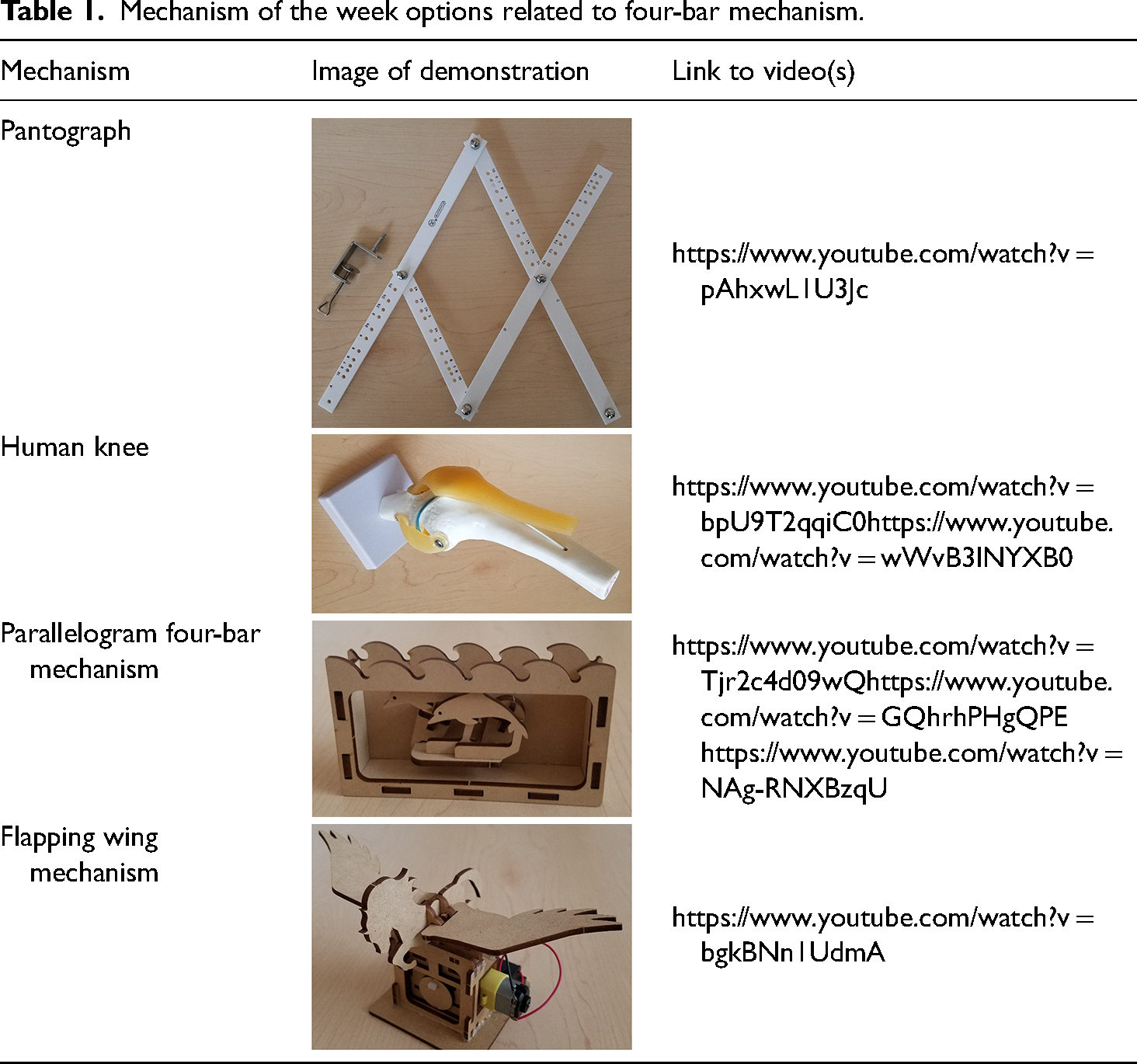
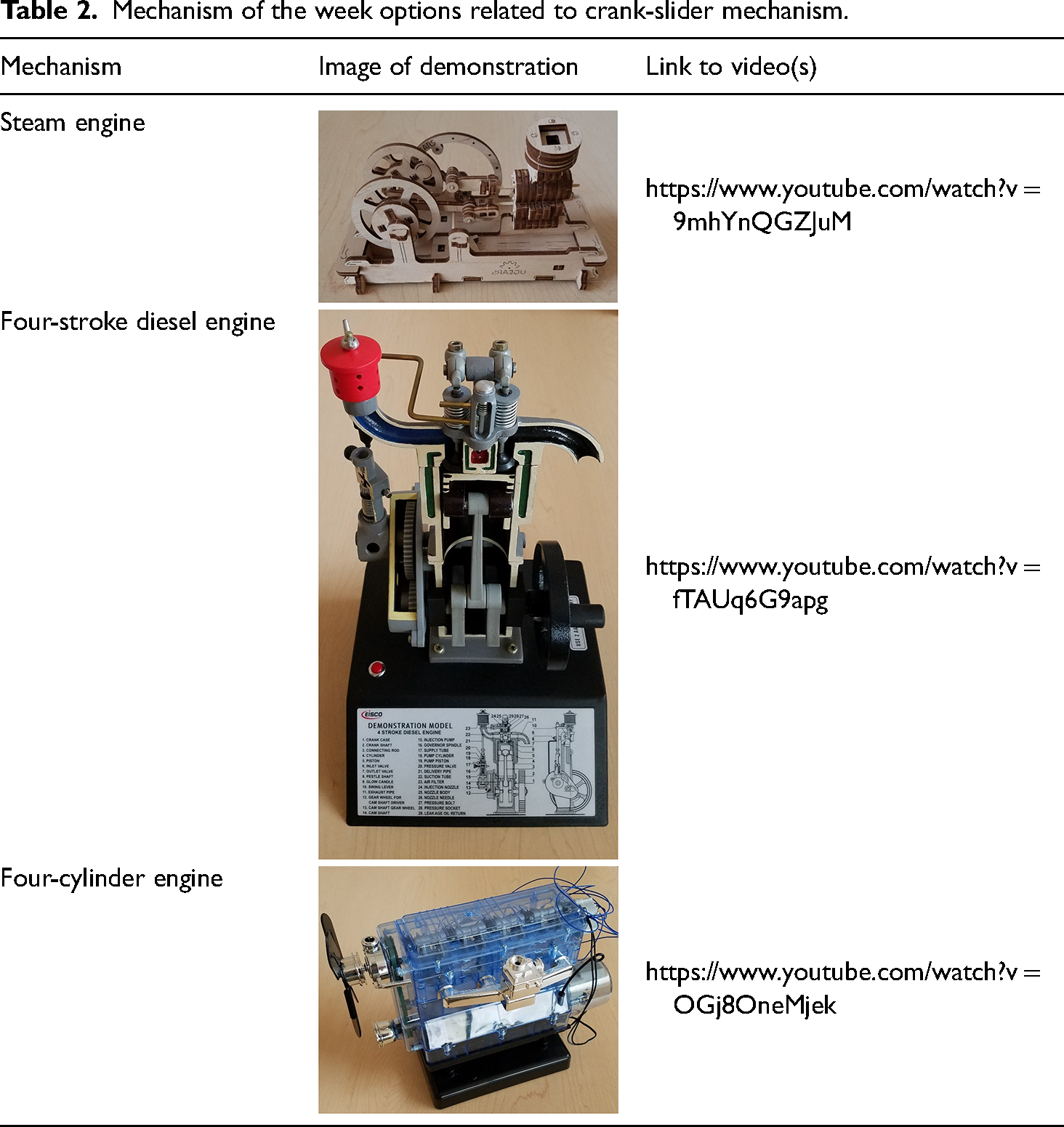
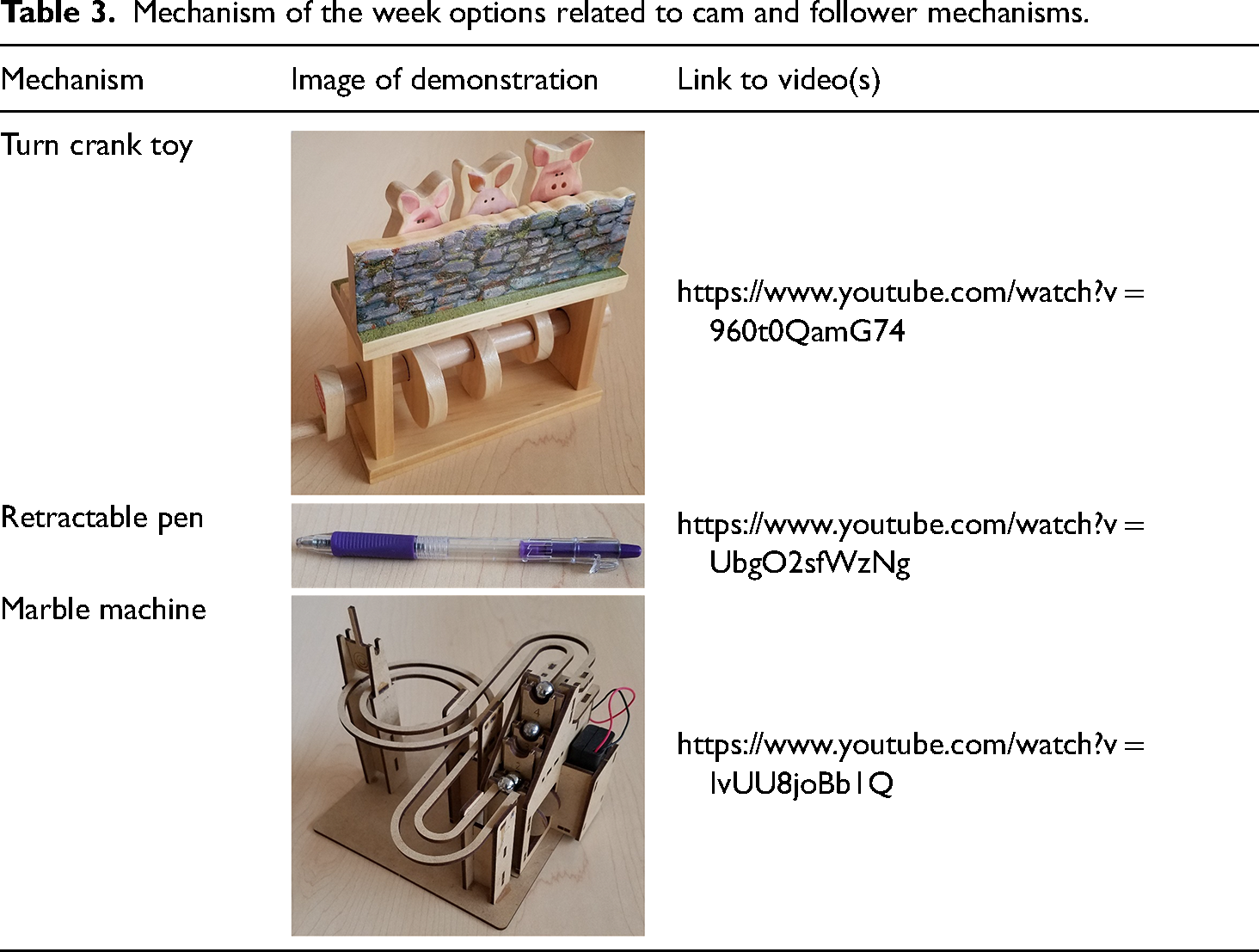
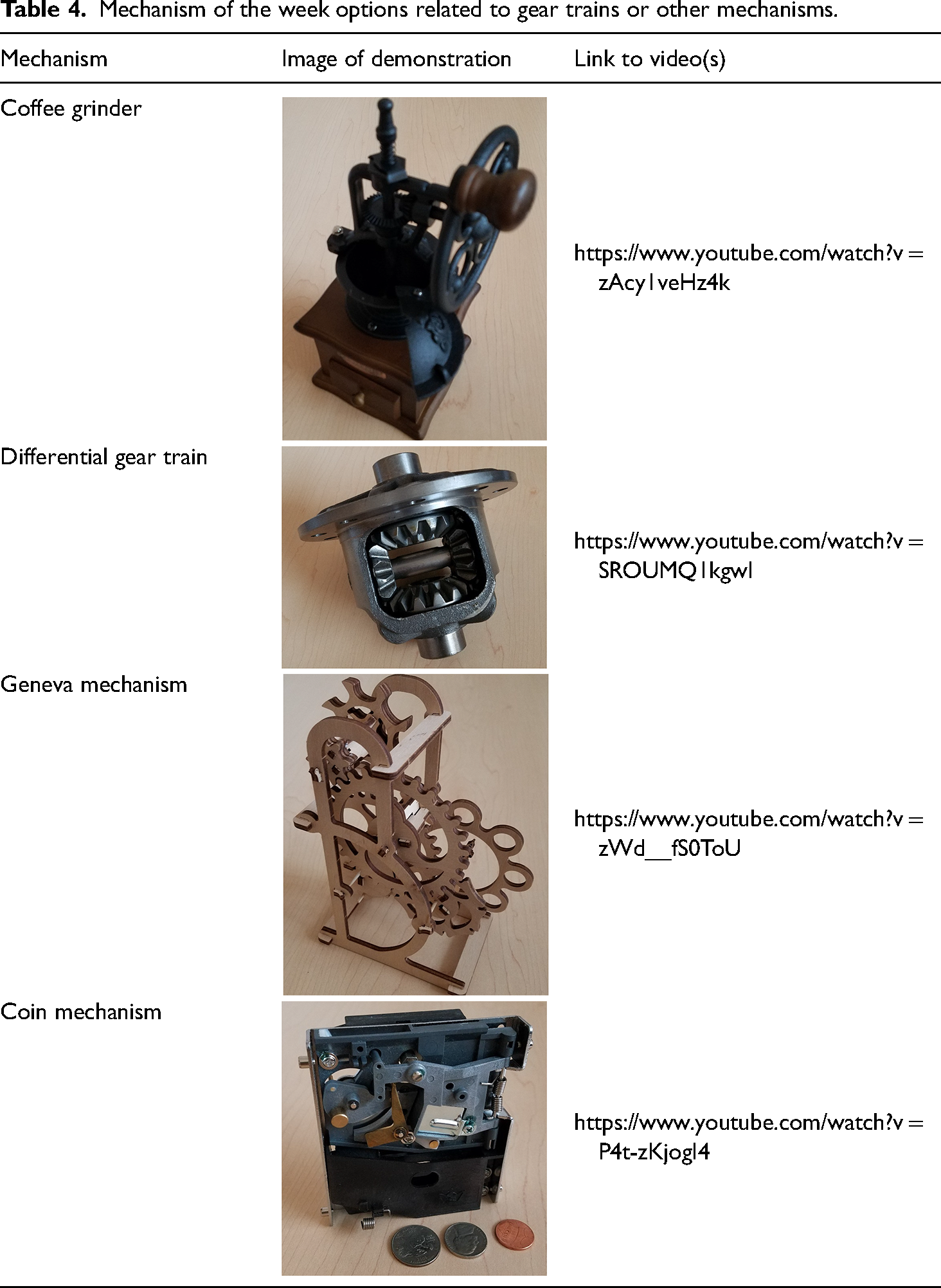
All materials for item #1 are publicly available from YouTube with links provided in Tables 1–4. Content from items #2 and #3 are not included anywhere in the paper to avoid any copyright infringement for these images which were obtained from the internet, textbook resources, and so on. Note that item #3 is just included for fun which the students do seem to appreciate.
Mechanism of the week options related to four-bar mechanism.
Mechanism of the week options related to crank-slider mechanism.
Mechanism of the week options related to cam and follower mechanisms.
Mechanism of the week options related to gear trains or other mechanisms.
Although the ME380 machine dynamics course provides general coverage of mechanism dynamics, the content focuses on a few commonly employed mechanisms. Specifically, the four-bar mechanism and crank-slider mechanism are discussed in detail as example mechanisms. In addition, the course covers cam and follower mechanisms and gear trains. To support these ideas, the mechanisms selected generally matched up with these categories with a few exceptions. By sharing multiple real examples of these mechanisms, students can start to better appreciate the broad application of the concepts covered in class. The order of presentation of these mechanisms is not particularly important, but the timing was selected such that the mechanisms would at least somewhat line up with the timing of class discussions of similar mechanisms.
First, the mechanism of the week options that were related to four-bar mechanisms is offered in Table 1. Through these various examples, students are shown how the four-bar mechanism can manifest itself in very different ways. The pantograph nicely ties together ideas from art and engineering regarding scale drawings. The example video offers an artistic application of the use of the pantograph, which helps students to see that the application of engineering technology is not limited to industrial applications. The discussion of the human knee takes things in a different direction, but hints at the ideas about biologically inspired engineering, which is an increasingly relevant topic. The flapping wing mechanism was selected as another application of four-bar mechanism because flapping wing research is being conducted by other faculty members at Penn State Berks. This example provides a natural way to mention relevant faculty research on campus which could be of interest to the students. Since undergraduate research is a valuable learning and engagement opportunity for students, 32 integrating some discussion of possible opportunities into the classroom is a possible way to improve student engagement.
In a similar manner to the four-bar mechanism options, the mechanism of the week options related to the crank-slider mechanism are offered in Table 2. These options are more traditional examples but tend to be very relatable to the students. Anecdotally, many of the Penn State Berks mechanical engineering students have an interest in cars, so these examples seem to connect well with the student population.
There are many different applications of cam and follower mechanisms, but the ones selected for this program are detailed in Table 3. These examples move more into the entertainment category, which makes them more accessible for the students. These types of examples allow students to see how their engineering knowledge can provide benefit to various situations. Also, as an important aspect of this project was to increase student engagement, these types of examples can be popular among the students because they are fun.
One final set of mechanism of the week options is offered in Table 4, which presents those mechanisms involving gear trains or other applications of mechanisms not directly covered within the course. For example, the Geneva mechanism is an interesting mechanism worthy of discussion within the course, even though it is not typically covered directly within the course content. By introducing these other mechanisms, even just briefly, students are exposed to various existing mechanisms and can help keep them better informed of the existing engineering technologies that are currently in use.
Note that all the images in Tables 1–4 are original images taken by the author of the actual pieces handed around the class for demonstration. These demonstration items were obtained primarily from Amazon.com, but similar items could be purchased from any vendor and used with similar effect.
Implementation of the program
The ME380 machine dynamics course is offered at Penn State Berks only in Spring semesters. This course is taken by students in the mechanical engineering degree program in their third year of the program if following the suggested academic plan. The mechanism of the week program was implemented during the Spring 2018, Spring 2019, and Spring 2020 semesters, containing final student enrollments of 37, 39, and 43 students, respectively. During these semesters, the course meeting times were 50-min class periods on Monday, Wednesday, and Friday mornings.
Note that there were some changes to the program during the Spring 2020 semester due to the transition to remote learning in March 2020. After this time, students did not get to experience the “hands-on” portion of the program, that is, the instructor could not pass out the mechanisms to the class to touch in the virtual environment. Instead, the students only viewed the mechanisms through video. While this was not an ideal situation, students still expressed a clear interest in continuing to conduct the mechanism of the week within the virtual learning environment.
Assessment of the program
In order to assess the effectiveness of the program, a simple survey was designed to distribute to the students. Before using this survey instrument, Institutional Review Board approval was obtained for the project. The inclusion criteria for this human subject research were that the participants must be 18 years or older and be a student currently enrolled in the course. Subjects that did not complete the survey were removed from the study. In 2018 and 2019, participants were recruited at the end of a class period where they were handed a paper survey containing the purpose of the study that they will have the option to fill out and submit. The instructor, who was also the principal investigator (PI) for this research, left the room so that students could decide if they wanted to participate or not. Participants were instructed that their participation was voluntary, and they could choose to stop the study at any time with no penalty. Participants were informed that completing or not completing the survey would not impact their grade. If they chose to participate, the answers they gave would not impact their grade. Participants placed their surveys in an envelope which was sealed and delivered to the PI. The envelope containing the survey results were not opened or evaluated until after the final course grades were assigned.
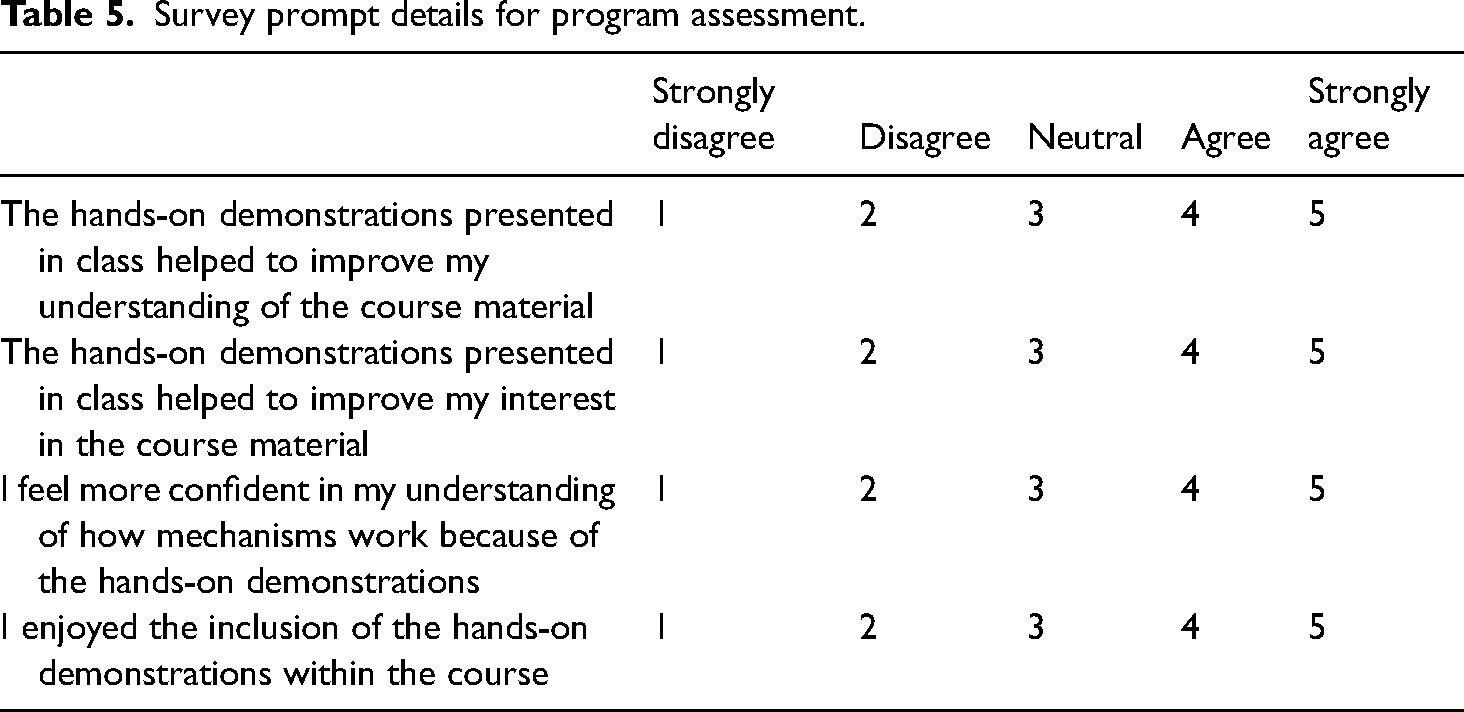
On the survey, the participants answered Likert-scale and open-ended questions about the hands-on demonstrations used within the course. The details for the survey are provided in Table 5. The survey included the instructions “Please circle the most appropriate response to each of the following.” Also, listed below the table was the following text: “In the space below, provide any additional comments regarding the inclusion of the hands-on demonstrations within the ME380 course.” In the Spring 2020 implementation of the program, the survey was administered through the online survey service, Qualtrics, instead of through paper copies due to the virtual learning environment required at the time due to COVID-19. In this case, the online survey was distributed after the final grades were assigned for the course.
Survey prompt details for program assessment.
Results
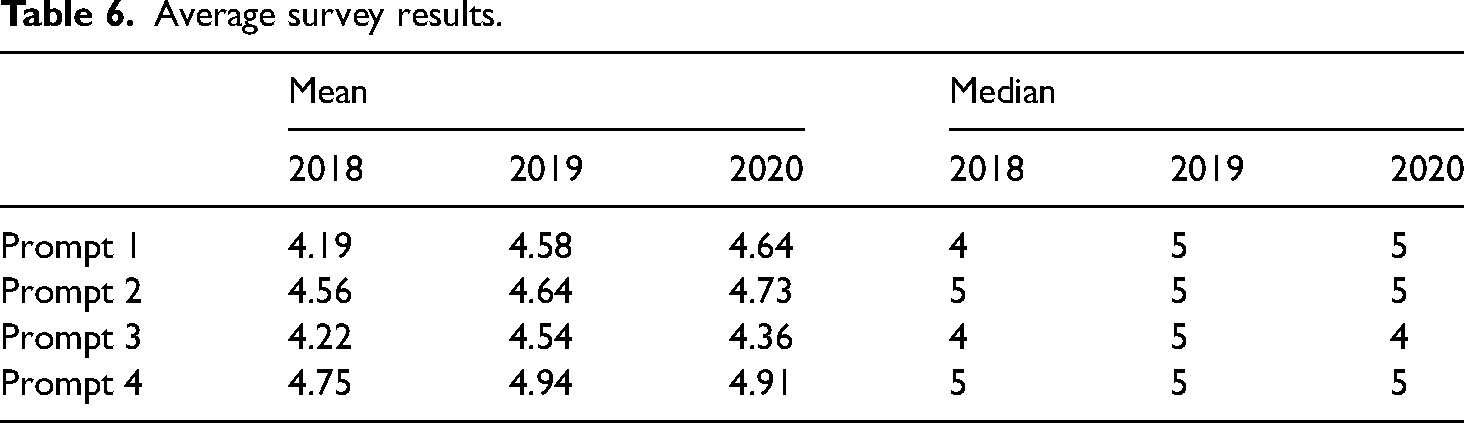
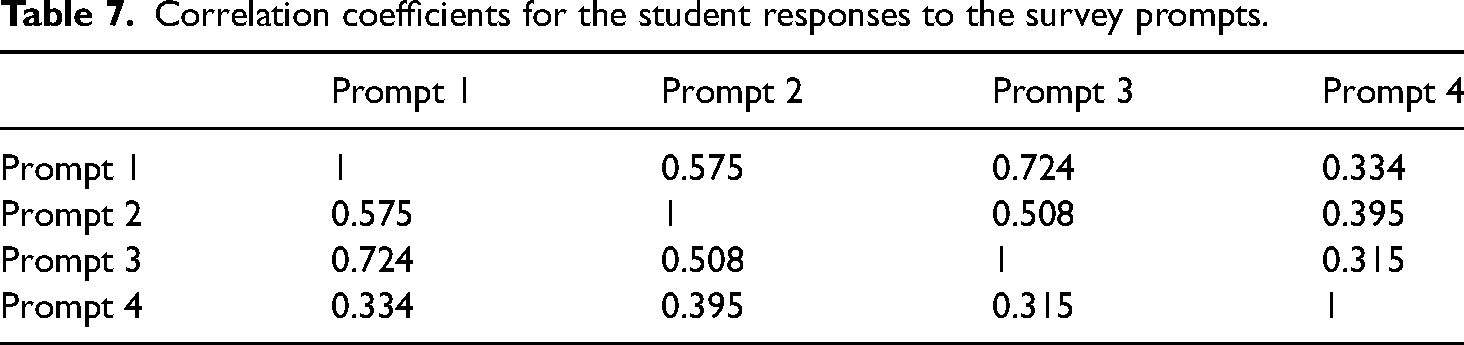
Out of the 37, 39, and 43 students enrolled in the course in the Spring 2018, 2019, and 2020 semesters, respectively, the survey was completed by 32, 33, and 11 students, respectively. The significantly lower response rate in Spring 2020 was likely due to the online administration of the survey as well as other possible challenges experienced by the students during the early stages of the COVID-19 pandemic. The mean and median average results for each of the four prompts (as detailed in Table 5) are shown in Table 6. To further visualize the distribution of the data, the numbers of recorded responses for each Likert score category are shown for prompts 1–4 in Figures 1–4, respectively. Similarly, the overall percentages of the student responses are offered for prompts 1–4 in Figures 5–8, respectively. The correlation coefficient between the different survey responses was also calculated and is shown in Table 7. Some mild-to-moderate correlation is shown in Table 7 for the survey responses. The strongest correlation was between prompts 1 and 3, which is expected since both reference the student understanding of course material.
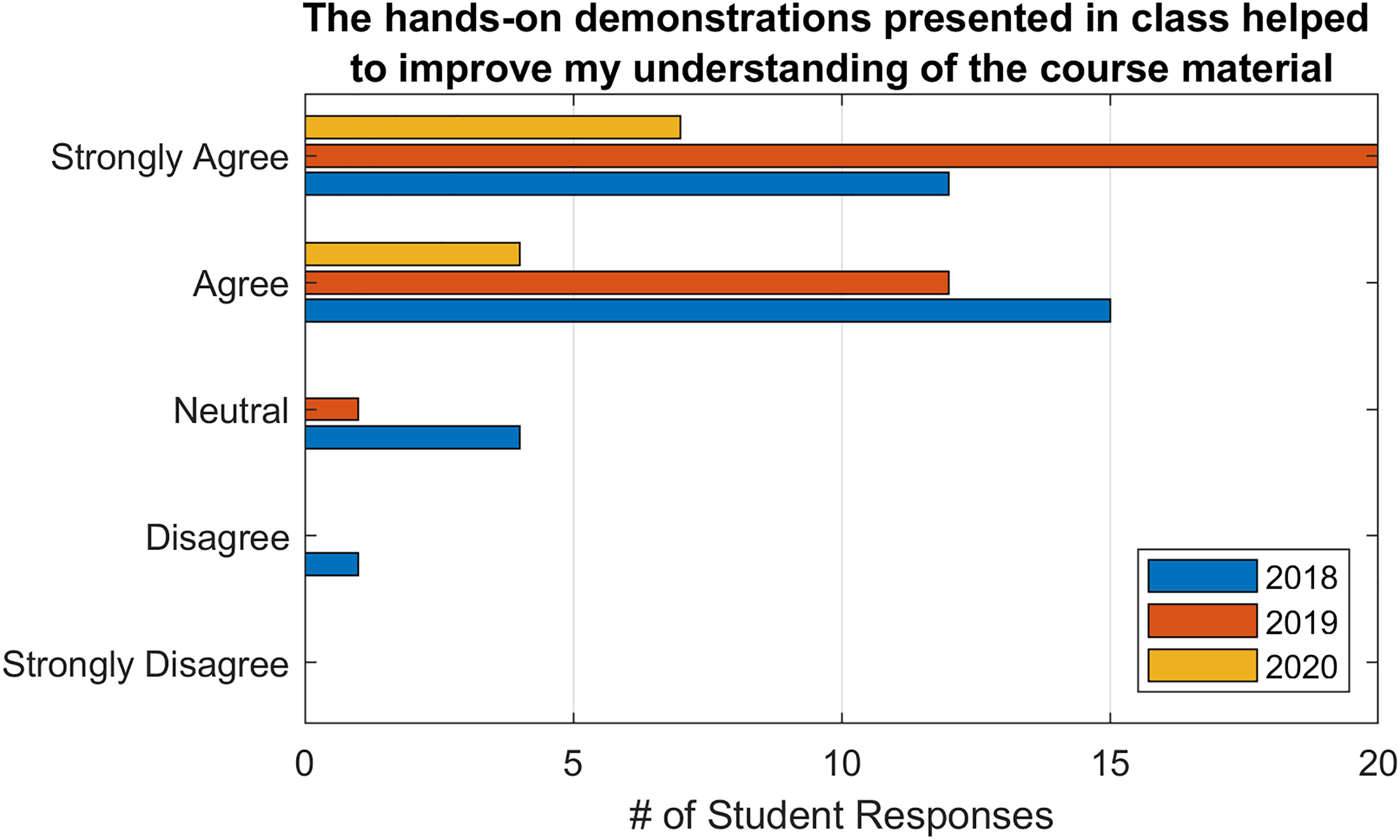
Student responses to survey prompt 1 by semester.
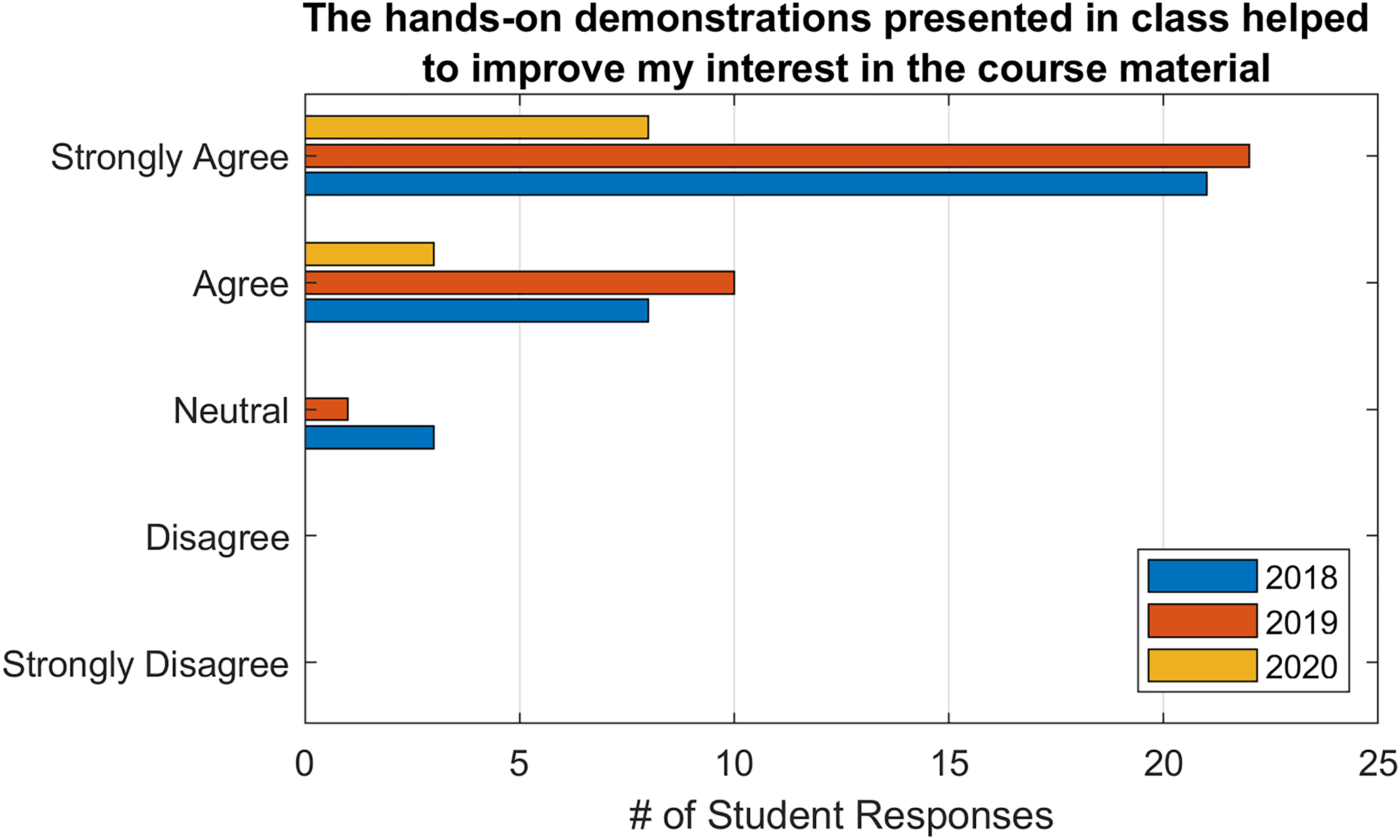
Student responses to survey prompt 2 by semester.
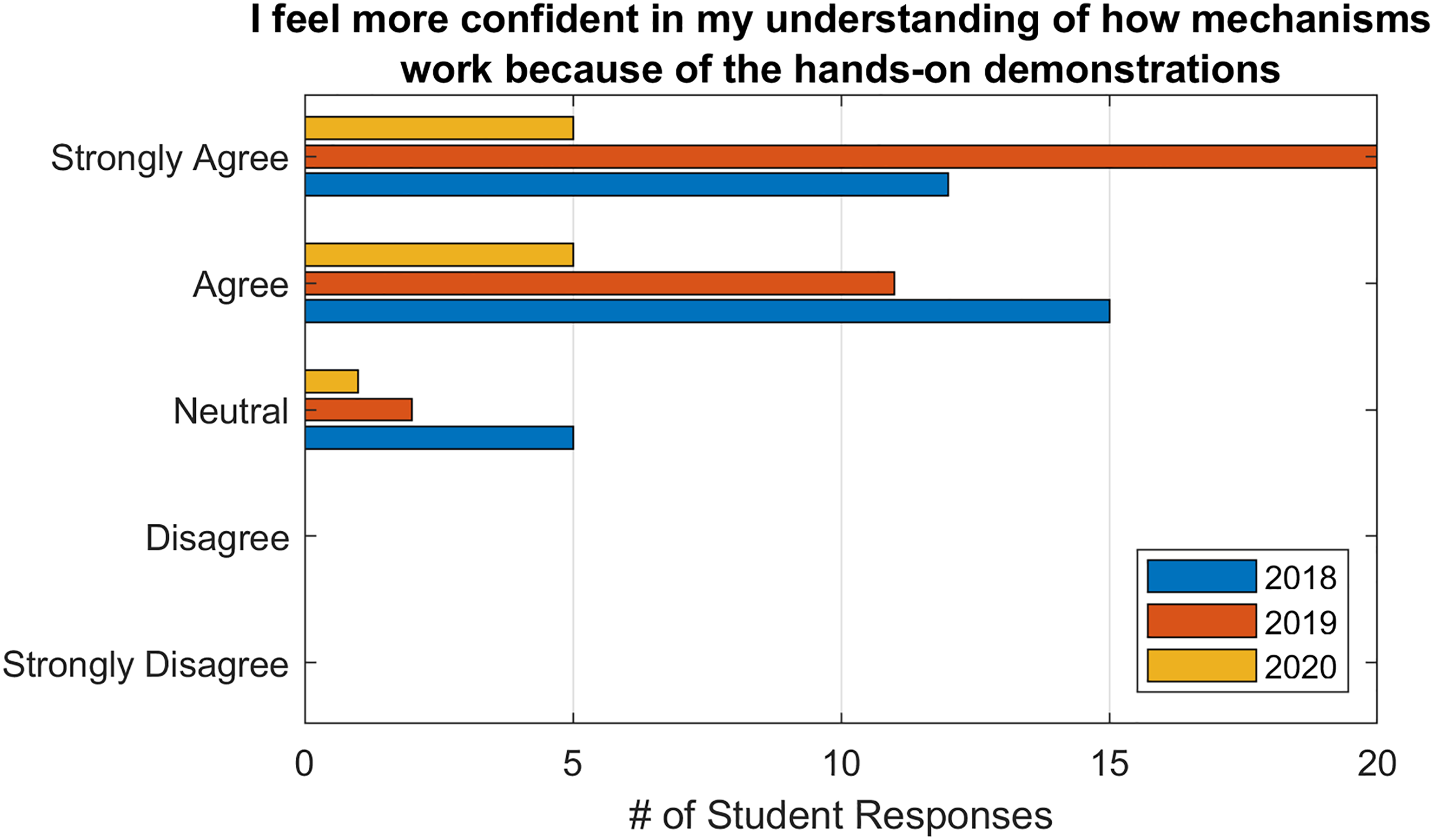
Student responses to survey prompt 3 by semester.
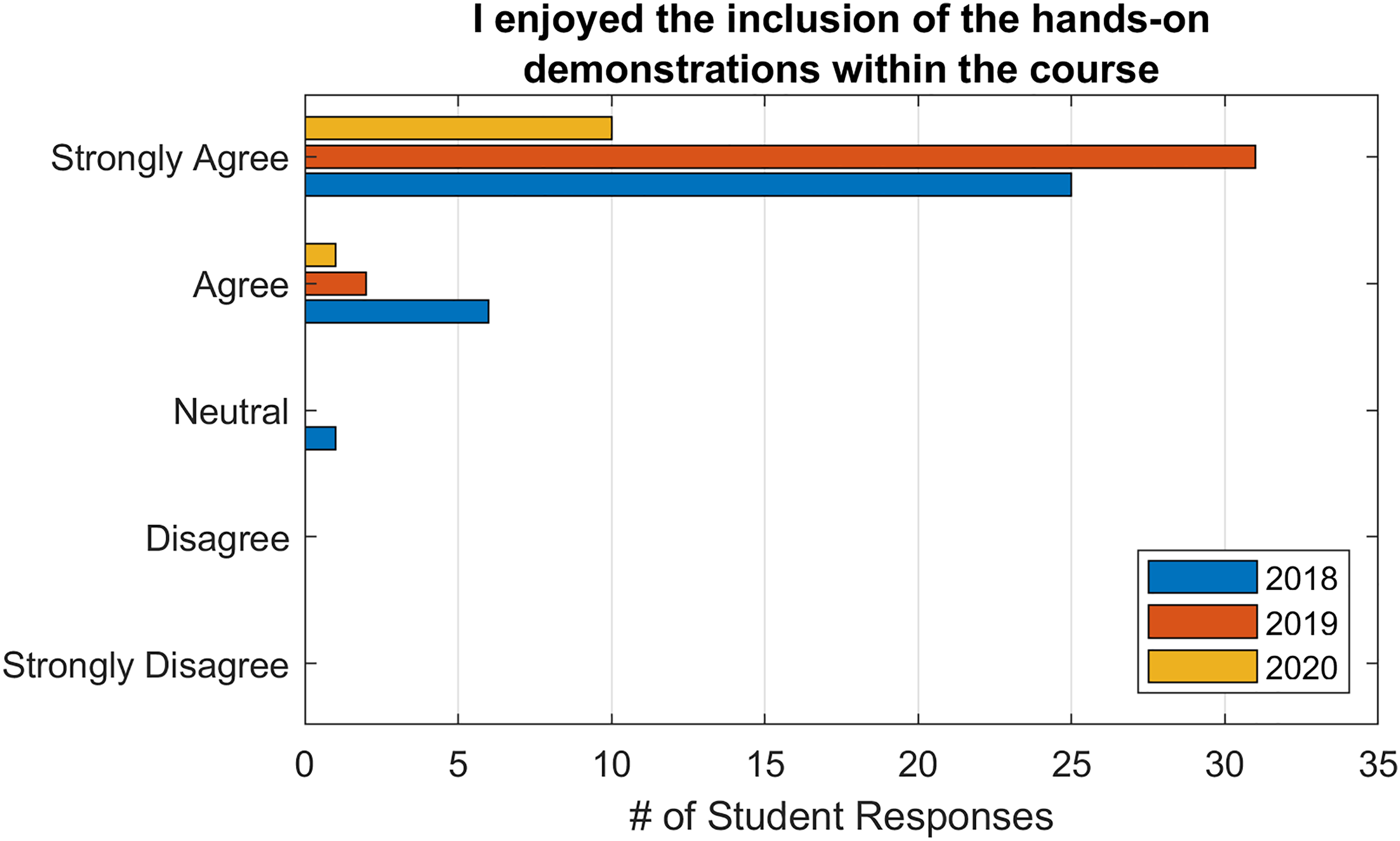
Student responses to survey prompt 4 by semester.
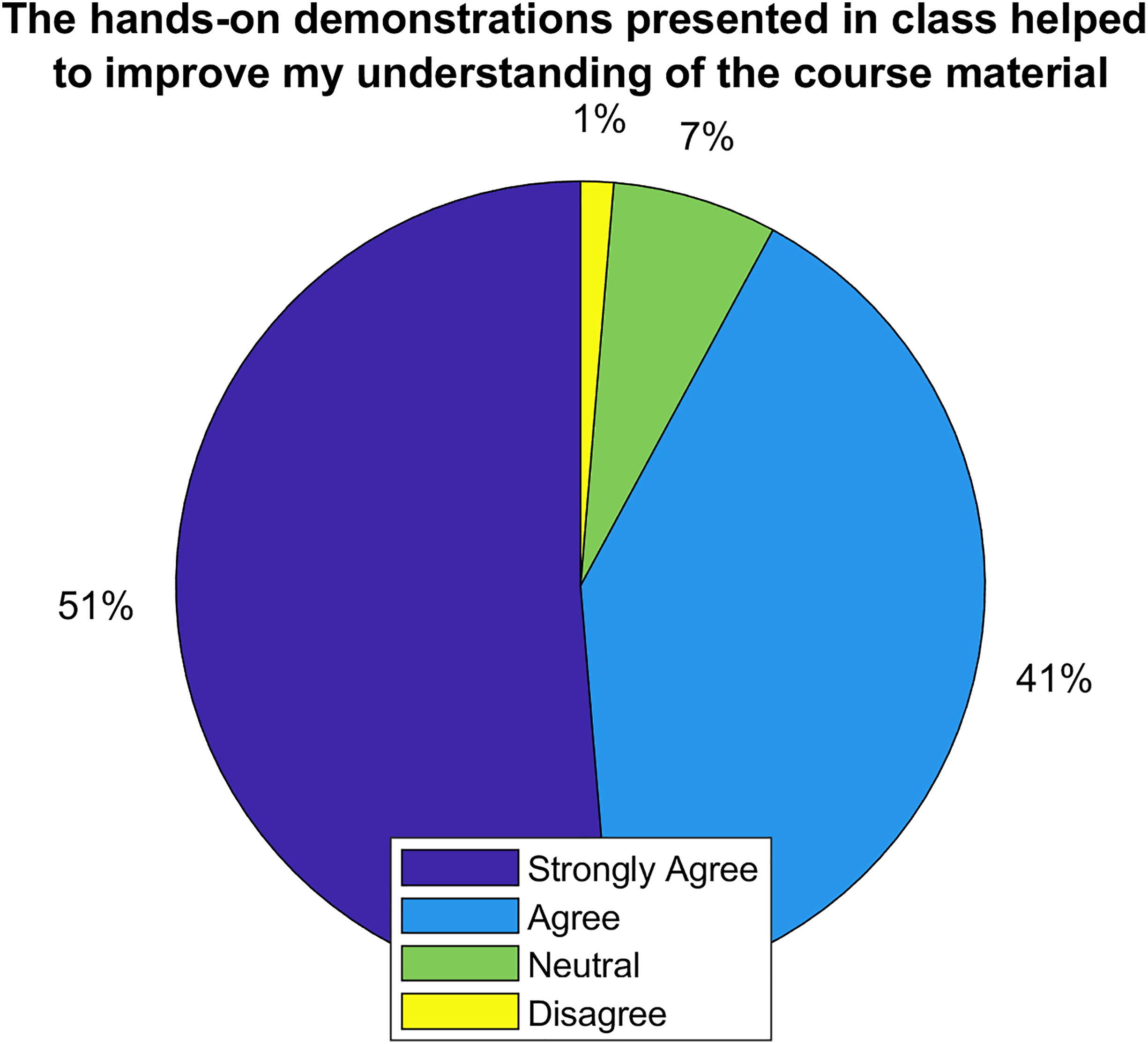
Overall percentage of student responses to survey prompt 1.
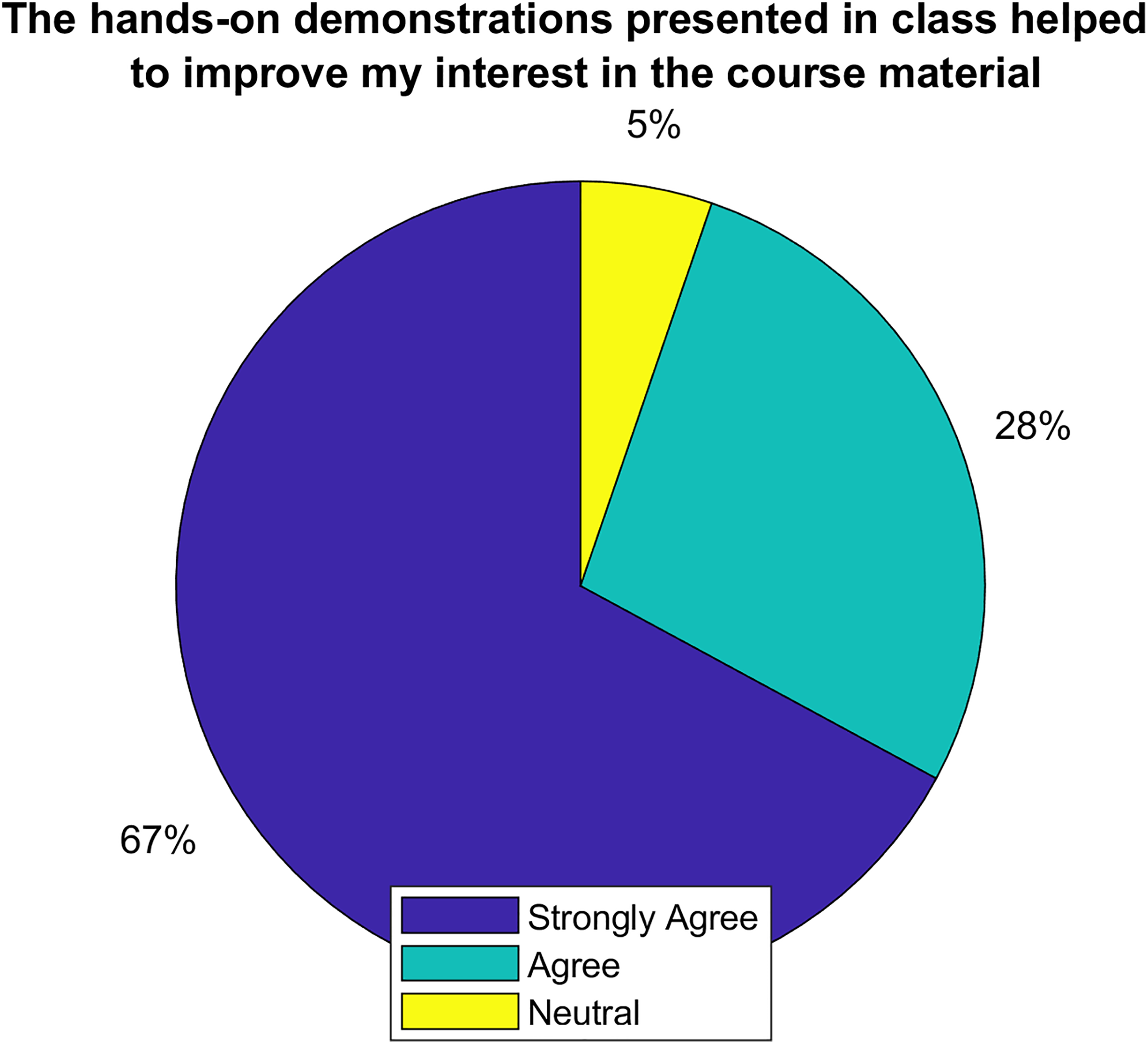
Overall percentage of student responses to survey prompt 2.
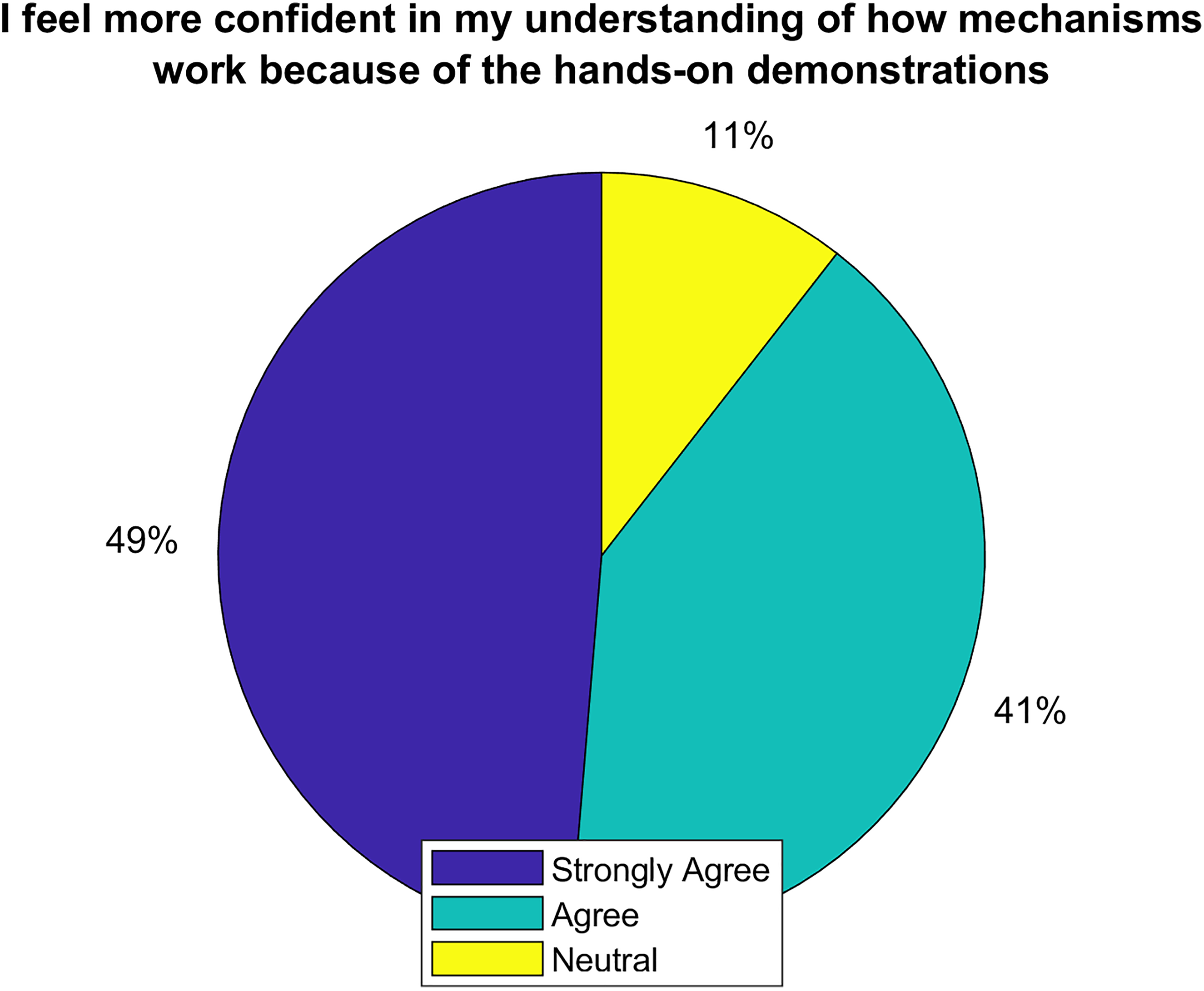
Overall percentage of student responses to survey prompt 3.
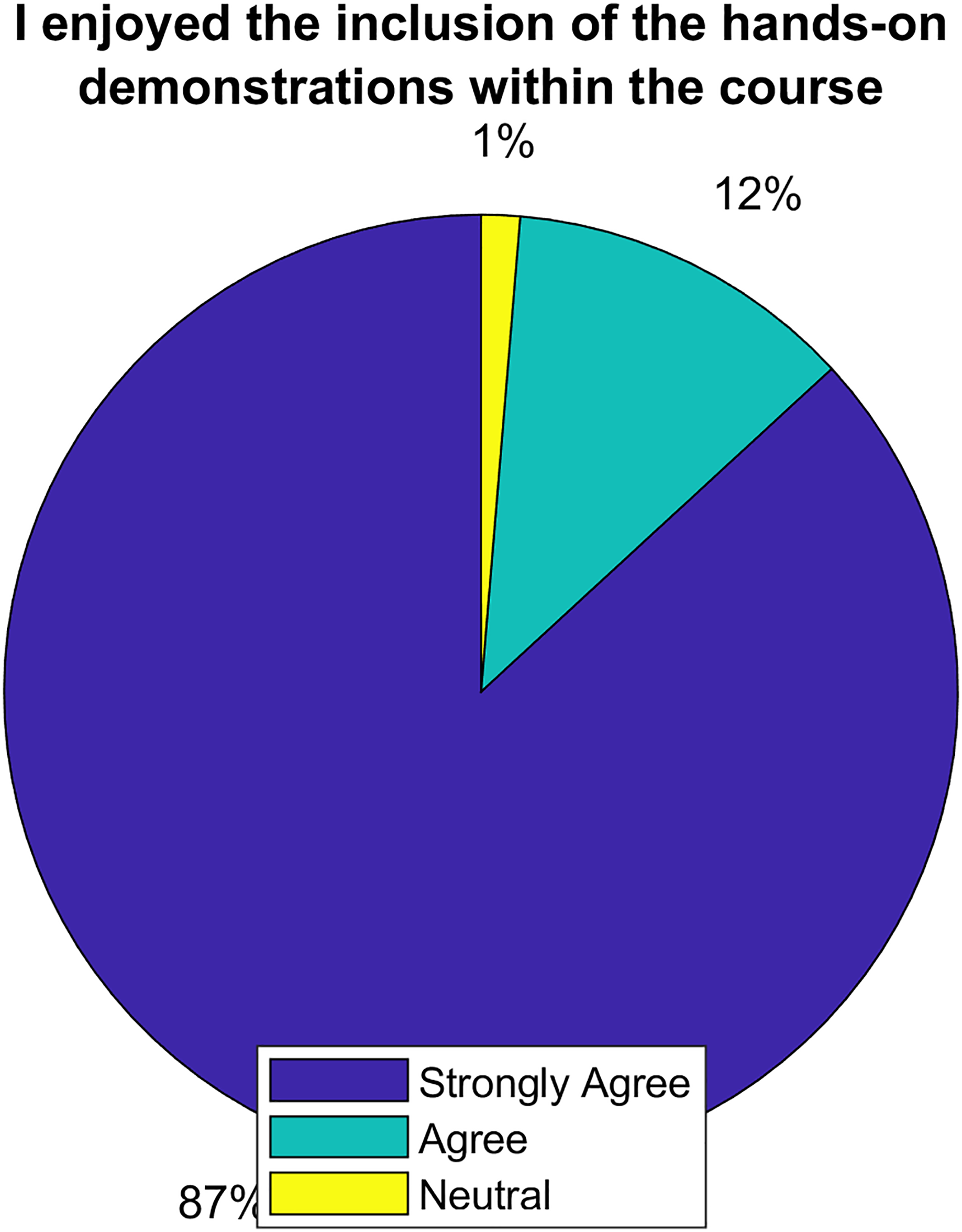
Overall percentage of student responses to survey prompt 4.
Average survey results.
Correlation coefficients for the student responses to the survey prompts.
In addition to the objective survey results, students were given the opportunity to write in their free-form comments. Some comments included various abbreviations for mechanism of the week, such as M.O.T.W., MOW, MotW, etc., which have been replaced using [] for clarity. Otherwise, the comments are provided in an unmodified form. All comments from the survey are included (both positive and negative comments):
Comments from the Spring 2018 survey
I thought they really made a lot of the topics more interesting and understandable The addition of mechanism of the week was an enjoyable component of ME380 More in-depth explanation of the mechs. Ie gear ratios and what not. Otherwise it was very informational and enjoyable to have in class U-Gears are cool but not exactly “real-world” examples of mechanisms. More “real-world” mechanisms would be more interesting and helpful It was just a little distracting to pass around while the class notes were being given Some of the machines work well with the content we were learning about and helped keep interest with the topics Getting real world examples peaked my interest to learn about more examples that had to do with class work [Mechanism of the week] helped relate course material to real-life applications which helped my understanding of topics I think they helped me learn what different things do and how they work. Made everything more interesting I think that some of the real life applications like the differential helped spark interest in some areas Great course, great instruction, one of the best professors! Get more All the mechanisms were fine and relevant, but a few were broken Cool I enjoy all the hand on demonstrations. Try to find more! They were fun, didn't really provide any further understanding. I liked them though. class is great; best ME professor at Berks Best way to learn the material The mechanisms helped provide a physical representation of what we are analyzing and challenged our conventional ideas of what some of the typical mechanisms are It made the class easier to be in. It was my last class of the day so often those are the hardest class to engage in but the hands on demonstrations helped very much. Thank you Some examples could use improvement. One engine is sufficient Mechanism of the week was a fun and helpful addition to the class! I very much enjoy [mechanism of the week] it made fridays better I appreciate going the extra mile to improve the learning experience for the students! The mechanisms helped connect what we were learning to physical models I really enjoyed the mechanism of the week. My only problem is that the mechanism that was displayed did not always pertain to material being taught in that lecture. It was something that made me look forward to the class every week. It also helped me connect concepts to real world applications of the material we learned during the week. The diversity of mechanisms shown really helped illustrate how powerful each configuration is. It helped me to visualize how a mechanism could look to achieve a desired purpose. I think [mechanism of the week] was a great way to get us involved and interested in the course material. It was an interesting and fun thing we looked forward to at the end of the week and helped build our understanding of the systems we were studying. The inclusion of demonstrations helped me because if there was any doubt in how a mechanism worked, I got to test them out and fully understand the topic for that week. It's not just informative, it's also fun BEST PART OF THE WEEK
Comments from the Spring 2019 survey
Comments from the Spring 2020 survey
Discussion
It is shown in Table 6 that the responses to the prompts on average are at or above “Agree” with many of the median responses indicating “Strongly Agree.” This indicates that on average, the students agree with the proposed hypothesis for this project. That is, students recognized the value of the project and expressed their appreciation for its inclusion within the course. As shown in Figures 1–8, only a single response was recorded as “Disagree,” which was in the Spring 2018 semester in response to the first prompt “The hands-on demonstrations presented in class helped to improve my understanding of the course material.” No responses indicated “Strongly Disagree” to any of the prompts in any of the semesters. This provides further indication of the general support of the students to this project. The single “Disagree” to the first prompt provides a potential weakness in the program for highlighting the connections between these examples and the course material, but the overall enjoyment and value of the experience was noted by the students. This is consistent with findings of other researchers that hands-on experiences promote enthusiasm. 25
A similar project has been presented as a work in progress, 10 which incorporates physical demonstration materials into a dynamics course. The preliminary results in the work of Haque 10 indicate the student enjoyment of the hands-on experiences, which is again consistent with this work. Survey data was not yet provided by Haque, 10 but possibly will be presented in future work. Another related project using Lego activities in a first-year engineering course provided survey results from students on a 5-point scale. 13 The survey results in 13 indicated the general student support of the program with average ratings ranging from 3.4 to 4.15 for the various survey prompts. These ratings are lower on average than the results from the mechanism of the week project, but this could be due to many different factors, such as differences in sample size, differences in student population (first-year vs third-year students), etc.
The student comments were generally positive, indicating some clear strengths in the engagement aspects of the projects. Multiple students indicated the “fun” of the program and indicated that the mechanisms were helpful. Some limitations of the work were highlighted by the students. Students identified that the mechanisms were not always well-aligned with the current topics in the class discussions, some mechanisms did not function properly, some mechanisms did not fairly represent realistic mechanisms in real-world applications, and some students did not find the mechanisms helpful to their learning, though they still enjoyed them. Although some students specifically stated that this program did not directly benefit their understanding of the course content, other students did specifically state the helpfulness of this program for their learning. This is representative of the principles of UDL for providing multiple means of engagement within the course. Not all students particularly resonated with this approach for their learning. However, it was particularly beneficial to some students, and all students at least saw value in the project overall.
These limitations can help to guide implementations of similar projects. When possible, it is ideal to capture examples that are well-representative of course content. During the implementation, the instructor leaned a bit heavier into the entertainment and engagement aspects of the experience rather than directly designing content around class discussions. There is potential for improving the design to better balance the student engagement with the representation of the course material.
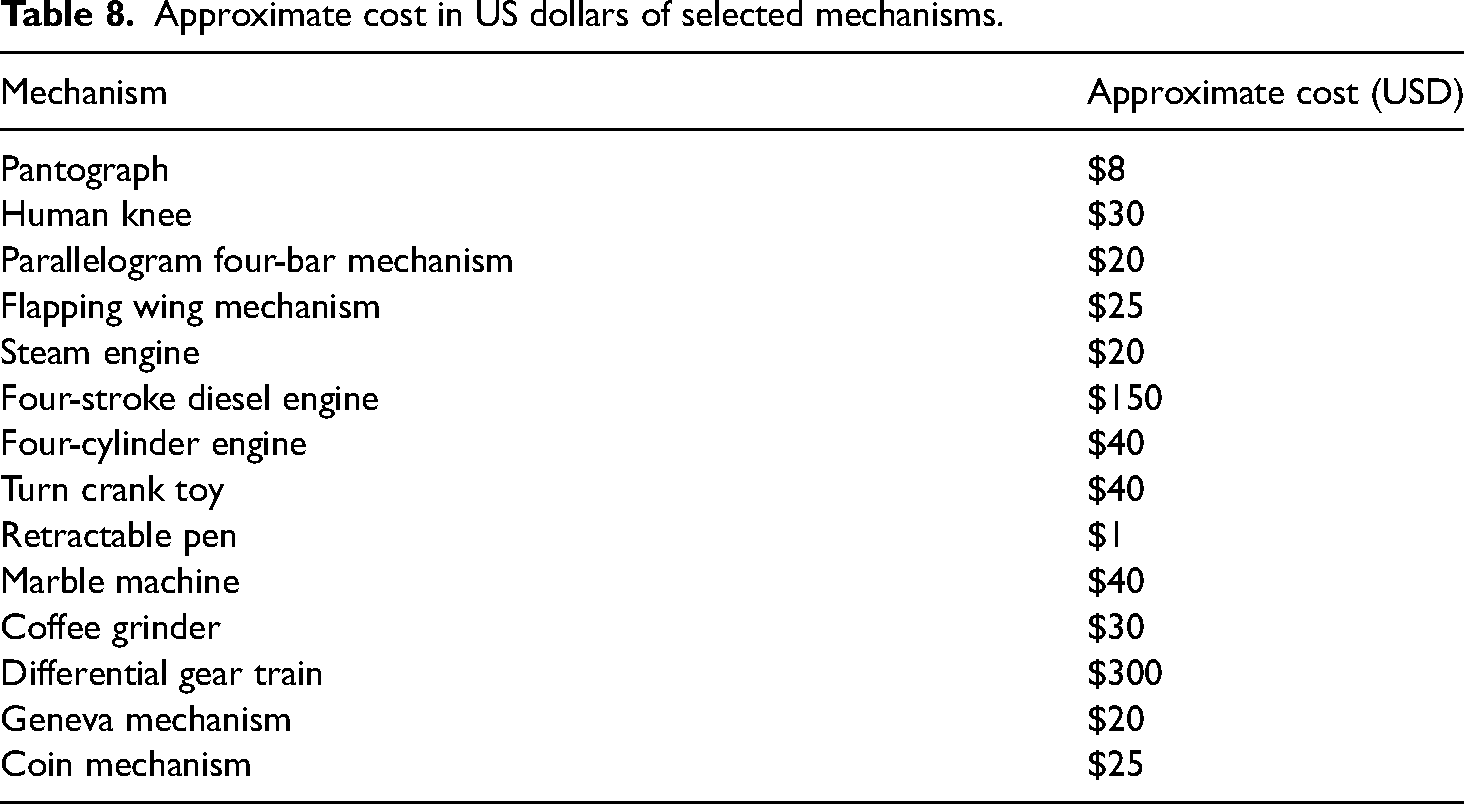
Another key limitation to keep in mind is potential budgetary constraints. Some students identified that they wanted “more.” Students wanted more mechanisms, more examples, or even simply to replace those that were broken over time. The sustainability of this type of program can be challenging, but if possible, identifying durable low-cost mechanisms could help to increase the quantity of the hands-on examples offered. To give a rough idea of the costs of the considered mechanisms, the approximate cost of the selected mechanisms is offered in Table 8. There is a considerable range in cost of the mechanisms, and therefore some consideration can be given to the selection of lower cost items if working within a limited budget. For example, the retractable pen is an option that is low cost but can still provide a meaningful demonstration for the students. Whereas the high cost of a physical differential gear train may not be necessary. It is worth mentioning here that virtual models are a possible alternative to physical mechanisms if cost is an issue. Various virtual platforms have been explored as alternatives for hands-on engineering experiences (e.g. see 17 or 18 ).
Approximate cost in US dollars of selected mechanisms.
Conclusions
This work presented a formal structured program for implementing hands-on demonstration materials within a machine dynamics course. It was shown through student survey responses that the project was effective in increasing student interest and student perception of understanding of the course material. This work was found to be particularly helpful in supporting the UDL principle of providing multiple means of engagement within a course. Similar programs could be implemented within other courses to help to increase student engagement.
Footnotes
Acknowledgments
This work was partially supported by the Penn State Berks Faculty Project Fund.
Declaration of conflicting interests
The author declared no potential conflicts of interest with respect to the research, authorship, and/or publication of this article.
Funding
The author received no financial support for the research, authorship, and/or publication of this article.
