




Abstract
The West Virginia University (WVU) Personal Rapid Transit (PRT) system was built between 1971 and 1975 in Morgantown, West Virginia to be a prototype transportation system of the future. Envisioned as a hybrid of public and automotive transportation, the fully automated cars deliver passengers directly to their destinations without stopping at intervening stations. The PRT concept may be familiar to STS scholars through Latour’s study of Aramis, a PRT in Paris that was never completed. This article recounts a history with the opposite ending: the successful realization of a PRT in West Virginia. Our account supplements existing ones, which explain the construction of the WVUPRT primarily as the product of geography and politics. While not denying these factors, we carve out an explanatory role for another influence: a public narrative about the dangers of hitchhiking and crimes that might ensue from that practice. In weaving together that narrative with the history of the WVUPRT, we show how public narratives of crime authorize technological infrastructure.
We tend, in contemporary societies, to associate public transportation with virtue. Public transportation is generally believed to be preferable to its principal rival—private automotive transportation—along many dimensions. It is more affordable, more equitable, better for the environment, better for public health, and so on. It is a collective good. It embodies resistance to the hegemonic culture that has been called ‘automobilism’ (Mom, 2020). The notion of public transportation as the unequivocally more civic-minded choice was undermined, if perhaps only temporarily, by the Covid-19 pandemic. Suddenly, private, self-contained transportation like the automobile was the safer choice, not just for the individual user but for the collective as well. The collective nature of public transportation was great, but the necessity of sharing space with large numbers of people was less so (Gutiérrez et al., 2021, p. S177).
As is well known among transportation scholars, there have been efforts to combine the collective aspects of public transportation with the comfort and convenience of private transportation. In Science & Technology Studies (STS), those efforts were the subject of Latour’s (1996) ground-breaking eponymous analysis of Aramis, an innovative new technology called ‘personal rapid transit’ (PRT) in Paris in the 1980s. PRT envisioned ‘a small (four-to-six passenger) private car, which operates on a slim monorail-like guideway, like a driverless taxi … and operates nonstop from origin to destination … retaining the auto’s desirable features while excluding its undesirable ones’ (Burke, 1980, pp. 6–7). In its idealized form, PRT was what public transportation should be.
Latour’s study of Aramis explained in part why the PRT never came to be in Paris, but, as he knew (p. 16), such a system already existed at the time he was conducting his study of Aramis. It was in Morgantown, West Virginia, ran through the campus of West Virginia University (WVU), and was aptly named the WVUPRT (Figure 1). It still runs today. It has never had an accident resulting in injury or death, although breakdowns are reportedly frequent (Burke, 2017; Robertson, 2016). Passengers take around 15,000 rides per day during peak periods, and the PRT has provided 83 million rides during its lifetime. It costs only 50 cents for the general public; WVU faculty, staff, and students ride for free.
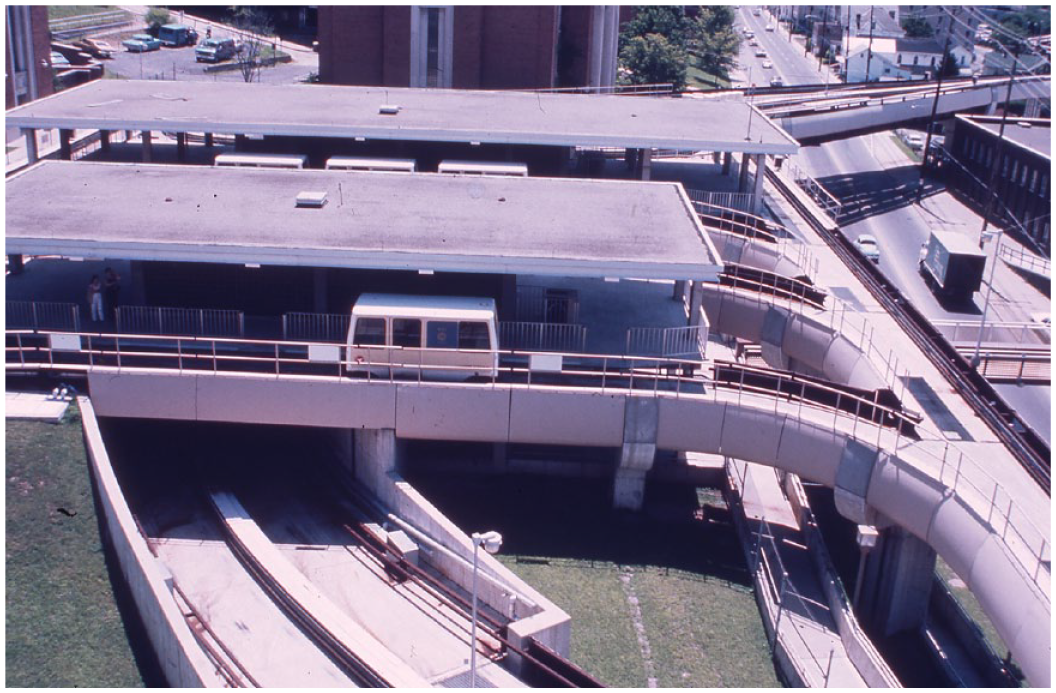
The West Virginia University Personal Rapid Transit, from Samy Elias, Engineering Professor, Personal Rapid Transit Records, Collection Number: A&M.3359 West Virginia and Regional History Center, West Virginia University Libraries, https://archives.lib.wvu.edu/repositories/2/resources/1607, Newspaper clippings and slides, 1969-1973, undated, Box: 22, https://archives.lib.wvu.edu/repositories/2/archival_objects/154639
In line with repeated attempts to explain the design and emergence of technology and built infrastructure (Callon, 1986; Guldi, 2012; Hetherington & Jalbert, 2022; Michael, 2020; Slota & Bowker, 2017), this article investigates the birth of the WVUPRT. Transportation policy research treats the WVUPRT as ‘a classic example of the ways in which technological innovation can be influenced by the political process’ (Burke, 1980, p. 104; see also L. M. Cole, 1975, pp. 6–7). We complement this with an explanation rooted in—perhaps surprisingly—crime. We situate the development of the PRT in its historical context, which includes not only the geographic, demographic, and political conditions that invited development of an innovative public transportation system, but also a burgeoning moral panic concerning hitchhiking. ‘Thumbing rides’, it was argued, was dangerous, and invited all sorts of crime—especially crime against women, and especially against female college students (Mahood, 2018; Packer, 2008; Reid, 2020; Strand, 2012). In theory at least, crime against hitchhikers was also a peril that could be counteracted by public transportation.
The notion of integrating a study of crime into a study of technological choice in transportation systems is perhaps not as incongruous as it may at first seem. As Guzik (2016, p. 71) notes, scholars’ treatment of the automobile as an artefact that epitomizes modern life tends to ‘overlook[] security and law’. And yet, Guzik adds, the history of the automobile is saturated with law, insecurity, crime, injury, and death. Likewise, Jain (2004, p. 63) argues ‘that the automobile as a technology was consolidated through law’. In the opposite direction, Robert and Dufresne (2016, p. 1) ‘propose … making technology, materiality, and objects more relevant to crime studies’. More recently, Livingston and Ross (2022, p. 2) have explored the under-noticed ‘connection between automobiles and incarceration’ concluding ‘that car use and ownership are central to “carcerality at large”’.
Much like criminal convictions, choices of transportation systems are fraught, consequential, and reversible only with great difficulty. It is, therefore, not unusual to plot stories about them like murder mysteries. Bottles (1987, p. 238) goes to great lengths to show that automobile manufacturers were falsely accused of ‘kill[ing]’ the streetcars of Los Angeles. A well-known story of the ‘failure’ of the electric automobile in the 1990s is titled Who Killed the Electric Car? (Paine, 2006). With characteristic creativity, Latour plotted his study of Aramis like a murder mystery, complete with an erudite detective and his loyal protege.
In investigating the mystery of the WVUPRT, we are doing more than adopting an entertaining rhetorical device. We also seek to intervene in a longstanding debate in STS about technological change (Joerges, 1999a, 1999b; Winner, 2001; Woolgar & Cooper, 1999). According to Joerges (1999a, p. 424), theories of technological change can be consolidated under either ‘control’ or ‘contingency’ discourses. Under the discourse of control, technological change results from intentional action, with all other consequences written off as ‘unintended side effects’. In contrast, under the contingency discourse, many actors and actions come together to establish a new socio-technological order; it is not possible to pinpoint a single ‘cause’ but only to identify multiple contributing factors. Dissatisfied with both extremes of control and contingency, Joerges sought instead to chart the ‘middle road’ (p. 424), where explanations would focus on questions of how rather than why. He urged analysts to look beyond the formal attributes of things and instead interrogate the processes by which authorizations for those things ‘are built, maintained, contested, and changed’ (p. 424). Consistent with the ‘middle road’ metaphor, Joerges cited an iconic example of transportation technology: Robert Moses’s bridges.
Caro (1975) argued that city planner Moses had built New York City bridges too low for buses to pass under as a means of excluding the city’s less affluent and minority populations from accessing Long Island beaches, and Winner (1980) used this example to argue that ‘artefacts have politics’. Mining the historical record, Joerges suggested that the story ‘can be told differently’ (p. 412), and, indeed, had little basis in historical fact. Although debunking the causal narrative, Joerges recognized that the ‘parable’ about Moses’s bridges continued to resonate because, in his turn of phrase, ‘politics have artefacts’. That is, stories like that told by Caro serve a number of political purposes, not least by revealing the tangible results of classism and racism. Taken up by Winner and others, those politics get perpetuated through retelling of stories. In turn, those stories imbue things—like bridges—with meaning and purpose. Thanks to stories like Winner’s, we have come to see Long Island’s parkways as not only a means of traversing space but also as the physical manifestation of an entire social structure that works to the detriment of poor and non-white urban residents. We are reminded of these effects when, more than two decades after Joerges ‘thoroughly debunked’ Winner’s claim (Slota & Bowker, 2017, p. 533), US Transportation Secretary Pete Buttigieg used Moses’s bridges to suggest that ‘an underpass was constructed such that a bus carrying mostly black and Puerto Rican kids to a beach—or that would have been in New York—was designed too low for it to pass by, that that [sic] obviously reflects racism that went into those design choices’ (Kessler, 2021).
In this article, we track the development of the WVUPRT and take up Joerges’s call to focus on the processes by which authorizations for things are made (and perhaps unmade). In what follows, we show that a specific fear of crime coincided with the emergence of the WVUPRT and ultimately became a part of its history. Turning Winner’s argument on its head, we argue that fear of crime facilitated the construction of public, not private, transportation.
The fear of crime we track doesn’t manifest solely in popular discourse; it emerges from and ultimately influences ways of seeing and understanding guilt. We show how discourses about crime develop and grow in the context of a criminal trial, the outcome of which is to both legitimate a conviction and to build an enduring authorization for the WVUPRT. As the ensuing history reveals, those discourses endure even when the narratives that emerge from a trial—not least of all that a person is ‘guilty’ or ‘innocent’—can be as questionable as the narrative of Moses’s bridges.
We make no claim to having solved the mystery of the WVUPRT. Unlike plotted murder mysteries, explanations for the existence of technological infrastructure (like solutions to some crimes) remain ever elusive. We are not concerned with proving the ‘right’ explanation for the emergence of the WVUPRT, or even, less ambitiously, with revealing the multiplicity and contingency of explanations for it (Woolgar & Cooper, 1999). Rather, we suggest that discourses about crime—and specifically hitchhiking—can and do shape explanations for technology. Those explanations authorize the thing—in this case, the WVUPRT—by engendering relationships between built form and social meaning, thereby circumscribing ways of seeing and understanding the thing itself.
The West Virginia University personal rapid transit
The concept of personal rapid transit had been around for several decades before the events Latour chronicled in Aramis. Most historians give credit for the idea of a PRT system to Donn Fichter, a US engineer, who began sketching prototypes in 1953 (Floyd, 1990). In the 1960s, prototypes and studies of the PRT system emerged in Japan, Britain, Germany, Sweden, and elsewhere. The most prominent US version to emerge in that decade was William Alden’s StaRRcar (Robertson, 2016). Over the subsequent half century, the concept of a PRT struggled to dislodge the popularity of the private automobile, but it may yet enjoy a renaissance. 1
That future was hardly on the horizon when, in 1965, WVU brought together a group of engineers and administrators to develop solutions to the city’s transportation problems. Professor Samy Elias, head of the Industrial Engineering Department, led the group. Somewhat improbably, the group began talking about monorails, duorails, and other seemingly exotic new forms of mass transit for WVU (Arnold, 1966a, 1966b).
Elias had long been fascinated with the PRT (Luter, 1973), and he saw an opportunity to develop such a system for Morgantown. Around the time his group began looking into WVU’s transportation problems, the Urban Mass Transit Authority (UMTA)—a department operating within the United States Department of Transportation—was in the process of reorganizing, bringing in new personnel who desired to reduce Americans’ dependency on the automobile, and, especially, to help those living in small communities (Burke, 1980, p. 105). Elias and his colleagues drew up a funding proposal to conduct a feasibility study of the PRT in Morgantown and submitted it to the UMTA in 1969. 2 The UMTA awarded them a $153,500 grant to fund the study. 3 This may be read as vindication of Elias’s vision, but, according to at least some observers, it was more likely a case of having the right proposal at the right time (Burke, 1980, p. 105; Gibson, 2002).
Why Morgantown?
Mountains are central to West Virginia and its citizens, prompting an immediate identification of West Virginians as people of the mountains through the state motto ‘Montani semper liberi!’ (‘Mountaineers are always free!’). Even those cities, like Morgantown, that do not directly abut the mountains retain a mountainous character, with hills ‘so dense’ and ‘tightly packed’ that roads ‘seem somehow tentative, as if always threatening to break off on the edges’, as Stewart (2020) put it in her description of West Virginia coal camps such as those that used to exist near Morgantown.
Elias pitched Morgantown, a city of 30,000, to the UMTA as an ideal site for a demonstration project with which to experiment with new modes of public transportation. Built alongside the Monongahela River—a river whose name means ‘falling bank’, whose sides are ever in danger of caving in—Morgantown may have seemed an implausible site for mass public transit, let alone revolutionary innovation. But Morgantown offered a rare and appealing combination for transportation planners: It was a relatively small American city with a traffic problem worthy of New York or Los Angeles. In addition, the city experienced extreme weather conditions, including ice, fog, snow, rain, and sunshine, in a varied topography. The University’s pitch was that if the system could work in Morgantown, it could work anywhere in the country. Carlos C. Villarreal, the UMTA Administrator, emphasized the value of the WVUPRT as an experiment with potentially far-reaching applications. At the 1969 Senate appropriations hearing for initial funding, he explained: ‘We are attempting to redirect the public transportation program to make it action-oriented with discernible results that can be viewed by the Congress, the cities, and the citizens of this country…’ (L. M. Cole, 1975, p. 8).
WVU also possessed characteristics that made it appealing as a testbed for a PRT: It was both its state’s ‘flagship’ (i.e., research) university and its ‘land grant’ (i.e., agricultural) university. This combination required WVU to fill a broad range of higher educational needs for the state. The result was a somewhat sprawling institution in the relatively small town in which the original university had been sited in 1867. Between 1955 and 1967, the enrollment in the undergraduate institution almost doubled, and enrollment in graduate and professional schools almost tripled. 4 The presence of students meant that there was a ‘captive audience’ generating peak demand throughout the day, rather than just rush-hour clusters in the morning and evening.
Because of the steep terrain, the expansion could not be accommodated merely by expanding the original downtown campus. Therefore, two additional adjacent campuses, Evansdale and Health Sciences, were built around a mile and half from downtown. As Elias noted, ‘Although the three campuses are only 1.5 miles apart, the steep terrain prevents walking or bicycle trips between the campuses. By the late 1960s, the university operated a fleet of 16 buses, comprising the second largest university bus system in the United States and handling around 50,000 trips per week. 5 Despite the frequency of service, Elias noted that ‘The bus service has been inadequate in many respects.’ Because many students had classes on more than one campus, student demand for bus service was congested during the changeover periods between classes. 6 ‘In an attempt to overcome this problem, the University changed from a ten-minute interval between classes to a twenty-minute interval. However, even then the buses were not able to provide the desired level of service.’ The University then changed back to ten-minute intervals and discouraged students from taking consecutive classes on different campuses. 7
With bus service so poor, students took to cars, whether theirs or others’. ‘Studies have shown that a significant proportion of the total student trips are made up of auto driver trips and hitch-hiking.’
8
But cars were of limited value because there were only two routes between the campuses. As a WVU transportation grant application described them: Monongahela Boulevard is a four-lane facility over steep grades which funnels into Beechurst Avenue, a two-lane facility. The other route between the campuses in University Avenue, a very narrow two-lane facility with steep grades. Because of the grades, bus traffic over these corridors must run at extremely slow speeds. This only compounds the problem because there are few passing opportunities on the two-lane segment of the roads and the slow bus traffic has caused delays to all the other traffic attempting transition from one part of the community to another.
9
The application complained that ‘The average speed through the campus area is between 5 and 10 miles per hour.’ It further noted ‘Students must cross University Avenue to change classes. On the hours, students and vehicles must use the same roadway, further reducing its capacity.’ 10
Jim Hatcher, an engineer at WVU in the 1970s, described the situation as ‘total gridlock’ (Gibson, 2002). A local joke supposedly claimed ‘it takes an hour to get the mile and a half from one campus to another—whether you drive, ride the bus, or walk’ (Shattuck, 1971). The grant application summarized the situation as a degrading cycle of events. The bus system cannot adequately negotiate the grades nor satisfy the demand on the system. This causes an increase in the use of private vehicles resulting in severe congestion on the local streets. The increased congestion then contributes to further degradation of the bus service. Added to this cycle of events is the continual increase in the number of University students and a corresponding increase in the population of Morgantown.
11
Without adequate transportation, Morgantown—and by extension, WVU—‘lay strangling’ between the steep hills (WVU Transportation and Parking, 2014).
Funding
Perhaps not surprisingly, Elias’s study determined that a PRT would indeed be feasible in Morgantown, and, in August 1970, the University submitted a new grant application to the UMTA for funding to cover approximately 80 percent of a PRT system (Burke, 1980, p. 105). Again, Elias’s pitch emphasized the utility of Morgantown as an ideal test site for this novel form of transportation due to its extreme weather, captive ridership, and unusual temporal demand patterns.
On September 24, the UMTA announced that it had granted the application and committed around $13.5 million to the project (Burke, 1980, p. 105; Secretary Volpe to make major announcement here, 1970). The UMTA’s commitment to fund a significant portion of the Morgantown project was not just the product of fortuitous timing. After all, other cities had by then begun to develop mass transit projects and to couch them in terms that would be appealing to federal agencies and lawmakers.
Other explanations emphasize the personal and political connections between West Virginia and the federal government (Burke, 1980, p. 104; see also L. M. Cole, 1975, pp. 6–7). Morgantown was in the district of Harley Staggers, who chaired the House Commerce Committee, which had a strong influence on the Department of Transportation budget. Senator Jennings Randolph of West Virginia was chairman of the Public Works Committee, which also had influence on transportation policy and funding. West Virginia’s senior Senator, the legendary Robert Byrd, sat on the Subcommittee on Appropriations, which controlled the Department of Transportation’s budgets. And Bryce Harlow, a powerful assistant to President Richard Nixon, happened to be the brother of WVU’s President, James Harlow (Burke, 1980, pp. 106–107; L. M. Cole, 1975, p. 6). Finally, John Volpe, the new head of the UMTA, was ‘an action-oriented person and wanted to have some visible projects functioning quickly’ (Burke, 1980, p. 106). Together these men formed a politically powerful network that made Morgantown a difficult locality to ignore—especially by a federal agency courting support to change existing transportation paradigms. WVU was not shy about lobbying them. 12
In announcing the award, Volpe cited the argument that the Morgantown climate would give the PRT ‘a rugged test’. He described a ‘creeping paralysis that is affecting downtown circulation and distribution of people and goods’ in ‘our economic and cultural hubs’. In addition, he talked about air pollution. But the press coverage of the award mentions another reason: An account in the Associated Press noted, ‘Proposals to create transit systems between WVU’s main downtown campus and the growing, sprawling layout at Evansdale some three miles [sic] away have been extremely active since coeds Karen Ferrell and Mared Malarik disappeared last January while hitchhiking back to Evansdale from downtown’ (Volpe plans ‘major’ announcement at WVU, 1970). 13 The student newspaper, the Daily Athenaeum, also attributed the idea of the ‘People Mover’, as the WVUPRT was then being called, to the abduction and murder: ‘The perennial problem of getting from one campus to another was brought to a grim forefront last year when two coeds, Karen Ferrell and Mared Malarik, disappeared while hitchhiking and were found dead in April’ (Secretary Volpe to make major announcement here, 1970).
Here was an explanation that seemingly had nothing to do with topography, meteorology, or patronage. And this is where the WVUPRT’s origin story takes an unexpected turn.
Murder
On January 18, 1970, two WVU students, Mared Malarik and Karen Ferrell (Figure 2), had hitchhiked back to their dormitory, Westchester Hall, on the Evansdale campus, after watching an evening showing of the movie Oliver! at a theater downtown. Because they didn’t have cars, they had walked downtown from their dorm (Perkinson & McLaughlin, 2017, Episode 1). They walked about a block and a half before getting into what one witness described as a ‘light colored sedan’ (Fuller & McLaughlin, 2021, p. 23; Perkinson & McLaughlin, 2017, Episode 1). Getting into that car, as many later retellings would ominously note, was the last time they were seen alive.
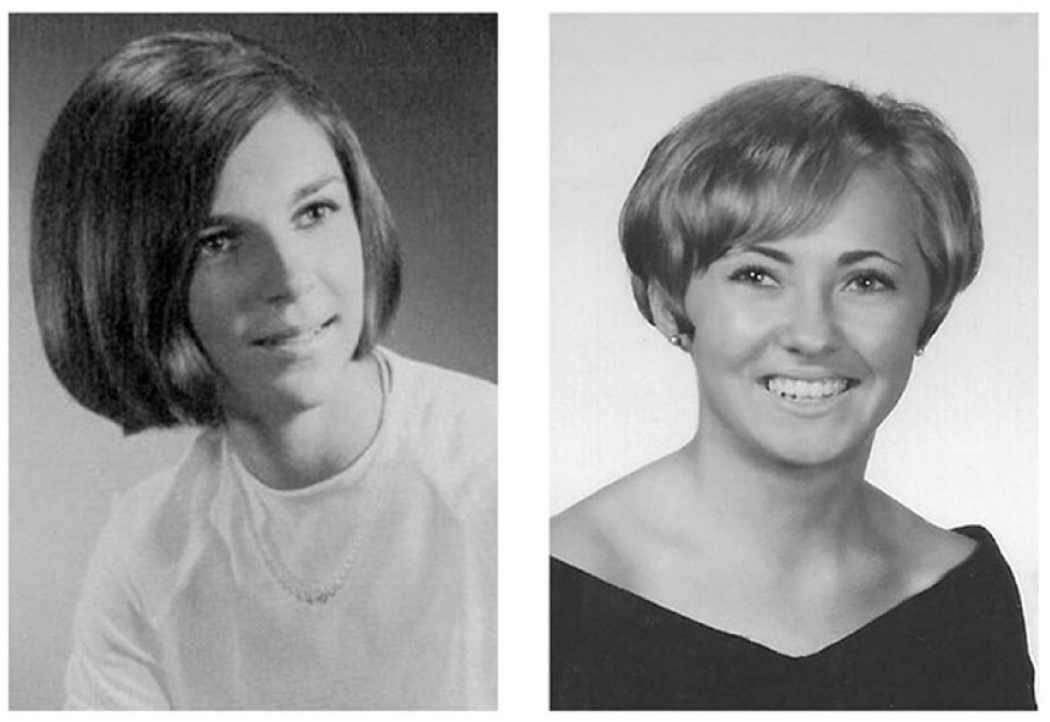
Mared Malarik (left) and Karen Ferrell (right) (Stacy, 1970).
Although it came to a terrible end, their decision to hitch a ride was not an obviously terrible one. Like the Dickens novel on which it was based, Oliver! was long; the movie ran approximately three and half hours. Mared and Karen, as they are almost referred to in both primary and secondary sources, 14 would have emerged from the theater around 11 p.m. By then, weather reports suggest, temperatures dipped below freezing. So walking was hardly an attractive option, and hitchhiking was an accepted alternative. As the newspapers noted, ‘Coeds hitchhiking to and from dormitories is a common practice … and police said bus transportation between the two sections of the campus ends in the early evening’ (Two W. Virginia coeds missing, 1970; Two girls missing at WVU, 1970).
When Mared and Karen missed their dormitory’s curfew, the Resident Assistant notified the campus police that they were missing. As Geoffrey Fuller and S. James McLaughlin, authors of a book about the murders and trials note, ‘concern about hitchhiking’ (Fuller & McLaughlin, 2021, p. 55) became ‘part of local conversation immediately …. Within two days of Mared and Karen’s disappearance, residents of Westchester Hall began circulating a petition calling for better bus service between campuses.’ By mid-March, ‘nearly 1 in 5 WVU students’ had signed one of the circulating petitions ‘calling for better transportation and FBI involvement in the case’ (Fuller & McLaughlin, 2021, p. 65). And it was not just students who were concerned. City Councilman Harold Wildman commented that he ‘didn’t like to see young women hitchhiking. I wouldn’t want my daughter doing it, and I think it is the University’s obligation to provide transportation’ (Fuller & McLaughlin, 2021, p. 55). The city council discussed hitchhiking and considered enforcing the city ordinance against it. But the city wanted WVU to solve the transportation problem, and ‘the university didn’t want too much attention paid to transportation problems created by the burgeoning two-campus layout and couldn’t afford to alienate students’ parents by jailing or slapping fines on hitchhiking students’ (Fuller & McLaughlin, 2021, p. 63).
Frightening incidents involving female student hitchhikers continued to occur and were published in local newspapers (Fuller & McLaughlin, 2021, pp. 66–68, 119–121). Fear among students was so great that guards were posted outside campus dormitories at night (Fuller & McLaughlin, 2021, p. 113).
Investigation
The headless bodies of Mared and Karen were found on April 16, 88 days after they went missing. According to the County coroner, one body was wearing only slacks, the other left unclothed from the waist down; both were decapitated. The coroner further reported that the bodies were found in a tomb made with slabs of stone pulled from a creek some thirty feet away (Stacy, 1970). 15
The discovery of the bodies caused ‘tension’ to ‘run high’ in Morgantown and prompted renewed emphasis on the role of transportation in contributing to the students’ victimization (Better WVU bus service demanded, 1970). Donna DeYoung, Mared’s roommate and high school classmate, told the Morgantown Dominion News, ‘If this doesn’t show students that hitchhiking should be banned, then I feel sorry for them’ (Fuller & McLaughlin, 2021, p. 43; May, 1970). The Dominion News reported that ‘Hitchhiking as a method for University students to travel between their dormitories and campus has become increasingly more in public focus.’ Kathy Spitznogle, the Senior Resident Advisor for Westchester Hall, noted that Beverly Manor, the privately operated dormitory complex which included Westchester Hall, ran a private bus service. The last bus arrived at 10:15 p.m., ‘but the girls don’t have to be back until midnight on weekdays and 2 a.m. on weekends’. Spitznogle called for students and administrators to ‘get together and solve the problems of busing and hitch-hiking’, but university administrators claimed the university was unable to offer bus service to Beverly Manor due to ‘legal and financial considerations’. They further noted that city police did not enforce the city and state ordinances against hitchhiking, and WVU administrators expressed uncertainty about whether they should ask the city to do so (Connell, 1970).
Two days after the bodies were found, the editors of the WVU student newspaper, the Daily Athenaeum, declared, ‘Lights are needed along University Avenue leading to Westchester Hall, adequate busing is needed, a crack-down on hitch-hiking is needed. Let there be no more cries that the problems on this campus are insoluble; action is needed, co-operation is needed, and solutions are needed. NOW’ (The Athenaeum Editors, 1970). ‘Adequate transportation’ was on the list of eight proposals presented to Morgantown Mayor Terry Jones by 200 WVU students who marched to City Hall with a petition containing 1,200 names on behalf of the Committee for Evaluation of Student Safety on April 28. The final speaker at the rally, Joann Alger, a student from Mared’s hometown, advised the audience ‘Do not hitchhike—it is not worth your life!’ (Fuller & McLaughlin, 2021, p. 134). Contrary to the student editors, however, the student marchers did not call for a ban: ‘The student group felt hitchhiking was a “symptom, not a problem”, and recommended better bus service for students returning to campus from the city’ (Better WVU bus service demanded, 1970; Fuller & McLaughlin, 2021, p. 65; Students Ask Morgantown for Protection, 1970).
Some students developed innovative solutions to the transportation problem. They created an early version of ridesharing—the ‘motor pool’—to operate during times when buses were not running. Male drivers were screened, accompanied by a second male witness, and carried identification cards. Signs placed in the windshield were printed on a special press to prevent counterfeiting. The service had 21 riders the first day (Fuller & McLaughlin, 2021, pp. 111–112).
The press accounts and archival record do not make clear exactly how the ‘coed murders’, 16 as they were commonly described in the press, might have made the PRT proposal ‘extremely active’ (Volpe plans ‘major’ announcement at WVU, 1970). Burke (1980, p. 107) notes that ‘The negotiations and discussion that occurred in arriving at the decision to go with the Morgantown project are nowhere publicly recorded, and one cannot be certain at what level the decision was made.’ Our archival searches did not yield any direct documentary evidence of the impact of the ‘coed murders’ on UMTA’s decision to fund the PRT. Elias and Harlow appear to have made no mention of the murders in their voluminous correspondence with one another and with various stakeholders, including the UMTA.
Even so, ‘many people were convinced the murders played a role in’ the siting of the PRT in Morgantown (Fuller & McLaughlin, 2021, p. 135). Many Morgantown residents apparently believed that the murders played a role in the completion of the PRT. George Castelle (discussed below) was a college dropout living near Morgantown at the time. He told us that he heard discussions of the connection between the murders and the approval of funding of the PRT. Fuller ‘repeatedly’ heard the rumor that the murders facilitated the completion of the PRT. One of his interview subjects remembers that he ‘always thought’ the murders were one of the reasons Morgantown got the PRT. Kendall Perkinson, the co-producer of a podcast about the murders, also described hearing the rumor.
Local historians insist that Staggers, Byrd, and Randolph ‘had eyes on’ the ‘coed murders’ in 1970 (Fuller & McLaughlin, 2021, p. 82). While we do not suggest that the WVUPRT was built solely in response to the murders, it is plausible that distress over the fact that two female college students had been murdered after hitchhiking due to lack of adequate public transportation may have helped facilitate the final decision to fund the project. Indeed, a few weeks after the announcement of the WVUPRT award, Harlow threatened to withdraw recognition of Beverly Manor ‘if its owners do not live up to contract specifications about providing adequate bus service’ (Beverly Manor Dorms at WVU Draw Warning, 1970).
Even as planning for the PRT began, hitchhiking around Morgantown continued—and continued to be perceived as a social problem. On the one-year anniversary of Mared and Karen’s disappearance, the Dominion News ran a story announcing with undisguised dismay: ‘Campus coeds still hitchhike one year after fatal ride’. The student body President, Alan Woodford, said that although there had ‘been some decrease in hitchhiking since last year … I don’t think it will be alleviated because some students need to travel to campus at odd times’. Cathy Montgomery, Chair of the Committee for Evaluation of Student Safety ‘said the committee hope to conduct a campaign to discourage hitchhiking in the near future, using bumper stickers and buttons portraying a message of “thumbs down to hitchhiking”’. The Beverly Manor bus still did not stop in front of Westchester Hall, and the last bus still terminated at 10:15 p.m. Despite the general turn against hitchhiking, not a single arrest for hitchhiking had been made in the past year (Campus coeds still hitchhike one year after fatal ride, 1971).
Hitchhiking
The anti-hitchhiking discourse in Morgantown reflected the broader culture of automobile societies. Although the association between hitchhiking and murder is so strong that a popular American urban legend, ‘the vanishing hitchhiker’, has the ghosts of murdered loved ones (usually young women) return as hitchhikers (Brunvand, 1981, p. 24), historians note that hitchhiking was not always considered dangerous. During the 1930s and 40s, it was considered a wholesome, mainstream activity, and indeed, a transportation necessity given the limited breadth of automobile ownership and patriotic duties to conserve gas and facilitate the transportation of military personnel during the Second World War (Packer, 2008, p. 78; Reid, 2020). When a discourse of danger arose around hitchhiking in the 1950s, it focused on riders—especially female ones—not drivers as the threat (Spjut, 1971, p. 332; Strand, 2012, p. 68), suggesting that hitchhiking women were not victims, but threats to the social order, and even going so far as to describe them as accomplices of predatory men (Mahood, 2016, p. 654).
It was only in the 1960s that the cultural discourse shifted toward female victimization, with male drivers portrayed as the ‘true’ threat (Mahood, 2018, p. 208; Reid, 2020, pp. 152–158). As Newsweek observed in 1973: ‘The old order of highway violence has been stood on its head. Instead of the driver fearing the pickup, it is now the hitchhiker herself who runs by far the greater risk of being robbed, assaulted, abducted, murdered—or, most likely of all, raped’ (quoted in Strand, 2012, p. 75). As Mahood (2016, p. 650) notes, ‘hitchhiking is a gendered performance’, one way in which ‘female mobility has become associated with sexuality’ (Freedman, 2010, p. 174). This new gendered discourse began to take shape as increasingly ‘liberated’ women began to hitchhike—and hitchhike without male companions—more often (Reid, 2020, p. 139). The portrayal of hitchhiking as perilous to women ‘reveals the cultural assumption that women have a different relation to cars and the road than men have’ (Mahood, 2016, p. 653). In contrast, ‘carpooling was being offered as the solution to smog, congestion, energy efficiency, overburdened schedules, and even mass transit workers’ strikes’. Carpooling, oriented toward businessmen and housewives differed from hitchhiking because of the supposed bourgeois respectability of drivers and passengers. Unlike hitchhikers, carpool riders were facilitating more efficient labor (whether paid male or unpaid female), thereby situating themselves ‘within the legitimate world of male production and provided, in roundabout fashion, a further legitimization of auto dependency’ (Packer, 2008, p. 105).
By 1970, discourse about the dangers to women of hitchhiking was in full swing (Mahood, 2016, p. 648; 2018, p. 207). The year Mared and Karen were murdered, Reader’s Digest published an article that announced, ‘In the case of a girl who hitchhikes, the odds against her reaching her destination unmolested are today literally no better than if she played Russian roulette’ (Reid, 2020, p. 153). It also claimed that ‘police across the country indicate that the one common factor in many unsolved cases involving people found sexually molested and murdered along rural roads is that they “liked to hitchhike”’ (Strand, 2012, p. 75). The San Francisco Chronicle reported that more than 50 women ‘reported being raped while hitchhiking’ in that city (Spjut, 1971, p. 330). Although these stories undoubtedly reflected experiences of violence, especially violence against women, they also reflected a ‘culture of fear’ (Garner, 2008), which encompassed the broader phenomenon of ‘fear of crime’, which arose as a criminological concept around 1968, just two years before Mared and Karen’s murders (Lee, 2001).
In the years following the murders, the culture of fear around hitchhiking continued (Mahood, 2016, p. 659; 2018, pp. 216–218; Reid, 2020, p. 153; Strand, 2012, pp. 75, 81; Vecsey, 1972). Many of these stories focused on college students and college towns such as Santa Cruz, Berkeley, and Boston (Packer, 2008, p. 97; Reid, 2020, p. 153). Like Morgantown, other U.S. college towns banned—or considered banning—hitchhiking (Reid, 2020, p. 155). Six murders in 1972 and 1973 in Santa Cruz involved decapitated female hitchhiking college students (Reid, 2020, p. 153; Strand, 2012, pp. 54–83). As Strand (2012, p. 74) notes, the local discourse in Santa Cruz echoed what had been said in Morgantown two years earlier, though perhaps even more stridently: Hitchhiking was clearly the problem. The sheriff’s office issued a press release warning female college students against it. ‘Ten rapes, eight assaults with intent to commit rape, three incidents of indecent exposure, two kidnappings, and one incident of sex perversion …. That’s 23 cases in 1972 in the unincorporated area of Santa Cruz county—all connected with hitchhiking.’ The police math was bad, but local newspapers began printing stories with titles like ‘Women Hitchhikers—Why Do They Do It?’ The local underground newspaper ran a banner ad declaring ‘Women, it is no longer safe to hitchhike in this community’. The sheriff shifted the blame to the women themselves: ‘When women hitchhike’, he declared, ‘they are asking for a lot more than a ride.’
In 1974, Valian made explicit the link between hitchhiking and violence against women, arguing in her book, Hitchhiking: The Road to Rape and Murder, that ‘rape and hitchhiking are closely interrelated’ and citing statistics purportedly showing that many instances of rape—including a dubious 70% of rapes in Boulder, Colorado—happened in the context of hitchhiking (Vilian, 1974, pp. 82–87).
As in Morgantown, enthusiastic and reluctant defenders of hitchhiking alike pointed to lack of public transportation in America’s increasingly automotive culture: ‘young hitchhikers pointed out that because of the nation’s nearly universal reliance on the personal automobile, cities and college towns lacked adequate public transportation options, leaving young people without cars no option other than to hitchhike’ (Reid, 2020, p. 155, see also 151). Again, the debate was gendered and pitted women’s independence against their safety: ‘As one young woman in Phoenix maintained, “It’s just as hard for women to get around this city as men. Women don’t want to be raped … but just because we’re women, we’re restricted [from hitching] because of what men expect us to be”’ (Reid, 2020, p. 158; Vecsey, 1972).
Boondoggle
By the time construction of the WVUPRT began on October 9, 1971 (Crago, 1971), the system design had, like Aramis, ‘degraded’ (Latour, 1996) into something less like a PRT and more like an ordinary subway. As Burke (1980, p. 106) commented, it ‘was clearly not a PRT system …. It was not a network but a two-way corridor line 8.7 miles long with stations.’ 17 The cars had a capacity of 20 passengers, making it ‘a group rather than a personal service’—a Group Rapid Transit (GRT) rather than a PRT (Burke, 1980, p. 108; Robertson, 2016). Some might call it a mere above-ground subway, a monorail, or an ordinary light rail. Latour (1996, p. 312) went so far as to call it ‘a kind of horizontal cable car’.
A product of compromise, the WVUPRT was both too sophisticated and not sophisticated enough. Observers attributed the huge cost overruns to the effort to develop a new transportation technology that could be disseminated to other sites—but overkill for a transportation system for WVU and Morgantown. For transportation visionaries, though, it fell short. Yet the WVUPRT was undeniably novel, permitting people to make express trips between stations, without stopping in between. It bypasses stations according to the destination of its occupants (Figure 3). No mere cable car or subway does that. And whether the WVUPRT should be called a PRT or GRT, the undeniable fact is that, unlike Aramis, it was built. It survived and (arguably) thrived.
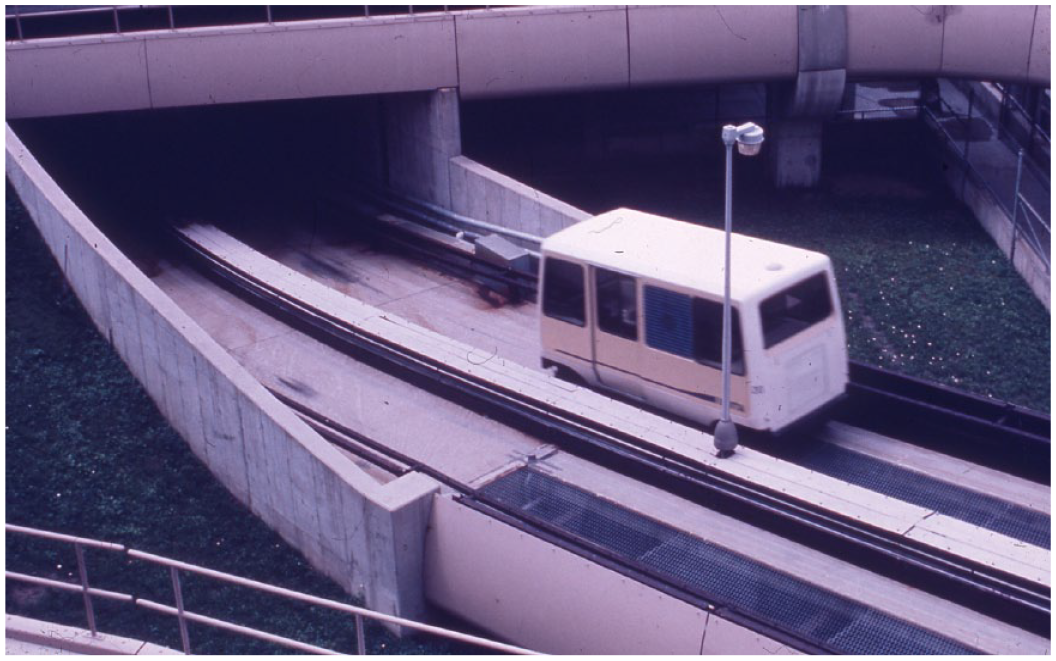
The WVUPRT bypasses a station by going under it, enabling it to provide direct nonstop service to any station on the line, from Samy Elias, Engineering Professor, Personal Rapid Transit Records, Collection Number: A&M.3359 West Virginia and Regional History Center, West Virginia University Libraries, https://archives.lib.wvu.edu/repositories/2/resources/1607, Newspaper clippings and slides, 1969-1973, undated, Box: 22, https://archives.lib.wvu.edu/repositories/2/archival_objects/154639.
The WVUPRT was dedicated on October 24, 1972 (Nagel, 1972a), reportedly because President Nixon wanted to point to an accomplishment in mass transit two weeks before the Presidential election (Connell, 1975; Lindsey, 1974; The escalating cost of a people mover, 1974). UMTA Associate Administrator for Research and Development Robert Hemmes would later say that the UMTA ‘built up an election-year hysteria trying to open by October, 1972’ (The escalating cost of a people mover, 1974). Nixon did not attend the dedication ceremony, but he sent his daughter, Patricia (Nagel, 1972a) (Figure 4).
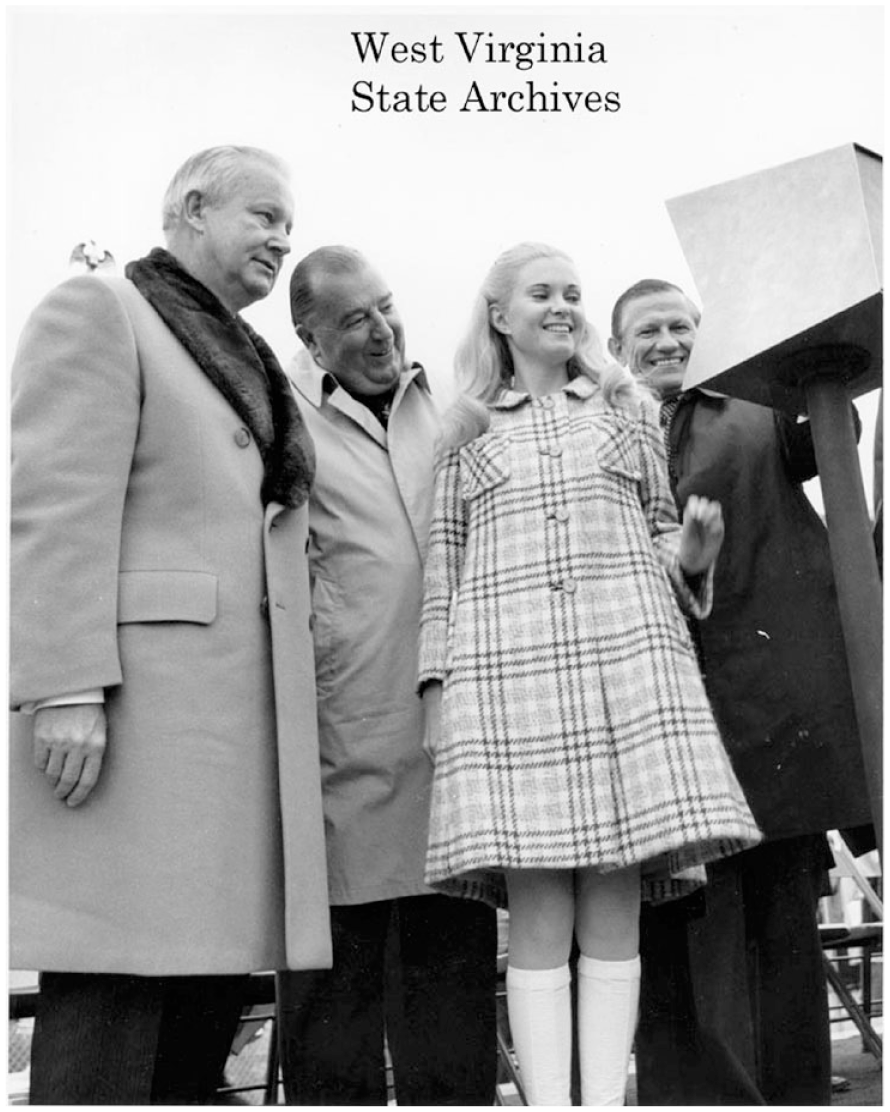
From left, Harley Staggers, James Harlow, Tricia Nixon, and John Volpe launch the WVUPRT, from West Virginia State Archives.
She was confronted by students protesting against the Vietnam War, whose signs insisted on ‘Mass transit not mass murder’ (Blosser, 1972; Nagel, 1972a, 1972b) (Figure 5). When the WVUPRT embarked on its first run, at least one car broke down (The escalating cost of a people mover, 1974).
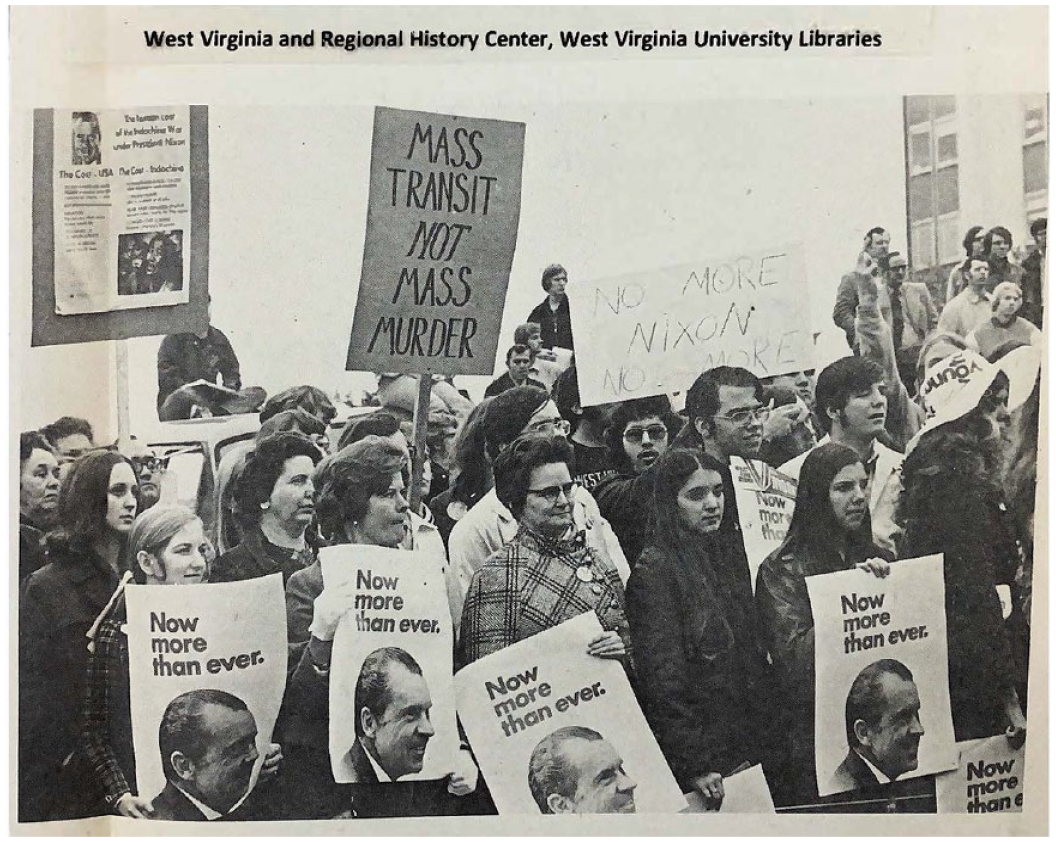
Nixon supporters and anti-war protesters at the launch of the WVUPRT (Nagel, 1972b), from West Virginia University, Newspaper Clipping Subject Files, Collection Number: A&M 0893, West Virginia and Regional History Center, West Virginia University Libraries. https://archives.lib.wvu.edu/repositories/2/resources/3679.
After 1972, the WVUPRT experienced a series of ups and downs. Costs soared. By 1974, the New York Times was calling the PRT a ‘costly and embarrassing white elephant’ (Lindsey, 1974), and Congressman Silvio Conte (Republican of Massachusetts) was calling it ‘the biggest boondoggle that was ever perpetrated on the American taxpayer’ (Robertson, 2016). UMTA and WVU began to feud over the project. UMTA, which perceived the WVUPRT as a demonstration project, was alarmed by the rising costs, and it proposed cutting the original six-station project to three stations. WVU, which perceived the WVUPRT as working transportation system, argued that the three-station system was not a usable transit system at all and insisted on the original six-station plan (The Escalating Cost of a People Mover, 1974). WVU had some leverage because a clause in the original contract gave the Board of Regents the right to demand removal of the system, which would impose significant demolition costs on UMTA while simultaneously depriving it of its demonstration project. 18 UMTA tried to turn the system over to WVU, but WVU refused to accept the shorter version of the system. Hemmes, a champion of the WVUPRT who would later become a critic of it, was forced to resign (Lindsey, 1974; The escalating cost of a people mover, 1974). Seemingly playing a dangerous game of chicken, both WVU and UMTA said they would prefer dynamiting the whole project to giving up their demands (Lindsey, 1974).
The parties eventually agreed on a five-station system, which reached the Evansdale campus, near where Mared and Karen had lived, and the Medical Center. The planned sixth station at the Coliseum, the football stadium, has never been built. At $62 million, the WVUPRT was tens of millions of dollars over budget when it commenced operation on October 3, 1975 (Blosser, 1975; Robertson, 2016). Securing the safety of female students continued to be an express wish of the system’s users. ‘I wish it ran at night for the girls’ a 20-year-old male rider commented on opening day (Blosser, 1975).
Like any large public works project, perhaps, when all the obstacles are retrospectively taken into account, it seems miraculous that the WVUPRT was built at all. The WVUPRT beat the odds that Aramis couldn’t. As noted above, most commentators have attributed this miracle to politics, but we have put forward evidence for also assigning a role to the ‘public narrative’ that arose around the murders of Mared and Karen. 19 This public narrative suggested that the lack of adequate transportation put students—especially female students—at risk. It posited a national wave of hitchhiking-related crime, of which the murders of Mared and Karen was just one example. Remarkably, this narrative did not focus on the supposed ensconced safety of the private automobile as the ‘solution’ to the problem. Indeed, according to this narrative, the private automobile was part of the problem. Instead, the administration of President Nixon, who notoriously pioneered the exploitation of fear of crime as an election strategy (López, 2014), promoted public transit as an important component of the solution to the supposed crime problem and invested federal dollars in developing public transportation infrastructure.
But the story was not over. In the remainder of this article, we explore the aftermath of WVUPRT’s construction and we show that the public narrative that contributed to its construction was not stable, even if the transportation infrastructure it helped beget remained so.
Confession
While WVU struggled to realize its PRT, various law enforcement agencies continued to investigate the dual homicide of Mared and Karen. The lack of progress in investigating the murders was not due to lack of suspects. During 1970, the police investigated between 40 and 100 people. There were many ‘very strange, very violent, very nasty people out there running around’: men in and around Morgantown whose backgrounds, motives, and past encounters with hitchhiking students made them prime suspects (Fuller & McLaughlin, 2021, p. 96; Perkinson & McLaughlin, 2017, Episode 4). In the end, though, ‘[t]hey pretty much cleared all of them’, said Dan Ringer, a Morgantown defense attorney (Perkinson & McLaughlin, 2017, Episode 4). He noted—with no apparent irony—that the investigation ‘had come to a dead end’. That is, until his client, Eugene Clawson, ‘essentially stood up and said “Hey, look at me”’ (Perkinson & McLaughlin, 2017, Episode 5).
Clawson had been incarcerated in Camden, New Jersey, where he was awaiting sentencing for an unrelated crime. Charges against him included armed abduction, private lewdness, assault with intent to commit sodomy, debauching the morals of a minor, and carnal abuse (Kelly, 1976). In January 1976, while in jail, Clawson allegedly confessed the murders of Mared and Karen to two other men held in the Camden County Jail, then confessed to Camden County officials, and then again to Richard Hall, a West Virginia State Police trooper, and a Morgantown police officer, who had travelled to New Jersey to interview him (Kelly, 1976; State v. Clawson, 1980, p. 663). The confession detailed violent and perverse sexual acts (Perkinson & McLaughlin, 2017, Episode 5). In both formal and informal settings, Clawson would later repeat details of the crime, stringing together a series of confessions to the murders in addition to signing a written confession.
Clawson’s confession drew strength from the existing public narrative about the ‘coed murders’. While the Morgantown community had gone six years without knowing who killed Mared and Karen, it held strong assumptions about how they were made vulnerable to murder: by hitchhiking. This was not believed to be a surprising or unusual circumstance for murder. On the contrary, as described above, the national discourse held that it happened all the time. Clawson didn’t have to explain much to make his confession persuasive; he simply placed himself in the ‘light colored sedan’ that had previously been occupied by a nebulous phantom driver. It was easy to believe Clawson killed Mared and Karen because the public already believed they knew how the women had been killed. The strength of the public narrative around hitchhiking made Clawson’s confession seem plausible despite the lack of other evidence against him and despite significant reasons to doubt his opportunity to commit the crime.
Trials
After confessing his crime in New Jersey, Clawson was taken to Morgantown, and police followed his directions to an abandoned mine site where he said he had hidden the victims’ heads. The heads were never found, but animal nests found in the general area contained what a State Police witness in the trial said were bits of human hair. Clawson’s defense attorney contended the hairs were from a local beautician, who used a garbage site near the site to dispose of hair cuttings from her shop (Perkinson & McLaughlin, 2017, Episode 6). 20
By the time of the trial (Figure 6), Clawson had recanted his confession. He explained that he had obtained his knowledge about the ‘coed murders’ from articles that appeared in pulp true crime magazines (Fuller & McLaughlin, 2021, p. 218; Marr, 2015; Paulson, 1973; Trent, 1975) (Figure 7). Clawson claimed that he concocted the confession in the hope of being extradited back to West Virginia (as he indeed was) because the charges were more serious than those he faced in New Jersey. Mistakenly believing that New Jersey would have to drop its charges against him in order to extradite him to West Virginia to face murder charges, he thought the murder charges would quickly fall apart, and he would be set free (State v. Clawson, 1980, p. 673).
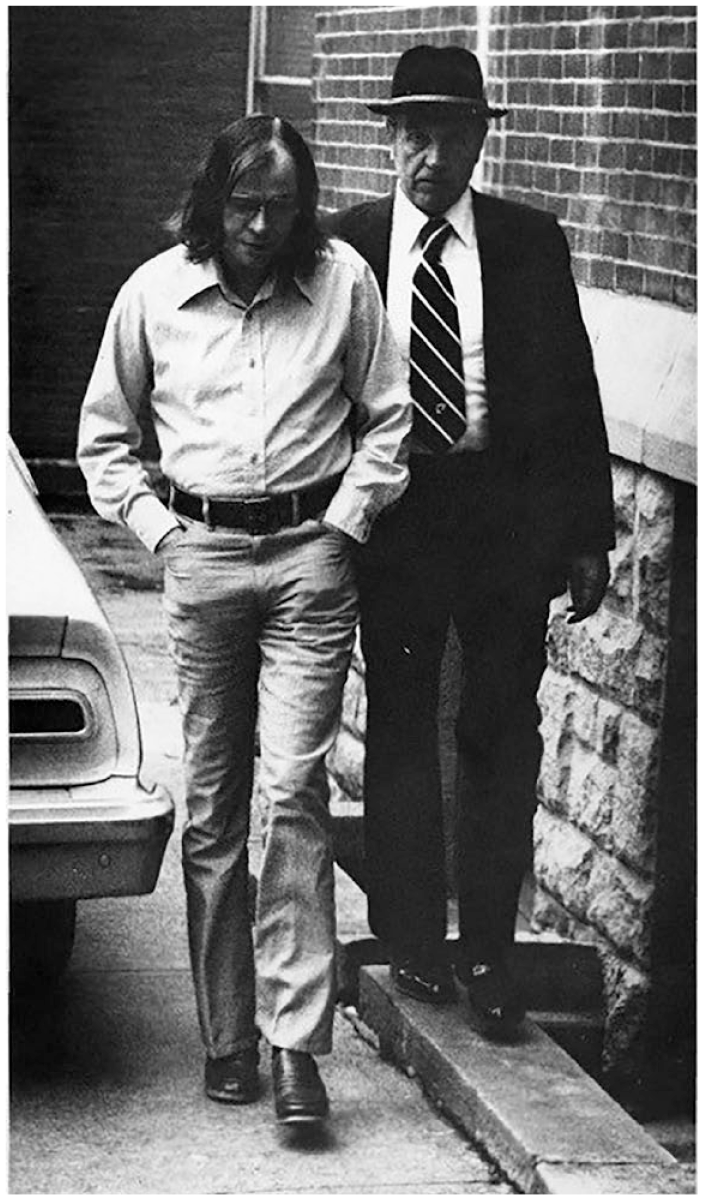
Eugene Clawson (left) at the time of his trial. On the right is a Sherriff named Chris Whiston (Perkinson & McLaughlin, 2017).
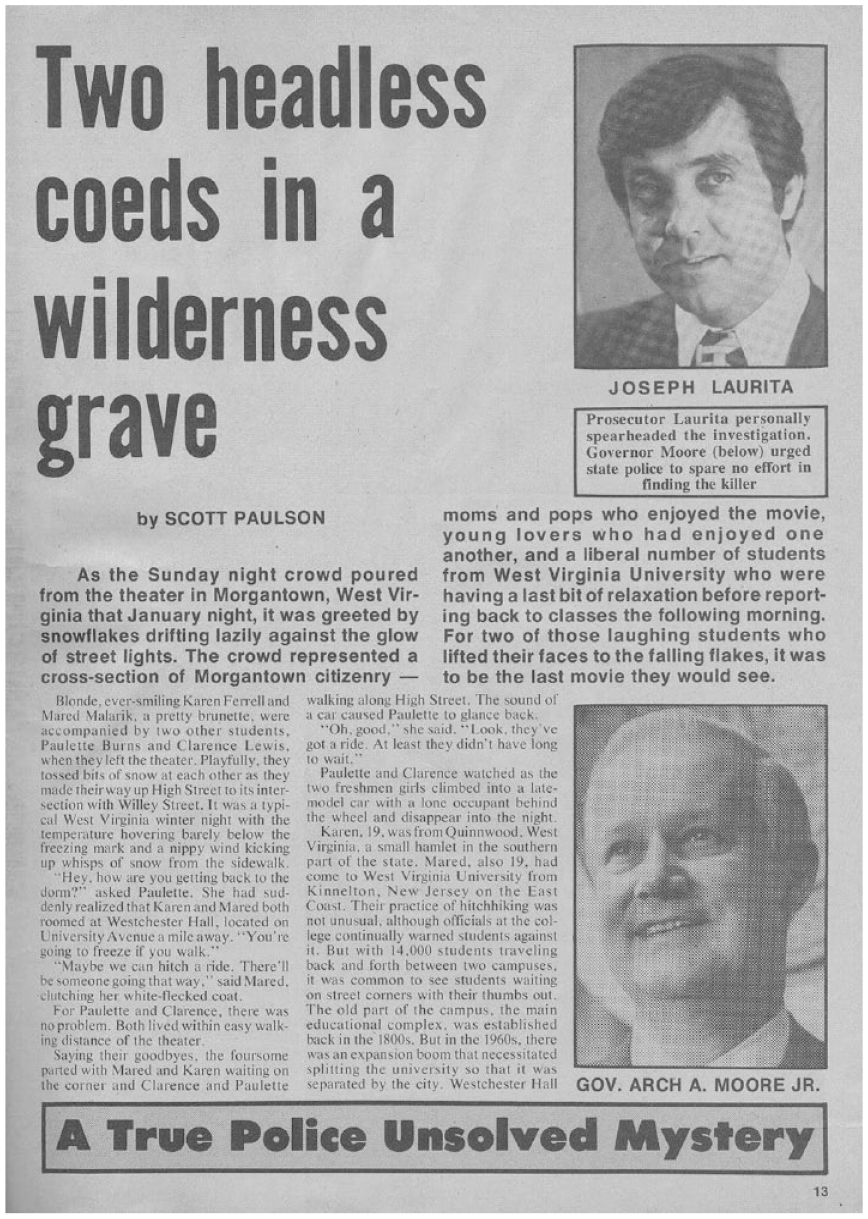
One of the magazine articles that Clawson later claimed informed his confession (Paulson, 1973).
He was wrong. After eight days of trial and six hours of deliberation, the verdict in the murder trial came on November 5, 1976: Guilty as charged (Man Guilty in Slaying of Two Coeds, 1976). Clawson’s attorneys appealed the verdict, asserting that the trial had been riddled with multiple errors and that Clawson was innocent. They asserted that the primary reason to disbelieve Clawson’s guilt was that his confessions were false (State v. Clawson, 1980, p. 673). In the 1970s, the idea that someone might falsely confess to murder tested the limits of credulity, but today false confessions are a well-documented, if still hotly debated, contributor to wrongful convictions (e.g., Kassin, 2022; Leo, 2008). Researchers who study false confessions try to develop heuristics to distinguish false from true confessions by focusing on the details of crimes that were volunteered by the suspect spontaneously, rather than suggested to them by, for example, their police interrogators. Did the suspect volunteer true details that they should not have known were they not the true perpetrator? Or did the suspect initially volunteer false details that were then corrected by the police? If so, what was the source of these false details?
In Clawson’s case, he volunteered several demonstrably false or dubious details. For example, Clawson confessed to sexually assaulting Mared and Karen; but the coroner uncovered no evidence of sexual assault when examining the bodies. Clawson also talked in his confession about conversations he had with his brother at the time of the crime; yet it turned out his brother had been stationed in Guantanamo Bay, Cuba at that time. Moreover, Clawson’s employment records show that he was working in New Jersey in the days prior to the murder. Although he conceivably could have been at work when the records show he was and still have made the six-and-a-half-hour trip by the most direct route to Morgantown to arrive by the time of the murders, he would have been hard pressed to do so in the manner described in his confession: driving to Point Marion, Pennsylvania, hitchhiking to Pittsburgh, stealing a car there, and then driving back to Morgantown. To pick up Mared and Karen at the time they were seen getting a lift, Clawson would have had only 8 hours 40 minutes to make a trip on a route that would have taken 8 hours under ideal circumstances (Fuller & McLaughlin, 2021, pp. 214–215). No car had been reported stolen in Pittsburgh on the day Clawson claimed to have stolen it. And, moreover, Clawson was written up at work on January 18 for being late to work, apparently because he had taken the train, making the theory that he drove from work even less plausible.
Clawson’s confession had other holes as well (Fuller & McLaughlin, 2021, pp. 190, 211). Clawson said he took a watch from the victims, but neither was missing a watch (Fuller & McLaughlin, 2021, p. 194). When asked how the bodies were placed in the ground, Clawson stated in his confession that they were side-by-side and face up. The bodies actually were found crisscrossed and belly down (Fuller & McLaughlin, 2021, p. 210).
There was a plausible source for many of these false details: the magazine articles. Clawson made a number of false statements about the murders that, though apparently false, had appeared in the magazine stories. Moreover, Clawson failed to correct even one error in the magazine articles. As George Castelle (2017; see also Fuller & McLaughlin, 2021, pp. 218–221), a law clerk for Justice Thomas Miller of the West Virginia Supreme Court of Appeals, who was assigned to draft the opinion for the Court on Clawson’s appeal and who later became the Chief Public Defender for Kanawha County, West Virginia, put it: I have little doubt that Clawson’s retraction was correct, because … almost every error in the magazine article was repeated in his confession. And, Clawson made only two statements about the murders that were accurate and were not in the magazine article: First, Clawson said ‘not where I picked them up wasn’t no movie’. That was accurate: Mared and Karen were picked up a block and half from the movie theater. Second, he said he took a class ring from Karen, and Karen’s class ring, which she wore on a necklace, was indeed missing.
The Court reversed Clawson’s conviction on September 23, 1980, but not because of the allegedly false confessions (State v. Clawson, 1980). Castelle (2017) notes that the Court was under attack at the time for liberal bias and being ‘pro-crime’. He believes those perceptions dissuaded the court from reversing Clawson’s conviction due to the false confession, a result that would have meant there was insufficient evidence to convict Clawson and would have precluded trying Clawson again. Instead, the Court found a different ground to reverse the conviction, one that would allow the State to retry Clawson if it wished: It held that the trial court should not have admitted gruesome photographs of the victims’ bodies. 21
The second trial took place in 1981, and Clawson was again found guilty of the murders. This time, when he appealed to the Supreme Court of Appeals, the Court simply declined to hear his appeal. Further appeals failed, and Clawson died in 2009 while still serving a life sentence. Clawson maintained his innocence until the very end (Perkinson & McLaughlin, 2017, Episode 6).
A wrongful conviction?
Although no one disputes Clawson’s guilt for the other crimes for which he was convicted, many people believe that Clawson was wrongly convicted of the ‘coed murders’. A podcast traces the story of the murders through Clawson’s conviction and suggests that the conviction may have been wrongful and the murders likely will remain unsolved (Perkinson & McLaughlin, 2017). Reflecting on the case, Castelle (2017) wrote: ‘Over the years, the Clawson case continued to trouble me as an obvious example of a wrongful conviction and a grave injustice to Clawson, in addition to allowing a dangerous double murderer (or murderers) to remain free.’ He later added: ‘My memory is that everybody who reviewed the objective evidence either unanimously or almost unanimously believed that Clawson was almost certainly innocent’ (Fuller & McLaughlin, 2021, p. 224).
Hall, the West Virginia State Police trooper who took Clawson’s confession in 1976, said at Clawson’s retrial that he didn’t believe Clawson’s account of the murders. He continued to investigate the murders after his retirement, and by 2006, thought he had found another possible suspect, William Gerkin, a WVU student with psychiatric issues, who had had reportedly assaulted his girlfriend and had submitted a writing assignment describing decapitation. The county prosecutor, however, refused to reopen the case (Fuller & McLaughlin, 2021, pp. 275–287; Perkinson & McLaughlin, 2017, Episode 7). Karen’s mother, Bess Ferrell, also ‘never believed Clawson was guilty and very much wanted to see whoever killed her daughter brought to justice’ (Fuller & McLaughlin, 2021, p. 249).
Fuller and McLaughlin also believe Clawson was wrongfully convicted. Fuller believes the real killer has been found: a deceased convicted serial rapist, John Brennan Crutchley, nicknamed ‘The Vampire Rapist’. McLaughlin is not so sure; she suspects deceased convicted murderer William Bernard Hacker, Sr. However, both Fuller and McLaughlin agree that Clawson was not the murderer (Perkinson & McLaughlin, 2017, Episode 8).
Law’s artefacts
If Clawson was wrongly convicted, the error would, like any wrongful conviction, be responsible for a variety of harms: to Clawson and to the victims, the failure to bring the true perpetrator to justice, collateral effects on other people, the exposure of failings in the criminal legal system, and the potential delegitimizing of the legal system (Naughton, 2007, pp. 161–186). Although we are interested in all of these consequences, we are most interested in elucidating here the way in which wrongful convictions—through their sudden and unexpected reversals of shared understandings of individual cases—in turn reveal, and possibly upend, shared public narratives about crime (S. A. Cole, 2009; Edmond, 2002).
It is possible, of course, that the public narrative about the dangers of hitchhiking might remain intact with a new perpetrator taking Clawson’s place in the ‘light colored sedan’. For example, Fuller’s (Fuller & McLaughlin, 2021, pp. 296, 330–331) proposed alternate suspect, John Crutchley, who—unlike Clawson—had a history of selecting hitchhikers as victims, spoke, chillingly, of the utility of selecting such victims and ‘favored nondescript white cars—like the one the coeds were seen getting into’. If Crutchley, not Clawson, were the killer, that would strengthen the public narrative around hitchhiking.
However, it is also possible that the erosion of belief in Clawson’s guilt would also erode belief in the public narrative around hitchhiking and crime. There is little evidence that the driver was Mared and Karen’s murderer other than that they were last seen getting into a car. Was hitchhiking not involved at all? Did something happen at the dormitory? Was the murderer someone the victims knew?
Mared’s high school boyfriend, Larry Casazza, was briefly considered a suspect by the State Police because they were told that he was ‘very violent, and that may have worried Mared’ (Fuller & McLaughlin, 2021, p. 72). Mared’s dentist, Elias Costianes, was a suspect for period, although admittedly one reason he was suspect was because he was rumored to prowl Morgantown in his white Cadillac trying to pick up girls (Fuller & McLaughlin, 2021, pp. 239–242). Another suspect was Gerkin, who was a WVU student and was reported to have worked as a bouncer at the Castle Club, a music venue Mared and Karen had attended earlier in the week of their disappearance. Karen’s Castle Club membership card was found with her other personal effects (Fuller & McLaughlin, 2021, pp. 38, 221, 285). One of Gerkin’s fraternity brothers said Gerkin came into his room with two women in the middle of night around a week before the abduction trying to get him to come out and party and suggested the women might have been Mared and Karen (Fuller & McLaughlin, 2021, p. 277). Eddie Thrasher—whom Fuller considers, along with his uncle, Charlie Herron, the second likeliest suspect (Fuller & McLaughlin, 2021, p. 370)—had worked at Mared and Karen’s dormitory, Westchester Hall, as a custodian until only weeks before the murder and may have known them (Fuller & McLaughlin, 2021, p. 281). McLaughlin’s (Fuller & McLaughlin, 2021, pp. 264–268, 369) primary alternative suspect, William Hacker, had a record of decapitation murders but no history of picking up hitchhikers as a modus operandi.
As we grapple with these alternative theories, we also confront the apparent weaknesses of any causal theory linking the murders to the construction of the WVUPRT. In the ‘coed murder’ mystery, there can be no grand reveal, no final scene where all the facts are laid out and the inevitable conclusion explained. ‘We get truth only in novels’, as Norbert H., the protagonist of Latour’s (1996, p. 289) Aramis observes. ‘In real life, the reality sets anyone looking for it quaking all over.’ Yet it is in the very impossibility of landing on the ‘truth’ that we can locate the ‘middle road’ where stories are made to ‘do things’ (Joerges, 1999a, p. 424). To be sure, stories can explain; but that is not all that they do, or even what they do reliably. Rather than just transmitting propositional content, these ‘parable[s]’, as Joerges (1999a) would refer to them—or ‘urban legends’, as others (Brunvand, 1981; Woolgar & Cooper, 1999) might call them—imbue built form with social meaning. As a result, the WVUPRT is widely understood to be not only a ‘people mover’ but also a ‘lifesaver’ for erstwhile hitchhikers.
In uncovering this enduring authorization for the WVUPRT, we focus on the crime-inflected origin story not for its explanatory potential but for its performative power. Like the story of Moses’s bridges, the linkages between the ‘coed murders’ and hitchhiking have taken hold as a way to justify the necessity of the WVUPRT and effectively transform it into a tangible solution to crime. Even more, as we’ve shown in our deployment of the narrative here, it has come to justify the necessity of Clawson’s conviction. Whether ‘true’ or ‘false’, the public narrative about the dangers of hitchhiking has imbued the transportation system with purpose, transforming it, at least in Morgantown itself, from a technological innovation into an exemplar of the ways in which crime shapes technological choice. Whether his guilt was ‘true’ or ‘false’, Clawson’s conviction shored up the public narrative about the dangers of hitchhiking and strengthened the supposed links between fear of crime and technological innovation. In short, by invoking the public narrative about hitchhiking, the connection between crime and hitchhiking was made still more plausible by the fact of Clawson’s conviction, and the authorization for the WVUPRT—nothing less than saving lives—was made more plausible, too.
Even if belief in Clawson’s guilt were to crumble—and the public narrative around hitchhiking to fall with it—one thing that would not necessarily disappear is the WVUPRT. Ultimately, technology, like convictions, may be produced ‘wrongfully’, but over time, the ‘wrongs’ are forgotten, and the train, the bridge, the crime, and the guilt all come to be accepted as ‘true’, as incontrovertible as they are indestructible.
Footnotes
Acknowledgements
For help, big and small, with our research on this project, we are grateful to Cindy Anderson, Valena Beety, Catherine Burke, George Castelle, Hope DeLap, Jessica Eichlin, Geoffrey Fuller, Valerie Lopez, S. James McLaughlin, Italia Patti, Kendall Perkinson, Mark Podvia, and Susan Scouras. This project could not have been completed without the archives of the West Virginia and Regional History Center at West Virginia University Libraries.
Declaration of conflicting interests
The author(s) declared no potential conflicts of interest with respect to the research, authorship, and/or publication of this article.
Funding
The author(s) received no financial support for the research, authorship, and/or publication of this article.
