




Abstract
Technology advancements have led to changes in traditional, face-to-face work models by enabling organizations to conduct business virtually. The new virtual models of work generate two main concerns for organizations. First, such models may not allow knowledge to flow smoothly within organizations as it travels through geographical boundaries. Second, organizations may not be able to store their lived experiences, or memories, to support future organizational decisions. To address these concerns, this paper develops a framework for selecting the optimal media choice to be used by organizations to promote organizational learning, particularly organizational memory, in virtual work settings. The framework discusses different media capacities, and the ability to achieve synchronicity, retainability, and reach. It is further proposed two dyads that are likely to influence organizational memory the most. This paper also concludes with implications, limitations, and future research directions.
Introduction
The digital revolution or the “development of digital information processing and storage technologies” (Baum and Haveman, 2020: 271) is here to stay. Such revolution has not only impacted organizational strategies, but it has also altered business models, structures, and processes (Baum and Haveman, 2020). Such advancement in technology affects how tasks can be performed, how employees can interact with each other, and how processes can be developed (Baroudi and Lucas Jr, 1994; Whisler and Leavitt, 1958). In particular, these technologies have also enabled organizations to conduct their business in virtual work settings (Baum and Haveman, 2020). For example, rather than having a physical location for a restaurant, the digital revolution has led to the emergence of cloud kitchens, where restaurants serve customers remotely. By using a variety of information technologies, employees, groups, and departments may be scattered geographically but are still required to work closely together as if they were in one location (Baroudi and Lucas, 1994). In fact, the connectivity among individuals and entities that are working virtually is especially critical to today’s knowledge-based economy (Quinn et al., 1996). Furthermore, the COVID-19 pandemic forced organizations to use virtual collaboration tools and expedited the implementation of virtual settings. Under these conditions, technology allowed many organizations to survive by restructuring their business models from a face-to-face setting to a virtual one.
Virtual work settings consist of “geographically dispersed individuals who communicate and collaborate via electronic media to accomplish tasks” (Hasty et al., 2006: 367). In a broader sense, employees who are geographically, organizationally, and/or time dispersed use information technology (IT) and telecommunication tools to accomplish organizational goals (Powell et al., 2004; Townsend et al., 1998). Employees then perform daily tasks and use different media according to contextual requirements (Symons and Stenzel, 2007). Among the different media available for employees are e-mails, video conferences, chats, instant messages, and social media. In virtual work settings, organizations rely heavily on technology to operate and connect people because they are “working together apart” (Ratcheva, 2008: 53) and they have limited face-to-face interaction.
However, in such virtual work settings, the way organizations learn becomes a challenge (Brown et al., 2010). For one, these settings may represent a constraint on knowledge management as the flow of knowledge to the right actor(s) at the right time is not as effective as in traditional, face-to-face models (Chen et al., 2021). The acquisition, transfer, storage, and use of knowledge in such settings is curtailed as it travels through geographical, organizational, and/or time boundaries. Knowledge may be lost, misunderstood or not shared as it crosses those boundaries. Moreover, organizational memory (OM), or the accumulated knowledge stored over time that can be accessed whenever necessary, may not be easily developed. This is problematic as OM is imperative to organizational learning (Huber, 1991; Kameo, 2017; Moorman and Miner, 1997), preserves the organizational knowledge-based, supports the current decision-making process (Berthon et al., 2001; Cross and Baird, 2000), and establishes the foundation for the exploration of new knowledge (Argote et al., 2021). Building OM when employees are apart from each other (i.e., not physically in the same location) may be challenging as OM relies on social interaction (Rowlinson et al., 2010) and communication depends on the digital media used (Hasty et al., 2006). Even though previous research has emphasized the relevance of knowledge creation and transfer in virtual work settings (e.g., Hong and Vai, 2008; Paul, 2006; Ratcheva, 2008; Vaccaro et al., 2009; Wang and Haggerty, 2009), the extent to which knowledge is stored and remembered in form of OM has received scant attention. Because the knowledge stored within organization boundaries dictates organizations’ learning trajectory (Bower and Hilgard, 1981), understanding how organizations promote the development of OM in virtual work settings needs to be investigated.
To fulfill the existing gap and mitigate any existing challenges, this paper attempts to answer the following research questions: How do organizations promote OM development when adopting virtual work settings? What are the communication media attributes that contribute the most to OM development considering different types of knowledge? To answer these questions, this study offers a novel research framework based on the dimensions of digital media used by the workforce in virtual settings. The framework emphasizes that the effectiveness of digital media in creating, retaining, and retrieving knowledge from OM in virtual work settings depends on the digital media’s attributes. It also considers the moderating role of the type of knowledge (i.e., explicit, tacit, succinct, or extensive) when choosing the media that promotes OM the most.
This paper contributes to the organizational studies literature by emphasizing the role of media choice in enhancing OM in virtual work settings. Specifically, the use of the Media Richness Theory is extended to explain the relationship between media and OM. The framework incorporates the latest communication media available to connect distributed workers and discusses the effectiveness of the different media options in light of four dimensions. The proposed framework also contributes to the OM literature by allowing organizations to identify the optimal media choice to be used to promote OM while considering the type of knowledge needed. The framework values both rational and social aspects and aims to identify which media can enhance the collection, storage, and retrieval of knowledge from OM to support the organizational decision-making processes when the actors are distributed geographically.
Theoretical background
Organizational memory
Organizational memory (OM) refers to the stored knowledge generated by the organization over time, which can be retrieved whenever necessary to support the decision-making process and drive behaviors (Walsh and Ungson, 1991). OM is one of the four organizational learning dimensions, together with knowledge acquisition, information distribution, and information interpretation (Huber, 1991). Knowledge acquisition refers to how knowledge is obtained, while information distribution captures how it is shared and spread across the organization. The interpretation dimension refers to how the workforce perceives and understands knowledge (Huber, 1991). OM then refers to the collective knowledge retained over the years and retrieved as needed on current situations (Rowlinson et al., 2010). OM can be a valuable and unique resource that can create a competitive advantage for organizations (Kameo, 2017). OM is also fundamental to the learning process as organizations can use their existing OM to make sense of their current conditions by either interpretating new experiences or acquiring new knowledge (Bower and Hilgard, 1981). In other words, learning performance increases when there is a link between the present (i.e., the object of learning) and past (i.e., whatever is stored in OM) (Bower and Hilgard, 1981).
OM represents the capability to retain and disseminate valuable knowledge from past to future actors within the organization (Stein, 1995). The outcomes of OM depend on the organizational context (Stein, 1995). The literature shows that OM may have positive consequences for organizations (i.e., organizational learning, organizational culture, organizational identity, autonomy, and creativity) as well as negative ones (i.e., inertia, blindness, and loss of competences) (Cross and Baird, 2000; Foroughi, 2020; Jain, 2013; Moorman and Miner, 1997; Ravasi et al., 2019; Walsh and Ungson, 1991; Yu and Glynn, 2015). In general, positive OM outcomes are likely associated with more stable environments than turbulent ones (Hanvanich et al., 2006).
Knowledge represents the content of OM, and it is often used interchangeably with experience. However, knowledge is a complex construct. While it has many dimensions, knowledge can be broadly classified as being explicit or tacit (Nonaka, 1994; Smith, 2001). Explicit knowledge (i.e., know-what) can be extracted from written documents such as memos, reports, and policies, while tacit knowledge (i.e., know-how) is based on practices and experiences and is contained in the minds of people throughout the organization (Casillas et al., 2015; Teece, 1981). While explicit knowledge is codified and easily communicated, tacit knowledge is embedded in the experiences of organizational members and can only be shared through its practical application (Nonaka, 1994). Knowledge can also vary in terms of the expanse it covers to be fully digested. That is, a specific piece of knowledge may require the individual to learn a greater volume of knowledge sub-units (e.g., learning several steps to fully understand how to run a statistical method such as running a Heckman model or 2SLS) or a lower volume (e.g., learning a single step to fully understand a statistical method such as running a correlation). Thus, knowledge can be either succinct or extensive. Knowledge is succinct when it is condensed and concise but also comprehensive and clear at the same time. Succinct knowledge involves key concepts and core ideas in brief (e.g., an executive summary). Knowledge is extensive when it is vast and broad, and contains many nuances (e.g., interorganizational agreement or contracts) (Davenport and Prusak, 1998). While knowledge tacitness taps into the difficulty in conveying knowledge, knowledge volume taps into the difficulty in digesting knowledge.
Furthermore, the knowledge stored in every organizational member’s mind (i.e., the individual memory) is the primary source of OM (Simon, 1991). Yet, OM goes beyond the memories of organizational members as it deals with members’ interactions that lead to shared knowledge. OM requires social interactions (Cross and Baird, 2000) as it is socially constructed (Simon, 1991). Such knowledge, which results from social interactions, creates collective memories in the form of beliefs, norms, procedures, processes, values, behaviors, and structures (Moorman and Miner, 1997). Organizational knowledge and experiences are shared and stored as memories in organizational structures and are accessed every time they fit a current situation. OM feeds the decision-makers with knowledge gained throughout the years, improves their understanding of current situations, and provides additional alternatives (Walsh and Ungson, 1991).
To fulfill its informative role, OM depends on three processes: acquisition, retention, and retrieval of knowledge. Memories are stored in different retention structures—individual, culture, transformation, structure, and ecology bins (Walsh and Ungson, 1991). For instance, during the mentoring of a new employee, a senior employee can transfer their knowledge by practicing specific tasks (tacit knowledge), providing established norms and procedures (explicit knowledge), and/or presenting organizational rituals. In this context, knowledge is retrieved from different OM bins and passed along to others. Knowledge transfer then reinforces the OM retention and retrieval processes. Similarly, during the design of a new product, team members engage in various activities (e.g., brainstorming and prototyping) where they share experiences, review previous patents, adhere to industry standards, and assess current market needs. In this scenario, by sharing their collective knowledge, they reinterpret past knowledge through a present perspective. Knowledge sharing not only reinforces the retrieval and retention processes but also generates new knowledge. The two situations described above occur frequently in organizations and are facilitated when employees have face-to-face interactions.
More importantly, “in today’s knowledge-based economy, managers can improve performance by deliberately developing OM and using the growing stores of knowledge to guide organizational activities and decision making” (Cross and Baird, 2000: 70). OM becomes critical as it brings past lessons to present situations (Martin De Holan and Phillips, 2004; Olivera, 2000; Stein, 1995; Walsh and Ungson, 1991). In settings where employees are gathered on the same site, communication is straightforward because employees can express the message freely and can effortlessly access multiple OM bins (e.g., other employees). However, in virtual work settings, interactions do not happen so easily. Employees tend to rely on the availability and the features of communication media to share and obtain knowledge from the many OM bins. When working virtually, the lack of interaction hinders OM development as it increases the difficulty level of retrieving knowledge stored from the different bins. Specifically, in virtual work settings, OM may be a challenge as communication media can dictate the type and volume of knowledge that can be exchanged, thus posing constraints. Therefore, it is important to select the optimal communication medium to promote OM which should also match the type and volume of knowledge required to handle current situations, whether the knowledge is explicit or tacit, or succinct or extensive.
Technology and OM
Technology is important in the context of OM in virtual work settings because OM can only be valuable if it is accessible, retentive, and retrievable (Croasdell, 2001). In virtual work settings, the use of technology can bring people together enabling knowledge transfer which in turn can promote learning. For instance, the use of video conference is widely adopted by companies today. The concern regarding the replication of face-to-face meetings is so significant that, in 2025, Google and HP are launching a 3-D video communications platform to increase the “sense that people are together in the same space” even when working apart (The Wall Street Journal, 2025a). In sum, information technologies can facilitate how knowledge is communicated, stored, and transferred (Baroudi and Lucas Jr, 1994; Stein and Zwass, 1995) as appropriate technological tools enable knowledge seekers to access stored information as needed (Croasdell, 2001).
Information technologies are fundamental to OM as they can also store large amounts of information, provide the means to connect people who are apart, provide access to knowledge, and automate processes to acquire knowledge (Olivera, 2000). Extending the concept of the storage bins developed by Walsh and Ungson (1991), Olivera (2000) introduced the concept of OM information systems (OMIS), redefining OM as “being formed by dispersed knowledge (e.g., held by people and documents) and the integrating mechanisms that make it accessible” (Olivera 2000: 813). He argues that OMIS allows the transfer and storage of explicit knowledge for future use. The development of tacit knowledge has also been explored in virtual work settings. Specifically, Vaccaro et al. (2009) found that groups that are geographically dispersed tend to utilize virtual technologies to interact with members of their groups to obtain specific know-how knowledge and also generate new knowledge. These interactions were achieved through synchronous engagement in work sessions.
Moreover, under the knowledge management perspective, Paul (2006) explored how knowledge is discovered, obtained, and shared in virtual work settings in the context of telemedicine projects. They found that the type of communication media (i.e., video conferencing and multimedia) used to integrate all parties significantly impacts their ability to create knowledge and/or look for knowledge. However, knowledge transfer does not require the use of such rich media. In addition to the communication media and information technology chosen, Hong and Vai (2008) found that social and organizational arrangements also impact the extent to which organizations share knowledge in virtual work settings. Moreover, they argued that there are four mechanisms that enable knowledge to be shared in virtual work settings. These mechanisms are (1) shared understanding, (2) learning climate, (3) coaching, and (4) job rotation. The first two mechanisms relate to the individual’s intent to share knowledge, which is influenced by the organizational culture (a topic that will be discussed in the next section). Regarding the other two mechanisms, coaching refers to management’s ability to lead virtual teams to interact, share knowledge, and learn from each other, while job rotation reflects the arrangement in which the old and new organizational members can interact with each other. Each one of these four mechanisms contributes uniquely to the dynamics of knowledge sharing in such non-traditional settings (Hong and Vai, 2008).
To summarize, for OM, the technological revolution provides firms with more options when it comes to how knowledge is stored, where it is stored, and how it can be retrieved. This highlights that organizations need to consider available technological tools (i.e., communication media choice) that can promote OM the most.
Communication media
The richness of communication media impacts the flow of knowledge in and out of the organization (Gupta and Govindarajan, 2000). According to the Media Richness Theory, communication media differ in their ability to allow users to interact, share, and interpret information (Lengel and Daft, 1988). The theory classifies media based on the degree of richness which reflects the media’s “ability to handle multiple information cues simultaneously, ability to facilitate rapid feedback, and ability to establish a personal focus” (Lengel and Daft, 1988: 226). This classification also considers verbal and non-verbal cues. The Media Richness Theory also states that the richer the media is, the better the message is exchanged (Lengel and Daft, 1988). Face-to-face is classified as the richest media, with written or not interactive forms of media (i.e., poster or printed material) being least. Compared to the other four different digital media (i.e., email, chat, teleconference, and video conference), face-to-face is the most effective type of communication when it comes to decision-making (Baltes et al., 2002).
Baltes et al. (2002) identified the degree of synchronization and the degree to which communication is established beyond words as the two major dimensions of digital media. They argue that video conference is the digital media that enables the greatest level of interaction among employees. Also, email is considered an important media due to its extensive use to distribute and interpret information (Baltes et al., 2002). The increasing use of email at work was also investigated by Byron (2008) who reported that emails have the ability to communicate emotions. Importantly, receivers often interpret email messages as more neutral and negative than intended by the senders. Regardless of email’s importance to the corporate world, email has a low degree of richness when compared to video conference because it lacks cues and does not offer immediate feedback (Byron, 2008). In conjunction with email, Olivera (2000) identifies phone calls as an essential means of communication for organizations. Additionally, based on rational and social perspectives, Webster and Trevino (1995) argued that the Media Richness Theory is grounded in the content of the message. However, other factors such as situational traits (geographical distance and capacity to reach many people) (Trevino et al., 1987), social aspects (norms, attitudes, and behaviors) (Fuik et al., 1990), and symbolic cues (e.g., formality and legitimacy) (Trevino et al., 1990) should also be considered for media choice, as they complement each other.
Ideally, the best media choice would be the one that facilitates the transfer of explicit and tacit knowledge, and succinct and extensive knowledge simultaneously. However, each media type has distinct features that favor different types and volumes of knowledge. For instance, collaborative tools (e.g., instant messaging, knowledge management systems, and video conferencing) favor the exchange of tacit knowledge as they allow real-time feedback, informal dialogue, sharing of insights, and non-verbal messages such as emojis (Baltes et al., 2002; Byron, 2008; Nonaka, 1994). On the other hand, non-collaborative media tools such as email, reports, intranet, and knowledge repositories are more appropriate to transfer explicit knowledge as this type of knowledge is formal and structured (Olivera, 2000). Similarly, while text messaging may be more conducive to transfer succinct knowledge, recorded video may be more advantageous to transfer extensive knowledge.
With this in mind, given the importance of communication media in today’s virtual work settings, the mechanisms that value and support OM require further nuance to truly disentangle the effects of geographical and time dispersion in organizations.
Model development
The Media Richness Theory (Lengel and Daft, 1988), the rational and social perspectives (Webster and Trevino, 1995), and the OM literature offer great insights on how to identify the media choice that optimizes OM in virtual work settings. By drawing on these theoretical perspectives, this study identifies four media dimensions that should drive communication choice to enhance OM in virtual working settings. The four media dimensions are: (1) synchronicity, (2) capacity, (3) reach, and (4) retainability. Each media choice is characterized by distinct levels of each of the four dimensions. With the purpose of finding which media attributes contribute the most to OM development, two dyads are proposed. In the first dyad, media synchronicity and capacity are combined. In particular, together both dimensions emphasize the link between past and present in which past knowledge is used in present situations, enacting all OM processes. The second dyad combines media reach and retainability as they facilitate the retention of knowledge for future use and the collective aspect of OM.
Media synchronicity
Media can vary in their ability to allow real-time feedback. The Media Richness Theory (Lengel and Daft, 1988) argues that real-time feedback is one of the important factors in increasing communication richness. Similar to Baltes et al. (2002), this study defines media synchronicity, the first dimension, as the medium’s ability to allow people to react in real-time. The degree to which organizational members interact instantaneously enriches their sense-making ability (Weick, 1995), which is essential to OM. Weick (1995) described sense-making as the process of placing stimuli into frameworks to comprehend them, construct meanings of them, and produce mutual understanding and patterns of experiences to manage surprises. Active conversation about current tasks is expected to trigger memories and promote the collective reconstruction of the past under a new situation (Foroughi and Al-Amoudi, 2020) which is a “dynamic, socially constructed phenomenon” (Nissley and Casey, 2002: 37). When making decisions, organizations do not retrieve knowledge in its original format but attempt to fit it into current situations which in turn promotes new experiences.
Therefore, allowing interaction among organizational members is likely to promote OM by facilitating the acquisition, retention, and retrieval processes. The synchronicity dimension contributes to the creation and diffusion of information because it enables social interaction and the flow and exchange of ideas (Etter et al., 2019). The use of live video conferences, social media, and cellphones exemplifies synchronous media options, while media broadcast (e.g., recorded videos), emails, and text messages represent asynchronous media.
Media capacity
Media can also vary in the volume of knowledge that can be transferred in a given time. This variation affects organizational members’ ability to send/receive multiple information (Lengel and Daft, 1988), and may carry more or less social and symbolic cues (e.g., emojis) (Trevino et al., 1990). Thus, media capacity is proposed as the second dimension. This study adapts Potosky’s (2008) definition of media bandwidth and defines media capacity as the amount of relevant information a medium can deliver within each interaction. Emails, websites, intranet, and file-sharing cloud drives (e.g., OneDrive and Dropbox) represent examples of media that can deliver large amounts of knowledge at once within the organization, while cellphones, chats, social media, and text messages carry a lower volume of knowledge. Higher capacity means more knowledge exchanged. Allowing a vast array of knowledge to be exchanged among organizational members is likely to promote OM by spreading knowledge, therefore, facilitating the acquisition, retention, and retrieval processes.
While media synchronicity allows actors to interact at a prompt pace, facilitating rapid feedback, media capacity enables the exchange of different amounts of knowledge. Under the OM lens, as social interaction allows memories to be opened to reinterpretation (Foroughi et al., 2020) and to be brought to support decision making (Berthon et al., 2001; Cross and Baird, 2000), the degree of media synchronicity becomes critical as it facilitates the retrieval of knowledge held by the organization. Higher levels of synchronicity lead to a higher level of interaction among peers. At the same point, when the media in use allows the flow of larger amounts of knowledge, organizational members can expand their interpretation of current situations and their access to existing knowledge. Higher levels of capacity lead to a higher level of knowledge exchanged.
Take, for example, a manager that needs to make a strategic decision regarding the introduction of a new product to the market and expanding the firm’s current portfolio. The manager will interact with and seek the experience of many actors, such as members from marketing, sales, operations, and logistics departments. If the manager considers communicating asynchronously by email, for example, it will take a long time to get the necessary cooperation and collaboration from all the actors because the feedback is not immediate. However, if the manager adopts a more synchronous media, the exchange of information in real-time will enhance the overall understanding by all actors and facilitate the final decision. Further, when the knowledge to be shared contains many sub-knowledge units, as is the case in new product introductions given all the departments involved, a high capacity medium enables the transfer of such vast amounts of knowledge. On top of that, the amount of knowledge retrieved from the OM can be larger which may provide more alternatives to be considered for the final decision. In other words, a media choice that is high in both synchronicity and capacity enhances the development of OM in virtual work settings. Hence, the following proposition is offered: Proposition 1: In virtual work settings, OM will be enhanced when knowledge is transferred through a medium that is high in both synchronicity and capacity.
As shown in Figure 1, video conference enables the participation of multiple organizational members simultaneously and allows the transfer and sharing of a large volume of knowledge, by providing specific features that enhance participation (chat, screen annotation, and whiteboard), enable the storage of documents (file sharing), clarify the content of knowledge (subtitles and transcriptions), among others. An example would be a kick-off project meeting performed virtually. In this scenario, all project members can actively participate having access to project planning, schedules, budgets, and resources. They collaborate simultaneously without resource limitations and with the ability to share multiple sub-knowledge units to comprehend goals, plans, milestones, and the like. Potential results from the synchronicity and capacity dyad.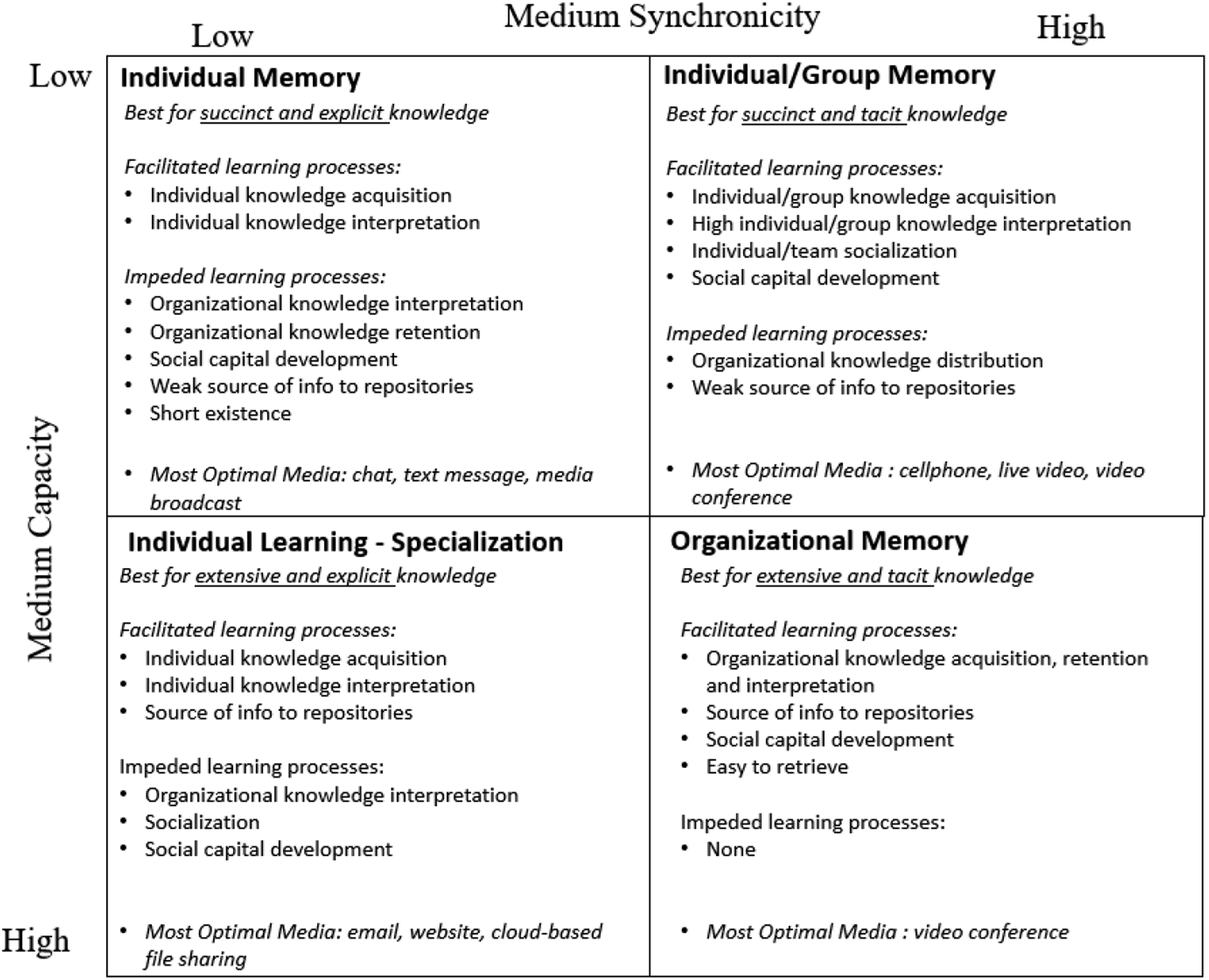
It should be noted that retrieval is key to OM and it can vary from automatic to controlled (Walsh and Ungson, 1991). While the former suggests the knowledge is retrieved spontaneously, without effort, the latter indicates the knowledge is obtained intentionally and purposefully. Spontaneous retrieval is the result of social interaction, reflecting that knowledge can become embedded in routines, habits, and cultures. Yet, when retrieval is controlled, organizations need to enable the retrieval feature in the chosen media to promote OM in virtual work settings. Hence, a medium that is high in synchronicity and capacity allows for more social interactions (Nissley and Casey, 2002) and the exchange of greater amounts of knowledge. As a result, this dyad facilitates spontaneous retrieval of OM. However, whenever the social environment is dissolved, OM is at risk and memories may become silent and uprooted (Foroughi and Al-Amooudi, 2020). Under this case, the learning process is impeded. Yet, organizations can also promote controlled retrieval by activating search tools embedded in available media.
By adopting a media high in synchronicity, the exchange of tacit knowledge increases because people can communicate the experiences that are not written and codified in documents, procedures, rules, policies, or norms. Further, others can ask questions on the spot, enhancing the clarification of the experience. Additionally, by adopting a media that is high in capacity, the volume of knowledge exchanged and shared increases significantly which allows for the flow of extensive knowledge. Hence, the following proposition is offered: Proposition 2: The positive effect of a medium that is high in both synchronicity and capacity on OM will be enhanced when the knowledge transferred is extensive and tacit.
As described in Figure 1, the use of video conference favors extensive and tacit knowledge for two main reasons. First, this media allows a vast amount of knowledge to be shared (e.g., discussion, documents, presentations, audio, and screen sharing). Second, members can share information beyond words, as they can use video and audio aids, gestures and body languages, create interactive content (quizzes and surveys), use metaphors, replicate hands-on activities, and so on. An example would be the development of a SWOT analysis performed virtually by the entire sales team of a multinational company, where members brainstorm, use artificial intelligence (AI) and search engines to identify external environment issues, share company documents and links in real time.
On the other hand, if media is low in both synchronicity and capacity, non-simultaneous interaction is promoted, tacit knowledge remains at the individual level, and only succinct knowledge is exchanged. In general, it creates a scenario in which actors interact at different times with one another and offers limited capacity to exchange much tacit and extensive knowledge. As the level of synchronization increases, simultaneous knowledge exchange tends to rise but the volume transferred is still constrained. This will only develop individual or group memory as exemplified by phone calls and phone meetings. If the level of synchronization remains low, but the capacity of the media grows, there will be a larger volume of knowledge transferred but not concurrently, leading to the creation of individual learning. The best example for this scenario is the use of emails, websites, and cloud-based file sharing technologies.
Media retainability
Another dimension that should be considered when selecting the optimal media choice for OM in virtual work settings consists of the ability to store and keep records of the knowledge transferred over time and to allow accessibility of such knowledge. Based on the idea that OM development relies strongly on the retention process to store knowledge as well as retention structures (bins and systems) (Walsh and Ungson, 1991), this study defines media retainability as the media’s ability to allow knowledge to be stored, and to be retrieved when needed. For example, knowledge posted on either firms’ websites or file-sharing cloud drives can be easily extracted by employees. These media outlets also keep track of the time-period for important firm’s milestones and events, contributing to the flow of knowledge and enhancing people’s overall understanding of the firm’s history. OM is at risk when the medium offers low level retainability, as knowledge can easily get lost and is not ingrained in any of the OM bins (Foroughi and Al-Amooudi, 2020).
Media reach
Lastly, media can vary in the degree to which they can reach people within the organization (Trevino et al., 1987). Organizational learning depends on the distribution of knowledge which is essential for creating organizational memories (Huber, 1991). When the knowledge is held by only one person, it influences individual memory, and the organization is at risk if this person leaves the firm (Massingham, 2008). OM should be developed in a way where memories transcend the individual level (Sutton and Hargadon, 1996). If knowledge reaches a single department or site, it can only impact a small number of people or that group’s memory. However, when knowledge reaches a large number of people, it can influence OM. This study defines media reach as the media’s ability to deliver knowledge to a greater number of organizational members.
For example, websites offer direct access to organizational knowledge to the workforce and the content is available promptly whenever needed. Emails sent to the organization’s workforce also promote the collective distribution of knowledge. Social media, as highlighted by Etter et al. (2019), has the power to reach a large number of people because it enables the flow of information by using interconnected social relations. In contrast, knowledge exchanged verbally by cellphone does not reflect a high level of reach or even retainability because it depends only on the individual’s memory.
While media retainability is strongly related to the retention process of OM, media reach enables the accessibility of stored knowledge by organizational members. Under the OM lens, media retainability influences how memories are properly stored for future use (Berthon et al., 2001; Cross and Baird, 2000), and media reach leads to the spread of knowledge across the entire organization. Intranet is one of the optimal media that is high on both retainability and reach. As described by Olivera (2000: 821), the intranet represents a media that “collects and stores a vast amount of codified knowledge that the firm has developed through experience and research. The Knowledge Intranet was designed to be easily accessible to anyone in the firm, taking into consideration that users may be located anywhere in the world.” Therefore, a media choice that is high in both retainability and reach should promote OM in virtual work settings. Hence, the following proposition is offered: Proposition 3: In virtual work settings, OM will be enhanced when knowledge is transferred through a medium that is high in both retainability and reach.
A medium high in retainability and reach can store and distribute knowledge across the organization. However, the retrieval of knowledge also relies on embedded search functions found only in the most advanced communication media and/or customizations implemented by the organizations between the media and information systems (Olivera, 2000; Stein and Zwass, 1995). Media such as email, websites, and intranet offer embedded search tools that facilitate the access of memory content through indexes. Other media such as cellphones and recorded videos hamper access to knowledge and require some organizational intervention to make memory available to all.
However, not all knowledge travels well in media that is both highly retainable and reachable. Because tacit knowledge primarily resides in individuals’ minds, it is difficult to store it in other OM bins. When individuals leave the organization, they take such tacit knowledge with them impacting OM (Massingham, 2008), unless they have been able to transfer it to other individuals through experiential learning. Still, organizational level storage of such tacit knowledge is elusive. Because it is difficult to store in organizational level bins, it is also difficult to reach. The retrieval of such knowledge is only possible through the active and deliberate participation of the individuals who possess it (Nonaka, 1994). Access to those individuals may be more difficult in virtual work settings than in face-to-face ones. On the other hand, as explicit knowledge is codified, it is easily stored in OM bins that goes beyond the individual. As a result, explicit knowledge can also be easily retrieved. When it comes to knowledge volume, this study proposes that succinct knowledge is less likely to be stored in and retrieved from organizational level bins and is more likely to either remain in individual’s minds or forgotten. Succinct knowledge is likely to be discarded or deleted, even if it is explicit, given its brevity. Organizational members are more likely to believe that they can recreate it if they need to. However, even if it is retained, organizational members may have a more difficult time finding it within the knowledge bins, especially in virtual work settings without having face-to-face access to other organizational members to consult. It would be like finding the proverbial needle in a haystack. On the other hand, extensive knowledge is likely stored due to its vastness as organizational members would not want to recreate such knowledge again and again. Further, due to its many components, extensive knowledge would also be likely easier to find. Therefore, as depicted in Figure 2, this study proposes that, in virtual work settings, media high in retainability and reach has a greater impact on OM when the knowledge transferred is extensive and explicit as such knowledge can be distributed throughout the organization and be made available and accessible to all organizational members regardless of geographic locations. In this, Proposition 4: The positive effect of a medium that is high in both retainability and reach on OM will be enhanced when the knowledge transferred is extensive and explicit. Potential results from the retainability and reach dyad.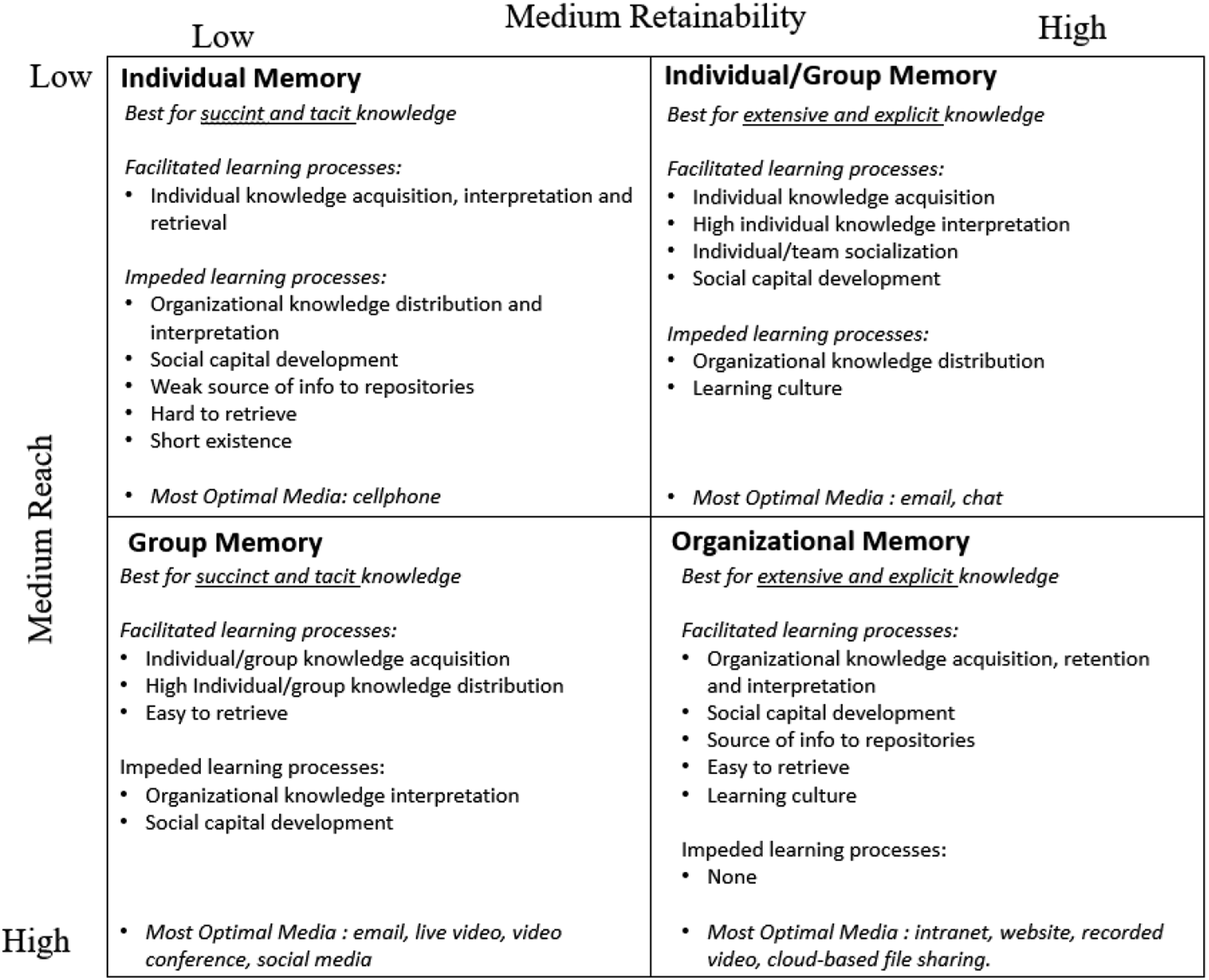
In this scenario, intranet is an optimal medium as it stores and keeps records of the knowledge transferred and is easily accessible to multiple members. Because of its static nature, ideally works better for extensive and explicit knowledge. One example would be posting on the company intranet a complete set of employee handbooks maintained by the human resources department detailing all the organization’s policies, rules, benefits, and procedures. The handbooks represent codified—explicit—knowledge and also extensive knowledge as the volume of information is large and covers multiple topics. Sharing those handbooks through email would be an inappropriate option, as emails get lost, are easily ignored, have limitations on size, and are vulnerable to cyberattacks. Therefore, it would compromise OM—the storage and accessibility of the knowledge for many.
On the other hand, if media are low in both retainability and reach, one-to-few relationships are needed, and the knowledge remains at the individual level with the exchange of succinct knowledge. In this scenario, knowledge distribution and interpretation are diminished. As the level of retainability increases, the existing OM bins store more knowledge, but it is limited to a few people, which will only encourage individual or group memory. Further, if the level of retainability remains low while the reach of the media grows, the knowledge will be poorly stored, and most knowledge will be lost. For visual clarity, Figure 3 depicts the four propositions detailed above for media choice in virtual work settings (Propositions 1, 2, 3, and 4) while considering the knowledge attributes. Proposed model for media choice in virtual work settings.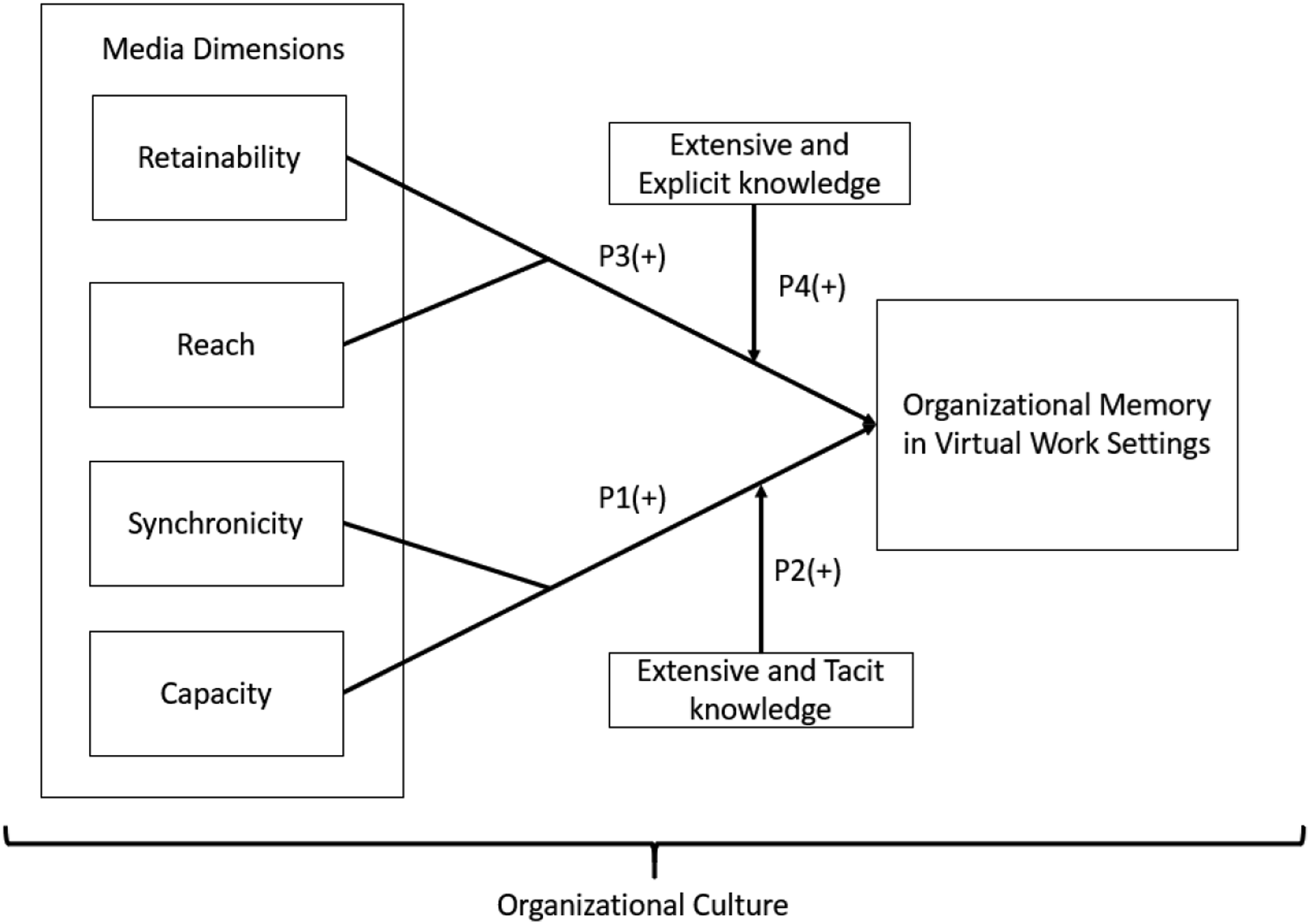
Figure 3 also highlights one of the social contextual variables that are found to influence knowledge transfer and OM as they are based on the social interaction among individuals (Liao et al., 2012; Nonaka and Takeuchi, 1995). Organizational culture (OC) sets the institutionalized standards, values, and norms that direct behavior within an organizational setting (Sørensen, 2002). It conveys meaning within a workplace as employees pass down knowledge throughout the years and knowledge becomes embedded in the shared work habits and assumptions (Stoyko, 2009). Having a virtual work setting where people are willing to interact, are receptive and ready to respond to others is crucial for knowledge exchange and continuous learning (Chen et al., 2021; Hong and Vai, 2008). Cameron and Quinn (2011) identified competing values that result in four distinct organizational culture types: clan, market, adhocracy, and hierarchy. Each type of culture is expected to influence how information and knowledge is passed and preserved in OM (Cameron and Quinn, 2011; Stoyko, 2009). For example, the clan OC values teamwork, supportive environment, collaboration among the team members, cohesion, and the efforts of each employee to contribute to the group’s results (Cameron and Quinn, 2011). Because these attributes emphasize social interactions, in virtual settings, it can be argued that the clan OC is more likely to lead to a higher degree of knowledge sharing and OM development when compared to the other types of OC (Lee et al., 2016).
Discussion and implications
Calls for research on OM have been common since Huber’s (1991) seminal paper on organizational learning. Since then, the three knowledge processes (i.e., acquisition, retention, and retrieval) that enable the development of OM have been explored in many domains. However, less attention has been dedicated to mechanisms that develop OM. With that in mind, considering that technology has allowed many organizations to restructure their business and become geographically and time dispersed, this study proposes a framework for conceptualizing the most optimal media choice to be used in virtual work settings to promote OM while accounting for the type (explicit vs tacit) and volume (succinct vs extensive) of knowledge (Fuik et al., 1990; Lengel and Daft, 1988; Trevino et al., 1987). Answering the first research question, the proposed framework underscores the importance of selecting the appropriate communication media to develop OM, particularly in contexts where individuals are geographically dispersed. This selection is critical for promoting OM. Throughout the paper, various scenarios are presented, illustrating how different media can be strategically adopted depending on the type and volume of the knowledge being exchanged. Regarding the second research question, the four media dimensions (i.e., synchronicity, capacity, retainability, and reach) represent the attributes to be observed in deciding which media would enable the most effective communication and the development of OM in virtual work settings. Scholars are invited to empirically examine the proposed framework and/or recommend new dimensions of communication media.
After exploring the four dimensions, two relevant pairs have emerged: (1) synchronicity and capacity, and (2) reach and retainability. Communication media that is high in synchronicity and capacity works best in developing OM when extensive and tacit knowledge is transferred in virtual settings. Thus, this study suggests that the use of live video conference is an optimal medium choice, especially, in framing and solving complex problems, and supporting decision-making processes. A media choice that is high in both synchronicity and capacity allows organizations to effectively transfer and share knowledge virtually. They are media options able to “handle multiple information cues simultaneously,” “facilitate rapid feedback,” “establish a personal focus” (Lengel and Daft, 1988: 226), close enough to face-to-face interactions. A media choice high in both synchronicity and capacity creates a virtual environment where individuals can engage in social interactions and foster the exchange of know-how (tacit knowledge) and vast array of information (extensive knowledge). Such interaction is needed for OM development (Rowlinson et al., 2010). Lower levels of synchronicity and capacity enhance individual and group memory, as knowledge may be retained in silos.
Communication media that is high in reach and retainability is most effective in developing OM in virtual settings when extensive and explicit knowledge is transferred. In this case, this study suggests that social media, intranet, and websites represent optimal media options. A media high in both retainability and reach promotes the effective storage and distribution of knowledge into multiple OM bins. Otherwise, knowledge may be lost (Foroughi and Al-Amooudi, 2020), may not be distributed to all preventing the sense-making ability (Bower and Hilgard, 1981; Weick, 1995), and may not be accessed when needed (Croasdell, 2001).
In fact, Chen et al. (2021) suggest that, for virtual teams to achieve most benefits in terms of knowledge transfer, several media must be adopted, progressing from simpler to more advanced options in terms of features. As described in Figure 2, one possibility would be to start the communication using cellphone—SMS, then transition to email, and then use intranet or website, where extensive and explicit knowledge can be largely stored. However, under such communication media, the degree of interaction is low, which compromises feedback and ongoing dialogue.
The four dimensions proposed play an important role in media choice adopted by organizations to interconnect all actors and enable effective communication among them. Adopting inappropriate media choice can have significant negative implications for organizations. Miscommunication and lack of interaction may hinder decision-making, as relevant knowledge may not be accessed to inform current situations (Walsh and Ungson, 1991). This can result in the loss of critical knowledge (Martin De Holan and Phillips, 2004). Since OM relies heavily on social mechanisms (Foroughi and Al-Amoudi, 2020; Kameo, 2017), an inadequate media choice may directly impact the retention of knowledge, as members lose the ability to effectively transfer and share important knowledge. Lastly, an underdeveloped OM makes it difficult for organizations to remember past experiences (access knowledge base) and apply the existing knowledge when making decisions.
Also, the COVID-19 pandemic has forced the world to endure massive changes in organizational arrangements (i.e., work remotely). During this time, the workforce worldwide has relied heavily on technology. Even though companies like JP Morgan Chase are now requesting employees to return to the office 5 days a week (The Wall Street Journal, 2025), these companies still rely on communication media to integrate thousands of employees distributed geographically. The reliance on communication technologies is expected to continue. Flexibility in the workplace has become the new normal which will push for other changes. The pandemic may have also impacted OM significantly because the turbulent economic environment forced organizations to adjust their operation by laying-off employees and downsizing. These practices put OM at risk because the reduction in human capital reflects a decrease in organizational knowledge (Massingham, 2008). Without these individuals, the shared knowledge that sources OM will not be the same which means that businesses might suffer from the loss of competitiveness, competence, and creativity when OM development is hindered. This will ultimately affect organizational performance. Organizations that recognize the importance of OM in supporting business operations, improving the decision-making processes, and framing and solving problems in such changing environments can create a competitive advantage that sets them apart from their competitors which will result in positive outcomes.
Therefore, the proposed OM framework has several implications for managers, directors, and executives. First, the optimal media choice among numerous available media in the market depends on the type and volume of knowledge being transferred. Accordingly, decision-makers must be aware of differences among knowledge type and volume when selecting the optimal media choice that enhances OM in virtual settings. Second, they must understand how social relations can be established remotely to support access to knowledge to promote OM. Interactions among actors are critical for creating a collective memory that feeds OM (Rowlinson et al., 2010) which improves organizational operations and processes. Third, resource allocation is another aspect that decision-makers have to consider. Organizations that have invested in the latest technological communication tools are also reducing costs associated with face-to-face meetings such as travel (i.e., airfare, accommodations, and meals). For example, Meta, Facebook’s parent company, has strongly embraced remote working environments by investing in a variety of technological tools that make such environments more efficient. Video conferencing and enterprise software tools are among the tools that the company has relied on to achieve this efficiency (The Wall Street Journal, 2022a). Finally, as OM links the past with the present, past knowledge and new knowledge are equally important in supporting decision-making. This suggests that decision-makers and other organizational actors should aim to have a balance between enhancing OM and searching for new knowledge because the value of knowledge might depreciate over time if it becomes irrelevant to the context in which it is used (Foroughi and Al-Amoudi, 2020; Meschi and Metais, 2013). A balance in the use of multiple digital media would enhance the ability of the organization to achieve this goal.
Limitations and future research
The use of digital media in the workplace is quite common and growing upward. For instance, the adoption of efficient media allows organizations to work virtually (Symons and Stenzel, 2007). However, even though this study assumes that existing organizational communication media and support services are reliable enough to effectively support business operations, this may not always be the case. This is because the amount of investment in communication media differs drastically among companies and industries. Therefore, it is important to highlight that: (1) each organization has its own communication media constraints; (2) each organization has its own internal policies that can expand or restrict the use and the amount of data transferred; and (3) each organization maintains a specific communication media infrastructure based on its demands and reality (i.e., the organization’s status quo, resources, experiences, and structures). This indicates that variations in communication media investments must be controlled for in future empirical studies.
As mentioned earlier, virtual work settings are becoming the new normal in which businesses operate regardless of the location of the business and its size (e.g., small firm or multinational enterprise). Thus, the proposed framework emphasizes that organizations that are dispersed in time and space can use digital media to promote OM. However, for global organizations, it is expected that cultural differences can also influence the choice of optimal media which means that these differences should be considered in such dispersed settings when developing a framework to maintain OM. This is important as people across cultures perceive information communicated through media in different ways depending on their backgrounds (Massey et al., 2002). Similarly, changes in time zones make it more difficult to use some media (e.g., synchronous) versus other forms (e.g., asynchronous). For this reason, it is possible that effective practices used in one place may differ from practices in another, and organizations must consider the use of new media grounded in existing cultural variations. As the primary goal of this paper is to enhance OM, it is also important to highlight that different cultures value the use of past experiences differently, which suggests that OM can play a more (or less) substantial role. Thus, cultural differences need to be taken into account when choosing the optimal media to be used to improve OM.
One last limitation of the proposed framework relates to knowledge retrieval. OM can be enhanced by using media rich in synchronicity, reach, capacity, and retainability, but if it cannot be retrieved when needed, the memory will get lost and become meaningless (Foroughi and Al-Amoudi, 2020; Meschi and Metais, 2013). Nowadays, retrieval functions are embedded in most advanced communication media, suggesting that organizations need to enable such features and provide the necessary search tools to facilitate the retrieval process. Yet, given that retrieval can depend on whether the organization enables it (when it is not spontaneous), this framework assumes that retrieval is spontaneous.
As a final note, OM has relied on structured information systems support for decades (Stein and Zwass, 1995). And even though this paper explores current digital media and their effect on OM, there are technological advancements that need further investigation as they relate to OM. To name a few, the advent of AI (e.g., ChatGPT and Deepseek) and more advanced media (e.g., virtual reality) are additional topics to be explored in future research. Specifically, scholars can investigate how artificial intelligence solutions interact with OM structures to support decision-making processes. Future research may also examine how the knowledge stored in AI systems can be shared among organizational members. In addition, the examination of the experimental use of holograms (The Wall Street Journal, 2022b, 2025a) or virtual reality which will represent digital media with the highest level of richness would be of great value. Additionally, existing literature has emphasized the acquisition, interpretation, and storage of knowledge but it still lacks an efficient demonstration of how memory mechanisms can help organizational processes in remembering relevant facts and experiences. Thus, scholars who are interested in mechanisms that enable knowledge to be accessed, extracted, retrieved, or captured can attempt to fill this gap. To conclude, the proposed framework represents an effort to advance the understanding of how organizations learn and develop their OM in virtual work settings. Further empirical examination is required to fully comprehend the effect of communication media on OM.
Footnotes
Author Note
An earlier version of this paper was presented at the Southwest Academy of Management Conference in 2022.
Declaration of conflicting interests
The author(s) declared no potential conflicts of interest with respect to the research, authorship, and/or publication of this article.
Funding
The author(s) received no financial support for the research, authorship, and/or publication of this article.
