




Abstract
Despite the widely acknowledged relationships between customer satisfaction, delight, and loyalty, there is a gap in the current literature of how they manifest in an emerging market context. This study seeks to redress this by examining customer delight arousal and delight pleasure as post-consumption experiences predicted by customer satisfaction and seeks to validate empirically the nexus between these factors and customer loyalty to mobile service providers in an emerging African economy. Using data obtained from self-administered surveys with 500 customers of South African mobile service providers, this study employs the partial least squares structural equation modelling technique to validate the measurement model and examine the theorised relationships between the constructs. The findings suggest that satisfaction has multiple associations with customer delight arousal, delight pleasure, and loyalty. The results pinpoint that customer arousal is positively related to customer delight pleasure. In fact, the results emphasise that delight arousal and delight pleasure are heightened levels of satisfaction and that satisfaction and customer delight are associated with customer loyalty. Furthermore, the findings show that customers’ delight pleasure and delight arousal are complementary mediators in the satisfaction-customer association. This study addresses a gap in current literature by presenting and validating an alternative model that investigates the interplay of customer satisfaction, delight arousal, and delight pleasure in predicting customer loyalty in a technology service context in an emerging African country.
Introduction
In the modern era, both global and South African service industries face stiff competition (Jahanbakht et al., 2022). This can be attributed to multiple factors, including the escalating number of competitors entering the market with superior service offerings (Kruger et al., 2015). Although service businesses offer attractive deals in an effort to appeal to customers, maintaining customer loyalty is often a daunting task (Almossawi, 2012). This is true in South Africa’s mobile service industry (MSI), where firms contend with high customer switching rates (Morgan and Govender, 2016). Like South Africa, other studies (e.g. Tarkang et al., 2023) have highlighted the presence of fierce competition in the telecommunications industry in various African countries, including Cameroon.
To keep customers satisfied, South African MSI companies have implemented a raft of value-added customer service strategies, including internet facilities that enable individuals to connect with the world through fast internet services, whether prepaid, post-paid, or roaming (Hawthorne et al., 2016). Although customers have expressed their satisfaction with these services, switching rates continue to be unacceptably high (Kruger et al., 2015). Research shows that, on average, 8.3% of mobile service customers switch service providers within 6 months (Van der Walt and Van der Merwe, 2015), although it has been noted that 65–85% of customers who claim to be ‘satisfied or very satisfied’ end up defecting to other service providers (Reichheld and Teal, 1996). This emphasises that customer satisfaction alone is insufficient to guarantee customer retention in industries like the MSI, where competition is rife and customer exit barriers are comparatively low.
Consequently, researchers in the service industry have advocated for the need to examine consumption experiences beyond satisfaction that may produce exceptional behavioural consequences, such as loyalty (Arnold et al., 2005; Barnes et al., 2016; Oliver, 1997). The consumption experiences that transcend basic satisfaction are commonly referred to as ‘customer delight’ (Rust and Oliver, 2000). This ‘higher-level’ satisfaction is widely theorised as critical for achieving elusive business goals, such as customer loyalty and lifetime value (Ali et al., 2018; Loureiro and Kastenholz, 2011).
Despite this, a review of extant literature points to a dearth of empirical research illuminating the link between customer delight and loyalty, particularly in the MSI and in developing countries, such as South Africa. Customer delight’s significance is widely acknowledged, with the aim of delighting customers being a quixotic ambition (Dixon et al., 2010a), yet questions about what constitutes customer delight and its impact on business outcomes remain largely unanswered (Barnes et al., 2016). Fornell (1992) stressed that customers in different consumption environments differ in their assessment of satisfaction and delight experiences. Therefore, to build a systematic theory, research must tap into consumer experiences in different industries and market contexts. Against this backdrop, the present research seeks to address the following questions: 1. What are the associations between customer satisfaction and delight experiences in the South African MSI, and how do they impact customer loyalty? 2. How does customer satisfaction compare to delight in fostering customer loyalty in the South African MSI? 3. To what extent do customer satisfaction and delight experiences contribute to customer loyalty in the South African MSI?
By addressing these research questions, the study makes key contributions to the existing literature. First, it illuminates delight arousal and delight pleasure as evaluated levels of satisfaction prompted by unexpected disconfirmation and develops a model rooted in expectation disconfirmation theory to examine these underlying processes. Although prior research provides evidence of satisfaction and delight, these customer experiences are generally presented as independent, parallel constructs. This study’s research model offers a more nuanced understanding of the process of satisfaction, delight arousal, and delight pleasure. Second, the findings contribute to the literature by showing the differential impacts of satisfaction and delight pleasure on customer satisfaction. Third, the study examines the mediating roles of delight arousal and delight pleasure in the satisfaction-loyalty relationship and establishes that satisfaction capable of engendering delightful consumption experiences contributes to producing loyalty. Furthermore, findings show how the introduction of delight pleasure dissipates the impact of delight arousal on loyalty, thereby highlighting the superiority of delight pleasure in garnering loyalty. Fourth, by focussing on South African mobile service providers, this study contributes to the literature on customer satisfaction, delight, and loyalty from a context that has not been well researched. Most studies on this topic rely on samples from Western or Asian countries. However, due to differences in product life cycles and market conditions across regions, it can be difficult to apply these findings to African contexts without proper validation. Finally, the study presents actionable managerial suggestions for achieving customer satisfaction, delight, and loyalty in the South African MSI and similar contexts.
The section that follows presents a review of the literature, the research model, and the development of the hypotheses. Thereafter, the study methodology is outlined, followed by the empirical results. To conclude, the study’s findings in relation to its theoretical and managerial implications are discussed.
Theoretical framework
Theoretical background – expectation disconfirmation theory
The expectation disconfirmation theory (Oliver, 1980) posits that customer satisfaction is a function of prior expectation and disconfirmation, and satisfaction is a precursor of repurchase intentions (loyalty). Prior research on customer satisfaction and delight is grounded in disconfirmation theory (Oliver, 1980), which compares consumers’ purchases and usage with actual performance levels using worse-than, better-than heuristics. The consequential judgement is referred to as negative disconfirmation if the product’s performance is worse than the expectation, positive disconfirmation if the performance is better than expected, and simple disconfirmation if the performance is as expected. In line with this, Oliver (1989) posited three forms of (dis)confirmation states: (i) performance within the scope of disconfirmation where deviations from expectations are ‘normal’; (ii) a series of disconfirmation performances that are feasible but infrequent so that the performance deviance is ‘unusual’; and (iii) levels of performance that are not plausible based on experience and are, in many respects, ‘unexpected’ or ‘surprising’. This latter level of performance is a ‘surprise confirmation’ (Oliver, 1989). Oliver and Winer (1987) contended that consumers’ level of disconfirmation could vary based on the extent to which they experience ‘unexpected’ levels of performance. These unexpected levels of performance underline the concept of consumer delight.
Thus, based on expectation disconfirmation theory, delight is a situation where a customer achieves a surprise confirmation, whereas satisfaction is said to occur when performance merely matches expectation. Bartl et al. (2013) argued that delight occurs when consumers’ expectations of the service delivery are exceeded to unexpected and surprising levels. Consequently, the authors concluded that delightful experiences are more memorable than satisfied experiences.
Delight manifests in pleasure and arousal (Berman, 2005; Finn, 2005; Torres and Kline, 2006). While delight arousal determines the extent to which a consumer feels active and stimulated by the consumption experience (Loureiro et al., 2014), delight pleasure refers to the extent to which a consumer experiences joy, a good feeling, or happiness in a consumption situation. This study incorporates these dimensions of customer delight into the research model by testing how customer satisfaction predicts these dimensions of delight and its relationship with customer loyalty. The proposed relationships are rooted in the expectation disconfirmation theory.
Conceptual model and hypotheses
Satisfaction is the basic level of the emotional state felt when customers’ consumption experiences equal their product/service-specific expectations. However, when a consumption experience exceeds pre-purchase product/service-specific expectations, consumers experience a higher psychological state of delight (Kumar et al., 2001). Hence, Bowden-Everson et al. (2013) contended that satisfaction is a prerequisite for delight to follow. Similarly, research has empirically validated arousal as a psychological post-consumption experience that is an independent antecedent path to customer delight (Finn, 2005; Loureiro and Kastenholz, 2011). Finally, satisfaction and delight are notable direct precursors of customer loyalty (Bowden-Everson et al., 2013; Loureiro, 2010; Loureiro and Kastenholz, 2011). This study proposes a conceptual model (see Figure 1) to examine the influence of satisfaction on customer delight arousal, delight pleasure, and loyalty to mobile network service providers. Conceptual model.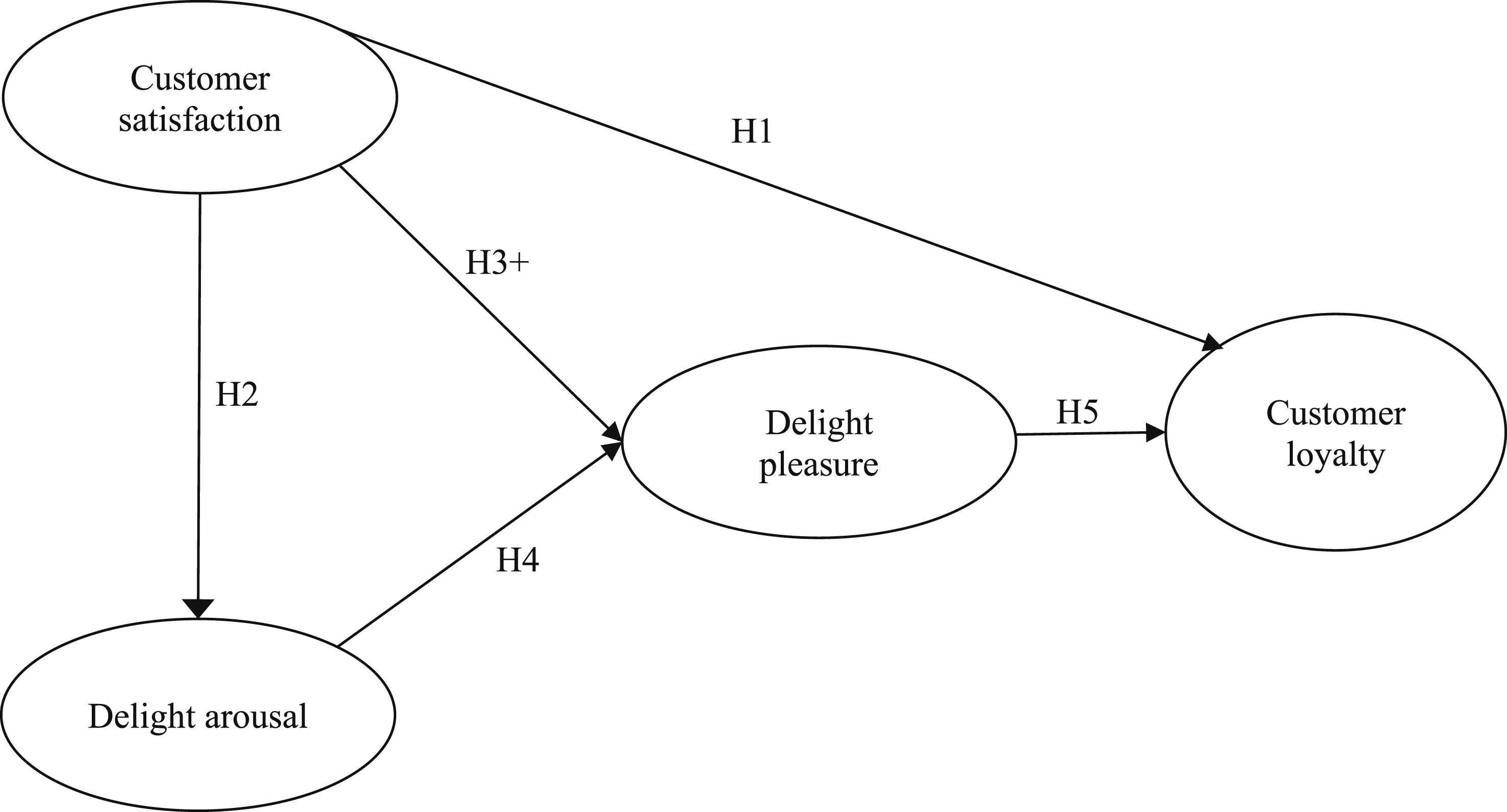
Customer satisfaction and loyalty
Satisfaction in expectation disconfirmation theory is a consumer’s response to fulfilment; it is an evaluative judgement that a product and/or service provides a ‘pleasurable level of consumption-related fulfilment’ (Oliver, 2010: 8). Customers are satisfied when their consumption expectations are fulfilled by their consumption experiences. This evaluative judgement becomes the basis on which customers make decisions about whether to repurchase a product and/or service (Rather et al., 2019). Consequently, satisfaction is touted as a fundamental element in customer retention strategies (Christ-Brendemühl and Schaarschmidt, 2020; Daughtrey et al., 2013; Foroughi et al., 2019; Liao et al., 2021). Research based on disconfirmation theory has established that satisfied customers tend to repurchase, are less sensitive to price, share positive word of mouth, and develop loyalty (Barnes et al., 2016; Kim et al., 2015). Customer satisfaction is widely considered to be a business imperative because it is among the main motives for customers to maintain relationships with companies (Roberts-Lombard and Petzer, 2018; Thaichon et al., 2016; Tweneboah-Koduah and Farley, 2016) and impacting business profitability (Glanfield et al., 2018; Smith, 2020). In a study conducted to understand the drivers of customer loyalty among retailing banking customers in Ghana, Tweneboah-Koduah and Farley (2016) empirically confirmed that customers are likely to remain with a particular bank if its services meet their expectations. Based on this argument, the following hypothesis is put forth:
Satisfaction has a significant positive association with customer loyalty.
Customer satisfaction and delight
Research has empirically demonstrated how important it is for businesses to strive to go beyond merely meeting customer expectations and to focus on delighting their customers (Rivera et al., 2019). While satisfaction lends itself to meeting customers’ pre-consumption expectations, delight is an unexpectedly high level of performance satisfaction (Finn, 2012). As previously indicated, disconfirmation model has three outcomes: negative disconfirmation arising from poor perceived service quality experiences, satisfaction resulting from adequate service quality experience (positive confirmation), and delight arising from high satisfaction. Consequently, Oliver (1989) postulated that customers’ expectations of performance could be exceeded if (a) the degree of ‘exceedingness’ is within the normal range, such that the customer perceives the experience to be better than expected, but not really surprising; or (b) the degree of performance is surprisingly positive, producing delight.
Since a positive disconfirmation experience beyond the zone of tolerance culminates in a durable positive effect that creates a sensation of delight (Finn, 2005; Keiningham et al., 1999), satisfaction is argued to be a necessary condition for delight to occur (Bowden-Everson et al., 2013). Correspondingly, Westbrook and Oliver (1991) found that customers with higher levels of arousal, joy, and surprise were those who reported being most satisfied, which suggests a link between satisfaction and delight. Similarly, researchers have noted that arousal is a prerequisite for delight (Finn, 2005; Mano and Oliver, 1993). For instance, Mano and Oliver (1993) empirically established that high levels of arousal are directly associated with higher degrees of positive affect in the type of delight pleasure. Empirical evidence also suggests that consumers can experience pleasure without being aroused (Barnes et al., 2016). Consistent with this evidence, the following hypotheses are presented:
Satisfaction has a significant positive relationship with delight arousal.
Satisfaction has a significant positive relationship with delight pleasure.
Delight arousal has a significant positive association with delight pleasure.
Customer delight and loyalty
Businesses strive to achieve customer loyalty, which enables them to leverage the lifetime value of their customers. Moreover, loyal customers tend to buy in large quantities, pay more, are eager to recommend the services or products, and spread positive word of mouth to other customers (Kumar et al., 2013). Therefore, loyalty is a business imperative. Loyalty comprises attitudinal and behavioural components (Dick and Basu, 1994; Oliver, 1999). The attitudinal component of loyalty refers to the tendency to engage in a given behaviour due to the favourable evaluation of the loyalty object. Loyalty denotes an enduring behavioural action concerning the objects of interest (Oliver, 1999). Attitudinal loyalty transitions through a sequence of cognitive and affective states culminating in conative loyalty – ‘a deeply held commitment to re-buy and re-patronise a preferred product or service constantly in the future’ (Oliver, 1999: 34). This study centres on conative loyalty because this type of loyalty is what firms look forward to when loyalty is the marketing goal (Wolter et al., 2017).
Although satisfaction predicts customer loyalty (Ali et al., 2018), it has been established that mere satisfaction is insufficient to capture the emotional content related to customer loyalty (Kim et al., 2015). Evidence suggests that when customers encounter unexpected, pleasurable consumption experiences, these experiences are delightful and more likely to foster loyal customers (Arnold et al., 2005; Rust and Oliver, 2000), making it less likely for customers to exit a volatile industry with no exit barriers (Hulbert et al., 2003). Recent studies rooted in expectation disconfirmation theory have confirmed the direct positive impact of delight pleasure on customer loyalty (Bowden-Everson and Dagger, 2011; Bowden-Everson et al., 2013; Loureiro and Kastenholz, 2011). Moreover, Arnold et al. (2005) contended that the overriding disparity between satisfaction and delight is the aspect of surprise. For this reason, prior research (e.g. Magnini et al., 2011) emphasises that in comparison with satisfaction, delight is more affect-inclined. Hence, customer delight experiences not only have a stronger memory recall but are also capable of producing stronger loyalty intentions than mere satisfaction experiences (Berman, 2005). Consequently, delight is expected to exert a mediating role on satisfaction’s impact on loyalty. Therefore, the following hypothesis is proposed:
Delight pleasure has a significant positive association with customer loyalty.
Research methods
Context of the study
This study’s context is the South African MSI. South African telecommunications services generated an estimated ZAR200 billion in 2021 (Independent Communications Authority of South Africa [ICASA], 2022), with MSI alone contributing about ZAR113 billion of this revenue. Within the same period, it is estimated that the revenue obtained from mobile data services was slightly higher than that from voice services, with estimated revenues of ZAR53 billion and ZAR36.7 billion, respectively, while revenue from text and multimedia messaging services, other mobile services, and outbound roaming services was estimated at ZAR3.6 billion, ZAR18 billion, and ZAR2.8 billion, respectively (ICASA, 2022).
The South African MSI comprises five network providers: Cell C, MTN, Virgin Mobile (a mobile virtual network operator), Vodacom, and Telkom Mobile (8ta). As of March 2019, the country’s MSI had 100 million mobile connections (BusinessTech, 2019). Vodacom was the market leader, with 43.2 million subscribers and 42.39% of the market share. This was followed by MTN, with 30 million subscribers and 29.44% of the market share. The third-largest provider was Cell C, with 17.2 million subscribers, representing 16.88% of the market share, followed by Telkom Mobile, with a reported subscriber base of 9.7 million (9.52%). Lastly, mobile virtual network operators, which run on the Cell C network, reported 1.8 million subscribers, commanding 1.77% of the market share (BusinessTech, 2019). Compared with the 2018 figures, MTN lost ground in its subscriber base, while Vodacom, Cell C, and Telkom reported growth over the same period. Consequently, research indicates that, as the MSI becomes saturated and highly competitive, network service providers are jockeying for their competitors’ customers (Moyo, 2017). Given the nature of the competition in the South African MSI, Morgan and Govender (2016) contended that customer loyalty for mobile service providers is increasingly under threat from competitive activities. Therefore, providing basic customer satisfaction will not be adequate to defend their customers against competitive activities and maintain their loyalty.
Measurement
The study fielded a self-administered questionnaire to obtain data from respondents. All construct measures were chosen from prior literature and tailored for this study. The operational definition of the constructs and the sources from which the measurement items were chosen and adapted are presented below.
In this study, customer loyalty was conceptualised and measured from the conative perspective. Like Oliver (1999), this study defined customer loyalty as a deeply held commitment to show preference to a particular mobile service provider and a decision to re-patronise the services of this preferred service provider. The construct was measured with two items adapted from Ndubisi (2006), which were measured on a seven-point scale, with 1 (‘strongly disagree’) and 7 (‘strongly agree’) as endpoints.
This research defined customer satisfaction as customers’ evaluations of their post-consumption experiences. The three items used to measure the construct were adapted from Dagger and Sweeney (2007) and measured on a seven-point scale, with 1 (‘strongly disagree’) and 7 (‘strongly agree’) as endpoints.
In the current study, delight arousal was conceptualised as the extent to which consumers feel stimulated, excited, astonished, and elated by their service experience with a mobile service provider. Delight arousal was measured with a four-item seven-point scale adapted from Bowden-Everson et al. (2013), with 1 (‘never’) and 7 (‘always’) as endpoints.
Delight pleasure is the extent to which consumers feel content, happy, cheerful, and pleased with the service experience of the mobile network service provider. The construct was measured in this study with four items adapted from Bowden-Everson et al. (2013) on a seven-point scale, with 1 (‘never’) and 7 (‘always’) as endpoints.
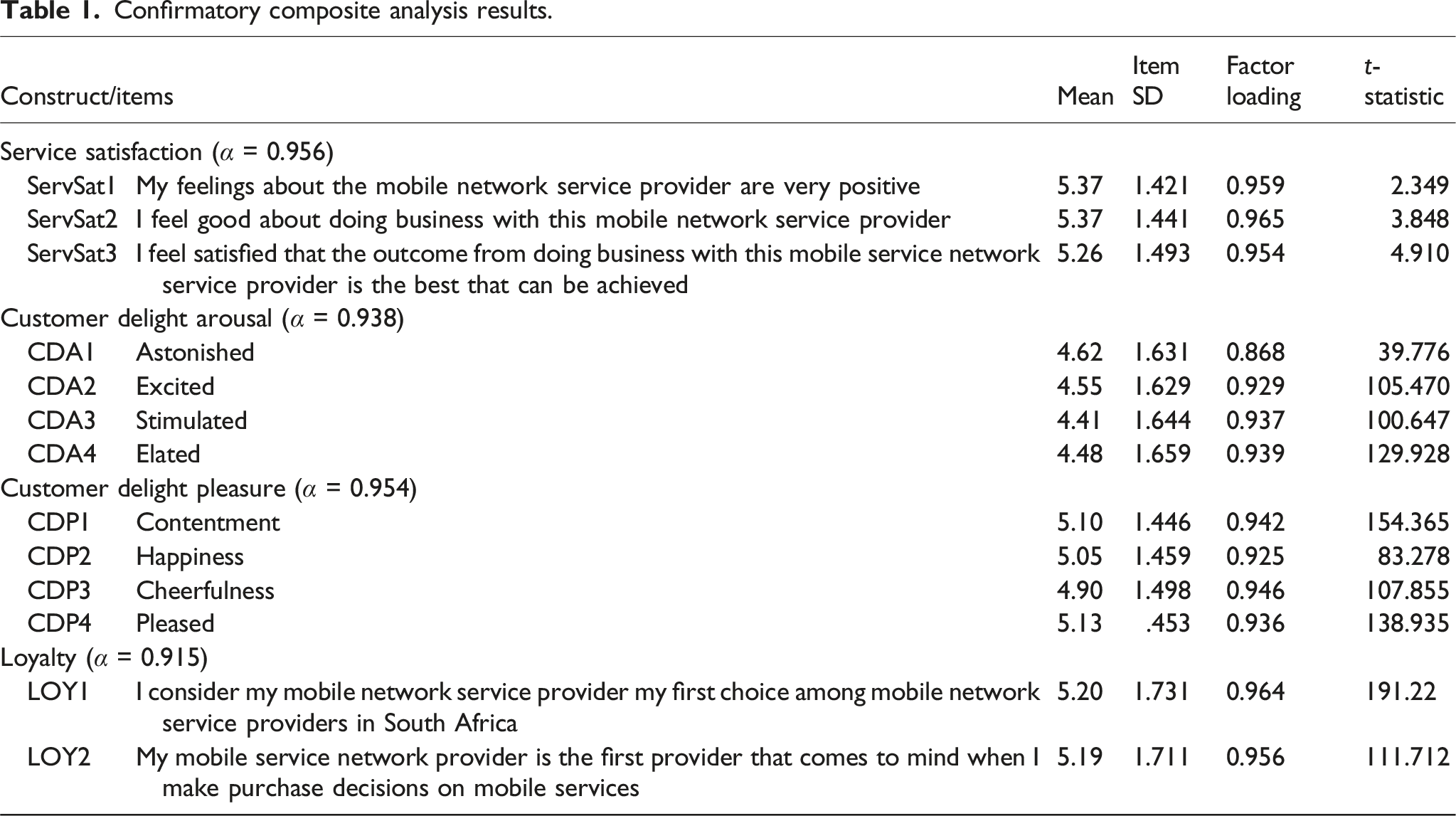
Prior to the implementation of the survey, the questionnaire was pretested to ascertain the validity of the measures. Postgraduate marketing students used quota sampling to recruit 30 participants to evaluate the draft questionnaire and provide their views on the clarity of the statement phrasing and/or questions, and the instructions. The results of the pretesting exercise indicated that the instructions and questions were clear, and the questionnaire was completed without much difficulty. The internal consistency of the scales was computed using Cronbach’s alpha. The estimates ranged from 0.915 (loyalty) to 0.956 (satisfaction) and confirmed the internal consistency of the measures.
Sample selection and data gathering
The study’s target population was customers of South African mobile service providers. Due to the unavailability of a sampling frame, convenience sampling was used to select participants for the study. Data was obtained through a survey by a group of trained fieldworkers. The fieldworkers selected the sample from households, public parks, and around shopping malls in the province of Gauteng, South Africa. Gauteng was chosen because it has the largest share of South Africa’s population, with 15.8 million people or 26% of the total population (StatsSA, 2022). The province’s population is so diverse that it is considered the microcosm of South Africa’s national population (Maduku, 2015; StatsSA, 2022). Moreover, Gauteng is South Africa’s biggest economic hub, contributing over 35.3% of the overall gross domestic product in 2021 (StatsSA, 2022). The fieldworkers approached a total of 863 willing respondents who have expressed their informed consent to participate in the study with a self-completing, printed questionnaire. The respondents could choose to fill out the questionnaire and return it to the research assistants or arrange with them to collect the completed questionnaire later. Efforts were made to include participants from different generational cohorts, such as baby boomers (born 1945–1965), Generation X (born 1966–1985), and Generation Y (born 1986–2005) (Markert, 2004). The aim was to have a fair representation of these subgroups in the sample on the basis of their numbers in the population. The survey took place between June and August 2019. By the end of the survey, a total of 512 completed questionnaires were returned. However, upon physical inspection of the questionnaires, 12 were discarded due to severely missing data and lack of variance in the responses provided to the scale items. As a result, a total of 500 responses were realised for the data analysis, representing an effective response rate of 58.8%.
Data analysis and results
Data analysis
A preliminary data analysis using descriptive statistics and common method variance was carried out utilising SPSS version 24. The analysis of the proposed research model was conducted using the partial least squares (PLS) technique, a variance-based approach to structural equation modelling. Hair et al. (2019) emphasised that the PLS technique is most suitable when the research is ‘concerned with testing a theoretical framework from a prediction perspective’ (Hair et al., 2019: 5). PLS use is appropriate because the focus of the analysis was to test how satisfaction and delight predict loyalty. SmartPLS version 3.2.8 software was the PLS tool used for the measurement and structural model analyses.
Results
Sample characteristics
The descriptive statistics of the sample showed that 244 (48.8%) of the participants were male and 256 (51.2%) were female. This indicates the study had a slightly higher number of female participants than males, thus mirroring the general South African population, which is 51% female and 49% male (StatsSA, 2017). For the generational cohorts, 100 participants (20% of the sample) were baby boomers, 151 (30.2% of the sample) were from Generation X, and 249 (49.8% of the sample) were from Generation Y. Concerning mobile network, 46.8% of the study’s participants were with Vodacom, 29.8% with MTN, and 18% with Cell C, while Telkom/8ta and Virgin Mobile accounted for 4.4% and 1%, respectively.
Common method bias
Both procedural and statistical measures were implemented to control and ascertain the threat of common method bias (CMB). The procedural measures implemented included the provision of confidentiality and anonymity for respondents, and reducing respondents’ evaluation apprehension by assuring them there were no ‘right’ or ‘wrong’ responses. Two statistical procedures were implemented. First, Harman’s single-factor test using maximum likelihood estimation and promax rotation was implemented. In the first step of this process, all factors were restrained to fit a single underlying factor representing the common method effects. CMB is present if the single-factor model fits the data. The results (χ2 [65] = 2042.111; p < .001) showed poor fit. In the second step, the fit of the single-factor model in contrast with the full measurement model showed that the fit of the single-factor measurement model was significantly inferior to the full-factor model (Δχ2 [23] = 1568.529; p < .001), suggesting that CMB did not compromise this study’s data quality. In the second statistical procedure to test CMB, a full collinearity test using the variance inflation factor (VIF) was implemented (Kock, 2015). The inner VIF estimates realised from this analysis ranged from 1 to 3.18. These VIF estimates, which did not exceed the 3 threshold, provided further evidence that CMB was not a significant issue.
Validation of the measurement scale
Confirmatory composite analysis results.
Convergent validity.
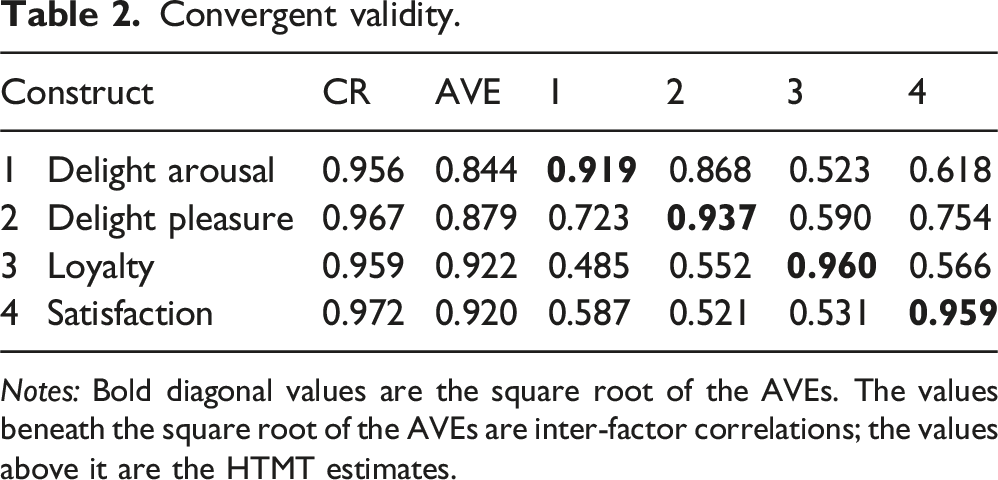
Notes: Bold diagonal values are the square root of the AVEs. The values beneath the square root of the AVEs are inter-factor correlations; the values above it are the HTMT estimates.
The final step of the CCA entailed the assessment of discriminant validity, using the Fornell and Larcker (1981) criteria. Moreover, the heterotrait-monotrait (HTMT) ratio of correlations was utilised (Henseler et al., 2015). A measurement model possesses discriminant validity when the square root of the AVE is larger than the inter-construct correlation (Fornell and Larcker, 1981). In Table 2, the largest correlation estimate (values beneath bold values) is 0.723, between delight pleasure and delight arousal. This estimate is smaller than the least square root of the AVE of all constructs, which is 0.919 for delight pleasure and satisfaction. Hence, the first criterion for discriminant validity for the CFA was met. With the HTMT criteria, discriminant validity is achieved when the HTMT estimates are less than 0.85 or 0.9 (Henseler et al., 2015). The results in Table 2 show that the HTMT estimates (values above the bold diagonal estimates) are less than 0.9, further validating the discriminant validity of the measurement using the HTMT criteria.
Before examining the structural model, the threat of collinearity between the exogenous variables was ascertained. Table 2 shows the highest inter-construct correlation is 0.723. This correlation estimate did not exceed the 0.90 threshold of critical correlation, which might suggest collinearity between the constructs (Bagozzi et al., 1991). Moreover, the VIFs ranged from 1 to 2.08, which are below the conservative critical threshold of 3 (Hair et al., 2020), suggesting the absence of collinearity at critical levels.
Structural model testing
The results of the structural model examination are presented in Figure 2 and Table 3. The results indicated that satisfaction had a significant positive association with loyalty (β = 0.278; p < .001), hence H1 was supported. With regard to H2, the results of the analysis suggested that satisfaction had a significant and positive association with customer delight arousal (β = 0.587; p < .001), providing statistical validation for H2. Similarly, the findings indicated that satisfaction was significant and positively linked with delight pleasure (β = 0.363; p < .001), offering statistical support for H3. Furthermore, the results of the analysis confirmed that delight arousal positively predicted delight pleasure (β = 0.610; p < .001), thus supporting H4. In fact, the results further emphasised that satisfaction and delight arousal explained more than two-thirds (76.3%) of the variance in delight pleasure, albeit that delight arousal had a stronger association with delight pleasure (0.610) than satisfaction (0.587). Finally, the results of the analysis pointed to a significant positive relationship between delight pleasure and customer loyalty (β = 0.352; p < .001), providing statistical support for H5. The results further suggested that customers’ loyalty had a stronger relationship with delight pleasure (0.352) than satisfaction (0.278). These factors collectively explained 34.2% of the variance in customer loyalty. Partial least squares analysis with path coefficients. Structural model results. Notes: Bootstrapping method with 5000 resamples, with no sign changes option, was implemented to determine the significance of the structural paths. Effect size (f2 and Q2) impact indicator: 0.02 = small effect size; 0.15 = medium effect size; and 0.35 = large effect size. Predictive relevance (Q2): Delight arousal (0.279); delight pleasure (0.645); loyalty (0.302). ***p < .001.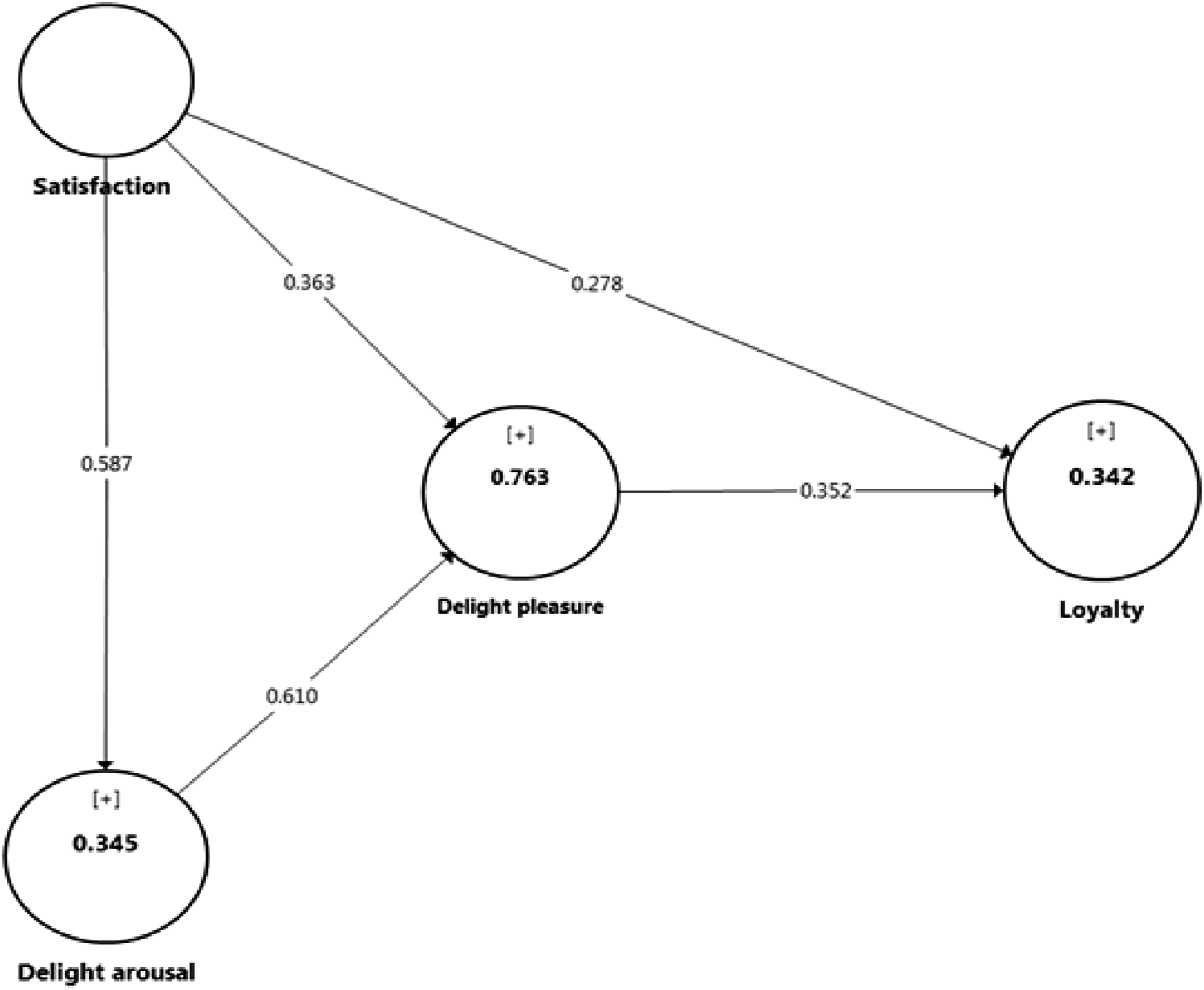
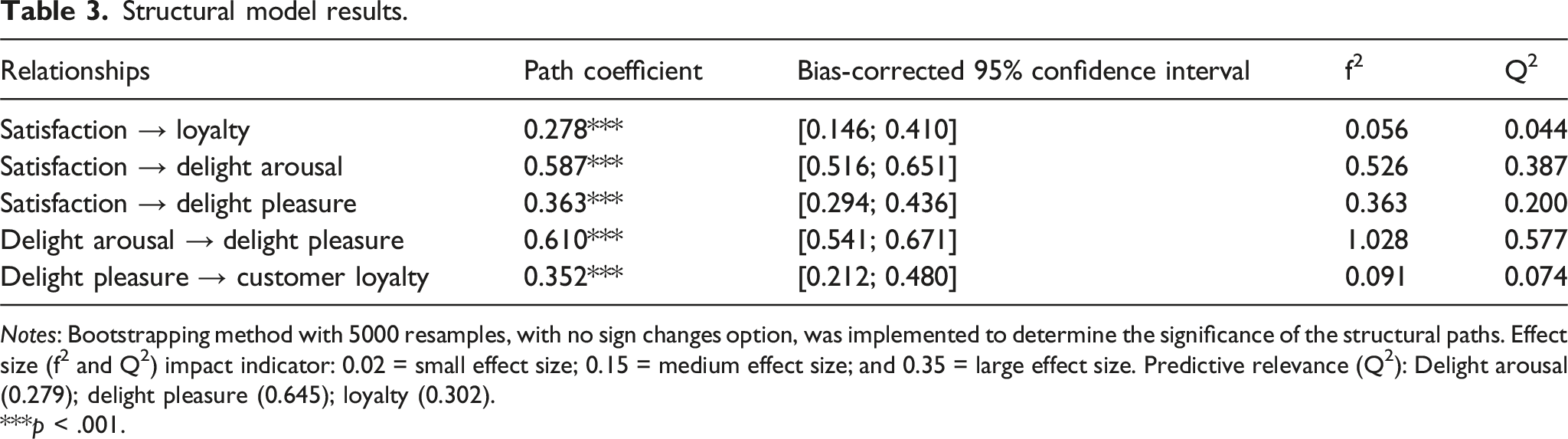
The evaluation of the model also entailed the assessment of the predictive relevance of the model (Q2) and the effect sizes (f2). In assessing the predictive relevance (Q2) of the model, a blindfolding technique using a predetermined omission distance of 8 was implemented to find the cross-validated redundancy. The results of this analysis showed that the Q2 estimates were above 0, providing support for the predictive relevance of the models.
Mediation analysis
In conducting the mediation analysis, the procedure recommended by Klarner et al. (2013) was followed. This procedure outlines steps to analyse two mediators (delight pleasure and delight arousal) in a model. Model 1 assessed the direct association between satisfaction and loyalty, excluding the mediator. Zhao et al. (2010: 198) emphasised that ‘there should be only one requirement to establish mediation, that the indirect effect be significant’. Thus, mediation exists when the indirect relationship is significant. A mediated relationship is partial when the direct and indirect effects are both significant. In a full mediation, the direct relationship is not significant, but the indirect relationship is (Zhao et al., 2010).
The results showed that the direct satisfaction-loyalty association was significant (β = 0.532; p < .001). Subsequently, the model was respecified with one mediator (delight pleasure) and estimated. The results presented in Model 2a in Figure 3 and Table 4 highlight that the indirect impact of satisfaction (via delight pleasure) on customer loyalty is significant (β = 0.254; p < .001) as is the direct effect (β = 0.277; p < 001). The variance accounted for (VAF) by this mediation was 47.83%, which is greater than the 20% recommended threshold (Hair et al., 2017). Since both the direct and indirect effects were significant, it can be concluded that delight pleasure partially mediated the customer satisfaction-loyalty relationship. In Model 2b, the mediating role of the second mediator (customer delight arousal) on the customer satisfaction-loyalty relationship was specified and evaluated. The results showed that satisfaction had a positive indirect impact (via delight arousal) on loyalty (β = 0.156; p < .001). The direct impact of satisfaction on loyalty was likewise significant (β = 0.375; p < .001). Consequently, with a VAF of 29.37%, delight pleasure partially mediated the customer satisfaction-loyalty relationship on the account that both the direct and the indirect relationships were significant. Mediation analysis models. Notes: Model 1: Direct relationship without a mediator. Model 2a: Model 1 with one mediator (delight pleasure). Model 2b: Model 1 with the other mediator (delight arousal). Model 3: Model 1 with both mediators. Results of mediation analysis. Notes: Bootstrapping method with 5000 resamples, with no sign changes option, was implemented to determine the significance of the structural paths. ***p < .001.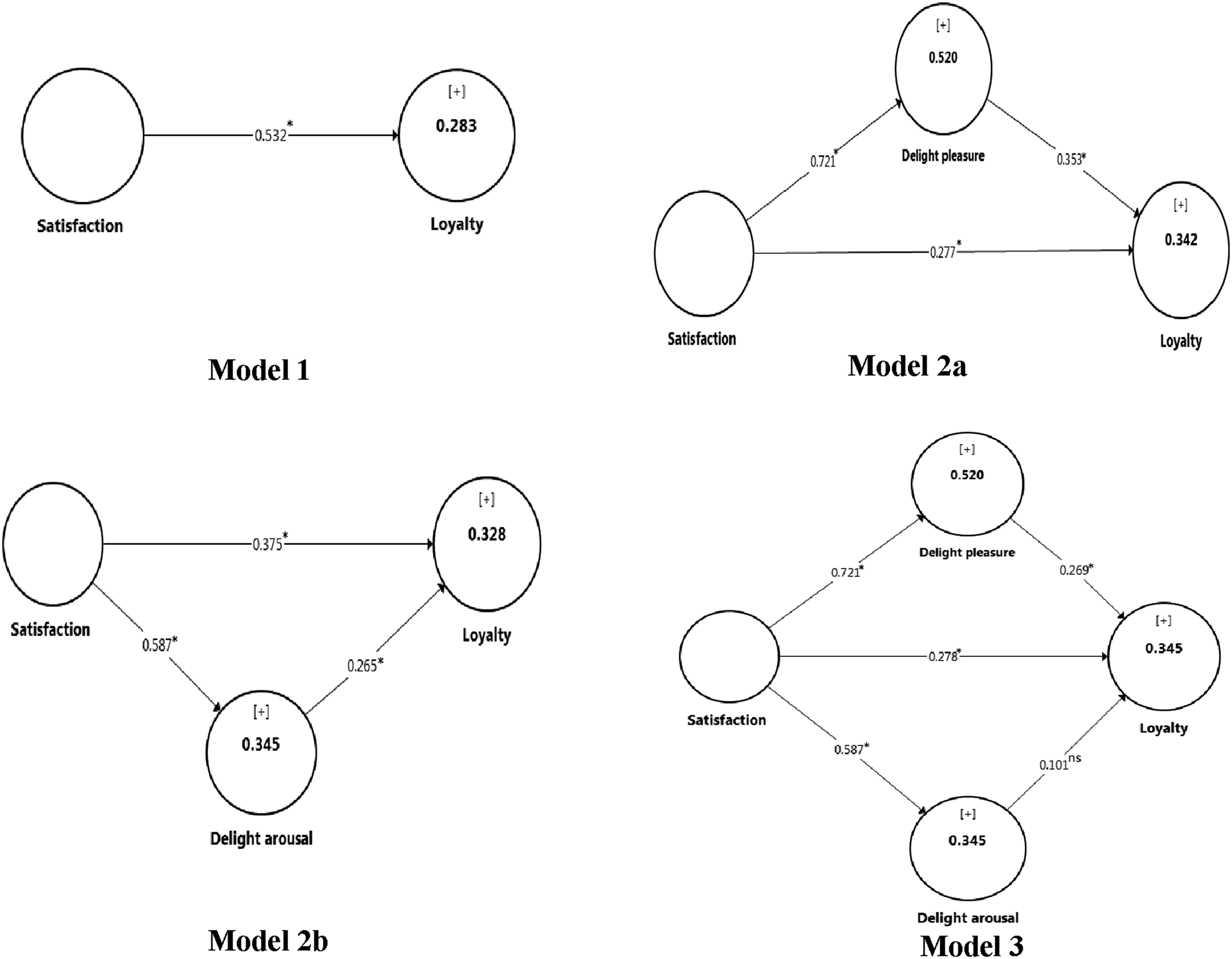
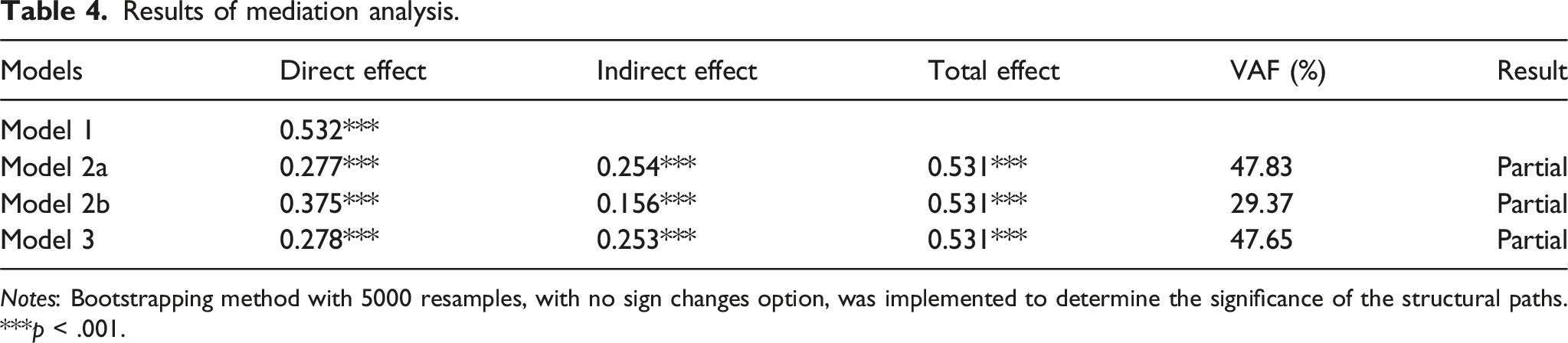
Both mediators (customer delight pleasure and delight arousal) were included in Model 3 and estimated simultaneously. The results showed that the direct association between satisfaction and loyalty remained significant (β = 0.278; p < .001). Moreover, the indirect association was significant (β = 0.253; p < .001) with a VAF of 47.65%. Thus, customer delight pleasure and delight arousal jointly mediated the impact of satisfaction on loyalty. Since both the direct and the indirect effects were significant, the mediation was partial. However, it must be emphasised that the direct association between one of the mediators (delight arousal) and the outcome variable (customer loyalty) was not significant, although in absence of delight pleasure, the delight arousal-customer relationship was significant (see Model 2b). This is an interesting and noteworthy finding that is explicated in the discussion.
Discussion and implications
The overriding aim of the study was to ascertain the association between satisfaction and delight in predicting South African customers’ loyalty to mobile service providers and to examine the mediating role of delight pleasure and delight arousal in the relationship between satisfaction and loyalty. The study’s findings imply that the proposed model offers sound explanation for satisfaction and delight as predictors of customer loyalty in the MSI. The findings have theoretical and managerial implications.
Theoretical implications
Although customer delight is reputed to be the reason why customers are likely to display loyalty to a particular firm, some recent studies have found satisfaction to be a stronger antecedent of customer loyalty than delight, thus casting doubt on the strength of customer delight in explaining customer loyalty. Specifically, Ahrholdt et al. (2017) reported path estimates of 0.381 for the satisfaction-loyalty relationship versus 0.316 for the delight-loyalty relationship. Similarly, Foroughi et al. (2019) reported 0.508 for the relationship between satisfaction and intention versus 0.358 for the delight-intention link. Moreover, Kim et al. (2015) found the satisfaction-loyalty relationship to be stronger (β = 0.560) than the delight-loyalty relationship (β = 0.360). The findings of this study confirm that satisfaction and delight pleasure are significant and directly related to customer loyalty, albeit that delight pleasure (β = 0.352) has a stronger impact on customer loyalty than satisfaction (β = 0.278). These findings are not only significant in explicating the differential impact of satisfaction and delight in predicting customer loyalty but also robustly venerate delight as a more important route to achieving customer loyalty.
Previous studies examining customer delight have argued that delight is an emotional state independent of satisfaction and have not tested the association between satisfaction and delight (Ahrholdt et al., 2017; Loureiro, 2010; Oliver et al., 1997). However, in disconfirmation theory, positive performance beyond the ceteris paribus (‘zone of tolerance’) is considered a delightful experience (Keiningham et al., 1999; Oliver et al., 1997). Consequently, satisfaction is a prerequisite for producing customer delight (Bowden-Everson et al., 2013). By relying on the disconfirmation theory, the proposed model posits customer delight arousal and delight pleasure as direct outcomes of customer satisfaction. The findings confirm that customer delight is a higher psychological experience, prompted by satisfaction. Therefore, this study is one of only a few offering alternative models rooted in the disconfirmation theory for explaining satisfaction-delight-loyalty relationships, thus contributing to the literature in this research domain.
The results further highlight that satisfaction is capable of predicting higher arousal states (β = 0.587) than pleasurable states (β = 0.363). Interestingly, this study’s findings on the path estimate for the impact of satisfaction on delight arousal are similar to the path estimate (β = 0.598) for the same relationship reported in the study of Bowden-Everson et al. (2013), even though the research context is different. Hence, this study’s finding presents a strong empirical validation for the impact of satisfaction on delight arousal. Moreover, the findings imply that arousal has a stronger relationship with pleasure (β = 0.610) than satisfaction (β = 0.363). This raises a significant issue, as it indicates that satisfaction, which leads to customer delight arousal, is necessary to produce a pleasurable consumption experience. Thus, this finding presents a different view from the usual one – the notion that arousing customers to a higher degree is not a fundamental requirement to produce a delightful experience (Barnes et al., 2016). Furthermore, the findings reinforce the dominant logic that arousal creates the desire for pleasurable delight, which influences customer loyalty (Finn, 2005).
The role of customer delight (delight arousal and delight pleasure) in promoting customer loyalty is reinforced by its significant role in the customer satisfaction-loyalty relationship. The results of the mediation analysis suggest that the impact of satisfaction on customer loyalty could, to some extent, be strengthened if it produces delightful consumption experiences. This finding is unlike those of previous studies (e.g. Ahrholdt et al., 2017; Loureiro, 2010) that have posited satisfaction and delight as separate and independent paths to customer loyalty. To the best of the researchers’ knowledge, no prior research has examined the mediating role of delight arousal and delight pleasure in the relationship between satisfaction and loyalty. The mediation analysis also reveals interesting insights, in that in the absence of delight pleasure, delight arousal impacts customer loyalty (Model 2b). The addition of a second mediator (delight pleasure) decreases the impact of delight arousal on customer loyalty. A plausible explanation is that delight pleasure, which reflects a higher level of consumption-based affect, is capable of producing repurchase loyalty more than delight arousal does (Oliver et al., 1997). The validation of the satisfaction-delight, arousal-delight, and pleasure-loyalty relationships in this study enhances the theoretical understanding of the range of varying psychological consumption experiences that culminate in customer loyalty. Future studies that aim to clarify the relationships between satisfaction, delight, and customer loyalty can benefit from these findings.
By focussing on consumers in South Africa, this study extends the literature on customer relationships from a context that has not been well researched. Prior research on customer satisfaction, delight, and loyalty is usually based on consumers in Asian and Western contexts. Although these studies are imperative in establishing an understanding of the issues in this research domain, the observable differences in the level of market development and consumers in these contexts and those in emerging economies in Africa have implications for the generalisability of the findings without validation.
Practical implications
The research findings offer numerous important implications for achieving customer loyalty in the MSI. A crucial finding of the study emphasises the centrality of customer satisfaction in promoting delightful consumption experiences and fostering customer loyalty. The strength of the impact of satisfaction on delight and loyalty suggests that managers in the MSI need to continue investing in and monitoring customer satisfaction with their services. Continuous improvement in the service quality strategy is one of the strategies that MSI managers can adopt to achieve customer satisfaction. It is noted that customers’ perceptions of service quality are often the earliest signal of customer satisfaction, retention, or defection (Kasiri et al., 2017).
In emphasising the role of customer services, Dixon et al. (2010b) noted that customers become dissatisfied and switch brands because the company fails to deliver on its customer service promise. In mobile services, dropped calls, slow mobile internet, stuck text messages and emails, and ‘still-connecting’ or endlessly loading screens are common service issues that frustrate consumers. Previous research (e.g. Kim et al., 2004; Zhao et al., 2012) notes that call quality, high-speed mobile internet quality, value-added services, convenient procedures, and customer support are key service quality factors that influence customer satisfaction and loyalty. Thus, South African MSI firms hoping to achieve customer satisfaction and reduce customer defection could consider enhancing their network quality to lower the rate of dropped calls, improve mobile internet connectivity, and speed up loading time.
The results emphasise that customer delight is a stronger predictor of loyalty than satisfaction. Therefore, for South African MSI firms to succeed in building customer loyalty, they must endeavour to move beyond merely satisfying their customers; they must delight them. Chandler (1989: 30) emphasised that ‘going beyond satisfaction to customer delight will provide a distinct advantage to the company that does it first and does it well consistently’. To delight customers, South African mobile companies may have to pleasantly surprise them (Kumar et al., 2001). Although achieving this may increase firms’ current cost structure and may be impractical (Dixon et al., 2010a), it is a business imperative to remain competitive and defend market position. In light of this, South African mobile service providers must find subtle and cost-effective ways to use their delight programmes as a strategy to reduce price elasticity among their contract customers.
One way to achieve an affordable customer delight programme is for firms to concentrate their efforts on aspects of their operations where they have a sustainable competitive advantage (Kumar et al., 2001). Delight programmes that are built around firms’ sustainable advantages are inimitable, at least in the short term. Therefore, firms could leverage their delight programmes before their competitors can provide the same level of experience, thereby making it an industry standard (Jain et al., 2017). An example could include programmes like ‘random acts of kindness’, where customers are selected at random and given special offers, including free airtime and/or data bundles. These surprising consumption experiences can create delight that may foster customer loyalty.
However, as Oliver et al. (1997) argued, adequate customer involvement is fundamental if aroused emotion is to be part of the consumption experience. Consequently, for MSI firms, the question of how to create customer involvement in their services is key to achieving aroused consumption states. Variability in the creation and delivery of products and services is also very important for delightful consumption experiences (Oliver et al., 1997). Hence, mobile companies that hope to garner customer delight and loyalty should stay abreast of industry developments and attempt to be at the forefront of cost-effective product/service innovations that foster variability in their service offerings. Service innovations, such as cost-effective ‘over-the-top’ applications and services that enable consumers to reduce communication expenses, not only provide positive arousal but also pleasant consumption experiences.
Customer service staff is a critical component of any strategy to foster customer satisfaction and delight in the South African MSI. Research shows that customer service staff may create superior, enduring, and pleasurable experiences that can complement their firm’s value-added offerings to achieve customer delight (Stock et al., 2017). Firms in the South African MSI can foster innovative service behaviour by encouraging customer service employees to produce creative ideas and solutions during service encounters, contributing significantly to customer loyalty.
Although the study’s findings present major implications for research and business practices, there are various limitations, too. First, the study focused on the mobile service sector, not on the entire telecommunications service sector. Future research can replicate this study and holistically research the factors that influence loyalty in the telecommunications industry. This is necessary because landline telephones are still widely used in South Africa and companies, such as Telkom and Neotel, offer services that are comparable with those of mobile service providers. Hence, it is essential that future research does not exclude landline service companies. Second, understanding the underlying reasons for customers to stay committed to a mobile service provider requires going beyond satisfying and delighting them. Some customers may not be encouraged by emotional experiences and may want physical and tangible rewards, such as free airtime and data, branded shirts and caps, or handsets. Therefore, it would be good for future research to examine the effect of satisfaction, delight, and tangible rewards on customer loyalty in the MSI.
Conclusion
The present study examined the associations between customer satisfaction, delight experiences (specifically, delight arousal and delight pleasure), and customer loyalty in the South African MSI. The findings indicate that customer satisfaction plays a significant and positive role in fostering customer loyalty. Moreover, customer satisfaction has a significant impact on both delight arousal and delight pleasure, with a stronger effect on delight arousal. The results also demonstrate that delight arousal has a positive influence on delight pleasure, and delight pleasure in turn significantly affects customer loyalty. Interestingly, the study reveals that while both satisfaction and delight pleasure contribute to customer loyalty, the impact of delight pleasure on loyalty is stronger than that of satisfaction. Furthermore, it is noteworthy that delight arousal alone does not directly generate loyalty; its influence is mediated through delight pleasure. These findings emphasise the importance of not only satisfying customers but also creating delightful experiences to enhance customer loyalty. Based on these results, it is recommended that firms in the South African MSI and others in similar contexts focus on achieving high levels of customer satisfaction while also incorporating strategies to evoke delight arousal and pleasure. By prioritising both satisfaction and delight experiences, firms in the MSI can cultivate stronger customer loyalty and gain a competitive edge in the market.
Footnotes
Declaration of conflicting interests
The author(s) declared no potential conflicts of interest with respect to the research, authorship, and/or publication of this article.
Funding
Open access funding for this publication was provided by the South African National Library and Information Consortium (SANLiC).
