




Abstract
This paper explores whether employee commitment to the organisation is influenced by talent acquisition and retention practices. How do SMEs retain talent and encourage commitment and job embedding when their very existence is in doubt? The talk these days is about layoffs, terminations, reduced pay, no-pay leave and redeployment; how will SMEs fare in this scenario? This qualitative study includes in-depth interviews conducted using a social constructivism approach in order to gain a better understanding of the world in which we live and work. Individual meanings are formed not entirely within the individual, but through interaction with others, the social, where meaning is given. The template analysis method is used to analyse the interviews, which include specific themes. The findings point to a misalignment between talent acquisition, talent retention practices and organisational commitment. There has been no clear development in terms of how both can complement each other. As a result, the dimensions of person-organisation and person-job fit serve as a link between talent acquisition, retention and commitment. This contributes to higher levels of employee commitment, job embeddedness and an internal culture that may influence employee retention decisions. At the interpersonal level, SME owners must understand, nurture and motivate their talent. As an effective employee retention tool, monetary incentives play only a minor role. Talent retention is based on implementing a structured talent acquisition practice that includes a highly targeted cost-effective hiring plan. Talent acquisition includes fit dimensions that demonstrate a nuanced perception of individualised consideration, such as flexible work, belonging, career growth and interpersonal relationships.
Keywords
Introduction
Employees will less likely leave their organisation when they have a psychological attachment to it, demonstrating a deep commitment to, embeddedness and involvement in their job. Through talent acquisition, development, management and retention, effective talent management practices can ensure that organisations have the right person for the right job, that is, person-job (PJ) fit, at the right time to meet organisational goals, that is, person-organisation (PO) fit (Khatri et al., 2010; Stahl et al., 2012). As a result, effective talent acquisition and retention practices and investment in talent capabilities have a positive impact on employee morale, job satisfaction and motivation, commitment, productivity and long-term performance, particularly in times of economic turbulence (Maley, 2019; Stuart et al., 2021). Instead of perceiving talent acquisition and retention practices as merely an outcome, practitioners and scholars should view them as deep-rooted human resource practices that can promote affective, continuance and normative commitment (Stuart et al., 2021).
Talent management is an investment in developing specific knowledge, skills and competencies to establish long-term and stable relationships with employees, leading to high retention through a relational contract (Festing and Schäfer, 2014). Increased research on the impact of talent practices in Malaysian SMEs should be conducted, examining various talent management activities separately to assess their effectiveness in and relevance to SME operations. Currently, no specific studies investigate the relationship between talent acquisition and retention practices and organisational commitment in SMEs. Furthermore, the context in which talent management is practiced in the West differs from that in the East, with Asian cultural norms, values and belief systems. Employee turnover intention can be reduced through key commitment-based talent management activities such as talent acquisition, PJ fit, PO fit and retention strategies. The liabilities of being small compound SMEs’ difficulties in attracting and retaining rare, unique and committed human capital (Wright and McMahan, 1992; Wright et al., 1994). The direct and indirect costs of employee turnover are a common feature shared by most businesses (Sels et al., 2006).
Thus, the research question is: To what extent does organisational commitment foster worker retention and assist in resolving talent acquisition challenges in SMEs? This study draws on the perspective of SME owner-managers regarding talent management practices that can influence employee retention through organisational commitment factors such as positive supervisory relationships, job autonomy and rewards and recognition from the organisation.
Theoretical development
Talent acquisition
A talent is defined as a ‘pivotal role’ individual who can effectively apply their knowledge and skills to real-world problems and have a significant impact on the direction of their company’s overall strategy (Boudreau and Ramstad, 2007; Collings and Mellahi, 2009). Talent acquisition should be considered as a comprehensive strategic process, beginning with an employer’s brand image and sourcing, applicants’ response, person-environment (PE) fit (selecting and hiring) and talent onboarding (Ployhart, 2006). Acquisitions must be strategic, using social networking, candidate relationship management and present-day analytics. Managers ‘often cite alignment with the organization’s goals, beliefs, or culture or a failure of the employee to become engaged with the organisation’ when attributing talent acquisition failures to ‘fit’ (Schiemann, 2014: 284). Therefore, a job’s level of information is connected with low voluntary turnover (Carless, 2007; Meglino et al., 2000). Talent acquisition through informal, rather than formal channels, can reduce early turnover by enhancing individual job embeddedness (Allen, 2006; Weller et al., 2009). Striking a balance between the needs of both parties to establish a devoted workforce whilst continuously enhancing the organisation’s effectiveness is essential. In SMEs, replacing an employee’s abilities is simple, but training a new employee will typically result in loss of output (Tansley, 2011).
Influence of PJ and PO fit on talent acquisition
PO fit refers to the attraction of individuals to organisations and their selection by such organisations when their views, values and desires align with the organisations’ principles, culture and characteristics. Consequently, through the use of the attraction-selection-attrition model of Schneider et al., 1995, it was determined that PJ fit and PO fit are crucial in the talent acquisition process. In essence, PJ fit indicates that an individual and their job function are co-determinants of individual and organisational outcomes (Phillips and Edwards, 2009; Schneider, 2001). Specifically, PJ fit describes an individual’s conformity with and the incentives supplied to perform their job requirements (Vogel and Feldman, 2009). Employees will likely stay with and commit to their organisation if their knowledge, skills and abilities (KSA) fit their job requirements (Boxall and Purcell, 2011). As a result, when the job preview is honest and matches the actual scope of the job, it can lead to high job satisfaction, low voluntary turnover and excellent work performance (Carless, 2007). Meanwhile, PO fit is the alignment of values and goals between individuals and their organisation (Kristof-Brown et al., 2005; Kristof, 1996). Organisations identify ‘fit’ during the prehiring process by emphasising talent acquisition practices that are effective in increasing organisational commitment (Khatri et al., 2010).
Talent retention
Talent retention is the result of mutual satisfaction between employers and employees (Kontoghiorghes and Frangou, 2009). Employee retention describes employers’ effort to retain skilled and desirable workers to achieve their organisational objectives (Frank et al., 2004). When employees have a clear understanding of their ‘core competencies’ and scope of work, retention rates will be high (Boxall and Purcell, 2011). Despite organisations’ investment in employee retention, instances of voluntary turnover will occur, over which organisations have no control (Frank et al., 2004). The indirect cost of loss of organisational memory and expertise as well as the paramount concern of employees leaving with a wealth of tacit knowledge are distressing for organisations (Tlaiss et al., 2017). Past research on talent retention demonstrated that factors such as competitive pay, workplace relationships and communication, job security, employee development opportunities, autonomy and reciprocal expectations are among the most influential motivational variables affecting intention to remain in an organisation (Boxall and Purcell, 2011; Ortlieb and Sieben, 2012).
However, scholars argued that retention strategies should be tailored to specific employee groups based on the success and competitiveness of an organisation (Tlaiss et al., 2017). The impact of talent management practices on employee retention in SMEs is contingent on rigorous recruitment and selection practices, socialisation processes, training and development, compensation and reward packages, employee engagement in decision-making and team-based work supervisory styles (Allen et al., 2010; Wagar and Rondeau, 2006).
Retention of talent through effective talent acquisition process
Generally, SMEs’ hiring phases and procedures are neither systematic nor highly sophisticated. Their approach is elementary and rudimentary at best, resulting in hiring errors such as disorganised recruitment and selection processes, limited information from applicants, discounted information, being duped by applicants’ exaggerated claims and hiring staff assessments that are completely trusted (Boatman and Erker, 2012). Rather than emphasising the importance of quality in their recruitment and selection process, SMEs typically use a casual approach therefore facing challenges in retaining talent. The relative cost of turnovers, including direct and indirect recruiting costs, the training and socialisation of new talents, loss of tacit knowledge and productivity decline, poses a considerable challenge to small businesses (Sels et al., 2006).
The high cost of employee turnover faced by SMEs, suggests that employee retention may be a key mediator in reducing overall costs, achieving a high rate of productivity and increasing marginal gains from the implementation of new strategies (Way, 2002; Drummond and Stone, 2007). The talent retention taxonomy developed by Ortlieb and Sieben (2012) demonstrated the criticality of workforce competencies associated with five retention strategies. The retention strategies are based on norms and values, incentives, the recruitment of new professionals, knowledge management and coercion. Among the five retention strategies, norms and values are the most effective basis for talent retention, regardless of the talents’ competencies. Employees can receive prestigious awards and social recognition under such a strategy, which can strengthen their commitment to their organisation even when they decide to leave. Retention through norms and values can be realised through effective supervisor communication, recognition as a prestige factor and employee satisfaction and willingness to perform (Lazarova and Caligiuri, 2001). This study focuses on predictors of affective commitment, such as supervisor satisfaction, job freedom and autonomy and rewards for and recognition of employees’ contributions to their organisation (Anderson and Anderson, 2011).
Organisational commitment and talent retention
The concept of commitment, as a construct, differs from other concepts such as job satisfaction, job involvement, turnover intention and work group ethics. Commitment can be defined as a ‘binding force experienced as a mind-set (i.e., a frame of mind or psychological state that compels an individual toward a course of action)’ (Meyer and Herscovitch, 2001: 303). In addition, commitment is an employee attitude of demonstrating intensity and dedication to an organisation. As a model, organisational commitment encompasses (a) a psychological state that (b) binds an employee to an organisation and prompts them to (c) consider the implications and consequences of their leave-taking from the organisation (Meyer and Allen, 1991). Clugston (2000) expanded the model developed by Meyer and Allen (1991) by stating that affective commitment involves employees reflecting on whether their personal values and goals are compatible with those of their organisation. Employees’ desire to remain in their organisation can be determined by how closely their values and goals align with those of their organisation. Continuance commitment is described as the loss associated with leaving an organisation. Tenureship, seniority, financial benefits, networks, unique job skills and alternative job opportunities may be lost when an employee decides to leave their organisation (the need to remain). An employee’s desire to remain in their organisation as a moral obligation, demonstrating a sense of duty and loyalty, is referred to as normative commitment (the mindset of having an obligation to remain in the organisation; Mercurio, 2015). When the three components of commitment are compared, it is determined that employees with affective commitment will be highly motivated and willing to go above and beyond for their organisation (Meyer et al., 2007).
To retain employees, SMEs should consider positive engagement factors such as respectful treatment of staff, trust between employees and the management, opportunities to demonstrate one’s abilities and skills, sense of safety in the workplace, job meaningfulness, work autonomy and independence, effective communication and recognition of one’s performance. Such factors can contribute to job satisfaction and organisational commitment, which in turn can influence employees’ intention to remain in their organisation (Gallup, 2023; Hausknecht et al., 2008; Lee et al., 2017). An inclusive talent management ecosystem will entail supervisors at various levels to show support, provide development opportunities and mentor employees, which may inspire organisational commitment and talent retention. Instead of focussing on high-potential employees, firms should identify, nurture and place talents, who generally demonstrate high levels of organisational commitment, in key roles through inclusive talent management activities (Krishnan and Scullion, 2017).
Predictors of organisational commitment
Supervisor support
Talent recognition is critical to an organisation’s success, because it can foster employee creativity and organisational commitment, especially in a participatory and competitive work environment (Dockel et al., 2006; Ramus and Steger, 2000). Regardless of their organisational level, employees want a sense of purpose and to be proud of their work. Employees will be motivated to continue their efforts or work harder for high achievement when they receive recognition (Agarwal and Ferratt, 2002). In this study, satisfaction with supervision is used to assess the impact of supervisory encouragement on organisational commitment. A significant aspect of talent retention is supervisors’ or leaders’ individualised consideration of implicit aspects such as belonging, communication and interpersonal relationships. Employees will have a strong normative commitment to their organisation as a result of feelings of loyalty and obligation (Dockel et al., 2006).
Freedom, engagement and job autonomy
Job autonomy is the degree to which a job allows a person significant freedom and independence to carry out their work. Employees who are confident in their competency and achievements will demonstrate high affective commitment, because their job scope is challenging and requires a variety of skills (Dockel et al., 2006). Employees will considerably value work outcomes from their effort when they perceive themselves to have high autonomy and enjoy the empowerment. As their leaders practice participatory leadership, which will allow them to make decisions, loyal employees seeking empowerment will be willing to accept responsibility for their work outcomes (Agarwal and Ferratt, 2002; Dockel et al., 2006). As a result, increased job autonomy will strengthen the organisational commitment of productive and value-added employees.
Rewards and recognition
Although monetary rewards are the primary incentive that will attract the right talents, the long-term solution to talent acquisition and retention is not about pay. Similarly, high pay is not required, but competitive compensation that is considered to be ‘fair’ has a strong correlation with retention rates (Kochanski and Ledford, 2001). The monetary rewards examined in this study are extrinsic rewards provided by organisations to their employees in exchange for services rendered (base salary). Meanwhile, performance recognition compares employees’ expected performance ratings with actual ratings given by their superiors.
Research purpose and conceptual framework
SMEs play an important role in driving employment, growth and economic transformation in Malaysia as an upper-middle-income economy. SMEs account for 98.5% of all business establishments in Malaysia, with 2.3% being medium-, 21.2% being small- and the remaining being micro-sized enterprises. Malaysia’s unemployment rate was 3.9% as of May 2022, with 637,700 people out of work (Department of Statistics Malaysia, 2022). The new workplace imperative for work and organisational commitment is about employees’ overall wellbeing. Scholars agreed that small businesses that can retain talents are likely to grow and expand; thus, small businesses should prioritise talent retention through skill-enhancing practices, motivation-enhancing practices and opportunity-enhancing practices (Pittino et al., 2016). However, research on talent retention in SMEs is scarce (Wagar and Grant, 2008; Wagar and Rondeau, 2006). Thus, managers must ask themselves, ‘How do I create a thriving work environment for my employees so that they are committed and can be retained?’
SMEs were observed to be hesitant in implementing formal talent management practices owing to perceived low return on investment (Patel and Conklin, 2012). Nonetheless, SMEs’ ability to attract, acquire, develop, motivate and retain talents is critical to their success and ability to gain a competitive advantage (McEvoy, 1984; Deshpande and Golhar, 1994). Hence, understanding the challenges faced by SMEs in retaining talents as well as the underlying causes of their unwillingness to implement talent retention practices is crucial.
Although talents value monetary benefits, employment trends indicated that intrinsic factors such as job satisfaction and organisational commitment to remain in an organisation are equally important (Hausknecht et al., 2008). Employees perceive considerable personal meaning when they perceive themselves to have high autonomy, which will have a positive effect on their normative commitment. Nonetheless, rewards and recognition are important predictors of organisational commitment, because they can provide a sense of security, appreciation and improved self-worth (Hoyt and Gerloff, 1999). Major forms of motivation are supervisor recognition and feedback, which were deemed to be affective commitment and hence can improve retention rates (Paré and Tremblay, 2007).
Motivation turnover and retention research shifted gradually from understanding ‘why people leave’ to ‘why they stay’ (Holtom et al., 2008). Based on this argument, and considering the importance of talent acquisition and retention in terms of organisational commitment, this study’s research objectives are as follows: 1. To explore the effectiveness of talent acquisition and retention practices in establishing organisational commitment through the lens of managers. 2. To evaluate managers’ understanding of organisational commitment predictors. 3. To determine whether managers regard PJ fit and PO fit as catalysts for organisational commitment from talent acquisition and retention practices.
The conceptual framework in Figure 1 was developed using key ‘a priori themes’ from the literature and research objectives. Conceptual framework based on ‘a priori themes’.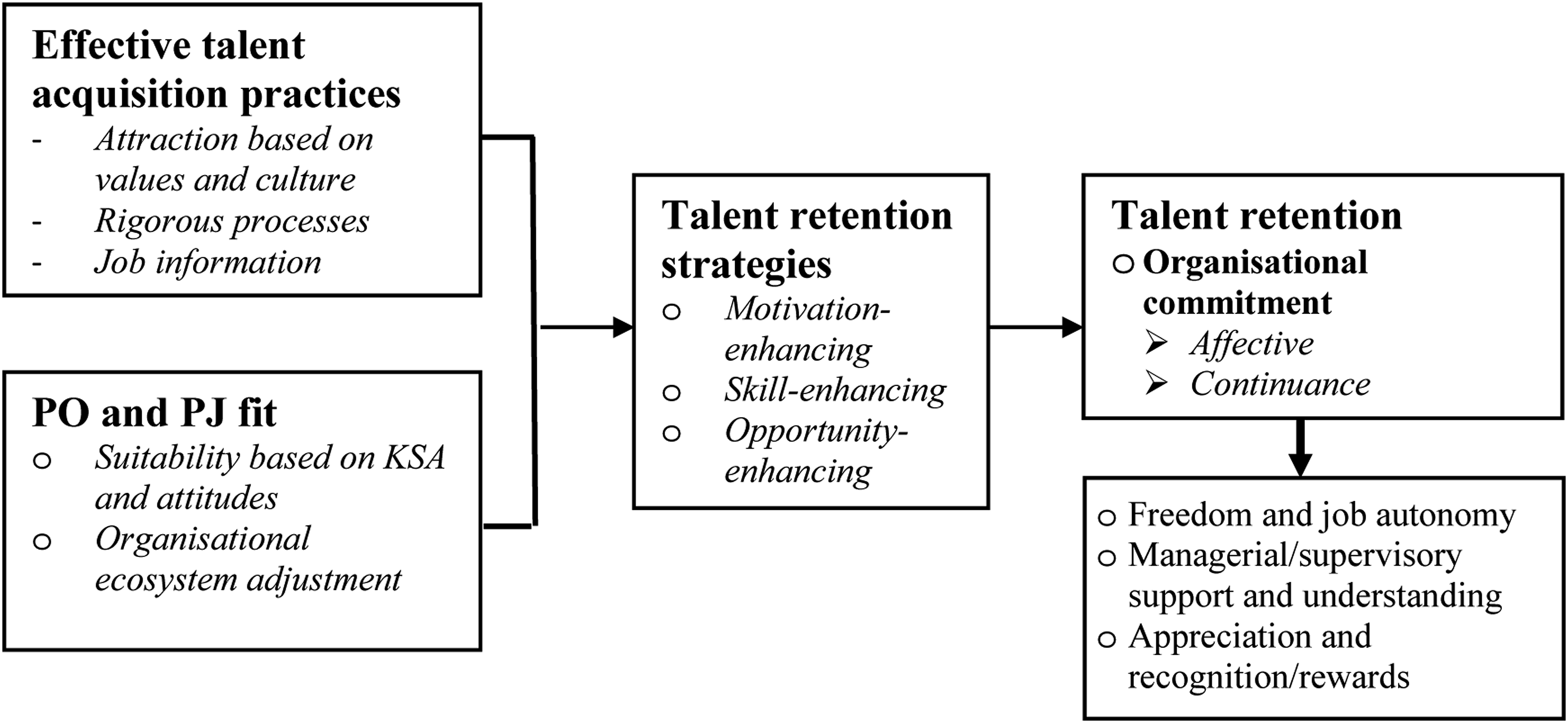
Methodology
A qualitative method was used in this study. Exploring the various aspects of talent acquisition and retention that can influence organisational commitment and job embeddedness, such as cultural nuances, values, engagement, autonomy and other factors, can add to our understanding of how SMEs can effectively retain employees. In the talent acquisition process, a qualitative approach may help managers identify distinct perceptions and characteristics. Specific qualitative findings may reveal misalignment and incompatibility between an individual and their job, between an individual and their supervisor, between an individual and their team or between an individual and their organisation. SME owner-managers can act to increase congruence and talent retention by addressing issues such as personality incompatibility, leadership, work styles, relationships, role conflicts and ambiguity.
The approach used in this qualitative study was social constructivism, which states that ‘individuals seek understanding of the world in which they live and work’ (Creswell, 2013: 24). The method is essentially used to seek understanding of individuals’ world and develop their unique meanings, which are not entirely innate in individuals but formed through interaction with others and the collective generation (i.e. social) of meaning (Creswell, 2013; Lee, 2012).
The research framework employs and reconstructs existing theories to reflect how managers perform their duties and is practice relevant. To determine and integrate prior work and practical rationality, five key strategies were used, that is, (i) ‘entwinement of practitioners and tools; (ii) the focus is on what people really do and not exclusively about people only; (iii) the focus is on how the activity is completed using various tools and body; (iv) looking at the standards set and what constitutes success and failure. The uniqueness of the practice that gives it an identity and (v) exploring the resources needed and how it is sourced for the practice facilitates the understanding of the links and options’ (Sandberg and Tsoukas, 2011: 346).
Description of participants of in-depth interviews.
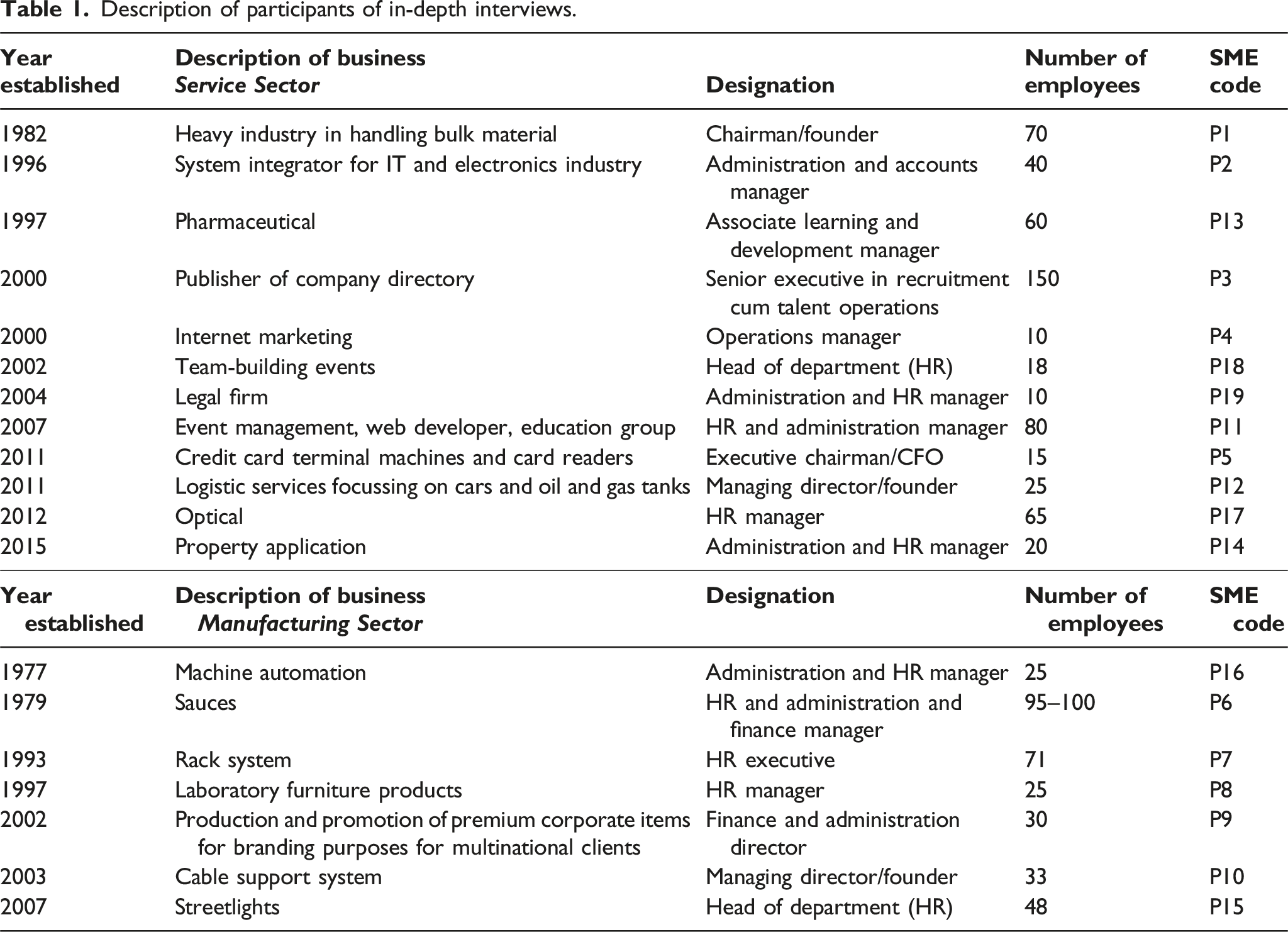
The in-depth interviews were guided by a set of general questions about talent retention and acquisition practices, organisational commitment factors and the importance of PO and PJ fit. The questions were developed using theoretical underpinnings (Chiu and Ng, 2001; Kontoghiorghes and Frangou, 2009; Ortlieb and Sieben, 2012; Phillips and Edwards, 2009; Ramus and Steger, 2000; Smith, 2008). All the participants gave their consent for the interviews to be digitally recorded and transcribed verbatim for the data analysis. The transcription process took about 6 months, from the end of 2017 to the middle of 2018. The process was slow, because some of the participants’ statements required verification for clarity.
Methods
Preliminary conceptual framework based on ‘a priori themes’.
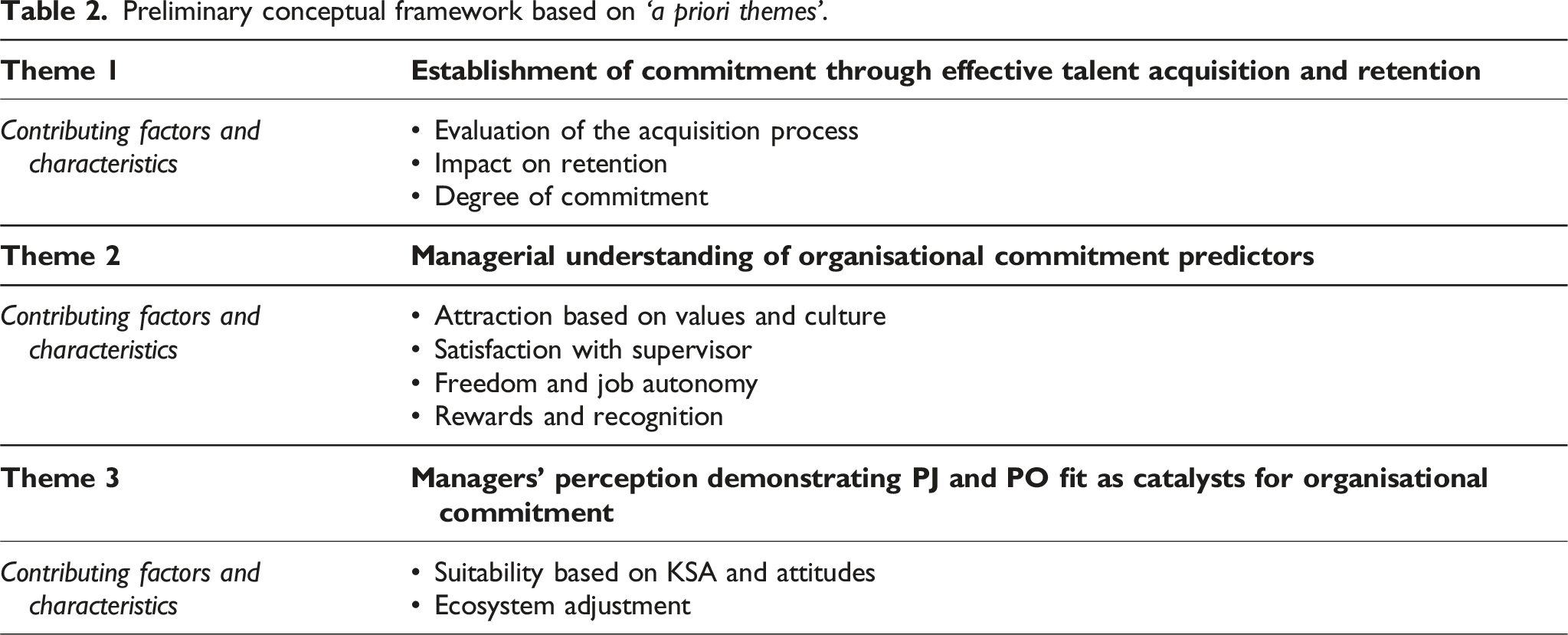
The interview transcripts were thoroughly reviewed and organised into categories after being thoroughly analysed to identify common phrases and statements from the 19 participants. This procedure aided in the identification of ‘recurring regularities’ and central ideas (Corbin and Strauss, 2008; Patton, 2015) Constructivist research examines meanings derived from verbal conversations, texts and interview narratives and is a process of making sense of, assigning meaning to and identifying factors that cannot typically be derived from statistics or metrics.
The key findings from the in-depth interviews on talent acquisition practices were used to determine the right ‘fit’ and methods employed to retain talents.
Findings
Establishment of commitment through effective talent acquisition and retention
Most of the SMEs lacked proper talent acquisition procedures, and though the owner-managers had existing standard operating procedures, no clear operational systems existed. The acquisition methods preferred by the SME owner-managers were a mix of word-of-mouth recommendations and agency and online postings. The convenience of hiring through recommendations is an advantage of SMEs. According to one participant, ‘When a truck driver resigns due to [an] offer from larger firms, we overcome it by [asking] the drivers [to] recommend their friends for the now vacant job’ (P12). In this case, the justification for using the method was the influence of word of mouth on potential employees’ decision to apply to the SME: I feel [that a] walk in [is] much easier, because they come in by word of mouth, so they already have some knowledge about the company or what they are actually looking at, so when we do an interview, they already have the view about what they want or what they could deliver. So, it is much easier. (P6)
The owner believed that when applicants choose to walk in, they would have gathered information about the firm. As a result, such applicants have made a deliberate decision about where to apply based on what they have heard about the firm; thus, retention would be easy.
In the acquisition process, benefits for the SMEs included ease of hiring and lack of red tape, which expedited the acquisition process. ‘Our company does not have a lot of red tape. That’s the good thing about our company. In a big organisation, you may have to go through levels of approval. Here, it is very straightforward’ (P9). The SMEs could also use agencies and college trainees as sources of talents for their talent needs. ‘If there is a requirement, first, we go to a recruitment agency or [we do reference checks]. We also take trainees. Sometimes, if we find that they are good, then we will offer them permanent positions’. In addition to traditional agencies, the SMEs used online talent agencies to recruit talents. ‘We will put [announcements] on Job Street or an advertisement’ (P1). A company’s reputation also had a significant influence on its retention of employees, ‘This is one of the companies where I don’t really have to go out and post ads. Ongoing, I have a lot of people applying to the company randomly’ (P11). As a result, posting job openings in a targeted manner can increase visibility and attract applications, which is consistent with the overall point of why having a memorable brand name can attract customers.
Issues with applicants dropping out of the application process or leaving after the probation period were shared, which added to the time to fill a vacancy. Interviews in SMEs are unstructured and flexible and continue until the organisations’ objectives are met. Allen (2006) discovered that formal recruitment increases early turnover owing to lack of individual job embeddedness; however, the results of the present study did not support this finding. In addition, the findings on formal sources for attracting and recruiting being ineffective in communicating messages to potential candidates unless personal sources and recommendations were used were inconclusive. Interviewers or the owner-managers used their impression of the applicants to make hiring or rejection decisions. The establishment of proper recruitment and selection procedures, according to Meglino et al. (2000), can reduce early turnover rates.
Managerial understanding of organisational commitment predictors
Participant responses on organisational predictors.
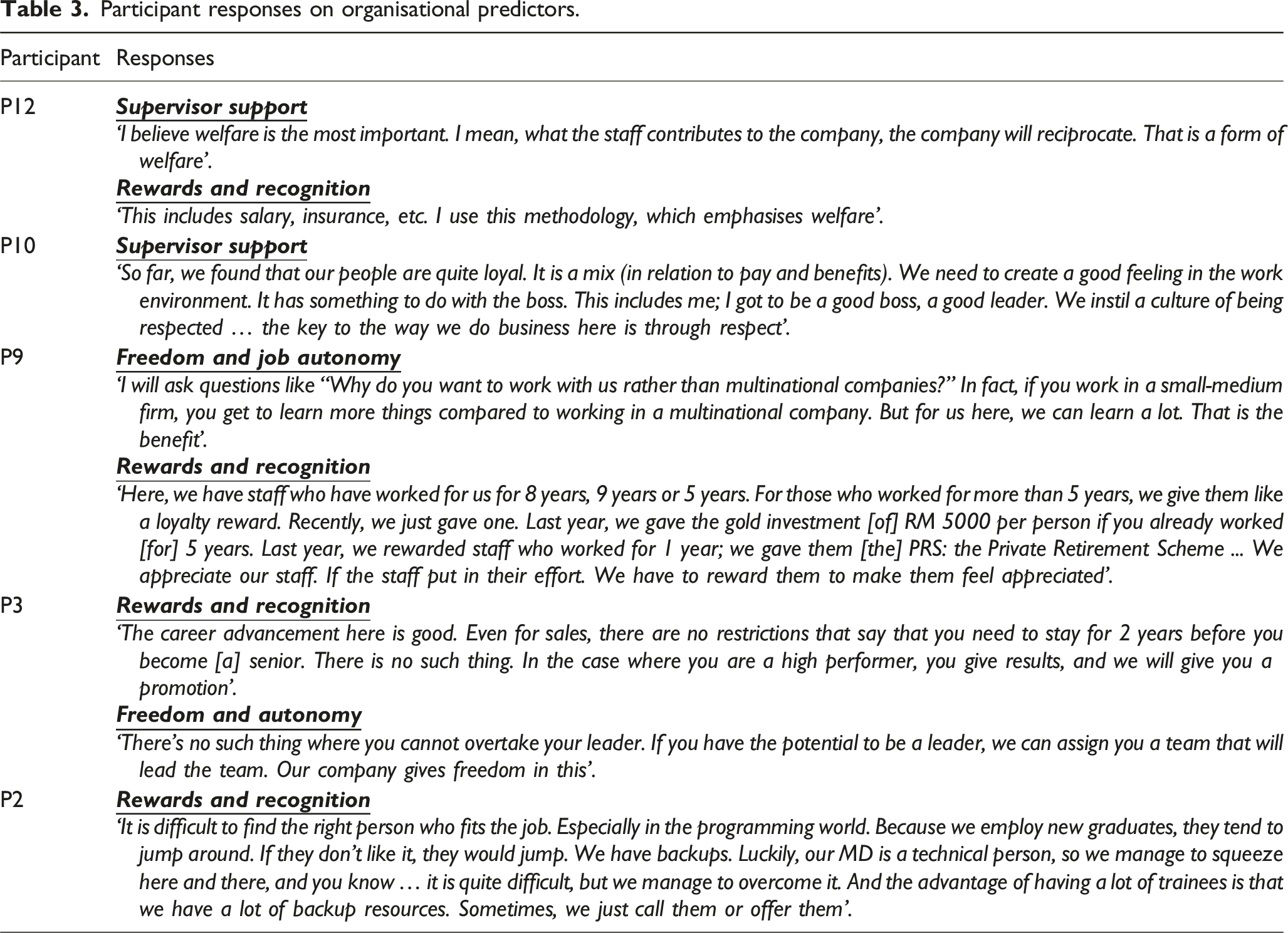
According to the findings (Table 3), the Malaysian SME owners, particularly P10 and P9, would rather focus on providing support and encouragement to employees to stay with the company than attempt to retain them when they indicate their intention to leave. Another participant discussed the mismatch between what was desired and the reality of the work environment rather than the appeal of having talent retention practices. As mentioned by one of the participants, one would ideally want to work in an environment similar to that of Google, but such an environment was far from the reality in a SME context: My MD likes the Google environment, because according to him, that is what appeals to Gen Y; they like the openness. We have a ping-pong table, we have a stress room, video and all these games, but no one plays, because they are supposed to be out there working. So, on the one hand, I experience difficulty matching the concept; wow, it is happening, very playful, fun and yet, the mindset is still ‘monitor time in and out’. (P7)
As mentioned by P2, talents’ main reason for leaving was better offers elsewhere, and SMEs were unable to compete. Nonetheless, the participants agreed that the reasons for talent retention in their organisation were primarily the organisational culture and values, leadership influence and motivation and competitive pay. P3 explained how employees can quickly advance in their careers. Promotion opportunities can recognise staff’s ability to be highly competent in a high-performance environment, which suggests that having freedom and autonomy in their work can overcome their perception of having high work stress. Employees with considerable freedom and independence in their job will value the results of their efforts and be highly motivated to keep going.
Managers’ perception demonstrating PJ and PO fit as catalysts for organisational commitment
When asked to describe the ideal ‘fit’ for their company, the respondents were vague. The SME employers placed a premium on hiring employees with the right attitude: In my view, first, they must have integrity and strong loyalty to the company. [The] most important is integrity to succeed and survive in this challenging age. Second, there is the skill of the job, which should be together with integrity. They must have confidence. I emphasise discipline and integrity, which [will] bring benefits to the company. (P12)
Another participant emphasised experience and persuasion: ‘Related working experience is what we require. Normally, there is not much problem for a person to fit into our requirement. Because we are very persuasive … Don’t think there will be any problem for any person to fit’ (P10). In this case, the participant was confident in finding candidates who demonstrated a satisfactory fit with the job and organisation. According to another participant, the emphasis on integrity, loyalty and trust involved how an applicant responded to critical-thinking questions: We need to trust the person. We will ask them critical-thinking questions; how you handle things. At least that tells us the character, how this person is when he/she answers. For example, in their previous company, they blame their company. I don’t think they will be a good fit. I know nobody is perfect, but rather than complaining about your company, you should give your company a solution instead. That can give you a hint if the person can fit. I think of your skillset and your character. (P3)
However, P4 highlighted the chemistry between the interviewer and candidate, ‘Based on the interview, we look at their eye contact, whether we have chemistry with the person. Although a person is very good, if the chemistry is not there, we will not accept [him/her]’. Similarly, P2 shared that first impressions can indicate if a candidate fits the job and organisation, ‘Sometimes, we will know whether he or she is able to adapt [based on] first impressions’. Another participant highlighted culture as a critical component of PO fit and described how employees who initially claim to be able to adapt and fit fail, because they are unable to fit over time. Some employees became toxic and exerted a negative impact on the other employees. I don’t want those who will probably stay but will become a cancer to the company. They will talk bad about the company. I don’t understand. If you really do not like the company, just leave. Why do you need to say a lot of bad things about the company? That’s the thing I do not understand. The mentality of these people. That’s why some companies can become very successful and why some companies close down - due to the staff. (P9)
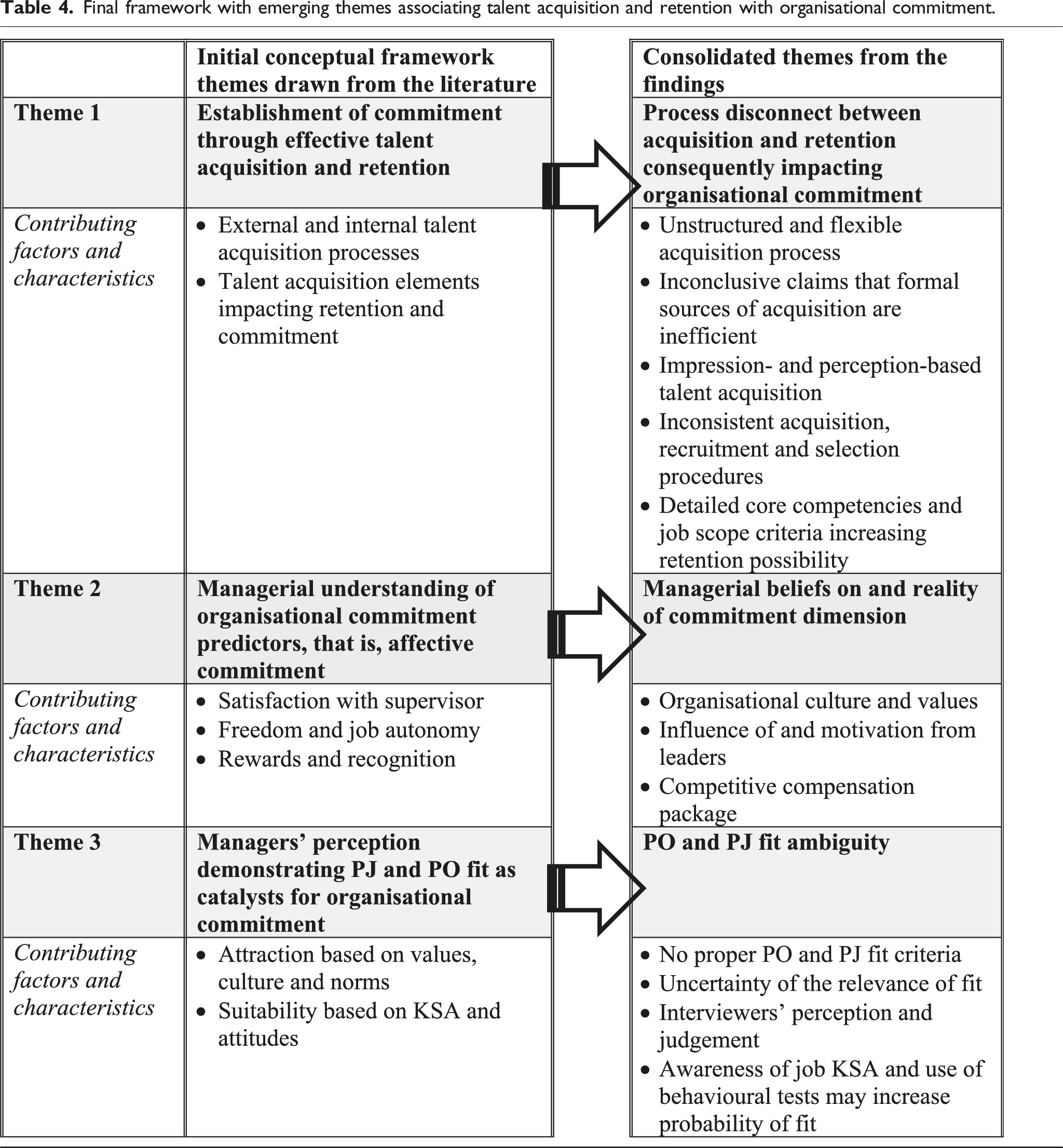
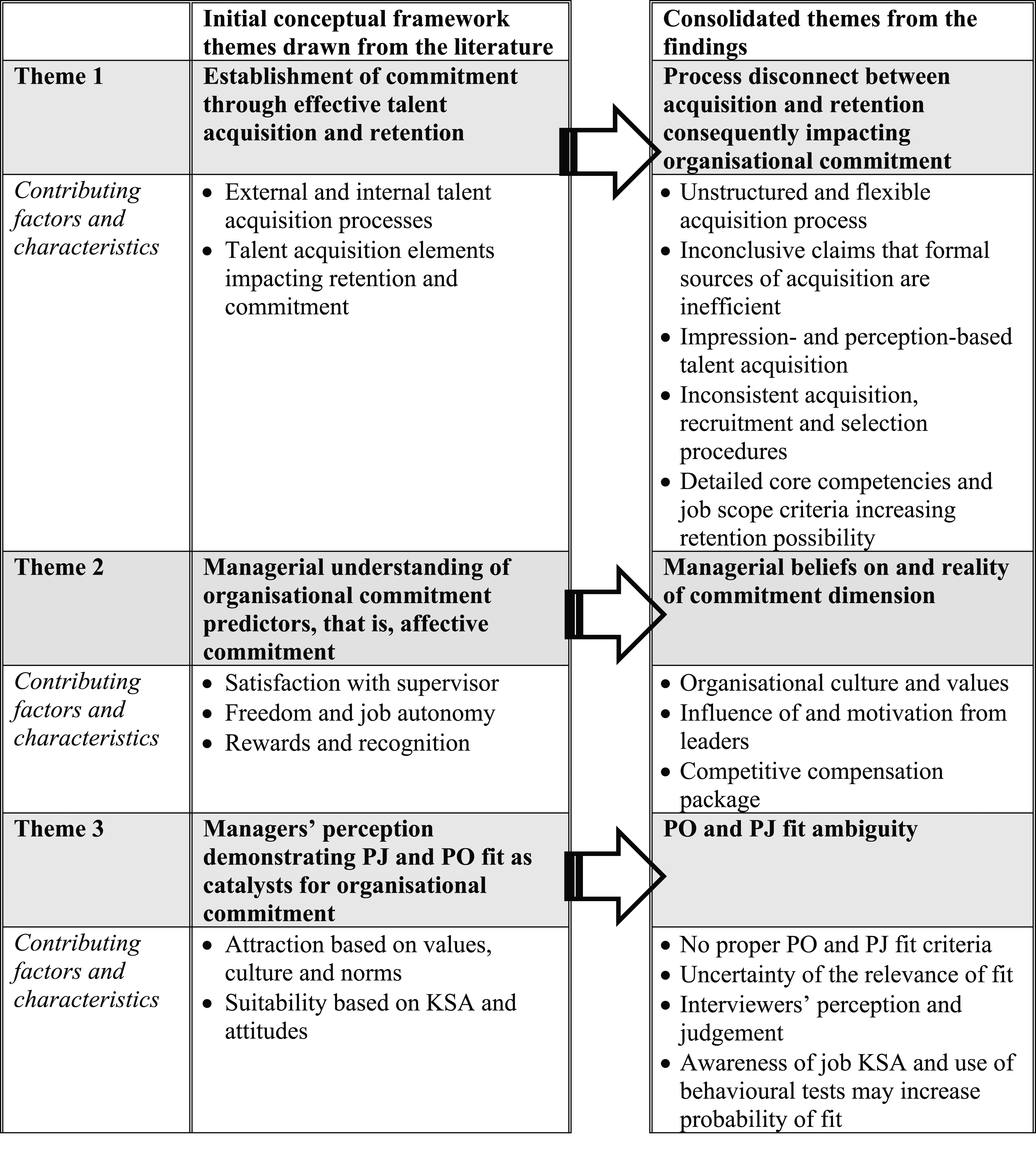
Final framework with emerging themes associating talent acquisition and retention with organisational commitment.
Discussion
The study findings suggest that the following emerging themes influence the relationship between talent acquisition, retention and organisational commitment in SMEs:
Process disconnect between acquisition and retention consequently impacting organisational commitment
Talent management practices in SMEs are less cohesive, poorly structured and ad hoc, beginning with the talent acquisition process and continuing through retention. In SMEs, talent acquisition is the primary activity directly related to the nature of a job. SMEs are concerned about the long-term viability of their operations, so quick talent acquisition processes, such as word of mouth, can meet their requirements. When an employee’s sister is hired, the likelihood of retention and commitment will increase. The arguments resonate with the findings and literature (Cassell et al., 2002). Candidates will likely consider an organisation if they are well-informed of its core competencies and the job scope (Ortlieb and Sieben, 2014). An employer’s brand, promoting the organisation as a distinct, desirable and excellent place to work, can act as a channel to attract applicants (Ewing et al., 2002). Initial impressions and the attractiveness of an organisation, based on its external image, are cues that can influence applicants’ decisions to apply to the organisation. Branding is employed to establish presence in the marketplace. In this context, promoting an organisation’s value proposition that can attract potential applicants, the key message publicised is to position the organisation as a favourable employment environment. Such a narrative should be incorporated into talent acquisition approaches. Hence, talent acquisition activities are not an ordinary process but a branding exercise that can generate a pool of quality candidates, find the right ‘fit’ applicants and encourage improved job retention rates. A firm’s core values and culture will become the narrative presented to stakeholders to attract and generate appeal for a job, positioning it favourably for the applicants.
The implementation of a clear hiring process is the first step towards effective talent acquisition. Thus, job descriptions and specifications are critical components of the acquisition process that must not be overlooked. When detailed core competencies and criteria are accurate, attracting candidates to apply for a job will become less difficult. It can pique applicants’ interest and increase their curiosity, because they can match their skills to the job. When systems are highly structured, the likelihood of retaining employees will be high, because excessive emphasis had been placed on turnover intentions rather than on retaining talents and advocating commitment (Stuart et al., 2021). Gaining employees’ trust and commitment to their organisation is essentially a long-term investment, which can be made by implementing well-organised talent management practices. Unstructured acquisition systems may result in acquisition processes based on individual impressions, perceptions and judgement. Some SMEs prefer the informal nature of talent acquisition owing to the benefits of speed and cost.
Managerial beliefs on and reality of commitment and job embeddedness dimensions
Surprisingly, the findings indicate that the SME owner-managers are aware of and believe in organisational culture and values as factors that can establish commitment. However, in the broad SME ecosystem, this awareness and belief do not translate into reality. An example is how SMEs responded to the COVID-19 crisis in a knee-jerk manner by drastically reducing talents rather than having the foresight to consider furloughs as a means for building long-term commitment and productive relationships with their employees (Stuart et al., 2021). Leaders’ role in motivating and influencing employees is critical in retaining talents in SMEs. SME owners and managers should seek additional ways to delegate tasks and empower their employees. Specifically, they may motivate their employees by changing their negative perception of job stress by emphasising the significance of their role and its impact on their work and the overall performance of the organisation. The SME owner-managers’ beliefs about organisational values and culture may be translated into tangible elements in the SME talent management ecosystem, thereby inspiring organisational commitment. The literature on commitment unmistakably states the need to develop a mindset representing a desire, a need and an obligation to remain committed.
PO and PJ fit ambiguity and implications on commitment and job embeddedness
A number of studies found that PE fit has an impact on ‘work outcomes such as satisfaction, organisational commitment, work motivation and intention to leave’ (Giauque and Resenterra, 2014: 210). PE fit is a broad concept that includes several dimensions, such as PO and PJ fit. Most of the SME participants are unsure of the PO and PJ fit and how they complement each other. Owing to the unstructured acquisition process, the distinct differences are unclear. As a result, job descriptions and specifications must include key KSA and personal characteristics. In terms of PO and PJ fit, linking company values with expectations on job descriptions and specifications can provide a snapshot of a company’s offerings. This finding is consistent with that of Meglino et al. (2000) and Carless (2007). When the acquisition process is completed, a positive psychological contract will exist (Kickul, 2001) between the employee and employer, thereby fulfilling the fit dimension and increasing talent retention rates.
Implications
According to the study results, organisational values and culture can influence an employee’s decision to stay with the organisation and level of commitment. At the interpersonal level, SME owners must understand, nurture and motivate their talents. As an effective employee retention and commitment tool, elements such as monetary rewards contribute only partially. Supervisors or leaders considering implicit aspects such as belonging, communication and interpersonal relationships is a major aspect of organisational commitment and talent retention. This study emphasises the importance of understanding job applicants’ decisions by viewing PO and PJ fit in a highly rich and nuanced manner. Finally, applicants’ decisions can highlight the significance of developing an effective acquisition and retention process.
SME retention practices can be improved by focussing on employee satisfaction by meeting employees’ emotional and social needs. Through their current word-of-mouth recruitment strategy, SMEs should position themselves in the industry to spread the positive image of their brand of employment.
SMEs are typically associated with informal workloads. However, this characteristic may promote employee retention. Thus, SME leaders should reconsider the traditionally regarded ‘negative’ characteristics of their business from a positive standpoint. For example, SME employees are trained to work under considerable pressure by multitasking between various tasks owing to loosely defined job descriptions. Instead of reinforcing this negativity, SME owner-managers can communicate their level of control over specific organisational outcomes. They should also emphasise the advantages of developing a diverse skillset through empowerment. Diversification of roles and responsibilities, rather than routine and monotonous tasks, can foster job commitment and improve retention.
Recommendations
Investigating the activities of excellent performers in and outside the industry is critical for SMEs. One option is to foster intercompany relationships among SMEs from the same or different industries. SME owners can use such an opportunity to discuss and share their short- and long-term talent management strategies as well as the challenges of attracting and acquiring the right talents and exchange ideas or explore solutions to such challenges.
An online forum should be established in companies as a platform for employers and employees to voice their concerns, raise important issues and seek advice on various problems. Employees should be encouraged to participate in discussions, because it can increase employee self-efficacy, particularly when their organisation values their feedback.
Monetary compensation may not be a long-term solution for retaining talents. When compensation and recognition are perceived to be unfair, they will have a negative impact on employee organisational commitment (Heneman et al., 2000). This situation may be exacerbated when struggling SMEs cut salaries to stay afloat. Employees’ skills, efforts, experience and economic conditions should be reflected in rewards and benefits (Heneman et al., 1999; Heneman et al., 2000; Kupperschmidt, 2000). Employers should be aware of their employees’ short- and long-term goals and align them with the organisation’s recognition and reward policies. When no bias exists, employees will be motivated to achieve high levels of success. As a retention strategy, SMEs may investigate additional methods for linking rewards with overall business performance, such as providing long-service rewards, retirement plans and family related benefits.
The COVID-19 pandemic left a deep scar on SMEs. Prior to the pandemic, SMEs faced significant human resource challenges, which have been exacerbated. The government of OECD countries implemented job retention policies that supported 50 million jobs during the early stages of the pandemic (OECD, 2020). According to Ernst and Young (2020), 32% of Malaysian SMEs are experiencing not only operational downtime but also significant delays in job tasks as a result of the pandemic. Thus, SMEs aggressively review staffing costs and operational expenses and prioritise government wage subsidies to sustain their business and employees. Such measures are temporary and cannot be sustained, emphasising the importance of implementing talent retention practices demonstrating employees’ dedication to their organisation. Human resource priorities and roles have shifted and are currently about ensuring employee wellbeing and experience.
The COVID-19 pandemic caused businesses and employees to rethink how they conduct business. According to a study on 500 Malaysian SMEs by Employment Hero (Thompson, 2020), 46% of SME employees want flexible work arrangements. Surprisingly, 23% believe that they can work extra hours without compensation. Workers prioritise career advancement, recognition, support, autonomy and flexibility in balancing work and responsibility over monetary compensation. In addition, 87% of the polled individuals expect improved career development support, which will determine whether they will stay or look for another job, and 49% believe that work–life balance is important and can influence talent retention and level of organisational commitment.
Limitations
The proposed framework is a universalistic model; however, this study acknowledges that talent management practices in Malaysia may be influenced by the religious, philosophical and cultural nuances of SME founders. Culturally, a paternalistic approach can influence how talent acquisition, retention and organisational commitment are perceived; thus, such elements merit further investigation. Most of the participants have a general understanding of talent management practices. The main assumptions of such practices are about hiring, compensation, training and performance, which are rudimentary knowledge. As a result, to sufficiently clarify the research focus, explanations and examples that can assist the participants in understanding the main research objectives are provided. The sample is not limited to a single type of enterprise, such as medium-sized businesses. Data are gathered from micro-, small- and medium-sized businesses. Furthermore, this study does not focus on a single industry but rather on a random sample of SMEs. As a result, the interviews of the participants from the same business sectors and types of enterprises may yield different results.
As senior staff or owner-managers of small businesses participated in the interviews, the results may be skewed towards the SMEs’ objectives and requirements and may not accurately reflect the views of their employees. Employees may have concerns, experiences and opinions about talent retention and commitment affecting their job satisfaction, work relationships and work culture that are not apparent to their employers. Exploring SME employees’ views on these issues may provide further insights into what could inspire them to remain.
Conclusion
Employees commit to an organisation, particularly SMEs, when they have a deep psychological connection and accept the organisation’s principles, culture, customs and practises. To maintain and inspire commitment, SMEs could positively redefine talent acquisition and retention practises by promoting different work models that are reinforced by empowerment and autonomy. An environment that promotes flexible work options, belongingness and positive relationships between owner-managers and employees may inspire strong retention and commitment, indicating that the primary motivator is not only based on extrinsic considerations.
Footnotes
Declaration of Conflicting Interests
The author(s) declared no potential conflicts of interest with respect to the research, authorship, and/or publication of this article.
Funding
The author(s) disclosed receipt of the following financial support for the research, authorship, and/or publication of this article: This research work was supported by the Ministry of Education Malaysia under the Fundamental Research Grant Scheme [FRGS/1/2015/SS03/UNIM/02/1].