




Abstract
Business regulation is only successful when firms comply. Compliance is determined by several factors, including knowledge-of/attitude-towards regulation, which we suggest consists of both burden and value. Existing literature generally ignores regulatory value and focuses on larger firms in “high-risk” industries. We explore Perceived Own-Firm and Perceived Competitor Compliance in English accommodation micro-firms. Perceived Own-Firm Compliance exceeds Perceived-Knowledge of regulation, and has the strongest (positive) association with Perceived-Value. Perceived Competitor Compliance is thought to be very low and is (negatively) associated with Perceived-Value and Perceived-Burden. Furthermore, the factors associated with greater Perceived Own-Firm Compliance are associated with lower Perceived Competitor Compliance.
Introduction
Regulation is part of everyday life given it impacts everything from the way we are treated by employers, to the cost/quality of the products we buy, yet it often goes unnoticed. Regulation offers many protections, such as to consumers/employees/the environment, while also creating rights/permissions in a variety of ways/contexts, the full impacts of which are often overlooked in management research. Indeed, Kitching et al. (2015: p. 132) note that extant literature generally assumes that regulation does not “facilitate or promote business performance.” But, by definition, business regulation is a set of rules from government that limits what firms can do/how they can do it, thereby restricting the freedom of choice that managers would otherwise enjoy (Atherton et al., 2008; BRTF, 2007), and hence has been suggested as one of the most important determinants of firm behavior (Al-Mataani et al., 2017; Lynch-Wood and Williamson, 2014). We posit it would be more accurate to say that regulation shapes behavior, both by such constraints but also potentially in other ways, and hence should be considered a key part of the general management function.
Firms should implement/adhere to all applicable business regulations, and then maintain this compliance in a constantly evolving regulatory landscape which requires ongoing learning of new requirements that must be understood and implemented. Poor compliance not only risks prosecution, but also jeopardizes the existence of small businesses. Large fines, lost business due to temporary closures, reputational damage, and the cost of compensation, may exceed the limited funds available (Boustras et al., 2015; Shalini, 2009). Recent Covid-19 experiences illustrate the importance of regulation to firms, with many firms having to quickly adapt their business practices in light of new restrictions/regulations implemented (Hu et al., 2020).
Many factors have been identified as possible determinants of firm compliance with regulations, including management knowledge-of and attitude-towards regulation, levels of enforcement, and competitor compliance (Boustras et al., 2015; Cronert, 2022; Fernández-Muñiz et al., 2009; Mendoza et al., 2016; Thomas et al., 2016). Yet understanding of the determinants of compliance is incomplete, particularly with regard to micro-firms, herein defined as firms with 0–9 employees—the UK legal definition (BIS, 2016; DTI, 2001). First, the regulatory environment is wide ranging (and indeed constantly evolving, Lynch-Wood and Williamson, 2014), yet most of the extant compliance literature only considers perceived “high-risk” regulations and/or industries, such as health and safety law, or the construction industry (where non-compliance could be fatal). This means some industries, such as accommodation, are relatively under-researched in this regard (Hasle and Limborg, 2006; Hasle et al., 2012) yet might provide different results given the different nature of their activities. Second, a number of existing determinants are under-researched. For instance, our earlier work on attitudes towards regulation suggests that exploration of compliance needs to adopt a more holistic approach given it has both benefits and burdens for firm performance (Betton et al., 2020a), and also since actual knowledge of regulation does not match Perceived-Knowledge (Betton et al., 2019). Finally, while any “employee headcount” definition of firm type could be considered somewhat arbitrary, we posit there are likely some differences between firms with up to nine employees, as opposed to firms with up to 49 or 249 employees – both widely used definitions of “small” and “SME” firms into which firms with 0–9 employees are often either subsumed into as a broad “small firms” category (Servon et al., 2010) or excluded from altogether (Arrowsmith et al., 2003). For example, micro-firms are typically owner-managed, with these owner-managers responsible for all areas of the business, which makes them uniquely positioned to be both the main conduit-for, and decision-making agent behind, business regulatory compliance while also likely being constrained by other demands of the business. Larger “small firms” may also be owner-managed, but they vary more in this regard than micro-firms, and that notwithstanding, by definition they have more employees to work on such issues, including the increased likelihood of regulatory specialists. Furthermore, micro-firms exist in most industries, and, for example, in the UK account for 95% of all firms, 32% of private sector employment, and 21% of private sector turnover (BEIS, 2021). They also encompass a variety of business types and are being targeted (at least in the UK) for specific regulatory reform (Kitching, 2019), and yet a thorough understanding of their unique compliance and the associated general management challenges are a significant limitation of the existing literature.
This study addresses these themes by investigating micro-firms in the English accommodation industry, thereby making a two-fold contribution to the general management and associated policy literature. The first is a broad theoretical contribution by exploring the determinants of regulatory compliance in micro-firms, including consideration of both own-firm and competitor compliance. A key development is to explore compliance using managers’ actual and Perceived-Knowledge levels, and do so using both the value (benefits) and burden (costs) of regulation simultaneously, in contrast to the solely “burden-centric,” or to a lesser extent the “broader value-focused,” methods which typifies other studies of regulation to date (such as Adomako et al., 2016; Kitching, 2019; Kitching et al., 2015). We then make a second, empirical, contribution by exploring the identified potential determinants of perceived-compliance with original survey data in the English accommodation sector, thereby advancing regulatory compliance research in an industrial setting which is not considered “high risk” but which has gained prominence due to the impacts of COVID-19, and the oft-overlooked field of micro-firms in particular.
The remainder of this paper is set out as follows: The next section reviews the literature on micro-firms, regulatory compliance, and (self) assessment skills, thereby developing hypotheses. The methodology section presents the chosen case, and the methodological approach. The following section reports the results of the analysis, discusses these, and offers recommendations for improving compliance. The final section briefly concludes.
Literature review
Micro-firms and regulation
Managers of micro and other small firms are required to comply with the majority of regulations applying to larger firms. There is a considerable literature on the financial burden of regulatory compliance; generally finding that it disproportionally affects smaller firms, since costs are a higher proportion of revenue and hence regressive (Carter et al., 2003; Collard and Godwin, 1999; OECD, 2001). Authors have expanded upon this to develop taxonomies for categorizing costs/effects/stages of compliance (e.g. Edwards et al., 2003; Lewis et al., 2015a; Mallett et al., 2018).
Such categorizations highlight the extent to which regulations require firms to make costly adjustments. Indeed, it has been suggested regulation can be considered to govern the majority of management processes/decisions within a smaller business (Lynch-Wood and Williamson, 2014). This is particularly important in the severely resource limited environment of micro-firms, where funds are limited and owner-managers cover all aspects of the business, including regulatory compliance. Since owner-managers are often severely time-constrained, compliance can only happen to the detriment of other areas of the business. To date, much of the focus of research on regulation regarding smaller firms, has been to investigate this costly burden (BRE, 2010; Chittenden et al., 2002; Kuratko et al., 1999), yet regulation is more than just a cost.
A growing literature explores the benefits that are associated with regulation (Kitching et al., 2015; Mayer-Schonberger, 2010; Zikriyoev, 2019). However, this literature does not fully acknowledge that many of the “benefits” of regulation fall outside of firms, while the costs fall within them; or indeed, that the “benefits” do not directly generate profit, while directly adding to costs. Furthermore, like the burden focused literature, such studies typically focus entirely on these benefits without recognition that regulation can have both value and burdens simultaneously (Betton et al., 2020a). We therefore posit that owner-managers might consider this “bigger picture” of burden and value when considering their efforts for implementing regulatory changes.
Attitude and regulatory compliance
In addition to the burden of compliance, other factors have been identified which help determine the levels of regulatory compliance for firms in general, and to a lesser extent, for smaller firms in particular (Boustras et al., 2015; Nielsen and Parker, 2012; Thomas et al., 2016). A key influence on small firm compliance levels is an owner-managers’ general attitude toward regulation (Mallett et al., 2018). It has been found to impact the way regulation is treated within small firms, including the importance placed on maintaining regulatory compliance (Edwards et al., 2003; Edwards et al., 2004; Hart et al., 2008; IpsosMORI, 2007). Whilst such conclusions have only been found in small firms, it seems likely that this also applies to micro-firms given owner-managers are even more important in this context. Furthermore, attitude also impacts the willingness of micro-firm owner-managers to engage in ongoing learning about regulation, which is likely to boost compliance levels for any given level of effort (Betton et al., 2019).
Mendoza et al. (2016) explore the notion of “perceived-fairness” with regards to compliance and regulatory knowledge levels in firms of all sizes, which is closely linked to attitude. Perceived-fairness is found to be influenced by several factors, including how easy the desired outcomes are to achieve; whether the reasoning for the regulation is adequately explained; whether the regulation is seen as common-sense; and whether the compliance cost is “reasonable”. Lewis et al. (2015a) note that in SMEs a distinction often exists between the objectives of regulation, which a business owner might perceive as being reasonable, and their associated perceptions regarding the unreasonable level of costs and complexities created by complying. Yet, a better overall grasp of these complex issues may be gleaned by considering both the Perceived-Value (the potential benefits) and Perceived-Burden (the costs/complexities) of regulation (Betton et al., 2020a) and this likely also extends to compliance.
One area of the compliance literature that is relatively well developed for smaller firms concerns the impact of a sense of duty. Hasle et al. (2012) found the owner-managers of firms with up to 50 employees, actually wanted to comply with “reasonable standards,” noting they hold a “family-feel” toward their employees and hence, a sense of the value of regulation from their employees’ point of view. This is probably a direct result of the close personal relationships that often exist between owner-managers and workers in smaller firms, as these would allow the owner-manager to see that what is a burden to them is also a benefit to their employee (IpsosMORI, 2007). For example, the “burden” of working time restrictions might be somewhat mitigated by observing how an employee, who is also a friend, maintains a work/life balance. BEIS (2016) report similar results in SME firms with employees, with 91% of their respondents identifying “it’s simply important to do the right thing/comply with the law,” while only 76% claimed “avoiding sanctions due to non-compliance” (p. 21). Furthermore, Boustras et al. (2015) investigated the motives for providing a safe work environment in micro-firm employers’ (thereby excluding firms with no employees) and found 56.2% reported “I feel ethically obliged,” emphasizing the value of regulation, while only 37.6% emphasized the avoidance of burden, by identifying “to avoid a fine.”
As such it seems micro-firm owner-managers not only consider the burden of regulation, but also its wider value/purpose, and both of these likely impact their levels of compliance. We therefore specify:
Knowledge and compliance
Knowledge of regulation is essential since without it, compliance would be based on luck (Thomas et al., 2016). Indeed, Mendoza et al. (2016) suggest that knowledge deficits in SME employers are much more likely to cause non-compliance than any intentional behavior. The issue is the complexity of regulation, meaning a basic level of understanding might not be sufficient to ensure compliance. For instance, a minimum wage instruction to pay no less than a certain amount per hour is easy to understand/implement, but the complexity of (for example) benefits in kind and accommodation offsets require extra effort to comprehend/implement (Lewis et al., 2015b). Complexity increases the effort required to understand and implement regulations, and likely leads to unintentional non-compliance though partial ignorance (Mendoza et al., 2016).
Knowledge is needed not only to understand and implement regulatory requirements, but will also inform an owner-managers attitude towards regulation. Knowledge is likely to be especially important for micro-firms as there is already considerable evidence they generally have poor knowledge and understanding of regulation (Atkinson et al., 2016; Harris et al., 2012; Sjögrén and Syrjä, 2015). Indeed, regulatory knowledge has been found to be poor among English micro-firm owner-managers (Betton et al., 2019).
Poor knowledge levels in micro-firms may be because the acquisition of regulatory knowledge is not directly enforced, given it just facilitates compliance (Mendoza et al., 2016). While larger firms may employ specialists, within smaller/micro-firms, it appears owner-managers are uniquely responsible for almost all regulatory issues (Edwards et al., 2003; Hart et al., 2008; Kelliher and Reinl, 2009). Hart et al. (2008) find 67% of small business owner-managers personally deal with new regulations, and 58% take personal responsibility for training employees/making them aware of their own rights/responsibilities. Atkinson et al. (2016) and Nahrgang et al. (2011) conclude similar findings in small firms, and Boustras et al. (2015) does so for micro-firms.
In light of these contributions, and previous research suggesting perceived rather than actual regulatory knowledge is of greater importance for owner-manager intentions, we specify:
Self-assessment, and the assessment of others
It is also important to remember that owner-managers perceived-knowledge of regulation is somewhat tied to their ability to self-assess their knowledge—both of the regulation and of their implementation of it. Smaller firm owner-managers are among the least likely to seek outside help or engage in wider networks (Lynch-Wood and Williamson, 2014) as they frequently operate in isolation, often not realizing the limited extent of their regulatory knowledge, and hence their actual level of compliance (Champoux and Brun, 2003). Lacking time and preferring to focus on “running the business,” they often rely on passive information, such as updates from trade-associations. However, prior studies covering different disciplines, demonstrate that individuals are generally poor at assessing their own level of knowledge (Eva and Regehr, 2005, 2007, 2011; Gordon, 1991; Meeran et al., 2016). Indeed, Sitzmann et al. (2010) conducted a meta-analysis and found that only 26% of the studies they reviewed reported self-assessment to be accurate. It has also been found to be a limited indicator of Actual-knowledge of regulation (Betton et al., 2019).
The importance of assessing knowledge levels also extends to the subjective assessment of others. Thomas et al. (2016) found perceptions of competitor compliance influenced personal efforts at regulatory compliance. Boustras et al. (2015) develop this idea further when considering health and safety compliance in micro-firms with employees, by suggesting that the perception of industry regulatory compliance and the wider environment contributes to a “reference state,” which owner-managers draw upon when making their compliance decisions. Unfortunately, individuals are commonly found to believe themselves to be objectively “better” than their peers across various settings (such as knowledge/capability/competency) despite lacking any evidence to suggest so (Brown, 2011; Krueger and Mueller, 2002; Meeran et al., 2016; Moore and Small, 2007). Research into this “better than average” (BTA) effect considers explanations and moderating effects (Brown, 2011), such as overestimation (in terms of actual levels of own knowledge and an inflated sense of position relative others) and miss-calibration (between actual and perceived levels of knowledge) (Moore and Healy, 2008).
Therefore, in line with (Boustras et al.’s 2015) “reference state,” self-assessment and the BTA effect likely feed into each other, with over-estimated knowledge driving the impression that an individual is better than average. This in turn leads owner-managers to believe that they do not need to invest (so much) effort into their own compliance since they are already ahead of industry norms (Kruger, 1999). We therefore specify:
Finally, having explored a dual-notion of attitude, we now posit that perceptions of regulatory value/burden will contribute to a firm’s perception of competitor compliance. Since it appears that owner-managers demonstrate a sense of duty and generally want to comply with “reasonable standards” (BEIS, 2016; Boustras et al., 2015; Hasle et al., 2012; IpsosMORI, 2007) it follows, we can expect to see the same relationship between Perceived-Value and Perceived Competitor Compliance as we do with Perceived Own-Firm Compliance: namely that the positive effect of value will demonstrate a benefit toward competitor compliance efforts. For example, an owner-manager may value regulation and assume that competitors do so as well, although will do so to a lesser extent due to the BTA effect. We therefore similarly expect to observe the inverse relationship with Perceived-Burden. If an owner-manager sees the burden caused by a regulation and thus, reduces their compliance efforts (as hypothesized in H1), then the BTA effect will magnify the detrimental effect of burden on perceived competitor compliance (Brown, 2011; Kruger, 1999; Meeran et al., 2016), such that the burden will cause competitors to comply even less. As such we specify our final hypotheses:
Methodology
Contextual background
To explore these issues, this study draws upon original survey data from the English holiday accommodation industry. This is a fitting case because it is highly regulated with an estimated 21,000+ regulations in force (TRT, 2012); almost 70% of businesses in the industry are classed as micro-firms; it accounts for 9.5% of the UK workforce (Tourism Alliance, 2015); and it contributes 7.1% of UK GDP (Tourism Alliance, 2016). Furthermore, as a non-high-risk industry, there is considerably less research into compliance levels than in industries such as construction or fishing (Hasle and Limborg, 2006; Hasle et al., 2012; Thomas et al., 2016).
While the industry is not “high-risk,” there remain a number of relatively risky tasks within firms that are also found in many other industries. For example, B&Bs (Bed and Breakfast accommodation) typically serve food and caravan parks need to maintain grounds, both of which use potentially dangerous equipment, while all firms use dangerous cleaning chemicals. In many ways, the tourism industry is typical in that it involves managers/employees routinely taking some risks, which in turn creates risks for customers/members of the public.
Survey design and sampling frame
Using several publicly available sources (e.g. trade-association membership directories and accommodation guidebooks), an independent database of 3805 potential respondents was developed. The sampling frame was limited to micro-firms operating in England, due to regulatory differences between devolved UK regions. The owner-managers were contacted several times via post and/or email, over the 6 months from October 2014. This resulted in a highly respectable 19% response rate, given the subject of regulatory compliance (which many businesses might be unwilling to disclose) (Mendoza et al., 2016) and the sampling frame (Saunders et al., 2015), totaling 706 valid responses. For further detail on the survey methodology see (Betton et al., 2020b).
The survey focused on four common/universal areas of regulation: employment; anti-discrimination; fire; and health and safety. In light of the different sub-sectors, respondents were only asked about regulatory areas relevant to their business, so for example, only those who identified having employees were asked to complete questions regarding employment regulation. The survey was first piloted with a subset of potential respondents, and representatives from the main industry associations who also provided an endorsement, to enhance the response rate.
Analytical approaches
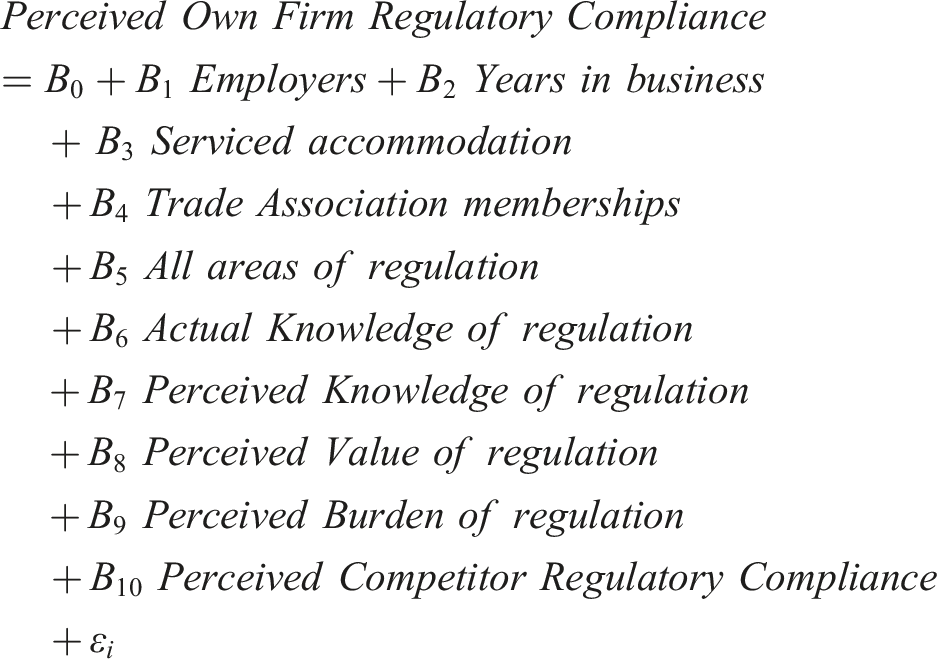
Based on the literature review and the hypotheses identified therein, we developed two regression models which we estimated using OLS in Stata v13. First, the model for Perceived Own-Firm Compliance
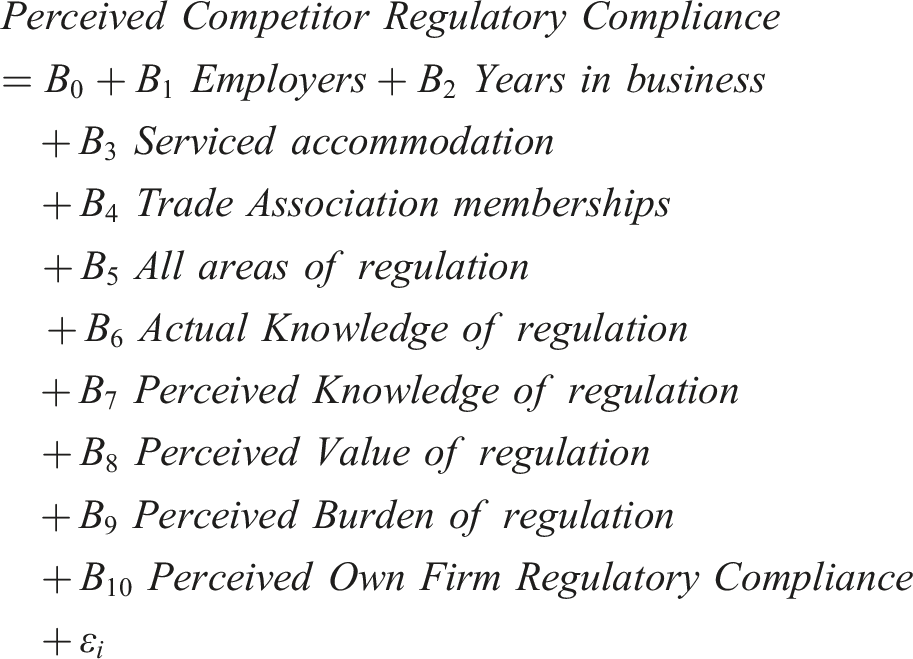
Second, the model for Perceived Competitor Compliance
The survey also included an unsolicited comments box, where 197 comments were written. Using a constant-comparison thematic analysis (Krueger and Casey, 2009), these comments were analyzed for emergent themes, which are used to inform our primary quantitative analysis, particularly with regard to causation, as interviews were not possible at the time. The results are integrated into the overall results and discussion section.
Variable construction and data validation
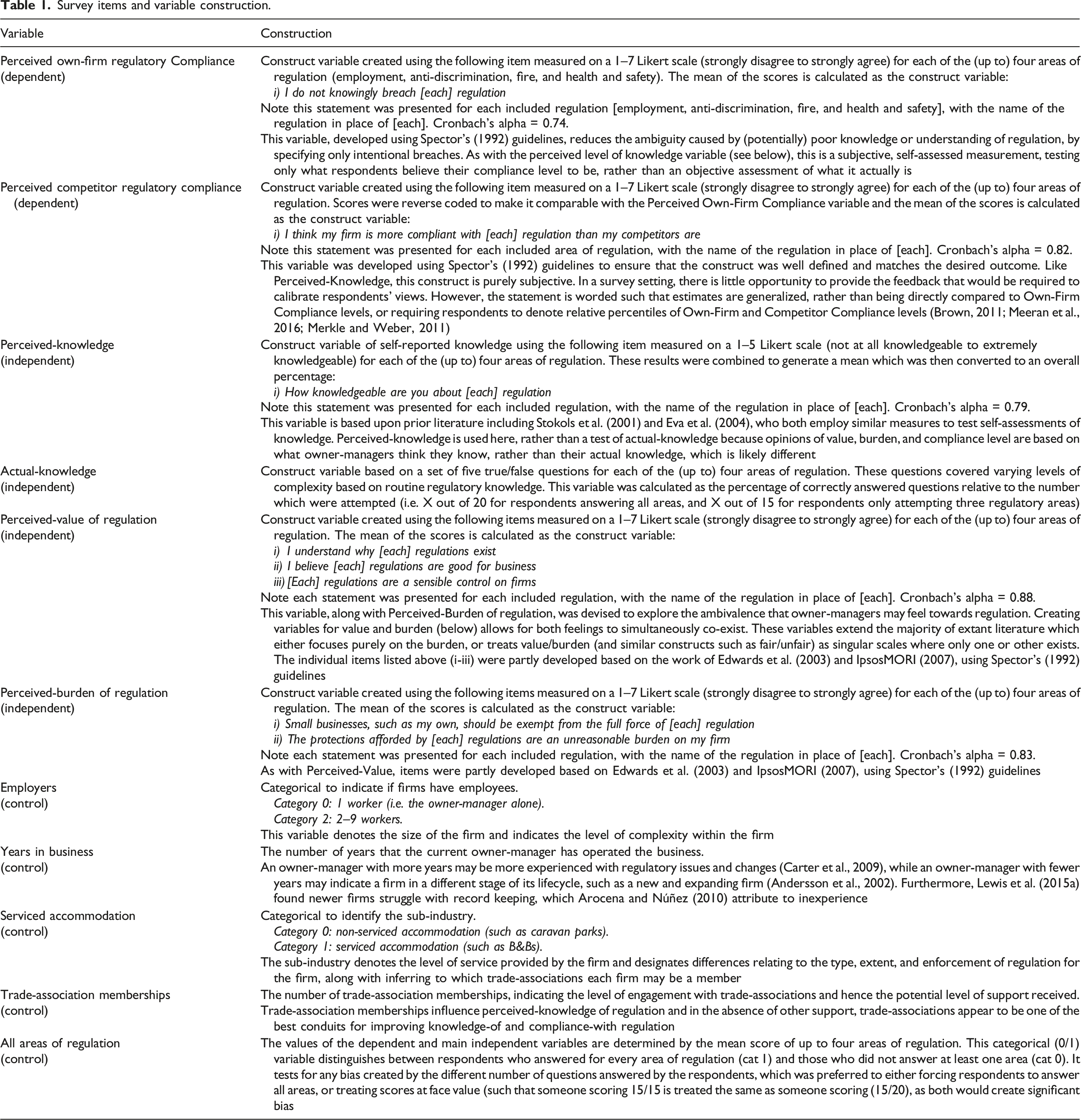
Survey items and variable construction.
As with any econometric method, there is always an inherent risk of omitted variable bias (Hosman et al., 2010). We therefore used the literature review to identify variables that may demonstrate a relationship with the dependent constructs, along with other commonly used confounders (Clarke, 2005; Mitra and Washington, 2012). We then followed the advice of Breiman (1992) and Clarke (2005), who recommended using fewer variables for more accurate models, and so only included variables of especial interest.
Items for each of the construct variables were presented as a larger set of questions in the survey and were tested using Principal Component Analysis, which highlighted our selected constructs as viable (Hair et al., 2010; Spector, 1992). Cronbach’s alpha was then calculated to test for convergent validity and for each of the five constructs was found to exceed the accepted minimum of 0.7—see Table 1 (DeVellis, 2012). The risk of common method bias through the use of a singular survey (Podsakoff et al., 2011), was mitigated by comparing survey responses for 14% of respondents (the maximum possible) to independently sourced data on several variables (such as revenue, and number of pitches). No evidence of bias or misreporting was found. Furthermore, since the subject of the study is the perception of the owner-manager, who is generally the sole worker in the firm (or on average, has just one further employee), it is not possible to survey multiple respondents per firm. Face validity and subjective assessment validity (Hair, 1998; Hair et al., 2010) were satisfied through the use of existing methods of measurement where possible, such as Stokols et al. (2001) and Eva et al. (2004) for Perceived-Knowledge; and the pilot study (which ensured the understanding of questions and answers matched our expectations, Rong and Wilkinson, 2011). In addition, the survey was structured specifically to reduce the risk of respondents linking different concepts. Finally, all respondents were assured of both anonymity and confidentiality to elicit truthful responses and aid response rate (Nielsen and Parker, 2012).
Results and discussion
Descriptive statistics
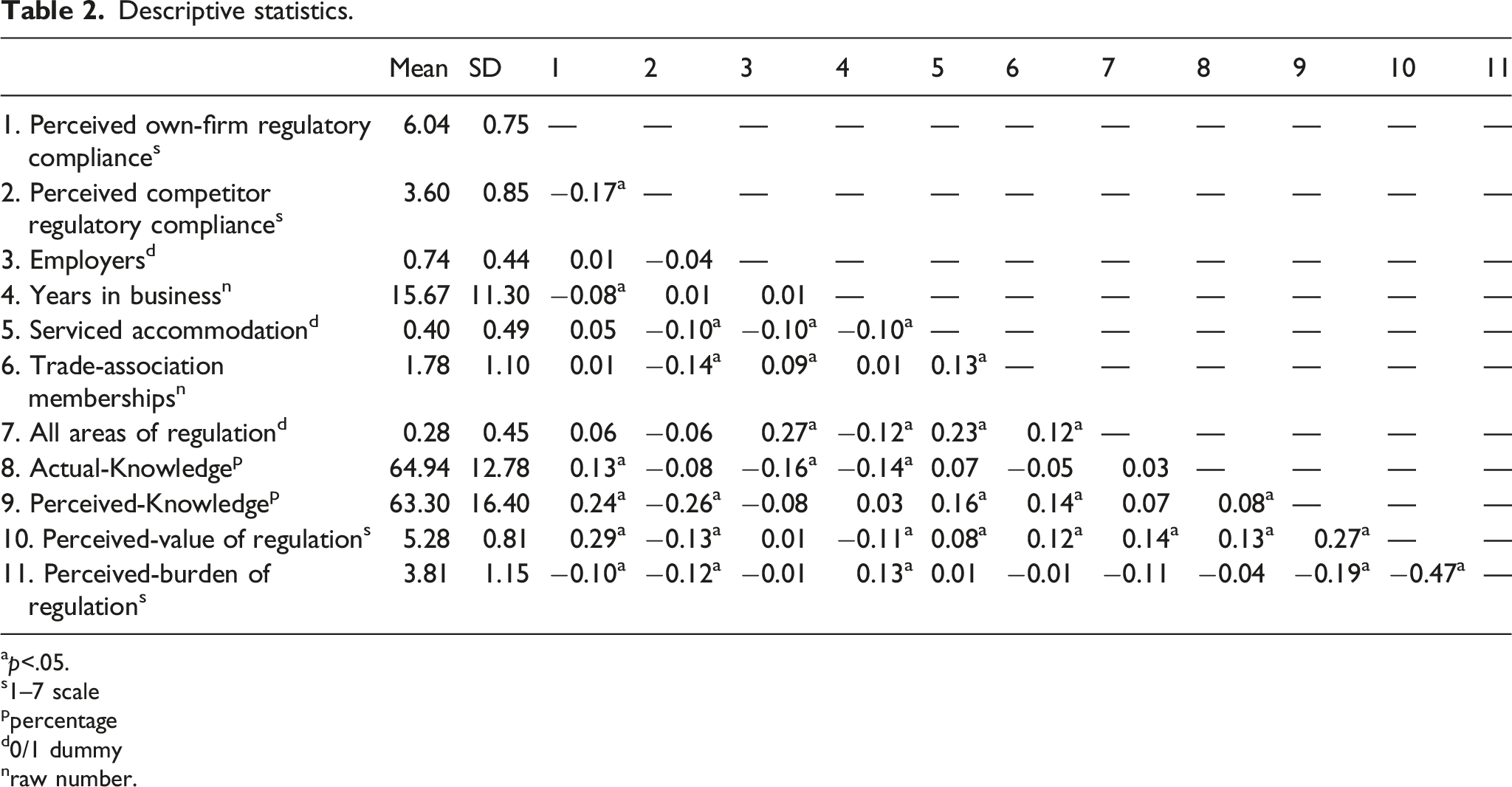
Descriptive statistics.
ap<.05.
s1–7 scale
ppercentage
d0/1 dummy
nraw number.
The relatively low mean (63.30%) of Perceived-Knowledge indicates owner-managers admit that self-assessed knowledge is generally poor, with substantive gaps in core knowledge. A response of 60% corresponds to the notion that the average firm reported they were ‘somewhat knowledgeable’ about regulation. It is also noteworthy that Perceived Own-Firm Compliance is comparatively higher (6.04/7 or 86%), indicating that respondents felt they complied to a greater extent than their Perceived-Knowledge level would suggest was possible. Furthermore, the fact respondents were willing to frequently disclose such low (self-assessed) scores suggests they were unlikely being dishonest or deliberately answering in a socially desirable manner (Mendoza et al., 2016). We also note that Perceived-Knowledge shows a positive correlation with Perceived-Value and a negative correlation with Perceived-Burden as expected.
The high means (and low standard deviations) for both Perceived Own-Firm Compliance and Perceived-Value, and to a lesser extent, the lower mean (and similar standard deviation) attributed to Perceived-Burden suggests that intentional non-compliance is low. Deliberately ignoring the law would be associated with lower mean values for Perceived Own-Firm Compliance, and theoretically also low Perceived-Value and/or high levels of Perceived-Burden. Furthermore, the relatively low mean for Perceived-Knowledge also suggests knowledge is not being used to intentionally circumvent regulation, or give the external appearance of complying (when deliberately not doing so) (Carter et al., 2009; Pratten and Lovatt, 2005). For example, claiming employees work fewer hours than they actually do in order to disguise paying below the minimum wage.
Perceived Own-Firm Compliance
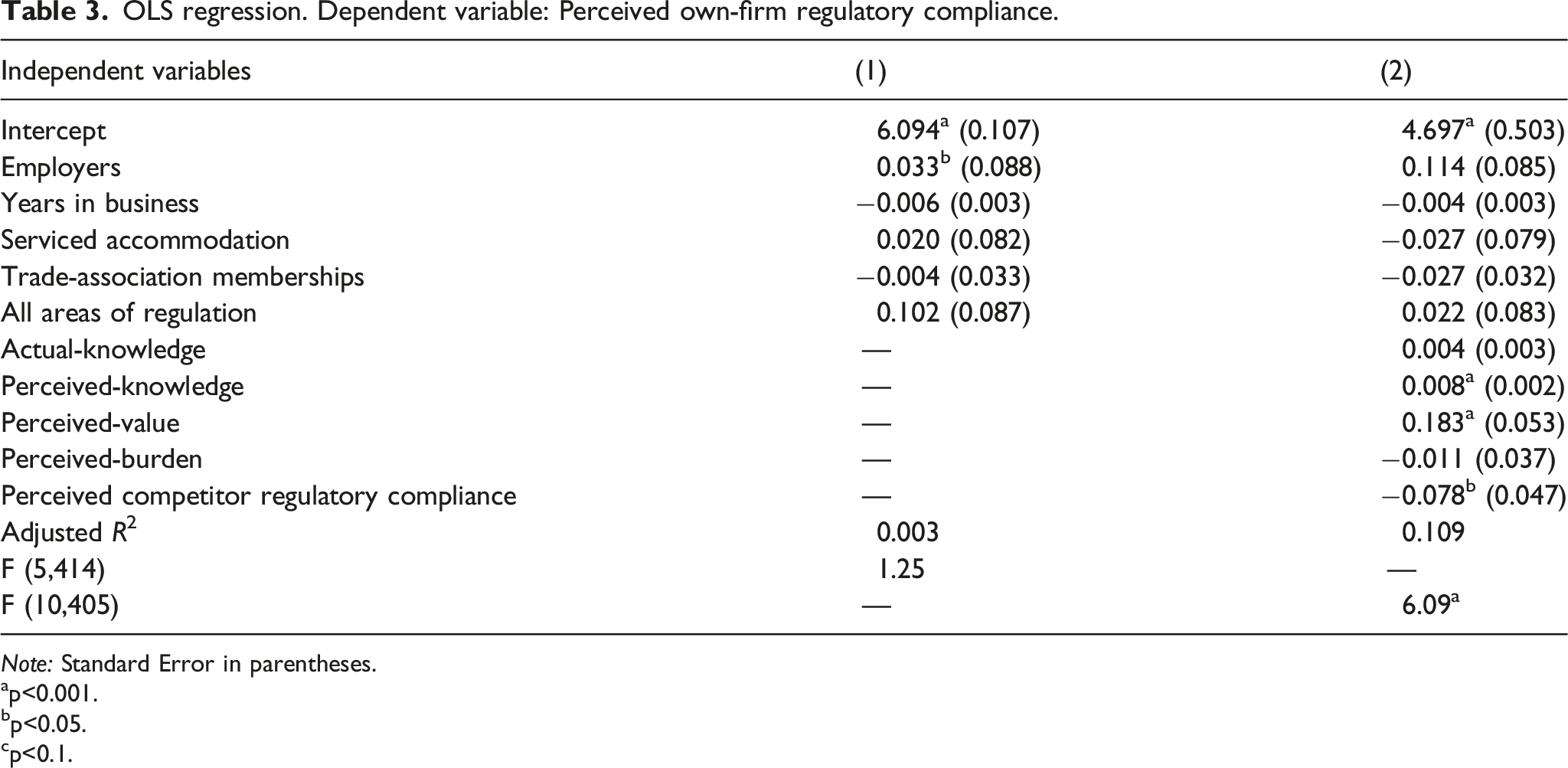
OLS regression. Dependent variable: Perceived own-firm regulatory compliance.
Note: Standard Error in parentheses.
ap<0.001.
bp<0.05.
cp<0.1.
The results also offer weak support for H3, with a positive relationship between Perceived-Knowledge and Own-Firm Compliance significant at the 1% level but with a very small coefficient. This contrasts to Thomas et al. (2016), who found a stronger relationship. Given the mean of Perceived-Knowledge (63.30%) is lower than Perceived Own-Firm compliance (86%), the possibility arises of owner-managers exhibiting pervasive hubris since they freely admit their knowledge is relatively poor, yet believe their compliance to be so much higher in spite of the implied knowledge deficit.
The unsolicited comments offer further insights on these findings. They suggest respondents feel regulation is generally designed to make them “do the right thing” having been created with “good intentions,” and therefore if they do what they think is “right” (as in “just” or “fair,” rather than correct according to the regulation) then they will likely comply with regulation by default. Such an approach to compliance by micro-firm owner-managers may explain why Perceived-Knowledge appears to have such a tiny impact on Own-Firm Compliance (Table 3). While it would appear obvious that firms must know about a regulation if they are to comply, it would actually seem the Perceived-Value associated with regulation is acting like a substitute as it was found to have a stronger association (coefficient 0.183). This sense of value might be enhancing the moral obligation for owner-managers to do the right thing, and hence, be associated with actions engendering a sense of compliance.
Competitor compliance is also significant (at the 10% level), but with a negative coefficient, and hence H4 is not supported (indeed quite the opposite). Micro-firm owner-managers are well known to avoid seeking expert help from outside the business and are also poor at wider networking (Bennett and Robson, 1999a, 1999b), suggesting they might not be well informed of the actions of their competitors. As respondent 3484 put it, “how do you judge what other competitors offer unless you have first-hand knowledge of their buildings and practice?” As owner-managers gain knowledge of what their rivals do (e.g. via trade-associations), they may come to realize their own compliance efforts are lacking and hence revise down their perceptions of their own compliance.
Finally, we note that none of the remaining variables are significant in the final models.
Perceived competitor compliance
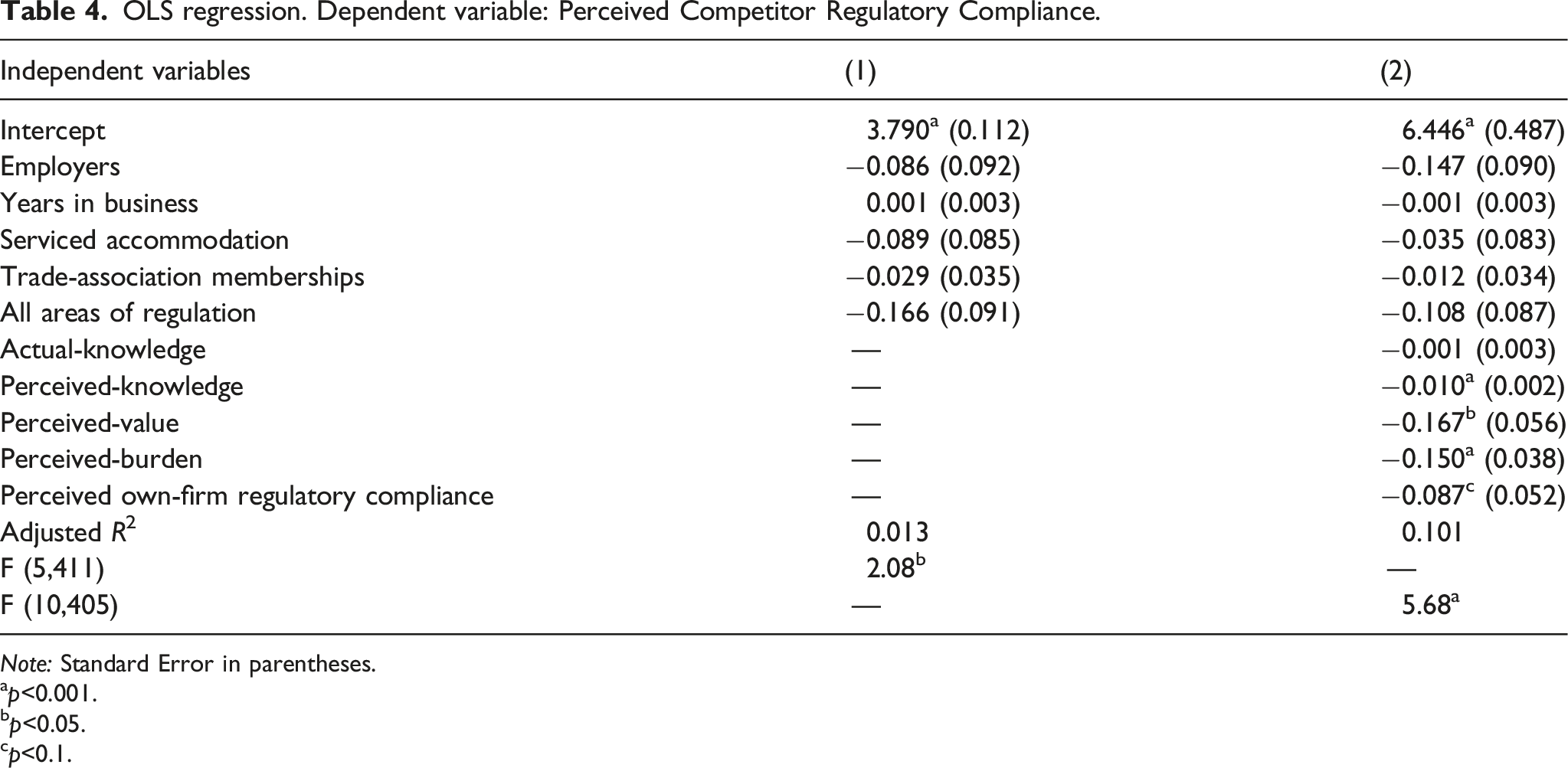
OLS regression. Dependent variable: Perceived Competitor Regulatory Compliance.
Note: Standard Error in parentheses.
ap<0.001.
bp<0.05.
cp<0.1.
Given the models for both Perceived Own-Firm Compliance and for Perceived Competitor Compliance demonstrate differing results for Value and Burden, it highlights the benefit of adopting this two-dimensional characterization of the attitude towards regulation. Furthermore, in both cases, Perceived-Value has been found to exhibit a significant association whilst Burden is only significant for Perceived Competitor Compliance.
Perceived-Knowledge is significant (at the 1% level) with a negative association, but as with Own-Firm compliance, the coefficient is very close to zero (−0.01) suggesting limited impact.
It is quite striking how poorly respondents believe their competitors comply with regulation (Table 2), especially as they believe their own compliance extends beyond their own knowledge. This dichotomy suggests respondents have a particularly low opinion of their competitors (and their industry). It is therefore likely that the better than average effect is playing a significant role here, particular since this is likely based on limited information on the behavior of rivals.
Moreover, Perceived-Value of regulation is found to have a negative association with Perceived Competitor Compliance suggesting owner-managers believe that other firms do not recognize the value in regulation that they themselves do, and hence, that other owner-managers are therefore not as compliant. Combined with the negative association of Perceived-Burden, this suggests firms take a general view that competitors shirk their regulatory responsibilities due to these ‘burdens’, while they themselves do not. This may be influenced by the negative rhetoric surrounding regulation. If all people do is complain about regulation, then it would be difficult to believe that they actually see the value in it, let alone value it enough (relative to the burden) to want to comply. This also links with the finding for Perceived-Knowledge, which has a similar, albeit considerably smaller, negative link. As firms learn more about regulation (or at least think they do), they believe other firms will comply even less (furthering the view of being ‘better than average’), potentially with the idea: “I have just learned X is required but I don’t believe other firms are doing this.”
It is interesting to note that Actual-Knowledge is not significant in either of our models, which confirms our earlier supposition that perceived, rather than actual knowledge is of greater importance for exploring owner-manager intentions. None of the remaining variables are significant.
Wider discussion
The dummy variable for those respondents not answering for all four areas of regulation was notably insignificant in both models. This not only offers further evidence that the methods and approach adopted herein are appropriate, but also suggests all four areas of regulation are of equal importance to perceived-compliance, which is in contrast to prior research that posits certain regulations may be prioritized (Edwards et al., 2003; Hart et al., 2008).
The sub-sectors variable has no association with Own-Firm or Competitor Compliance. This is somewhat surprising given the growth of sharing economy firms such as Airbnb, which operate in the same market space as serviced accommodation (e.g. B&Bs) but not in most forms of non-serviced accommodation (e.g. caravan parks). Indeed, there was a pervasive opinion in the survey comments that sharing economy hosts enjoy an unfair competitive advantage by offering a substitute product, but without the same regulatory ‘burden’. For example: in their unsolicited comments, respondent 2176 said “the most important issue for small hospitality businesses is, in my opinion, unfair competition from “businesses” that are potentially unregulated as they trade using non-standard methods such as Airbnb.” We posit that respondents likely regard sharing economy firms as belonging to a separate industry offering a competitive product, rather than being in the same industry, although the presence of such products is clearly of concern to them. This is an area that requires further study.
It is of interest that trade-association membership appears to have no statistically significant impact on either Own-Firm or Competitor Compliance, despite expectations trade-associations act as both conduits of regulatory information and potential networking sources to better inform owner-managers’ opinions regarding competitors (BRE, 2010; Battisti and Perry, 2015; Pleasance and Balmer, 2013). The results herein therefore suggest the actions of trade-associations at the time were not particularly effective at facilitating regulatory compliance.
Given compliance is not seen to be perfect, and the apparent drivers for Competitor Compliance operate in stark contrast with those for Own-Firm Compliance, there is a question as to how to address the issues raised so that management compliance efforts might be improved. Mendoza et al. (2016) propose a simple solution: engendering a sense of the fairness of regulation leads to greater knowledge acquisition, which in turn leads to improved regulatory compliance. However, our results might suggest improving knowledge and, to a greater extent, Perceived-Value may improve Perceived Own-Firm Compliance, but at the possible cost of Perceived Competitor Compliance (which could then impact compliance).
One of the issues seems to be that appropriate and complete information on regulatory requirements is either not reaching, or not being absorbed by, micro-firm owner-managers. We believe trade-associations are the most likely candidate to offer support to them, even though there is evidence that current trade-association support efforts are somewhat ineffective, simply because there was a lack of viable alternatives and because we know firms do look to their trade-associations for such support. Recent COVID-19 experience in the UK, where the government has explicitly pointed firms to industry bodies that outline guidelines, suggests that trade-associations can play an important role in supporting management (e.g. BEIS and DCMS, 2020). Indeed, we would suggest that future researchers should explicitly explore the actions and effects of trade-associations throughout the COVID-19 pandemic.
A trade-association (or other) campaign must include methods which provide feedback to owner-managers on their knowledge/compliance efforts, so they can be sure their interpretations are correct, while also calibrating their self-assessed knowledge. This would likely also improve the calibration of assessing other firms, reducing the existing gap between Perceived Own-Firm and Competitor Compliance. Such training and feedback has also been shown to improve implementation directly (Fernández-Muñiz et al., 2009; Boustras et al., 2015). At a higher level, Lewis et al. (2015b) note that knowledge is sought to ease the complexity of regulation, but when such complexity is at a low level, no help is needed. It is important then, for the regulations themselves to be clear and simple, both in their aims and their implementation requirements. This would ease the work of industry associations as they would be merely passing on information, rather than reinterpreting and distributing it to managers. However, it would enhance the lobbying role for trade-associations, as they look to influence the drafting of the regulations to ensure they are clear and simple. We have again seen this with COVID-19 related changes in the UK, where trade-associations have made a large contribution to relevant government guidelines.
Next, it is important that any scheme addresses the insular interactions of micro-firm owner-managers. Bennett and Robson (1999a) (among others) note how they generally resist formal events, such as the training courses that trade-associations already provide. Ways must be found to encourage and facilitate attendance at compliance related events to improve management practices, as such activities will not only enhance owner-managers’ knowledge, but also develop their networking with peers. By interacting more with other firms, owner-managers will be able to get a better sense of what other firms actually do and how they are implementing regulation. This would recalibrate their assessment of other firms’ compliance and hence also address their likely unfounded sense of being “better than average” (Moore and Small, 2007). In turn, this would not only improve Perceived Competitor Compliance but would also mean that attempts to improve Knowledge and Value would not have such a profound negative impact on Perceived Competitor Compliance. Whilst detailed prescriptions of the way to achieve such higher attendance is beyond the scope of this paper, efforts might include looking at the frequency, timing, cost, location, and wider incentives offered for attending such events. Organizers would need to be mindful of the real and significant costs to micro-firms when owner-managers attend. Indeed, trade-associations could instead look to more actively visit their members in order to offer direct advice and support, and in doing so, might use such visits as a way of engendering networking as other local members might be invited to attend (and who would then learn close to home in a real-world setting similar to their own). Furthermore, such onsite events could feature as case studies in industry publications/communications to spread the benefits even further. Recent COVID–19-related moves to greater use of video conferencing suggest that they may now have more success with online calls. Such events could highlight that other firms do, in fact, value regulation and implement it as they should, thus further contributing to the recalibration of Perceived Competitor Compliance (Moore and Small, 2007). However, we acknowledge micro-firms are fiercely independent and any such a scheme might be initially resisted and thus difficult to implement. Nevertheless, the possible benefits suggest it would be worth finding solutions to such challenges. In addition, consideration should be given to the potential unintended consequences of government initiatives, such as the UK policy of ‘naming and shaming’ firms that breach minimum wage legislation. On the one hand, this demonstrates the negative effects of being found non-compliant. However, publicizing non-compliance (even only after being caught), may contribute to an impression that regulatory compliance is generally low (in firms of all sizes).
Conclusions and areas for future research
Using primary survey data from micro-firms, we have found evidence that while owner-managers of English accommodation firms have a generally poor level of regulatory knowledge, they simultaneously believe their compliance with regulation exceeds their knowledge. Furthermore, their opinion of compliance by their competitors in the industry (broadly defined) is exceedingly poor. Additionally, we have further demonstrated the benefits of exploring both the Perceived-Value and Burden of regulation, which offers a more nuanced view than one-dimensional scales, such as “fairness” (Mendoza et al., 2016), or the traditional approach of exploring regulation only through its burden. This study has demonstrated that Perceived-Value is the strongest driver (of the factors we have considered) of Own-Firm Compliance, while Perceived-Burden appears to be treated simply as the cost of doing business, which is perhaps complained about but accepted nonetheless. Surprisingly, Perceived-Knowledge was found to have a limited association with both Perceived Own-Firm and Competitor Compliance, while Actual-Knowledge demonstrated no association. Perhaps most interestingly, our analysis has identified a paradox by suggesting attempts to improve Own-Firm Compliance, through improvements to Knowledge and enhancements to Perceived-Value, will likely be detrimental to Perceived Competitor Compliance. This is problematic as improvements in Perceived Competitor Compliance might end up reducing Perceived Own-Firm compliance efforts.
We suggest that in the absence of alternatives, trade-associations are best placed to support the general management of micro-firms with issues around regulatory compliance, especially with their active involvement in COVID-19 responses. However, any efforts by them (or other organizations) will likely need to develop fresh approaches to engaging micro-firm owner-managers, perhaps by taking support closer to firms, more strongly highlighting the value of regulation, and by encouraging better networking amongst firms.
In drawing these conclusions, it should be recognized that a key limiting factor of this paper is the reliance on owner-managers’ perceived levels of regulatory compliance. However, such a limitation is necessary for a study identifying such owner-manager perceptions as a key driver of general management practices. Any concerns in this regard could be mitigated by a future examination or independent review of actual practices within firms to ascertain how strongly such perceptions influence decision-making, and also the genuine level of regulatory compliance within a firm. Such research could follow the pattern laid out by Boustras et al. (2015), who visited firms during regulatory inspections, but do so with reference to more areas of regulation than just health and safety. This would additionally create the possibility of collecting data on the impact of having inspections or enforcement action (by including firms subject to their first visit and those inspected previously).
Other potential areas for further study include a deeper exploration of perceived levels of industry compliance, by including other elements such as perceptions of enforcement and penalties for non-compliance in management decisions. A further natural extension would be to conduct a longitudinal study to not only consider measures to boost compliance efforts but also to examine the causal link that theory suggests might exist between Perceived-Knowledge and both Value and Burden. Any such relationship is likely to be both complex and somewhat cyclic, with owner-managers either learning about regulation and in doing so forming opinions about its value and burden, or first forming opinions on value and burden with little foundation which then drive the desire to learn more about the regulation. Additionally, our recommendations of more targeted support from trade-associations would be more likely to be successful if such endeavors were planned after a thorough exploration of why owner-managers have such a low opinion of their competitors’ and hence general industry’s regulatory compliance. Finally, future research should explore the sharing economy, particularly in regards to regulators (to ascertain what regulations actually apply to hosts), the hosts themselves (to establish their level of perceived and actual regulatory compliance), and the impact they have on compliance elsewhere in the sector. This would address the contentious suggestion of unfair competition and the results may placate traditional accommodation firms.
Footnotes
Acknowledgements
The authors would like to thank all of the survey respondents, and those who helped in the refinement and distribution of the survey, including: David Weston at the Bed and Breakfast Association; Andy Woodward at Farm Stay UK; Martin Couchman and Julia Svetlosakova at the British Hospitality Association; Sharron Orrell and Jane Darragh at VisitEngland; Gene Jeffrey at BedPosts; Jamie Hurst at The National Caravan Council; Gregory Yeoman at the Tourism Society; and Ros Pritchard at the British Holiday and Home Parks Association. The authors also wish to thank Prof Stephen Pavelin and Prof Alex de Ruyter for their helpful and constructive comments on an earlier draft of this paper. The responsibility for the work, however, remains entirely with the authors.
Declaration of conflicting interests
The author(s) declared no potential conflicts of interest with respect to the research, authorship, and/or publication of this article.
Funding
The author(s) received no financial support for the research, authorship, and/or publication of this article.
