




Abstract
This study aims to determine the level of culture of a new subsidiary of a company in Colombia and define strategies to increase the level of culture in a way that promotes the organization in this region. Following the organizational culture theories, the Organizational Culture Assessment Instrument was used to measure the aspects of organizational culture. The transfer and adoption of culture are achieved through knowledge sharing within and across the departments and units of large organizations. The comparison between the current and desired state of culture shows a gap in the clan culture, as the company wishes to establish a working environment that promotes teamwork and employee participation, creates confidence, and provides opportunities for professional development. Executives can measure the strength of organizational culture with the aim of updating, strengthening, or modifying the existing culture to improve performance and gain sustainability.
Keywords
Introduction
Increasing competition and globalization force businesses to engage in developing sustainable competitive advantages. The existing scholarly management literature describes that culture and leadership are intangible resources that influence sustainable firm success and create competitive advantages. Previous management scholars have stressed the critical role of organizational culture on performance, mainly on organizations (e.g., Jardioui et al., 2019; Kim and Chang, 2019). Although the importance of this relationship has long been accepted in the literature, surprisingly, studies that use case studies in order to explore the various elements of organizational culture, investigating the extent to which organizational culture and leadership have an impact on performance in a new subsidiary of a company have rarely been studied (Kuo and Tsai, 2017; Meyer et al., 2020).
A well-known quantitative approach, that is, Competing Value Framework (CVF), is used by Cameron and Quinn (2006) to help examine the link between performance and organizational culture. CVF classifies four culture types, and one of them internally focuses on relationships between employees and leaders. Leaders with a vision who encourage employees to take responsibility and task ownership toward achieving the company’s vision foster a culture of proactive, creative change and growth (Wilderom et al., 2012). Researchers (e.g., Chong et al., 2018; Nam and Park, 2019; Zheng et al., 2019) concluded that the level of performance depends on the relationship between organizational culture and leadership as great leaders and their planning can increase business performance. Critical factors leading to a culture of enterprise excellence include transparent communication, formulation of a clear strategy, a high degree of motivation, collaboration, and employee commitment (Pathiranage, 2019; Sabella and Eid, 2016). These factors are linked to, explained, and influenced by the elements of organizational culture, following Sun’s (2009) classification: symbols, heroes, rituals, and values. Inspiring leadership strengthens organizational culture by inspiring employees and supporting open communication, advancing the levels of knowledge sharing within the organization. Studies support the argument that motivated employees tend to participate more than their demotivated colleagues in knowledge-sharing initiatives and contribute to the organization’s innovation and growth (Dong et al., 2017; Llopis and Foss, 2016). Also, such organizations reward the contributing teams, which are efficient and productive (Song and Kolb, 2013).
The literature suggests methods to measure the extent to which the various components (i.e., values, symbols, practices, and assumptions) affect organizational culture through interviews with managers and employees to identify the extent to which the workforce is aligned with the internal culture and to find representative aspects of culture, including rules, behaviors, lessons learned and best practices (Abdussamad et al., 2015). Nevertheless, the studies on corporate culture are limited in explaining how businesses can increase performance; they also do not discuss strategies that less successful firms can adopt to improve their performance (Pinho et al., 2014).
This study aims to determine the level of culture of a new subsidiary of a company in Colombia and define strategies to increase the level of culture in the way to promote the organization in this region. Reviewing the theories on organizational culture, the authors employ the Organizational Culture Assessment Instrument (OCAI) to measure the elements of organizational culture.
The current study uses the OCAI instrument to assess the various elements of organizational culture, investigating the extent to which organizational culture and leadership have an impact on performance. Previous studies support the claim that the level of performance is affected by values, behaviors, rules and policies, and organizational structure (Carter and Greer, 2013; Joseph et al., 2016). Constructive leadership is essential as it creates and supports a culture in which employees can work together effectively (Thompson et al., 2018). This highlights the significance of managing individuals in ways that embed values and supportive behaviors in developing an organizational culture that enhances firm performance. Also, this paper has clear managerial implications for executives in multisector organizations. These implications concern the ways in which executives can identify the type of culture and the levels of cultural congruence and measure the strength of organizational culture as they aim to update, strengthen, or modify the existing culture to improve performance and gain sustainability.
This study follows the case study approach by focusing on a Spanish multinational corporation that operates, among others, in the sectors of energy, telecommunications, and transportation. Abengoa S.A. supports its activities by developing operations in more than 70 countries. This study focuses on the subsidiary of the above (Spanish multinational corporation) organization in Colombia. The promoted culture within the organization encourages engagement and knowledge sharing, training and professional development, professional safety, and risk prevention.
The research questions of this study are summarized as follows: 1. What are the key factors of organizational culture that influence the performance of a new subsidiary? 2. How and to what extent does each of those factors influence the performance of a new subsidiary? 3. When, how, and why should the culture of the parent organization be transferred to a new subsidiary?
The structure of the article is as follows: the theoretical background analyzes the effect of organizational culture on performance—next, the methodology section discusses the sampling method and the tools for data collection and analysis. The results section synthesizes and compares the findings of the study, while the conclusion discusses and contrasts the findings with the literature. Also, the limitations and suggestions for future research are included in the last section.
Theoretical background
This paper has been developed by combining different methodological approaches supported to conduct a study in the field of leadership performance and organizational culture (e.g., Abdussamad et al., 2015; Barrera, 2010; Carter and Greer, 2013; Chong et al., 2018; Cui et al., 2006; Famiola and Adiwoso, 2016; Gómez, 2004; Hogan and Coote, 2014; Joseph et al., 2016; Kuo and Tsai, 2017; Nam and Park, 2019; Prenestini and Lega, 2013; Thite et al., 2012; Wilderom et al., 2012; Zheng et al., 2019). To study the existing body of knowledge regarding organizational culture and leadership performance, we examine the transfer and adoption of culture theories, aspects of organizational culture, and results that show the comparison between the current and desired state of culture, looking at the extent to which strengthening the organizational culture can improve performance and sustainability. The studies mentioned above were useful in identifying the knowledge gaps regarding key factors of organizational culture that influence the performance of organizations. With the help of other studies, we were able to contribute to the OCAI instrument to assess the various elements of organizational culture, investigating the extent to which organizational culture and leadership have an impact on performance.
Studies (e.g., Barrera, 2010; Cui et al., 2006; Famiola and Adiwoso, 2016; Gómez, 2004; Thite et al., 2012) show improved customer satisfaction and increased performance is the result of the proper organizational learning approach. Moreover, multinational corporations (MNCs) increasingly emphasize the importance of a global learning focus that offers more competitiveness by implementing learning strategies in subsidiaries that will become critical for managers to understand. Likewise, learning is facilitated by factors that affect the implementation of different management practices. One such factor that affects the application of management practices is culture. More generally, organizational culture affects the transmission and subsequent stability of knowledge, having the ability to influence employee behavior, which is affected by different levels of culture, that is, values, rituals, and symbols. In practice, people understand that enterprise culture, sense the loyalty of enterprise and subsequently influence positive behavior that will lead to the future development of the business. This will lead to an excellent working environment for the employees who will be inspired and encouraged to be productive and efficient. The literature review below offers insights into these values and norms of organizational culture. Also, this study explains how organizational culture drives competitive advantage and success in business performance.
Thus, the interest in this topic seems to be lacking because little research is available about identifying the type of culture in an organization, the levels of cultural congruence, and measuring the strength of organizational culture (Calciolari et al., 2018; Vandavasi et al., 2021) as organizations aim to update, strengthen, or modify the existing culture to improve performance and gain sustainability (Aslam et al., 2018; Drew and Wallis, 2014; Singh et al., 2020). It is essential to study these areas and gain further knowledge about how the promoted culture within an organization encourages engagement and knowledge sharing, training and professional development, professional safety, and risk prevention. Additionally, these studies (e.g., Alharbi et al., 2016; Amundsen and Martinsen, 2015; Cameron and Quinn, 2006; Chong et al., 2018; Davies et al., 2007; Easterby-Smith et al., 2012; Hogan and Coote, 2014; Kirkman et al., 2016; Kuo and Tsai, 2017; Lvina et al., 2017; Prenestini and Lega, 2013; Reina et al., 2018; Warrick, 2017) helped us to identify the existing knowledge gaps that are explored in and addressed by our study.
Organizational culture, values, and norms
Organizational culture is a system of collective values, principles, and expectations within organizations, aiming at balancing and optimizing the relationship between the employees (engagement), the work tasks (value creation), and the customer (development, retention, and loyalty) (Alvesson and Sveningsson, 2015). Corporate culture enables the creation of a shared system of meanings, increasing the level of communication and mutual understanding. Another interesting point is that corporate culture may indirectly influence behavior by using managerial tools, such as strategic direction, goals, tasks, technology, structure, communication, decision-making, cooperation, and interpersonal relationships (Zhu et al., 2004). Previous studies measured organizational culture using work practices such as empowerment, external orientation, interdepartmental cooperation, human resource orientation, and improvement orientation (Cho and Choi, 2021; Rohlfer et al., 2021). These work practices were selected by researchers who examined the effect of leadership on culture and organizational performance. Gooty et al. (2009) explain that charismatic leaders, through their influence, positively affect organizational performance by increasing the rates of these work practices. Other findings support the claim that organizational culture is characterized by organizational practices of empowerment, knowledge sharing, interdepartmental cooperation, and human resource orientation, positively affecting organizational performance (Wilderom et al., 2012).
Organizational culture, corporate performance, and success
Organizational culture drives competitive advantage as an intangible force (Madu, 2012). For example, the success of large firms depends on the establishment and management of a strong corporate culture identifiable by employees. Such a culture influences business strategies, market presence, and technologies that contribute to the company’s performance and long-term effectiveness (Hogan and Coote, 2014; Kuo and Tsai, 2017). The Competing Value Framework (CVF) is a well-known quantitative approach used by Cameron and Quinn (2006), and it examines the link between performance and organizational culture. The CVF classifies four culture types; each one is associated with different values and attitudes. The culture types are the following: clan, developmental, hierarchical, and rational.
The first type of culture, the clan culture, is internally focused, and its processes focus on relationships between employees and leaders. Leaders must support teamwork and group interaction because they are viewed as mentors. They encourage team members and increase trust, cooperation, and involvement. Furthermore, leaders give encouragement and recognition to team members and encourage their development (Alassaf et al., 2020; Bilan et al., 2020). These organizations are characterized by loyalty and tradition. According to Meng and Berger (2019), organizations characterized by increased leadership performance, strong communication, and supportive organizational culture can increase the level of trust and cooperation among team members.
Developmental culture focuses on meeting changing external demands and promoting innovation in the organization (Langer and LeRoux, 2017). Leaders have a vision for their businesses, take risks, and require the same behavior from other members. They communicate a clear and positive vision of the future. These organizations are flexible and can change in relation to the ideas developed in order to satisfy external stakeholders (Sehgal et al., 2021).
The third type of culture (hierarchical) emphasizes an internal focus and the implementation of rules and regulations that characterize the ways that an organization works (Lee et al., 2017). Predictability, control, and stability characterize organizational effectiveness (Kam et al., 2016). Executives provide resistance to change (Wangrow et al., 2019).
The rational culture, the last type of culture, focuses on achieving predefined goals and facing external competition; thus, leaders are goal-oriented (Alharbi et al., 2016; Chong et al., 2018; Davies et al., 2007; Prenestini and Lega, 2013; Warrick, 2017).
Organizational culture is essential for organizations because it guides leaders and can increase business performance (Chong et al., 2018; Nam and Park, 2019; Zheng et al., 2019). According to this framework, specific performance elements are associated with each dominant cultural type. Researchers concluded that the level of performance depends on the relationship between organizational culture and leadership (Thompson et al., 2021). Clan culture is associated with staff satisfaction, low vacancy and turnover rates, and the development of professional competencies (Jehanzeb and Mohanty, 2018). Developmental culture is associated with the following expected performance indicators: satisfaction of external stakeholders, reduced waiting times, a high degree of innovation, and perceived quality of care (Lajili et al., 2020; García-Buades et al., 2016). On the other hand, financial performance, operating efficiency, and sound data quality are associated with hierarchical culture (Asbari et al., 2020; Sehgal et al., 2021). Finally, a rational culture that focuses on competitiveness and the external environment is associated with market share gains, greater access to external financing, the satisfaction of external stakeholders, and reputation improvement (Bowers et al., 2017; Davies et al., 2007; Prenestini and Lega, 2013).
During a culture transformation, hierarchical cultures are mostly concerned with financial performance, especially if the achievement of business performance is the primary goal (Valmohammadi and Roshanzamir, 2015). A significant positive relationship was found between rational culture and competitiveness. The selection of top managers, as well as the style of leadership, affects the organizational culture and the effectiveness of the organization during a culture transformation (Warrick, 2017). The achievement of financial constraints is likely to be met by a hierarchical or clan culture, while competitiveness and consolidation of reputation might benefit from a rational culture (Calciolari et al., 2018; Thompson et al., 2021).
Uddin et al. (2013) consider that a competitive and robust culture, which encourages employees to take initiatives and innovate, has a significant positive influence on the performance of both employees and organizations. Their study highlights the importance of organizational culture on employee performance and productivity by assessing the level of culture from the perspectives of both top management (strategic level) and employees (operational level), thereby determining the coherence of the viewpoints, independently of the vision. In this view, Abdussamad et al. (2015) and Hogan and Coote (2014) conclude that there is a direct influence of organizational culture on the motivation and performance of employees. Similarly, Kuo and Tsai (2017) measured the organizational culture by using three dimensions (i.e., bureaucratic culture, innovative culture, and supportive culture), which have a direct impact on performance (Lis, 2018).
Moreover, Babelova and Vanova (2014), who focused on the role of corporate culture in aligning organizational goals with economic success, noted that economic success should be measured by a combination of objective (i.e., financial) and subjective (non-financial) indicators. For instance, the financial indicators describe the economic dimensions of business success (i.e., profit, value creation, turnover, return on equity, etc.). In contrast, the non-financial indicators (i.e., satisfaction or fluctuation of employees, rate of absence, etc.) have also been discussed in the literature (Amundsen and Martinsen, 2015; Reina et al., 2018) highlighting their importance and impact on organizational performance. These results are supported by Muratovic (2013), who noted that organizational culture affects the way in which organization members act and relate to each other and the customers. Although each company has its own way of acting, it can identify breaches in which it can improve establishing strategies and competitive advantages, thereby defining a profile of the desired culture (Krasonikolakis et al., 2020).
In addition, studies examining the impact of organizational culture on performance management practices suggest that organizational performance influences the creation of career paths and behaviors among employees, which, in turn, might affect the company culture (e.g., Ahmad, 2012; Sehgal et al., 2021). Another interesting finding is that organizational culture affects employees’ behavior, motivation, and values, relating the cultural system directly to organizational performance (Bui et al., 2021; Kontoghiorghes, 2016). Other studies argue that while organizational culture does not directly influence the level of corporate success, an influential culture does tend to make teams work effectively together, leading to increased performance (e.g., Kirkman et al., 2016; Lvina et al., 2017; Nazarian et al., 2021).
Primarily, it is believed that business success is the outcome of financial success. The literature is consistent in indicating that financial success or firm performance is linked with the orientation of corporate culture (e.g., Babelova and Vanova, 2014; Whelpley and Perrault, 2021). Also, the wider body of research discusses various approaches that help researchers to construct evidence regarding the influence of culture on the performance of organizations, distinguishing the current with the desired state of culture as a way forward to define action plans (Drew and Wallis, 2014; Ahmad, 2012).
Methodology
Organizational culture assessment instrument
The methodology used in this study is based on the framework of competing values, considering the key indicators of the effectiveness of the organization, according to what was presented in the literature overview. The model is based on diagnosing the current level of culture with specific critical dimensions of culture gaps between current and desired levels to achieve organizational effectiveness (i.e., productivity, cost-effectiveness, motivation, job satisfaction), with the goal of finding a better approach to identify these key factors. The analysis generates useful information that can help the process of changing the corporate culture to improve the aspects that are identified as weak while keeping those that are strong considering its compatibility with the guidance of the company in maintaining the existing competitive advantage and increasing it (Cameron and Quinn, 2006).
Cameron and Quinn (2006) described the Organizational Culture Assessment Instrument (OCAI) as a tool to measure the aspects of organizational culture. This instrument helps to establish a relationship with organizational performance. In other words, it is an instrument that measures the current cultural state of an organization, demonstrating the deficiencies or incompatibilities which affect performance. OCAI is an instrument that includes the following six essential aspects of organizational culture: 1. Dominant characteristics which identify the current situation of the organization. 2. Organizational leadership which indicates the leadership styles of managers. 3. Management of employees which indicates the extent to which employees have opportunities to use and develop their talents. 4. Organization glue, which is a mechanism that holds the organization together. 5. The strategic emphasis, which considers the plans of the business and 6. Criteria for success, which determines the criteria of operational, financial, and strategic success and growth.
Data collection
The model is based on diagnosing the current level of culture with specific critical dimensions of culture gaps between current and desired levels of achieving organizational effectiveness (i.e., productivity, cost-effectiveness, motivation, job satisfaction), with the goal of finding a better approach of identifying these key factors. The analysis generates useful information that can help in the process of changing the corporate culture to improve the aspects that are identified as weak and keeping those that are strong, considering their compatibility with the guidance of the company in maintaining and innovating the new competitive advantage (Cameron and Quinn, 2006).
The research has been considered in two parts, qualitative and quantitative, to cover more aspects necessary in a case study and will address the recommendations of Easterby-Smith et al. (2012) and Yin (2018). The semi-concealed method has the advantage that it helps to get accurate information and identify the way to change aspects of the organizational culture in the subsidiary of the case study.
Qualitative and quantitative approaches are employed in this study, aiming to cover the essential aspects of a case study, following the recommendations of Easterby-Smith et al. (2012). Two qualitative research methods were used to collect information for this case study. First, we relied on observations because they are a practical way to collect information and analyze situations and behaviors that could be conserved. The behaviors were closely observed within the organization. Second, in addition to observation, interviews were conducted with employees, aiming to identify the perceptions of various members regarding the ways in which corporate culture is developed and promoted within the organization. The observation of participants, along with the interviews and the analysis of relevant corporate documents, helps the researchers to identify structures through the patterns displayed by individual behaviors. This approach allows the researchers to receive relatively fast feedback and adapt the approach to new insights (Jung et al., 2009). As a result, a plentiful amount of data about an organization’s cultural dynamics and complexity can be collected. The findings are presented as a narrative description of the state of organizational culture and perception of the company’s performance and a description of the link between the existing cultural dimensions with the current performance.
Also, three quantitative research methods were used to collect additional information. Questionnaires were shared with employees to gather information related to the current state of corporate culture and the employed indicators of performance within the organization. Also, historical data (i.e., monthly and yearly reports) of the organization’s performance were collected. Finally, the current indicators of performance were used. The findings are presented on reporting the scores of cultures, defining the profiles for the case organization case, following the recommendations of Cameron and Quinn (2006). The survey is focused on developing a score of the tendency of the profile of the existing culture and a score of the desired level of organizational culture to plot a profile. The gap between the current and desired organizational culture profile helps build a strategic action plan.
Abdussamad et al. (2015) consider that the organizational culture and psychological factors affect performance in terms of productivity and competitiveness in the long term, with seven primary characteristics constituting the essence of organizational culture: innovation and risk-taking, attention to detail, results from orientation, person orientation, team orientation, aggressiveness, and stability.
The secondary resources will be the information on the web about the company selected in Colombia and information found in journals about the influence of culture within organizations. Also, information about the first project of a company in Colombia to determine the performance and the lessons learned about the experience will be stated to some extent. Whereas the primary sources, as mentioned earlier, will be interviews and polls given to employees in the company who are selected to determine the level of culture of the company, the outcomes achieved, and evaluate the process of transferring culture to new the subsidiary and new employees.
Research sample
Managers and employees who took part in the interviews were selected as representatives of the various sections of the organization. This sample was selected to avoid biased or one-sided opinions when using the Organizational Culture Assessment Instrument (OCAI). This approach reflects the results of studies that stated that the sole use of managers as raters of corporate cultures and the failure to include samples of random employees are two significant research design weaknesses (Wilderom et al., 2012). The subsidiary under investigation is divided into six functional areas (i.e., planning and procurement; quality control; accountability; safety; commissioning; technical office and construction), employing 100 people. Managers and employees were willing to participate in the study to identify weak cultural aspects, develop plans, and promote changes to improve employee welfare and teamwork, advance professional development, and achieve business growth. The sample size of the surveys and interviews depended on the number of employees in the functional areas as well as on the relevance of available information per department. Following a process of filtering and categorization, nine participants were selected to take part in the interviews. Also, questionnaires were distributed to employees and managers, covering various company functional areas.
The model is based on diagnosing the current level of culture with specific critical dimensions of culture gaps between current and desired levels of achieving organizational effectiveness (i.e., productivity, cost-effectiveness, motivation, job satisfaction) to find a better approach to identifying these key factors. The analysis generates useful information that can help in the process of changing the corporate culture to improve the aspects that are identified as weak and keeping those that are reliable, considering their compatibility with the guidance of the company in maintaining and innovating the new competitive advantage (Cameron and Quinn, 2006).
The procedure of research
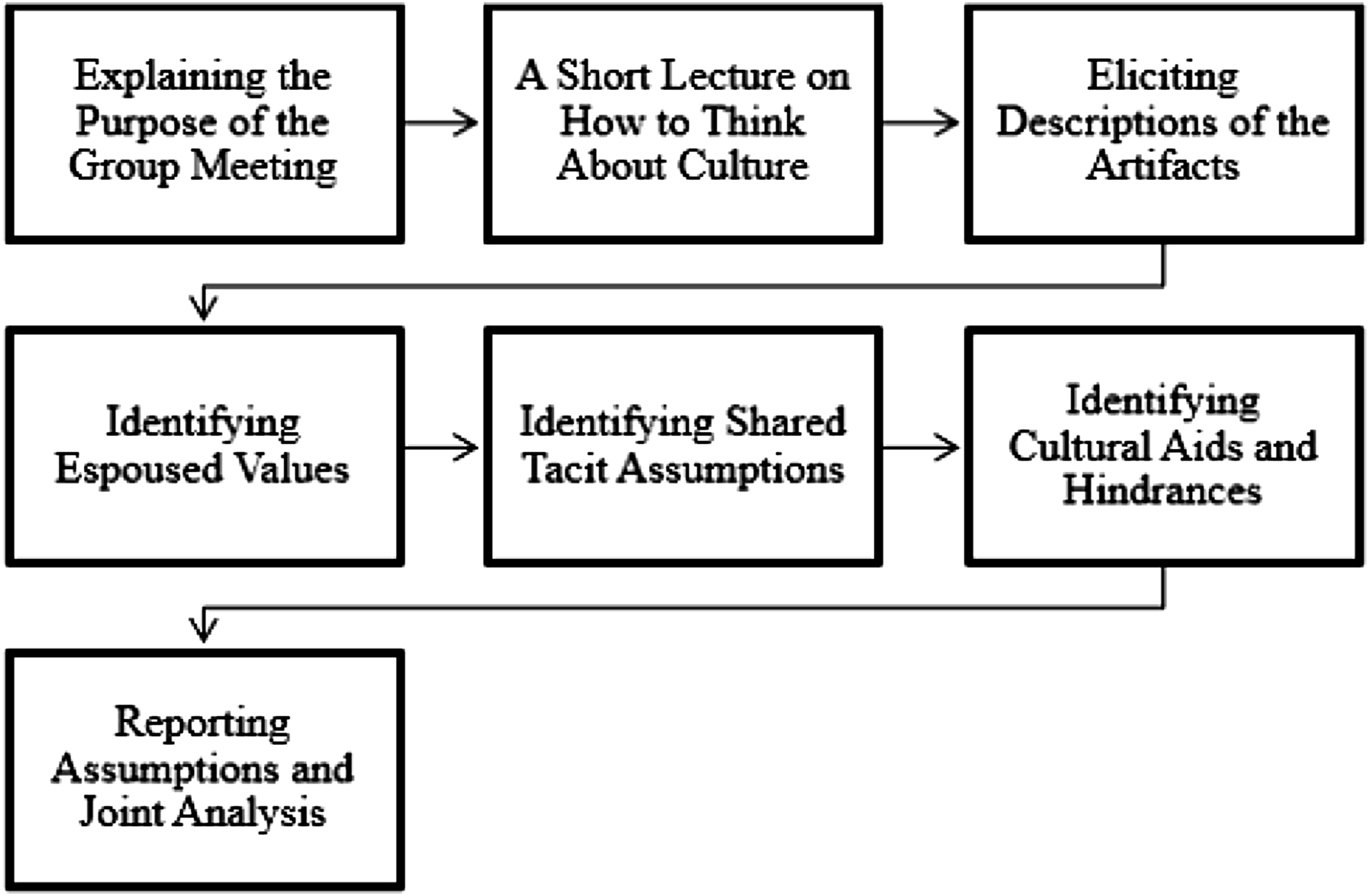
Schein (2004) has recommended several steps to assess the culture level and for the implementation of a culture-deciphering process based on these assumptions, and that was followed in the case study research: 1. Explaining the Purpose of the Group Meeting: the purpose of the research was explained to the members with the advantages of organizational performance about the productivity and competitiveness in the long term, and how the information would be treated was also explained. 2. A Short Lecture on “How to Think About Culture: The brief resume” was presented about culture. 3. Eliciting Descriptions of the Artifacts: In the meeting, the participant questioned what it felt like to enter the organization and what they noticed most upon entering it. 4. Identifying Espoused Values: Across the interview and survey, the values present in the organization were identified. The members were encouraged to look at the sense of being of the organization that they have recognized and to figure out as best they can what values seem to be implied. Values in Consorcio Abengoa found mainly were honesty, respect, flexibility to change, protection of the environment, team spirit, integrity, professionalism, management excellence, social responsibility, and innovation. 5. Identifying Shared Tacit Assumptions: The company defines the values, but some are weak, like teamwork, where it was identified that some members are not integrated with the goal or the organization. Social responsibility, innovation, respect, honesty, integrity, professional and social responsibility, and protection of the environment are highlighted during the organization’s training. Then these assumptions were perceived in the interviews in the case study and have consistency with the actions taken as an organization. 6. Identifying Cultural Aids and Hindrances: the main aid identified was that the company has a clear definition of values and principles for the whole organization. The perceived hindrance was the fact that the culture of the subsidiary requires further cultural maturity and work to gain the commitment of all new employees. 7. Reporting Assumptions and Joint Analysis: the complete report of the findings is shown in the Analysis of the Findings section. Figure 1 illustrates these steps. Culture-deciphering process.
Further, Cameron and Quinn (2006) have defined six steps that should be followed for designing and implementation in the organization to create momentum for culture change, to minimize the resistance, to clarify the concerns for improved learning, and to identify what features could remain even after the change: Reach consensus on the current culture > Reach agreement on the desired culture > Determinate what the changes will mean and will not mean > Identify illustrative stories > Develop a strategic action plan > Develop an implemented plan.
Sampling method
The focus of the sampling process was on those who were participating in the surveys and the interviewees who represented each of all the representative areas of the company. This focus follows our objective of covering the various situations throughout the organization as well as the members’ perceptions of the culture at the organization. The representative areas of the company are planning, procurement, quality control, accountability, safety, commissioning, technical office, and construction. It is important to involve members who have a perspective on the overall organizational culture. The survey ensured that the people involved believed in implementing changes to improve the organization. The sampling considered members who could provide different perspectives from their roles (Cameron and Quinn, 2006).
Questionnaire
The survey was based on the six important aspects of organizational culture suggested by Cameron and Quinn (2006). They are Dominant Characteristics, Organizational Leadership, Management of Employees, Organization Glue, Strategic Emphasis, and Criteria of Success.
Reliability and validity
Cameron and Quinn (2006) have presented information and evidence of the validity and reliability of the OCAI as an instrument, providing evidence from many studies where the coefficient of reliability must exceed satisfactory levels. The reliability of the OCAI of a study is analyzed by the 86 public utility firms in which 796 assess their organization with the next coefficients: 0.74 for the clan culture; 0.79 for the adhocracy (developmental) culture; 0.73 for the hierarchy culture; and 0.77 for the market (rational) culture. The outcome shows that the respondents rate the organization with the consistency of the values emphasized by the organization. The OCAI uses the Ipsative rating scale that divides 100 points among the alternatives; the advantages are that it highlights and differentiates the uniqueness that exists in the organization and that the respondents are forced to identify trade-offs that exist in the organization. The outcomes of the Ipsative scale show the instrument’s extreme reliability. (Cameron and Quinn, 2006).
The question of validity: does the OCAI measure four types of organizational culture? Cameron and Quinn (2006: 155) have referenced the evidence where they studied 334 higher education institutions, where 3406 individuals participated. A total of 236 institutions have congruent cultures (one culture type dominated most aspects of the organization). The most frequent was the clan culture, and the least frequent culture was the market culture. In contrast, 98 institutions had an incongruent culture, where the culture was not consistent across the organization. Cameron and Quinn (2006) considered that an organization with an influential culture is more effective, comparing to an organization with weak culture; also, an organization with a congruent culture has more effectiveness than an organization with an incongruent culture.
Analysis of the findings
The survey asked participants to distribute 100 points for each item in alternatives A, B, C, and D. Some surveys were handled directly on paper, while others were administered by email. It was checked that the sum of points assigned to the alternatives reaches 100 points for each item. In accordance with Cameron and Quinn (2006), arithmetic calculations were used to analyze the results: 1. Calculate the average of the survey to each item and each alternative. 2. Add the responses A of the six items and divide by 6 in the “Now,” column. 3. Calculate the average of responses A of all surveys. 4. Repeat steps 1 and 2 for alternatives B, C, and D. 5. Add the responses A of the six items and divide by 6 in the “Preferred” column. 6. Calculate the average of responses A of all surveys. 7. Repeat steps 1 and 2 for alternatives B, C, and D. 8. Map the outcomes of each item with the average of columns “now” and “preferred.” 9. The alternatives A are in the framework correspondent to the Clan culture. 10. The alternatives B are in the framework correspondent to the Adhocracy culture. 11. The alternatives C are in the framework correspondent to the Hierarchy culture. 12. The alternatives D are in the framework correspondent to the Market culture. 13. The gaps between column “Now” and “Preferred” help identify where the culture could change to improve for each item, and it helps build a strategic plan of action.
Each map below indicates the divergence between the current organizational culture and the desired one. The maps illustrate the gaps and give a picture of the company’s priorities and strategic plans. It appears that hierarchy prevails over clan in the organizational culture with adhocracy and market to equal the set targets. The examined organization adopts a decentralized administration in Colombia. Interviewees indicated that the positive aspects of the performance of the subsidiary are leadership, commitment, customer communication, and timeliness of the payroll payments. Also, they noted that opportunities for learning, teamwork and the sharing of mission and vision positively influence the performance of the subsidiary.
On the other hand, findings show that excessive bureaucracy and a lack of management commitment negatively affect the company’s performance. Furthermore, the management of change is not efficient, with the interviewees suggesting that awards should be given based on achievement. Figure 2 depicts the dynamics of organizational culture in the company. Average of organizational culture.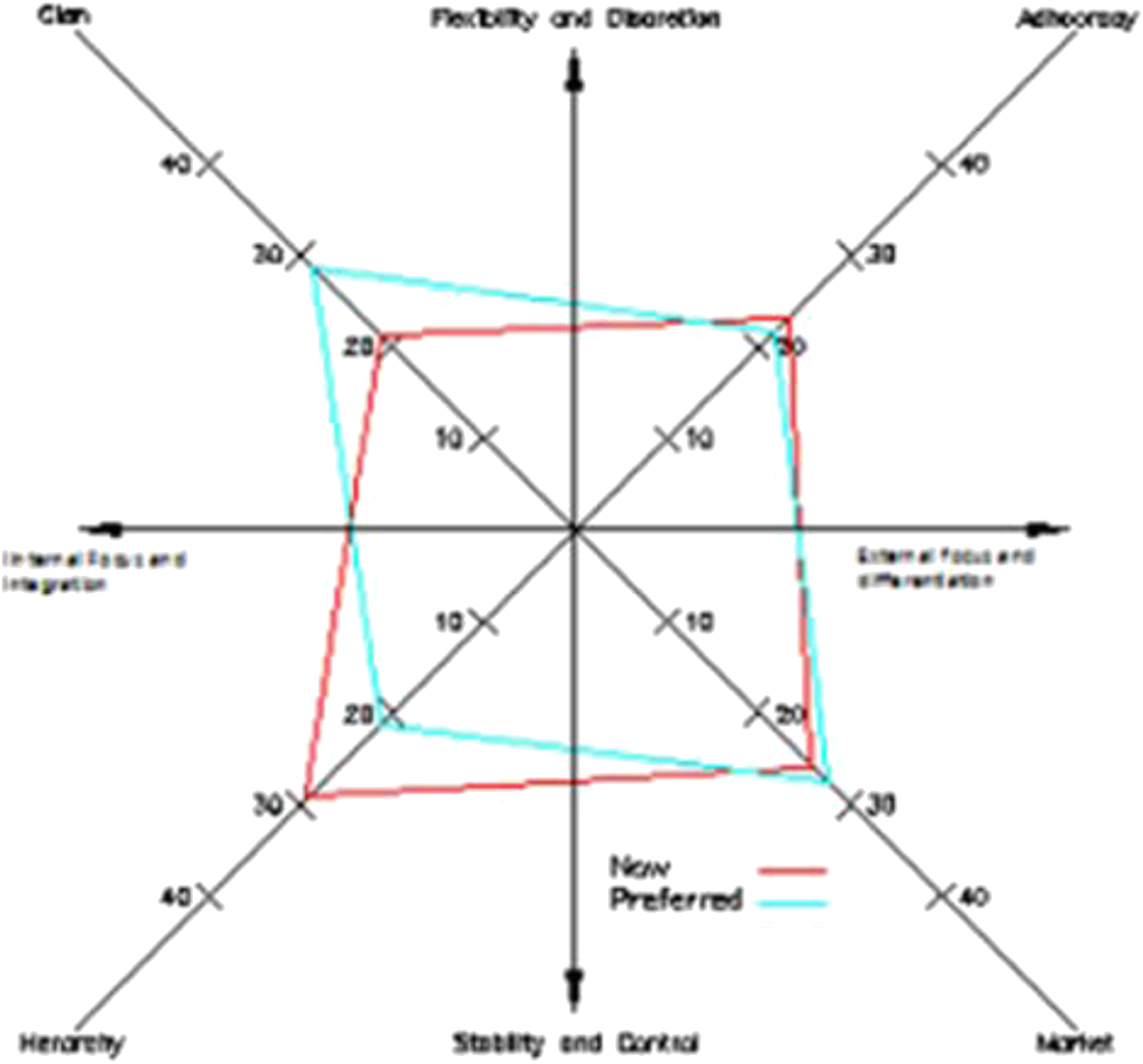
In addition, the dominant characteristics highlight the emphasis given by the organization. In this case, attention is given to the adoption of practices and the development of activities that follow the organizational principles and values. Also, the organization appears to adopt a results-oriented approach, creating a competitive and achievement-oriented environment. The level of employee expertise is low, identifying a lack of knowledge sharing within the departments, resulting in low cooperation levels. Thus, they do not work as members of a team. Moreover, a significant challenge is that managers are not informed about new market opportunities and strategies, leading to a higher cost of product expansion to new markets. Figure 3 illustrates the average dominant characteristics of the company. Average of dominant characteristics.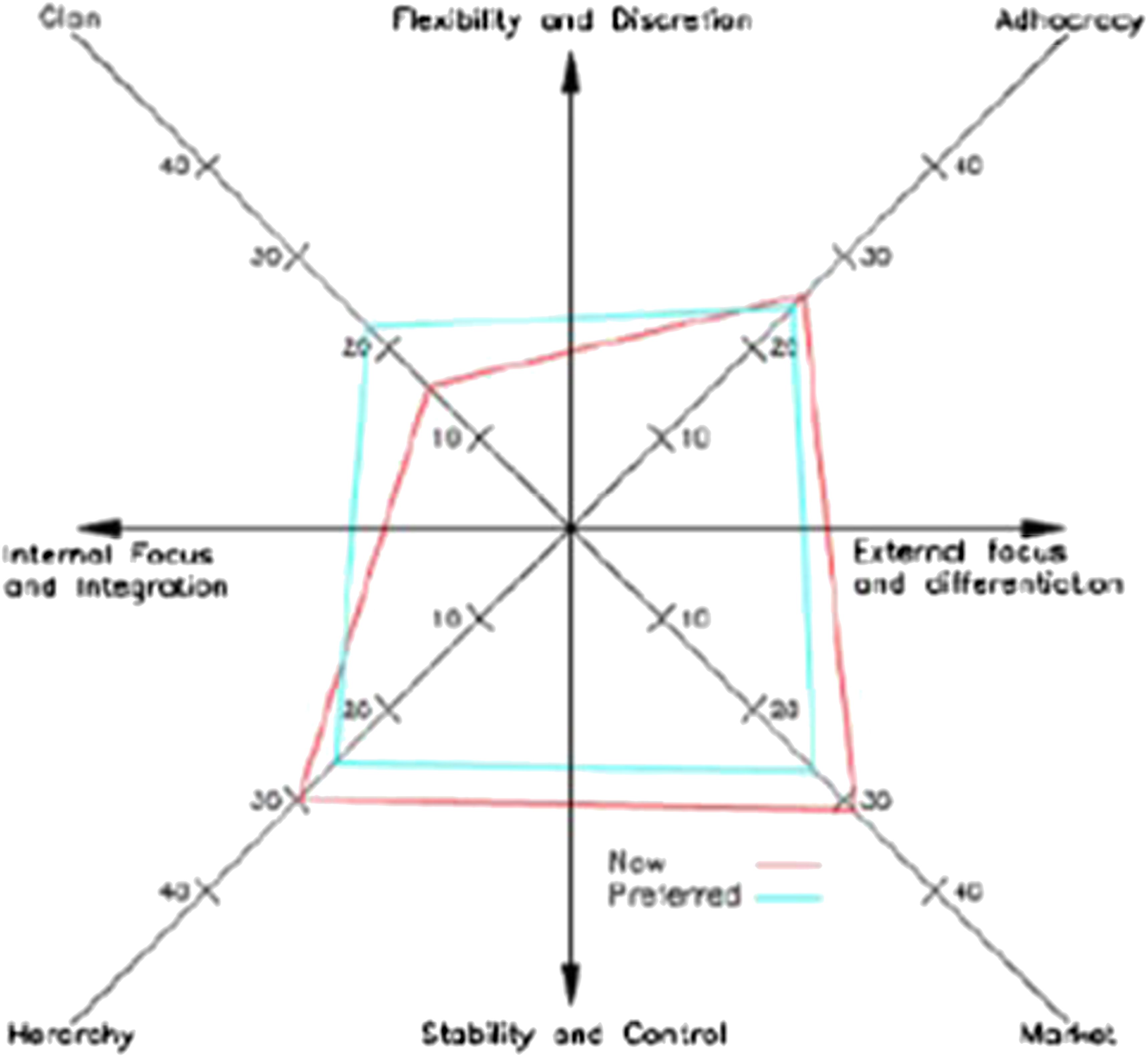
Furthermore, in interpreting the data collected through the interviews and surveys, it becomes clear that a significant number of employees have recently joined the company, which explains the challenges within teams and the low team morale. The comparison between the current and desired state of culture shows a gap in the clan culture, as the company wishes to establish a working environment that promotes teamwork and employee participation, creates confidence, and provides opportunities for professional development.
Also, the level and strength of leadership within the organization appear to be low because of the lack of time of the leaders to focus on the human factor. The findings demonstrate that market success and development is the main priority for the company, considering the plans and activities for market expansion. The data shows that the penetration of the company into Latin America, and specifically to Colombia, was an expensive initiative. This reason explains the decision of the leadership to focus on the demands of the customers (e.g., reduce the required time from project design to execution) rather than on the needs of the employees (e.g., training, coaching, and mentorship). Thus, the company leaders appear to be unable to develop effective teams, providing little support for teamwork. The outcome of this practice satisfies the company because it has established a strong brand name, enjoying recognition in the market of engineering solutions. The market culture is predominant in the focus of organizational leadership. The findings support that leaders must work in clan and adhocracy culture to establish an effective organization, following the desired culture in an effort of changing for improvement. Figure 4 presents the dynamics of organizational leadership in the company. Average of organizational leadership.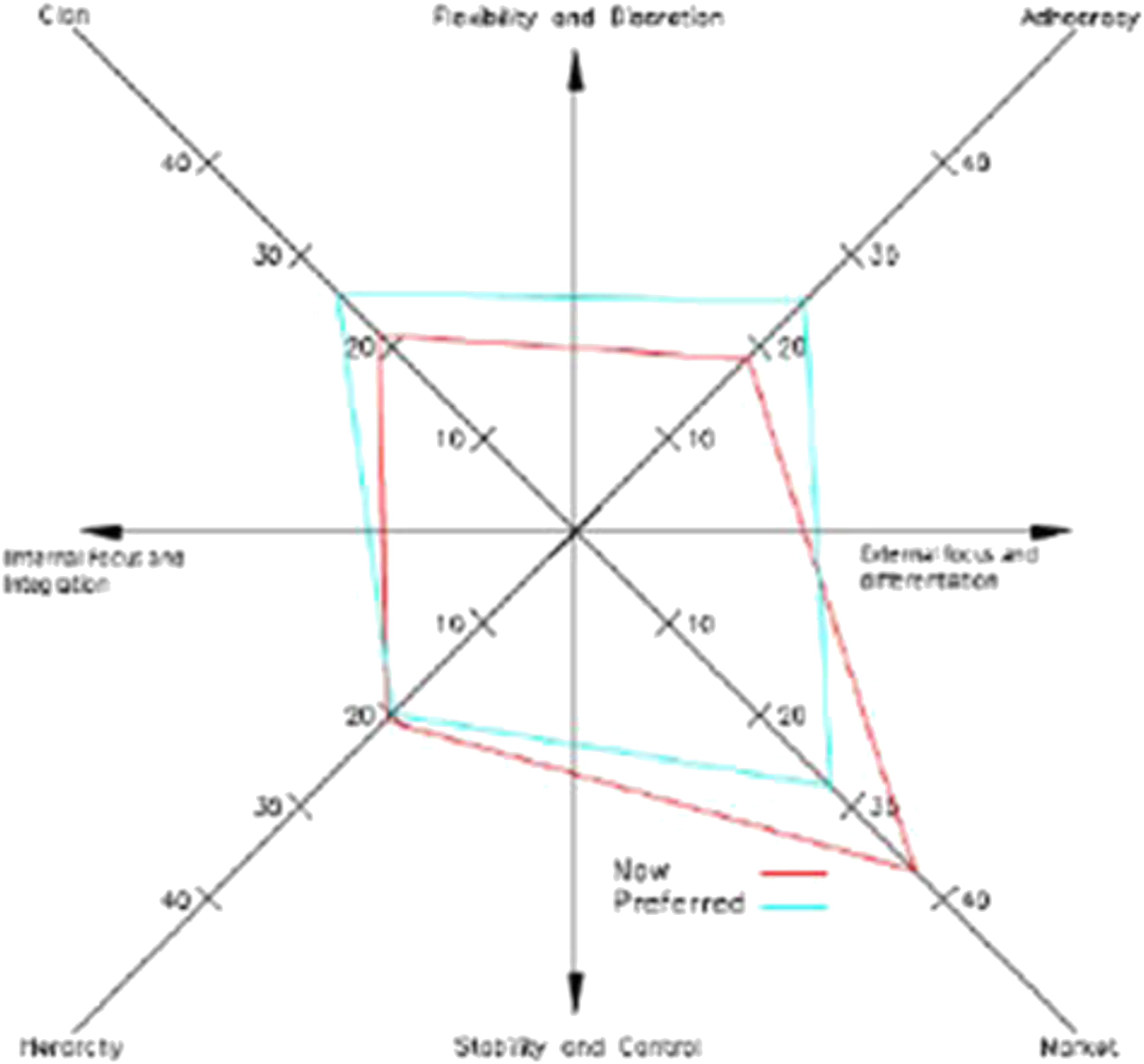
Furthermore, market orientation often predominates the focus of organizational leadership. Frequently, the leadership team chooses to adopt clan and adhocracy culture, focusing more on effectiveness than on employee motivation and creativity. This notion is supported by the findings, which indicate that the management of the case company believes that employees are unwilling to share ideas for new products, services, or systems or take initiatives to improve existing procedures. This approach does not tie in with the desired organizational culture, which prioritizes the employee’s well-being in the organization; hence, some responses underlined the necessity of cultural change. Figure 5 displays the trends in the management of employees in the company. Average of management of employees.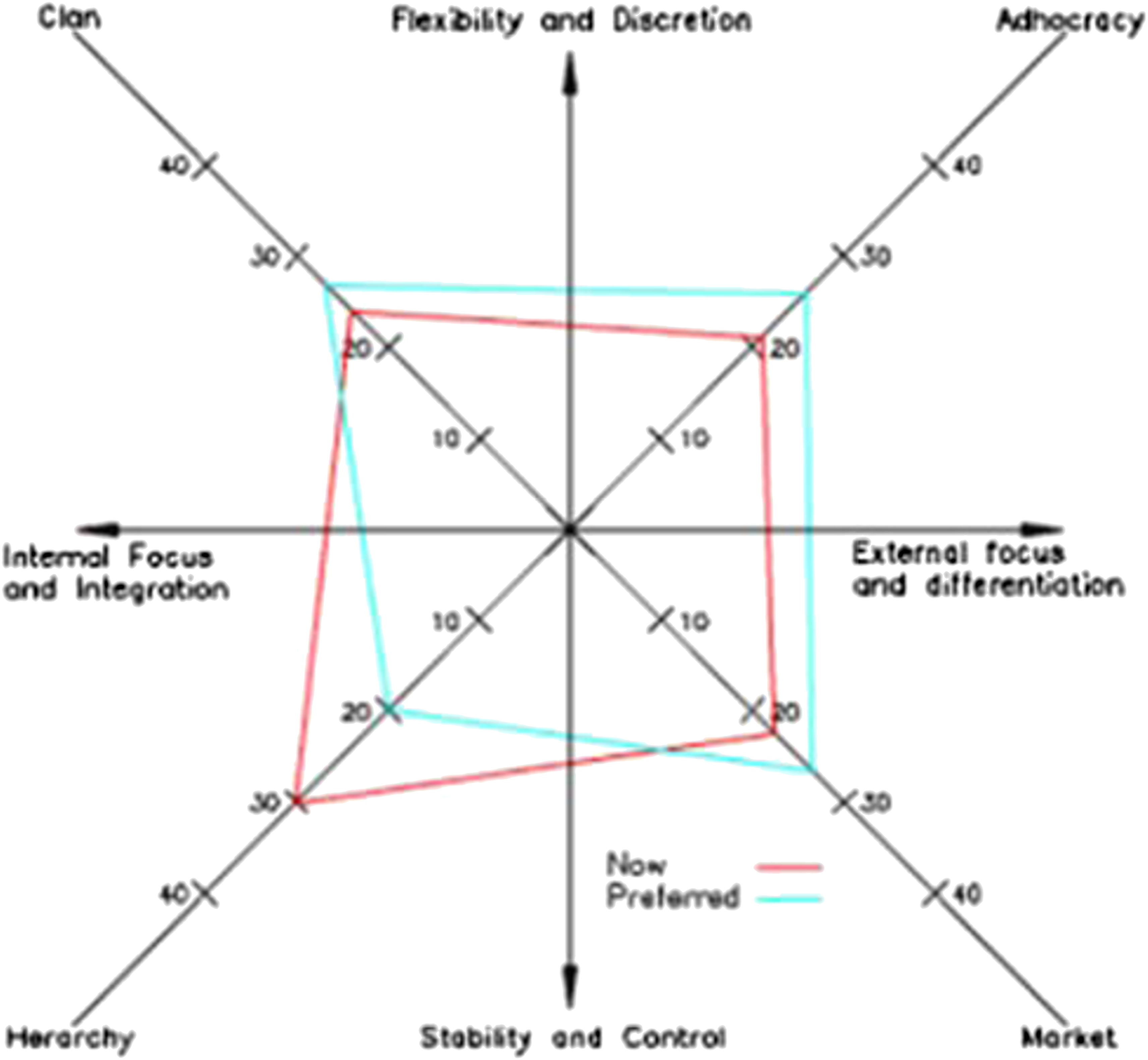
The power politics within the organization appear to be balanced, as the findings show that there is no strong competition regarding internal promotions. Also, the subsidiary has a clear organizational structure. However, there seems to be room for improvement as to the level of productivity and employee engagement; strategies should be developed, and actions should be taken toward the motivation and involvement of employees in decision-making, attempting to overcome the challenge of resistance to change and help employees to take ownership of their job tasks. This claim is based on the finding that some employees feel collectively disintegrated, stating that the cohesion levels among them are low, which might be because the subsidiary has recently been developed; therefore, there has not been sufficient time for employees to develop constructive and positive relationships. The organization should focus on changing the management style to keep hierarchy as an agent of management, facilitating the development of activities and coordination of actions, and establishing an organizational behavior that will enable growth for the organization. The above dynamics are presented in Figure 6, which portrays the state of organizational glue in the company and illustrates a gap in clan culture between the current and the preferred situation. Therefore, it becomes apparent that the company needs to improve the current situation. On the other hand, the culture hierarchy shows a higher level than the preferred. Average of organizational glue.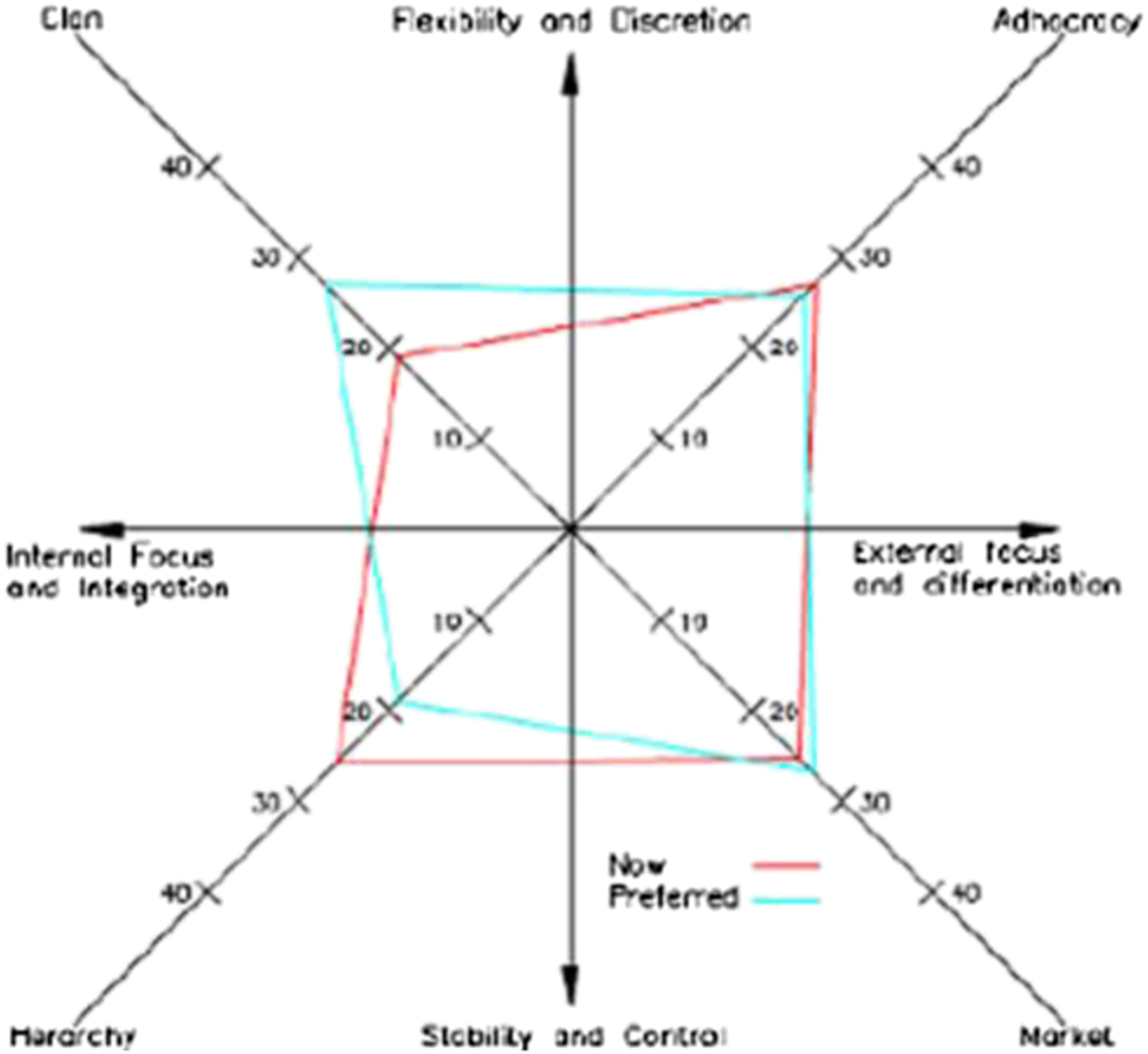
The findings demonstrate the presence of a hierarchical culture that dominates the organization under study. Controlling systems are put in place with bureaucracy and formal procedures to govern, leaving little room for flexibility and creativity. The adverse outcome of this system is underlined by the employees who challenge the administration’s argument that the system enhances organizational effectiveness. As discussed above, organizational policies determine the behavior within the workplace; however, it becomes clear that employees feel disengaged as to their participation in the decision-making of the company. Meanwhile, it is noteworthy that the managers have strong morale, believing that there are opportunities to share ideas and participate in policymaking and strategy.
Additionally, professional development initiatives are infrequent, with a preference for people with high expertise and experience in the required areas. Also, it appears that the company uses contractors for specific projects with limited contract time. This approach creates a relatively insecure working climate, which negatively affects employees’ confidence. It becomes apparent and vital for the people of the case organization that a plan should be developed with initiatives and activities that will increase the levels of trust, commitment, and involvement in the development of the company. Employees suggest a transformation in the management style, focusing on better coordination to create an environment that promotes idea exchange and collaboration in a context of growth. Figure 7 illustrates the company’s strategic emphasis, demonstrating that the organization should focus on trust, openness, participation, efficiency, control, and smooth operations to reach the desired outcome. Average of strategic emphasis.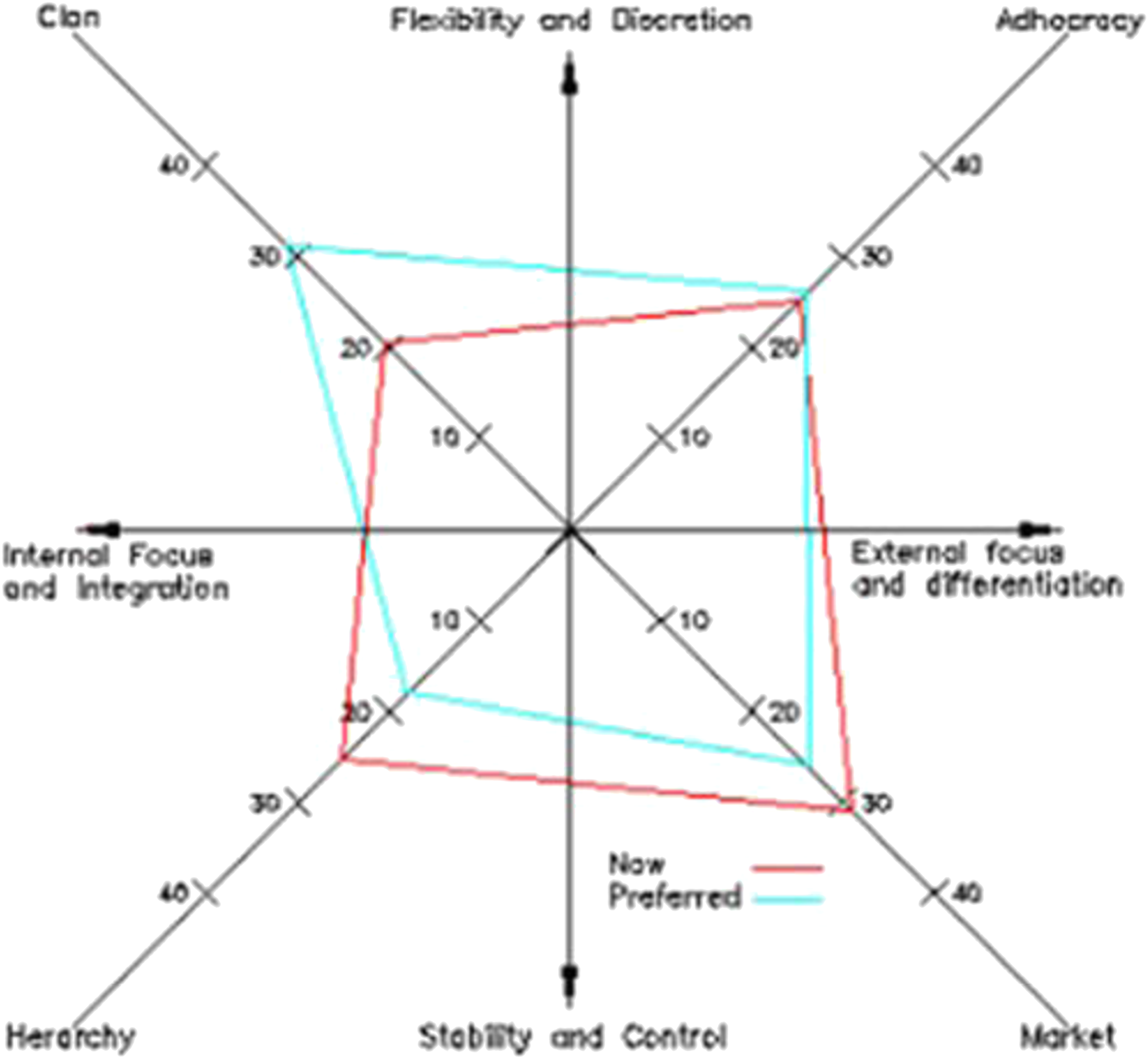
The findings reveal a gap in clan culture between the current state and the preferred one. As discussed earlier, and again evidenced in this section, the current state of hierarchical culture is even higher than the preferred state. This finding might be explained because the examined subsidiary is a new venture for the parent company. Nevertheless, human resource development and employee involvement continuously emerge as essential elements of effectiveness, differentiation, and growth. The organization should define success on the basis of the development of human resources, teamwork, employee commitment, and concern for employees’ needs. Another success criterion that the organization should consider is the competition in the marketplace. Dependable delivery, smooth scheduling, and low-cost production are critical for success. Figure 8 compares the existing and preferred criteria of success, as these are perceived and discussed by the respondents. Average of success criteria.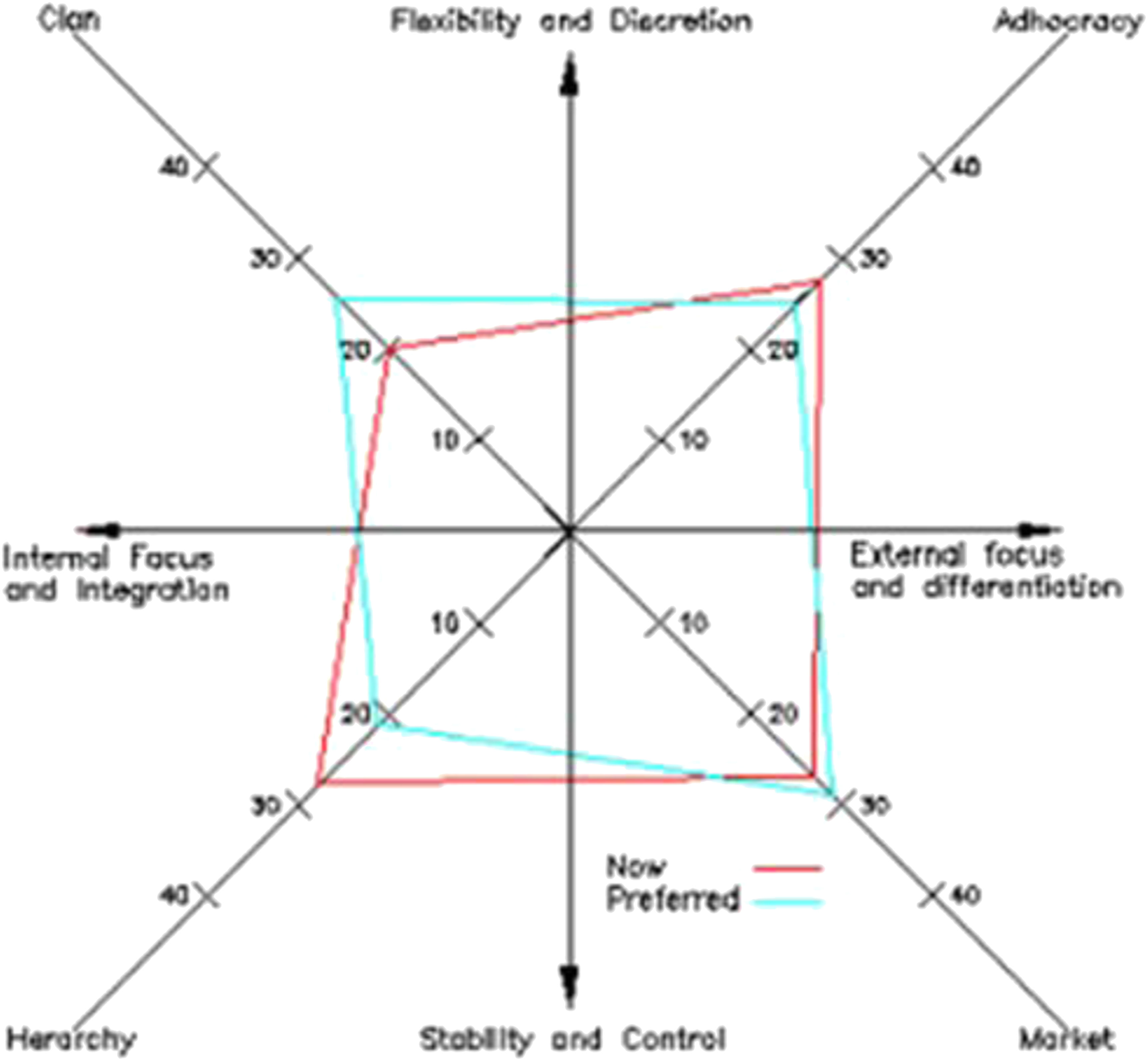
Discussion
Following the analysis of the findings for the examined organization, it becomes clear that, for clan culture, effectiveness, teamwork, mentoring, and coaching enhance employee commitment and credibility, promote communication, and improve collaboration between departments. This argument is supported by the findings of Fleig-Palmer and Schoorman (2011), Löfsten (2016), and Milagres and Burcharth (2019), who argue that mentoring and trust create a vehicle for collaboration and knowledge transfer. Likewise, Joo and Lim (2009) and Al-Jabari and Ghazzawi (2019), who studied the effects of organizational learning culture on organizational commitment, discussed that higher learning culture motivates employees to exhibit the greatest organizational commitment.
As for the adhocracy culture, it nowadays becomes vital for organizations to develop visionary plans, which take into account the dynamic and competitive environments, the evolution of technology, and the willingness of employees to learn, contribute and grow within the organizations (Snihur and Clarysse, 2021). Such plans set the basis for the creation of a working environment that promotes creativity and idea-sharing, leading to creative problem-solving. This argument is supported by Wimmer (2016), who examined how closer cooperation can advance problem-solving, argues that creativity is not an element nor a prerequisite of problem-solving, but the latter is regarded as creativity. This finding is also supported by Young (2014). Likewise, Tan et al. (2018) found that environments that support collective creativity develop advanced collaborative problem-solving solutions.
Also, an inclusive culture promotes employee engagement, creates new communication channels, and advances the levels of collaboration between departments and units. This notion is supported by Richter and Brühl (2021) and Zhang and Huxham (2020), who argue that inclusive culture overcomes barriers to enhancing communication and peer collaboration. Likewise, Thomson (2017: 2) states that “inclusion within organizations involves fostering an environment that allows people with different backgrounds, characteristics, and ways of thinking, to work effectively together and fulfill their potential,” resulting in engaged and valued individuals. The primary findings of this study show that the subsidiary requires acting toward innovation by generating and implementing new ideas aiming at developing creative solutions and improving performance. This outcome can only be achieved in an open and collaborative environment, welcoming and supporting collaboration and engagement. Furthermore, a visionary plan is essential in guiding the organization and integrating its members into a series of activities, creating an environment in which stability enables people to express their creativity and dedicate themselves to the organization’s sustainable development. A clear vision will enhance knowledge sharing and improve organizational effectiveness in conjunction with an inclusive culture.
As for hierarchy culture, the organization adopts a bureaucratic structure giving power and authority to the managers and employing standardized procedures that assist in monitoring and controlling the numerous subsidiaries. Nevertheless, the managers need to develop systems and assessment tools that will enable them to standardize performance and achieve homogeneity within the organization. Kozlowski and Chao (2018), and Brunsson et al. (2012) argue that performance standards and standardization are a dynamic phenomenon in organizations, although they are consorted with stability, with Horváth and Szabó (2019), and Schilke et al. (2009) finding that the link between standardization and performance is significantly stronger in large enterprises—like the examined organization of this study. The findings reveal that some of the managers have recently joined the organization, which might explain the lack of uniformity within the organization and with the corporate culture, considering the non-existence of the appropriate tools and systems.
Finally, it is noteworthy that leaders throughout the organization need to consider the importance of strategy and culture in building a successful organization. Several studies have pointed out the link between strategy, culture, and success. For instance, Naqshbandi and Kamel (2017), Harrison and Bazzy (2017), and Tosti (2007) argue that the challenge for organizational leaders is to institute a supportive culture, which aligns with the company strategy for success. This result is achieved by establishing the operational values that will materialize the company culture. Likewise, Warner and Wäger (2019) and Goldman and Casey (2010) argue that culture is an essential factor that can encourage strategic thinking through the process of learning, while Kopperud et al. (2021) and Joo (2012) found that the leader-member exchange quality had a significant impact on the job performance of employees, which affects the overall performance of the organization Schuh et al. (2018). Also, it was discovered that an organizational culture, which supports learning, substantially affects the relationship between the leader and the member (Thompson et al., 2018; Warrick, 2017). Finally, leaders should identify, communicate, educate, and engage employees in the cultural ideals of the organization by using symbols, social events, and stories to embed and manage culture. Also, desired behaviors and practices must be recognized and rewarded to establish positive routines for success and growth.
Conclusion
Corporate culture is likely to remain a complex concept (Jung et al., 2009). Increasing competition and globalization force businesses to engage in developing competitive advantages. The existing scholarly management literature explains that culture is an intangible resource that influences sustainable firm success and develops a competitive advantage (Kuo and Tsai, 2017; Wilderom et al., 2012). The purpose of this study was to determine the level of culture of a new subsidiary of a company in Colombia and define strategies to increase the level of culture in the way to promote the organization in the region of its operations. Drawing on organizational culture theories, the authors draw on the Organizational Culture Assessment Instrument (OCAI) to measure the aspects of organizational culture.
The contribution of this paper is twofold. First, research on organizational culture and performance has concentrated mainly on organizations, but studies examining how the parent organization’s culture can be transferred to a new subsidiary are limited. This study contributes to this line of research by exploring the various elements of organizational culture, investigating the extent to which organizational culture and leadership have an impact on performance in a new subsidiary of a company. Second, unlike prior studies in this stream of research that have supported that the level of performance is affected by values, behaviors, rules, and policies, and organizational structure (Carter and Greer, 2013; Joseph et al., 2016), this paper uses the OCAI instrument to assess the various elements of organizational culture, investigating the extent to which organizational culture and leadership have an impact on performance. Such an approach enabled us to examine the current level of culture with specific critical dimensions of culture gaps between current and desired levels to achieve organizational effectiveness to find a better approach to identify these key factors, thus going beyond previous studies that have largely focused on the relationship between organizational culture and performance (Abdussamad et al., 2015; Carter and Greer, 2013; Joseph et al., 2016) or organizational culture and leadership (Chong et al., 2018; Nam and Park, 2019; Zheng et al., 2019).
Constructive leadership is essential as it creates and supports a culture in which employees can work together effectively. This highlights the significance of managing individuals in ways that embed values and supportive behaviors in the development of an organizational culture that enhances firm performance. Thus, this finding provides a significant criterion to consider when choosing leaders, as they should support organizational values and help employees collaborate among themselves. The highlighted implications for managers include that executives should focus on organizational culture components, support organizational values, and help team members. Also, this paper has clear managerial implications for executives in multisector organizations. These implications concern the ways in which executives can identify the type of culture and the levels of cultural congruence, measure the strength of organizational culture, and aim to update, strengthen, or modify the existing culture to improve performance and gain sustainability.
The organization needs to effectively integrate and coordinate its various functions, adopting a management system that promotes collaboration and reflects a competitive culture to support its desired growth. Emphasis must be given to teamwork (Lvina et al., 2017; Kirkman et al., 2016). Corporate organizational culture requires time, maturity, and the right mechanisms to be transferred to all subsidiaries in the organization, allowing employees and managers in the different levels to contribute to the development of the intra-organizational culture. Such culture should consist of values, principles, and behavior patterns, creating positive and constructive working environments while building upon the nature of the human relationship. The required actions to involve employees in modifying the hierarchical structure—to achieve a higher acceptance rate within the organization—include the improvement of employee engagement and the definition of rules and standards with the participation of workers based on the organization’s values and principles as essential aspects of the culture (Reina et al., 2018). The transformation of an organizational culture requires the necessary changes in personal behaviors, the reinforcement of new values, and management adjustment. Such transformation is achieved within learning environments, in which a leading-by-example approach is adopted so that the internal culture is transferred to the new employees (Cameron and Quinn, 2006).
Hierarchy in the examined organization is strong; therefore, the current structure can support action plans to increase the level of organizational culture by adopting a systematic approach that aligns internal subcultures (i.e., departmental or unital) with the corporate culture, aiming at supporting initiatives to improve organizational performance (Pinho et al., 2014; Song and Kolb, 2013). The theoretical concepts are relativist and depend on the leader and the environment in which each organization works. There is a link between culture and performance at the organizational level, the result of which depends on management and leadership styles, company morale, continuous improvements, company vision, improved customer care, and the implementation of organizational policies (Carter and Greer, 2013).
The organization should set up a consistent system of performance appraisals, which will be linked to rewards, promotions and foster teamwork and the engagement of employees in organizational decisions and activities. Such an approach toward employee involvement leads to sharing responsibility and motivation for improving performance. Leaders should create a corporate culture where employees can generate, pursue, and implement new ideas. This is supported by the studies of Andreeva et al. (2017) and DeNisi and Smith (2014), which argue that performance appraisals, performance management, and rewards for knowledge behavior aligned with the organization’s strategic goals enhance firm-level collaboration, innovation, and performance.
This paper provides critical managerial recommendations for improving firm performance. Findings from the survey indicate that innovative organizational culture can be built through active encouragement and support from managers. When managers recognize and nurture their employees’ uniqueness and empower them to follow their vision of the organization, they will have an innovative culture. Employees that understand and act on organizational values can increase business performance. Leaders need to encourage managers and support them to create a competitive work environment in order to increase business performance. This study will inform managers by presenting how they can create a supportive organizational culture, encourage team members and leaders to increase efforts to support organizational culture, and create opportunities for improvement. Managers need to understand that a transparent organizational culture creates a competitive advantage and significantly influences shaping organizational culture.
Limitations
The first challenge met during this study was to convince managers and employees to take part in it. This was a barrier because of the confidentiality of the information. As a way to overcome this challenge, the authors discussed the benefits for the examined company, explaining that these might contribute to the improvement of organizational performance and work productivity. Another issue was the lack and ambiguity of quantitative data regarding the perceptions of strategic leadership values and cultural effects on organizational effectiveness. The challenge was to get reliable data, identify the representative sample, and define a scale of quantitative data to provide the answers to the research questions. Also, the sample was not large enough because the subsidiary consisted of 100 employees. Participants comprised managers and employees apprehending the need for cultural change in the company and held opinions concerning how such change could promote teamwork, improve employee welfare, and achieve professional and business growth. Finally, the study was conducted within a single industry and a single subsidiary. Thus, the results of the survey cannot be generalized to other industries or countries.
Future research
A suggestion for future research relates to the examination of the role of values and norms, and performance. Why do managers concentrate on some dimensions and not others? Leaders and managers emphasize increasing firm performance; however, a better understanding of leader behaviors that support increased firm performance will only come about through a sustained research effort in this direction.
Future researchers could expand the sample of this survey and examine the relationship between organizational culture and performance by implementing quantitative survey approaches that are more suitable for the examination of larger sample sizes. However, long-term observations or interviews for organizational culture or performance analysis are recommended for longitudinal studies. This topic requires additional research to quantify the effectiveness of mature organizational culture and examine the extent to which such culture would be affected by the characteristics of the various projects. Other areas of focus described in the management literature—such as the decision theory or a detailed analysis of the required skills and the specific indicators of performance—could be synthesized and analyzed to provide additional insights and knowledge in organizational culture and performance management.
Footnotes
Declaration of conflicting interests
The author(s) declared no potential conflicts of interest with respect to the research, authorship, and/or publication of this article.
Funding
The author(s) received no financial support for the research, authorship, and/or publication of this article.
