




Abstract
The relationships between transformational leaders and several follower outcomes have been well investigated, but the mechanism through which these leadership behaviors relate to such outcomes is relatively unexplored. By investigating the mediating role of interactional justice, using structural equation modeling analyses, and data collected from supervisors and direct reports at various organizational levels, the present study provides insight into the psychological processes underlying transformational leadership and its effectiveness on follower outcomes. In line with social exchange theory, the main takeaway from the present study is suggesting that leaders, who display transformational leadership behavior in a manner perceived by followers as respectful, fair, and consistent with moral and ethical standards, may expect greater follower organizational attachment as an appropriate response to interactional justice.
Keywords
Introduction
More than three decades have passed since Bass (1985) first presented his seminal work on transformational leadership. Numerous subsequent studies have consistently shown a positive association between transformational leadership and effectiveness in organizations, including commitment to the organization (Top et al., 2013), creativity (Mittal and Dhar, 2015; Wang et al., 2014), engagement at work (Breevaart et al., 2014), and organizational citizenship behavior (Fatima et al., 2014). Furthermore, the emotional intelligence of leaders has shown a significant variance between leader self-perception and rater-perception of transformational leadership (Barbuto and Burbach, 2006). Despite previous research findings on the performance and performance-related attitudes of transformational leaders, Cho and Dansereau (2010) have argued that how transformational leaders influence individual followers has received little attention. The present study addresses this research gap by focusing on the relationship between transformational leadership and followers’ perception of interactional justice, as interactional justice is the psychological mechanism expected to best reflect how transformational leader influence followers. Specifically, in an attempt to increase employee performance, leaders should behave in a fashion that is perceived as respectful and polite by followers. Alternatively, when followers perceive involvement in developing a vision for the organization as legitimate, and when such involvement is friendly and considerate, followers feel respected by their leader. Cohan-Carash and Spector (2001) held that the behavior shown by management toward the recipient of justice represents the human side of organizational practices.
However, respectful and polite leadership behavior toward followers in for-profit business settings could potentially conflict with shareholders’ notions of efficiency and management’s commitment to aggressively maximize short-term profits. For instance, shareholders may adopt a more strategic outlook and view employees in general as an organizational resource charged with achieving organizational goals. In one study conducted in a business context, Cho and Dansereau (2010) found that interactional justice was responsible for transmitting the effects of individualized consideration. Cho and Dansereau’s (2010) study was conducted in a collectivistic culture (South Korea) where employees were more willing to subordinate self-interest for the sake of the larger collective, and the emphasis was on group accomplishment (Jung et al., 1995). Goal attainment depended on group collaboration; group norms and values were more strongly adhered to and therefore provided a more powerful social control mechanism (Jung et al., 1995). Group harmony was prized along with individual modesty (Jung et al., 1995). However, the validity of the findings of Cho and Dansereau (2010) has yet to be explored in an individualistic Western business context, where promotion and competition for status and resources are entrenched (Bailey et al., 1997). In support of this notion, research has shown that situational aspects impact which leader behaviors are ultimately effective (Lord et al., 2001; Shamir and Howell, 1999). Transformational leader behaviors effective in one situation may not translate to effective performance in a different context (Antonakis and Atwater, 2002). Furthermore, Cho and Dansereau (2010) focused only on individualized consideration, leaving unaddressed the validity of each of the other three components of transformational leadership (i.e. intellectual stimulation, inspirational motivation, and idealized influence). This is particularly important due to research suggesting that subdimensions have differential effects on outcomes (Deinert et al., 2015).
Accordingly, the intended contribution of this research is threefold. First, to extend previous research to see whether each of the four components of transformational leadership is associated with multiple outcomes via interactional justice. Second, to broaden the focus by examining uncharted outcome variables such as follower work performance and organizational commitment (OC). For instance, OC is an important outcome, as research has demonstrated its important consequences for organizations and its employees, since committed employees contribute to productivity and effectiveness at different organizational levels (e.g. Conway and Briner, 2005). Third, to apply data from profit-oriented firms to empirically determine whether the association between transformational leadership, interactional justice, and outcomes is valid in a Western business context. The aim is to contribute to transformational leadership literature by investigating a specific mechanism through which each of the four transformational leadership dimensions may relate to multifocal effectiveness outcomes. By doing so, we hope the increased understanding of the leadership process will enable leaders to focus their behaviors so that they trigger the mechanism through which they work, more effectively. Basically, we believe the main managerial contribution from the present study is suggesting that leaders, who display transformational leadership behavior in a manner perceived by followers as respectful, fair, and consistent with moral and ethical standards, can expect greater follower organizational attachment as an appropriate response to interactional justice.
Theory and hypotheses
Transformational leadership is a construct used to describe how leaders influence and inspire followers to commit to demanding objectives and perform beyond expectations (Eberly et al., 2017; Piccolo et al., 2012). Currently, transformational leadership seems the most dominant leadership construct in organizational behavior research (see for instance Gottfredson and Aguinis, 2017). According to most researchers (e.g. Bass and Riggio, 2006; Gottfredson and Aguinis, 2017), transformational leadership consists of four components, usually labeled the four I’s. Inspirational motivation provides meaning and challenge using simple language, symbols, and images. Leaders display optimism and enthusiasm, envisage an attractive future by articulating an appealing and inspiring vision for followers, and set high expectations. Idealized influence emphasizes the importance of a strong sense of purpose and collective sense of mission. Leaders are perceived by followers to have extraordinary capabilities, persistence, and determination, with self-confidence and a willingness to take risks to achieve the collective goal. Intellectual stimulation refers to leaders who can help and challenge others to question assumptions, reframe problems, and encourage creative thinking. Finally, individual consideration means paying attention to each individual follower and their particular needs through coaching and mentoring. Leaders listen to followers’ concerns, add insight, and develop opportunities for growth. Two-way communication is encouraged, and ‘walk-around’ management and delegation are practiced.
As mentioned above, the present study examines how each of these four factors is associated with follower performance and OC via followers’ justice perception. Cropanzano et al. (2002) found that employees evaluate justice according to three bases: outcomes received through the organization (distributive justice), formal policies by which outcomes are allocated (procedural justice), and interpersonal treatment by managers (interactional justice). In examining followers’ justice perceptions in connection to the four transformational leadership factors, the focus is on interactional justice, as interactional justice is the psychological mechanism that best explain how transformational leaders influence followers (Cho and Dansereau, 2010). Interpersonal treatment by managers (interactional justice) is essential for the well-being of employees (e.g. positive affect, life satisfaction) and for the emergence of desirable work outcomes (e.g. commitment to the organization) (Kass, 2008). Accordingly, because transformational leaders show appreciation and concern for employees, they may elevate their followers’ feelings of being treated with dignity, respect, and equality (i.e. interactional justice). Moreover, when followers perceive involvement in implementing a vision as legitimate, and when such involvement is friendly and considerate, followers feel respected by their leader. In addition, when followers feel legitimate support and encouragement in striving for knowledge-creation and actualizing their potential, it too is interpreted as the leader showing respect and trust. Followers, who feel their leader is treating them with respect, and refrain from prejudicial or improper statements when interacting with them, will reciprocate by working harder to enhance personal performance. This latter notion is rooted in social exchange theory (Blau, 1964; Cropanzano et al., 2017). The core principle of social exchange theory is reciprocity (Gouldner, 1960; Tsai and Kang, 2019), which posits that each party in a social exchange relationships will feel an obligation to repay any benefits received. Transformational leaders, who are perceived by followers as kind, respectful, and dignified, can therefore expect followers to respond with behaviors in line with the leader’s goals, such as working harder to enhance personal performance. Therefore, we hypothesize:
Next, the association between transformational leadership and OC via interactional justice is examined. Social exchange theory holds that organizations are forums for transactions (Cropanzano et al., 2017). From a social exchange point of view, it is not clear why followers should repay the organization, by way of enhancing their commitment, as a result of being fairly treated by their leader (Loi et al. 2009). That is, most social scientists traditionally view OC as an attitude characterizing the relationship between a follower and the organization (de Grip et al., 2020) which is not a party to the dyadic leader–member relationship. Still, research has shown that followers often identify their leader with the organization (Eisenberger et al., 2010). Accordingly, from a social theoretical lens, when followers are being treated in a friendly and considerate manner, followers can be expected to repay the organization as a result of fair treatment by the leader. That is, relying on the notion of supervisor organizational embodiment (Shoss et al., 2013), the benefits received from the supervisor should be interpreted as originating from the organization. Admittedly, this theorizing can be considered to be grounded in a more rational self-interested process of social exchange where individuals “are motivated by the returns they [their actions] are expected to bring…from others” (Blau, 1964: 91). However, in addition to this self-interested process of social exchange, it can be argued from a social identity perspective (Ding et al., 2017) that interactional justice should in itself facilitate an emotional attachment to the organizational as a whole, such that the strongly committed individual identifies with, is involved in, and enjoys membership in the organization. Accordingly, we hypothesize:
Methods
Setting and sample
Following principles of pragmatism and practice of prior studies on similar topics (e.g. Epitropaki and Martin, 2013; Nielsen and Daniels, 2012), this research used simple convenience sampling, a non-probability sampling method where the sample was drawn from an easily accessible study group. Specifically, data were obtained via questionnaire distributed to two for-profit business organizations in Norway which we gained access to, via an executive student enrolled in an executive master class at the university where one of the authors are employed. A cover letter informed respondents the study had been approved by management, that strict confidentiality was guaranteed, and results were to be used for academic research purposes to better understand leadership dynamics in the workplace. Employees were not compensated for participation in the study, and questionnaires were distributed to the respondents while at work. The first organization was an international provider of telecommunication services and the second conducted testing of a wide range of food and environmental products. Data were gathered from supervisors and direct reports at various organizational levels. The response rate was nearly 75% based on 210 contacted individuals: 51.6% of followers were male, the average age of followers was 39.8 years (SD = 9.52), and average education was 15.3 years (equivalent to a bachelor’s degree).
Measures
Supervisor ratings of performance
Each supervisor provided ratings on the following scale: a five-item performance rating scale developed by Williams and Anderson (1991). Sample items: Adequately completes assigned duties; Performs tasks that are expected; anchors: 1 = Never; 2 = Seldom; 3 = Occasionally; 4 = Often; 5 = Always). Cronbach’s αs for the five items were 0.89.
Subordinate assessments
Transformational leadership was measured using Multi-factor Leadership Questionnaire (MLQ) Form 5X (Bass and Avolio, 1995). Each subordinate completed the 20-item measure of MLQ with sample items: Articulates a compelling vision of the future; Treats me as an individual rather than as a member of the group; anchors: 0 = Never; 1 = Rarely; 2 = Seldom; 3 = Occasionally; 4 = Often. Transformational leadership is conceptualized as four distinct components (Avolio et al., 1999). Cronbach’s αs for the four components of transformational leadership, that is, individualized consideration (α = 0.82) idealized influence (α = 0.88), intellectual stimulation (α = 0.74), and inspirational motivation (α = 0.89), were acceptable. Interactional justice was measured with a nine-item scale (Niehoff and Moorman, 1993) with sample items: When decisions are made about my job, the general manager treats me with kindness and consideration; When decisions are made about my job, the general manager treats me with respect and dignity; anchors: 1 = Strongly disagree; 7 = Strongly agree. OC (α = 0.91) was measured with the nine-item version of the Organizational Commitment Questionnaire (Mowday et al., 1979). Examples of sample items: I am willing to put in a great deal of effort beyond that normally expected in order to help the organization be successful; This organization really inspires the best in me in the way of job performance; anchors: 1 = Strongly disagree; 2 = Disagree somewhat; 3 = Slightly disagree; 4 = Neither agree nor disagree; 5 = Slightly agree; 6 = Agree somewhat; 7 = Strongly agree.
It is important that research questions be worded so as to avoid the risk of misunderstanding or misconception and that language be equivalent when the instrument is translated from one language to another (in this case from English to Norwegian). Therefore, following recommendations in the literature, a translation-back conversion process was applied to avoid the risk of misunderstanding or misconception and to ensure equivalency of item meaning (Brislin, 1980; Cavusgil and Das, 1997). Following recommendations of Nachmais and Nachmais (1992), the research was preceded by a pilot study to test the instruments, distribution of questionnaires, and data collection procedure, using a focus group of five supervisors to examine the suitability of the items in a for-profit setting before presentation to the actual survey population. Emory and Cooper (1991) stated that changes that need to be made to the methodology can be made from pilot study results to enhance the probability of expected results from the research design, and pretesting of the questionnaire should be undertaken to detect possible shortcomings in the design and administration of the questionnaire. The results of the qualitative pilot study indicated the instruments were relevant for the study context and no shortcomings were detected by either native speakers of English or native speakers of Norwegian when the scales were checked for wording, accuracy, and clarity of items.
The research study did not include any control variables. Control variables can reduce available degrees of freedom and statistical power and their elimination aligned with the recommendations of Becker et al. (2016). For instance, Becker et al. (2016) note that with the addition of control variables, parameter estimates (e.g. regression coefficients) no longer reflect the original measured independent variables, but the portions of the independent variables unrelated to the control variables. If the hypotheses do not include control variables, they recommend not to include them in the analysis (Becker et al., 2016), and when in doubt to omit them as this improves interpretation of the results.
Results
With respect to the validity of the measures employed in this research, the authors estimated a confirmatory factor analysis (CFA) performed on an eight-factor model representing individualized consideration (Cronbach’s α = 0.82), intellectual stimulation (Cronbach’s α = 0.74), idealized influence (Cronbach’s α = 0.88), inspirational motivation (Cronbach’s α = 0.89), interactional justice (Cronbach’s α = 0.96), performance (Cronbach’s α = 0.89), and OC (Cronbach’s α = 0.91). The results of this CFA provided an indication of a well-defined measurement model demonstrating convergent and discriminant validity (χ 2 (839) = 1022.71, p < 0.01; root mean square error of approximation (RMSEA) = 0.04; comparative fit index (CFI) = 0.98; nonnormed fit index/Tucker–Lewis index (TLI) = 0.98). Specifically, both the RMSEA values were below 0.08 (e.g. Hooper et al., 2008; MacCallum et al., 1996), and the CFI and TLI indices exceeded 0.90, considered evidence of a well-defined measurement model by several authorities (e.g. Bollen, 1989; Fan et al., 1999).
Reliability estimates are outlined in the Measures section of this study as well as shown on the diagonal line in the correlation matrix, using Cronbach’s αs in accordance with most previous research conducted using similar measures. The calculated values ranged from Cronbach’s α = 0.74 to 0.96 well above the commonly used cutoff of 0.70. For instance, Rothbard and Edwards (2003: 713) reported that “all reliabilities exceeded the 0.70 criterion suggested by Nunnally (1978) and were considered acceptable,” and McAllister and Bigley (2002: 898) wrote that “reliability assessments for all scales exceeded the minimum standard of 0.70 suggested by Nunnally (1978),” and Spector et al. (2002: 458) reported that “these scales maintained adequate internal consistency reliabilities as assessed with the widely accepted 0.70 coefficient α standard (Nunnally, 1978).”
Descriptive statistics and intercorrelations among the independent and dependent variables are displayed in Table 1. The coefficient α estimates for the multi-item scales are listed on the primary diagonal of the intercorrelation matrix. As expected, all transformational leadership dimensions were significantly and positively associated with interactional justice (rs > 0.51, p < 0.01). Furthermore, interactional justice was also positively associated with the output variables follower performance and OC (rs = 0.41 and 0.27, respectively, both p < 0.01).
Descriptive statistics, correlations, and coefficient αs (on the diagonal).
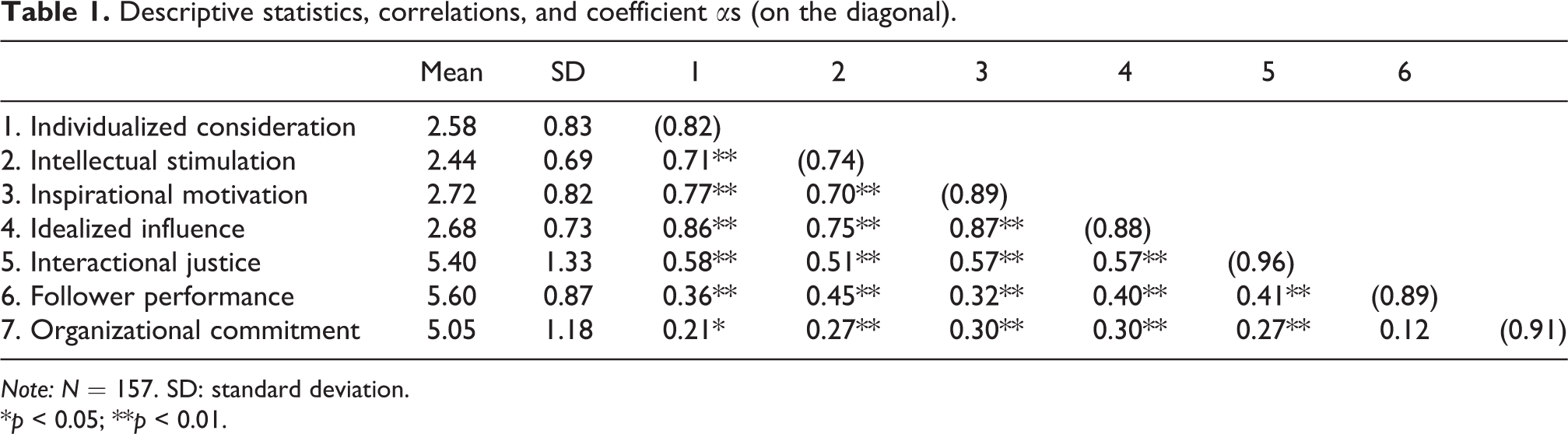
Note: N = 157. SD: standard deviation.
*p < 0.05; **p < 0.01.
One structural equation modeling (SEM) analysis using MPlus was performed for each of the transformational leadership dimensions. Table 2 as well as Figures 1 to 4 exhibit the results of these SEM analyses. Contrary to Hypothesis 1, the results did not reveal significant indirect relationships between intellectual stimulation and performance (standardized indirect effect = 0.06, n.s.), between individualized consideration and performance (standardized indirect effect = 0.12, n.s.), or between idealized influence and performance (standardized indirect effect = 0.13, n.s.). However, in line with Hypothesis 1, a significant indirect relationship between inspirational motivation and performance was observed (standardized indirect effect = 0.20, p < 0.05). Mixed results were obtained for Hypothesis 1. Furthermore, in line with Hypothesis 2, the results revealed significant indirect relationships between intellectual stimulation and OC (standardized indirect effect = 0.13, p < 0.05), between individualized consideration and OC (standardized indirect effect = 0.19, p < 0.01), between idealized influence and OC (standardized indirect effect = 0.12, p < 0.05), and between inspirational motivation and OC (standardized indirect effect = 0.11, p < 0.05). Hypothesis 2, therefore, was supported.
Structural equation modelling: Testing four models.
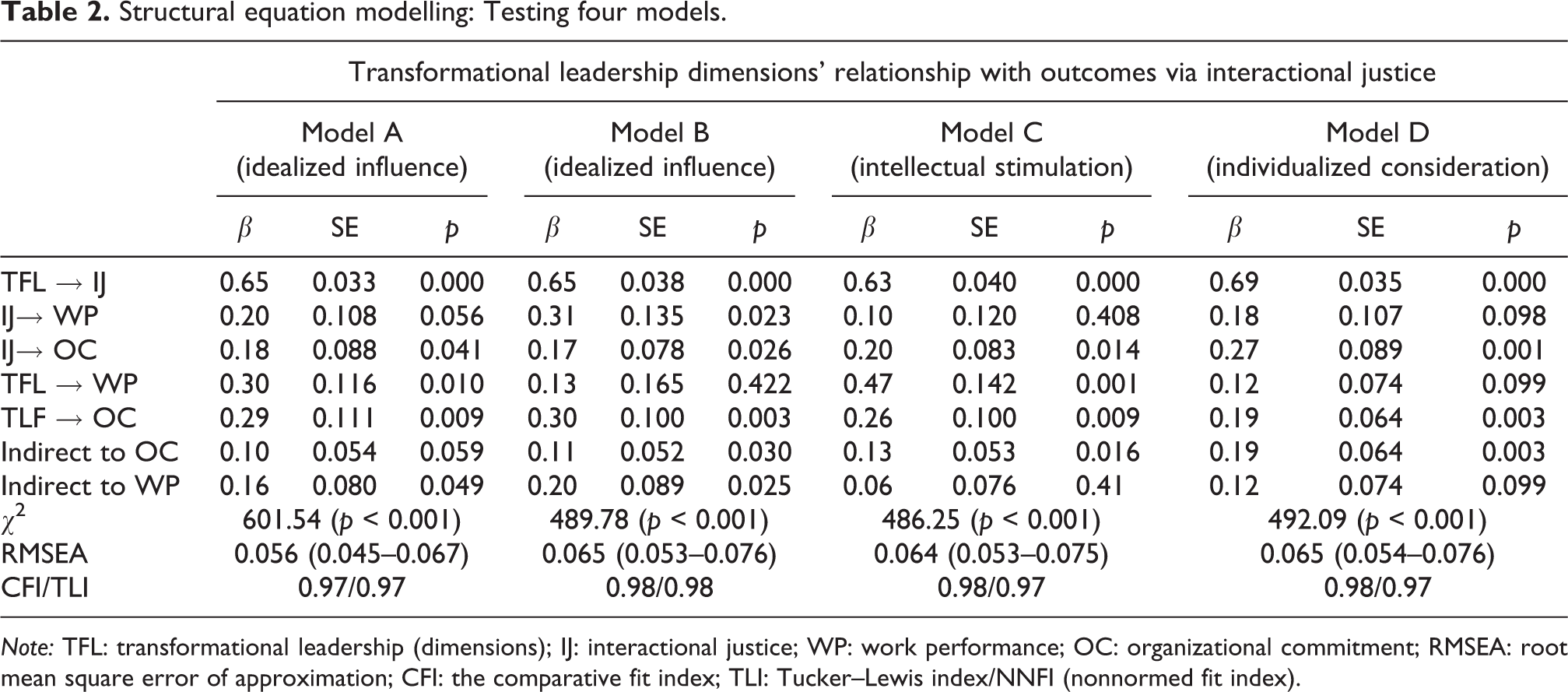
Note: TFL: transformational leadership (dimensions); IJ: interactional justice; WP: work performance; OC: organizational commitment; RMSEA: root mean square error of approximation; CFI: the comparative fit index; TLI: Tucker–Lewis index/NNFI (nonnormed fit index).
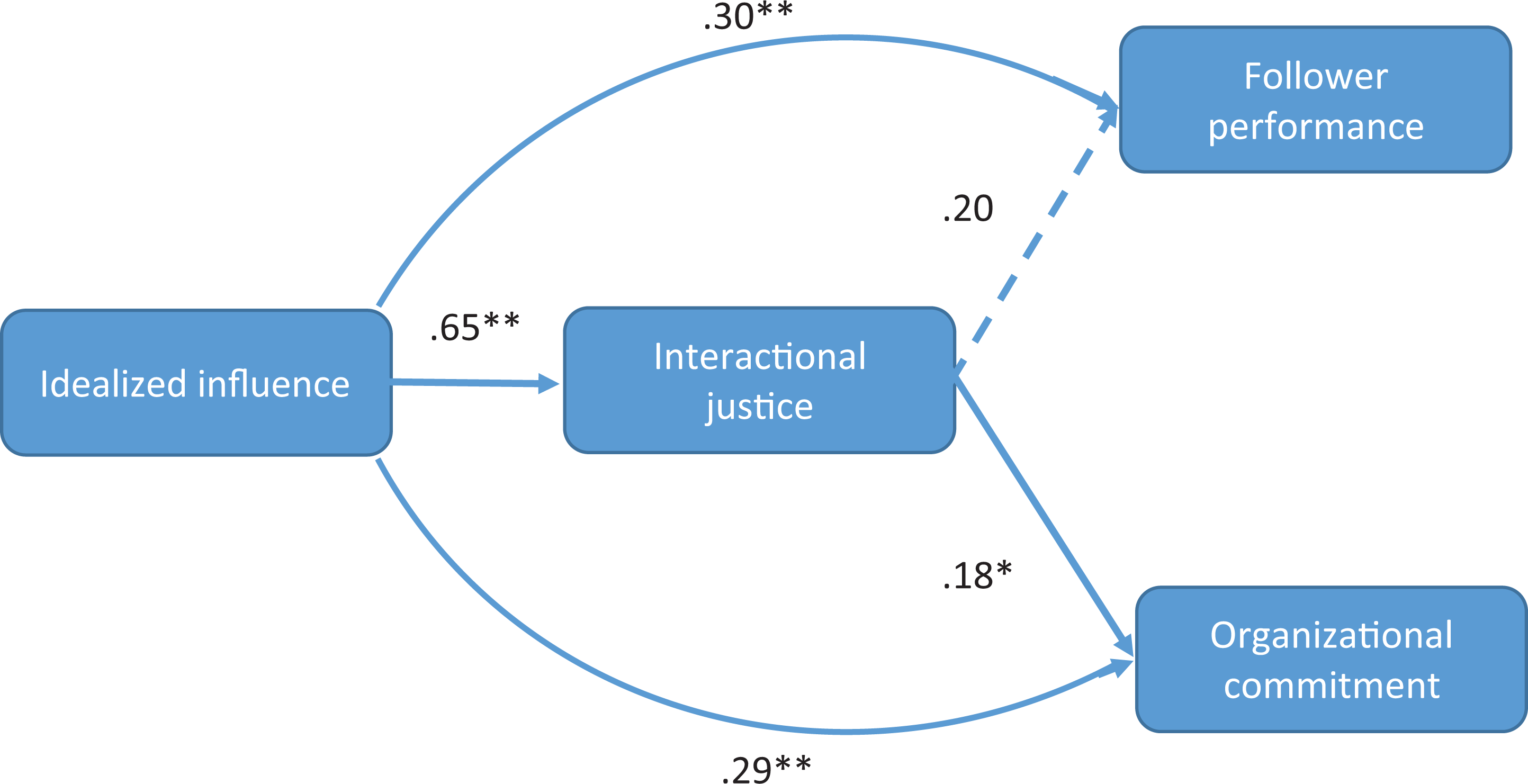
Idealized influence and outcomes mediated by interactional justice.
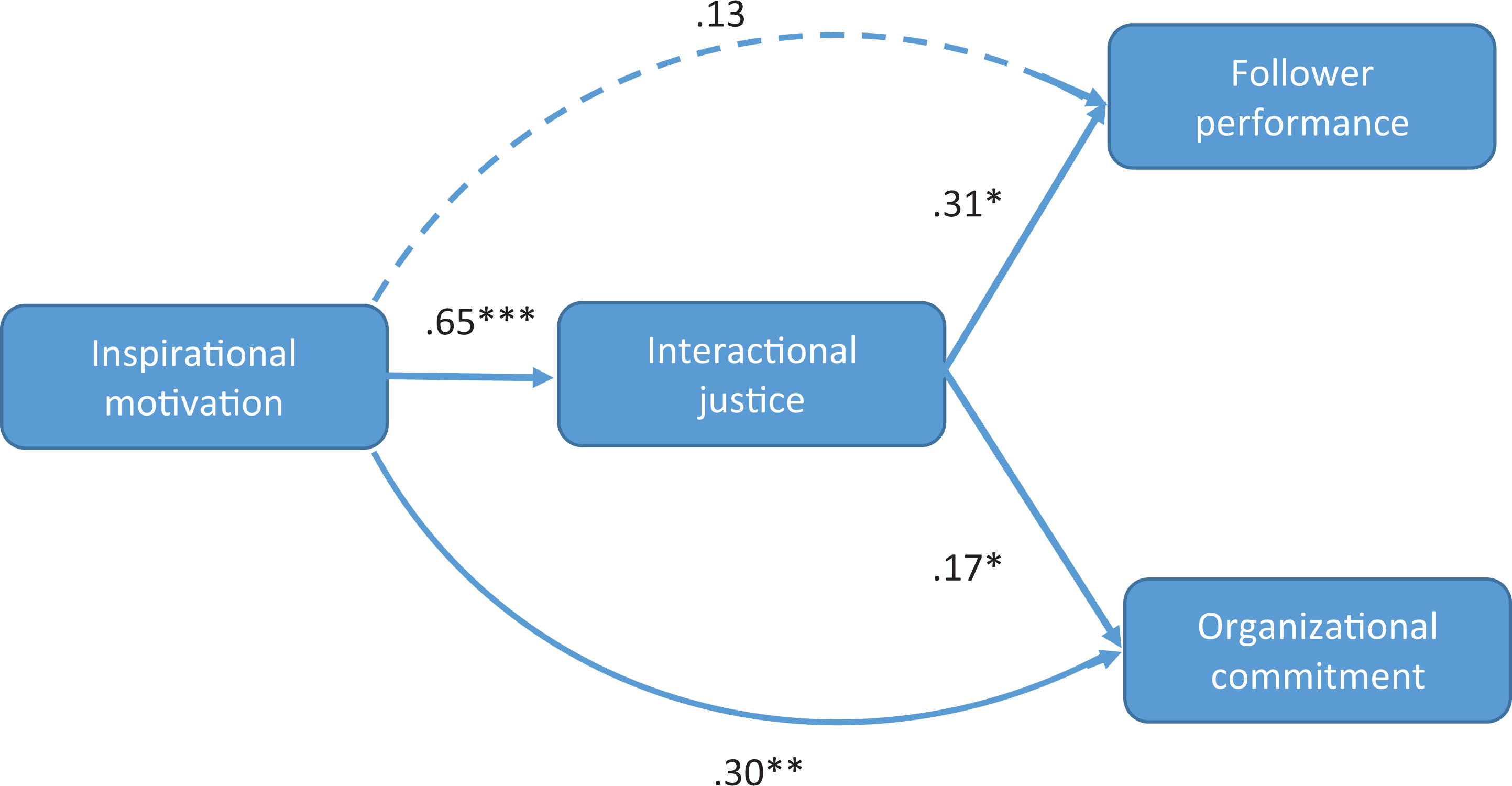
Inspirational motivation and outcomes mediated by interactional justice.
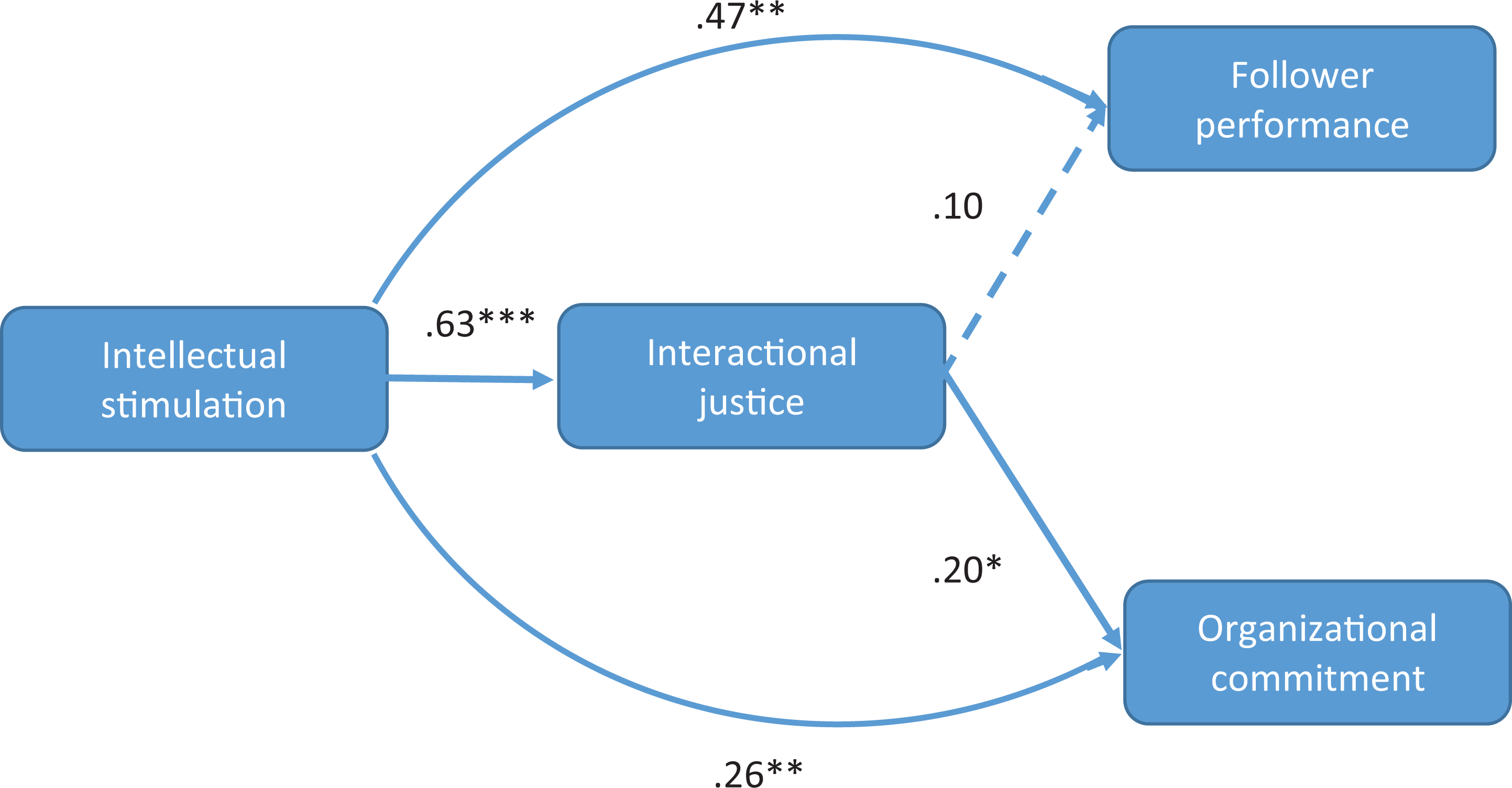
Intellectual stimulation and outcomes mediated by interactional justice.
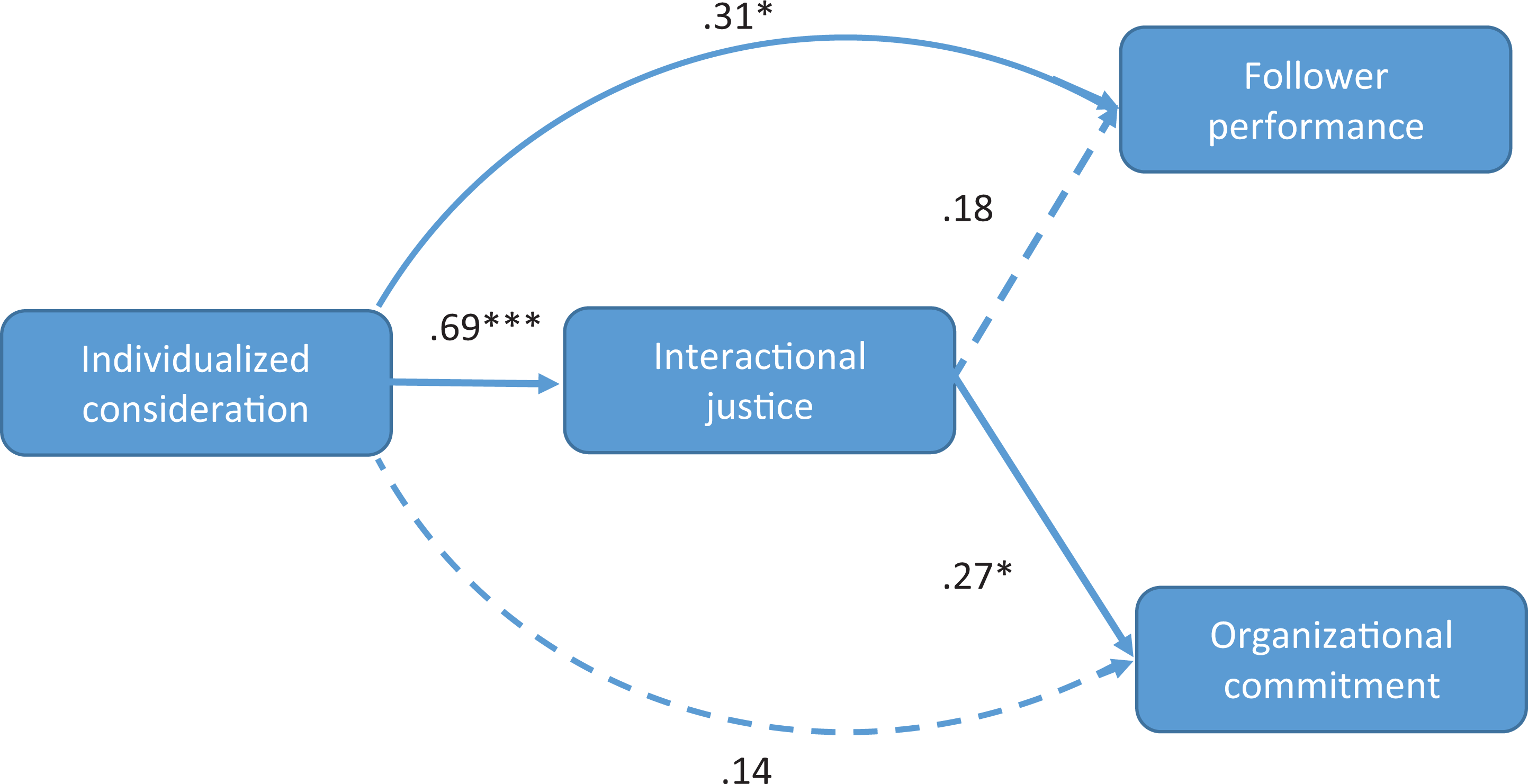
Individualized consideration and outcomes mediated by interactional justice.
What constitutes a “practically” significant effect has not yet been established by social scientists (e.g. Ferguson, 2016). On the other hand, Cohen (1992) suggested r = 0.10 as a threshold level for “weak” effects and r = 0.30 as the threshold for “moderate” effects. Although most of the direct relationships observed in the present study were well above these values, it should be cautioned that the indirect relationships varied from 0.11 to 0.19. Still, the indirect effects are calculated on the basis of direct effects (e.g. the indirect effect of 0.13 (p < 0.05) was calculated by multiplying the a path (0.63***) and the b path (0.20*) of Figure 3).
A supplemental exploratory factor analysis was conducted to see whether the self-reported measures loaded on a single factor, indicating an extreme amount of common-method bias. The result of the test showed that common-method variance did not account for the associations between variables.
Discussion
The aim of this research study was first to investigate whether employee perception of organizational justice served as an important psychological mechanism in transformational leadership processes, and the second aim was to investigate whether each of the four I’s in transformational leadership was associated with multifocal effectiveness in conjunction with interactional justice. The results of the analysis showed mixed support for the hypotheses.
Theoretical implications
Although research demonstrates a relationship between transformational leadership and leadership effectiveness, there is little understanding of how the four I’s actually contribute to the process (Arnold, 2017; Deinert et al., 2015). The present study addressed how transformational leaders can influence individual followers by focusing on a psychological mechanism in the transformational leadership process. As for the first hypothesis, the findings showed only inspirational motivation was significantly associated with performance via interactional justice. When followers perceived legitimate, friendly, and considerate support for knowledge creation and actualizing their potential, followers believed the leader was treating them with trust and respect and strove to meet organizational goals by working harder to enhance personal performance. As for the other three factors, the only direct significant association was obtained to performance. Interactional justice seems to have played a limited role in the relationship between the four factors and follower performance. As noted by Zhao et al. (2010), significant direct relationships point to the possible existence of yet unidentified mediators. Accordingly, interactional justice may not be the only mechanism through which transformational leadership may have exerted its influence on the employee outcomes investigated. The direct relationships observed in the present study may be an indication of omitted mediators such as trust or motivation (Conchie, 2013).
The second hypothesis addressed the association between each of the four I’s, interactional justice, and OC, and a positive significant association was obtained for all four factors. Although tentative, these results may suggest interactional justice is a key determinant in explaining why followers feel an obligation to reward the organization through increased affective commitment. This aligns well with social exchange theory (Blau, 1964), which proposes employees repay positive treatment by the leader or organization in the form of positive work outcomes via affective OC. As noted by Loi et al. (2009), the obligation to exchange caring for caring invokes greater affective commitment to the organization.
The direct relationships between the four I’s and OC present an interesting pattern. Specifically, the four I’s, with the exception of individual consideration, were significantly and positively related to OC. The fact that the relationship between individualized consideration and OC was only indirectly significant suggests interactional justice was a key mechanism through which individualized consideration related to OC. As for the remaining three of the four I’s, the direct significant relationships suggested other unmeasured mechanisms may also come into play. The nature of individualized consideration itself, which presumes a close working relationship between leader and follower, may allow followers to feel honestly and respectfully treated and important and valued organizational employees.
Practical implications
The results of the four models imply that managers may benefit from a reexamination of their leadership behaviors to obtain improved outcomes. For example, to encourage followers’ emotional attachment to the organization in which the employee enjoys membership and with which he or she identifies (Allen and Meyer, 1990), transformational leadership behaviors perceived as respectful and polite by the subordinate should be developed. These behaviors also promote higher levels of job satisfaction and organizational citizenship (Meyer et al., 2002). To increase job performance, leaders should focus on inspirational motivation behaviors that allow followers to feel they are being treated fairly and consistently based on moral and ethical standards. These findings could play a role in leadership training programs. An understanding of the psychological processes underlying transformational leadership is important to improve productivity in actual organizational settings.
Cho and Dansereau’s (2010) study was conducted in a collectivistic culture (South Korea) where employees were more willing to subordinate self-interest for the sake of the larger collective, while the present study was conducted in an individualistic Western business context, where promotion and competition shape the business environment. However, despite different cultural contexts, findings from both studies underline the significance of understanding how interactional justice plays an important role in the relationship between transformational leadership and outcomes. This insight can be useful to increase leadership development, training effectiveness, and effective management, as well as to reduce expatriate failures in international business.
Study limitations and directions for future research
The findings here must be considered in the light of the limitations of the study, which in turn suggest opportunities for future research. First, findings were drawn from data collected from two for-profit business organizations in Norway. However, more data remain to be collected from multiple organizations to ensure greater generalizability of the results. Second, the present study applied a cross-sectional research design, which limited the possibility of a causal interpretation of the results. Therefore, a future longitudinal approach appears essential, as follower performance is often understood as a response to leader behavior which plays out over time. Third, self-reporting by followers was used for all measures except follower performance. The variable follower performance was rated by the leader for each respondent. By using two data sources, the threat of common method variance was reduced (Podsakoff et al., 2012). Still, the possibility of common-method bias remains when using self-reports, which can suffer from inflation, unreliability, and bias (Atwater et al., 2005). Future research may benefit from applying observations and archival data along with self-report surveys for the examination of the research model.
Conclusion
The present study contributes insight into psychological mechanisms involved in transformational leadership by obtaining partial support for the association between the four transformational leadership factors, followers’ perception of interactional justice, and multifocal effectiveness (performance and OC). Specifically, leaders who display transformational leadership behavior in a manner perceived by followers as respectful, fair, and consistent with moral and ethical standards may expect greater follower attachment to the organization than normal as an appropriate response to interactional justice. Taken together, this research provides an initial view of psychological processes underlying transformational leadership and its effectiveness on follower performance and attitudes. But just how transformational leaders influence individual followers requires further insight from social scientists.
Footnotes
Declaration of conflicting interests
The author(s) declared no potential conflicts of interest with respect to the research, authorship, and/or publication of this article.
Funding
The author(s) received no financial support for the research, authorship, and/or publication of this article.
