




Abstract
‘Critical’ international relations (IR) is usually understood to have originated in the early 1980s. However, a close reading of Vithal Rajan’s ‘An Epitaph for Detached Scholarship’, published in the inaugural issue of Millennium in 1971, tells another story. Rajan’s article was not a work of critical theory per se, but it was in tune with demands, at this time, for establishing a ‘critical university’. Promising to open up university education to all, dispensing with traditional curricula and authoritarian modes of teaching, the critical university, like Rajan’s article, has long since been forgotten. Nevertheless, this moment set the scene for the professionalised establishment of ‘critical’ academia in the decades to come. Rediscovering Rajan’s ‘Epitaph’ thus offers to reconnect critical IR with an earlier, and perhaps more generative, moment of inception. Indeed, even today, Rajan’s creative, provocative, playful text stands out as a rewardingly undisciplined contribution to the discipline.
Anniversaries are a time for celebrating what has been. However, they may also be a time for considering what could have been otherwise.
According to established lore, ‘critical’ international relations (IR), as a field of scholarship, emerged in the early 1980s. Hence, in 2007, a group of authors gathered to celebrate its 25th anniversary. 1 The birth of this field, the forum presumed, was owed to a number of foundational texts – in particular, Robert Cox’s ‘Social Forces, States and World Orders.’ 2 Published in Millennium volume 10, Cox’s prodigiously quotable article, now more than 40 years old, continues to be an almost obligatory point of citation for establishing the provenance – and therefore identity – of critical IR. 3 This canonical timeline is not wrong as such. Circa 1981 was indeed when IR scholars began to adopt such technical vocabularies in earnest, and distinctively new communities of scholarship emerged in the years thereafter. However, this story is rather limited, and is limiting for those who build upon it.
As Kimberly Hutchings has argued, in the aforementioned forum and elsewhere, to address the question of critique is to address the question of change. 4 This, moreover, requires the apprehension of multiple, coexistent, and conflicting temporalities. Time does not simply flow as an ordered sequence of progression, degradation, remembrance, and forgetting. The world in which we live is constituted by the manifold ways in which things of the past endure, disappear, and sometimes return unexpectedly. The objective of this article is, then, to return something unexpected.
The sudden discovery of critical-theoretical scholarship in IR, circa 1981, was, I argue, only one germinal moment from which what we, today, understand as ‘critical IR’ can be taken to have emerged. Although almost completely forgotten, another can be found, a decade earlier, in the inaugural issue of Millennium. More precisely, it can be found in Vithal Rajan’s ‘An Epitaph for Detached Scholarship’ (hereafter ‘Epitaph’). 5 This playful, satirical, yet condemnatory take on the epistemic conservatism and everyday racism of his institutional milieu, when taken in the political and intellectual context of its time, suggests an alternative account of the emergence of ‘critical’ approaches to studying international politics. An echo from another era, such a narrative offers to redraw the lines of intellectualism and activism, dissidence and respectability, for a field that has become wrought with anxiety as regards its contemporary purpose. 6
Rajan’s contributions to Millennium may not have taken the form of critical theory per se, but they were in tune with what became known, in the late 1960s, as the ‘critical university’. This concept, in turn, arose from the refraction of a fractious decade through the increasingly self-assertive networks of Euro-American student politics. 7 By the time that ‘critical IR’ is usually taken to have been born, the social formation that Rajan’s critiques were a creative expression of had already made a transformative impression upon analyses of world politics. To understand the significance of his ‘Epitaph’, then, it is necessary to first unravel that context, including both the geopolitical traumas of the time and the fast-moving transformation of higher education in the years after 1960. Subsequent sections then explicate the other contributions to Millennium’s first issue, before moving on to that of Rajan, telling the story not only of an unusual piece of writing but also of a very distinctive career. In order to consider how Rajan’s satirical prose stands up as a formal academic critique, I then compare his unflattering portrayal of Hedley Bull with some of Bull’s writings from around the same time, finding that, while Rajan’s characterisation was likely exaggerated, his scorn may have been justified.
In conclusion, I outline five ways in which the account presented herein can contribute to the contemporary practice of critical IR. First, Rajan’s conception of social science, which stakes knowledge claims upon a combination of empathy, reflexivity, and participatory democratic politics, offers a model of critical knowledge production reminiscent of, but also strikingly different from, that which became the common sense of critical IRists in the neoliberal era. Second, his energetic, engaged, even entrepreneurial career of political activism can be taken as rejecting the strict opposition of ‘critical’ and ‘problem-solving’ intellectual work, 8 without lapsing into the accommodating relationship to hierarchies of global governance that some contemporary critics of that opposition risk advocating. Third, even half a century later, Rajan’s creative, humorous style stands out as remarkable. While explorations of less prosaic modes of academic writing are, today, comparatively commonplace, 9 and while satirical humour as a crucial element of international politics is now well recognised, 10 the use of such humour as a mode of scholarly expression remains rather outré. Fourth, while Rajan’s transnational biography frays the edges of the stark Eurocentrism that has characterised critical IR since its (formal) inception, 11 his work also demonstrates the possibility for further reconnecting this field with its roots in antiwar activism, peace research, and anticolonial thought. Finally, by reconstructing not only Rajan’s textual contribution to the ‘counterarchives’ but also the life and career that informed and followed it, 12 the story below allows us to think counterfactually – about not only what has been, but also what could have been otherwise. More than simply filling in a blank space on the intellectual-historical map, this long-forgotten text, and the story that animates it, may allow us to transform the received genealogy of critical IR, allowing for an alternative conception of both its genesis and its direction.
Conflict and Counterculture
While the notion of critical theory was new to scholars of IR in the early 1980s, it was, by this point, well known to both West German and anglophone sociologists, and to ‘New Left’ readers of social theory in general.
13
Indeed, already by the late 1960s, a less technical but explicitly political sense of ‘critical’ had already found its way into popular discourse. This can be found most clearly in the heatedly debated notion of the ‘critical university’. Writing in Reason magazine in 1969, Cheri Litzenberger, a PhD student in literature at the University of California, observed that:
The idea of a ‘critical university’ derives its name from its function: to criticize existing institutions, and their theoretical justifications. The role of the intellectual in society, and hence of the university, according to this view, is not to be the transmitter and advancer of knowledge, but to be the instrument of social change.
14
Writing for a right-libertarian audience, Litzenberger did not, however, suppose this to be a good thing. Rather, in a manner continuous with conservative politics from the Red Scares to the contemporary moral panic regarding ‘Critical Race Theory’, the spectre of academic political advocacy was taken as little less than a mortal threat to Western civilisation. 15
The late 1960s were a time of tumult, laced with a sense of possibility. So-called ‘critical’ academia – as an institutionally ensconced, professionalised expression of a large-scale social formation – emerged from this milieu. The Vietnam War was at its apex, as were protests against it. In the United States, a spate of political assassinations punctuated the furiously resisted gains of the Civil Rights movement. ‘Second-wave’ feminism asserted itself, ‘environmental’ issues rapidly became a mainstream political concern, and the movement against South African apartheid gathered momentum. 16 The process of former colonies gaining national independence continued, while coups and proxy conflicts were the normal order of Cold War business. Anti-communist massacres in Indonesia, between 1965 and 1966, were not only known about but were actively supported by agents of the United States and the United Kingdom. 17 A period of détente between the superpowers, particularly after the invasion of Czechoslovakia in 1968, could not distract from a fractured multitude of theatres of violent conflict. While the Six-Day War of 1967 was as swift as it was decisive, the Troubles of Northern Ireland were more slow burning, yet they burned. However, it was Vietnam that remained at the apex of outrage for Western publics, forming a bloody, blazing backdrop to a still-vaunted period of ‘counterculture’ and popular protest.
The phrase ‘baby boomer’ was first used in a Virginia newspaper article in 1963, referring to a coming ‘tidal wave’ of college enrolments, which were expected to double between 1960 and 1970. 18 Indeed, not only in the United States but worldwide, institutions of higher education were beginning a process of almost exponential expansion that continues to this day. 19 Universities remained, and remain, elite-dominated. Nevertheless, being increasingly instruments of mass education, they were also transformed. 20 This transformation was, however, a faltering, contested process.
The student movements that gave rise to the ‘critical university’ were, in some part, driven by the general atmosphere of burning outrage. However, they were also prompted by more local disputes. At the Free University in West Berlin, for instance, demands for untrammelled free speech on campus clashed with the top-down assumptions of conservative administrators. At Nanterre, in Northwestern Paris, by contrast, it was the strict female/male segregation of student dormitories that provided the proximate cause. At Trento, in Northern Italy, meanwhile, it was parliament’s refusal to grant degrees in sociology. 21 In any case, between 1967 and 1969, the Kritische Universität in West Berlin and the Università Critica in Trento undertook to establish parallel institutions of education, unbeholden to traditional curricula, renouncing lectures and tutor-led seminars as authoritarian, throwing the campus doors open to workers, school students, and whoever else wished to participate. Neither para-institution lasted a full year. Few workers showed up, while Trotskyists and Maoists denounced the endeavour as an affectation of bourgeois privilege. Organisers of the Kritische Universität themselves concluded that ‘several founding presuppositions of the KU, namely to demand the development of individuals, to deconstruct their attitude as consumers and thereby boost their capacity for critique’ proved unworkable. Mistaking an absence of structure for an absence of hierarchy, loudest voices spoke loudest, while the uninitiated were unable to meaningfully participate. 22 In Nanterre, meanwhile, proposals for a para-institution announced to be ‘self-governed – open to all – critical’ faltered at the discussion stage. 23
A cynic might say that this was the ’68 student movement in a microcosm. Indeed, as much as this moment of countercultural popular dissidence has gripped the Euro-American left-academic imagination over the past half-century, 24 the radicalism of the baby boomers proved fleeting, if not fabulated. Nevertheless, the critical university did not simply crumble. It was, along with its wider culture, in many respects absorbed and metabolised. Indeed, if one is looking for signs of more enduring institutional changes brought about by the intellectual-political forces of this moment, one need look no further than the plethora of periodicals that were established around this time.
Founded in 1960, from a merger of The New Reasoner and the Universities and Left Review, with Stuart Hall as its first editor, the New Left Review was crucial for translating and popularising works by Walter Benjamin, Antonio Gramsci, and the Frankfurt School, 25 as were Telos (1968), Radical Philosophy (1972), and New German Critique (1973). In geography, Antipode: A Radical Journal of Geography came into being in 1969, while, in the same year, members of the Sociology Liberation Movement founded The Insurgent Sociologist (later renamed Critical Sociology). Opposing the reigning behaviouralism, the Caucus for a New Political Science helped to establish Politics & Society in 1970. 26 Meanwhile, literary theory, hitherto among the stuffiest of academic disciplines, found new outlets such as New Literary History (1969), Diacritics (1971), Feminist Studies (1972), and Critical Inquiry (1974). 27 Closer to home for IR scholars, Johan Galtung founded the Journal of Peace Research in 1964, and the Bulletin of Peace Proposals (later Security Dialogue) in 1970, while the World Order Models Project gave rise to Alternatives in 1975, edited by Rajni Kothari. 28
This, then, was the background against which Millennium was founded. However, while several of the above journals owed their origins directly to student activism, Millennium was rather different. Established in 1971 at the initiative of F.S. Northedge (Professor from 1968), with a unique system of annually rotating student editors, the journal served, in its early years, principally as an outlet for work by students and staff at the London School of Economics (LSE). The content was largely conventional, even conservative. Certainly, there was little trace, in those early issues, of the sorts of theoretical debates found in Telos or New German Critique, which would become mainstream for IR scholars only during the 1980s and 1990s. Likewise, there was no editorial agenda comparable to that expressed on the first page of Antipode:
Our goal is radical change—replacement of institutions and institutional arrangements in our society that can no longer respond to changing societal needs, that stifle attempts to provide us with a more viable pattern for living, that often serve no other purpose than perpetuating themselves.
29
Of course, it should be acknowledged that the likes of Antipode and The Insurgent Sociologist were themselves marginal at their inception. Indeed, the latter, its editors later wrote (upon the occasion of renaming their journal Critical Sociology), was little more than a ‘newsletter’ at the time. 30 Nevertheless, this, for sociologists and geographers, is when the ‘critical’ subfields of their disciplines first sputtered into life – inchoate, going by other names, yet identifiably part of a broader social formation, with a discernible set of principles, methods, and objectives.
IR lacks such a story, and thus such a perspective upon itself. In Rajan’s ‘Epitaph’, we may find an exception that offers such a perspective. However, before coming to that text, I will first explore the other contributions to Millennium 1:1, foreshadowing how exceptional Rajan’s proposals and provocations were for an IR scholar in the early 1970s.
Millennium or Nightmare
The very word ‘millennium’, Northedge’s opening essay noted, signifies a ‘future time of happiness and justice on earth’. Yet, in 1971, he continued, such an idea must seem positively ‘pre-Freudian’, not to mention pre-nuclear. Today’s IR scholar was faced, rather, with a ‘nightmarish world’, drenched in ‘oceans of blood’, which ‘five millennia’ of righteous justice-seekers and ‘faceless bomb-throwers’ had wreaked upon their fellow humanity. In the age of nuclear Armageddon, ‘all minorities and all nations’ now depended upon the virtue of peace prevailing over that of justice. However, not all was doom and gloom, with the Treaty on the Non-Proliferation of Nuclear Weapons (NPT) of 1968 being particularly promising (the first agreement of the Strategic Arms Limitation Talks [SALT] would be signed in 1972). Such were, nevertheless, stopgaps. Ultimately, human survival would require ‘a world-wide movement devoted to the abandonment of national sovereignty and the formation of a single world government’. In the medium term, however, what was needed was “a united Europe”—East and West—to stand up to the “super-Powers,” including the looming figures of Japan and China. In this respect, the UK’s proposed accession to the European Communities (which followed on 1st January 1973) was of the utmost significance: ‘the millennium will not have arrived, but at least the first day of the first year of the thousand years may have dawned’. 31
The rest of the issue mostly lacked such grand, professorial scope. However, it frequently shared Northedge’s conflicted mixture of hope and dread. Nicholas Sims, then-Lecturer at LSE, for his part, discoursed on the concept and prospect of ‘general and complete disarmament’ (GCD), drawing attention to developments amongst practitioners, as well as the latest scholarship: ‘If the body of International Relations theory concerned with disarmament were more substantial’, he lamented, hopes of GCD ‘would surely be on the way to fulfilment’. 32 In response, Philip Windsor, then-Reader, praised the ‘intellectual originality’ of Sims’s argument, while gravely doubting its relative hopefulness. Armaments, particularly, small arms, were already everywhere, and it would take an apparatus of even more monstrous proportions to reign that reality in: ‘an immense and worldwide army of inspectors’, with ‘powers to look under every bush and bed [. . .]’. 33
In his contribution, Emanuel Lubetkin, graduate student at School of Oriental and African Studies, University of London (SOAS), traced a history of Israel’s relations with Asian and African countries, from, 1953 to 1967. The ‘complete Asian and African ignorance of Jewish history’, Lubetkin argues, made them vulnerable to Arab propaganda, ‘which presented Israel as similar to Rhodesia or South Africa’. Such conspiracies and ‘James Bond stories’ 34 notwithstanding, Israeli diplomacy had largely prevailed, partly through the strategic use of aid, and partly through ‘a feeling of common fate’. Indeed, ‘Africa’s real attitude towards Israel’, Lubetkin claimed, was ‘as a living laboratory for development studies’, within which the ‘[a]rdour, devotion, ingenuity, and improvisation’ of Israeli settlers served as an example of what could be applied elsewhere. 35
The remaining contributions all came from graduate or General Course students at LSE. 36 Alaba Cornelius Abiodun Ogunsanwo was also concerned with the foreign relations of African countries, this time with China. While its rise as a great power was open to doubt, it was clear that ‘[l]ike other big powers, China seems to have arrived in Africa to stay’, its diplomatic and economic relations with African countries having increased through the revolutionary turbulence of the 1960s. 37 Jeffrey Golden, meanwhile, turned a critical eye to the International Court of Justice (ICJ), particularly its recent hearing on the South African colonial occupation of Namibia. Despite its ‘image of majesty’, and its regal environs, decorated with ‘Oriental vases and North American lumber’, an almost complete lack of great power support rendered the court, including in the anti-apartheid struggle, toothless, and, from the perspective of newly independent countries, untrustworthy. 38
John Latella, in turn, examined trade preferences between ‘less-developed countries’ (LDCs) and ‘developed countries’ (DCs), particularly with respect to the United Nations Conference on Trade and Development (UNCTAD, established 1964), and the General Agreement on Tariffs and Trade (established 1947). Similar to the ICJ, while the newer institution promised a forum for LDCs to articulate their demands, without great power support, it risked becoming a mere talking shop. 39 Finally, Julian Friedman and Chris Stevens reported from a recent pedagogical war game played out by LSE students, organised by Coral Bell (Reader since 1965). Written up like a journalistic news feed, the report details fictionalised hostilities between Zambia, Tanzania, and colonial Portugal, which eventually draw in the United Kingdom, United States, and other powers. It concludes with a Chinese news report (complete with a rendition of ‘The East is Red’), denying the allegations of ‘social imperialists and their running dogs’ that an outbreak of ‘Asian flu’ in Salisbury was the result of communist germ warfare. 40
The issue itself then concluded with a series of book reviews by A. Kim Campbell, Aidan Keane, and John Burke (who wrote four).
41
Most are rather perfunctory; however, Burke’s review of Richard Mayne’s 1971 The Recovery of Europe stands out as an apt bookend to Northedge’s opening message:
It is all very well to wonder what will be when the Millennium materialises, and the author’s account of how Mr. & Mrs. earthling will spend a typical solar day in 2000 AD is as good as any. But a course-correction was needed before the ultimate chapter to bring us nearer our target. The final questions as we now stand are: Will we continue an ever-fluid process of European unification. Or will we one day reach a United Europe? And if so, will it be a Third Force facing rival continents in an Orwellian nightmare? Or will the next step be a Federal planet? Richard Mayne’s parting words are ‘Today, the name is Europe. Tomorrow, it could be the world’. Could be!
42
‘Asian flu’ in Salisbury, European unification as an answer to English insecurity – the ironies of history shine through. The above contributions seem to present an apt picture of IR in the early 1970s, if only in the vicinity of Aldwych. Grand speculation and transformative normative demands were by no means absent. However, any green shoots of liberal hopefulness were quickly put in their place by a sagacious, knowing realism. Institutional reform and intergovernmental compacts formed the horizon of improvement. Meanwhile, issues such as environmentalism, feminism, imperialism, and antiwar activism – very much on the agenda elsewhere – are conspicuous by their absence. Explorations of the merely possible, moreover, were confined to the imagination of some kind of world state – an absolute Leviathan, which, in its terrible majesty, could transform the anarchic predicament of world politics for good.
It is, of course, easy to criticise the shortcomings of the above, more than two decades on from 2000 AD. One book review aside, female contributors are conspicuous by their absence (a pattern that would improve only at a snail’s pace in the years to come). Moreover, it is difficult to imagine arguments regarding the common experiences of Israelis and Africans being received as much more than settler colonial propaganda in the pages of Millennium today. The vision of Europe as the solid ground for a future world state, likewise, seems less optimistic than neoimperial, in retrospect. It is a signal achievement of anticolonial scholars, particularly since the turn of the millennium, that such presumptions now, at least in journals such as this one, rarely pass uncriticised.
Easily dismissed, then. However, these long-forgotten texts set the scene for that other contribution to Millennium 1:1, which promises to reconnect critical IR with an earlier, and perhaps more generative, moment of inception.
The Citadel
I do not write plays, politically; but I write politics playfully
Rajan’s ‘Epitaph’ begins with this epigraph, itself a playful paraphrase of Jean-Luc Godard. Thereafter follows a confounding text, at turns humorous and condemnatory, sarcastic and sincere. Structured as a response to visiting lectures by Martin Seliger, Hedley Bull, and K.J. Holsti, the arguments of these vaunted professors are parodied, with often caustic irony. Later, the article adopts a more serious tone, laying out a series of propositions for the advancement of a New Left model of academic praxis, seemingly owing as much to Chairman Mao as to Johan Galtung.
Idiosyncratic though it may have been, Rajan’s writing did not come from nowhere. As he now recounts his ‘romantic peregrinations’ 43 : In the mid-1960s, Rajan emigrated from India to Canada, thinking that he was entering ‘the modern world’. However, what he saw, like so many others, was the horror of war flooding from every television set – ‘American war planes bombing the life out of helpless Vietnamese peasants 30,000 feet below’. While working for Imperial Chemical Industries, Rajan threw himself into the antiwar movement. Then, believing that an academic career would better befit a life of peace activism, he left for London. He was disappointed. The LSE’s ‘vaunted left position’ had been all but expunged, the efforts of Northedge, John Burton, and others, notwithstanding. Nevertheless, the nearby Marlborough Arms was a haunt of revolutionaries ‘from Timor to Bolivia’, and, at the SALT meeting in Helsinki in 1971, Rajan met Galtung, Dieter Senghaas, Kinhide Mushakogi, and other founders of the International Peace Research Association – connections that would prove inspirational.
First up for Rajan’s satirical scrutiny is Seliger’s lecture on ‘The Marxist Conception of Ideology and the Practical Requirements of Foreign Politics’. 44 While the Eastern Marxist, Seliger assures us, looks down on the Western bourgeois for his ‘false consciousness’, it is their own gilded dogmas that portend catastrophe for the ‘International System’ itself. ‘The only way out’, for these muddle-headed Marxists, is ‘to stop saying wrongly that we are wrong, forget their delusions and their envy, become rational, and bargain with us’. 45
Rajan’s Bull, too, ridicules the ‘unrealistic, hallucinatory assumptions’ of those partisans who place justice before order. Advocates of multilateral aid, meanwhile, offer little more than ‘the ravings of visionaries’. What such ‘[r]ubbishy Marxists’ fail to appreciate is the superior rationality of Western governance: ‘the donors are more rational, more educated, and certainly more honest than native governments. See how well Western economies are run’.
On the other hand, when we turn to the government of South Africa, we find people we can talk to, people who have been to Oxford or Cambridge, who speak civilized languages and have table manners. Theirs is a pleasant enough country to visit—a bit provincial, mind you—but, then, South African stocks are as good as gold. No, it is an orderly country. Their sense of justice doesn’t coincide with ours, but the richness of diversity is essential in a pluralistic liberal civilization. The blacks, for their purposes, talk as if South Africa has created disorder in the region.
While ‘the laughably light-headed left’ might reply that disorder itself arises from the use of violence to prevent people from pursuing their desired patterns of life, such that ‘to destroy white hegemony there [in South Africa] would be to create order’, an enlightened society can be measured, on the contrary, by ‘how gently and understandingly’ it administers violence to quell its ‘dissident minorities’. 46
While evidently satirising the quotidian racism and patrician liberalism of his institutional and disciplinary milieu, Rajan’s text was not, however, merely castigatory. In a section wryly titled ‘Exit Tartuffe Pursued by a Bear’ (nodding to Shakespeare’s famous stage direction in The Winter’s Tale), he takes on Holsti’s diagnosis of the death of ‘grand theory’ – a magisterial pronouncement, issued with ‘the Ibsenian logic of American behaviouralists’, which pretends to ‘value-free’ science. Although the contemporary social scientist must be recognised as having ‘no unitary standpoint, no criterion for criticism and dynamic analysis’ – and, hence, no position free from value judgements – this should not, Rajan argued, mean the end of large-scale social theorising. The natural scientist, too, ‘brings to his analysis the set of values imposed by his senses and his experience as a time-defined organism’. Drawing on the phenomenology of Alfred Schütz, social science is then characterised by reflexivity, relationality, empiricism, and, above all, empathy. 47
Being based ‘upon the constructs of people, of reflective beings’, social scientific knowledge can trace the interconnections of these constructs only speculatively. Moreover, the social scientist must be aware of their own ‘beliefs, feelings, desires, fears, etc.’ – their entire ‘experience of life’ – and how these factors influence the research at every stage. Finally, whatever professorial blowhards may have to say about ‘false consciousness’, the empirical source of social knowledge must be the experiences of people themselves, who the social scientist must ask about their experiences.
A social scientist can reject, or refuse to accept, the constructs of other people, after mature consideration, if he is tolerably convinced that the constructs intimated to him are deliberate lies, confused notions, mistaken beliefs, real but secondary in importance in the event, or whatever. But he must have strong reasons for asserting the delusions or untrustworthiness of others.
Once the researcher has understood ‘what different peoples, groups, classes, societies think are their beliefs, preferences, and actions and their inter-relationship’, they should then ‘form an explicit unitary system of values’. Presented back to the people, in however idealised form, ‘results, theory, and value can [thus] be interlinked, criticised publicly and changed’, via participatory mass democracy. 48
The problem with doctrinaire anti-Marxists, then, is not just their difference of conviction, but their rigid lack of empathy. To study any society, one must, in some measure, ‘empathize with them, so as to be able to pronounce upon them at all’. Without ‘liking them [the Eastern Marxists], at least as people, if not as philosophers’, Seliger et al. trap themselves within a fixed view of human nature. By contrast, Rajan asks:
May not the opinions we hold about man merely reflect the social attitudes he has adopted within the framework of an aggressive, expanding, threat-filled, alienating and competitive society?
If so, then would not the human condition be ‘correctable’, rather than merely tragic?
49
Complacent assumptions regarding the fixities of human nature, Rajan is keen to emphasise, are a problem shared by social scientists and classical humanists equally. In both cases, the pretender to ‘value-free’ objectivity merely picks and chooses ‘piecemeal supporting evidence for culturally accepted beliefs’. In this:
The shallow Ivy League behaviouralist is then no better, for all his pretensions, than Professor Bull who on a fine afternoon’s stroll discovers a seeming incompatibility between ‘justice’ and ‘order’ [, and] pronounces upon it with all the panache of a Taoist mystic, without pausing to consider why it is so, when and under what conditions.
50
The problem, in other words, is not just with the facile anti-Marxism of conservative academics specifically, but with the whole edifice of ‘value-free’ knowledge production in general. That, among other things, is what is holding back the tensely coiled possibility of social change.
In the penultimate section, titled ‘The Foolish Old Man of the Mountains Rides Again’, Rajan alludes to a Daoist parable of the fourth-century BCE, most famously recounted by Mao in a speech in 1945:
Today, two big mountains lie like a dead weight on the Chinese people. One is imperialism, and [the] other is feudalism. The Communist Party has long made up its mind to dig them up. We must persevere and work unceasingly, and we, too, will touch God’s heart. Our God is none other than the masses of the Chinese people. If they stand up and dig together with us, why can’t these two mountains be cleared away?
51
Towards such ends, Rajan writes, a social scientist must ‘take an active participatory role in society’. Thus might ‘[s]ociety as a whole’ become ‘a reflective organism’. Such a task needs neither permission nor consensus: ‘Any small group of like-minded social scientists can start such a new active approach’. However, Rajan’s energetic optimism was not unattenuated. Whereas John Burton’s recent presentation on ‘The Feedback of International Relations into Other Disciplines’ had apparently glowed with the impression of a transformative ‘international consciousness’ ready to bloom forth at any moment, ‘in general all around us we find decision-makers and the public thinking and acting like billiard balls, clashing in Wagnerian gloom’. Indeed, Rajan was well aware that these tenets of the ‘new-left’ would likely be dashed as so many ‘irrational criticisms against the citadel of scholarship’. He concludes, elliptically and enigmatically:
End (to the sound of some large wind instruments and an old spoon rattled incessantly against an empty tin plate).
52
Theoria and praxis
To the best of my knowledge, this article has, to date, received one published citation: In the next issue, Robert J. Shapiro, an LSE graduate student, denounced Rajan’s screed as a mere ‘transplant of ideology’ threatening to destroy the integrity of the social sciences. Though taking the title of his text from the subtitle of V.I. Lenin’s ‘“Left-Wing” Communism: An Infantile Disorder’, 53 Shapiro’s attack does not seem to be written out of any communist sympathies. Rather, it undertakes to dissect Rajan’s text with the sharpened tools of debating club logic-chopping, and, then, scoffingly ridiculed.
Rajan’s own text was itself, of course, unflinchingly oppositional. However, it also entertained empathy towards the objects of its scorn. ‘I prefer humour to anger’, he explains. 54 By contrast, in the mercilessly clinical style performed by Shapiro – perhaps in keeping with the LSE of Karl Popper (Professor 1949–1969) – there is no higher victory than uprooting a fallacy or logical contradiction. ‘Now, exactly what is our author’s plan?’, he writes. Speculation is not welcome here. However, it is also apparent that it is not Rajan alone who is under the microscope. His text is the pretext: ‘[Rajan’s] position, in fact, is the one which claims to be the foundation of the argument for politicization of the universities currently desired by so many fledgling scholars’. 55 ‘Epitaph’, in other words, is taken as a symptom of the critical university.
The citadel of scholarship, evidently, had its defenders. Apparently undaunted, however, the next year Rajan published, in Millennium, what amounted to a manifesto for a para-university programme of peace research-based adult education. Written in response to an editorial call for discussion of teaching, Rajan outlined a one-year course in peace theory ‘in popular form for working people’, addressing ‘a felt need for spreading peace theory among the masses’. Such a programme would end ‘the divorce between theoria and praxis’, allowing working people ‘to carry out their own critical analysis of society’. However, while this was certainly a matter of sharing the benefits of university education with those beyond, it would not involve simply dispensing universally valid knowledge from a position of central authority. Indeed, the course would need to be reconstructed for each social situation within which it was taught, being open and responsive to the interests and needs of participants. 56 The proposed syllabus listed a veritable who’s who of possible tutors, from Jane Goodall and Margaret Mead to Kinhide Mushakoji, István Mészáros, Barry Commoner, Tariq Ali, Gunnar Myrdal, Noam Chomsky, and of course Galtung. 57
Adorning the end of the text was a bestiomorphic cartoon of UNCTAD, by Rajan himself, one of a series. Playful indeed.
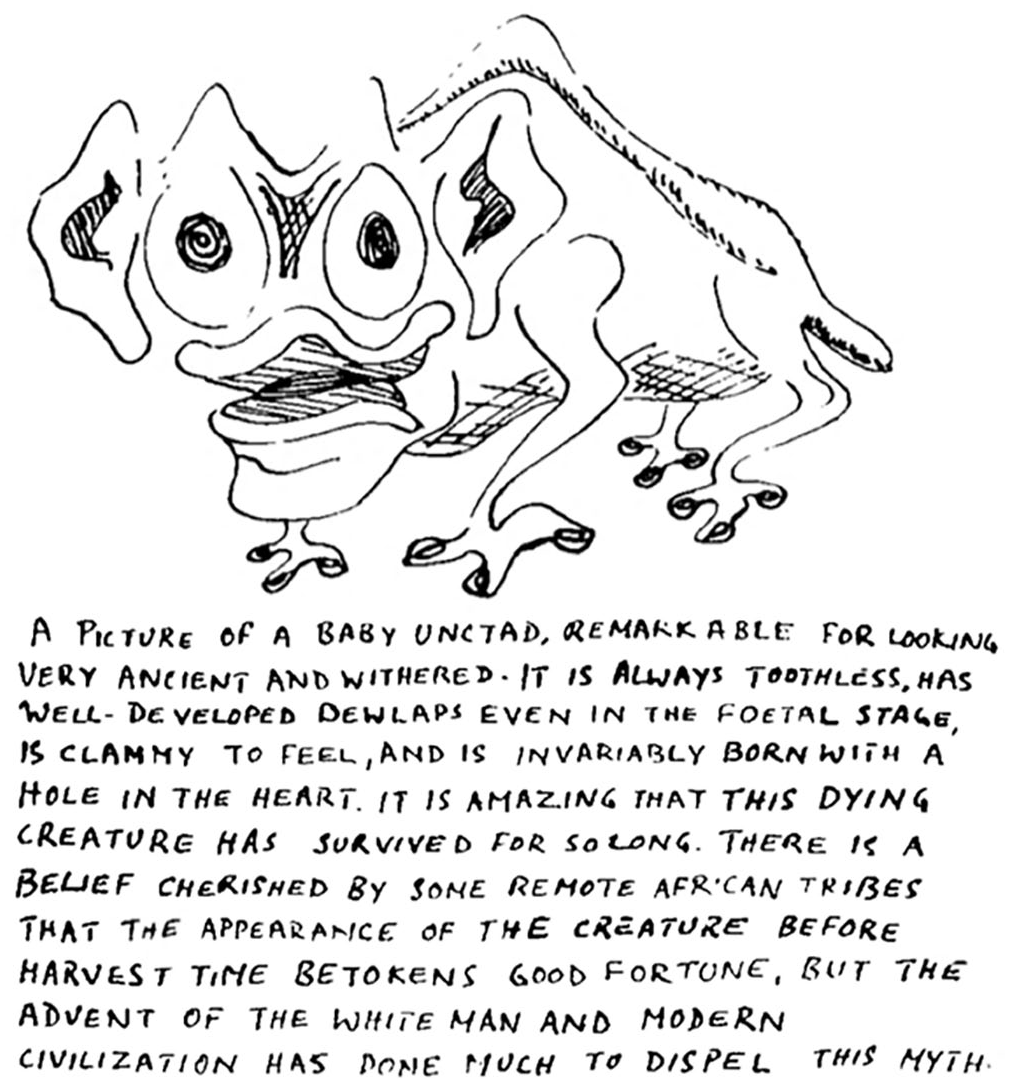
Cartoon by Vithal Rajan, 1972.
These grand plans may have gone unrealised; however, the question of praxis remained central to Rajan’s life. Having marched, while in London, against apartheid and for women’s reproductive rights, among other issues, after the Bloody Sunday massacre in 1972, he became particularly involved in politics in Northern Ireland. Working for the Committee for Society, Development and Peace, an organisation set up jointly by the World Council of Churches (Protestant) and the Pontifical Commission for Justice and Peace (Catholic), Rajan became a low-level mediator in Belfast. Though the island itself seemed a paradise, he recalls houses with ‘steel plating on their walls’, witnessing both stirring resistance and terrible violence. Once that ‘[q]uestions arose in the minds of a few shadowy gun-toting youths why I would not take sides’, his position became untenable and he departed, defending his PhD thesis on the subject of the Northern Ireland crisis in 1976. 58
Three years before that, Rajan had become one of the founding staff members of the Quaker-funded School of Peace Studies at Bradford University. Here, he organised against the National Front. While his memories of Adam Curle, the first Head of Department, are fond, other faculty, it seems, were less accommodating. ‘I knew it was no place for me’. Compelled to return to India by what he saw as the fascism of Indira Gandhi’s declared state of emergency (from 1975 to 1977), Rajan joined the Administrative Staff College of India in Hyderabad, where he met his wife, the feminist author K. Lalita, before founding the Deccan Development Society (DDS) in 1983. Back in the white, wealthy world, he was appointed Director of Education for the World Wide Fund for Nature. Despite making various celebrity acquaintances, this did not work out either.
Paid a salary I could never dream of, and stationed in Switzerland which UN bureaucrats consider achieving paradise before death, I was nothing more than a presentable non-white at fund-raising meetings to milk the very rich, who were concerned about the fate of their playgrounds.
By the 1990s, Rajan had arrived at a scathing critique of the naturalist, paternalist common sense of the development industry – capitalist and socialist alike. Even left-wing activists, he wrote, maintained a ‘basic assumption of intellectual inequality’, refusing to recognise ‘that people have the skills, capacities and knowledge to develop their own communities’. Drawing on the likes of Sandra Harding and Ashis Nandy, Rajan thus called for ‘the philosophic basis of science’ to be re-examined, through experimental, participatory research design. 59
Describing his work on the Deccan plateau as putting into practice Gandhian principles of ‘“Antodaya,” or serving the last first, and of “Gram Swaraj,” or achieving genuine independence at the village level’, Rajan’s development organisation particularly worked with communities of Dalit women. A ‘quiet revolution’ was taking place in such communities, he argued, bypassing the ineffective, condescending prescriptions of ‘western-university trained experts’. Rather than instructing poor communities on how to properly integrate themselves with the modern, capitalist economy, the DDS provided a ‘social forum’, which offered women community leaders ‘the support of progressive officials, warded off the enmity of the rural rich, and the ridicule of the elite, and helped their husbands to save face when they did not know what the women meant by going out at night to attend meetings!’ 60
Central to this work was the achievement of sustainable, decentralised agriculture. Through Integrated Pest Management – dealing with pests through an experimental assemblage of birds, beetles, frogs, ‘trap crops’, coordinated bonfires, and other species and techniques – communities could escape being locked in to buying expensive pesticides from transnational companies. Likewise, through local knowledge of the quality and aridity of the land, a multitude of crops could be planted and rotated seasonally, which both increased yields at harvest time and subverted the economic alienation inherent to capitalistic monocultures. Given the necessary support at state, regional, and local levels, ‘the explicit Gandhian goal of Gram Swaraj’ was thus presented as a living possibility – ecology and autonomy going together, hand in hand. 61
In more recent years, Rajan has been a frequent contributor to Economic and Political Weekly, writing on a range of subjects, from the problems of Indian administrative politics, to the involvement of the West with the military regime in Myanmar, to the historical origins of the British Raj. 62 He has also written prose fiction and plays, and continues to draw. 63 Since 2015, he has lived in the Nilgiri Hills, in southwestern India, where he and his wife run an inn. 64
Order and Justice
LSE, circa 1970, seems to have been rather far from a ‘critical university’. Of course, in fairness, the few student-led experiments that did develop this concept into praxis didn’t last long. Nevertheless, it is notable that LSE students were, for the most part, on rather different trajectories. The most illustrious early contributor to Millennium, in the end, was probably Avril Kim Campbell, later a Conservative Progressive politician in Canada, who became that country’s first (and so far only) female Prime Minister in 1993. For his part, Alaba Cornelius Abiodun Ogunsanwo went on to have a long career as a diplomat and political scientist in Nigeria. Robert Shapiro, meanwhile, worked as an advisor on economic policy for Bill Clinton, Tony Blair, and other right-liberal politicians, as well as the International Monetary Fund, and major corporations.
IR, too, at the turn of the 1960s, was an institution comparatively untouched by New Left troublemaking. However, further exceptions can be found. For example, between 1971 and 1972, students at the University of Sussex were demanding reform to their curricula, in opposition to dominant ideologies. They arranged seminars asking ‘What is IR?’, compiled alternative bibliographies, and argued that a new professor, due to be hired, should constitute a departure from the prevailing departmental conservatism. In particular, candidates should understand the importance of non-Western and non-state actors in international politics. Disappointed they were as the department appointed Coral Bell from LSE. Though one of the very few women in the profession, Bell was a member of the Institute for Strategic Studies (ISS), and considerably to the right of what the protesting students had been demanding – students she then allegedly branded ‘left-wing McCarthyists’. 65
Disappointment is perhaps the most consistent refrain of this history. Given the heavy silence of the IR establishment regarding the chaotic, conflicted, yet vibrant coalition of antiwar, antiracist, feminist, and environmentalist politics that was making its presence felt around the year 1970 – politics that had found voluble expression in geography, sociology, and other neighbouring disciplines – it is perhaps unsurprising that Rajan’s contribution to Millennium 1:1 tended towards the antagonistic. This cry against the status quo announces itself perhaps most powerfully in the caustic satirical remark, attributed to the character of Bull, that ‘when we turn to the government of South Africa, we find people [. . .] who speak civilized languages and have table manners’. 66 This parodic statement spoke against the kind of casual, cheerful racism that was, I have no doubt, evident in the environs of LSE in the early 1970s. However, being presented as an academic critique, it is also necessary to consider how fair or unfair this characterisation may have been.
Of course, I have no way of knowing what exactly was said in Bull’s lecture on ‘Justice versus Order in the International System’, half a century ago. 67 However, also in 1971, under the same title, Bull published an article that, it can be presumed, represents his arguments that day. Echoing the knowingly pragmatic, state-centric consensus so evident in Millennium 1:1, Bull affirms that, while there are ‘no lack of self-appointed spokesmen of the common good of “the spaceship earth,”’ nor of NGOs ‘with valid claims to express the ideas of transnational groups of various kinds’, only ‘the views of sovereign states, even unrepresentative or tyrannical ones’ were of any practical importance. While Northedge had affirmed how the world, in its increasing maturity, had come ‘to prefer something higher than justice: peace’, 68 Bull, likewise, poured cold water on notions of ‘racial justice’ and ‘world interest’, as advocated by Ali Mazrui and others. 69 For post-colonies no less than colonisers, state interest overrode all other considerations.
Most significant with respect to Rajan’s portrayal of him, however, is Bull’s comment on South Africa:
The argument that has been advanced by black African states in the Security Council since 1963 to the effect that apartheid is not merely a violation of human rights but a threat to the peace, whatever merits it may or may not have as a construction of the law of the Charter or as a political tactic, obscures the position: it is the proponents of intervention who wish to threaten the peace, and they are moved by considerations not of peace but of justice.
Offering an aloof, analytical evaluation, Bull was not bluntly asserting the priority of peace above all: ‘The question of order vs. justice will always be considered by the parties concerned in relation to the merits of a particular case’. 70 Given this context, it seems that Rajan’s ventriloquising line about ‘civilised languages’ may well have been an unfair exaggeration of Bull’s beliefs. Nevertheless, the subsequent remark that ‘[t]he blacks, for their purposes, talk as if South Africa has created disorder in the region’ hits its satirical target rather effectively.
It is not difficult to detect the air of comfortably condescending complacency that such a lecture may have had for a young peace activist and fraterniser at the Marlborough Arms. A longstanding member of the ISS, 71 working with the British Foreign Office since the mid-1960s, Bull was a fully paid up member of the institutional establishment that any New Leftist worth their salt would wish to take down a peg or two.
A decade later, in 1982, Bull would issue an article-length statement on the South African situation. In considerably more normatively forthcoming terms, he had no compunctions about characterising the South African regime as ‘white supremacist’. Though emphasising what he saw as ‘the African reality of authoritarian government, military intervention in politics, ethnic tension and rivalry, anarchy, and civil war’, he also asserted that ‘this cannot be made into an argument for perpetuating white dominance, any more than the old argument that if colonial rule in Africa were ended, tyranny or anarchy would follow’. Though calling for understanding of ‘the predicament of white South Africans’, Bull was quick to add that this ‘should not lead us to lose sight of the much more terrible predicament of the nonwhites, who suffer injustices that are present, real, and overwhelming, whereas the anxieties of the whites are about future, imagined dangers that are, in part at least, dangers only to privileges they have inherited’. 72
Evidently, blasé warnings about the dangers of pursuing justice were no longer good enough. Bull’s analysis of the situation changed, it would seem, not because his theories of IR had changed. Rather, the South African situation had come to seem a liberal exception to the realist rule.
There is not a world consensus against communist oppression, or oppression by military governments, or of one Asian or African ethnic group by another, comparable to that which exists against this surviving symbol of a white supremacism that all other societies in the world, to different degrees and in different ways, have repudiated over the last three decades.
73
This impression of uniform international opposition to South Africa seems rather curious, given the continued support of the governments of Margaret Thatcher and Ronald Reagan through the 1980s. However, the crucial point is this: Bull changed his analysis because the ground had shifted beneath his feet. Critics of apartheid had made it shift. Not, of course, that academic critics were the principal actors in realising this change in attitudes towards South African white supremacy. Far from it. 74 Nevertheless, it can be said that the social formation Rajan’s critiques were a creative expression of had already, by the time that ‘critical IR’ is usually taken to have been born, made a transformative impression upon analyses of world politics.
It wasn’t polite, it wasn’t collegial, and it may not have been a viable career path. Nevertheless, in the present moment, at a time when conservative politicians and senior academics alike are accusing young people of abandoning the norms of civility permissive of academic exchange, it is worth recalling that every normative nicety we may today enjoy has been won through struggle. The labour of condemnation, exposure, and ridicule – as dangerous and little-understood as these things are – has always been part of that.
What Is a Thing of the Past?
Since the mid-1980s, Millennium has achieved a reputation for being something of a home for critical IR – a forum for politically and philosophically heterodox scholarship, driven by the energies of youth; a weathervane, often years ahead of the disciplinary mainstream. Even after the journal’s early days, however, this story was far from straightforward. As Mark Hoffman recounts, the publication of Cox’s famous 1981 article ‘was not a foregone conclusion’, with some of the editors ‘wishing to reject it outright’. 75 Indeed, dalliances with leftist social thought were bound to be deeply conflicted with respect to Millennium’s (then and continuing) institutional position at the heart of English late-imperial financial power. Hoffman also recounts the story of the third Millennium–Chase annual lecture in 1981, funded by Chase Manhattan bank, wherein Galtung made various audience members squirm in their seats as he used the occasion to mount ‘a fierce attack on the institutions of the North and their role in the growing gap between the haves and have-nots’ – the aforementioned bank itself serving ‘as the whipping post for the purposes of his argument’. 76 Subsequent lectures by John Kenneth Galbraith and Ali Mazrui went down scarcely better.
Set against this backdrop, Rajan’s story seems fitting. As the cases of Campbell, Ogunsanwo, Shapiro, Rajan, and others demonstrate, LSE and Millennium have been centres of opportunity and privilege for many years. Access to this new forum for publication, in 1971, allowed Rajan to express himself in a way that would have been all but unthinkable in any other IR journal at the time, or for years after. Millennium, it is clear, was not founded for that purpose. But, in that moment, it allowed a fragile, overheated social formation to, however fleetingly, receive intellectual articulation.
In rejecting pretensions to ‘value-free’ science, and maintaining the necessity of ‘grand theory’, Rajan both foreshadowed the arguments of critical IRists from the early 1980s onwards and spoke to ongoing debates in the social and political sciences during the years previous. 77 Indeed, Bull himself had scorned the American pretension to a science of IR based upon ‘strict standards of verification and proof’. 78 However, whereas Bull spoke in defence of a humanistic programme of cultivating intellectual judgement in service of rational policymaking, Rajan connected social scientific knowledge production to a programme of participatory democracy in which academic intellectuals would serve less as leaders than as mediators. 79
While his main philosophical reference point, Alfred Schütz, may be better known to social constructivists than to critical theorists per se, 80 Rajan derived from Schütz many of the core principles of critical international theory, as it would be later established. An essentialised view of human nature was replaced by recognition that conflict-centred subjectivities may be the product of ‘an aggressive, expanding, threat-filled, alienating and competitive society’. Likewise, given that ‘“facts” are the constructs of people’, the researcher must therefore engage these facts through ‘a process of “reliving” the ideological experience of people’. In other words, the social scientist was obligated to practice not only reflexivity but also empathy in their research practices. This, however, was then coupled to an insistence upon moving beyond the scholarly oscillation between description and prescription to asking ‘[why], when and under what conditions’ social phenomena are actualised. While research practice must therefore be phenomenological in its engaged, empathetic mode, it must also be dialectical in its theoretical inferences: ‘The invincible red banner of Chairman Mao’s thought teaches us “in given conditions, every contradictory aspect transforms itself into its opposite”’. In short, Rajan derived, from Schütz, a constructivist model of social science, buttressed with a (however loosely) Maoian-Marxian commitment to the possibility of radical, emancipatory, democratic change – a critical theory in all but name. 81
What perhaps does not fit the picture of critical IR, as we know it today, is Rajan’s career as a political organiser, peace mediator, and founder of development organisations. ‘I wished to Learn by Doing’, he writes. 82 Ever since Cox distinguished between critical and ‘problem-solving’ theories, echoing Max Horkheimer’s much earlier distinction between critical and ‘traditional’ theories, self-consciously ‘critical’ IRists have generally understood practices of societal problem-solving as something wholly different from that of intellectual critique per se. 83 Cox himself, prior to commencing his academic career, worked for more than two decades at the International Labour Organization. 84 However, no matter how valid this previous work had been, it would not, by his own conception, have been meaningfully ‘critical’. In recent years, this separation of the practical and the critical has become increasingly challenged. Lucas van Milders and Harmonie Toros, for example, argue that critical scholars who choose to engage with governmental actors are able to engage in ‘almost insignificant acts of subversion’, thus creating ‘the possibility of an IR that is more self-reflexive and potentially more transformative’. 85 By playing the game, one can at least abrade the churning cogs of global governance, however indiscernibly.
In 1971, Rajan would go so far as to state that a social scientist ‘cannot build theory without active participation in policy formulation’. 86 However, particularly when interpreted in terms of the course that his career took after the 1970s, this should not be understood as advocating an ethos of instrumental game-playing in order to carve out some thin slither of influence amidst the powers that be. Rather, the thread connecting scholar to policymaker was indirect, being mediated by those social movements whose needs and organisational agency, ultimately, made the scholar’s own practices meaningful. Interpreted thus, the traditionally repeated truism that the ‘critical’ is that which is not merely ‘problem-solving’ paints only part of the picture. By taking the origin story of critical IR back in time by a decade, it becomes clear that the adjective ‘critical’ signifies not simply affiliation with a particular intellectual tradition – be it Kantian, Hegelian, Fanonian, or whatever. This word, furthermore, entails association with a broader social formation that includes but also exceeds the work of academics. The possibility of holding theory apart from practice, and even policy, thus simply vanishes. However, the sinews connecting these dimensions of political activity become far more demanding than has generally been contemplated.
Though Rajan left academia, this did not conclude his life as an intellectual. He continued (and continues) to read, think, and publish 87 – and these endeavours evidently informed his development work. Indeed, there is significant continuity between his contributions to Millennium and his work with the DDS. At each stage, Rajan promoted bottom-up models of political transformation, where the academic-intellectual class are accorded a crucial role as facilitators of institutional privilege, but are not expected to become leaders. Engaging in worldly problem-solving did not mean acquiescing to the terms of engagement set by the superrich ‘concerned about the fate of their playgrounds’ – environmental ‘carpetbaggers’, as Rajan, after the physicist Anna Mani, calls them. 88 Rather, such privileges and connections were something to be leveraged – to help others who can help themselves but whose place in the world does not afford them the means to realise their autonomy alone. While intellectual critique, in a recognisably academic sense, was not central to this work, it could nevertheless play a constitutive part in it.
Interpreted in academic terms, such a programme may be found to resonate with trends towards practice, locality, and epistemic horizontality in the humanities and social sciences, IR included, over the past few decades. However, in recognising this affinity, it is also necessary to acknowledge what may seem, from a contemporary perspective, like a thing of the past. What is perhaps most provocative about Rajan’s writings in Millennium, reading them today, is that that they speak to us from a pre-neoliberal world. They speak a politics not yet brought to its knees by competition and disappointment. How many of us, today, can seriously believe ‘that there are no known unavoidable blocks to creating a healthier society’, or that ‘[a]ny small group of like-minded social scientists’ can move the world towards a decentralised, democratic transformation via engaged public criticism? 89 The circumstances in which Rajan was writing, as I have emphasised, were transfixed with horror, but also held a sense that radical change was possible. Today, we are no less transfixed, yet we seem also immobilised by the relentless evidence of political failure. The critical university, after all, came to nothing. Fulfilling the expectations of the Trotskyists and Maoists, it fell apart and was picked over for scraps, becoming the critical academy that we know today – as much a brand as a commitment. Thus our horizon for critical practice became ‘almost insignificant acts of subversion’. Thus I myself write this article, looking to the past rather than to the future.
The temporality of political consciousness in the age of climatic and environmental disaster is weighed down with an affect of dread. The future no longer opens, it closes. Under the weight of such collective depression, it is easy to lose faith in intellectual discourse – flimsy and indulgent as it may be. Yet, against the defeatism that I, for one, am all too attuned to these days, I would like to find, in Rajan’s ‘Epitaph’, some consolation, and perhaps even inspiration. In particular, I would like to still hear the liberation that it practiced, however recklessly. While explorations of poetic, unconventional modes of academic writing are, today, not uncommon, 90 few have taken the creative risks that this long-forgotten text took by the bucketful. Of course, that being said, creativity is not its own validation. The prosaic qualities of argument matter too. Were the characterisations of those several famous professors more than just caricatures? They were certainly broadly sketched. However, as I have argued in relation to Bull, a certain quality of satirical exaggeration may be justified as an exercise in oppositional critique. 91 While satirical and aggressive humour is, today, often recognised as a crucial element of international politics, 92 the exercise of satire as a form of academic expression remains highly unusual. In this, something is surely lost. To expose the casual bigotry of the English intelligentsia, from within an institution of its heartland, the slight distance of a satirical persona may be precisely the armour needed to speak truths to those unwilling to hear them. Ridicule is not a weapon to be lifted lightly, yet it is a constitutive component of that ancient device we call critique.
It may not be surprising that Rajan’s articles have sat unread all these years. Early issues of Millennium had a circulation of around one hundred, being printed on a mimeograph, spiral bound, and sold for 20 pence at LSE and a few other UK institutions. 93 They seem to have been widely read within this community at the time. However, it was not until 2007 (by which time ‘critical IR’ had already turned 25) that these issues were digitised and thus made available more generally. 94 These material conditions of distribution and circulation are surely significant. However, I think that the neglect of such texts calls for a deeper explanation. The obvious answer is that, while being ‘of its time’ with regard to New Left politics circa 1970, Rajan’s work was conspicuously ‘ahead of its time’ with regard to a discipline that caught up to its professional neighbours only years later. These multiple temporalities are, to some extent, still reflected in the conceptual common sense of critical IR, which has tended to define itself more in terms of theoretical lineage than explicit political commitment. 95 Nevertheless, the broader, more engaged sense of ‘critical’, as per the critical university, has long since dissolved into the intellectual commons from which IR, no less than any other field, has drawn. All senses of the word are, today, discursively co-present. However, where these meanings came from has generally been obscured.
In returning Rajan’s works – and particularly his ‘Epitaph’ – to epistemic attention, then, I am indeed attempting to return something unexpected. Something that, in its very unexpectedness, stakes a claim upon possibility. First of all, the textbooks could be rewritten, if we really wanted to. However, that is not really the point that interests me. What would this field of knowledge look like today if the likes of Rajan had been heard the first time around? What if such provocations – youthful and brazen as they were – had been taken seriously? Clearly, Rajan’s example frays the edges of the Eurocentric self-understanding of critical IR 96 (though it admittedly remains centred upon ‘western-university trained experts’). 97 Building upon this more transnational starting point, one might note that peace research, the World Order Models Project, and Alternatives, all of which have been acknowledged as precursors to critical IR, 98 can be connected to Rajan’s career trajectory, directly or indirectly. Furthermore, anticolonial critical traditions have, in recent years, begun to be more systematically documented. 99 What I would finally like to affirm, however, is more than the simple value of adding some knowledge on top of other knowledge.
Through its sheer, stubborn existence, Rajan’s ‘Epitaph’ still holds open a space of intellectual possibility. A space that is ours to explore. According to the stories that structure this field of knowledge, this text shouldn’t exist. And so, even if it was never read until now, that very unexpectedness augments its power. This is not to romanticise Rajan’s writings, nor those of anyone else, as some sort of lost treasure that would do our thinking for us. Yet, to say that they are ‘of their time’ is not to say that they are a ‘thing of the past’.
As Robbie Shilliam has recently put it, ‘[t]he retrieval of inheritances as living multifaceted resources—or counterarchives—allows us to deepen and widen our conceptual, theoretical and empirical inquiries into race and racism in IR’. 100 In Rajan’s writings for Millennium, we may find a valuable inheritance of just this sort. Via email, after responding to an earlier draft of the text that you are reading now, Rajan told me that, though he visited Durham University (my home institution) while he was living in England, the porters had stopped him from exploring its beautiful campus, ‘since I didn’t belong’. 101 It is a small moment, recalled half a century later, and is perhaps a sentimental note to end on. However, such small moments capture the maldistribution of collective memory that afflicts our attempts to think in the present. Names that we should know, we do not. Ideas, likewise.
Given that time does not flow as an ordered sequence of progression, degradation, remembrance, and forgetting, it is difficult to say, with any conclusiveness, what is and is not a thing of the past. If nothing else, Rajan shows us that the living, multifaceted counterarchive is there for us, if only we care to look.
Footnotes
Declaration of Conflicting Interests
The author declared no potential conflicts of interest with respect to the research, authorship, and/or publication of this article.
Funding
The author received no financial support for the research, authorship, and/or publication of this article.
1.
See Nicholas Rengger and Ben Thirkell-White, ‘Still Critical After All These Years? The Past, Present and Future of Critical Theory in International Relations’, Review of International Studies 33, no. S1 (2007): 3–24.
2.
Robert W. Cox, ‘Social Forces, States and World Orders: Beyond International Relations Theory’, Millennium: Journal of International Studies 10, no. 2 (1981). See also Richard K. Ashley, ‘Political Realism and Human Interests,’ International Studies Quarterly 25, no. 2 (1981): 126–55; Andrew Linklater, Men and Citizens in the Theory of International Relations (London: Palgrave Macmillan, 1982).
3.
Philip R. Conway, ‘Radicalism, Respectability, and the Colour Line of Critical Thought: An Interdisciplinary History of Critical International Relations’, Millennium: Journal of International Studies 49, no. 2 (2021).
4.
Kimberly Hutchings, ‘Happy Anniversary! Time and Critique in International Relations Theory’, Review of International Studies 33, no. S1 (2007): 72; Kimberly Hutchings, ‘Time and the Study of World Politics’, Millennium: Journal of International Studies 46, no. 3 (2018): 253–8.
5.
Vithal Rajan, ‘An Epitaph for Detached Scholarship’, Millennium 1 (1971): 26–37.
6.
Cf. Jonathan Luke Austin, Rocco Bellanova, and Mareile Kaufmann, ‘Doing and Mediating Critique: An Invitation to Practice Companionship’, Security Dialogue 50, no. 1 (2019): 3–19; Nicholas Michelsen, ‘What is a Minor International Theory? On the Limits of “Critical International Relations”’, Journal of International Political Theory 17 (2021): 488–511; Beate Jahn, ‘Critical Theory in Crisis? A Reconsideration’, European Journal of International Relations 27 (2021): 1274–99.
7.
Ben Mercer, Student Revolt in 1968: France, Italy and West Germany (Cambridge: Cambridge University Press, 2019).
8.
An opposition generally attributed, though often overly simplistically, to Cox, ‘Social Forces, States and World Orders’.
9.
For example, Anna M. Agathangelou and L. H. M. Ling, Transforming World Politics: From Empire to Multiple Worlds (London: Routledge, 2009).
10.
Rebecca Adler-Nissen and Alexei Tsinovoi, ‘International Misrecognition: The Politics of Humour and National Identity in Israel’s Public Diplomacy’, European Journal of International Relations 25, no. 1 (2019): 3–29; Xymena Kurowska and Anatoly Reshetnikov, ‘Trickstery: Pluralising Stigma in International Society’, European Journal of International Relations 27, no. 1 (2021): 232–57.
11.
Hutchings, ‘Happy Anniversary!’, 82–3.
12.
As called for in Robbie Shilliam, ‘Race and Racism in International Relations: Retrieving a Scholarly Inheritance’, International Politics Reviews 8, no. 2 (2020): 153.
13.
For example, Paul Connerton, ed., Critical Sociology: Selected Readings (Harmondsworth: Penguin, 1976); Gillian Rose, ‘How is Critical Theory Possible? Theodor W. Adorno and Concept Formation in Sociology’, Political Studies 24, no. 1 (1976): 69–85.
14.
Cheri Litzenberger, ‘The Uses of a “Critical University”’, Reason, 1 March 1969.
15.
On the CRT moral panic, see Philip Conway, ‘Critical international politics at an impasse: reflexivist, reformist, reactionary, and restitutive post-critique,’ International Politics Reviews 9 (2021): 213–238.
16.
Martha Weinman Lear, ‘The Second Feminist Wave’. The New York Times, 1968; David Harvey, ‘The Nature of Environment: The Dialectics of Social and Environmental Change’, The Socialist Register 29 (1993):1–51.
17.
Vincent Bevins, The Jakarta Method: Washington’s Anticommunist Crusade and the Mass Murder Program That Shaped Our World (New York: PublicAffairs, 2020).
18.
Leslie J. Nason, ‘Baby Boomers, Grown Up, Storm Ivy-Covered Walls’, Daily Press, 1963.
19.
John W. Meyer and Evan Schofer, ‘Towards a Multiversity? Universities Between Global Trends and National Traditions’ (Bielefeld: Transcript, 2006).
20.
Fabio Rojas, From Black Power to Black Studies: How a Radical Social Movement Became an Academic Discipline (Baltimore; London: Johns Hopkins University Press, 2010).
21.
Mercer, Student Revolt in 1968, 1.
22.
Mercer, Student Revolt in 1968, 265–8.
23.
Mercer, Student Revolt in 1968, 274.
24.
Julian Bourg, From Revolution to Ethics: May 1968 and Contemporary French Thought (Montreal: McGill-Queen’s University Press, 2007).
25.
Stuart Hall, ‘The Emergence of Cultural Studies and the Crisis of the Humanities’, October 53 (Summer 1990): 16.
26.
Clyde W. Barrow, ‘The Political and Intellectual Origins of New Political Science’, New Political Science 39, no. 4 (2017): 437–72.
27.
Elisabeth K. Chaves, Reviewing Political Criticism: Journals, Intellectuals, and the State (Farnham; Burlington: Ashgate Publishing Limited, 2015).
28.
Rajni Kothari, ‘Editorial Statement’, Alternatives 1 (1975): 1–5.
29.
David Stea, ‘Positions, Purposes, Pragmatics: A Journal of Radical Geography’, Antipode 1 (1969), 1.
30.
Editors, ‘Introduction’, Critical Sociology 15, no. 1 (1988): 3.
31.
F. S. Northedge, ‘What Hopes for the Millennium’, Millennium 1 (1971): 3–4, 11–2.
32.
Nicholas A. Sims, ‘The Return of GCD’, Millennium 1 (1971): 65.
33.
Philip Windsor, ‘GCD Again’, Millennium 1 (1971): 66, 69–70.
34.
A cultural reference that Windsor also alludes to: ‘GCD Again’, 70.
35.
Emanuel Lubetkin, ‘Israel and Africa’, Millennium 1 (1971): 14–20.
36.
The General Course being LSE’s one-year study abroad programme, which brings students from other countries to the institution.
37.
A. C. A. A. Ogunsanwo, ‘China’s Africa Policy’, Millennium 1 (1971): 71–4.
38.
Jeffrey Golden, ‘The International Court of Justice’, Millennium 1 (1971): 39.
39.
John Latella, ‘Trade Preferences’, Millennium 1 (1971): 48–54.
40.
Julian Friedmann and Chris Stevens, ‘Anatomy of a Crisis’, Millennium 1 (1971): 84–5.
41.
A. Kim Campbell, ‘Book Review: The Field of Nations’, Millennium 1 (1971): 86–7; Aidan Keane, ‘Book Review: Appearance and Reality in International Relations’, Millennium 1 (1971): 91–2; John Burke, ‘Book Review: The Concert of Europe’, Millennium 1 (1971): 89–90; John Burke, ‘Book Review: The Recovery of Europe’, Millennium 1 (1971): 88–9; John Burke, ‘Book Review: Europe Discovers the World General’, Millennium 1 (1971): 93; John Burke, “Book Review: The Soviet Union,” Millennium 1 (1971): 93.
42.
Burke, ‘Book Review: The Recovery of Europe’, 89.
43.
Vithal Rajan, ‘Romantic Peregrinations Searching Peace Activism’, Seminar 719 (2019). Available at: https://web.archive.org/web/20200604153408/ (accessed date 4 June 2020).
44.
Research later published as Martin Seliger, The Marxist Conception of Ideology: A Critical Essay (Cambridge: Cambridge University Press, 1977).
45.
Rajan, ‘An Epitaph for Detached Scholarship’, 26–7.
46.
Rajan, ‘An Epitaph for Detached Scholarship’, 26–8.
47.
Rajan, ‘An Epitaph for Detached Scholarship’, 32; Translated by George Walsh and Fredrick Lehnert (Evanston, IL: Northwestern University Press, [1932] 1967).
48.
Rajan, ‘An Epitaph for Detached Scholarship’, 31–4.
49.
Rajan, ‘An Epitaph for Detached Scholarship’, 30.
50.
Rajan, ‘An Epitaph for Detached Scholarship’, 31.
51.
Quoted in Alexander C. Cook, Mao’s Little Red Book: A Global History (Cambridge: Cambridge University Press, 2014), 273.
52.
Rajan, ‘An Epitaph for Detached Scholarship’, 34–5, 37.
53.
Vladimir Ilyich Lenin, ‘Left-Wing’ Communism: An Infantile Disorder: A Popular Essay in Marxian Strategy and Tactics (New York: International Publishers, [1920] 1940).
54.
Email correspondence, 20 March 2020.
55.
Robert J. Shapiro, ‘An Infantile Disorder: A Reply to the Marxist Critique of Social Science Inquiry’, Millennium 1, no. 2 (1971), 28–38.
56.
Vithal Rajan, ‘War and Peace: Adult Education in Peace Research: A One Year Adult Education Course in Peace Theory’, Millennium 1, no. 3 (1972): 50–2, 55.
57.
Rajan, ‘War and Peace’, 56–65.
58.
Vithal Rajan, ‘A Critique of the Concept and Practice of Mediation in Political Conflict, With Particular Reference to the ‘Whitelaw Period’ of the Northern Ireland Crisis, 1972–73 (PhD diss., London School of Economics and Political Science (University of London), 1976).
59.
Vithal Rajan, ‘People’s Science: A Perspective From the Voluntary Sector’, Sociological Bulletin 40, no. 1–2 (1991): 125–31; Sandra G. Harding, The Science Question in Feminism (Ithaca: Cornell University Press, 1986); Ashis Nandy, ed., Science, Hegemony and Violence: A Requiem for Modernity (Delhi: Oxford University Press, 1989).
60.
Vithal Rajan, ‘The Power of the Poor’, Resurgence, Sept/Oct (1994).
61.
A. N. Shukla and Vithal Rajan, ‘Towards Ecological Farming in India for Poverty Alleviation, Environmental Regeneration, and Political Stabilization’, Journal of Sustainable Agriculture 6, no. 4 (1996): 91–2.
62.
Vithal Rajan, ‘A System in Decay’, Economic and Political Weekly 43, no. 14 (2008): 31; Vithal Rajan, ‘Oil, Guns and Rubies: A Burmese Tragedy’, Economic and Political Weekly 42, no. 47 (2007): 10–3; Vithal Rajan, ‘Invisible Invincibility: As Madras Enters the 375th Year of Its Founding, We Still Do Not Know Why the Sepoys of the Madras Native Regiment Gave So Much to the Founding of the Empire and Were Yet Quick to Rebel’, Economic and Political Weekly 49, no. 36 (2014): 77–9.
63.
Vithal Rajan, Holmes of the Raj (Gurgaon, India: Random House, 2010); Vithal Rajan, The Legend of Ramulamma (London: Hachette UK, 2014).
64.
Rajan, ‘Romantic Peregrinations Searching Peace Activism’.
65.
Ed Goddard, Student Radicals: An Incomplete History of Protest At the University of Sussex, 1971–75 (Providence: libcom.org, 2011), 11–2; Patricia Owens, Patricia Owens, and Katharina Rietzler et al., eds., Women’s International Thought: Towards a New Canon (Cambridge: Cambridge University Press, 2022). On continued advocacy for Sussex as an ‘open university’, see: Chris Richards, Young People, Popular Culture and Education (London: A&C Black, 2011), 28.
66.
Rajan, ‘An Epitaph for Detached Scholarship’, 28.
67.
Rajan, ‘An Epitaph for Detached Scholarship’, 27.
68.
Northedge, ‘What Hopes for the Millennium’, 3.
69.
Hedley Bull, ‘Order vs. Justice in International Society’, Political Studies 19, no. 3 (1971): 276–8.
70.
Bull, ‘Order vs. Justice in International Society’, 282. See also Robert Ayson, Hedley Bull and the Accommodation of Power (Basingstoke: Palgrave, 2012), 147–8.
71.
Coral Bell, ‘London: The LSE, the “British Committee on International Theory,” the “English School” and the Early Days of the IISS’, in Remembering Hedley, eds. Coral Bell and Meredith Thatcher (Canberra: ANU Press, 2008), pp.47–52.
72.
Hedley Bull, ‘The West and South Africa’, Daedalus 111, no. 2 (1982): 265–7.
73.
Bull, ‘The West and South Africa’, 266.
74.
Julian Brown, The Road to Soweto: Resistance and the Uprising of 16 June 1976 (Woodbridge, UK: Boydell & Brewer, 2016).
75.
Mark Hoffman, ‘Critical Voices in a Mainstream Local: Millennium, the LSE International Relations Department and the Development of International Theory’, in International Relations At LSE: A History of 75 Years, eds. Harry Bauer and Elisabetta Brighi (London: Millennium Publishing Group, 2003), 166.
76.
Hoffman, ‘Critical Voices in a Mainstream Local’, 148–9.
77.
Cox, ‘Social Forces, States and World Orders’; Linklater, Men and Citizens in the Theory of International Relations; Barrow, ‘The Political and Intellectual Origins of New Political Science’.
78.
Hedley Bull, ‘International Theory: The Case for a Classical Approach’, World Politics 18, no. 3 (1966): 361.
79.
Rajan, ‘An Epitaph for Detached Scholarship’, 34.
80.
In particular via his students Peter Berger and Thomas Luckmann. See Titus Hjelm, ‘Rethinking the Theoretical Base of Peter L. Berger’s Sociology of Religion: Social Construction, Power, and Discourse’, Critical Research on Religion 7, no. 3 (2019): 223–36.
81.
Rajan, ‘An Epitaph for Detached Scholarship’, 30–3, 36.
82.
Email correspondence, 20 March 2020.
83.
Cox, ‘Social Forces, States and World Orders’; Max Horkheimer, ‘Traditional and Critical Theory’, Critical Theory: Selected Essays (New York: Seabury Press, 1972), 5–6.
84.
Robert W. Cox, Universal Foreigner: The Individual and the World (Hackensack: World Scientific, 2013).
85.
Lucas Van Milders and Harmonie Toros, ‘Violent International Relations’, European Journal of International Relations 26, no. 1_suppl (2020): 116–39. See also Jonathan Luke Austin, ‘A Parasitic Critique for International Relations’, International Political Sociology 13, no. 2 (2019): 215–231.
86.
Rajan, ‘An Epitaph for Detached Scholarship’, 36.
87.
Vithal Rajan, ‘“The World’s Most Prestigious Prize”: The Inside Story of the Nobel Peace Prize’, The Historian 83, no. 3 (2021): 418–20.
88.
Rajan, ‘Romantic Peregrinations Searching Peace Activism’; Bharati Ray, Women of India: Colonial and Post-Colonial Periods (New Delhi: SAGE, 2005), 228.
89.
Rajan, ‘War and Peace’, 52; Rajan, ‘An Epitaph for Detached Scholarship’, 34–5.
90.
Agathangelou and Ling, Transforming World Politics; Paulo Ravecca and Elizabeth Dauphinee, ‘Narrative and the Possibilities for Scholarship’, International Political Sociology 12, no. 3 (2018): 125–38.
91.
On oppositional, in contrast to other forms of critique, see Philip R. Conway, ‘Who am I to judge? The six (or so) dimensions of critique’, International Politics Reviews 10 (2022): 102–112.
92.
Adler-Nissen and Tsinovoi, ‘International Misrecognition’; Kurowska and Reshetnikov, ‘Trickstery’.
93.
Hoffman, ‘Critical Voices in a Mainstream Local’, 144.
94.
Thanks to Mark Hoffman for this information.
95.
Philip R. Conway, ‘Radicalism, Respectability, and the Colour Line of Critical Thought: An Interdisciplinary History of Critical International Relations’, Millennium: Journal of International Studies 49, no. 2 (2021).
96.
Hutchings, ‘Happy Anniversary!’, 82–3; John M. Hobson, ‘Is Critical Theory Always for the White West and for Western Imperialism? Beyond Westphilian Towards a Post-Racist Critical IR’, Review of International Studies 33, no. S1 (2007): 91–116.
97.
Rajan, ‘The Power of the Poor’.
98.
Simon Dalby, ‘Critical Geopolitics: Discourse, Difference, and Dissent’, Environment and Planning D: Society and Space 9, no. 3 (1991): 263; Ken Booth, Theory of World Security (Cambridge; New York: Cambridge University Press, 2007), 59–69; Craig N. Murphy, ‘The Promise of Critical IR, Partially Kept’, Review of International Studies 33, no. S1 (2007): 117–33; Samuel M. Makinda, ‘Critical Security Studies, Racism and Eclecticism’, Security Dialogue 52, no. 1_suppl (2021): 144–7.
99.
For example, Thomas Kwasi Tieku, ‘The Legon School of International Relations’, Review of International Studies 47 (2021): 656–671.
100.
Shilliam, ‘Race and Racism in International Relations’, 153.
101.
Email correspondence, 1 April 2022.