




Abstract
In this review, we mapped the existing academic literature on facilitation factors in community-based, non-professional adult singing groups who gather for fun and well-being. Group singing is an effective community-based intervention offering participants therapeutic benefits. Social prescription to group singing is gaining popularity however little is known about those people who undertake the facilitation role. This review was conducted in accordance with Joanna Briggs Institute (JBI) methodology for scoping reviews and reported in line with the Preferred Reporting Items for Systematic Reviews and Meta-Analyses extension for Scoping Reviews (PRISMA-ScR) guidelines. Nineteen articles published across 14 peer reviewed journals and six countries since 2014 were included in the review. Results have been presented in a descriptive manner, supported by tables and Supplementary Material. A gap in role definition was established from the available literature. Key factors of facilitation were presented under the themes of musicality, identity, and facilitation approaches each with subthemes. The accumulated research recommendations found in eight of the included studies have been reported. The findings of this review can therefore inform future research questions and support facilitation practice in extant and developing community-based singing programmes.
The broad therapeutic benefits of group singing have been well established in the general community (Clift et al., 2010; Densley & Andrews, 2021) as well as in clinical populations (Brisola & Cury, 2015; Daykin et al., 2018). The psychological well-being effects derived from group singing include mood enhancement, anxiety reduction, reclamation of identity and increased happiness (Clift & Morrison, 2011; Hallam et al., 2016; Judd & Pooley, 2014; Stewart & Lonsdale, 2016; von Lob, 2010). Additional well-being effects, also termed therapeutic benefits, include social connection, non-conventional socialisation, a sense of personal sanctuary, and mindful experiencing (Camlin et al., 2020; Densley & Andrews, 2021). Broadly, these well-being effects from group singing can be conceptualised as beneficial to the mental health of participants.
Mental health support is a public health priority globally, therefore community-based interventions such as group singing warrant further research investigation. The third sustainable development goal of the World Health Organization is good health and well-being for people of all ages (United Nations, 2024). Increasing prevalence of anxiety and depression post COVID-19 has threatened progress towards this goal (United Nations, 2024). In Australia in 2023, more than two in five people had experienced a mental health condition which is an increase since 2018 (Australian Institute of Health and Welfare [AIHW], 2023). The considerable impact of COVID-19 on all communities has further contributed to the need for accessible, community-based resources (Khan et al., 2020; Rossell et al., 2021).
The use of group singing as a community-based mental health intervention has been proposed by several researchers (Damsgaard & Brinkmann, 2022; Galinha et al., 2023; Livesey et al., 2012) who agree: group singing increases well-being and can mitigate the mental health concerns of participants irrespective of their age, gender, nationality or well-being status. Accordingly, group singing has attracted the attention of health care professionals as a social prescription intervention (Cunningham et al., 2024; Holt et al., 2020).
Social prescription focusses on prevention of illness and involves referrals of patients to non-medical activities in the community (Chatterjee, 2019). Links to such activities aim to reduce loneliness, increase physical activity, and improve well-being (Husk et al., 2019). A scoping review on social prescription and group singing describes the currency and infancy of the research in the area despite a growing trend towards it (Helitzer et al., 2022). The skills and sensitivity of the facilitators are relevant to the success of social prescription (Dingle & Sharman, 2022), therefore a focus on the people who facilitate this well-being experience is warranted.
Singing groups are facilitated by music therapists and expert choir conductors as well as community members without specific and requisite professional expertise in music or therapy (Camlin & Zeserson, 2018; Forbes & Bartlett, 2020). The most recent survey of community singing participation in Australia undertaken by Music in Communities gathered responses from 200 choirs. This survey found 58% of singing leaders have degrees in music education and 7% in music therapy (Music in Communities, 2014).
Community singing facilitators work with diverse populations across varied health settings including aged care facilities (Davidson et al., 2014), asylum centres (Weston & Lenette, 2016), LGBTQIA+ alliance (e.g., Leske, 2017), and other marginalised populations. Community musicians (or non-music therapists facilitating group singing) are key to the success of well-being singing groups due to their effective musical and social skills (Davidson et al., 2014; Lee et al., 2016). This suggests that as well as group singing itself being therapeutically beneficial, the facilitator is an important factor. However, little is known about who facilitators are and what they do to contribute to the therapeutic outcomes of group singing.
There is limited research literature on the facilitator factors in community-based group singing with adult participants (Batt-Rawden & Andersen, 2020; Lamont et al., 2018). A scholarly meeting of cross-disciplinary group singing researchers recommended investigation into whether singing facilitators working therapeutically require an additional skill set (Dingle et al., 2019).
The studies that do exist in relation to facilitator factors are not specific to the general community, but include studies conducted in clinical, educational or cohort-specific contexts. In summary, they describe a suite of necessary interpersonal skills and attributes of a singing facilitator including leadership, charisma, a co-learner mindset and communication (Higgins & Bartleet, 2018), the ability to motivate others (Price, 2010), and pedagogical skills (Camlin & Zeserson, 2018). The therapeutic benefits of group singing may also be experienced by the facilitators of those groups (Forbes & Bartlett, 2020; Lenette & Procopis, 2016). Well-being factors experienced by facilitators themselves are influenced by relational processes (Ascenso et al., 2017) captured in the notion of an ‘educative friendship’ proposed by Higgins (2012).
Strong and continual music practice was proposed as important for facilitators (Camlin et al., 2020) as well as a fluency in a range of musical languages, strong administrative skills, and a command of musical technology (Price, 2010). Reflective practice (Joseph & Southcott, 2020) and flexibility (Anderson & Willingham, 2020) were further established facilitator attributes described in the literature. Studies investigating the experiences of singing group facilitators during the COVID-19 pandemic highlighted that the facilitator voice can richly describe the perceived therapeutic impacts of singing and offer valuable insight into the role of the singing group facilitator (Daffern et al., 2021; Densley, Andrews, et al., 2024; Price et al., 2021).
The findings from the described studies identify a range of facilitator attributes however the breadth of contexts, or lack of specificity about context, indicate a scoping review would be beneficial. A scoping review focussed on singing facilitation in the general community would have applicability to social prescribing as an intervention addressing mental health and well-being. The objective of this scoping review is to map the literature on facilitator factors in community-based, non-professional adult singing groups.
Review question
What are the facilitator factors in community-based, non-professional adult singing groups who gather for fun and well-being?
Objectives
To identify the current academic literature on facilitation factors in community-based, non-professional singing groups.
To describe how facilitator factors are depicted in the literature.
To identify how facilitator factors may enable or prevent singing group participation.
Inclusion criteria
Participants
We mapped studies on adult singing groups who gather to sing for fun and well-being in this scoping review. Given that well-being outcomes are associated with choirs gathering for other purposes, studies included in this review were required to make explicit reference to well-being, fun, or social motivations for the gathering of the group. The conceptualisation of community-based well-being groups draws on the notions of participatory musicking where the focus is on process of singing rather than the preparation of a perfected outcome (Palkki, 2022b; Small, 1998; Turino, 2008). Therefore, excluded from the review were studies regarding auditioned choirs, professional singing groups, church choirs, performance based vocal groups, children’s singing groups, and singing groups convened for music education.
Concept
We identified studies in which group singing facilitators were participants, as well as studies where aspects of facilitation were discussed by singing group participants or researchers. We included only studies involving facilitators who met two criteria: (1) most of their work involved leading community-based singing for fun and well-being, and (2) the findings clearly related to that work.
Context
We mapped studies of in-person singing groups based in the general community that gathered for fun and well-being in this scoping review. We excluded from the review studies about clinically based singing groups (e.g., ParkinSong, LungHealth, and dementia-specific groups), studies not held in the general community (e.g., prisons, hospital settings, and aged care homes), and on-line singing groups that otherwise met the inclusion criteria.
Types of sources
We documented peer reviewed descriptive and analytical studies that investigated facilitator factors in community-based group singing settings and included discussion of those factors in their findings. In addition, systematic reviews that met the inclusion criteria were also considered. Excluded sources included reviews of original studies, literature reviews, conference proceedings, opinion pieces and publications in languages other than English.
Methods
The proposed review was conducted in accordance with the Joanna Briggs Institute (JBI) methodology for scoping reviews (Peters et al., 2020) and in line with the Preferred Reporting Items for Systematic Reviews and Meta-Analyses extension for Scoping Reviews (PRISMA-ScR) (Tricco et al., 2018). A scoping review protocol was developed by the authors and logged on the Open Science Framework (https://doi.org/10.17605/OSF.IO/8TSVM) (Densley, Dickson-Swift, et al., 2024).
Search strategy
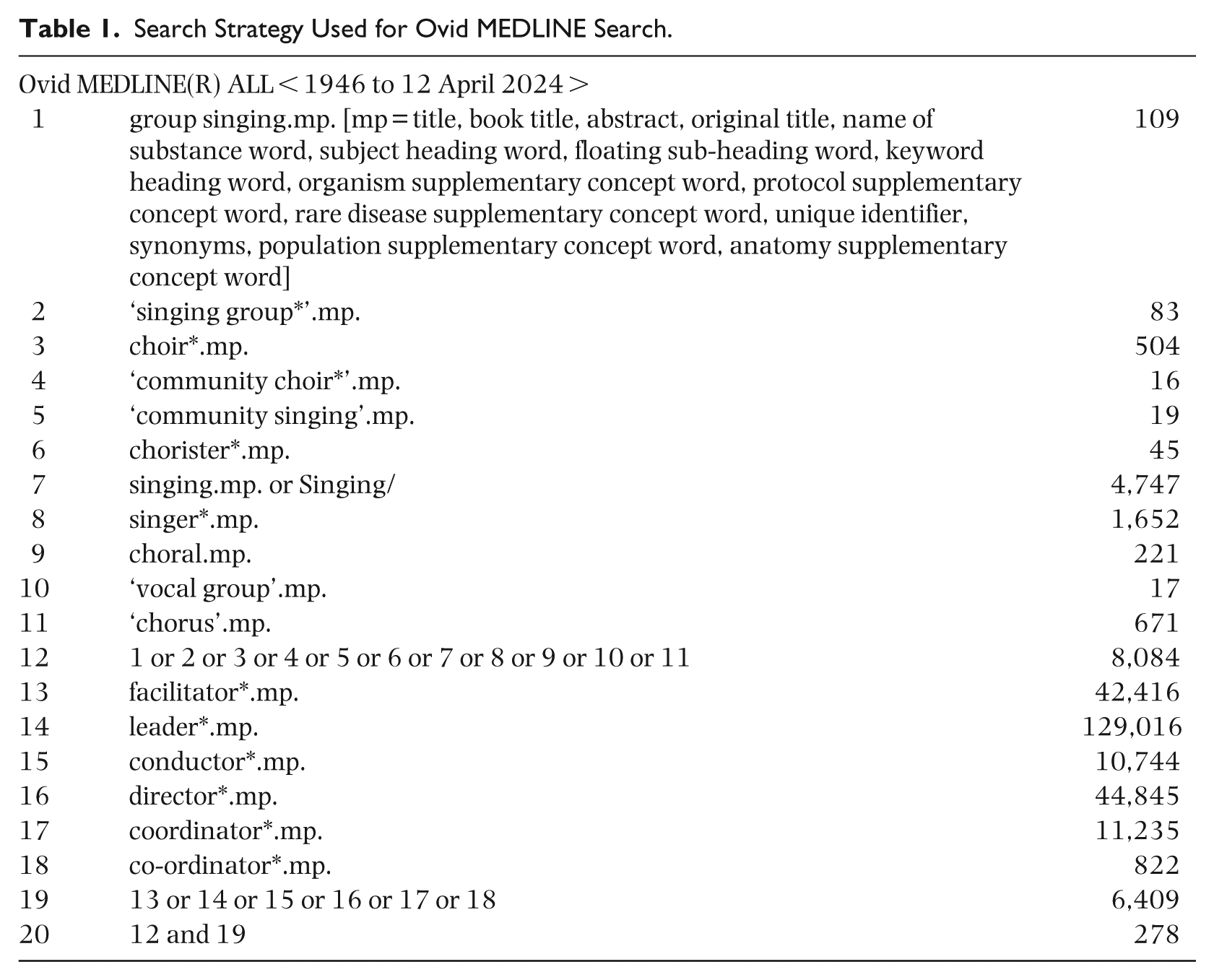
A two-step search strategy was used to locate published peer-reviewed studies. First, an initial limited search of MEDLINE (PubMed) and Web of Science was undertaken with a specialised librarian to identify articles on the topic. A preliminary search of MEDLINE and JBI Evidence Synthesis was conducted and no current or underway systematic reviews or scoping reviews on the topic were identified. In consultation with the librarian, the text words found in the titles and abstracts of relevant articles, as well as the index terms used to describe the articles, were used to develop a comprehensive search strategy for MEDLINE (see Table 1). The MEDLINE search was then reviewed with a specialist librarian. The search strategy using the same search terms was adapted for use and run in the Web of Science, ProQuest Central, PsycINFO and ERIC databases. The rationale for limiting the results to studies published between 2014 and 2024 was (1) to gather a representation of research pre and post COVID-19 and (2) to canvas studies published following the research imperative established by Dingle et al. (2019) to investigate facilitator factors in group singing.
Search Strategy Used for Ovid MEDLINE Search.
Search results
Following the searches, 2,129 identified citations were collated, exported to EndNote v.X20 (Clarivate Analytics, PA, USA), and uploaded into Covidence (Veritas Health Innovation, Melbourne, Australia) of which 807 duplicates were removed. BD and VDS screened the titles and abstracts of 1,314 sources against the inclusion criteria for the review. There were 69 relevant sources remaining and the full text of these sources was uploaded into Covidence (Veritas Health Innovation, Melbourne, Australia). The full text of selected citations was assessed in detail against the inclusion criteria by both authors. There were five reasons for exclusion of sources of evidence at full text. These were (1) study not undertaken within the community, (2) singing group gathered for education or performance purposes, (3) facilitation factors not discussed, (4) article not in English (only the abstract), and (5) not original research.
The authors resolved any conflicts through discussion, and a colleague was available to moderate if needed. Nineteen studies were selected for data extraction. The first author hand-searched the reference lists of these studies and identified 33 additional citations as potentially relevant based on their titles and how they were referenced in the full text. These citations were added to Covidence (Veritas Health Innovation, Melbourne, Australia), and reviewed by the first author, with only one deemed suitable for inclusion. The first and second authors discussed the reasons for excluding the others, and this exercise was considered to support the strength of the original search strategy. The single identified article was uploaded into Covidence (Veritas Health Innovation, Melbourne, Australia), reviewed at full text by both authors and added for extraction. The process of evidence selection is presented in a PRISMA flow diagram adapted from the model developed by Moher et al. (2009) (Figure 1).
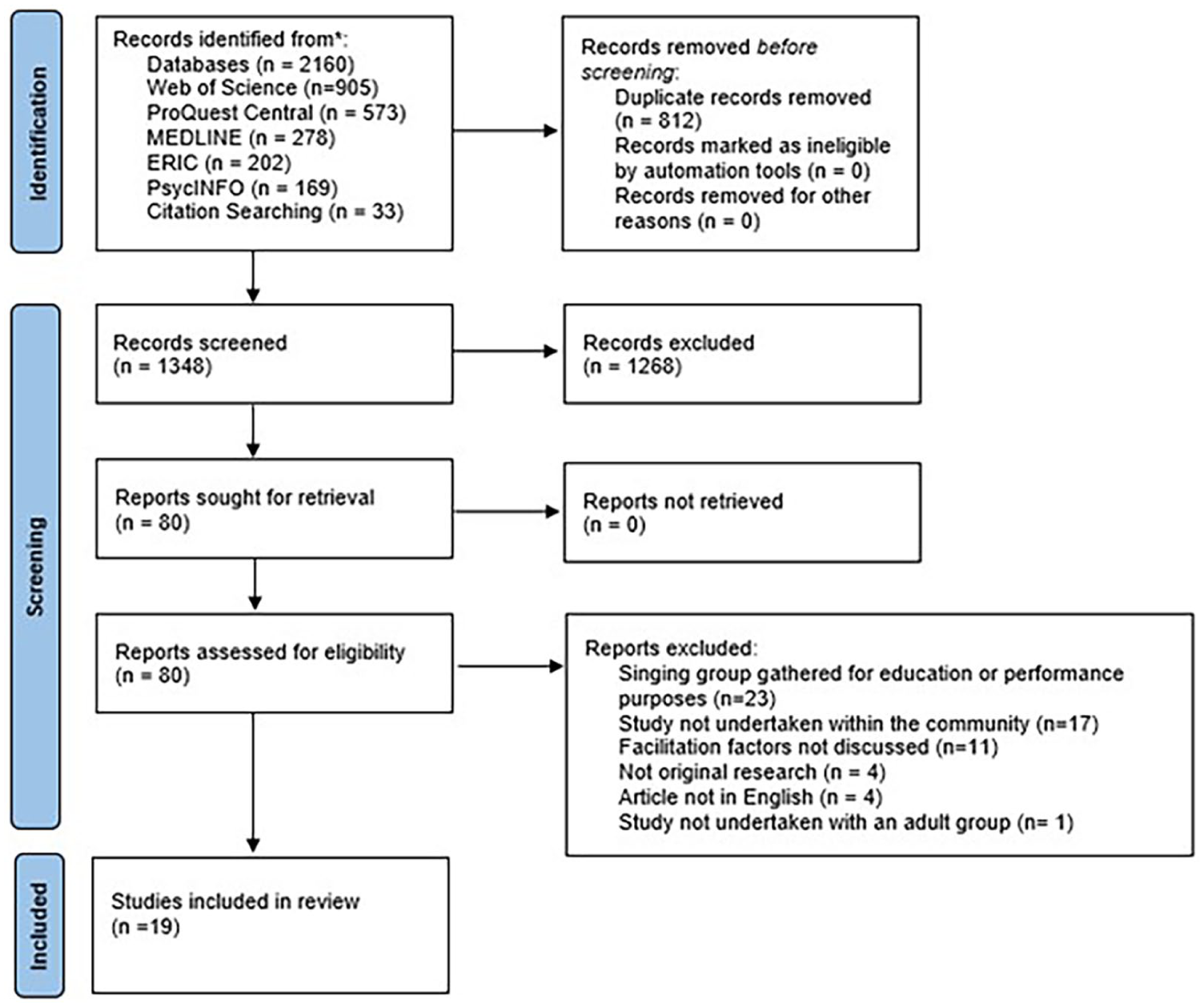
Flow Diagram for the Scoping Review Process Adapted from the PRISMA Statement by Moher and colleagues (2009).
Data extraction
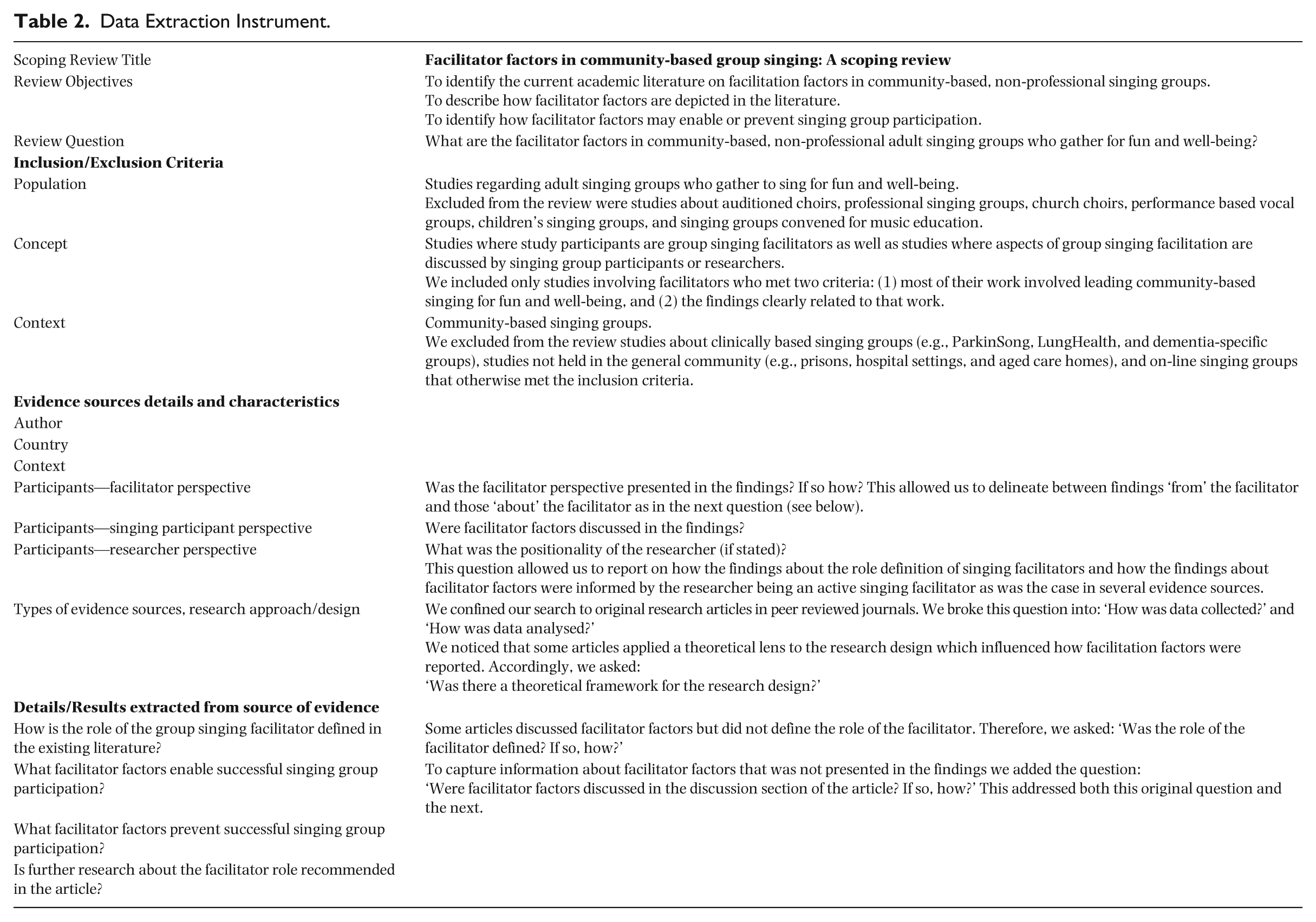
The review team extracted data from the relevant literature using a draft data extraction instrument, developed for the protocol as per the JBI guidelines. The draft data extraction tool was trialled by the first two authors and revised to incorporate modifications. The final extraction tool is included as Table 2. The first author completed the extraction of the identified sources and met for discussion and review with the second author throughout the process.
Data Extraction Instrument.
Data analysis
The extracted results are presented in tables (see Supplementary Materials) and narrative summaries within the next section of this article. We thematically analysed the findings related to facilitator factors that acted as enablers or barriers to singing group participation. Using the six-step process established by Braun and Clarke (2006), with attention to their recent clarification of process (Braun & Clarke, 2024), all findings were coded, categorised, organised into themes, revised, and written into the reported findings.
Findings
Nineteen articles published across fourteen peer reviewed journals since 2014 were included in the review. The subject areas represented by these journals included psychology (5), health (4), music education (3), community music (2), qualitative research (2), music therapy (1), communication (1), and culture and religion (1) indicating a diversity of disciplines interested in group singing (see Supplementary Materials). The reviewed studies were conducted across six countries; Australia (7), England (5), America (3), Ireland (2), New Zealand (1), and Sweden (1).
The role of the singing facilitator
In 16 of the included studies there was no attempt to define the role of the facilitator. Three of the articles sensitively described processes, skills and attributes of singing facilitators with the combined rich descriptions suggesting a complex role with multiple goals and inherent requirements. Of these, the most expansive discussion of the role was provided by Joseph and Southcott (2020). This was supported by extant literature from traditional choral studies and applied to community-based settings focussing on older adults. This was not strictly a definition of the role but rather an extended outline of the variety of features recognised in the research literature as important for enacting the role. The discussion of the facilitator role described multi-faceted musical, social and organisational aptitude and skills. The importance of cultural identity, training pathways, leadership attributes and prosocial interpersonal qualities were emphasised by these authors (Joseph and Southcott, 2020). Sophisticated teaching skills and processes were also described along with the necessity of an intentional framework for appropriate repertoire selection. The authors of this study summarised the role of the community-based singing facilitation as ‘complicated’ (Joseph and Southcott, 2020, p. 1493).
Similarly, Forbes and Bartlett (2020) also gave the role of the group singing facilitation extended attention and definition. These authors made the distinction between community-based singing for well-being and music teaching or choral conducting explicit by choosing to use the word ‘facilitator’ for the former role. The musical and interpersonal skills of the facilitator were emphasised, along with the importance of pedagogical expertise proposed by the authors (Forbes & Bartlett, 2020). Like Joseph and Southcott (2020), these authors drew on extant literature about choral conducting and singing for well-being literature to propose the desirable features of a singing facilitator within the community context. For example, it was proposed facilitators may require a suite of expert conducting skills, practices emphasising inclusion and diversity, and ‘a working understanding’ of a range of mental health and physical conditions (Forbes & Bartlett, 2020). These authors highlighted the importance of facilitators balancing musical achievement, personal nurturance, and empowerment for participants. In this study, facilitators of community-based singing were distinguished from music therapists and determined to be community leaders ‘who are called to serve’ and who exhibit leadership through their own creativity (Forbes & Bartlett, 2020, p. 556).
The work of a singing facilitator was described by Moss and colleagues (2022) as having ‘shared terrain, with community musicians, choir directors, music therapists and singers leading singing for health groups’ (p. 425). These authors emphasised that specialised training is essential for facilitators, regardless of their background or chosen approach (Moss et al., 2022, p.425). Based on their previous work, these authors proposed ‘that where a professional is sensitive, well-trained, and engaging in mentoring or clinical supervision, they can successfully facilitate a singing for health group’ (Moss et al., 2022, p. 425). A specific definition of the role was not provided in this article however granular detail about recommended processes for singing facilitation was provided (to be included in the findings below).
Were the perspectives and experiences of group singing facilitators presented?
Eleven of the included studies included the perspectives of group singing facilitators in the reported findings. Only one study, by Forbes and Bartlett (2020), was chiefly focussed on the experience of the group singing facilitator. Three studies used data collected only from facilitators to investigate the role of the facilitator adjunct to the experience of singing group participation (Joseph & Southcott, 2017, 2020; Palkki, 2022a). Given the depth of facilitator findings from these studies, they will be discussed in a later section. Another seven studies provided little, but some, attention on the facilitator voice.
Facilitator factors that impact participation in group singing
Findings from all included studies included discussion of facilitator factors that are grouped below into three themes with subthemes; musicality (with subthemes of musical competence and training); identity (with subthemes of purpose; personal characteristics; and well-being) and facilitation approaches (with subthemes of relational; non-traditional; teaching; leadership; and logistics.
Musicality
The type of music selected to be sung in a session was discussed in two studies (Hendry et al., 2022; Shakespeare & Whieldon, 2018). The selection of those songs is presumed to be part of the act of facilitating the group and therefore reportable in this review. Hendry and colleagues (2022) reported that for some singers, the style of music was unimportant considering the benefits reaped from participation. In another study, song selection was based on its emotional content and harmony, and the songbook was regularly updated (Shakespeare & Whieldon, 2018). More broadly, the act of singing facilitation was found to be a unique mode of music performance, characterised by peak experiences of flow that differed from traditional concert performance (Forbes & Bartlett, 2020). Further discussion of facilitator musicality in the reviewed studies is defined under two subthemes: musical competence and training.
Musical competence
Six of the included studies published findings about the musical competence of the singing facilitator (Davidson et al., 2014; Forbes & Bartlett, 2020; Helitzer & Moss, 2022; Joseph & Southcott, 2017, 2020; Ververis & Marshall, 2015). Helitzer and Moss (2022) reported it was important for facilitators to use an evidence base to work with singers and have experience conducting choirs. Another study found that facilitators needed to demonstrate good conducting technique while also using that technique to convey their passion for the music (Ververis & Marshall, 2015). Musical and conducting competency was required of facilitators for them to sustain the commitment of participants (Joseph & Southcott, 2020). These authors found that the facilitator needed to model expertise for participants as both a musician and a performer.
Musical competency was defined as having a ‘good ear’, a sense of timing, and ability to sing all harmony parts (Joseph & Southcott, 2017). The singing skills of the facilitator were valued by participants in a study by Davidson et al. (2014) who argued singing programmes with older people could be developed with community musicians. Sophisticated musical skills were found to be required by facilitators to achieve musical goals with community singers who may not themselves have musical skill (Forbes & Bartlett, 2020).
Training
Professional training in music therapy by a singing facilitator was found to be instrumental for the success of a group in the study by Helitzer and Moss (2022). These authors also found facilitators across Ireland had a wide range of training including specialised health training, music therapy, other music degrees, community music and teaching (Helitzer and Moss, 2022). Conversely, a study of two successful community singing facilitators in Australia found they both had little or no formal training. Both facilitators effectively learnt ‘on the job’ and drew on their own singing experiences (Joseph & Southcott, 2020).
Identity
Four of the included studies reported that the identity of a singing group was closely tied to the facilitator themselves (Bird, 2018; Judd & Pooley, 2014; Lamont et al., 2018; Palkki, 2022b). Palkki (2022b) reported a dissonance between the facilitator perceiving herself as the conduit of song, and the participants seeing her as key to the group appeal (Palkki, 2022b). Similarly, in the study by Lamont et al., (2018) the facilitator was seen as the nexus of the group. The negative aspect of this was reported to be the related risk of losing the group if the facilitator herself was no longer available (Lamont et al., 2018). In a study by Judd and Pooley (2014) several people occupied the facilitation role successively and the group changed accordingly, sometimes affecting the group dynamic negatively. The way the identity of a facilitator impacts the group is further defined by three subthemes: purpose, personal characteristics, and well-being.
Purpose
Having a strong vision for the singing group was an important part of the facilitation role reported in six of the included studies (Densley, Andrews, et al., 2024; Forbes & Bartlett, 2020; Judd & Pooley, 2014; Lamont et al., 2018; Piercy & Kramer, 2017; Shakespeare & Whieldon, 2018). Judd and Pooley (2014) reported that the vision of the facilitator has an overall effect on the tone of the group. Lamont and colleagues (2018) also found that clear vision and sensitive support were features of the facilitator role. Having a selfless sense of vocation and service was tied to the meaning of the facilitator role in the study by Forbes and Bartlett (2020). A sense of facilitator purpose extended beyond singing and related to mental health resourcing in a study by Densley, Andrews, et al. (2024). Similarly, Shakespeare and Whieldon (2018) highlighted how facilitators emphasised the focus of their ‘Sing your heart out’ groups to be more than singing but singing together. This community-building aspect of the purpose was also prominent in the study by Piercy and Kramer (2017), who reported that facilitators acted both as leaders of the singing group and as representatives of the group to the wider community. The facilitator should strive to promote interaction between participants and create ‘meaningful experiences for the participants’ (Moss et al., 2022, p. 422). These authors proposed this can be achieved when the facilitator enacts five-faceted musical experiences being those that promote social connection, expression, creativity in-the-moment, reminiscence and cognitive stimulation (Moss et al., 2022).
Personal Characteristics
Ten of the studies included in the review discussed the personal characteristics of the facilitator in their findings (Davidson et al., 2014; Helitzer & Moss, 2022; Hendry et al., 2022; Joseph & Southcott, 2017, 2020; Judd & Pooley, 2014; Lamont et al., 2018; Palkki, 2022a, 2022b; Ververis & Marshall, 2015). Pro-social personality traits of facilitators valued by singing participants included being welcoming (Joseph & Southcott, 2020), enthusiastic (Helitzer & Moss, 2022; Lamont et al., 2018), inspiring (Palkki, 2022a; Ververis & Marshall, 2015), patient and tolerant of mistakes (Joseph & Southcott, 2017, 2020), encouraging (Ververis & Marshall, 2015), and passionate (Palkki, 2022a; Ververis & Marshall, 2015). The facilitator’s sense of humour was highlighted as important in four studies (Davidson et al., 2014; Joseph & Southcott, 2017, 2020; Palkki, 2022b). Judd and Pooley (2014) found the facilitator required ‘nurturing’ skills. Balancing being nurturing with maintaining high musical expectations was highlighted as a facilitator skill by Joseph and Southcott (2017). Similarly, the study by Hendry et al. (2022) found the facilitator skill for fostering fun was balanced with being organised.
Well-being
The well-being of the facilitator was discussed in the findings of five of the included studies (Daffern et al., 2021; Densley, Andrews, et al., 2024; Forbes & Bartlett, 2020; Palkki, 2022a, 2022b). Facilitators experienced the relationships with participants as rewarding (Forbes & Bartlett, 2020). These authors found the rewards of singing facilitation meant the unique relationships forged through singing meant the role ‘transcended work’. Also liberating for facilitators in this study was the complement of their personal skills, joyful attitude to music making and atypically lower musical expectations of the group which made the work desirable (Forbes & Bartlett, 2020)
Reciprocal loyalty and a sense of mutual responsibility between the facilitator and participants was a striking finding in a study undertaken during COVID-19 by Daffern et al. (2021). A study that highlighted some negative aspects of the facilitator role and well-being were also highlighted in another study undertaken during the COVID-19. The inability to conduct in person singing groups ruptured some facilitator’s self-identity and the requirement to withhold the resource of group singing caused them some distress (Densley, Andrews, et al., 2024).
Finally, a study by Palkki (2022b) in which the ethnographic researcher was positioned as a community singing participant with a formal choral conducting background, highlighted well-being effects from a facilitator perspective. Comparing technically excellent choral rehearsal with community singing the author found the experience to be therapeutic, offering him ‘freewheeling expression and joy and non-pompous bravado’ (Palkki, 2022a, p. 39).
Facilitation approaches
The extensive positive psychosocial health outcomes experienced by singing group participants are influenced by approaches to facilitation (Hendry et al., 2022). More specifically, the approaches to facilitation described in the included studies are organised under the subthemes: relational, non-traditional, teaching, leadership, and logistics.
Relational
Five of the included studies emphasised relational qualities of the approach to group singing facilitation (Creech et al., 2014; Forbes & Bartlett, 2020; Helitzer & Moss, 2022; Moss et al., 2022; Palkki, 2022b). Relational qualities are considered in this review as distinct from pro-social personal characteristics, instead involving negotiated processes. For example, Moss et al. (2022) emphasised having the same facilitator each week enabled a relationship to deepen with the participants. Forbes and Bartlett (2020) found the facilitator uses continuous feedback throughout the session, within a context of psychological safety, to create a shared musical experience. The feedback was rarely negative, in a study by Creech et al. (2014) and focussed on non-specific, ongoing encouragement. These authors also referenced extensive and ongoing use of humour by facilitators to engender informality within a structured session. Continual assessment of the group was referred to as an ability to ‘read the room’ by Palkki (2022b). Facilitators were found to have the ability to balance motivation, fun, and creativity for their group within a context of having a clear purpose and appropriate expectations (Helitzer & Moss, 2022).
Non-traditional methods
This subtheme synthesises the findings within the included studies that refer to non-traditional approaches to singing facilitation. These were findings that make specific comparison between formal choral methods or traditional music education and this singing for well-being approach. In one example, a traditional choral conductor was interviewed about less formal, participatory singing and described ‘livening up’ congregational singing by inviting participants to improvise (Palkki, 2022a). In the same study there was also reference to specific non-traditional techniques including demonstrating the melody of a song by singing it clearly without accompaniment, using lyrics sheets rather than sheet music, and avoiding gestures that could be perceived as conducting (Palkki, 2022a). In this study, the facilitator also described the importance of focussing on how things are sung, rather than the accuracy of what is sung. In another study by the same author, the lack of formal choir ‘rehearsal norms’ was highlighted as freeing for participants, and key to facilitation (Palkki, 2022b). The absence of traditional musical engagement methods such as reading music and auditions were also discussed as inclusive practices that generated self-efficacy in participants (Hendry et al., 2022).
Teaching
Five of the studies referred to a teaching component of the singing facilitation role (Creech et al., 2014; Hendry et al., 2022; Joseph & Southcott, 2017; Moss et al., 2022; Shakespeare & Whieldon, 2018). Hendry et al. (2022) described an inclusive approach to sharing songs that involved participants learning by ear. In a study, that also included investigation of other music groups, Creech et al. (2014) noted considerable time was spent by facilitators providing explanations, modelling, and asking and answering questions. Overall, these authors noted most of the facilitator time was spend ‘scaffolding’ which included conducting, accompanying and joining in with the participants. Scaffolding was a term also used in two other studies who defined it as an effective method to swiftly build by singing each line to participants and having them repeat it (Joseph & Southcott, 2017; Shakespeare & Whieldon, 2018). In one study, lyrics sheets were not issued to participants, and this was seen as a potential barrier to engagement, while others valued the cognitive stimulation and social connection afforded because of their absence (Moss et al., 2022).
Leadership
A subtheme of leadership described results that are distinct from personal characteristics or relational work because they focus on authority, flexibility and management of group processes. Three of the included studies discussed authority (Creech et al., 2014; Moss et al., 2022; Ververis & Marshall, 2015). For a distinct minority of their observed practice, facilitators directed their groups in a non-negotiable manner in a study by Creech et al. (2014). Participants accepted the authority of the facilitator on musical issues but preferred to contribute their views on other matters including repertoire selection in the study by Ververis and Marshall (2015). Similarly, participants in the study by Moss et al. (2022) also valued facilitator flexibility regarding musical content.
The study by Piercy and Kramer (2017) focussed on exploring the dialectal tensions managed by facilitators and named four: satisfying current members while recruiting for new participants; fostering a positive climate in the sessions whilst focussing on the quality of the musical outcome; ensuring social relationships can develop in the group whilst not interfering with the music process; and controlling the decision making in the group whilst also incorporating participant feedback. These authors found the facilitators managed these tensions by overtly recognising competing goals and using humour.
Social leadership by the facilitator was recognised as key to the singing groups success in the study by Davidson et al. (2014). Facilitators themselves also feel a responsibility to foster a positive experience for their groups (Forbes & Bartlett, 2020). A non-strict environment created by the facilitator motivated participants to attend, and they particularly valued enjoyment being prioritised over professional excellence in a study by Lee et al. (2016).
Finally, leadership was valued in one study in relation to group dynamics. Hendry et al. (2022) reported group dynamics have the potential to undermine the psychosocial benefits of group singing and need to be managed effectively by the facilitator to retain participation.
Logistics
Logistics were discussed in five of the included studies (Creech et al., 2014; Davidson et al., 2014; Helitzer & Moss, 2022; Moss et al., 2022; Shakespeare & Whieldon, 2018). The subtheme of logistics included discussion of the facilitator’s use of supports, the emotional climate of the group gathering, and considerations related to the physical gathering space.
Supports of the facilitator work that were discussed in the reviewed studies included committee members, volunteers, or support staff who helped organise finances, publicity, and providing technical support (Helitzer & Moss, 2022). Singing participants with mental health literacy, who could assist distressed or disruptive fellow participants, represented another facilitation support resource (Shakespeare & Whieldon, 2018).
One study highlighted the importance of a singing environment with a ‘home-like’ feel (Helitzer & Moss, 2022). While this study didn’t attribute the curation of the environment to the facilitator specifically, the home-like feel was described as constituent of conditions (such as inclusivity, lack of judgement, informality and supportiveness); emotion-driven behaviours (such as joy and friendliness); and a sense of social justice whereby both equality and equity were emphasised, presumably (at least in part) by the facilitator (Helitzer & Moss, 2022).
The location and timing of the singing sessions needed to be considerate of the participant availability (Helitzer & Moss, 2022). In addition, the singing venue needed to be accessible (Shakespeare & Whieldon, 2018). In one study, the importance of being able to physically see the facilitator was highlighted and attributed to seating layout (Davidson et al., 2014). Organisational activities, such as setting out chairs, distributing resources, and generally organising the physical space was found to account for almost 10% of facilitator time in a study by Creech and colleagues (2014). Incorporating a tea break within a session was considered important in the findings of one study in which it was reported to be an opportunity for low intensity social engagement between participants (Shakespeare & Whieldon, 2018).
Future research
Eight of the included studies made recommendations for future research to be conducted investigating facilitator factors (Creech et al., 2014; Densley, Andrews, et al., 2024; Forbes & Bartlett, 2020; Hendry et al., 2022; Joseph & Southcott, 2020; Lamont et al., 2018; Lee et al., 2016; Palkki, 2022b). Including the group singing facilitator voice in future research was suggested by authors of three of the included studies (Creech et al., 2014; Densley, Andrews, et al., 2024; Joseph & Southcott, 2020). Furthermore, the facilitator perspective on their experiences and abilities was argued as useful for the development of training programmes for new group singing facilitators (Joseph & Southcott, 2020).
Research regarding the facilitators’ perception of their role, the processes used in the work, and how the facilitator is resourced by the work was recommended by Densley, Andrews, et al. (2024). Investigating the factors that support facilitators’ own well-being was also proposed by Forbes and Bartlett (2020) along with exploring meaningful work opportunities for those community musicians who include singing facilitation in their portfolio.
Further study exploring the role of the facilitator and how it is sustained was proposed by Lamont et al. (2018). The style and method of singing group facilitation was proposed as worthy of investigation as a mediating factor in the singing participant experience (Hendry et al., 2022). Similarly, Lee et al. (2016) recommended research into facilitation qualities, skills and techniques specific to motivation and well-being of the participants. Finally, the potential for a singing facilitator who incorporates participatory philosophy to inform traditional choral teachers was proposed via further research by Palkki (2022b).
Discussion
Despite the importance of the facilitator to the effectiveness of singing groups (Davidson et al., 2014; Lee et al., 2016), there is a dearth of research on this role or associated facilitator factors (Batt-Rawden & Andersen, 2020; Dingle et al., 2019; Lamont et al., 2018). In this scoping review only 19 studies were identified and of these just three attempted to define the role of the singing facilitator. This finding suggests a clear definition of the important group singing facilitator role does not yet exist.
This review built on the knowledge from extant studies which related to facilitator factors in group singing conducted in clinical, educational or cohort-specific contexts (Brisola & Cury, 2015; Daykin et al., 2018). In this review, the findings of the 19 included studies specifically related to community-based settings where participants gathered for fun and well-being. This adds specificity to the existing work that can be generalised to group singing across domains.
In this review, it is noteworthy that non-musically based factors of group facilitation dominated discussion. Emphasising non-musical facilitation practices appears important given that the established psychosocial benefits are also reported as non-musical gains (Clift et al., 2010; Hallam & Creech, 2016; Judd & Pooley, 2014; Stewart & Lonsdale, 2016; von Lob, 2010). Furthermore, the articulation of non-musical facilitation factors is important because group singing is being recommended for non-musical reasons such as mental health benefits (Damsgaard & Brinkmann, 2022; Galinha et al., 2023; Livesey et al., 2012) and is being socially prescribed (Cunningham et al., 2024; Holt et al., 2020). Group work logistics, support staff, relational factors, mental health literacy, facilitation style, and social leadership were all described as important facilitator factors in the findings of the reviewed studies.
The considerable discussion about the personal prosocial characteristics of the facilitator in the findings of the reviewed studies supports the previous work that highlights the skills and sensitivity of the facilitators are relevant to the success of socially prescribed singing programmes (Dingle & Sharman, 2022). The importance of a clearly articulated purpose for the group was also emphasised across the findings from the reviewed studies. This suggests singing group facilitation work occurs outside the singing sessions and relates to deliberate and intentional participatory musicking practice (Small, 1998). Further research on the conditions of practice and stance of the singing facilitator would be beneficial to further investigate the notion of facilitator purpose.
Some of the included studies in this review presented conflicting findings. For example, professional training in music therapy by a singing facilitator was found to be instrumental for the success of a group in the study by Helitzer and Moss (2022), however Davidson et al. (2014) argued singing programmes with older people could be developed with community musicians. Continuity of facilitation was also a conflicted concern. Some studies reported consistent, reciprocally rewarding relationships between facilitators and participants linked to the group identity and success (Forbes & Bartlett, 2020; Moss et al., 2022), while others found the identity of the group itself shifts when a new facilitator adopts a group and can be a negative experience (Judd & Pooley, 2014).
Previous research had indicated the therapeutic benefits of group singing may also be experienced by the facilitators of those groups (Ascenso et al., 2017; Lenette & Procopis, 2016). In this review, further findings were added to the existing knowledge indicating group singing can have both positive and negative well-being impact on the facilitator. The facilitator voice in studies on group singing has been cited as both valuable and scarce in the research literature (Daffern et al., 2021; Price et al., 2021). In this review, the facilitator voice was represented in 11 of the 19 included studies adding support to the argument there is a little facilitation representation amongst group singing research evidence.
Future research recommendations on facilitation factors were assembled in this review from eight of the included studies. These recommendations are specific to investigating the facilitator’s role and process, as well as including the facilitator’s voice in study designs, and will assist with the development of future research questions. Such research will support the development of guidelines for singing group facilitation that accompany extant and developing community-based singing programmes.
Limitations
The exclusion of articles before 2014 was a limitation of this study. The review also omitted books and grey literature which may have contributed knowledge on the facilitation factors in group singing. The most challenging limitation was selecting studies that focussed on singing for well-being groups where facilitator factors were discussed, because the purpose of the singing group was not always easily identified. The difficulty delineating the type of group and facilitation may represent the broader concern identified in this review, that the facilitator factors related to community-based for well-being singing have not been explicitly explored and defined.
It is likely that this review presented findings relating to active singing groups where effectiveness is inferred by the group’s ongoing existence. Therefore, investigating the experiences of participants and facilitators where groups have failed to endure would be useful in exploring barriers and enablers to group success. This limitation supports a previous recommendation by Camlin et al., 2020) to explore the experiences of those who do not sing in groups, and highlights the importance of including the facilitator in such research.
Conclusion
Despite the mounting evidence regarding the therapeutic benefits of attending of community singing groups, there has been little research on the singing group facilitator role. In this review, existing research regarding facilitator factors from the last decade was mapped with the highest proportion of that research emanating from Australian studies. Facilitator factors impacting participation were assembled and presented under the key themes: musicality, identity, and facilitation approaches. Future research recommendations from the included studies were also presented. This review offers a contemporary picture of the research on singing group facilitation and highlights the need for more work in this area, particularly to support evidence-based guidelines and practice of singing and social prescription programmes. The findings of this scoping review may stimulate much needed research in the field of group singing facilitation to address the presented gaps in role definition, value and process. Including facilitators as research participants in future research would also amplify the under-represented voices of group singing facilitators.
Supplemental Material
sj-docx-1-pom-10.1177_03057356251368303 – Supplemental material for Facilitator factors in community-based group singing: A scoping review
Supplemental material, sj-docx-1-pom-10.1177_03057356251368303 for Facilitator factors in community-based group singing: A scoping review by Belinda Densley and Virginia Dickson-Swift in Psychology of Music
Footnotes
Acknowledgements
Thank you to Hannah Buttery and Angela Johns-Hayden, Health Sciences Faculty Librarians, La Trobe University, for their recommendations for database searching and in construction of the Boolean phrases.
Declaration of conflicting interests
The authors declared no potential conflicts of interest with respect to the research, authorship, and/or publication of this article.
Funding
The authors disclosed receipt of the following financial support for the research, authorship, and/or publication of this article: This study is supported by La Trobe University.

Supplemental material
Supplemental material for this article is available online.
References
Supplementary Material
Please find the following supplemental material available below.
For Open Access articles published under a Creative Commons License, all supplemental material carries the same license as the article it is associated with.
For non-Open Access articles published, all supplemental material carries a non-exclusive license, and permission requests for re-use of supplemental material or any part of supplemental material shall be sent directly to the copyright owner as specified in the copyright notice associated with the article.
