




Abstract
Music performance anxiety (MPA) is a common experience among musicians of all ages. However, young pianists have indicated receiving limited performance training or effective MPA support from their teachers. As these findings do not reflect teacher perspectives, this study was designed to provide a fuller picture of piano training. Two hundred thirty-seven piano teachers from across Canada and the United States participated in an online survey, comprising both open- and closed-ended questions, to gauge their pedagogy regarding performance training, perfectionism, and MPA. While the majority of participants reported that students have expressed MPA concerns to them, many noted that they only discuss the issue when students raise it. Virtually all teachers reported that they teach students what to do on stage and how to address performance challenges—in particular memory lapses. Most believe there is a distinction between teaching to play and teaching to perform, yet only 58% said they offer studio classes and 37% hold dress rehearsals. Participants noted a focus on excellence, not perfection, in their pedagogy, but many acknowledged that perfection is an expectation within the field. Comparisons with previous findings on piano students and implications for educators are discussed.
Keywords
Music performance anxiety (MPA) is a problem experienced by many musicians, both adult and child (e.g., Allen, 2011; Diaz, 2018; Fehm & Schmidt, 2006; Kalenska-Rodzaj, 2020; Osborne et al., 2005; Papageorgi, 2022; Rae & McCambridge, 2004; Ryan, 2005). With wide-ranging behavioral, physiological, and psychological manifestations, it can be distressful to the performer and detrimental to their performance. The pervasive nature of MPA has led many researchers to examine a wide range of facets pertaining to it, with a broad focus on prevalence, related factors (internal and external), and mitigation strategies (e.g., Burin & Osorio, 2017; Cohen & Bodner, 2019; Fishbein et al., 1988; Juncos & Markman, 2015; van Kemenade et al., 1995).
Adult professionals and college-level musicians have served as study participants across the bulk of the research literature, which has consistently demonstrated the prevalence of performance anxiety among this population, citing it as one of the top concerns and medical problems (Fernholz et al., 2019; Fishbein et al., 1988). Over the last 25 years, however, some researchers have turned their attention toward the MPA experiences of musicians younger than college age, as they attempt to learn more about when and how MPA begins and what factors may contribute to a developing musician’s experience of it (e.g., Boucher & Ryan, 2011; Fehm & Schmidt, 2006; Kalenska-Rodzaj, 2020; Osborne et al., 2005; Papageorgi, 2006, 2022; Rae & McCambridge, 2004; Rothlisberger, 1992; Ryan, 1998). Such knowledge may ultimately support the creation and implementation of strategies to reduce negative impacts on musicians and their work, and thus potentially offer resilience for the next generation. This growing body of literature clearly indicates that MPA is a common experience for child and adolescent musicians, with several studies pointing to a need and desire on the part of student musicians from elementary age through the university years for open dialogue and support surrounding the issue (Cornett & Urhan, 2021; Fehm & Schmidt, 2006; Studer et al., 2011; Tahirbegi, 2019).
From their earliest music performances, young children of 3 and 4 years of age have demonstrated stress responses physiologically, behaviorally, and through self-report measures when performing with their preschool-mates in concerts for families and friends (Boucher & Ryan, 2011). School-age children from at least as early as third grade have been found to anticipate anxiety surrounding impending school ensemble performances, with indications that the onset of puberty may be related to an increase in MPA (Ryan, 2005). MPA is a prevalent concern among adolescent musicians (Fehm & Schmidt, 2006) that may play a role in their plans for or against post-secondary study in music (Ryan & Andrews, 2021); intense experiences of MPA during the adolescent years have been shown to remain with musicians long after the performance, affecting their confidence and subsequent MPA (Osborne & Kenny, 2008). Among college students, its pervasiveness has been widely documented (e.g., Barros et al., 2022; Dews & Williams, 1989; Kenny, 2009; Papageorgi et al., 2013; Rae & McCambridge, 2004; Robson & Kenny, 2017; Ryan, 2021; Sims & Ryan, 2023).
A variety of factors have been considered in the research literature as potential contributors to MPA. One such factor is perfectionism, which has been linked with MPA in several studies (Dobos et al., 2019; Mor et al., 1995; Sinden, 1999). Given the varied ways in which MPA can manifest, including reductions in focus and fine motor control (among many other areas critical to performance excellence), it can be particularly difficult for sufferers to perform at their best in public contexts, making the experience all the more challenging for those striving for perfection. Indeed, a fear of making mistakes in a public context has been found to be a key impetus for MPA in young pianists (Ryan, 2004), giving credence to the contention by some researchers that perfectionism is built into traditional music pedagogy (Dobos et al., 2019; Jeong & Ryan, 2021; Kobori et al., 2011; Patston & Osborne, 2016).
Gender is another factor that has been considered—primarily as a binary—in many studies. Research on children suggests that boys and girls may exhibit different types of, and timeframes for their, anxiety responses (Dempsey & Comeau, 2019; González et al., 2017; Papageorgi, 2022; Ryan, 2004, 2005). As children mature into late adolescence, the higher anxiety response in women that is prevalent in the adult literature (Barros et al., 2022) becomes a prominent finding (e.g., LeBlanc et al., 1997; Osborne et al., 2005; Rae & McCambridge, 2004).
Music teachers play an integral role in their students’ performance experiences. Typically, teachers create performance opportunities (e.g., recitals) and/or direct students to opportunities such as competitions and examinations. Despite their key positioning, we are only beginning to understand the role they play in students’ performance preparation and experience of MPA. Ryan et al. (2021) examined adolescent pianists’ views on their preparation for performances and experience of MPA. They found that many of the 62 participants reported feeling nervous not only about public performances, but also during their private lessons. When asked what their teachers do or say to help prepare them for performance and MPA, few actionable strategies or supports were reported, with a focus instead on continuing to practice the musical selection, rather than preparing for differences between playing at home and performing onstage. The young musicians further noted that when they expressed anxiety surrounding an upcoming performance to their teacher, they were met with recommendations to “relax/don’t be nervous,” “don’t think about it,” and advice that “they’ll be happy they did it in the end.”
Beyond the school years, college/university musicians have indicated a strong need for more support and information about MPA from both experts and educators (Studer et al., 2011). Students have noted that teachers are integral to MPA regulation, in particular with regard to strategies specific to managing memory slips. They have expressed a desire for increased normalization of discussion about MPA and indicated that learning about teachers’ experiences with MPA was helpful (Tahirbegi, 2019). Some students see teacher MPA support as embedded within their pedagogy, for example, with regard to practice performances, acceptance of mistakes, and relaxation techniques (Huang & Yu, 2022).
While the previously noted studies focused on student musicians’ perspectives, teachers’ views have also been considered in a few studies. Four instrumental teachers indicated their belief that not only was mentoring students regarding MPA part of their job, but that teacher training on MPA was needed as avoidance of the issue has long been the dominant practice (Moura & Serra, 2021). The historical positioning of MPA as a “taboo topic” and the concern that teachers may avoid MPA discussion for fear of instigating anxiety were noted in interviews with three teachers, who suggested that teachers can use pedagogical practices such as reacting positively to mistakes and sharing their own MPA mitigation strategies (Sieger, 2017). Reluctance to address MPA with students was found by Gill et al. (2024), in a large study of teachers, to be much more pronounced in studio teachers than in school teachers.
The most common music teacher approaches to MPA, gleaned from scientific and non-scientific literature, include preparation, open communication, realistic expectations, exposure therapy, and deep breathing (MacAfee & Comeau, 2023). Researchers like Moura and Serra (2021) have recommended formal MPA training for educators (MacAfee & Comeau, 2023)—a theme echoed in findings of a study on a large body of musicians, including children, college students, and music educators (Cornett & Urhan, 2021). Findings indicated that uncertainty surrounding how to manage anxiety, an expressed need for MPA mitigation training, and greater psychological support in schools were needed. Given the uptick in interest on teachers and MPA, Mazzarolo et al. (2023) reviewed the extant literature and found that common management approaches, such as practice performances, breathing, and preparation, are often built into teachers’ regular pedagogy, rather than explicitly indicated to address MPA.
Despite some perceived reluctance and/or uncertainty surrounding how to address MPA in the studio, there appears to be an opening up about providing support and an interest in learning how to do so. Each of the previous studies examined music teachers as a whole without focusing on practices within a specific instrumental/vocal specialization. Given that there are unique aspects to playing and performing on each instrument, we felt it important to consider within-group practices. As piano students’ perspectives have previously been examined (Ryan et al., 2021), we decided to turn the lens toward piano teachers, in order to better understand their beliefs and practices with regard to performance training and MPA. Furthermore, we wished to consider the link that has been observed between MPA and perfectionism, and suggestions that perfectionism is built-in to traditional pedagogy.
The research questions were the following:
Method
Participants
Two hundred thirty-seven piano teachers from across Canada (6.7%) and the United States (93.3%) participated in this study. Participants were highly educated—43.3% with undergraduate degrees, 33.6% with master’s degrees, and 18.9% with doctoral degrees; 93.3% of participants’ highest degrees were in music. Only 3.4% did not have a university degree, although they had attended university, and 0.8% indicated that they had never attended university. Piano was the primary instrument for 97% of respondents.
There was a wide age range of participants, between 21 and 92 (M = 52), and a wide range of years teaching piano, between 0.5 and 75 (M = 26.9). In a typical non-COVID year, they taught an average of 23 piano students. Participants were asked to indicate the age range (youngest to oldest) of their students in an open response. We categorized these into four age groupings: below 10 (94.1%), 11–18 (97.9%), 19–30 (61.2%), and above 30 (55.5%). Participants focused their pedagogy on Classical music (99%), but other styles were represented, including Contemporary (38%), Pop (37%), Jazz (31%), Rock (13%), Blues (17%), and Sacred (10%).
Measures
An online survey, titled “Preparing Young Musicians for Performance” (see the appendix) was designed for this study. It comprised a wide range of questions, both open- and closed-ended, on teachers’ perspectives and practices regarding performance training; expectations for performance and perfection; and MPA preparation, observation, and response. The survey comprised five sections. Part 1 focused on information about the teacher’s training and studio practices regarding performance (13 closed-ended questions). Part 2 focused on how teachers prepare their students for performance, for example, questions about practice performances and memorization strategies (nine multipart questions that included seven open-ended components). Part 3 included questions about teacher practices, observations, and experiences at student performances (eight multipart questions that included six open-ended components). Part 4 focused on their expectations for students at performances and in general (five questions with five open-ended components). Part 5 included questions about online and in-person performance contexts and anxieties, reflecting the realities of music teaching and performing during the COVID-19 pandemic, during which the study took place (the questions from Part 5 will not be considered in this article). Two final questions comprised the section, labeled Final Thoughts: one question about age and gender and the other pertaining to distinctions between teaching to play and teaching to perform (two multipart questions with open-ended components).
Some questions provided multiple options for responses. For example, for the question, At lessons, do you discuss with students what to do onstage and how to navigate performance challenges? participants were asked to select all that apply from a list of 17 topics, plus an option to specify. Regarding why they require students to perform from memory, participants were asked to select all that apply from a set of four responses: (a) because all pianists are expected to perform from memory, (b) because it improves their playing, (c) because it looks better on stage, and (d) other:______. For the question, What are the expectations you have regarding your students’ performance? participants were asked to rank six expectations in order of importance, where 1 is the most important: (a) technical excellence, (b) a high level of musicality, (c) the best they can do, (d) a confident stage presence, (e) performance without the use of the musical score, and (f) participation. Regarding signs of anxiety they see in students at performances, participants were asked to select all that apply from a list of 14 common signs, plus an option to specify.
Questions were based on the MPA literature, in general, with a specific focus on literature pertaining to pianists, piano students, manifestations, performance challenges, evaluative contexts, perfectionism and high standards, gender, age, and teachers (e.g., Boucher & Ryan, 2011; Brotons, 1994; Kenny, 2009; Kenny & Osborne, 2006; Papageorgi et al., 2007; Patston & Osborne, 2016; Rae & McCambridge, 2004; Ryan, 2004; Ryan et al., 2021).
Procedure
Prior to commencement of the study, research ethics approval was granted by Toronto Metropolitan University, Durham College, and Florida State University. Participants were recruited to participate in a study on piano teachers’ pedagogical approaches to solo performance preparation. Between late February and April, 2021, email messages were sent to music education and piano pedagogy organizational leaders and professional contacts of the researchers across the United States and Canada, asking them to share with piano teachers in their networks our invitation to participate in the study. Recruitment notices were shared electronically in announcements to the membership of the Music Teachers National Association (MTNA) and posted on Facebook. In addition, the study was announced and participation invited at a national webinar that two of the researchers gave for piano teachers.
Three graduate students in piano pedagogy who were experienced in teaching piano to a wide age range of students piloted the survey for clarity and response time. All reported that the questions were clear and no revisions were needed; the response time was approximately 20 min. The survey was conducted on the Google Forms platform. A landing page described the study and required informed consent prior to participation. Of those who entered the survey platform and read the description, one person declined to participate in the study and five consented but did not respond to the questions. Closed-ended questions were summed and presented as percentages in the results. The contents of open-ended questions were analyzed independently by two of the researchers using an inductive coding approach. The resultant codes were compared and any discrepancies between them were resolved by the third researcher. Two of the researchers were experienced pianists and piano pedagogues (one of the initial coders and the one who compared and finalized codes) and the third was not. This combination of insider-outsider lenses allowed for both accuracy in coding responses (for example, with regard to field-specific terminology), objectivity, and minimization of any potential biases. Codes were grouped into overarching themes to reflect common responses for each question.
Results
Expectations
To answer Research Question 1, What expectations do piano teachers hold for their students with regard to performance and perfection? we examined responses to questions pertaining to performance frequency, expectations, requirements, and perfectionism.
Performance
Most participants (79%) indicated that their students perform in one to three recitals each year, with two (46%) being most common. Half of the participants (50.6%) indicated that they require all of their students to perform; 42% offer their students the choice; and 7% select and invite students to perform. Participants were divided about having their students perform in competitions, with only slightly more indicating that they do not than those who do (52.1%; 47.9%). The majority of participants (82.3%) reported that their students typically also give solo performances for adjudicators that are not competitions, for example, in Guild Auditions or Piano Examinations. Participants’ highest, second highest, and lowest ranked expectations for their students’ performances are provided in Figure 1.
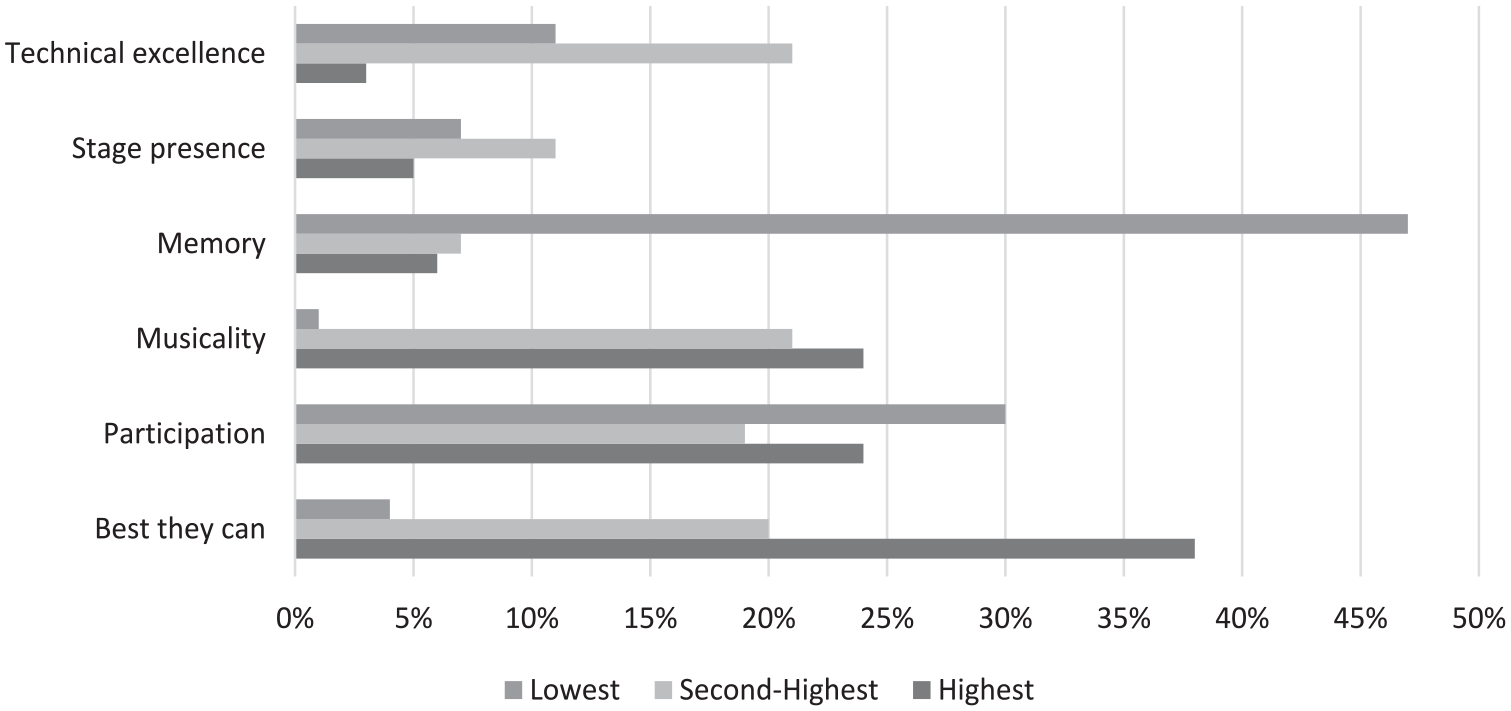
Teachers’ Ranked Expectations for Student Performance.
Excellence and perfection
In response to the question, Do you encourage your students to strive for excellence or for perfection? 96.2% of participants indicated their focus is on Excellence; 0.8% selected a focus on Perfection; and 3% did not choose either option. In their open-ended explanations of their Excellence/Perfection response, all but one participant responded (average word count = 25.5). Themes centered around perfection being unrealistic (71%), and musicianship being more important than technical perfection (29%). Some representative statements from participants include the following: “Excellence means the musicality is there, perfection means every note is right. That isn’t feasible 100% of the time”; “Musicality always trumps wrong notes, but wrong notes can lead to a drying up of musicality. I encourage them to pour themselves into the expressiveness of the music even more after a mistake as an antidote”; and “Perfection is a high stress word. . . I want piano to be a place where we can work excellently while also using it as a tool to escape the stresses of their normal life.”
When asked whether or not they would agree with the statement, Playing everything ‘just right’ or ‘perfect’ are expectations of piano students and teachers, 43% said yes and 54% said no. All but three participants responded to the open-ended prompt to explain their yes/no response (average word count = 27.7). Themes pertained to a focus on musicianship, not perfection (24.7%); agreement that this is the standard (21%); it is unrealistic (21%); technical accuracy is needed as a basis for musical performances (13.7%); yes, but not in my studio (11%); and students/parents believe this, not teachers (8.7%). Representative statements include the following: “Well, it is not my expectation, though I have met and know too many teachers who think this way. I tell my students to always strive for perfection, but that is not our ultimate goal”; “More an expectation that students place on themselves (especially adult students), but I think teachers have less of an expectation of ‘perfection’ from their own students”; “Perfect Schmerfect. I want students to find their own voice and play with love, joy, passion, curiosity and a desire to connect with others. Self-expression, in whatever beautiful, messy, individual way it shows up, is most important to me”; “It is unfortunately an underlying truth that is not often spoken of but instills incredible fear in students”; and “I believe as teachers when we constantly pick out all of the incorrect details, this statement is what comes across even if we say we disagree.”
Preparation
To answer Research Question 2, (How) do piano teachers prepare students for performance and MPA? we examined responses pertaining to opportunities for practice performances, memorization strategies, and discussion of performance anxiety during the preparation stage.
Practice performances
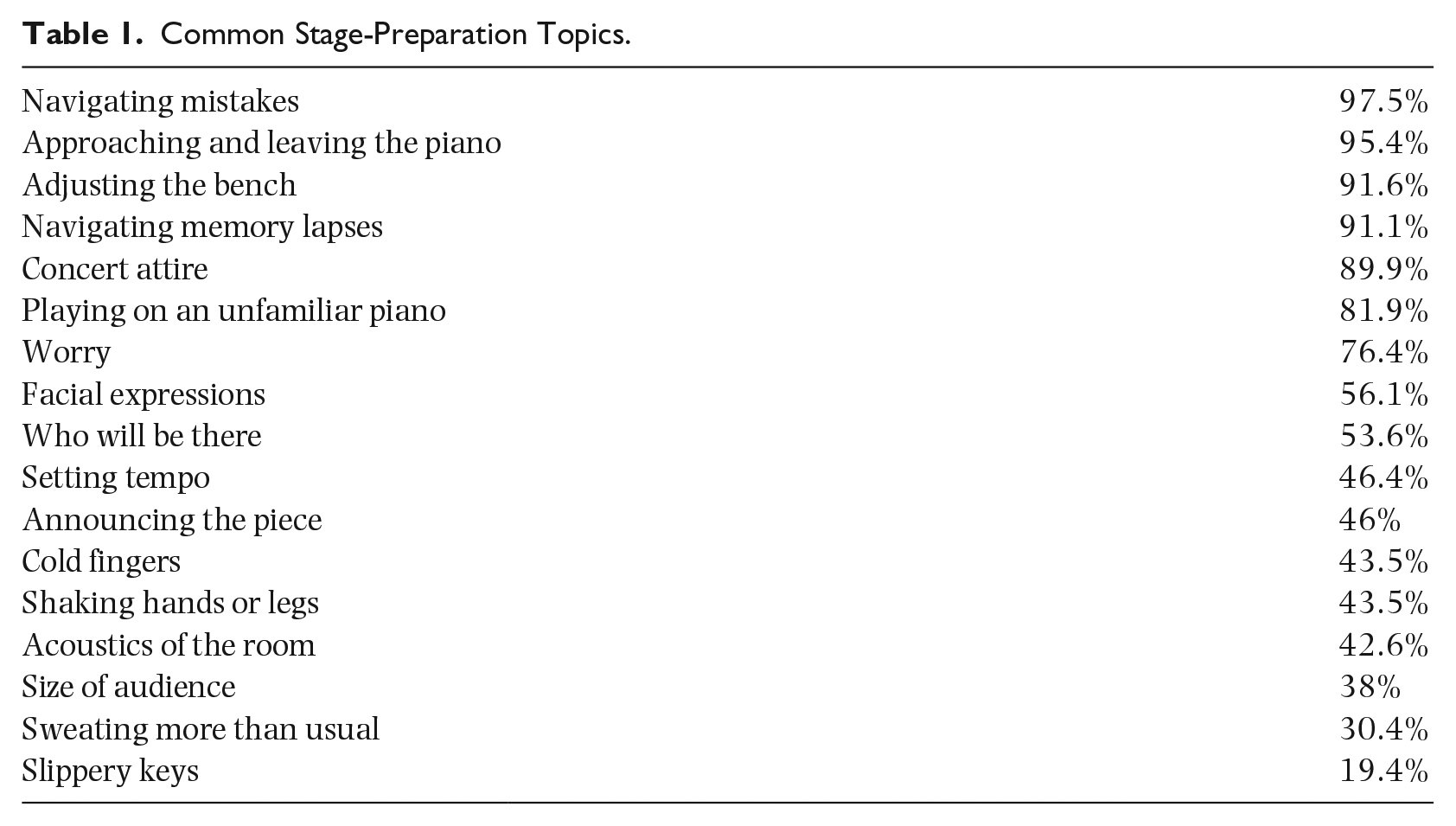
In terms of preparing students for performance and offering them opportunities to practice-perform, 58% of participants indicated that they hold studio classes in which students are either required or offered the opportunity to perform, and 37% hold dress rehearsals prior to a performance. When asked, Aside from studio classes and dress rehearsals, are there other types of practice performance opportunities you typically use in your teaching practice? 63.7% said yes and 35.6% said no (two did not respond). Common examples of other practice-performance opportunities included performances at schools, churches, festivals, and seniors’ homes, and informal performances for other teachers, family, and friends. When asked, At lessons, do you discuss with students what to do onstage and how to navigate performance challenges? 99.6% said yes. The most common topics of discussion are presented in Table 1. Many other topics were noted by individual participants. When asked, Do you feel that your preparation strategies help decrease your students’ performance anxiety? 97.5% said yes and 2.5% said no.
Common Stage-Preparation Topics.
Memorization strategies
When asked, Do you require your students to perform from memory? 52.7% said yes, and of those, 62.4% indicated that this requirement applies to all students. The most common reasons for why participants required memorized performance was because it improves their students’ playing (82.1%), because all pianists are expected to perform from memory (26.9%), and because it looks better on stage (15.4%). In the “other” category, several participants noted memorization leading to a greater understanding of the music, supporting greater concentration during performance, and being a requirement of competitions. Representative statements in the ‘other’ category included “they perform more musically” and “by-heart performance allows for creativity and spontaneity, and gives the ability to think on your feet.” While 37.6% of participants indicated that they make exceptions to their requirement to perform from memory, these exceptions tend to be provided in unique instances for each participant, such as when the student is a young child, a beginner, a new student to their studio, or a duet performer; a student who has a learning disability, anxiety, or memory issue; or a student who is performing a relatively new piece and/or is not ready or comfortable with performing from memory. Representative perspectives include the following: “Unless there is a learning disability or some other reason why I don’t think they’ll be able to memorize comfortably before the performance”; “Some just-starting 5-year-olds don’t memorize and those with learning disabilities”; and “If it is a new piece they wish to prepare, memorization is not mandatory.”
Participants who require memorized performances indicated that they prepare students for this by teaching for potential memory lapses (98.7%). When asked the open-ended question, What kind of memorization strategies do you teach? a wide range of strategies (average response = 26.2 words) were reported, but none that a majority of participants employed. The most common themes pertained to theoretical analysis (19.5%), defining anchor points (19%), chunking/blocking (8%), and memorizing the two hands separately (7.5%).
Anxiety
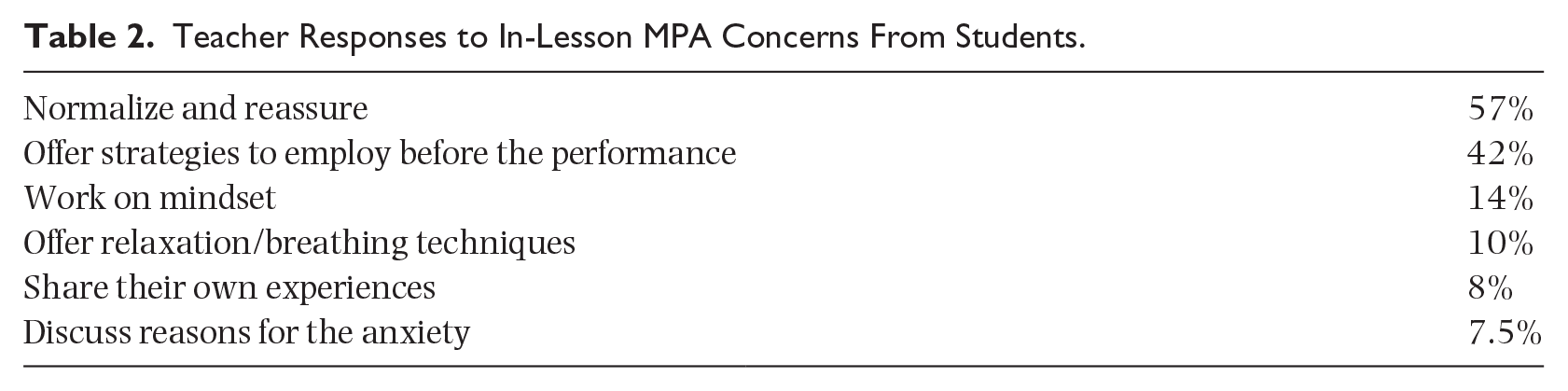
The vast majority of teachers (94%) indicated that students sometimes tell them at lessons that they are nervous about upcoming performances. Themes that emerged from the open-ended comments about how they respond to those students (average = 27.4 words), are reported in Table 2 (some participants included multiple responses; the percentages therefore exceed 100).
Teacher Responses to In-Lesson MPA Concerns From Students.
When asked, Do you bring up the potential of experiencing performance anxiety with all of your students, all but two participants responded: 58.2% of participants said yes and 40.9% said no. Open-ended why or why not comments (average response = 23.3 words) reflected themes pertaining to normalizing the experience and preparing students for the realities of the context (41%) and teaching students how to cope (23.3%) on the “yes” side. Comments include “A bit of performance anxiety is expected . . .”; “as a preface to discussing practice strategies in preparation for playing for an audience. The best “medicine” is thorough and wide ranging preparation”; “Part of performing is learning to navigate complex emotions, which can’t be done without preparation/warning”; and “It is something that almost everyone deals with, and it is reassuring to know that you are not alone.” Open-ended responses on the “no” side indicated themes of concern about suggesting anxiety or planting the idea (30.9%) and not raising the issue with younger students (4.9%). Representative comments include “I won’t like for them to overthink/worry about performance, especially the little ones”; “don’t want to scare them”; and “I do not want to give them the idea of being nervous or anxious. I would rather have them see performing as something fun and enjoyable.”
Performance
To answer Research Question 3, What do piano teachers observe with regard to students’ MPA and (how) do they address it? we examined teachers’ reported observations and perceptions of student MPA at performances, their responses to weak performances, what they do when students have trouble and stop mid-performance, and their observations of MPA with regard to student age and gender.
Anxiety
When asked, Have you had students, at performance, say that they are anxious (i.e., nervous, feeling butterflies, worried)? 86.9% said yes. In their open-ended comments about how they respond to these students (average response = 24.6 words), themes pertained to providing assurances (65.4%), suggesting strategies (26.5%), arranging physical proximity to the teacher (2.7%), suggesting additional practice/practice performances (2.7%), and providing the option to not perform (2.3%). Sample responses include “I tell them that it’s a normal response and to let it fuel their performance”; “You’ve got this! Sing the music in your head, shake out the jitters”; “Let’s breathe deeply together until we feel calm”; and “Don’t say ‘I’m nervous’, say I’m excited!”. When asked whether they think anxiety helps or hinders performance, 4% indicated that it helps, 27% that it hinders, and 69% had mixed feelings—that it both helps and hinders. Open-ended comments (average response = 23.3 words) about their perspective revealed themes pertaining to heightening the performance overall (56.3%) on the “helps” side; negative manifestations of anxiety (27.3%) on the “hinders” side; and impacts differing for individuals (8%) on the “mixed” side. Sample comments included “Some students perform with more vivacity from the adrenaline, but some students become more inhibited, physically and emotionally”; “Some students freeze under anxiety while some are able to use it to their advantage”; and “I think it can depend on the individual student’s personality, the piece they are performing, the circumstances of the day, etc. whether performance anxiety will help or hinder their performance. I think in general there is a sweet spot of performance anxiety, where the performer is just anxious enough about wanting to do well that they are focused and not careless, but where they are not so worried that their nerves completely take over and as a result they fumble nervously through the performance.”
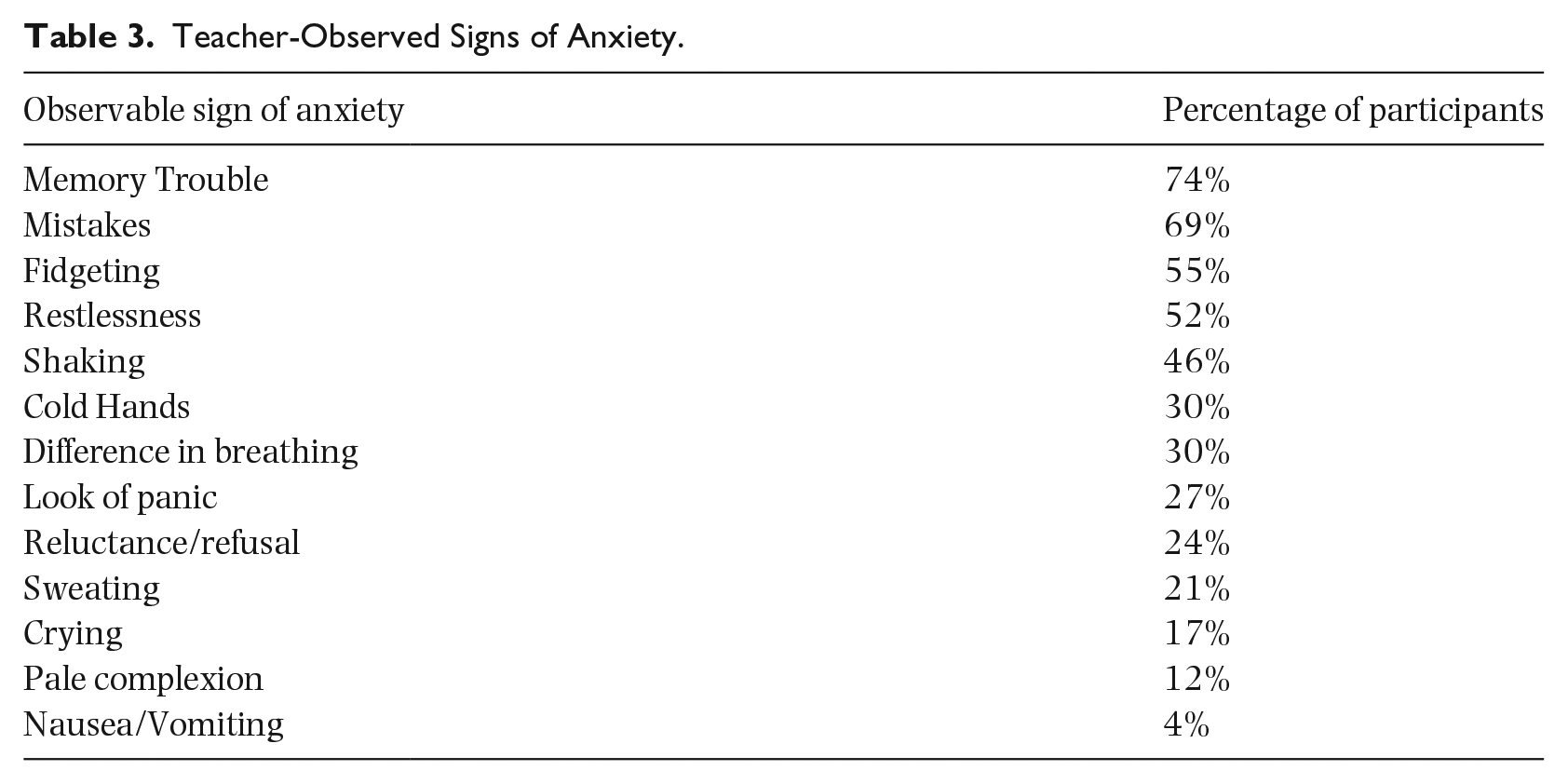
The majority of participants (81%) indicated that they observe signs of anxiety in their students at performances. The complete list and the percentage of teachers who reported observing each sign are presented in Table 3.
Teacher-Observed Signs of Anxiety.
Teacher response
Participants were asked to share open-ended responses to the questions, If a student who was well prepared does not perform well, what do you say afterward? (average response word count = 29.7) and If a student was not well prepared does not perform well, what do you say afterward? (average response word count = 22.4). Responses to well-prepared students centered around themes of assurance (88%), encouragement to reflect on what happened (17%), or suggestions for further preparation going forward (8%). However, for less well-prepared students, fewer teachers indicated providing assurances (36%). In these cases, the themes focused on asking students their perspective on how it went (22%), having students analyze what went wrong (17%), and encouraging them to try to prevent the situation from happening again (12%).
In response to the open-ended questions, If a young student has trouble and stops during a performance, what do you do? (average response = 28 words), and If an older student has trouble and stops during a performance, what do you do? (average response = 19.4 words), notable differences were observed according to the student age. For young children, themes involved coaching them through it (52%), waiting or doing nothing (26%), having them start again (12%), and/or getting them the score (11%). For older students, themes involved waiting it out or doing nothing (42%), having students restart or suggest a starting place (38%), or offering them the score (13%). As part of their response, 21% made a point of noting that their students are taught in advance what to do in such a situation and are prepared with a strategy.
Gender and age
Near the end of the survey, we asked, In reflecting on the above questions about anxiety, have you experienced any differences in students according to gender and/or age? and, if so, to share the observations in an open-ended response (average response word count = 25.6). All but four participants responded: 47.7% said no and 50.6% said yes. Of those who said “yes,” the themes from their open-ended responses focused on adolescents and adults experiencing more anxiety (45.6%), genders expressing anxiety in different ways (21.3%), young children experiencing little to no anxiety (18.8%), and children experiencing more anxiety (8.1%). Comments included, “Teenagers, particularly ages 12 to 14, generally have the most anxiety . . . all part of the typical extreme self-consciousness and external approval concerns of that age group”; “Definitely worse with the girls and teenagers; the little ones and boys are fine”; and “Young kids usually are delighted to perform with the exception of the young student who is anxious in general.”
Teaching to play/teaching to perform
To answer Research Question 4, Do piano teachers see teaching to play the piano as distinct from teaching to perform on the piano? we examined responses to the direct question on this point. A majority of respondents (78%) reported a belief that there is a distinction and 22% responded that there is not. When those who responded “yes” were asked to explain their response (average response word count = 27.5), themes centered around distinct skill sets required for performance and for playing (74.6%), adjustment to the public (vs. private) nature of performance (18.2%), additional confidence and awareness of the environment that is needed for performing (4.8%), and the melding of playing and performing that occurs in music performance (2.4%). Participants noted, “Performance requires everything that ‘just’ playing requires and many other skills that need developing beyond that”; “A huge difference. Lots of people who play well can’t perform. It takes a certain type of personality to be able to do it”; and “Performance is a unique mental discipline and control, separate from the mechanics of playing music. It must be addressed in addition to the teaching of music and piano playing.”
Discussion
Through this online survey of piano teachers in the United States and Canada, we sought to learn about their practices, experiences, and beliefs regarding MPA and performance training. Two hundred thirty-seven teachers, typically highly educated and experienced, shed light on the inner workings of piano performance teaching and learning.
One of the issues we wanted to explore involved teachers’ expectations for students. We were particularly interested in whether a focus on perfectionism, which has been discussed as a common component of classical music training (Dobos et al., 2019; Kobori et al., 2011; Patston & Osborne, 2016), was evident in the practices of piano teachers. Perfectionism has been linked with MPA in studies on adult musicians (Butković et al., 2022; Dobos et al., 2019; Kenny et al., 2004; Mor et al., 1995; Sinden, 1999) and a fear of making mistakes was identified as a key reason for MPA in interviews with adolescent pianists (Ryan, 2004). While the young pianists’ concerns were raised organically in response to questions about MPA, teachers in this study were asked directly about their pedagogical focus—whether they seek excellence or perfection. Our findings indicate a clear focus on excellence, not perfection, but many acknowledged that perfection is expected by some. While many felt that perfectionism was unrealistic and problematic, when it came to performances that do not go well, teachers reported being much less sympathetic with students who were not as well prepared as they could have been. Taken together, the current findings and those from previous studies lead us to speculate as to whether teacher expectations for excellence may be interpreted by students as expectations for perfection. Future research that considers perspectives within the student–teacher dyad seems warranted to better understand these expectations and understandings.
Piano teachers in this study were very familiar with the potentially negative effects of MPA on their students’ performances, although many also felt that it could benefit some. The most common signs of MPA they noticed in student performances were mistakes and memory lapses, and most participants indicated that they teach strategies for navigating these challenges. The majority reported that students have told them at lessons and performances that they are anxious, and about 81% indicated that they have observed signs of anxiety at performances. Yet, despite recognizing MPA as a common experience, our findings indicate that many teachers do not build preparation for it into students’ training. While 58% indicated that they discuss performance anxiety with all their students, 41% reported that they do not, with many indicating that they only discuss MPA if the student directly raises the concern with them. In their comments, many teachers noted a fear of instigating an MPA response. This concern echoes findings that emerged from interviews with teachers in previous studies (MacAfee & Comeau, 2023; Sieger, 2017).
In terms of MPA mitigation, participants noted that when students openly express anxiety concerns to them, their most common response was to attempt to normalize the experience and to reassure the student. Some also reported offering strategies to employ before and during the performance. Given the past practices of avoiding MPA discussion, normalizing the experience is an important step, and yet, opportunities to do so may be missed when the first attempts at such normalization occur after the student is already experiencing MPA and has chosen to disclose it to their teacher. Interviews with 12-year-old pianists indicated that they expected to experience MPA and some had attempted to develop coping strategies. Behavioral observations, heart rate monitoring, and performance ratings of these students indicated that some experience MPA in quiet ways (for example, with a racing heart rate but a still demeanor) that may not be obvious to others (Ryan, 2004). Similar physical and behavioral findings were noted in very young children participating in group performances (Boucher & Ryan, 2011). As MPA has been shown to be experienced from a young age, it seems that a proactive approach to anxiety mitigation, rather than a reactive one, might be warranted. Given the commonality of the MPA experience across the age spectrum, teachers might consider building MPA into discussions about performance preparation and readiness (Gill et al., 2024). University students have noted that teachers were integral to their MPA management and that learning about their experiences with MPA was helpful (Tahirbegi, 2019). According to Biasutti and Concina (2014), “Instrument training should also focus on the development of students’ psychological skills that can be used to cope with MPA. . .” (p. 201). When piano teachers discuss adjusting the bench and announcing their piece, they can also talk about common feelings and physical responses that people experience when performing onstage. Certainly, these topics seem to fit very well with discussions that teachers note they are already having about how to deal with a mistake and how to recover from memory lapses on stage.
The findings in this study are limited in several key areas that should be considered in subsequent studies. First, while the intent was to examine the beliefs and practices of piano teachers collectively without a specific focus on the age or level of the student, it would be interesting to now narrow down the participant pool to see whether there are distinctions in approaches to performance preparation and anxiety when working with children, adolescents, college-level, or adult learners. In addition, the focus on the perspective of teachers alone limits our understanding of what teachers report they say and do and what students report they hear and experience. Future research might include students and their teachers within the same study to shed more light on the matter. Finally, research that looks more closely at teacher observations and practices with regard to MPA according to student gender may provide valuable insights into musicians’ experience and mitigation of MPA.
With research studies spanning more than 40 years, MPA is one of the most common health concerns of professional performing musicians (Fernholz et al., 2019; Fishbein et al., 1988). Yet, in this age of increasing openness about mental health, open conversations between piano teachers and students about this common concern are not a consistent component of piano pedagogy. Young musicians have indicated a desire to “talk more often and openly” about MPA (Fehm & Schmidt, 2006, p. 107) and for “interventions that could be given during the regular instrumental lessons” (Fehm & Schmidt, 2006, p. 107); musicians across the age-span have indicated a desire for greater psychological support in educational contexts (Cornett & Urhan, 2021). While some teachers are doing just that, with a little more than half of participants in this study raising the issue of MPA with all of their students, it seems that there is still room for growth in terms of preparing students for the realities of performing onstage and the different feelings and challenges it presents from playing in the studio.
Footnotes
Appendix
Declaration of conflicting interests
The author(s) declared no potential conflicts of interest with respect to the research, authorship, and/or publication of this article.
Funding
The author(s) disclosed receipt of the following financial support for the research, authorship, and/or publication of this article: This work is supported by Start-up Grant from the Toronto Metropolitan University.
