




Abstract
Having a song ‘stuck’ in the head – an earworm – is a curious cognitive phenomenon frequently experienced among the general population. The intrusive and involuntary nature of earworms has led to recent survey studies investigating their potential link with obsessive–compulsive (OC) traits. However, those higher in OC traits may tend to self-report more earworms and evaluate their episodes less positively, simply because they are more likely to notice and be disturbed by the experience. This study employed both experience sampling methodology (ESM) and a retrospective survey to investigate earworms in relation to OC traits. Participants (n = 131) undertook online surveys assessing past experiences of earworms, OC traits, and musical experience, followed by 3 days of experience sampling probes. Results indicated that OC traits moderated the relationship between the two measures of earworm frequency, such that consistency between the two measures became weaker at higher levels of OC traits. Ratings of earworm unpleasantness were highly correlated between retrospective and ESM measures, yet OC traits did not moderate this relationship. These findings indicate that individual differences should be considered in choosing a methodology to measure earworm experiences and that ESM may provide a more sensitive measure of earworm frequency.
Earworms – a form of involuntary musical imagery – are a commonly experienced phenomenon, involving the repetition of a musical excerpt in the mind of an observer (Beaman & Williams, 2010, 2013; Halpern & Bartlett, 2011; Hyman et al., 2013; Liikkanen, 2008; Williamson et al., 2012). Earworms have received increasing attention in psychology research in recent years (Beaman, 2018; Liikkanen & Jakubowski, 2020), and have been associated with various individual differences (Beaman & Williams, 2013; Hyman et al., 2015; Negishi & Sekiguchi, 2020; Williamson et al., 2014). Although many individuals report enjoying their earworms and being able to regulate them somewhat easily, studies have shown there to be a small but significant proportion of individuals who find them difficult to control (Beaman & Williams, 2010; Williamson et al., 2012), as well as a source of distress and anxiety (Halpern & Bartlett, 2011; Williamson et al., 2014) to the point of impacting daily life (Taylor et al., 2014). It is perhaps unsurprising that earworms have been conceptualised as a type of obsessive thought and speculatively associated with obsessive–compulsive (OC) disorder (OCD; Levitin, 2006; Sacks, 2010).
This theorised link between earworms and OCD has intuitive appeal (Müllensiefen, Fry, et al., 2014), given that persistent intrusive thoughts are one of the hallmarks of OCD (American Psychiatric Association, 2013). Similarities between intrusive thoughts characteristic of OCD and the nature of unwanted earworm experiences pertain chiefly to how these thoughts are evaluated and the strategies employed to eliminate them. Those with OCD attempt to control intrusive thoughts through suppressing or ignoring them (American Psychiatric Association, 2013), which is often how people seek to regulate unwanted earworms (Beaman & Williams, 2010, 2013; Hyman et al., 2015; Williamson et al., 2014). Thought suppression may be defined as the attempt to not think of something, with the aim of ‘[leaving] a person with no vestige of the unwanted thought at all’ (Wenzlaff & Wegner, 2000, p. 61). This phenomenon has been described in Wegner’s (1994) theory of ‘ironic’ mental control, which asserts that the attempt to supress unwanted thoughts is self-defeating, as the thought must be brought into conscious awareness for the person to ascertain whether it has been suppressed (Wegner, 1994). Accordingly, the attempt to rid oneself of an earworm may result in a paradoxical increase in earworm experiences, an effect documented in diary and survey studies (Beaman & Williams, 2010, 2013).
To examine whether – and the extent to which – characteristics of OCD relate to earworms, several researchers have used measures of OC traits in the general population. In a large survey study of 1,536 participants, Müllensiefen, Fry, et al. (2014) found that those exhibiting more OC traits reported earworms with greater frequency and considered them more disturbing, worrisome, and harder to suppress. Participants high in OC attributes were also revealed to make more attempts at suppression, and higher ratings of earworm disturbance were associated with lengthier and more unpleasant episodes. Floridou et al. (2015) tested associations between OC traits and earworms in another large study (n = 649), finding significant associations between negative appraisal of earworms and a range of OC traits such as washing, checking, and hoarding. Higher OC traits were also strongly related to participants’ attribution of their earworms to personal worries or concerns. Two of the six OC traits measured (obsessing and neutralising behaviours) were found to correlate with increased earworm frequency. Therefore, OC traits appear to be strongly and positively related to the negative appraisal of an earworm, whereas frequency of self-reported earworms was related only to some OC traits.
These studies provide important insights into the potential connection between OC traits and earworms; yet they rely on the retrospective recollection of episodes, which may be subject to various self-report biases. In order to respond to a retrospective measure of earworms, participants need to be self-aware of the earworms they experience and accurately recall them at the time of the survey. Moreover, for those who are high in OC traits, these retrospective measures may be particularly problematic (MacLaren Kelly et al., 2018). If somebody is more troubled by their earworm, the episode may assume a disproportionate representation in their memory, leading the person to retrospectively overestimate the number of earworms they experience. OCD appears to be associated with a memory bias towards disturbing or threatening experiences (Muller & Roberts, 2005); hence, earworms may be more salient to those higher in OC traits.
Using experience sampling to measure earworm episodes
The experience sampling method (ESM) is a longitudinal research methodology used to measure people’s feelings, thoughts, and behaviours in their daily life, by prompting participants to complete brief self-reports – ‘probes’ – at different time points over several days, in order to gain a representative understanding of the phenomenon under investigation (Scollon et al., 2003). In measuring intrusive thoughts such as earworms, ESM may present a more reliable method than retrospective surveys, as it has greater sensitivity in assessing transient, short-lived experiences that may not be consciously recollected or judged accurately after the fact (Ellison et al., 2020; Reis, 2014), and as it does not restrict participants to reporting their average experience of earworms in the way that retrospective measures do (Cotter & Silvia, 2017). Studies repeatedly assessing the same experience tend to uncover significant within-person variability, as an individual’s behaviour is prone to fluctuation over time (Fleeson, 2004). Earworm experiences, for example, may tend to happen more at particular times of the day or week for certain individuals, depending on circumstance, activity, or mood. This variability has been affirmed in research on musical imagery, with one study finding that approximately 80% of variance in inner music experience may be accounted for by within-person factors (Cotter & Silvia, 2017). Accordingly, ESM may provide a more accurate assessment of an experience while allowing within-person variability to be recorded.
Musical imagery in daily life has been studied effectively using ESM, often with no distinction drawn between voluntary and involuntary forms of imagery (Bailes, 2007, 2015; Beaty et al., 2013). To date, several studies have employed ESM to assess the experience of earworms more specifically, obtaining mixed findings in terms of the relationship between estimates from ESM and retrospective survey methods (Cotter & Silvia, 2017; Floridou & Müllensiefen, 2015). Floridou and Müllensiefen (2015) used ESM to examine the environmental and individual characteristics associated with the development of earworms. Forty individuals were contacted six times per day for 1 week, with 1,374 observations collected at the end of this period. Participants reported experiencing earworms in 47% of the ESM samples, a frequency higher than earlier studies where voluntary and involuntary imagery were not differentiated, yet lower than estimates typically reported using retrospective measures. No relationship was observed between the frequency of earworms reported via ESM and those reported via a retrospective survey.
Cotter and Silvia (2017) measured earworm incidences using both a retrospective survey and ESM (n = 150). Although participants’ ESM reports of earworm frequency and episode length were well predicted by their retrospective recall of past episodes, weaker relationships were observed between the two methods on most other assessments of the experience (e.g., valence, enjoyment). On average, participants reported earworms to be less distracting and more enjoyable when measured in real time via ESM than in retrospect. Generally, the results were not as strongly related as would be expected for two methods measuring the same phenomenon, suggesting that they may tap different aspects of earworms (Cotter & Silvia, 2017). Most recently, Negishi and Sekiguchi (2020) used ESM to investigate the association between OC traits and earworms. Participants (n = 101) were probed six times per day for 7 days, with a resultant 1,905 individual responses. Earworms were reported in 28% probes, and participants who scored higher in the ‘Intrusive thoughts’ OC subscale were significantly more likely to report more earworms. No other OC subscales (compulsive checking, washing, or indecisiveness) were related to earworm frequency. However, compulsive washing was found to negatively correlate with pleasantness of earworms and with participants’ enjoyment of the song experienced as an earworm.
These findings suggest that certain OC traits may be related to both frequency and appraisal of an earworm when measured via ESM, in accordance with prior research using retrospective methods indicating a relationship between OC traits and earworm frequency (Floridou et al., 2015; Müllensiefen, Fry et al., 2014). However, Negishi and Sekiguchi (2020) did not employ a retrospective measure of earworm experiences in addition to the experience sampling and so these reports cannot be directly compared. Research shows that people with OCD are subject to a retrospective bias, where they may overestimate the frequency and intensity of negative experiences (Muller & Roberts, 2005), and this bias is directly observable when comparing retrospective methodologies with ESM (MacLaren Kelly et al., 2018).
This study
This study sought to examine whether individuals higher in OC traits experience earworms with greater frequency and find them more unpleasant. To distinguish whether individuals with OC traits truly experience more earworms, or merely report more in hindsight, both retrospective and ESM measures were employed to explore the phenomenon. A retrospective measure of earworms was administered and a self-report survey administered via an app was devised to measure daily episodes, so that we could compare participants’ responses across the two research methods. Furthermore, a measure of musicality was used to determine participants’ past musical experience, given the known influence of musical expertise on earworm experiences (Floridou et al., 2012; Liikkanen, 2011; Negishi & Sekiguchi, 2020). It was predicted that individuals higher in OC traits would report more frequent earworm episodes and perceive earworms to be more unpleasant retrospectively, compared with earworm frequency and evaluation measured with ESM. In other words, we hypothesised that OC traits may be associated with a retrospective bias towards recalling more earworms and evaluating them less positively, which would be evidenced by lower correspondence between retrospective and ESM earworm incidence.
Method
Participants
A target sample size of approximately 100 was determined, based on prior studies investigating earworm experiences using ESM (Beaty et al., 2013; Negishi & Sekiguchi, 2020). The final sample comprised 131 first-year psychology students from the Queensland University of Technology, recruited via the first-year psychology pool and granted course credit for their participation. Participants ranged from 17 to 59 years (Mage = 21.9, SD = 6.5) and were mostly female (n = 100). The general population was considered adequate for this study, as OC traits are known to manifest to varying degrees among nonclinical populations (Gibbs, 1996).
Materials
Experience of Everyday Earworms Survey (ESM items)
The survey used for the experience sampling segment of the study was developed by the researchers to evaluate everyday earworm experiences. It draws on commonly used items in previous experience sampling studies assessing earworms (Beaman & Williams, 2010; Floridou et al., 2015) and contains questions measuring frequency, pleasantness, disruptiveness, and length of the earworm episode, as well as activities performed and mood experienced at the time of the earworm. The survey contains 12 unique items in total (see Appendix 1), with participants being presented with a different set of questions depending on whether they indicated they had recently experienced an earworm (12 items) or not (4 items).
Experience sampling application
The Participation in Everyday Life Survey Application (PIEL App) is an experience sampling platform designed for Android and iOS mobile devices. Participants are prompted to complete surveys that the researcher has programmed throughout the day. The application has been used in numerous peer-reviewed studies (Chen et al., 2016; Jessup et al., 2017).
Involuntary Musical Imagery Scale
The Involuntary Musical Imagery Scale (IMIS) measures retrospective experiences of involuntary musical imagery, including earworm experiences, via 17 items (Floridou et al., 2015). The inventory consists of four factors, namely personal reflections, movement in response to earworms, negative valence, and helpfulness of the earworms. The internal consistency of the overall scale has been found to be acceptable, between α = .76 and α = .91 (Floridou et al., 2015).
OC Inventory (Revised)
The OC Inventory – Revised (OCI-R) is a shortened inventory comprising 18 items across six subscales (Foa et al., 2002). The OCI-R assesses OC traits through questions regarding the frequency of symptoms and distress caused by OCD symptomology. The six subscales include obsessing, hoarding, washing, neutralising, ordering, and checking, with each dimension containing three items. These are based on commonly found symptom categories in OCD, with each subscale being found to successfully discriminate between clients presenting with the six primary areas of OCD and patients with other psychiatric disorders displaying similar symptoms (Huppert et al., 2007). The OCI-R, therefore, offers a quick assessment method for OC traits while retaining excellent internal consistency, α = .90 (Foa et al., 2002).
Goldsmiths Musical Sophistication Index
The Goldsmiths Musical Sophistication Index (Gold-MSI) assesses self-reported musical skills, engagement, and behaviours across 39 items (Müllensiefen, Gingras, et al., 2014). The Gold-MSI assesses musicality broadly by evaluating self-reported musical training, perceptual abilities, active musical engagement, singing abilities, and emotional responses to music. A general musical sophistication scale includes select items from each of the five other Gold-MSI subscales, creating a representative factor. The internal consistency of all subscales is acceptable, ranging between α = .79 and α = .92 (Müllensiefen, Gingras, et al., 2014).
Procedure
The study involved two stages of data collection. The first stage spanned up to 20 min on Day 1 and involved participants answering the Gold-MSI, IMIS, and OCI-R via the Qualtrics online survey platform. At the commencement of the survey, participants were presented with an information sheet and generated their own unique identifier token. After completing the surveys, participants were then asked to download the PIEL App onto their mobile device and input their identifier token in preparation for the next stage.
The second stage began on Day 2 of the study and spanned 3 days. This constituted the experience sampling phase, in which the PIEL App automatically prompted participants six times per day at random between set intervals (9 a.m.–10 a.m.; 11 a.m.–12 p.m.; 1 p.m.–2 p.m.; 3 p.m.–4 p.m.; 5 p.m.–6 p.m.; 7 p.m.–8 p.m.) to answer the Experience of Everyday Earworms Survey. Each individual was permitted 1 hr to complete a survey from the time the prompt appeared on their mobile device, after which the survey allocated for that time would terminate. Participants were not penalised for missing a survey and were still able to answer further surveys regardless of the number they had previously missed. At the end of the 3 days of experience sampling, participants were prompted by the PIEL App to submit their results to the researchers via email. On completion, participants were sent a debriefing email outlining the purpose of the study and thanking them for their time.
Results
Data were analysed using the Statistical Package for the Social Sciences (SPSS, Version 29). In examining correlations between variables, Pearson’s correlation coefficients were bootstrapped (Bias Corrected and accelerated; BCa) using 1,000 samples, due to the non-normal distribution of some scales, which included responses such as never to always on the IMIS and not at all to extremely on the OCI-R. Bootstrapping was considered optimal as it would protect against any influences of non-normal distributions on clinical measures.
Overall, 131 completed sets of responses were received from participants who had returned data for both the retrospective and ESM stages. Ten participants were, however, excluded from the analysis due to answering fewer than six ESM surveys over the 3 days. Respondents answered ESM surveys an average of 14.9 times (SD = 5.2) out of a possible 18 prompts, returning a total of 1,803 responses. Earworms were reported to have occurred in 600 of these cases (33.3%). Only seven participants indicated that they did not experience any earworms during the ESM stage. Weighted by the number of responses the individual returned, the mean proportion of ESM probes in which an earworm was reported was 0.35 (SD = 0.23). This is well within the confines of previous ESM studies investigating musical imagery, where reported occurrences have been found to vary between 0.17 and 0.47 (Bailes, 2015; Beaty et al., 2013; Cotter & Silvia, 2017; Floridou & Müllensiefen, 2015). Table 1 depicts the means and standard deviations of quantified subscale scores across participants. Responses on the Gold-MSI suggest that this sample spanned a wide range in terms of musical experience.
Descriptive Statistics of IMIS, OCI-R, and Gold-MSI.
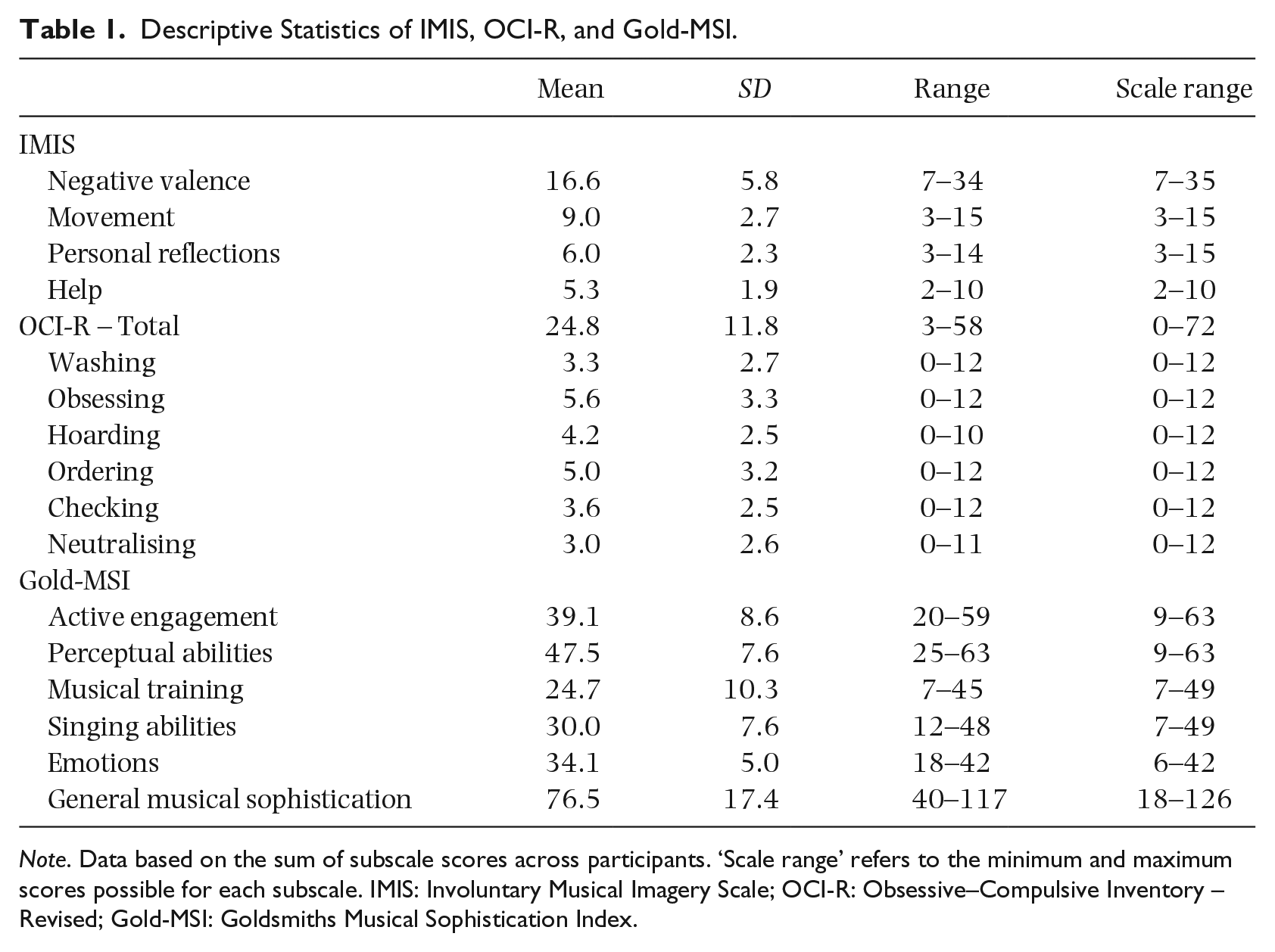
Note. Data based on the sum of subscale scores across participants. ‘Scale range’ refers to the minimum and maximum scores possible for each subscale. IMIS: Involuntary Musical Imagery Scale; OCI-R: Obsessive–Compulsive Inventory – Revised; Gold-MSI: Goldsmiths Musical Sophistication Index.
Retrospective and ESM reports of earworms
Notably, there was a significant relationship between the frequency of earworms using the retrospective survey and ESM, Pearson r(120) = .48, p < .001, BCa 95% confidence interval (CI) = [0.33, 0.61], indicating that overall there was some correspondence between participants’ perceptions of episode occurrences across the two reporting methods. Similarly, participants’ retrospective perception of how unpleasant they find earworms was significantly correlated with unpleasantness ratings averaged across their earworms measured via ESM, Pearson r(113) = .50, p < .001, BCa 95% CI = [0.33, 0.63].
Retrospective reports on the IMIS revealed that participants most commonly experienced earworms several times per week (44%), followed by several times per day (26%). Only one participant reported that they never experienced any earworms (1%). Although the sections of music that get stuck in participants’ heads typically lasted between 5 and 10 s (47%) or 10 and 30 s (25%), the episodes themselves tended to persist for at least 10 min to half an hour (37%), with only a handful (17%) of episodes lasting under 10 min. In response to ‘When I get an earworm I try to block it’, participants most commonly reported ‘not very often’ (37%). For the item, ‘The experience of my earworms is unpleasant’, most participants reported ‘not very often’ (44%). These retrospective reports represent participants’ beliefs about their earworm experiences, and as such, they provide a reference point against which to compare the experience sampling data.
According to the experience sampling data, participants most commonly reported that their earworms typically persisted for less than 10 min or between 10 min and half an hour (47% and 36%, respectively). Short fragments of a song, such as a lyric or melody from a verse, were most likely to get stuck in participants’ heads (43%), followed closely by the chorus (40%). Earworms tended to originate from a song heard aloud within the last hour (33%), though a sizeable proportion of participants had listened to the song either earlier in the day (20%) or more than a week ago (20%). The majority of participants liked the song they had in their head (41%), whereas 26% felt neutral about the song, and only 2% hated the song. The main reasons speculated for triggering an earworm were that participants heard the song recently or that the tune was simply ‘catchy’ (43% and 36%, respectively). Table 2 displays percentages of moods experienced, participants’ level of focus, and recent music listening, according to whether they had been experiencing an earworm or not.
Participants’ Rated Mood, Activity Concentration, and Recent Music Listening for All Experience Sampling Episodes.
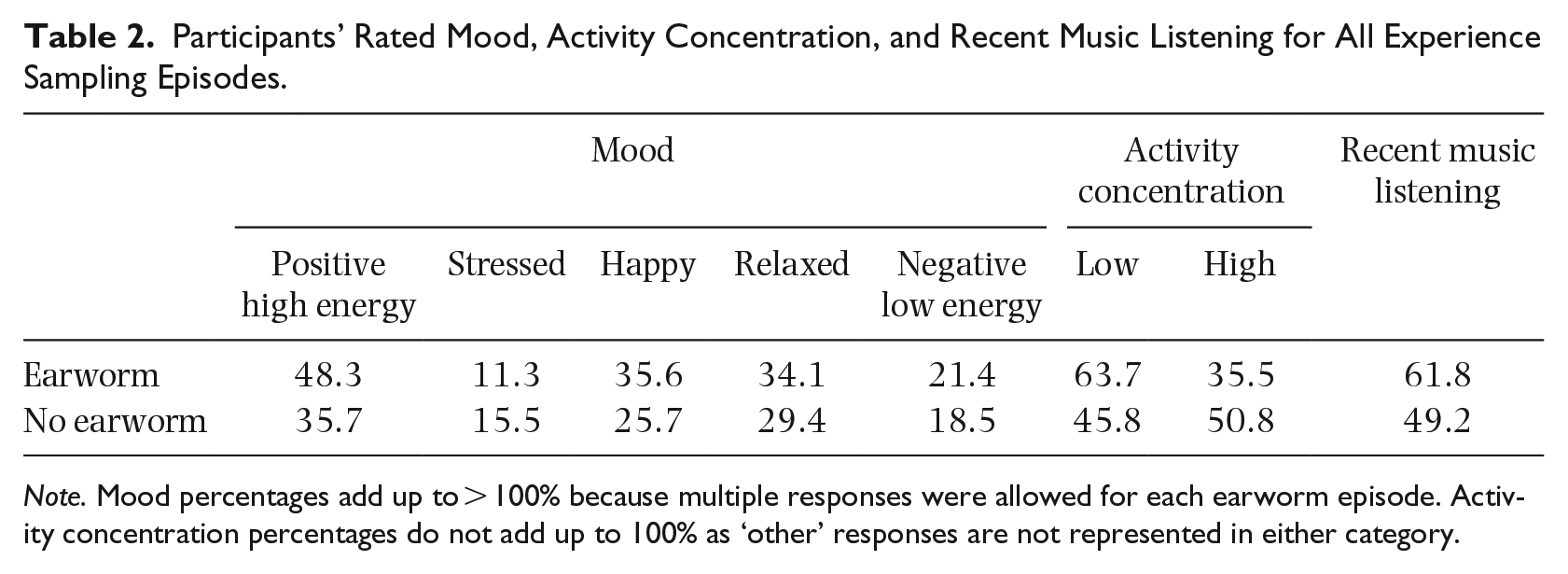
Note. Mood percentages add up to > 100% because multiple responses were allowed for each earworm episode. Activity concentration percentages do not add up to 100% as ‘other’ responses are not represented in either category.
Earworms and OC traits
We examined the relationship between the total score on the OCI-R and frequency of retrospective earworm experiences, finding no significant relationship, Pearson r (120) = .02, p = .840, BCa 95% CI = [–0.14, 0.20]. Similarly, there was a non-significant relationship between OCI-R score and the perceived unpleasantness of the earworm experience, Pearson r (120) = –.14, p = .143, BCa 95% CI = [–0.08, 0.34]. Table 3 displays bootstrapped bivariate correlations among the OCI-R subscales and several key items from the ESM and IMIS measures, including the IMIS subscales. A Bonferroni correction was applied (ɑ = .008) according to the number of OCI-R subscales. Most notable are the positive associations between the IMIS ‘Personal Reflections’ subscale and all subscales of the OCI-R, four of which reached significance at the adjusted alpha level. Negative valence was also significantly positively correlated with the ‘Checking’ subscale of the OCI-R. The ESM measure of frequency did not correlate significantly with any subscales.
Bivariate Correlations Between OCI-R Subscale Scores and IMIS Items.
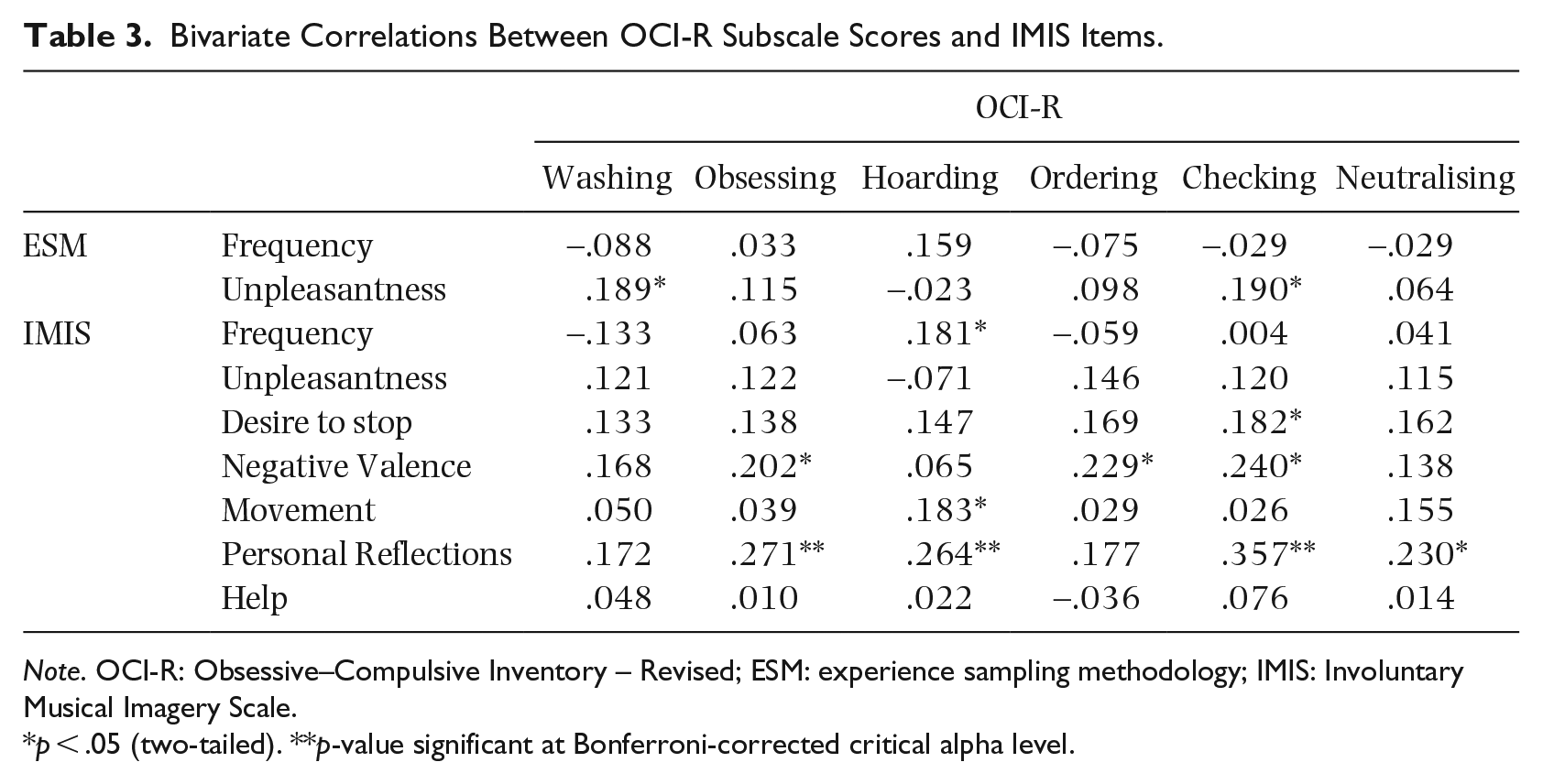
Note. OCI-R: Obsessive–Compulsive Inventory – Revised; ESM: experience sampling methodology; IMIS: Involuntary Musical Imagery Scale.
p < .05 (two-tailed). **p-value significant at Bonferroni-corrected critical alpha level.
We then tested the relationship between scores on the OCI-R and the frequency of ESM earworm experiences. As with retrospective recall, no significant correlation was found, Pearson r(120) = –.01, p = .913, BCa 95% CI = [–0.19, 0.17]. Similarly, no significant relationship was found when examining bivariate correlations between total OCI-R score and earworm unpleasantness, for those participants who experienced earworms, Pearson r(113) = –.15, p = .104, BCa 95% CI = [–0.03, 0.33].
The purpose of this study was to investigate the question of whether, among those higher in OC traits, there is a poorer correspondence between actual and remembered earworms. That is, it is proposed that those with higher OC traits may report more earworms when using retrospective measures, and evaluate them less positively, merely because their memories of these earworms are highly salient. Although OC traits did not significantly correlate with earworm frequency on either measure, indicating that for this sample, those higher in OC traits did not necessarily experience more earworms, we still considered the possibility that the observed relationship between actual (ESM) earworm events and remembered (retrospective) earworms might be weaker among those with higher OCI-R scores. To test this prediction, first for earworm frequency, a moderated multiple regression was performed using retrospective earworm recall as the independent variable, frequency of ESM earworm reports as the dependent variable, and total OCI-R scores as the moderator. Marginal univariate distributions and residuals were normally distributed; however, two multivariate outliers were indicated based on Mahalanobis’ distance. Analyses conducted with and without these participants yielded consistent results either way; hence the analysis using the full sample is reported. To address potential multicollinearity, retrospective earworm recall and total OCI-R scores were centred and an interaction term was created by calculating the product of the two variables.
Total OCI-R scores and retrospective earworm recall were entered in the first step of the hierarchical regression analysis. The overall model was significant, accounting for 23% of the variance in ESM earworm frequency, F(2, 118) = 17.74, p < .001. The interaction term between retrospective earworm recall and total OCI-R scores was entered in the second step. As shown in Table 4, the interaction term was also significant, explaining 8% of the variance over and above that of retrospective recall and total OCI-R scores alone, Fchange(1, 117) = 12.72, p < .001. The model was bootstrapped using 1,000 samples to ensure robustness, and the interaction term remained significant, 95% BCa = [–0.11, –0.03], p = .002. In total, the main effects and interaction explained 31% of the variance in earworm experiences captured via ESM, R2 = .31, F(3, 117) = 17.24, p < .001. Thus, OC traits significantly moderated the association between retrospective and ESM reports of earworm frequency.
Coefficients for Predictors of ESM Earworm Frequency.
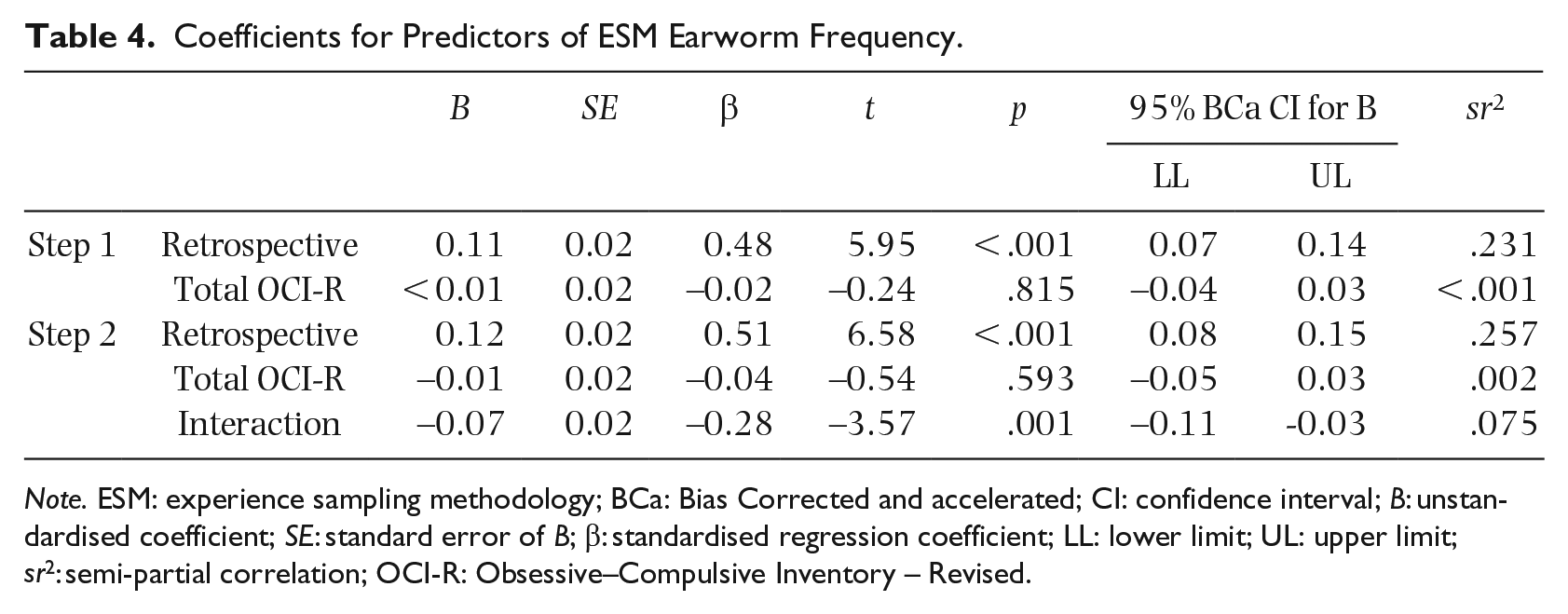
Note. ESM: experience sampling methodology; BCa: Bias Corrected and accelerated; CI: confidence interval; B: unstandardised coefficient; SE: standard error of B; β: standardised regression coefficient; LL: lower limit; UL: upper limit; sr2: semi-partial correlation; OCI-R: Obsessive–Compulsive Inventory – Revised.
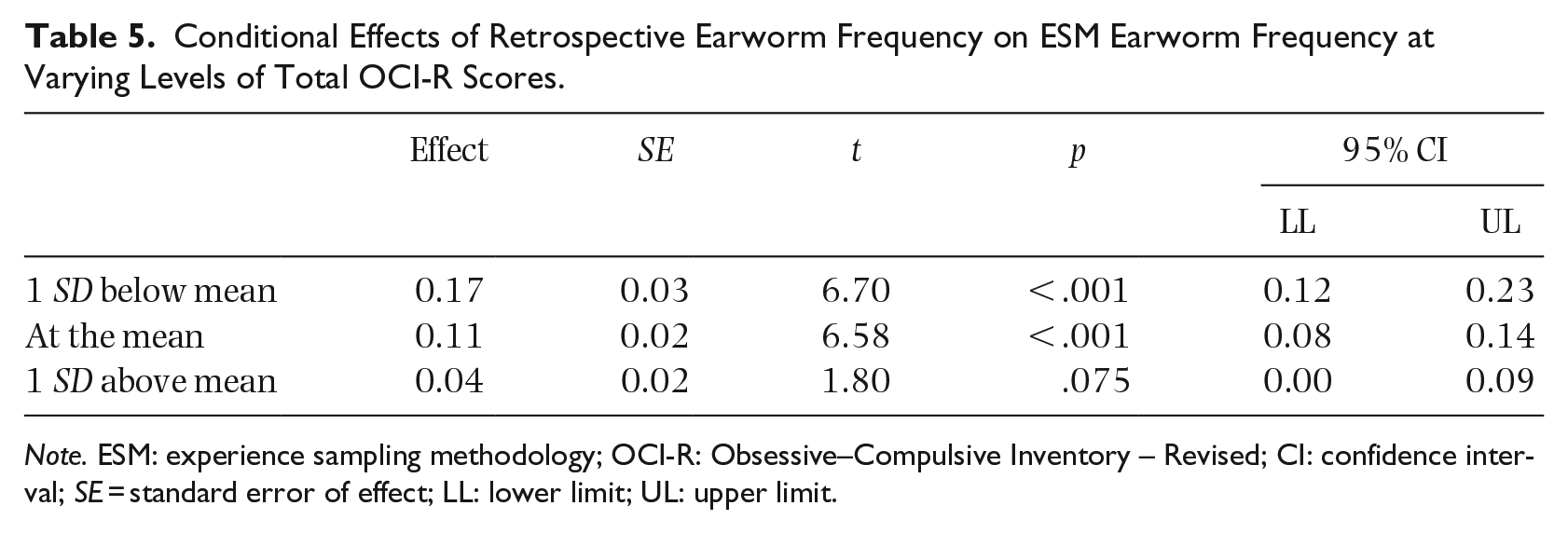
To follow up the significant interaction, simple slopes were explored using the PROCESS macro for SPSS (Hayes, 2017). Table 5 shows that the relationship between retrospective earworm recall and ESM earworm reports becomes weaker with higher total OCI-R scores. Figure 1 depicts this finding visually, showing that, among those higher in OC traits, there was a weaker relationship between retrospective earworm recall and ESM earworm experiences.
Conditional Effects of Retrospective Earworm Frequency on ESM Earworm Frequency at Varying Levels of Total OCI-R Scores.
Note. ESM: experience sampling methodology; OCI-R: Obsessive–Compulsive Inventory – Revised; CI: confidence interval; SE = standard error of effect; LL: lower limit; UL: upper limit.
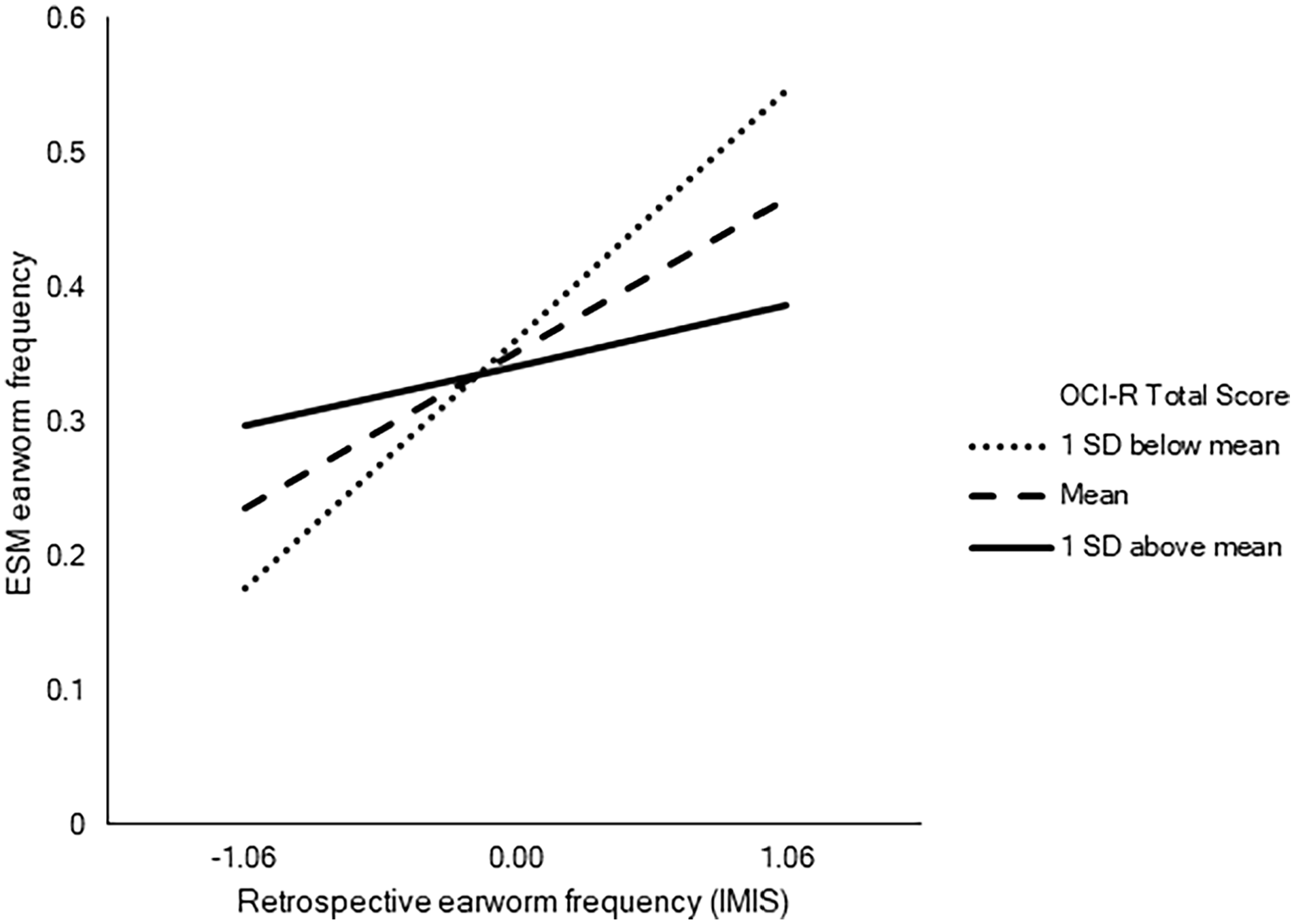
Conditional Effects of Retrospective Earworm Frequency on ESM Earworm Frequency at Varying Levels of Total OCI-R Scores. ESM: experience sampling methodology; OCI-R: Obsessive–Compulsive Inventory – Revised.
The Johnson and Neyman (1936) technique revealed that, for values greater than 11.2 units of total OCI-R scores above the mean, the relationship between retrospective and ESM earworm reports is no longer significant at the p < .05 level. This value (a score of 36) would represent a clinical level of OC severity (Foa et al., 2002). These findings suggest that OC traits affect the accuracy of earworm recall, indicating a potential memory bias among the OC population when comparing retrospective and ESM reports.
To test whether OC traits moderated the relationship between the different measures in terms of how negatively an earworm was evaluated, a second moderated hierarchical regression was performed, including retrospective earworm unpleasantness rating as the independent variable, average unpleasantness rating of ESM earworm reports as the dependent variable, and total OCI-R scores as the moderator. Again, variables were normally distributed as were residuals, but three multivariate outliers were detected according to Mahalanobis’ distance. Results were consistent between analyses conducted with and without these participants; therefore, the analysis reported below includes the full sample.
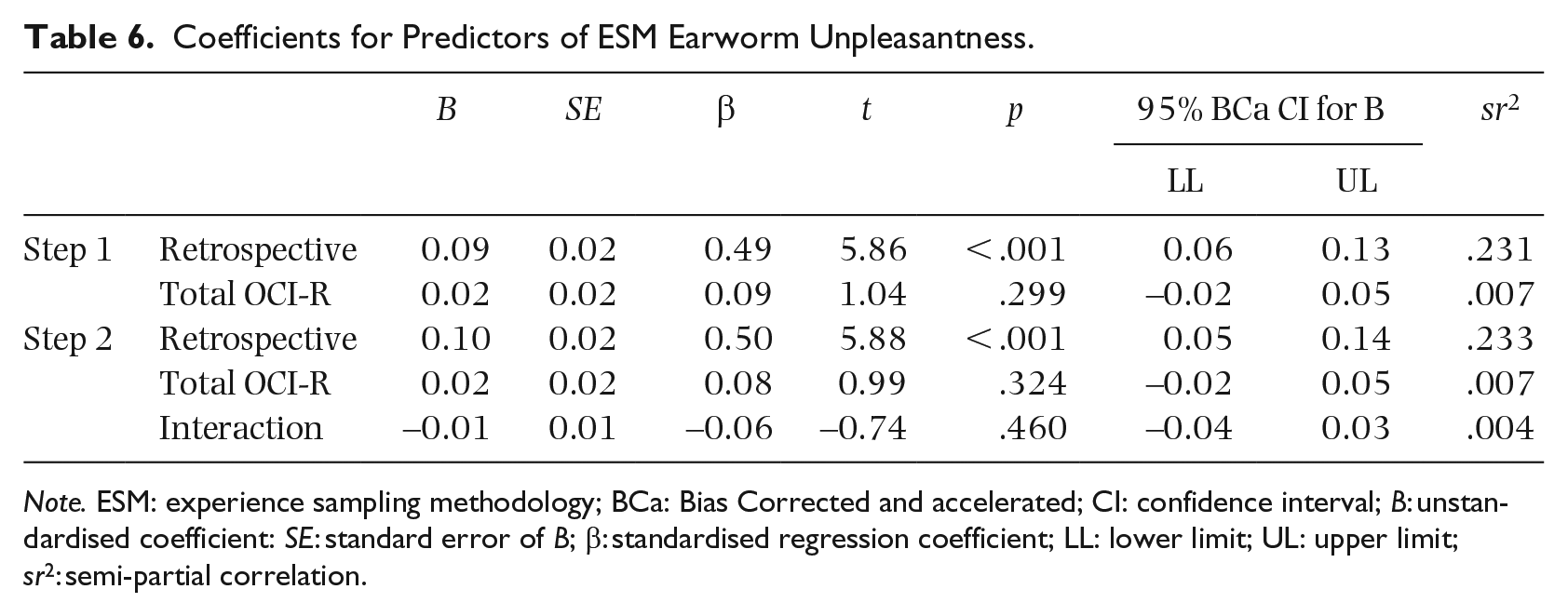
OCI-R total score and the IMIS earworm pleasantness rating were mean centred and entered at Step 1. This model was significant, explaining 25% of the variance in ESM earworm unpleasantness ratings, F(2, 111) = 18.91, p < .001. The interaction between OCI-R and unpleasantness was entered at Step 2, but was non-significant, R2change < .01, Fchange(1, 110) = 0.55, p = .460. The final model explained 26% variance in ESM unpleasantness ratings, F(3, 110) = 12.74, p < .001. Table 6 displays coefficients for the model, indicating that the retrospective measure of perceived unpleasantness of an earworm was a significant predictor of ESM unpleasantness ratings. That is, higher unpleasantness ratings on the IMIS were associated with higher mean unpleasantness ratings across ESM episodes, albeit a relatively small degree of variance explained.
Coefficients for Predictors of ESM Earworm Unpleasantness.
Note. ESM: experience sampling methodology; BCa: Bias Corrected and accelerated; CI: confidence interval; B: unstandardised coefficient: SE: standard error of B; β: standardised regression coefficient; LL: lower limit; UL: upper limit; sr2: semi-partial correlation.
Discussion
The purpose of this study was to investigate whether higher levels of subclinical OC traits are related to increased earworm frequency and perceived unpleasantness. Although previous research has examined this question by measuring earworms with either retrospective measures or experience sampling, this study employed both methodologies, allowing us to examine how OC traits might influence responses in the varying approaches. We were particularly interested in further investigating the notion that a tendency towards obsessive thoughts and compulsions could be reflected in a higher frequency of earworms. However, it may be the case that earworms are perceived as more intrusive and threatening by those high in OC traits, such that the experiences take greater prominence in memory, and are self-reported more in survey measures. Therefore, a key prediction in this study was that we would observe a disconnect between the two self-report methods for those higher in OC traits, with these participants reporting more earworms and finding their episodes more unpleasant when assessed retrospectively, but not when measured in real time via ESM.
This hypothesis was partially supported, with respect to earworm frequency, but not perceived unpleasantness. The relationship between OC traits and self-reported earworms was not significant for either measure, suggesting that those higher in these traits did not necessarily report more earworms. Nonetheless, OC traits significantly moderated the relationship between retrospective estimates of earworm frequency and the average number of earworms reported via ESM, indicating that the two measures of report were less consistent for those higher in OC traits. However, the same relationship was not observed for retrospective and ESM reports of earworm unpleasantness. Although the two measures were highly correlated, they were not moderated by OC traits. It seems, therefore, that how an earworm is remembered, in terms of its perceived unpleasantness, tends to correspond with how earworms are perceived in the moment, and this relationship is not influenced by the tendency towards obsessive thoughts. On the contrary, perceptions of earworm frequency do differ between methodologies, with the relationship between the measures becoming non-significant for those who are higher in OC traits.
The significant moderation for measures of frequency is a novel finding, given that no previous studies have employed both a retrospective measure and ESM to explore the association between self-reported earworm experiences and OC traits. The present results imply that individuals higher in OC traits report varying rates of earworm episodes depending on the type of reporting method used. Similar memory biases have been observed in clinical OC samples. In one study, MacLaren Kelly et al. (2018) compared retrospective and ESM ratings of distress, interference, and severity caused by obsessions and compulsions over a period of 6 to 10 days. Results indicated a lack of correspondence between reporting methods, with participants’ retrospective ratings being significantly greater than their average ESM ratings. In general, OCD has been associated with a memory bias towards disturbing or threatening experiences (Muller & Roberts, 2005), and it may be that earworms are more salient for those higher in OC traits, as this population perceives their earworms to be more disturbing (Floridou et al., 2015; Mullensiefen, Fry, et al., 2014).
Importantly, we observed a positive relationship between the two reporting methods when measuring episode frequency, indicating consistent recall among the total sample. Similarly, the only other known study that has compared ESM and retrospective measures within the same sample also found a high degree of correspondence between reported earworm frequency (Cotter & Silvia, 2017). The total OCI-R score was not related to earworm unpleasantness, which is consistent with findings of Müllensiefen, Fry, et al. (2014). Negishi and Sekiguchi (2020) found earworm pleasantness to be significantly related to only one subscale of the OC measure (Compulsive Washing).
The total scores on the OCI-R measure did not significantly correlate with either measure of earworm frequency, nor did the subscales. The lack of relationship between OC traits and ESM earworm reports deviate to some extent from the findings of Negishi and Sekiguchi (2020), who found a significant positive correlation between the OCI-R subscale ‘Intrusive Thoughts’ and earworm frequency. It is worth noting that the OC Tendency Scale for Japan (OCTS-J) used in their study differed substantially to the OCI-R used in this study, being constructed and validated with a Japanese sample and with some discrepancies between the subscales and the items (Ide et al., 1995). Nonetheless, these results are somewhat surprising, given there are commonalities between the subscales of compulsive checking and compulsive washing across both measures, and a degree of overlap between the OCTS-J ‘Intrusive Thoughts’ subscale and the OCI-R ‘Obsessing’ subscale. It is possible the discrepancy in findings is related to sample characteristics in terms of the degree of OC traits across the different subscales, or even possible cultural differences in the manifestation of OC traits (Williams et al., 2017). With limited studies so far on the relationship between OC traits and earworms as measured through experience sampling, it is clear that further research is needed to understand these discrepant findings, replicating with other, larger samples.
Previous studies that have employed retrospective measures of earworm experiences have tended to find weak relationships between OC traits and frequency. Müllensiefen, Fry, et al. (2014) found that the retrospective measure of earworm frequency significantly correlated with OCI-R total score, and there were also small significant relationships between frequency and all OCI-R subscales except for ‘Checking’. Floridou et al. (2015) did not observe a significant relationship between frequency and the overall OCI-R score, instead finding small but significant correlations between frequency and the subscales of ‘Obsessing’ and ‘Neutralising’. Certain subscales on the OCI-R were correlated with subscales of the IMIS (retrospective measure of earworm experiences); for instance, Checking was significantly related to the Negative Valence subscale, whereas Obsessing, Hoarding, Checking, and Neutralising were all significantly associated with the Personal Reflections subscale. In interpreting these key relationships, it is useful to note that the Negative Valence subscale measures subjective appraisals of an earworm from pleasant to disturbing, given the diverse experiences reported in the literature (Halpern & Bartlett, 2011; Williamson et al., 2014), whereas Personal Reflections taps into the perception that earworms are triggered by unresolved matters and that they relate to personal worries and concerns (Floridou et al., 2015). These findings are comparable with Floridou et al. (2015), who found that ‘Negative Valence’ and ‘Personal Reflections’ were the IMIS subscales that most highly correlated with the OCI-R subscales.
Overall, this research provided some support for previous suggestions of a link between OC symptomatology and earworm incidence. Future studies should continue investigating the relationship of OC traits with earworm experiences and consider using both retrospective surveys and ESM with a clinical OC sample. It is also recommended that future research attempt to verify these findings by inducing earworms in a laboratory setting (Floridou et al., 2012; Hyman et al., 2015). In employing self-reports alongside more task-based activities where participants’ performance may indicate whether they are distracted by an earworm (Akerman et al., 2020), the phenomenon could be assessed more objectively. Future studies could also extend the duration of the ESM stage, allowing for richer insight into participants’ daily experiences of earworms, and employ counterbalancing in the ordering of the retrospective and ESM components of the study, to examine directionality of effects. It may also be beneficial in future research to ask participants whether they were aware of the aims of the study following the debriefing session, to determine any potential effects of demand characteristics.
The sample in this study had a low proportion of males; it would be beneficial for future research to be conducted using a more gender-balanced sample. It is also notable that the sample was particularly high in terms of OC symptomatology: 61% of participants had a score higher than the recommended cut-off point of 21 on the OCI-R, which is used to indicate a likely presence of clinical OCD (Foa et al., 2002). It could be speculated that this high rate is due to increased rates of mental health symptoms as a result of conducting research during the onset of the COVID-19 pandemic. Indeed, other studies conducted during this period have found increased OC symptoms in both clinical and non-clinical samples (for review, see Guzick et al., 2021); yet the rate in our study is still substantially higher than the 21% prevalence for undergraduate students with clinically significant OC symptomatology during the pandemic, as identified in a recent meta-analysis (Pozza et al., 2024).
In summary, this study found novel evidence to suggest that OC traits are associated with the level of agreement between retrospective and ESM earworm recall, indicating a greater memory bias among individuals high in OC traits. Importantly, these findings indicate that, when measured in daily life, earworms do not appear to be more intrusive or unpleasant among individuals higher in anxiety or OC traits. The findings overall suggest that a combination of methods employing both retrospective measures and ESM could be a particularly powerful tool for future research in this area.
