




Abstract
The study of gestures in music performance provides valuable insights for instrumental learning. However, gestural vocabularies vary depending on the instrument being played, according to its postural and technical specificities. The goals of this study were twofold: first, to create a gesture categorization system for saxophone players, and second, to analyse their gestural behaviour across contrasting musical excerpts. A criteria-based observational analysis was conducted, considering the type and frequency of gestures identified in a database of 100 video and motion recordings. The categorization system, including 15 gesture types applicable to the case of saxophone playing, was further validated by 2 expert raters. A descriptive appendix is provided for the identification of each gesture type. Results revealed that: (1) knee and trunk flexion, feet elevation, mediolateral sway and flap were the most recurrent gestures among saxophone players; (2) energetic, fast-tempo excerpts led to higher movement frequency; and (3) impulsive gestures (head nods) were idiosyncratic of the excerpt containing repeated accentuated notes. These results present a definition of the gestural behaviour of saxophone players, which constitutes relevant knowledge for the development of future studies in the fields of injury prevention, body expression and historically informed performance.
The mastery of psychomotor skills is one of the main challenges in music performance. More than merely mechanical repetitive actions, the motor tasks involved in music-making carry expressive and cultural layers, essential elements to the construction of significant performances. The complex interaction between body and mind during music experience has drawn the attention of researchers from multiple perspectives, providing valuable insights into the understanding of skilled human behaviour, musician‒audience communication and performance optimization. Several of these studies demonstrated that body movements are related to and most likely influenced by musical features (Broughton & Davidson, 2016; Buck et al., 2013; Chander et al., 2022; Davidson, 2012; Demos et al., 2011, 2012; Juchniewicz, 2008; MacRitchie et al., 2013; Massie-Laberge et al., 2019; Moura, Vidal, et al., 2023; Nusseck et al., 2022; Teixeira et al., 2014; Thompson & Luck, 2012). For example, musical phrasing showed consistent effects on the swaying of trombone players (Demos et al., 2017), harmonic transitions, melodic phrasing and dynamics were associated with bell gestures of clarinet players (Teixeira et al., 2014) and moments of expressive timing translated into higher amplitude of movement in piano players (Thompson & Luck, 2012). Generally, increased motion behaviour has been associated with expressive locations (Buck et al., 2013; Davidson, 2007, 2012; Thompson & Luck, 2012), intentional phrasing targets (Desmet et al., 2012) and cadential resolutions (Buck et al., 2013; Chander et al., 2022; Juchniewicz, 2008; MacRitchie et al., 2013; Teixeira et al., 2014). Regarding rhythm, studies document gesture repetition in similar rhythmical structures (Buck et al., 2013; MacRitchie et al., 2013; Wanderley et al., 2005) and tempo-variant body behaviour (Coorevits et al., 2019). Massie-Laberge and colleagues (2019) found that musical excerpts comprising a variety of dynamics and articulations allowed for more amplitude variations, and that excerpts comprising slow rhythm and smooth dynamics and articulations gave space to performers to adopt more personal ways of body expression (higher inter-performer variability). In the articulation domain, accentuated staccato notes translate into impulsive gestures (Dahl, 2004; Dahl et al., 2010; Rasamimanana & Bevilacqua, 2008). Ultimately, the performer’s emotional intention also shapes his or her bodily behaviour (Dahl & Friberg, 2007).
The way musicians move is influenced by both musical, and technical and ergonomic factors, including the instrument’s size, shape and postural demands on the player (Davidson, 2012). Players of the same instrument develop similar motion behaviours, as supported by the gesture categorization studies conducted in percussion (Broughton & Davidson, 2014, 2016), piano (Davidson, 2007; Poggi, 2006), violin (D’Amato et al., 2020; Huberth et al., 2020) and clarinet (Wanderley, 2002; Wanderley et al., 2005; Weiss et al., 2018). Nevertheless, it is possible to extract transversal patterns among instrumentalists, such as repeated gesture types (Davidson, 2012) or the need to restrict movement in technically demanding passages (Massie-Laberge et al., 2019; Moura, Vidal, et al., 2023; Wanderley et al., 2005). It is, therefore, critical to develop specific gestural cues for saxophone players, considering the existing knowledge in other instruments.
The literature addressing body movement in saxophone playing is scarce. Two studies were found concerning playing-related musculoskeletal injuries of saxophone players (Clemente et al., 2018; Shanoff et al., 2019), which revealed relevant motion patterns for our study. When compared with clarinet players, sax players present higher anterior positioning of the head and more oscillations in right-left direction (Clemente et al., 2018), as well as a rounded upper back as a common postural habit (Shanoff et al., 2019). Focusing on expressive gesture, a study conducted by Sakata and Wakamiya (2009) reported differences in the movement characteristics of one saxophone player when playing in different expressive modes and dynamics. Recently, Moura, Vidal, and colleagues (2023) found a predictive relationship between saxophone players’ knee flexion and the tonal context of music, and a reduction of the amplitude of knee flexions in musical passages with higher rhythmical density and hence increased technical demands, when compared with passages with lower rhythmical density.
Due to the lack of further literature describing saxophone players’ gestures, the rationale of this study evolved from the research developed around clarinet performance. Clarinet and saxophone share technical and ergonomic resemblances in diaphragmatic breathing technique, finger positioning, posture and embouchure (Fuks & Fadle, 2002). On the contrary, there are differences between the two that promote variations in motion behaviour, such as the increased weight of the saxophone, which requires players to use a supporting neck strap (Ingham, 1998), and its curved shape, which leads to asymmetrical playing postures (Fuks & Fadle, 2002). Naturally, the differentiated historical and interpretative contexts of the two instruments also mould the way musicians move while playing.
The first systematic overview of clarinet gestures was reported in a study conducted by Wanderley and colleagues (2005). Clarinettists’ main gesture types were, in order of frequency: clarinet bell complete up-down (30%), head up-down (20%), knees bend (10%), waist bend (9%), arms flapping (8%), shoulders up-down (7.5%), feet stepping (4%), weight shift right (3.5%), weight shift left and clarinet bell complete circle (3% each) and back curl (2%) (Wanderley et al., 2005, p. 105). In further studies, these were reduced to five types (clarinet bell circle, head up-down, arms flapping, bending knees, feet stepping) and two new ones were added (feet together, breathing) (Desmet et al., 2012), and also summarized into four motion profiles (predominant knee motion, predominant arm motion, no specific motion pattern, and overall low motion) (Nusseck et al., 2022; Weiss et al., 2018). A study conducted by Teixeira and colleagues (2014) reinforced the importance of bell gestures, concluding that these summarize movements executed by multiple body parts in one single point. Finally, Davidson (2012) identified gestures common to flute and clarinet players: side-to-side torso sways, knee bends and torso movements (when combined, called bobbing), elbow circling and raising up the end of the instrument (Davidson, 2012). Inspired by these studies, Moura, Vilas-Boas, and Serra (2023) conducted a qualitative study, providing observation-based descriptions of the movement behaviour of saxophone players. Nevertheless, we identified a need to systematize and quantify these gestures to better delimit the movement profile of these instrumentalists.
In this study, we focused on the body behaviour of expert saxophone players to create a gesture categorization system applicable to the instrument and further analyse frequency variations in gesture frequency across contrasting excerpts. Bearing in mind the large body of studies supporting that variations in musical features lead to differences in the movement behaviour of the performers (Broughton & Davidson, 2016; Buck et al., 2013; Chander et al., 2022; Davidson, 2007, 2012; Desmet et al., 2012; Juchniewicz, 2008; MacRitchie et al., 2013; Massie-Laberge et al., 2019; Moura, Vidal, et al., 2023; Nusseck et al., 2022; Teixeira et al., 2014; Thompson & Luck, 2012), we considered that the frequency analysis should be carried out in relation to the specific musical contexts, and hence expected to find differences across excerpts. The following research questions were posed: What gestures define the motion profile of saxophone players? Is there a consistent gestural hierarchy across the participants? How does gesture frequency vary in different musical excerpts? Are there idiosyncratic gesture types linked to specific excerpts? This study is part of a larger research project centred in the role of gestures in saxophone performance. Its main goal was to provide a basis for the development of future studies involving kinematic analysis of specific gestures. Understanding how gestures are integrated in performance allows musicians to develop instrument-specific compensatory motor behaviours to support technical, communicative and expressive skills (Broughton & Davidson, 2016; Turner et al., 2021). Once studied, these can be transposed into pedagogical guidelines to be used by teachers, students and performers, and further applied in the development of technology-assisted learning systems (Gonzalez-Sanchez et al., 2019).
Method
Participants
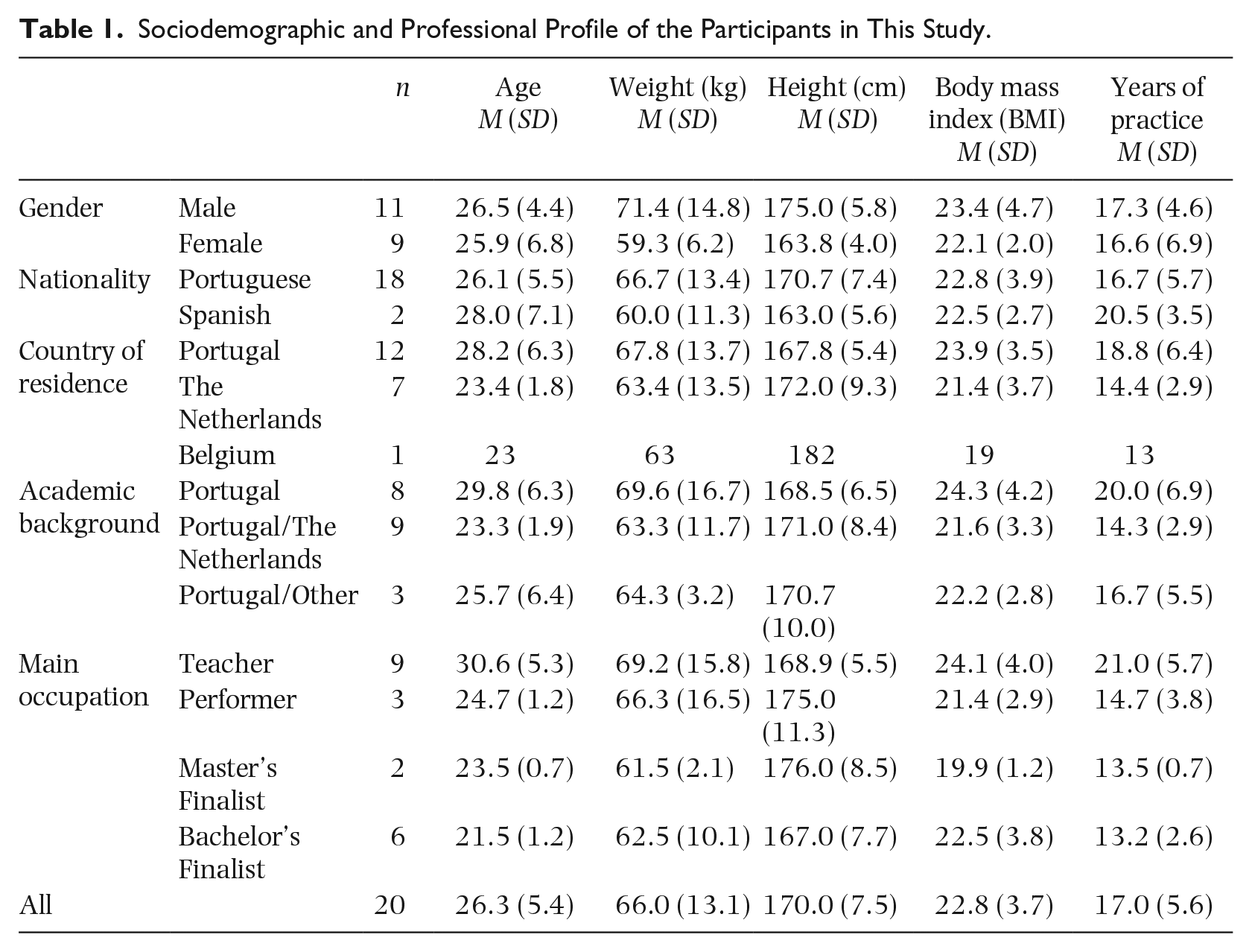
Volunteer participants were 20 saxophone players (9 female). Inclusion criteria comprised having a minimum of 10 years of saxophone practice, counted from the start of formal music education (M = 16.9, SD = 5.6 years), and following a professional career in saxophone performance (12 professional saxophonists, 8 university-level students in saxophone performance). The participants pursued their studies in Portugal (n = 8), Portugal and the Netherlands (n = 9) and Portugal and other countries (n = 3). Detailed information about the sample is presented in Table 1.
Sociodemographic and Professional Profile of the Participants in This Study.
Prior to data collection, participants were given written information describing the study, which they read, and then signed a consent form. This study was approved by the Comissão de Ética para a Saúde of the Universidade Católica Portuguesa (CES-UCP) with the protocol number 137/2021.
Materials
Musical repertoire
The stimuli used for the observational analysis included 100 performance recordings captured on video and three-dimensional (3D) motion (20 participants playing 5 musical excerpts each). Given the lack of studies focusing on saxophone performance, no framework of previously used repertoire was found. Thus, a review of the musical pieces included in programmes of international saxophone contests (e.g., Adolph Sax competition), pedagogical curricula (e.g., Trinity Laban) and published books on saxophone performance and pedagogy (e.g., Ingham, 1998) was conducted, resulting in a selection of the 29 most cited pieces across references. These were further analysed considering their level of difficulty, technique, compositional style and musical character, which led us to the final four contrasting pieces. The following excerpts were then extracted with the aim of representing differing technical and interpretative requirements: (E1) Allegretto scherzando from Concerto in Eb, Op. 109 by Glazunov (bars 40‒66) (Glazunov & Petiot, 1936); (E2) Andante from the same piece (bars 81‒103) (Glazunov & Petiot, 1936); (E3) Entrance from Rhapsodie by Debussy (bars 14‒35) (Debussy, 1998); (E4) Initial section of the third movement of Sonata by Creston (bars 1‒74) (Creston, 1945); and (E5) Allegro con moto from the first movement of Concertino da Camera by Ibert (bars 62‒121) (Ibert, 1935). Illustrative segments of each excerpt are presented in Figure 1, and supporting music analyses are presented in Table 1 of the Supplementary Material.
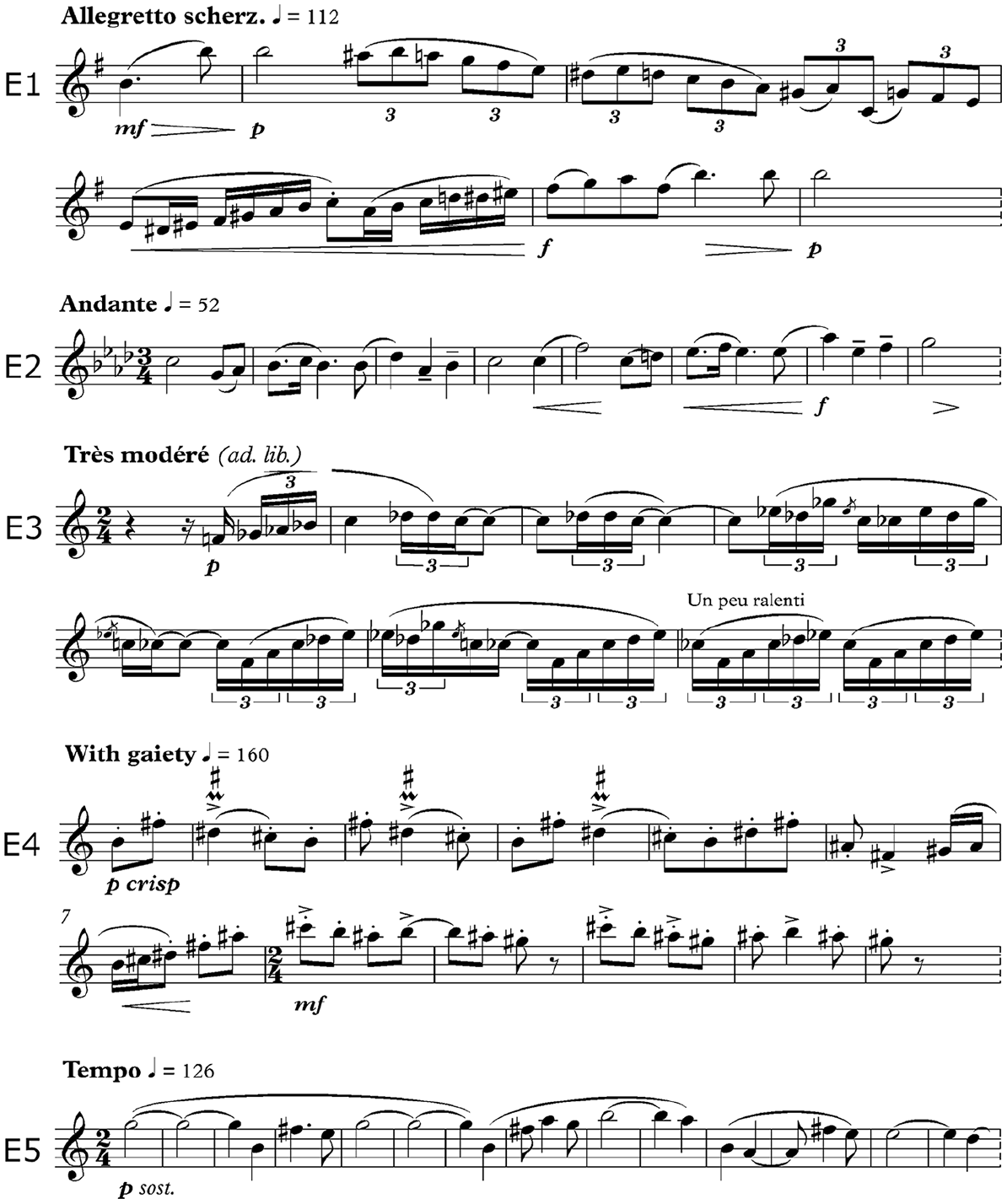
Illustrative Segments of Each Excerpt Used in This Study.
Data collection
In the individual data collection sessions, the participants were video recorded in the frontal plane with a Canon EOS 100D (Canon Inc., Japan) with an 18‒55 mm lens, and in the lateral plane with a Blackmagic pocket cinema 6k (Blackmagic Design Pty Ltd., Australia) with a 24‒70 mm lens. In addition, quantitative video was recorded with a Vicon optical-passive system comprising nine infrared cameras and operated with the Vicon Blade 2.1 software (Vicon Motion Systems Ltd., UK) at a sampling frequency of 240 Hz. A total of 58 retroreflective markers were placed on convenient body landmarks of each participant, and 9 more markers were placed on the saxophone (Figure 2). This marker setup allowed us to reproduce the participant’s full body movement, along with the instrument’s attitude, and to reconstruct them as 6 degrees of freedom 1 segments for further analysis. To synchronize all data collection devices, a clapperboard was used at the beginning and end of each performance, with two markers, one placed on the bottom and one on the top. Participants were asked to play each excerpt as in a concert situation.
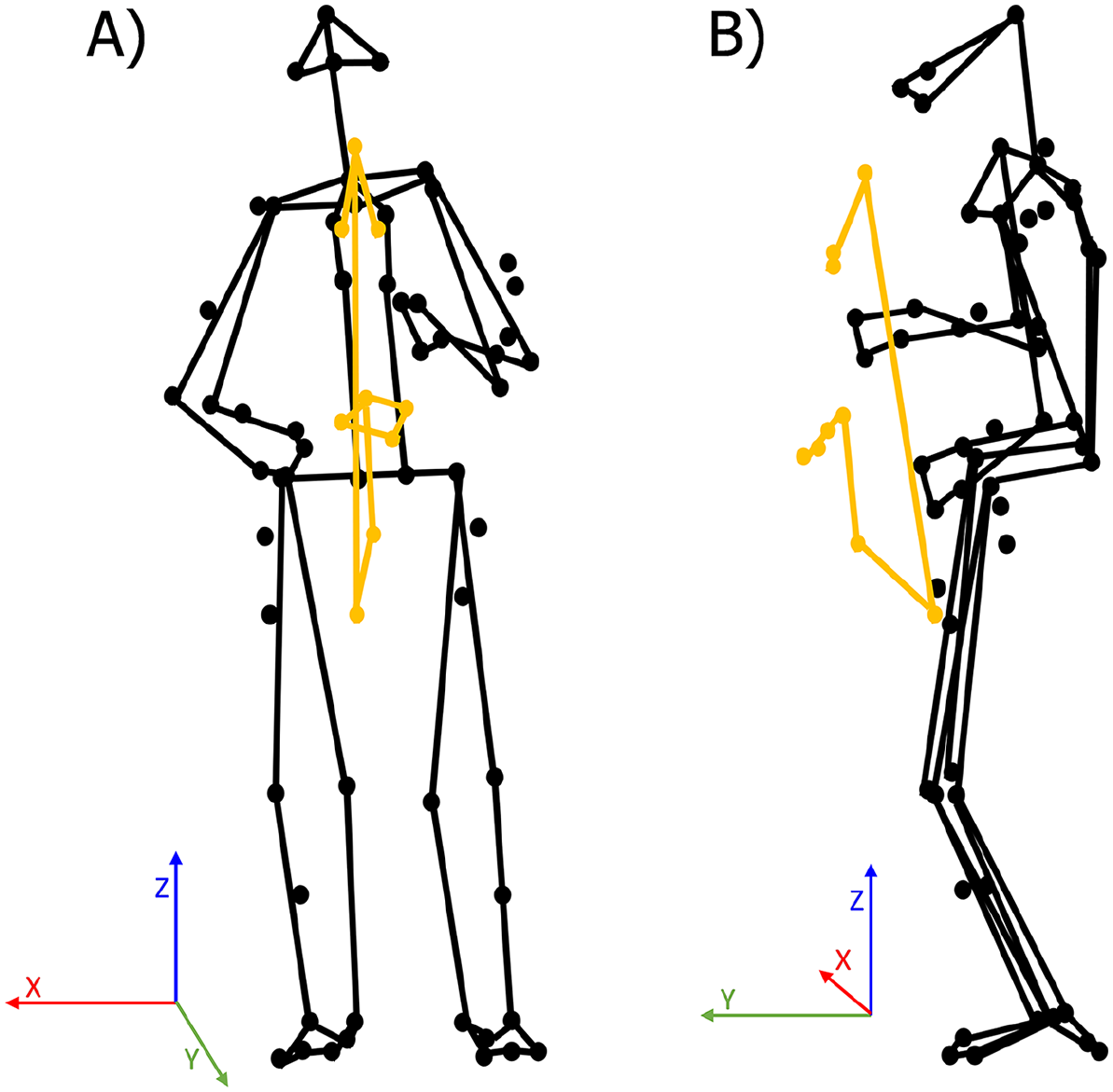
Frontal (A) and Lateral (B) Views of the Marker Configuration Used in This Study, Including 58 Markers Placed on the Body of the Participant, and 9 Markers Placed on the Saxophone.
Data pre-processing
Frontal and lateral videos were joined in a double split-screen format using Adobe Premier Pro CC 2019 13.0.2 (Adobe Inc., USA). Motion capture data was processed in Qualisys Track Manager (QTM) 2021.1 (Qualisys AB, Sweden), where marker labelling, trajectory smoothing (10 Hz low-pass Butterworth filter) and gap-filling were performed.
Analysis
Development of the categorization system and qualitative observation principles
To develop a structured categorization system and observational principles, we followed Knudson’s model for qualitative diagnosis of human movement (Knudson, 2013, 2020), widely used in the field of biomechanics for both athletic and clinical applications. This model is organized in four stages: preparation, observation, evaluation/diagnosis and intervention. Here, we focused on preparation and observation, as the evaluation/diagnosis and intervention stages were not relevant for our case, as they involve, respectively, the identification of strengths and weaknesses of the performance and direct intervention with participants aiming at performance improvement (i.e., giving feedback, proposing changes in practice or technique) (Knudson, 2013, 2020). Instead, we conducted one third stage called ‘Evaluation’, in which we assessed the reliability of our coding system.
Stage 1: Preparation. The preparation stage involves gathering relevant knowledge about the activity, performer and context, establishing critical features of the movements and developing systematic observation strategies (Knudson, 2013, 2020). Given that a saxophone gesture categorization was not found in the scientific literature, our first task was to devise one considering previously published gesture types of clarinet performance (Teixeira et al., 2014; Wanderley, 1999; Wanderley et al., 2005; Weiss et al., 2018), because this is the musical instrument that shares most similarities with the saxophone regarding posture and sound emission. Other gestures used on different instruments deemed common or relevant were also included (Davidson, 2012; Demos et al., 2017).
In a preliminary stage of exploratory observation, the first author (holding a bachelor’s and master’s degree in, respectively, saxophone performance and education) repeatedly viewed the videos with the aim of identifying which of the previously reported gestures were applicable to saxophone playing. The gesture types which did not apply were at that moment excluded from the coding system. Video examples of the applicable gesture types were then watched and discussed with the rest of the authors, including one researcher with a PhD in music education and psychology, two with PhDs in biomechanics and one biomechanics PhD student. At this point, the three researchers who specialized in movement analysis provided suggestions regarding gesture descriptions, and inclusion and exclusion criteria, which are provided in Supplementary Appendix 1.
Stage 2: Observation. According to Knudson (2013, 2020), in the observation stage, professionals apply the previous observational strategies to gather relevant information about the performance of the movements (i.e., phases of movement). For this, video recordings are often used, as they enable the extension of the observation through replay and slow motion.
In this stage, the first and last authors applied the planned systematic procedure of observational analysis to register the occurrence of each gesture type across recordings. For each recording, the authors independently watched the videos and annotated the coded gesture types in the corresponding musical score. When needed, the authors relied on the 3D representations of the movement and trajectories obtained from QTM for confirmation and extraction of illustrative examples of the gestural motions. The motion data was included in the study because RGB video alone was not sufficient to define and characterize smaller gestures, such as wrist or shoulder movements, which were better perceived by means of 3D representations enabling us to zoom in, as well as rotate for alternative perspectives. Afterward, differences in the coding were discussed until mutual consensus was reached, and the number of occurrences of a given gesture was counted and organized into frequency tables.
Also, during this process, four new gesture types were identified, and later discussed and defined with the rest of the team, before being counted and added to the categorization system. The final list of identified gesture types and their analogous descriptions in other studies can be found in Table 2. The observation criteria developed for each gesture type are presented alongside illustrations of the motions in Supplementary Appendix 1. For an in-text example, Figure 3 presents the illustration and identification guidelines of trunk flexion.
List of the Observed Gesture Types in This Dataset and Their Analogous in Previous Studies With Other Musical Instruments.
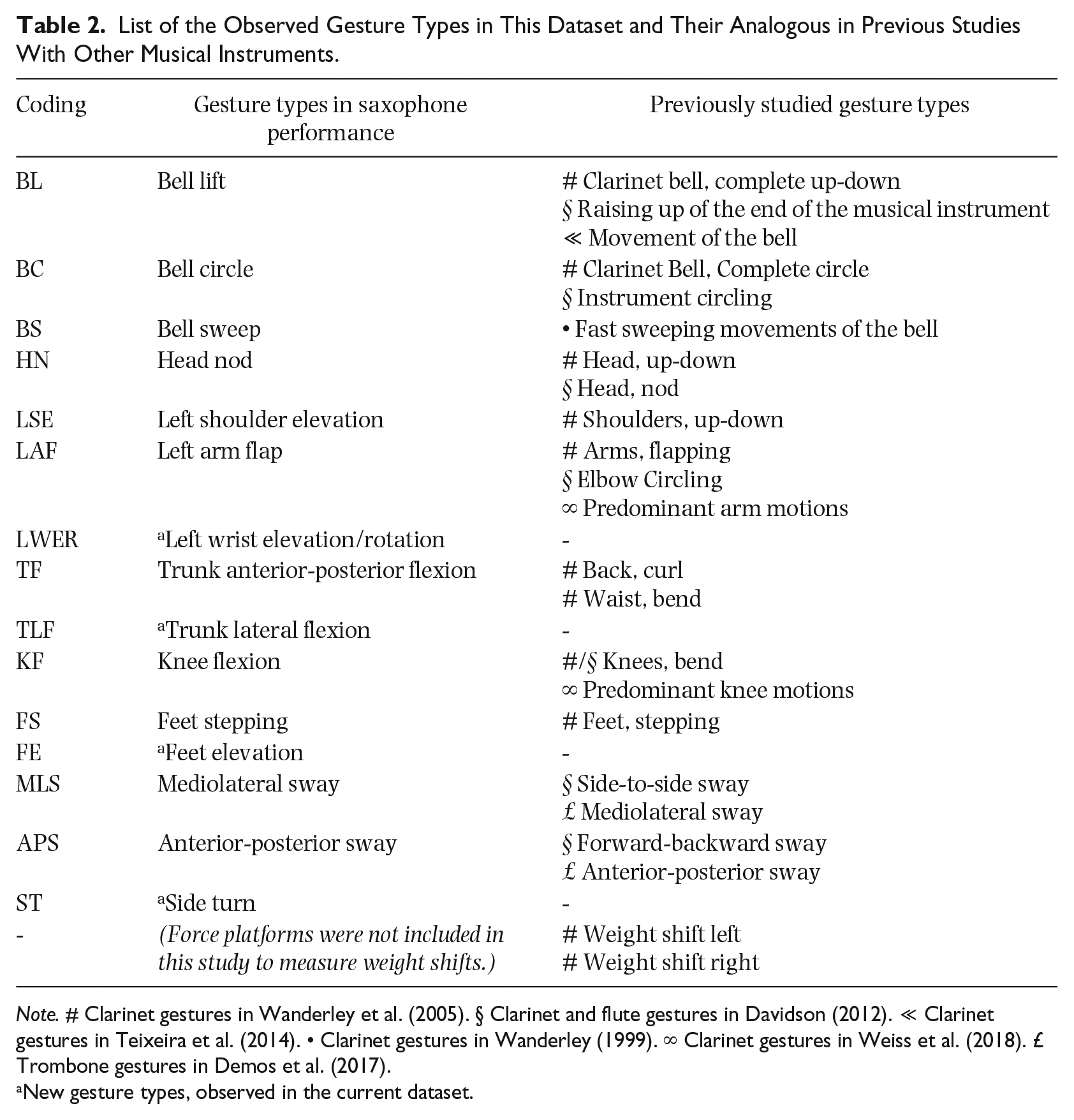
Note. # Clarinet gestures in Wanderley et al. (2005). § Clarinet and flute gestures in Davidson (2012). ≪ Clarinet gestures in Teixeira et al. (2014). • Clarinet gestures in Wanderley (1999). ∞ Clarinet gestures in Weiss et al. (2018). £ Trombone gestures in Demos et al. (2017).
New gesture types, observed in the current dataset.
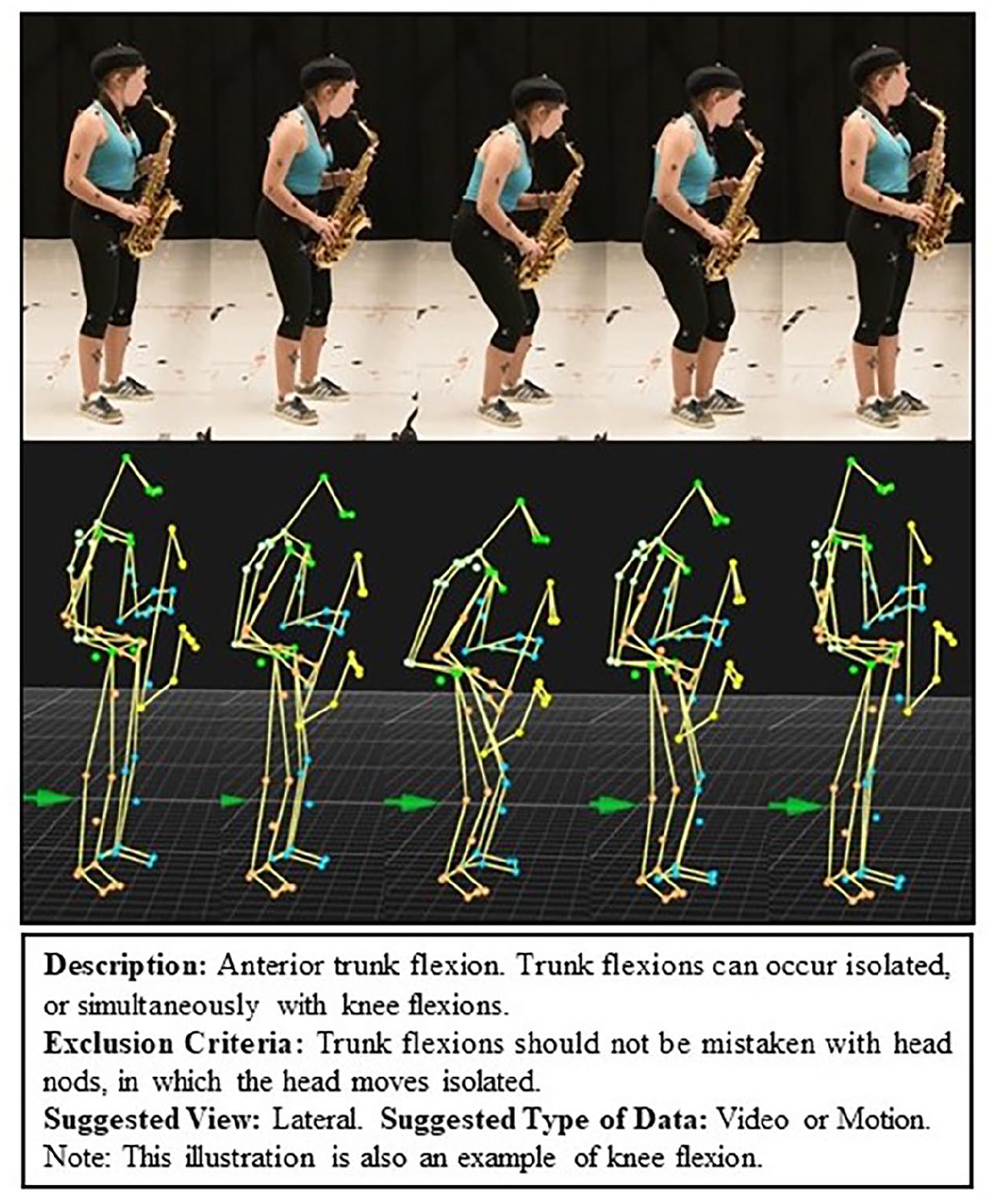
Illustration and Observation Criteria for the Trunk Flexion (TF).
Stage 3: Evaluation. According to Bartlett (2007), successful qualitative movement analyses imply both reliability (consistency in ratings by one analyst) and objectivity (consistency in ratings across multiple analysts). Therefore, to assess the consistency of our coding method, we adopted a two-part model accounting for intra- and interrater reliability. One year after the first analysis, the first author repeated the coding procedure of the complete dataset. After Koo and Li’s (2016) reliability levels, we found excellent reliability for all gesture types together (intraclass correlation coefficient, ICC = 0.981; 95% confidence interval, CI = [0.974, 0.988]). The individual analysis revealed excellent reliability for 14 gesture types (ICCs’ range = 0.918–0.989) and good reliability for Bell Sweep (ICC = 0.874). Thus, we concluded that the categorization guidelines were robust and could be used without alterations for the interrater analysis.
Following, we invited two raters with high levels of musical training (PhD students in Music Science and Saxophone Performance, both holding bachelor’s degrees in Saxophone) to apply the coding procedure to 10% of the video recordings, considering that 10%–25% of data units is the typical proportion used in intercoder reliability (Cheung & Tai, 2023; O’Connor & Joffe, 2020). We selected raters with embodied knowledge on saxophone performance because (a) an extensive knowledge base about an activity is essential to a good qualitative movement diagnosis (Knudson, 2013) and (b) as music researchers, they are representative of the scientific audience that will potentially re-use our categorization system. The first author scheduled an individual 2-hr educational session with each rater, where the categorization guidelines were explained, video examples were watched and gesture identification was discussed considering the criteria. Following the session, the raters received 10 new video recordings to assess individually within a deadline of 14 days. This subset of videos was randomly selected, assuring the inclusion of the same number of videos per musical excerpt and one different performer per video to ensure representativeness of the full dataset (O’Connor & Joffe, 2020). The interrater reliability analysis is reported in the Results section.
Statistical analysis
The statistical analyses were performed using the SPSS 29 software package (IBM SPSS Statistics, USA). For the intra- and interrater reliability analyses, ICC estimates and their 95% CIs were calculated based on a single-measurement, consistency, 2-way mixed-effects model. For each gesture, the data were entered as the number of times it occurred across performers and the musical excerpt, translating into a 20 × 5 matrix for the intra-rater analysis (in which all videos were used) and a 2 × 5 matrix for the interrater analysis (10% of videos used). The qualitative reliability levels described throughout the paper follow Koo and Li’s (2016) categories: poor (<.5), moderate (.5–.75), good (.75–.9) and excellent (>.9).
For the frequency analysis, we tested each hypothesis using non-parametric tests, and the median with the interquartile range was used to summarize the variable gesture frequency. To verify the differences between gesture frequencies, we used Kruskal–Wallis tests. Post hoc pairwise comparisons were then conducted using Dunn’s (1964) procedure with a Bonferroni correction for multiple comparisons. The level of significance for all tests was set at α = .05. To assess inter-performer consistency, we further calculated the ICC across performers, using an average-measurement (k = 20), consistency, 2-way mixed-effects model.
Results
Interrater reliability
For the three raters (initial rater vs. post hoc raters 1 and 2), we found very good reliability for all gesture types together (ICC = 0.882, 95% CI = [0.849, 0.91]). In the stratified analysis, we found excellent reliability for nine gesture types (APS, BL, FE, FS, KF, LAF, ST, TF, and TLF) and good reliability for six gesture types (BC, BS, HN, LSE, LWER, and MLS). ICCs per gesture type are presented in Table 3.
Results of the Interrater Reliability Analysis Between Three Raters (Initial Rater vs. Post Hoc Raters 1 and 2).
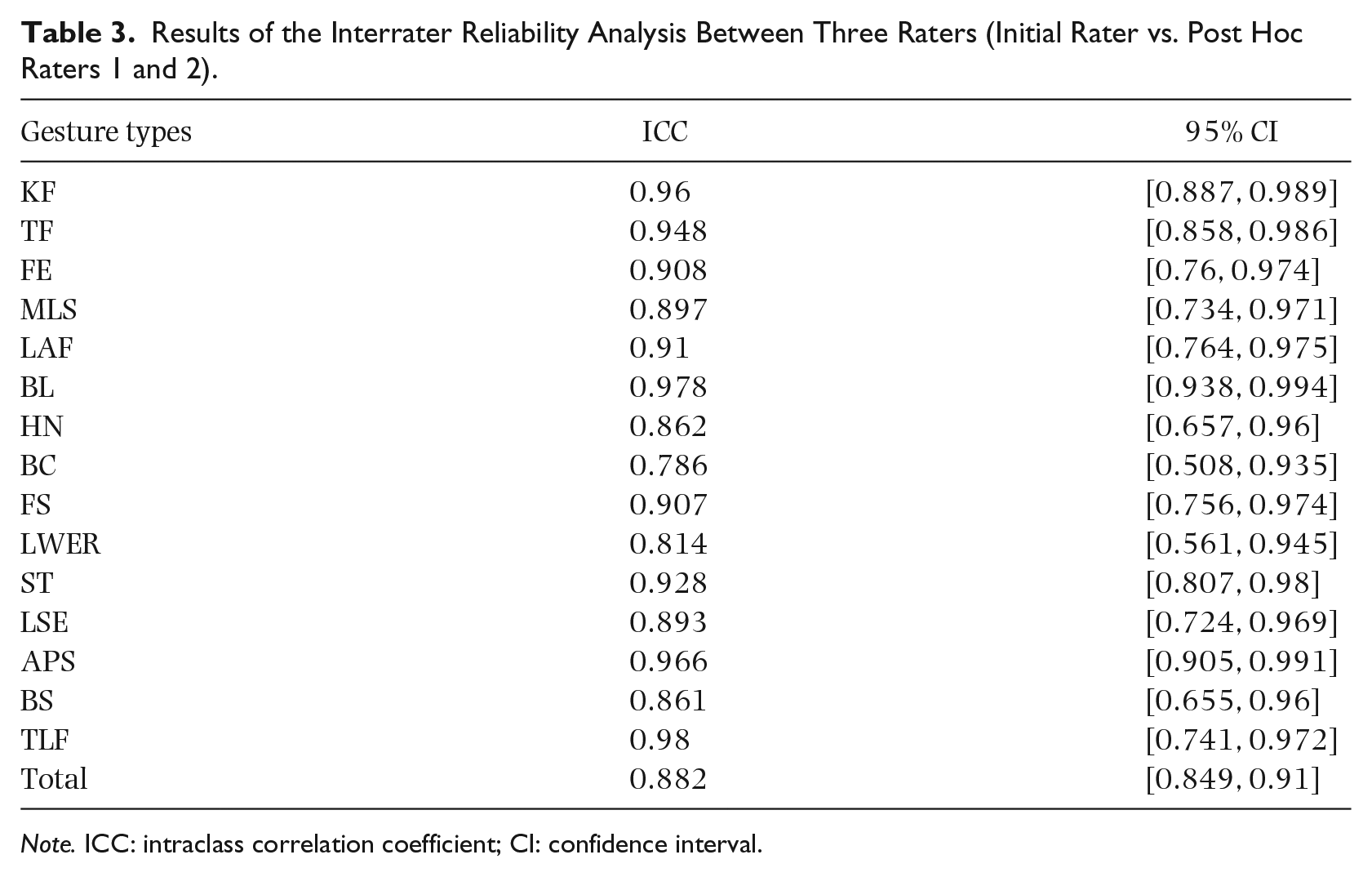
Note. ICC: intraclass correlation coefficient; CI: confidence interval.
Hierarchy of gesture types in saxophone playing
From the 8,724 gestures performed by the 20 participants across a total of 100 recordings, the most frequent were knee flexion (n = 1,810, 20.7%), trunk flexion (1,269, 14.5%), feet elevation (1,116, 12.8%), mediolateral sway (876, 10%), left arm flap (689, 7.9%), bell lift (605, 6.9%) and head nod (549, 6.3%). The less frequent gestures were bell circle (434, 5%), feet stepping (340, 3.9%), left wrist elevation/rotation (305, 3.5%), side turn (291, 3.3%), left shoulder elevation (206, 2.4%), anterior posterior sway (102, 1.2%), bell swift (94, 1.1%) and trunk lateral flexion (38, 0.4%).
Apart from anterior posterior sway (APS), executed only by 45% of the participants, and trunk lateral flexion (TLF), executed by 10%, all the other gesture types were employed by all or the majority of the group: knee flexion (KF), trunk flexion (TF), feet elevation (FE), mediolateral sway (MLS), bell lift (BL), bell circle (BC) and head nod (HN) were executed by 100% of the participants; left arm flap (LAF) by 95%; left shoulder elevation (LSE) by 90%; feet stepping (FS) and side turn (ST) by 85%; left wrist elevation/rotation (LWER) by 80%; and bell sweep (BS) by 75%. Individual observations per gesture type are presented in Figure 4.
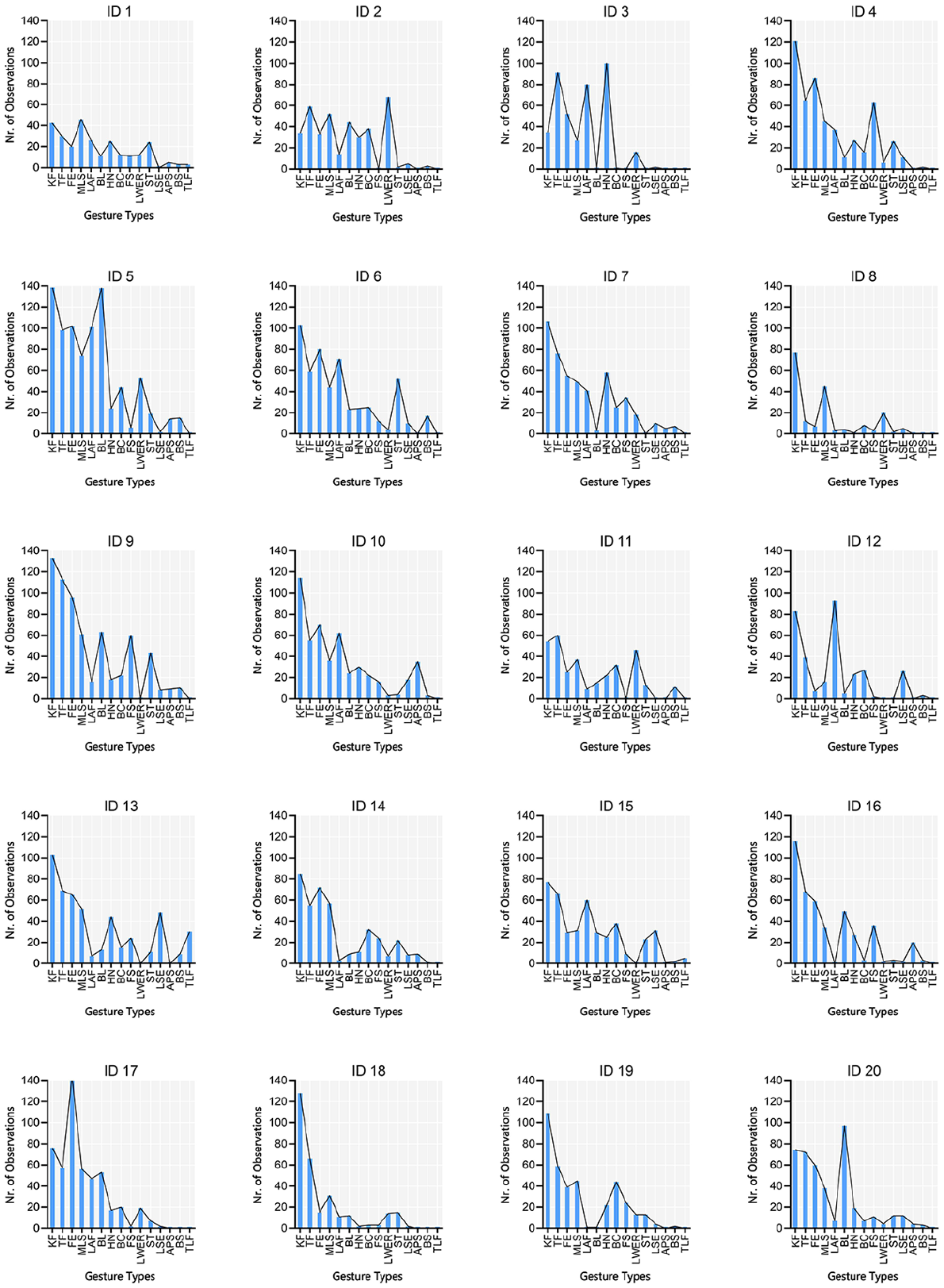
Summed Gesture Frequency Values in All excerpts Per Participant (N = 20) Across Gesture Types (N = 15).
Inter-performer consistency was assessed by calculating the ICC across participants. We found excellent reliability in gesture frequency across performers (ICC = 0.967, 95% CI = [0.936, 0.987], p < .001), meaning that participants’ gesture type frequencies vary in the same way, increasing and decreasing comparatively, even though certain participants present higher (or lower) mean frequency values per gesture type. For a graphic representation of this result, frequency plots per participant are presented in Figure 5.
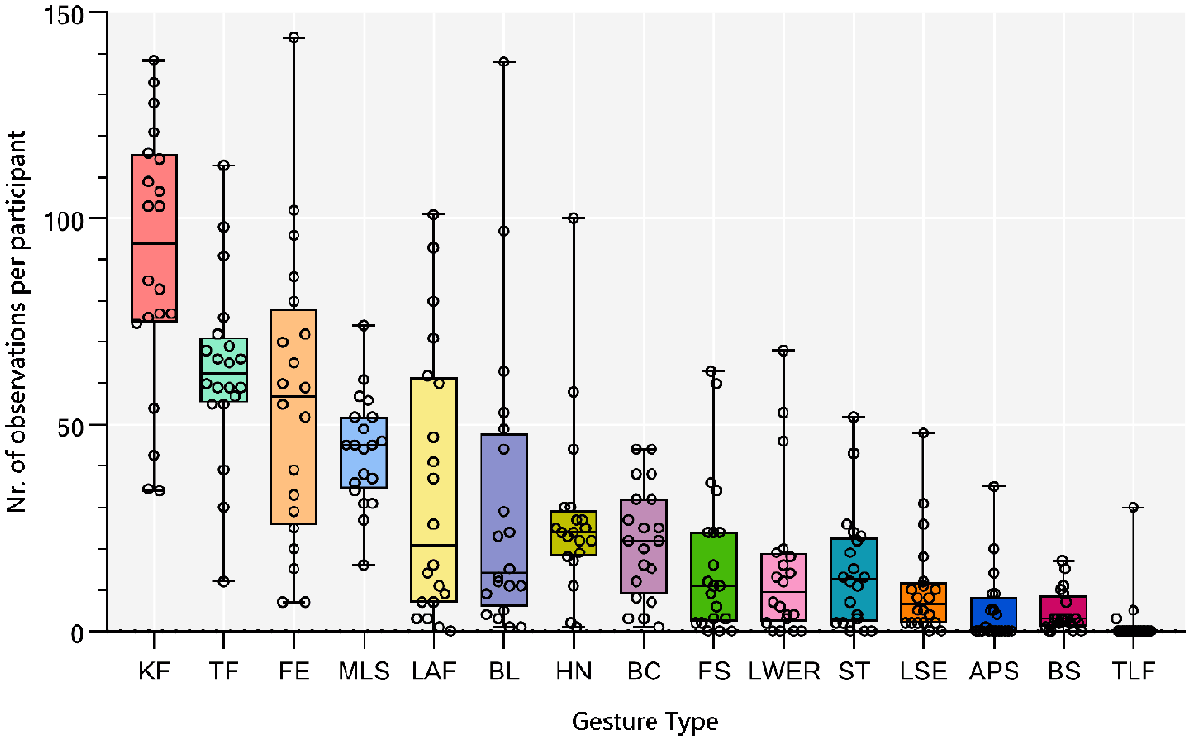
Frequency Plots of the Distributions of Gesture Types Per Participant (ID 1 . . . 20).
The Kruskal–Wallis test revealed that there were differences in the frequencies across the groups of gesture types (H = 2,935.369, df = 14, p < .001). To find these differences and create a gesture hierarchy, we conducted follow-up pairwise comparisons, which are presented in Table 2 of the Supplementary Material. These results revealed the following gesture frequency hierarchy: (1) KF (significantly higher than 14 gesture types), (2) TF (higher than 13), (3) FE and MLS (higher than 11, each), (4) LAF (higher than 9), (5) BL (higher than 8), (6) BC (higher than 6), (7) HN and FS (higher than 4, each), (8) LWER and ST (higher than 3), (9) LSE (higher than 2), (10) APS (lower than 11) and (11) BS and TLF (lower than 12).
Differences between excerpts
The gesture frequencies of the 20 participants across excerpts were distributed as follows: 1,722.5 observations in E1, 1,463 in E2, 1,510 in E3, 2,230.5 in E4 and 1,798 in E5. The Kruskal–Wallis test revealed that there were differences in the frequency across excerpts (H = 25.407, df = 4, p < .001). Post hoc pairwise comparisons with Bonferroni correction revealed that the frequency was significantly higher for E4 in comparison to E2 (p < .001) and for E4 in comparison to E3 (p = .003).
Idiosyncratic gestures related to specific excerpts
The gesture type frequencies per excerpt were distributed as presented in Table 4.
Gesture Frequency Distributions Across Musical Excerpts.
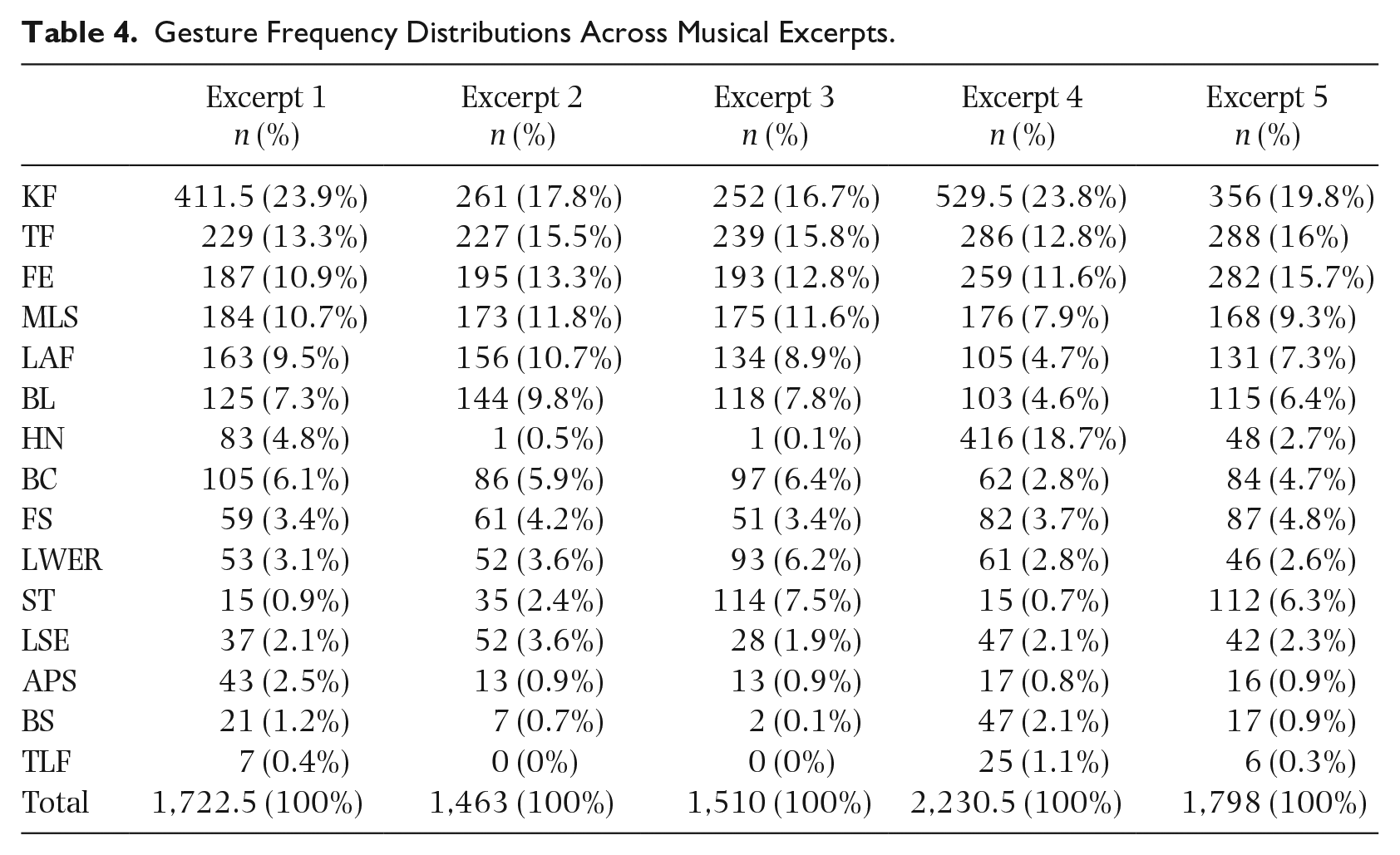
The Kruskal–Wallis test revealed differences in the frequencies of gesture types for E1 (H = 585.415, df = 14, p < .001), E2 (H = 676.531, df = 14, p < .001), E3 (H = 545.239, df = 14, p < .001), E4 (H = 732.464, df = 14, p < .001) and E5 (H = 744.418, df = 14, p < .001).
Follow-up pairwise comparison tests were conducted for each excerpt to further compare the frequency distributions and find idiosyncratic gestures. The significant differences between gesture types in each excerpt are reported in Tables 3 to 7 of the Supplementary Material.
In E1, KF was significantly higher than 13 other gesture types, TF significantly higher than 13 other gesture types, TF higher than 11 gesture types, FE and MLS higher than 9 gesture types, LAF and BL higher than 8 gesture types, BC higher than 5 gesture types and LWER higher than 1 gesture type.
In E2, KF and TF were higher than 11 gesture types, MLS higher than 10 gesture types, FE higher than 9 gesture types, LAF and BL higher than 8 gesture types, BC higher than 5 gesture types, LSE higher than 2 gesture types and FS higher than 1 gesture type.
In E3, KF and TF were higher than 11 gesture types, MLS higher than 10 gesture types, FE higher than 7 gesture types, LAF higher than 6 gesture types, BL, BC, LWER and ST higher than 5 gesture types and FS higher than 3 gesture types.
In E4, KF was higher than 14 gesture types, TF, MLS and HN were higher than 10 gesture types, FE was higher than 9 gesture types, LAF was higher than 4 gesture types, BL and FS were higher than 3 gesture types and BC and ST were higher than 1 gesture type.
In E5, KF was higher than 13 gesture types, TF was higher than 12 gesture types, FE and MLS were higher than 11 gesture types, LAF was higher than 6 gesture types, BL, BC and ST were higher than 4 gesture types and FS was higher than 3 gesture types.
A graphical representation of these hierarchies is presented in Figure 6.
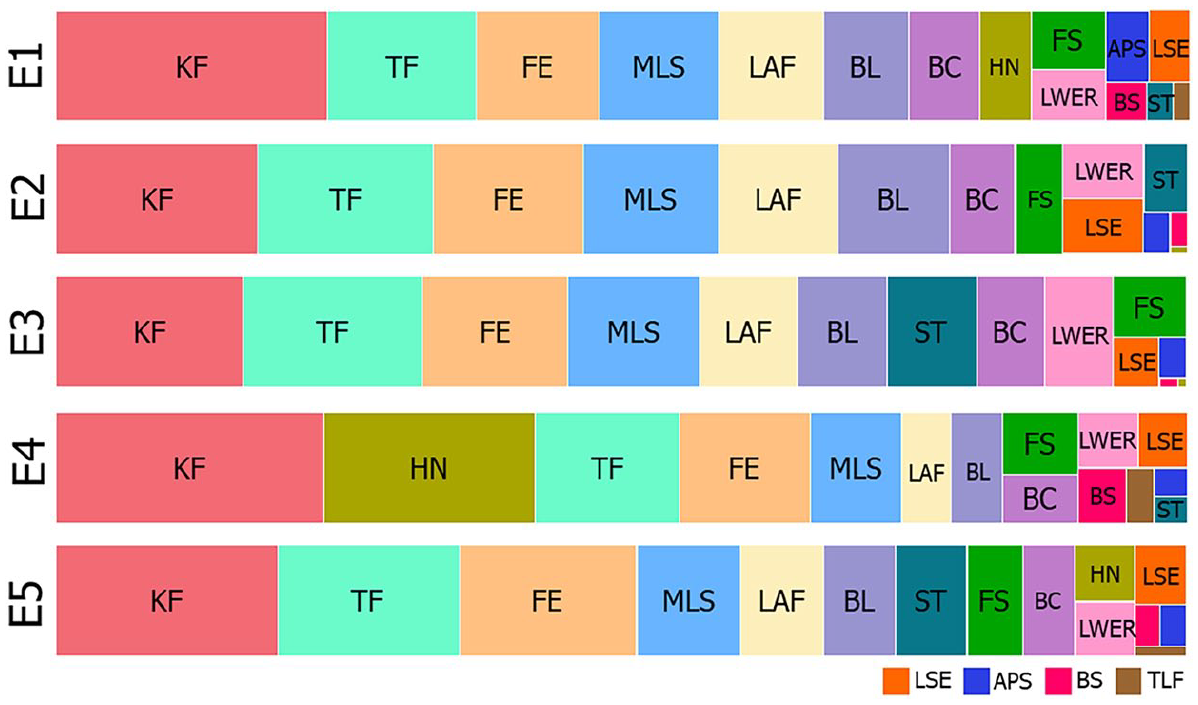
Tree Maps of the Gesture Frequency Hierarchies in Each Excerpt (E1 . . . E5).
Discussion
This study emerged from the need to define the gestural profile of saxophone players, considering the lack of literature about this topic. By defining and quantifying the most recurrent gestures among a heterogeneous group of participants, we provide a basis of information that enables the reasoned selection of gestures to focus on thoroughly in further studies. To this end, a categorization system for gestures in saxophone performance was created, built upon the existing literature about other musical instruments.
Our results demonstrate that there is a consistent gestural repertoire among saxophone players. Although musicians’ movement is highly individualized and culture-determined (Davidson, 2005), the movement constraints set by the instrument’s ergonomics and technique led the participants to perform similar gesture types. This aligns with previous findings suggesting that communicative and expressive gestures are not independent from technique (Castellano et al., 2008; Davidson, 2012). Instead, they are built upon a base layer of sound-producing gestures, overlapping and interacting with them (Jensenius et al., 2010). Although most of the clarinet gestures (Desmet et al., 2012; Wanderley et al., 2005; Weiss et al., 2018) were applicable to the saxophone, differences were found in their frequency hierarchy. The hierarchy found in this study highlighted the following seven most recurrent gesture types among saxophone players: (1) knee flexion, (2) trunk flexion, (3) feet elevation and mediolateral sway, (4) flap, (5) bell lift and (6) bell circle.
Knee and trunk flexion were the first and second most recurrent gestures among saxophone players, whereas in clarinet players these were the third and fourth most recurrent, respectively (Wanderley et al., 2005). A recent study found that knee flexion curves predicted the tonal expectations of saxophone players and correlated with rhythmical density, unveiling potential facilitative and expressive functions underlying this action (Moura, Vidal, et al., 2023). Regarding the trunk flexion, this finding is particularly interesting considering that saxophone players tend to round the upper back (Shanoff et al., 2019) and present a higher anterior positioning of the head than clarinet players (Clemente et al., 2018). The prevalence of the trunk flexion may be related to the neck strap used to support the saxophone’s weight, ultimately leading to a tendency of moving the trunk forward and curling the upper back. Another recurrent gesture with potential supportive functions is the mediolateral sway: if, on one hand, it may act as a compensatory movement for balance, it may also embody expressive and communicative attitudes of the performer, as previously demonstrated with other instruments (Chang et al., 2017, 2019; Davidson, 1994, 2012; Demos et al., 2017). All the other prevalent gestures are most likely related to expressive functions, as they do not seem to support any sound-producing task. Feet elevation was not reported in other instruments before; however, we assume that it probably occurs with musicians sharing similar playing positions. Correspondingly to the clarinet (Wanderley et al., 2005), the flap was the fifth most recurrent gesture type, and bell lifts occurred more often than bell circles. Nevertheless, the bell lift is much more characteristic of clarinet players than saxophone players (first vs sixth place in the hierarchies) (Wanderley et al., 2005).
We further found, by comparing excerpts, that the energic, fast-paced Creston excerpt (E4) presented a significantly higher summed gesture frequency than the two lyrical, slow-paced excerpts (E2 and E3). At first glance, we would expect the opposite, because technically demanding repertoire, such as E4, implies a certain level of movement restriction for effective execution (Massie-Laberge et al., 2019; Nusseck & Wanderley, 2009; Wanderley et al., 2005). Nevertheless, we propose that this increased frequency may be rhythm related. The fast pulse of E4 translates into a higher number of beats per minute, when compared with the slow pulse of E2 and E3 (for pulse indications, see Figure 1). If participants moved to the beat, a well-known human tendency across several activities (Buhmann et al., 2016, 2018; Repp & Su, 2013; Rose et al., 2021), they performed gestures more repeatedly in fast-tempo excerpts than in slow tempo ones, although both had similar durations. Previous studies support the relationship between movement and rhythm, demonstrating that performers’ gestures reflect rhythmical structures (Coorevits et al., 2019; Wanderley et al., 2005) and are used to convey timing cues to other co-performers for synchronization purposes (Bishop & Goebl, 2018; Coorevits et al., 2020).
Finally, we identified idiosyncratic gestures related to specific excerpts. Head nodding was the second most frequent gesture in E4, whereas its prevalence was minimal in the other excerpts. We believe this event may be explained by the repeated accentuated notes, exclusive of E4 (see Figure 1). Impulsive gestures, also described as sudden tensing/relaxing movements or muscle contractions, occur in the contexts of beat tracking and accentuated staccato notes, both in performers and listeners (Dahl, 2004; Dahl et al., 2010; Jensenius et al., 2010; Papageorgiou, 2012). Comparable to the discrete jerky movements observed in violinists playing martelé strokes (Rasamimanana & Bevilacqua, 2008), it could be that head nodding acts as a supportive strategy for saxophone players to execute the technique underlying accents. On a smaller scale, we observed higher frequency of side turns in E3 and E5, which we could not justify in light of the contrasting musical features of the excerpts. These results add to the idea that the gestural behaviours of performers are analogous to stylistic features of sonic gestures (Godøy & Leman, 2010; Hatten, 2004).
External raters with high levels of expertise in saxophone performance successfully used the gesture categorization system we developed in conjunction with the observation criteria. We found excellent interrater reliability for 9 out of the 15 gesture types and good reliability for the rest. The gesture types presenting lower scores were local movements associated with smaller body parts (head nods, wrist and shoulder elevations) or the saxophone (bell circle and bell sweep). Therefore, we hypothesize that the video data possibly did not provide enough visualization details for better identification, and that these gestures benefit from the support of the 3D motion illustrations, which provide complementary perspectives and trajectory drawings. For instance, bell circles are easily counted by observing the trajectory of the bell across time, as performed by the initial raters. Nevertheless, the good-to-excellent interrater consistency levels validated the efficacy of the method and its applicability in replication studies, in which observation guidelines can be refined and other visualization modes used.
We conclude by arguing that although the frequency was a useful general descriptor of the gestural profile of saxophone players, it also presented limitations related to the characterization of gestures (e.g., a bell lift may be fast or slow, have higher or lower distance travelled). A previous study was found providing qualitative descriptions of movement behaviour among saxophone players in relation to the musical content (Moura, Vilas-Boas, & Serra, 2023). Yet, a quantification of gestures was needed to make conscious decisions in the design of future studies, in which we will perform kinematic analyses of a selection of gesture types. By including objective motion descriptors (e.g., amplitude, velocity), we will be able to describe the quality of movement and further demonstrate its relationship with musical features. While this study was performed as a criteria-based observation, other studies with additional expert observers and participants from other academic, professional and cultural backgrounds are necessary to consolidate these findings. For this purpose, we make available the appendix of guidelines used and validated in this study to assist the identification of each gesture type.
Conclusion
In this study, we delimited the motion profile of saxophone players by: (1) extracting the most recurrent gesture types across multiple participants and musical excerpts, (2) analysing variations in gesture frequency in contrasting excerpts and (3) identifying idiosyncratic gestures related to specific excerpts. We introduced a gestural categorization system for saxophone performance, based on previously studied gesture types in other instruments, and provided an appendix of criteria for gesture identification for further replication studies.
The thorough understanding of performative gestural behaviour is required for the development of pedagogical guidelines for the use of body movement as a tool for performance enhancement. The delimitation of the core gestures employed by saxophone players offers researchers a basis for selecting which gestures deserve further investigation. We encourage additional research covering the impact of specific gestures in performers and observers to bring saxophone research in line with previously studied instruments.
Supplemental Material
sj-docx-2-pom-10.1177_03057356241257425 – Supplemental material for Video-based categorization system and frequency analysis of gestures in saxophone playing
Supplemental material, sj-docx-2-pom-10.1177_03057356241257425 for Video-based categorization system and frequency analysis of gestures in saxophone playing by Nádia Moura, Pedro Fonseca, Jorge Graça, Philippe Trovão, Márcio Goethel, João Paulo Vilas-Boas and Sofia Serra in Psychology of Music
Supplemental Material
sj-pdf-1-pom-10.1177_03057356241257425 – Supplemental material for Video-based categorization system and frequency analysis of gestures in saxophone playing
Supplemental material, sj-pdf-1-pom-10.1177_03057356241257425 for Video-based categorization system and frequency analysis of gestures in saxophone playing by Nádia Moura, Pedro Fonseca, Jorge Graça, Philippe Trovão, Márcio Goethel, João Paulo Vilas-Boas and Sofia Serra in Psychology of Music
Footnotes
Acknowledgements
We would like to thank the saxophone players for their participation.
Availability of data and materials
The anonymized video and motion data used in this study can be made available by author N.M. upon request for research purposes.
Funding
The author(s) disclosed receipt of the following financial support for the research, authorship and/or publication of this article: This work was supported by the Fundação para a Ciência e Tecnologia (FCT), Portugal, under the grants number 2020.05257.BD (N.M.) and PD/BD/150617/2020 (J.G.). J.P.V.-B. would like to acknowledge the support received through  .
.
Supplemental material
Supplemental material for this article is available online.
Notes
References
Supplementary Material
Please find the following supplemental material available below.
For Open Access articles published under a Creative Commons License, all supplemental material carries the same license as the article it is associated with.
For non-Open Access articles published, all supplemental material carries a non-exclusive license, and permission requests for re-use of supplemental material or any part of supplemental material shall be sent directly to the copyright owner as specified in the copyright notice associated with the article.
