




Abstract
The ability to regulate one’s emotions is integral to well-being and recent studies have documented the relationship between music and emotion regulation strategies. The purpose of this meta-analysis was to examine the impact of musicking on emotion regulation. To achieve this objective, a systematic database search for randomized control trial (RCT) studies was conducted. Eight studies that met the inclusion criteria were selected, involving 441 participants, and employing a diversity of musicking intervention strategies including listening, playing, and creating. The overall effect size was d = 0.45; p < .01. Moderator analyses were conducted. The discussion focuses on perspectives for music education, prevention programs, and public policies for the general population and music as a potential resource contributing to well-being.
Music in its many forms is easily available and ubiquitous in society (MacDonald et al., 2012; Uhlig et al., 2013) and it is an important part of everyday life. Skånland (2013) describes how music technologies have allowed people to listen to whatever they want, wherever they want, targeting different music to regulate moods and emotions. How and why people experience music has been associated with broad psychological functions including emotion regulation (ER) and coping (Chamorro-Premuzic & Furnham, 2007, p. 175). Hallam (2016) asserts that there is growing evidence to show that active music making may contribute to the enhancement of many different nonmusical skills. However, attempts to qualify the social impacts of arts activities, establish cause and effect, and demonstrate the direction of causality are challenging currently (Hallam, 2016; Rimmer, 2012).
The benefits of music for physical health and well-being are being increasingly recognized (Hallam, 2016) and the ability to adequately regulate emotions has been shown to be integral to general well-being and functioning (Chin & Rickard, 2014; R. Elliott et al., 2004). Although music therapy is an established discipline focusing on music, health, and well-being, other disciplines such as community music and music education are also interested in pathways and processes that contribute to these outcomes (Peters et al., 2021). Recent studies have documented the relationship between music and effective ER strategies in preschoolers (Moore & Hanson-Abromeit, 2018) and adults (Chin & Rickard, 2014). Focusing specifically on the adult population, Chin and Rickard (2014) examined the mediating effects of ER on the relationship between music engagement and well-being.
Musicking
The term chosen to define our dependent variable is musicking, a term originally coined by Small (1998), who states that “music is not a thing at all but an activity, something that people do” (p. 2). Small encourages his readers to think about music as it is practiced, an authentic and holistic act, including organized sounds and focused on relationships, taking place in physical and social contexts. Therefore, to music is to take part, in any capacity in a musical performance, whether by performing, by listening, by rehearsing or practicing, by providing material for performance (what is called composing), or by dancing. Music is first and foremost action. (p. 9)
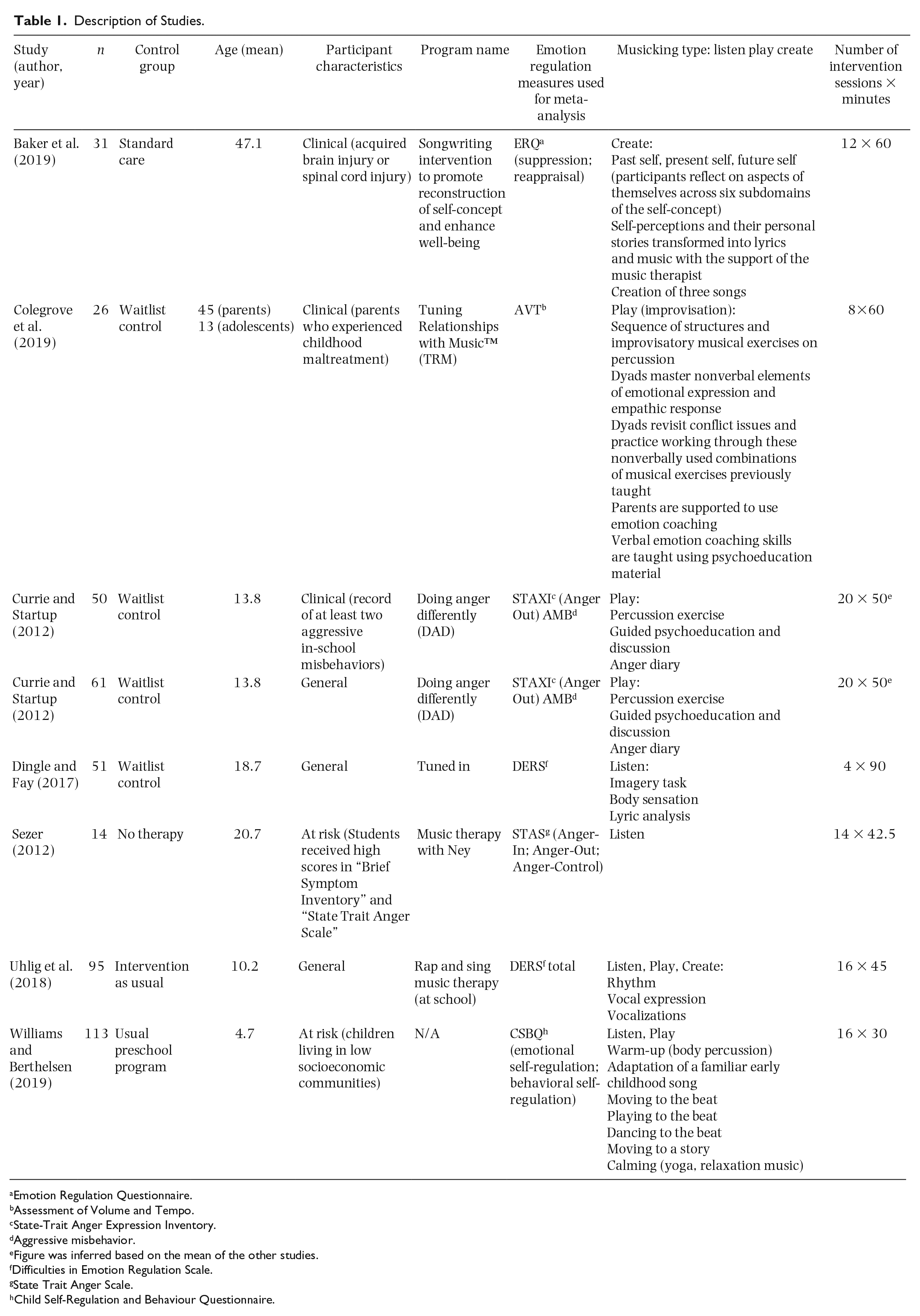
Accordingly, D. Elliott and Silverman (2015) define musicking, a contraction of music and making, as active music making, active music listening, and actively creating music. The development of these three disciplinary competencies in music, playing, listening, and creating are the foci of music school curricula around the world. For this meta-analysis, we have adopted an inclusive definition of musicking including listening, playing, and creating (see Table 1, Musicking type).
Description of Studies.
Emotion Regulation Questionnaire.
Assessment of Volume and Tempo.
State-Trait Anger Expression Inventory.
Aggressive misbehavior.
Figure was inferred based on the mean of the other studies.
Difficulties in Emotion Regulation Scale.
State Trait Anger Scale.
Child Self-Regulation and Behaviour Questionnaire.
Musicking and emotions
Gross (2014) opens his chapter concerning the conceptual and empirical foundations of ER by tackling a difficult question: What is an emotion? According to the author, “a discussion of emotion regulation presupposes an understanding of what emotion is” (p. 3). Baltazar and Saarikallio (2016) add that defining emotion may pose several problems and it is not always easy to differentiate emotion from ER. According to Gross (2014), it is the meaning attributed to a situation that gives rise to emotions, which allows people to feel and act, resulting in anticipating emotion-related behaviors or following them, helping to achieve the goal that gave rise to the emotion. The author presents the modal model of emotion, comprised of four core features: situation, attention, appraisal, and response, each step in this emotion-generative process being a potential target for regulation. This model is incorporated into the process model of ER (see Emotion Regulation).
According to Rentfrow (2012), “Of all the topics investigated in the social psychology of music, none have received more attention than music and emotion” (p. 406). In a review of 251 studies, Eerola and Vuoskoski (2013) described different research approaches aimed at exploring the fundamental question of how music may evoke emotions in the listener. The different areas of inquiry included how emotions are induced and conveyed by music, the contribution of the situation, listener attributes and intention to regulate affective states as well as whether these processes are universal or learned, and how they relate to other types of meaning-making processes in the mind.
Emotions, expressed, aroused
Studies have presented convincing evidence that music can be expressive of felt emotions and can arouse emotions in listeners (Juslin, 2011; Rentfrow, 2012). Strong experiences with music (SEM) have been described (Gabrielsson, 2011) and research has sought to demystify such experiences by attempting to identify the underlying mechanisms associated with musical emotions (Juslin et al., 2014). This has resulted in several promising frameworks, including the BRECVEMA model, featuring eight mechanisms besides appraisal: brain stem reflex, rhythmic entrainment, evaluative conditioning, contagion, visual imagery, episodic memory, musical expectancy, and aesthetic judgment. According to Juslin et al. (2014), music moves us, evoking basic to complex emotions, and these emotional responses add personal significance to the musical experience, comprising one of the main reasons why people engage with music.
The work regarding SEM has made an important contribution to understanding how and why people experience emotions in connection with musical listening. SEM are peak, intense experiences where music becomes the focus, the primary event, and everything else fades into the background. Interestingly, Gabrielsson (2011) notes that SEM have allowed research participants to “use” this experience, especially in somehow critical situations, to affect their mood. They try to revive the positive feelings from this occasion by listening to the same music or just thinking of how it felt . . . SEM becomes a resource available for use when needed. (p. 107)
Contexts, musicking and emotions, emotion regulation
Everyday life
Music has multiple uses and functions in everyday life (DeNora, 2000; Sloboda et al., 2001). “People use music to serve various functions, from emotion regulation to self-expression to social bonding” (Rentfrow, 2012, p. 402). People actively listen to music in their everyday contexts to create mood states, and change levels of emotional arousal (North et al., 2004), as a tactic for affect regulation (Baltazar & Saarikallio, 2016). Rentfrow and Gosling (2003) evoke the possibility that individuals seek out music consistent with their current mood or to change their mood. Chamorro-Premuzic and Furnham (2007) concur, reporting that “people listen to music for rational/cognitive appreciation, emotional regulation (e.g. to change or reinforce moods) or simply as background to other activities (e.g. studying, socializing, working)” (p. 182).
In Skånland’s (2013) study focusing on music listening with MP3 players, music was highly efficient in regulating affect, creating private spaces for listeners to focus on their own emotional states of mind without being influenced by surroundings. “Listeners are generally able to find music that agrees with their current or desired affects, enabling them in turn to manage and regulate their mood and emotions” (p. 8). Participants were adept at using music as a resource, as a form of self-care in their daily lives (DeNora, 2000).
Music therapy, music education, community music
In addition to music use in everyday life, music therapists have, especially in their research and practice with adolescents, made emotional connectedness a priority, both emotional expression and ER (McFerran, 2019; McFerran et al., 2010). To interrogate the literature pertaining to music, emotions, and well-being, McFerran (2016) focused on music psychology and music therapy studies, decrying the lack of focus on emotions within the therapy field. This critical interpretive synthesis, contextualizing the relationship between music, emotions, and the well-being of young people, focuses on emotion uses of music across the well-being continuum and reports on how young people manage their emotions. The authors insist that music therapists value authentic experiences of self, not privileging positive emotional experiences and not necessarily training their clients to regulate their emotions. Creating original music and engaging with listening are two ways of connecting with emotions in the context of a supportive therapeutic relationship (McFerran, 2016). Although music is used to actively manage feelings, some may report feeling better while others, especially vulnerable young people, may feel worse (McFerran et al., 2010). Discussing habits of music use may be helpful for adolescents to be aware of unhelpful coping behaviors as well as associations of music with traumatic experiences and complex memories (McFerran, 2019).
Schools and community music contexts are also embracing the social, emotional, and psychological benefits of music engagement. This expansive view of well-being explores how music might contribute to the development of social and emotional competencies and ER (Hampshire & Matthijsse, 2010; Peters et al., 2021). Hallam (2010) highlights studies concerning emotions and music and proposes that music education should support competencies relating to music and its affective role in our lives. Even though music therapists have traditionally focused on health and well-being, many different musical activities in different contexts could promote health in various ways (Peters et al., 2021). There are some shared territories and possibilities for developing shared frameworks across practices and disciplines that should be explored (Stige, 2012). Peters et al. (2021) consider the unique roles, convergences, and blurring of philosophies and practices of these disciplines and how they might intersect. In sum, musicking may foster health and well-being, including ER, in the contexts of music therapy, community music, and music education.
Emotion regulation
Among the general underlying mechanisms influencing the emotional experience, ER is defined as “processes by which individuals influence which emotions they have, when they have them, and how they experience and express these emotions” (Gross, 1998, p. 275). Ochsner and Gross (2007) consider ER as an umbrella term describing interactive, goal-dependent, explicit, and implicit processes intended to help an individual manage and shift an emotional experience. “Emotion regulation may be said to occur when (1) an emotional response itself is subject to valuation as good or bad, and (2) this valuation leads to the activation of a goal to change that particular emotion response trajectory” (Gross, 2014, p. 12). Many activities may count as emotion regulatory including “imagining your audience naked when you’re nervous about performing in a piano recital. . .[or] playing calming music after a long day at work” (Gross, 2014, p. 6).
Gross (1998) proposes a process model of ER, where each of the five steps of the emotion-generative process becomes a target for regulation: situation selection, situation modification, attentional deployment, cognitive change, and response modulation (Gross, 1998). Individuals regulate their emotions at each of the five points (from the first to the fifth step, representing the movement through time) and each point represents a family of ER processes (Gross, 2014).
Three core features constitute the ER process: (1) The ER goal, what the person is trying to achieve, (2) the ER strategy (processes), and (3) the outcome. Most ER goals involve decreasing the magnitude and/or duration of negative emotions or increasing the magnitude and/or duration of positive emotions; in other words, increasing short-term pleasure or decreasing short-term pain. An ER strategy such as situation modification is used to alter the emotional impact by, for example, moving the attention away from what has happened (attentional deployment). Reappraisal is another common form of situation modification that allows a person to decrease negative emotions and increase positive ones. At the heart of the ER process model is the outcome, and both experimental and correlational approaches have been used to study the affective, cognitive, and social outcomes of different ER strategies (Gross, 2014). We have adopted the process model of ER (Gross, 1998, 2014) for the current study, a model that has been widely used and measured in terms of its outcomes by a range of instruments.
The primary window for ER occurs during infancy, toddlerhood, and preschool years, and atypical ER is a risk factor associated with mental health problems (Dvir et al., 2014; Moore & Hanson-Abromeit, 2018; Siegel, 2012). ER skills are linked to higher social competence, more prosocial behavior, and socioemotional adjustment in adolescence. However, more longitudinal evidence is needed to clarify the empirical picture and understand the developmental changes from childhood to adolescence to young adulthood (Riediger & Klipker, 2014). In addition, Chen and Miller (2014) have focused on the role of ER in explaining health disparities, especially regarding low-socioeconomic status (SES) children who may be “less able to reappraise stressful situations in positive ways. In turn, this leads them to be more likely to experience negative emotions and physiological costs . . . that may contribute to risk for disease over the long term” (p. 592). ER strategies may serve as protective buffers against disease for low-SES children, especially if a shift-and-persist strategy is used: shifting (reappraisal) and persisting (being optimistic and future-orientated). “Successful adaptation entails enduring adversity with strength by finding meaning in difficult situations and maintaining optimism in the face of adversity (persisting)” (Chen & Miller, 2014, p. 590).
Music and ER
Saarikallio (2016) affirms that musical ER is a topic of growing interest and “high relevance for understanding the significance of music as a part of human emotionality, wellbeing, and everyday life behaviour” (p. 10). The use of music for ER is an important strand of the literature, focusing on “the specific goal of maintaining a comfortable state of arousal” (Moore, 2013, p. 201). Although it is accepted that music expresses and arouses emotions and that music can be used as a tool for exploring and regulating emotions (North et al., 2000; Saarikallio, 2010, 2016), there has been less attention on how music influences ER (Moore, 2013).
A critical, integrative literature review was conducted by Baltazar and Saarikallio (2016) to better understand affect self-regulation, an umbrella term defined as the processes of creating, changing, or maintaining affective states (positive/negative), through music. The authors describe the inconsistency and conceptual imprecision regarding word usage, and the lack of models pertaining to the emergent field of affect regulation and music. They also reaffirm the regulatory use of music in daily life, especially the omnipresence of listening.
Two other systematic reviews have examined the interaction between musicking (listening, playing, improvising, and composing) and ER. Moore (2013) focused on how music impacts the neural structures implicated in ER and considered the clinical implications. The results of this literature review indicate that “music does indeed impact neural areas implicated in emotion processing” (p. 201) and that musical experiences may have an impact on ER. However, the impact was not measured. In terms of implications for practice, “these results provide preliminary evidence supporting the use of music listening, singing, and improvisation to facilitate emotion regulation” (Moore, 2013, p. 233).
Another systematic review of literature examining the effects of music on ER was conducted by Uhlig et al. (2013). The use of active musicking interventions (MI) (music making and listening) was limited while reflecting, talking, and writing about the use of music were more prevalent. In addition, only one large study was conducted with a representative sample of school children, inciting the authors to comment that “purposefully, goal-oriented application like MI of active listening, singing or playing for specific emotion regulation purposes in education or therapy, in schools or clinical settings are rare. These studies are very poorly researched and documented” (Uhlig et al., 2018, p. 2). Music listening is reported as the most frequently used intervention in relation to ER. Moore (2013) and Uhlig et al. (2013) underscore the need to build bridges between researchers, educators, and therapists, to propose applications for real-world contexts, where music might be used as a resource for ER, to contribute to positive adjustment and adaptation and overall well-being.
Some important work has been conducted in this area with adolescents and adults. Music continues to be used as a coping mechanism related to negative affective states and to achieve desirable moods (Miranda & Claes, 2009; North et al., 2004; Västfjäll, 2001). According to Miranda and Claes (2009), the adolescent participants identified music listening as one of their most important coping strategies, including helping them to deal with life stress.
It is not surprising that individuals use music to manage and enhance mood, and cope with anxiety and stress in addition to creating desirable atmospheres or environments (Chin & Rickard, 2012). Notwithstanding the existing reviews concerning the interaction of musicking and ER (Baltazar & Saarikallio, 2016; Moore, 2013; Uhlig et al., 2013), what is known regarding the impact of musicking on ER? To what extent and how does music influence the emotion regulatory experience? Applied research has demonstrated that music-based ER and nonmusic ER differ in several important ways, with the use of music being described as a strategy or tactic allowing listeners to reach specific emotional goals (Hides et al., 2019; Randall et al., 2014; Van Goethem, 2010; Van Goethem & Sloboda, 2011). Therefore, this meta-analysis sought to document the state of the empirical knowledge regarding the impact of musicking on emotion regulation.
Method
Research and article selection
Peer-reviewed articles published between 1970 and February 2020 were systematically selected from the following databases: PsychINFO, PubMed, ERIC, Francis, Education Source, Child Development & Adolescent Studies, Family & Society Studies Worldwide, Music Index, Psychology and Behavioral Science Collection, RILM Abstracts of Music Literature, Social Sciences Full Text. The following keywords were used: Music* AND “emotion* regulation*” OR “regulat* mood*.” The reference lists of the relevant papers were also systematically examined. Finally, expert researchers in the field were contacted directly and asked for references to be included in the present meta-analysis.
Two independent coders, the second and the fifth author, conducted the electronic search including all the screening steps and the data extraction. The coders worked independently, and discrepancies were resolved through consensus.
Inclusion and exclusion criteria
To be included in the present meta-analysis, studies had to:
Evaluate the effect of musicking on emotion regulation with or without psychoeducation components. Studies using music combined with other interventions besides psychoeducation, for example, sports, art, etc., were not included;
Use a measure of emotion regulation outcome or sub-component of emotion regulation (e.g., aggressivity regulation);
Include a control group;
Include participants of all ages from general and at-risk populations. Studies with non-neurotypical participants were not included (autism, ADHD, etc.);
Be peer-reviewed scientific articles excluding thesis and dissertation publications.
Screening procedures
During the initial search procedures, 1,277 articles were identified. Subsequently, after a careful reading of titles and abstracts, 52 studies were retained. Finally, nine full texts matched the inclusion criteria. Reference lists from these studies as well as bibliographies of relevant texts on music and emotion regulation were also examined resulting in the addition of one more article for a total of 10 (see Figure 1, PRISMA flowchart for screening steps). One of the articles retained includes two studies (Currie & Startup, 2012).
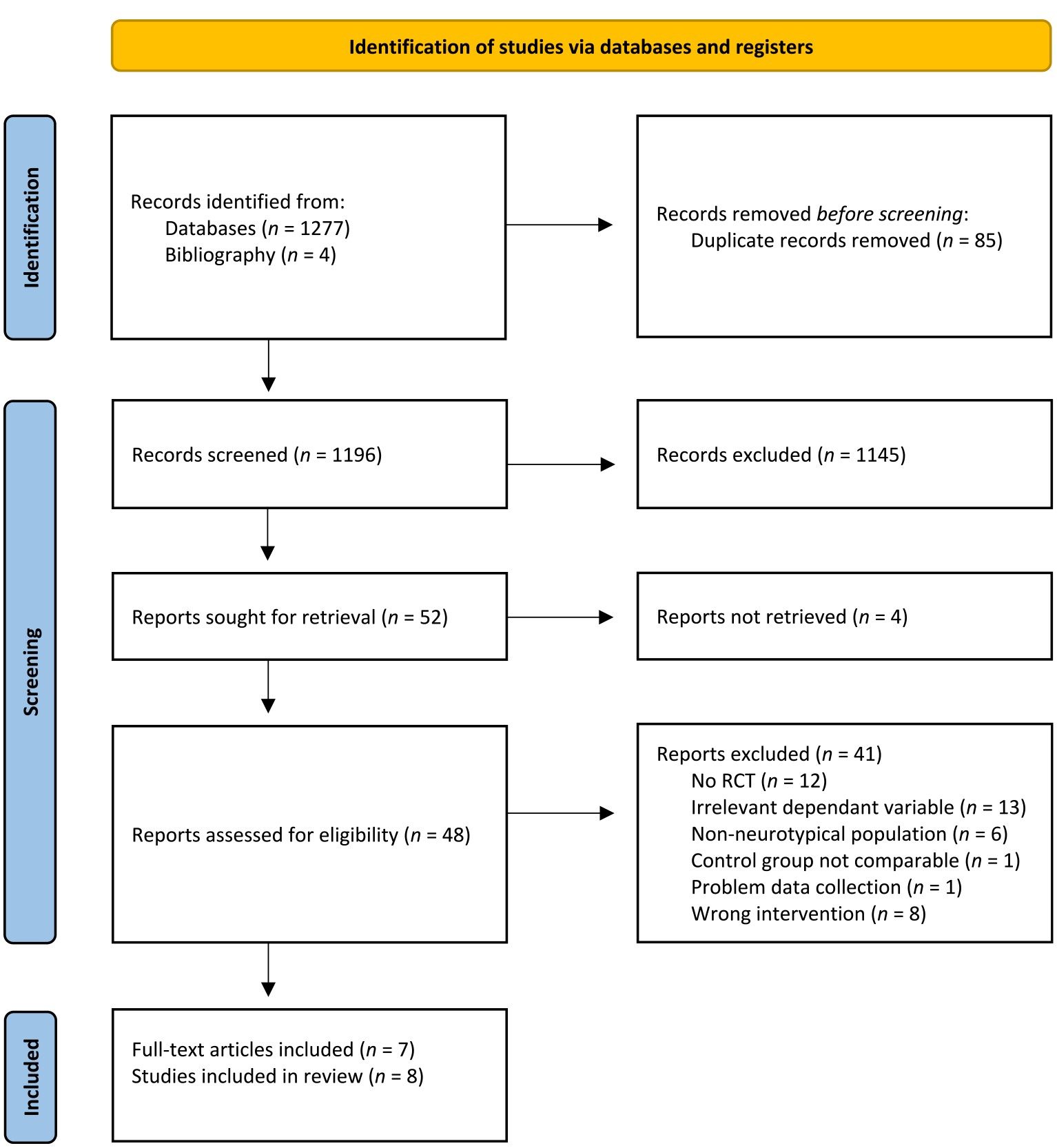
Flowchart.
The quality of the randomized control trials (RCT) was assessed by two independent coders using the 6-item Quality Assessment Scale based on Cochrane’s Risk of Bias Tool (Higgins et al., 2011) and assessed by a methods expert (third author) in ER. One study was removed because the two groups that were compared were nonequivalent (Dingle et al., 2017) and one other study was removed due to attrition and data collection problems (Hides et al., 2019). In total, seven articles representing eight studies were selected for inclusion in this meta-analysis, involving a total of 441 participants.
Data extraction
The following information was extracted from the studies retained for the meta-analysis:
Type of musicking (playing, creating, listening),
Emotion regulation measures,
Number of MI sessions during the program,
Duration of each MI session in minutes,
Total duration of the MI sessions in minutes,
Sample characteristics: general, at-risk, clinical (see Table 1 for details),
Participant age in years,
Year of publication.
Meta-analytic procedures
The meta-analysis was conducted using Comprehensive Meta-Analysis Version 3.0 (Borenstein et al., 2014). Three basic approaches exist for comparing the effect size of a set of studies: (1) comparing final values of the control group and the experimental group; (2) comparing the pre–post values of the experimental group; (3) comparing the evolution of data between the control group and the experimental group.
In the present meta-analysis, the third approach was adopted as it considers the wealth of pre-test and post-test design with a control group. The effect sizes were calculated using the formula recommended by Morris (2008, p. 369):

with a pooled standard deviation defined as

and

Standardized mean differences (SMD) were calculated for each study using a random-effect model considering the heterogeneity of the measures. Effect sizes were represented by SMD that were corrected for biases using Morris’s (2008) formula. Effect sizes were qualified based on the following criteria recently described by Funder and Ozer (2019). A Cohen’s d of .20 is interpreted as small, a d value of .40 is considered moderate and a d of .60 is large. Values greater than .80 are considered very large (Funder & Ozer, 2019). For the studies (k = 4) that included a follow-up measure, only the first ER measure reported following MI was retained for analysis. If a study reported using more than one measure of ER, a mean effect size was calculated and used in the meta-analysis. Publication bias was assessed using visual inspection (funnel plot) and the Trim-and-fill procedure (TFP) (Duval & Tweedie, 2000).
Categorical moderators were tested using the Q statistic. Continuous moderators were tested and analyzed using meta-regression. The Q statistic was used to test for heterogeneity of effect sizes across studies. Heterogeneity of results was assumed if Q was significant at the p < .05 level, allowing for the testing of potential moderators. To conduct moderator analyses with a low number of studies, statistical power was used to determine whether these analyses were valid. According to the literature (Valentine et al., 2010), statistical power for the current meta-analysis is .99, which is sufficient for exploratory purposes.
Moderator analyses were conducted to test whether the relationship between musicking and ER varied as a function of each of the proposed moderator variables: (a) Age of participants, ER skills likely to manifest themselves differently depending on age (Gross, 1999); (b) duration of the intervention (Martin-Saavedra et al., 2018); (c) general versus at-risk or clinical populations (Sloan et al., 2017; Uhlig et al., 2013); and (d) year of publication.
Results
Study characteristics
The mean ages of the participants varied across studies, from 4.7 to 47.1 years. The mean age of participants younger than 18 was 9.76 years (SD = 3.82). The mean age of participants older than 18 was 31.73 years (SD = 6.44). Sample sizes ranged from 14 to 113. The mean age for all participants was 15.5 years (SD = 12.4).
In this meta-analysis, 50% (k = 4) of the studies included a listening component, 62.5% (k = 5) asked the participants to play music, 25% (k = 2) included creative activities, and 75% (k = 6) of the articles proposed a playing or creating component.
The length of the MI sessions varied between 360 and 1,000 min (M = 677.94 min; SD = 241.71 min). The number of MI sessions varied between 4 and 20 and the duration of each session varied between 30 and 90 min. For one of the studies (Currie & Startup, 2012), the total time was not reported.
Three studies were conducted with general populations and five studies with clinical or at-risk populations. The characteristics of the studies retained for the meta-analysis are summarized in Table 1.
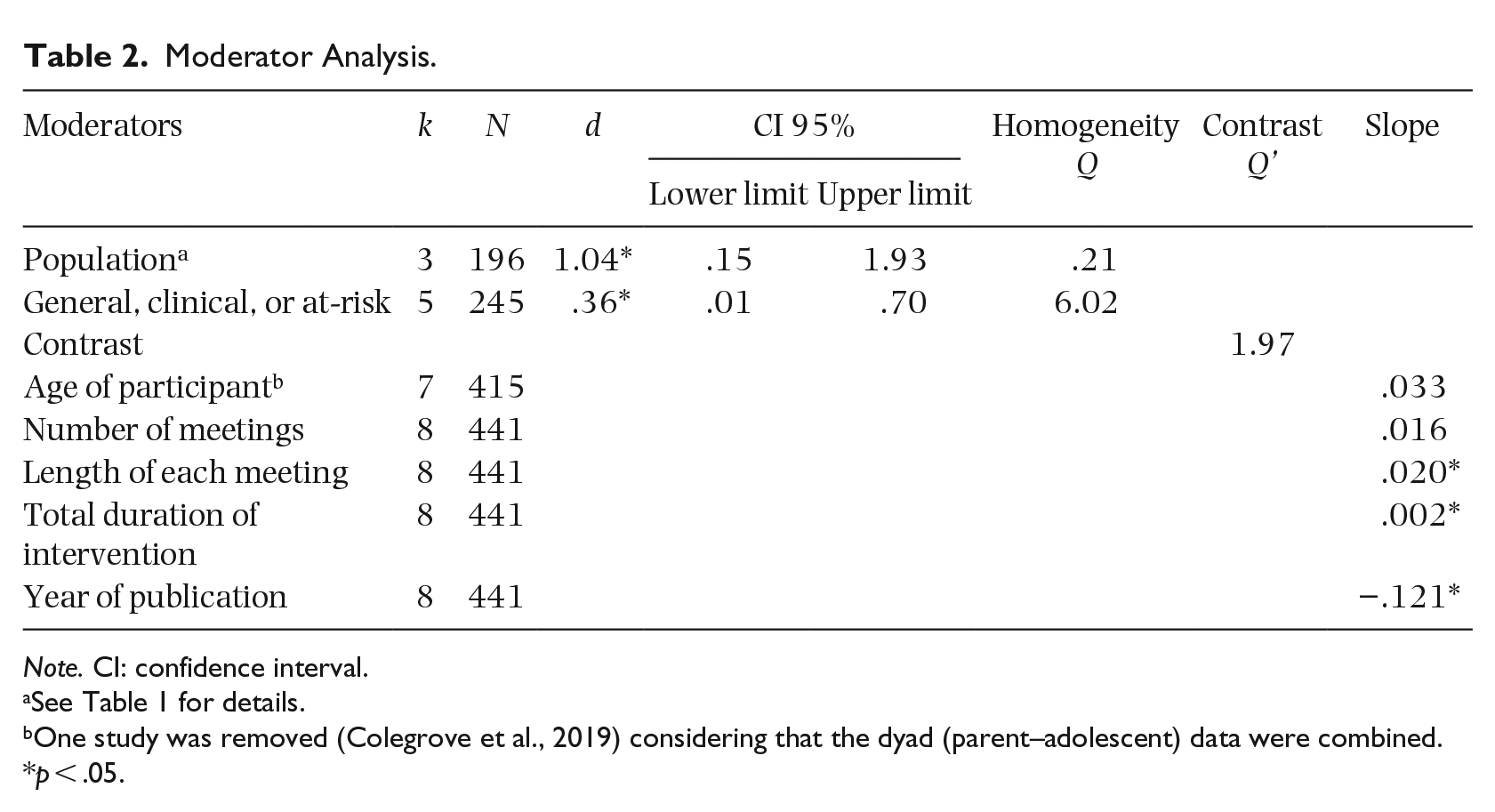
Moderator Analysis.
Note. CI: confidence interval.
See Table 1 for details.
One study was removed (Colegrove et al., 2019) considering that the dyad (parent–adolescent) data were combined.
p < .05.
Main effects
Results are presented in Figure 2. According to the analyses, there was a significant global effect size of d = .45 (p < .01; k = 8); therefore, musicking in the context of an intervention program has a moderate impact on ER. No significant heterogeneity Q was found (Q = 9.86; p = .197; k = 8). Considering that the heterogeneity of the musical interventions is not significant and that the studies can be considered homogeneous, the moderating variables of interest were examined for exploratory purposes only.
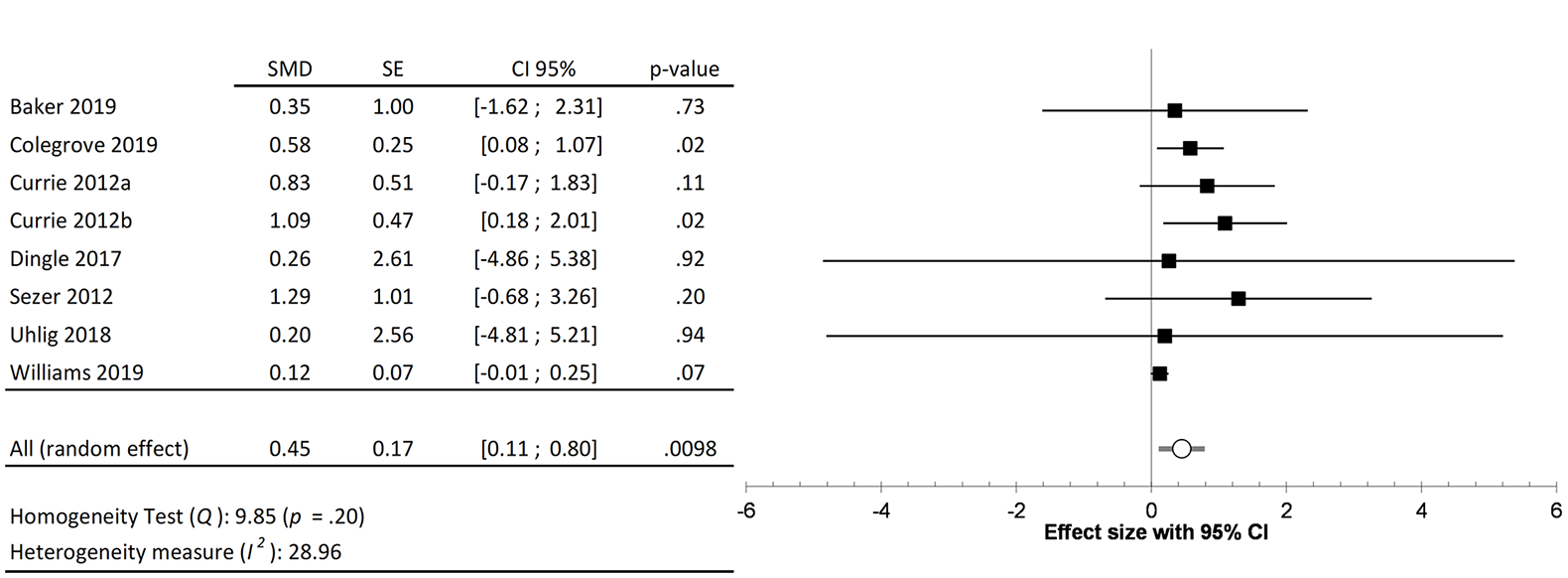
Forest Plot.
The TFP (Duval & Tweedie, 2000) revealed a publication bias, one study could possibly be missing. Therefore, a bias-adjusted effect size was calculated, d = .40 (Q = 10.25; k = 8). No outlying studies were identified (i.e., Z values not lower than −3.29 or greater than 3.29; Tabachnick & Fidell 2001). Considering that this bias did not change the interpretation of the data, analyses with the primary data continued.
Moderator analysis
Age of participants
Emotional regulation skills are likely to manifest themselves differently depending on age. The meta-regression shows that the age of participants did not significantly influence the short-term effects of the MI: slope = .033; p = .087.
Duration of the MI
There was a significant moderating effect of the duration of the MI on the relationship between musicking and ER (slope = .002, p = .017). The higher the total MI time in minutes, the larger the impact of musicking on ER.
There was no significant moderating effect of the number of MI sessions on the relationship between musicking and ER (slope = .016, p = .73). However, there was a significant moderating effect of the length of each MI session on the relationship between musicking and ER (slope = .020, p = .01).
General versus clinical or at-risk populations
There was no moderating effect of belonging to general, clinical, or at-risk populations on the relationship between musicking and ER (Q’ = 1.97, p = .16).
MI had a high and significant effect on the ER of general populations (d = 1.04, p = .02, k = 3) and a small to moderate significant effect on the ER of clinical or at-risk populations (d = .36, p = .04, k = 5).
Year of publication
There was a significant moderating effect of year of publication on the relationship between musicking and ER (slope = −.121, p = .011). The effect size was smaller in more recent studies.
Discussion
One of the most important findings of this investigation is the rarity of existing empirical studies of good quality that have explored the impact of musicking on ER. Clearly, this avenue of research needs to be enriched. Nevertheless, the results of this meta-analysis indicate that musicking has a moderate impact on ER. However, these results must account for the possibility of publication bias (missing 1 study) and a small sample size of studies (N = 8). More recent publications reported smaller effect sizes probably due to more rigorous methods and better controlled variables. It seems important to consider the length of the MI program and the sessions in the design of studies looking at the impact of music programs on ER. Moreover, short-term effects are documented in most of the studies, observed concurrently, at the time of the MI, or immediately following the MI. It may be that regular musicking helps a person to cope better, contributing to well-being, human flourishing. It would be interesting to observe how music might be used as an ER strategy in the moment but also long term, as a way toward constructive emotion management.
Regarding the moderator variables, the MI duration, Population type, and Type of musicking will be considered for discussion. Given the significant moderating effect of the duration of the MI on the relationship between musicking and ER and the larger impact of musicking on ER when total intervention time was higher, professionals should envision long-term MI programs in different contexts including clinics, communities, and schools, whenever possible. Given the high and significant effect of musicking on ER for the general population and the small to moderate significant effect of musicking on the ER of clinical and at-risk populations, it seems probable that musicking might result in positive outcomes and could be included as an accessible protective strategy in intervention programs, integrated into music education curricula, in addition to its more widespread use in therapeutic programs.
Further studies must be conducted to confirm findings and provide examples of educating about the adoption of ER strategies with music that might contribute to well-being rather than self-harm (McFerran, 2019). In addition, it would be interesting to explore the moderator effects of different types of MI, listening versus playing versus creating in future research. The studies included in this meta-analysis were highly variable and therefore, it was not possible to include moderator analyses for Type of musicking.
Limitations
Few studies rigorously documented the impact of musicking on ER and only eight studies were identified with control groups for this meta-analysis. In addition, a wide diversity of ER measures was used and few studies described the MI processes in detail. These factors limit the interpretation of the results of these analyses.
Future directions
Future studies should explore the effectiveness of the MI, looking more closely at the impact of different types of musicking on ER. Only two studies in the meta-analysis focused on creating. More studies describing the MI program in detail are needed. One rare instance is the description of the Tuned In program described by Dingle and Fay (2017). ER strategies with music need to be detailed, including how these strategies help to shift the emotional experience (Ochsner & Gross, 2007).
In addition, ER strategies, with and without music need to be compared (Hides et al., 2019; Randall et al., 2014) to elucidate music’s emotion-regulatory power and unique role in increasing positive emotions and solace (Saarikallio, 2010). “The connections between music-related regulatory strategies and general emotion strategies may provide a useful viewpoint for future research to understand the effectiveness of music-related regulation in terms of adaptive behavior and emotional well-being” (Saarikallio, 2010, pp. 322–323).
Musicking may have an impact on the emotion-generative process by directly intervening at each of the five steps (ER strategies): situation selection, situation modification, attentional deployment, cognitive change, and response modulation presented by Gross (1998, 2014, 2015). Before the emotion occurs, it is possible to choose a situation that will give rise to desirable or undesirable emotions. For example, an individual could choose to take part in musical activities (e.g., listening to or playing certain pieces that procure enjoyment) because they believe that these activities will generate positive emotions. The person might need to leave the room, because there are too many people, and listen to music in another physical environment, with headphones, to create their own “bubble” (situation modification). When the emotion-generating situation is in progress, the individual might choose to utilize attentional deployment to influence emotions. For example, a hospitalized patient, anxious about an imminent surgery, could choose to direct their attention toward a stimulus other than their anxiety by listening to music that they enjoy. The music could then be used as an ER distraction strategy (Bradt et al., 2013).
Music may also be used to change the perception of an event (cognitive change), thus contributing to altering the emotions experienced. Musically, this process could be translated as follows: An individual chooses to compose, play, or listen to a song aligned with the situation generating the emotions (e.g., a recent breakup). Composing or playing music or listening to a piece of music dealing with the same issues as the situation experienced could then contribute to modifying the appraisal of the situation and consequently, altering its emotional significance.
Finally, music may contribute to response modulation. As such, several studies show that music can act on neurochemical components of emotions such as dopamine, serotonin, oxytocin, cortisol, corticotrophin-releasing hormones, and adrenocorticotropic hormones (Chanda & Levitin, 2013; Ferreri et al., 2019; Speranza et al., 2022).
Therefore, music has the potential to impact the emotion-generative process, deployed as an emotional regulation strategy. What remains to be investigated are the rules that govern the skillful application of ER with music. According to Dingle and Fay (2017), there are some recent attempts to understand the mechanisms by which music influences emotion and ER strategies (Chin & Rickard, 2014; Miranda & Claes, 2009; Saarikallio & Erkkilä, 2007). More studies using standardized instruments created to specifically measure ER strategies with music are needed.
Classroom-based MI might be one way of teaching healthier patterns of ER to the general population. Unfortunately, only one study in this meta-analysis included school groups: To our knowledge, it is the first study on the underrepresented subject of music and emotion regulation in a school group setting, and we tested its application. There were no other studies to compare with, nor existing validated measurements for music and emotion assessment. (Uhlig et al., 2018, pp. 581–582)
According to Dingle and Fay (2017), “there is clearly room for a brief and engaging emotion regulation program aimed at prevention and skills building in young people” (p. 514). As demonstrated by Saarikallio and Erkkilä (2007), music can strengthen positive feelings and help to move away from negative ones as well as regulate the intensity of the affect. Given that adolescence can be a difficult period of life to navigate, it seems important to harness the power of music to satisfy emotional goals including discharging negative emotions and changing mood in a more positive direction. According to Saarikallio’s (2010) study exploring central processes and strategies of emotional self-regulation (ESR) with adults, ER theories have mainly focused on how to deal with negative emotions; therefore, it would be important to consider how music is linked to enjoyment, positive feelings and understand the unique ESR role music plays in maintaining and increasing positive emotions as well as its use for solace, “described as something like imaginary social regulation, somewhat comparable to talking to friends” (p. 323).
Therefore, given that music listening is an important coping strategy and is used for ER purposes (Miranda & Claes, 2009; Uhlig et al., 2013) and that people with ER skills demonstrate higher social competence and better socio-emotional adjustment (Riediger & Klipker, 2014), research in educational settings (Dingle & Fay, 2017) and classroom-based MI may contribute to envisioning ways of teaching healthier patterns of ER to a wider population (Gross, 2014). University music pedagogy programs and professional development offers might include modules on music and ER, offering examples of how this knowledge might be mobilized in music education practice but also for MI programs dedicated to promoting the well-being of general and vulnerable populations. Indeed, Uhlig et al. (2013) concur, encouraging “more detailed and combined studies, building bridges between researchers, educators and therapists, focusing on emotion regulation for real world participants” (p. 2). Understanding why people regulate their emotions as they do, and which strategies are employed to achieve regulatory goals are important challenges for researchers (Gross, 2014).
Conclusion
Artistic activities such as musicking may play an important role in well-being and positive human flourishing for diverse populations (Ansdell & DiNora, 2012; Croom, 2015; Tay et al., 2018; VanderWeele, 2017). How musicking interventions and music pedagogies might be envisioned to this end will require continued exploration. Given that music is omnipresent, valued, and accessible in everyday life, it may be important to reflect on how “music can now be seen as a resource rather than merely as a commodity” (North et al., 2004, p. 42). Questions about the why and how of music use in everyday life may be important given its association with psychological functions such as emotion regulation and coping as well as its capacity to “evoke powerful emotional reactions in people” (Chamorro-Premuzic & Furnham, 2007, p. 175). Gabrielsson (2011) notes that these powerful emotional reactions have allowed people to “use” this experience, especially in somehow critical situations, to affect their mood. They try to revive the positive feelings from this occasion by listening to the same music or just thinking of how it felt . . . SEM becomes a resource available for use when needed. (p. 107)
This study contributes to the mounting research regarding the unique contribution of the arts for all populations. Rather than dismantling music programs in schools and communities during difficult times, it is necessary to clarify how the development of musical competencies contributes to ER as well as educating people to mobilize these strategies. In the context of scarce resources and even more so in crisis situations, it becomes a societal responsibility to identify and propose accessible strategies likely to help manage the emotional experiences of general, at-risk, and clinical populations.
Footnotes
Acknowledgements
The authors gratefully acknowledge Guylaine Lemay, a doctoral candidate at Université Laval, for her help in completing this manuscript and Mélissa Gravel for her help in developing a search strategy.
Declaration of conflicting interests
The author(s) declared no potential conflicts of interest with respect to the research, authorship, and/or publication of this article.
Funding
The author(s) disclosed receipt of the following financial support for the research, authorship, and/or publication of this article: This article draws on research supported by the Social Sciences and Humanities Research Council of Canada (SSHRC). The Insight Development Grant, How musical learning acts as a protective factor, contributing to the development of socio-emotional competence for at-risk populations, will develop and mobilize knowledge regarding flourishing, emotion regulation, and the development of social and emotional competencies through musicking across the lifespan.
