




Abstract
This study aimed to test whether the adaptive functions of music listening would mediate the relation between music engagement and subjective dream intensity and whether this mediation relation would be moderated by the regularity of music listening and level of music training. A total of 236 undergraduate students were invited to complete the Music Engagement Questionnaire, Music Use Questionnaire (MUSE), Adaptive Functions of Music Listening Scale (AFML), and Dream Intensity Scale. The analyses using the PROCESS Marco Models 4 and 75 demonstrated a significant mediation effect of the AFML and significant moderation effects of the MUSE Music Listening and Music Training Indices. This provides the first empirical evidence for the indirect effect of active music engagement on dream intensity via adaptive music listening. In addition, the overall evidence highlights the implication for the significance of music behavior in maintaining mental healthiness. Because an individual’s emotional concerns and difficulty in emotion regulation during waking as reflected by the subconscious process of dreaming are modulated by music behavior and adaptive music listening, directed music engagement for adaptive purposes could form a potential tool for psychological intervention, irrespective of the effect of the regularity of music listening and the background of music training.
Music listening is considered by some researchers to be an adaptive behavior, which promotes positive emotions (e.g. Laukka, 2007; Liljeström et al., 2013; North et al., 2004) and mitigates negative emotions (e.g. Knight & Rickard, 2001; Radstaak et al., 2014; Sandstrom & Russo, 2010). After an extensive literature review, Groarke and Hogan (2018) developed the Adaptive Functions of Music Listening Scale (AFML) for assessing music listening as a coping strategy. The AFML comprises 11 subscales, most of which measure the extent to which listening to music can facilitate the regulation of emotions and feelings. Specifically, the Stress Regulation, Anxiety Regulation, Anger Regulation, and Loneliness subscales address the use of music to tone down adverse feelings or turn them into more positive ones, the Strong Emotional Experiences and Rumination subscales being concerned with intensifying, deepening, and diversifying emotional experiences by listening to music.
As with music listening, dreaming has been conceived as an affect-regulatory process. Dreaming is susceptible to emotional experiences in waking life. There is ample evidence for the connection between dream emotions and waking moods (e.g. Antunes-Alves & De Koninck, 2012; Gilchrist et al., 2007; Schredl & Reinhard, 2009; Yu, 2007). There is also evidence that waking-life activities, especially emotionally intense events, are incorporated into dream content (Eichenlaub et al., 2018; Malinowski & Horton, 2014; Schredl & Hofmann, 2003). Furthermore, many researchers (e.g. Cartwright, 2010; Deliens et al., 2014; Kramer & Barasch, 2000; Levin et al., 2010; Perogamvros & Schwartz, 2012; Walker & van der Helm, 2009; Westermann et al., 2013; Yu, 2015, 2022) have postulated that dreaming serves the function of affect regulation by, for instance, desensitizing adverse subjective feelings, dealing with daytime preoccupations, and decoupling emotions and memories.
In view of the continuity between waking and dream activities and the analogous function of affect regulation shared by music listening and dreaming, it can be conjectured that dream experiences might be, one way or another, accounted for by the adaptive functions of music listening in waking life. For instance, the habit of music listening might amplify waking moods, which in turn renders dream experiences at night more vivid. Similarly, the effort to regulate negative sentiments by listening to music might mobilize dream resources.
Music listening for adaptive purposes is only one aspect of music engagement. Besides the emotional experience of music (e.g. “I become emotional when I hear certain types of music”), according to Vanstone et al.’s (2016) measurement model, music engagement can be evaluated by the role of music in daily life routines (e.g. “I listen to music while I perform chores or boring tasks”), musical performativity (e.g. “I create my own music”), musical consumer behavior (e.g. “I spend money to buy recordings or attend concerts”), responses to music (e.g. “I move my body to the beat of music that is playing”), and preferences for music (e.g. “I like particular styles of music”). In other words, music engagement can be seen as a person’s overall commitment to a variety of music-related activities or the degree to which music permeates a person’s daily life. It is this overall devotion to and attitude toward music that we attempted to investigate in this study. Considering the effect of music engagement on dream experiences, music listening as an integral part of music engagement, and the comparable function of affect regulation between music listening and dreaming, this study was geared toward testing whether the adaptive functions of music listening would mediate the effect of music engagement on dream experiences. Vanstone et al.’s (2016) Music Engagement Questionnaire (MusEQ) was used to measure psychological engagement with music in everyday life.
Studies have been conducted to examine the effect of music engagement on dreaming. Olbrich and Schredl (2019) reviewed empirical studies which reported the prevalence of dreaming about music. They observed that music can take various forms in dreams, for example, listening to music, playing an instrument, singing, talking or thinking about music, and even creating new music during dreaming. These dream experiences are broadly referred as music dreams. In Uga et al.’s (2006) study, the prevalence of music dreams was two times higher in musicians than in non-musicians despite their similar frequencies of dreams with and without recalled content. Similar findings that music activities during wakefulness influence the frequency of music dreams but not overall dream recall frequency were also replicated in the studies of Kern et al. (2014) and König and Schredl (2021). In view of these findings, it seems that playing musical instruments does not influence the incidence of dream recall. However, music engagement, which is not necessarily limited to playing musical instruments, might be related to certain facets of dream intensity, such as auditory experiences during dreaming.
Even though overall music engagement might not be directly implicated in dream experiences, more engagement in music activities might bear on dream experiences via its connection with the adaptive functions of music listening. In other words, a person who is more engaged in music activities is probably more likely to draw on the adaptive functions of music listening and therefore experience more intense dreams. It should be noted that engagement with music in everyday life, as measured by Vanstone et al.’s (2016) questionnaire, differs from amount of music listening or level of music training. Given the potential effect of adaptive music listening being amplified by music training and the previous evidence for the differences in dream experiences between musicians and non-musicians (Uga et al., 2006), music training was hypothesized to modulate the mediation effect of the adaptive function of music listening on the relation between music engagement and dream experiences. For the same reason, frequency of music listening was posited to be another factor that would moderate the mediation effect of the adaptive function of music listening.
It is important to note that although the Emotion subscale of Vanstone et al.’s (2016) MusEQ contains three items about emotion regulation (e.g. I relax when listening to peaceful music), these three items comprise only a 10th of the MusEQ items. Similarly, the MusEQ consists of items measuring listening (e.g. If I am bored, I listen to music to pass the time) and performing music (e.g. I show interest in learning about pieces of music that I enjoy), but these items are concerned with music-related attitudes and characteristics of music-related habits rather than the level of music training and frequencies of performing and listening to music.
In the investigation of the abovementioned mediation model, it is necessary to factor in the frequency of music listening and the level of music training, which are very likely to moderate the effects of music engagement and adaptive music listening. The second aim of this study, therefore, was to examine whether the relation between music engagement and dream experiences mediated by the adaptive function of music listening would be moderated by the regularity of music listening and former music training. It was hypothesized that the amount of music listening and level of music education would uplift the adaptive functions of music listening, thereby affecting the mediated relation.
Moreover, the prevalence of music dreams varied from 4% to 40% of dream samples across the eight studies reviewed by Olbrich and Schredl (2019). The variation in the prevalence of music dreams could be attributed to research methodology and participants’ musical backgrounds. Specifically, the prevalence rate of music dreams for non-musician participants in Uga et al.’s (2006) study was 18.2%, which was higher than the prevalence rate for participants with musical backgrounds in any other studies—17.4% for music students in Vogelsang et al.’s (2016) study, for example. The high prevalence rate found by Uga et al. (2006) might be caused by the research instruction, which prompted participants’ focus on their music dream experiences, according to Olbrich and Schredl (2019). Accordingly, the study of the overall intensity of dream experiences, rather than music dreams, may to a certain extent reduce this cognitive bias.
Most previous studies of music dreams compared participants with and without playing musical instruments. A few studies (e.g. König et al., 2018; Vogelsang et al., 2016) demonstrated that spending more time in various music activities—such as singing and listening to music—was related to the occurrence of music dreams. No studies have been designed specially for examining the effects of music engagement on dream experiences other than music dreams. Previous studies assessed general dream recall frequency with either a retrospective scale or a prospective diary. Nonetheless, the subjective magnitude of dreaming can be more thoroughly assessed by four primary factors of the Dream Intensity Scale (DIS) in accordance with Yu’s (2012) validated measurement model: Dream Quantity, Dream Vividness, Diffusion, and Altered Dream Episodes. Replicated evidence (Yu, 2010a, 2010b, 2012) indicated that the frequencies of individual dream variables measured by a single-item scale are less sensitive than the DIS global and factor scores to individual variations in personality traits.
Instead of focusing on music dreams, this study adopted the DIS to assess subjective dream experiences and therefore more comprehensively capture the effects of music activities on dreaming. This would yield a more complete model for explaining the triadic relation between music engagement, adaptive music listening, and dreaming. The association between music and dream experiences is an understudied subject in the field of dream research despite its theoretical and practical implications. By testing how dream experiences might be affected by waking music experiences with consideration of the adaptive functions of emotion processing and factors such as music training and the regularity of music listening, this study could clarify the process that might connect music engagement in the daytime to dream experiences at night and therefore might inspire future practice that engages individuals in both music and dream activities for the improvment of psychological well-being.
Method
Participants
The sample consisted of 96 male and 140 female university students in Hong Kong. Their ages ranged from 17 to 25 years (M = 21.20, SD = 1.52). They were recruited through convenience sampling. The study was advertised and invitations were sent through the university electronic communication system. Participants’ degree of music engagement, amount of music listening, level of music training, efficacy of adaptive music listening, and intensities of dream experiences were assessed, respectively, by the MusEQ, both the Index of Music Listening (IML) and the Index of Music Training (IMT) of the Music Use Questionnaire (MUSE), the AFML, and the DIS.
Measures
Music Engagement Questionnaire
The MusEQ (Vanstone et al., 2016) consists of 32 items and six subscales: Daily (e.g. “I tell others if I hear a song that I really like”), Emotion (e.g. “I play a song over and over if I like it”), Perform (e.g. “I play a musical instrument for pleasure”), Consume (e.g. “I enjoy attending concerts or other live musical performances”), Response (e.g. “If others are singing, I join in”), and Prefer (e.g. “I dislike certain styles of music”). Participants were asked to rate on a 5-point scale (1 = not at all to 5 = very much). The total score of the MusEQ is produced by summing all 32 items. A higher total score indicates a higher level of music engagement. The internal reliability of the MusEQ was excellent in this sample (α = .91).
Music Use Questionnaire
The subscales IML and IMT of MUSE (Chin & Rickard, 2012) were utilized to measure the regularity of music listening and the level of music training. IML was computed by multiplying the frequency of listening music per week and the duration of listening music per day, which were, respectively, elicited by the items “on average, how often do you listen to music in a week” and “on average, how many hours do you purposely listen to music a day”. These two items were scored on a 5-point scale (1 = less than once a week to 5 = more than 6 times a week). IMT was calculated by adding up the scores for the levels of achievement in school-based music training, non-school-based music training, and board-certified examinations, which were, respectively, probed by the items “what is the highest level of formal music training you have received”, “what other type of music training did you receive”, and “have you completed AMEB or equivalent such as ABRSM music examinations”. School-based music training and board certificate examinations were scored on a 5-point scale (0 = none to 4 = postgraduate training/Grades 7–8), whilst non-school-based music training was rated on a 4-point scale (0 = none to 3 = group music classes/tuition).
Adaptive Functions of Music Listening Scale
The AFML (Groarke & Hogan, 2018) assesses music listening as a coping mechanism. It consists of 46 items and 11 subscales, including Stress Regulation (“Listening to music distracts me from stress”), Strong Emotional Experiences (“When listening to music, I feel intense emotions”), Rumination (“When I feel sad/depressed, listening to music leads me to focus on those feelings”), Sleep (“I listen to music in bed because it helps me get to sleep”), Reminiscence (“Listening to music reminds me of people from my past”), Anger Regulation (“When I feel angry, I get comfort from listening to music”), Anxiety Regulation (“When I feel anxious, listening to music makes me happy”), Awe and Appreciation (“Listening to music, I feel a sense of awe for the talent of the composer”), Loneliness Regulation (“Listening to music makes me feel less alone”), Cognitive Regulation (“Having background music makes it easier to focus on what I’m doing”), and Identity (“Listening to music has helped me discover who I am”). Each item is rated on a 5-point scale (1 = strongly disagree to 5 = strongly agree). The sum of 46 items yields the total score, with a larger score indicating more efficacy of listening music for achieving an adaptive function. The internal consistency of the AFML was excellent in this study (α = .94).
Dream Intensity Scale
The DIS (Yu, 2012) evaluates both quantitative and qualitative dream experiences by 23 items and four major factors: Dream Quantity, Dream Vividness, Diffusion, and Altered Dream Episodes. The Dream Quantity scale encompasses variables that measure the quantitative aspect of regular dream activities shared by most people, such as dream recall frequency and nightmare frequency. The Dream Vividness scale is concerned with sensory experiences during dreaming (e.g. seeing colors, hearing sounds, feeling emotions in dreams). The Diffusion scale assesses dreamwork processes (e.g. symbolism, displacement) and paramnesic episodes (e.g. dream–reality confusion). The Altered Dream Episodes scale measures dream lucidity by gauging the incidence of altered forms of dream experiences (e.g. awareness of being in a dream, re-experience of wishful dreams). Participants rated each item using either the 10-point scale (e.g. 0 = never, 9 = almost every night) or the 5-point scale (e.g. 0 = almost every dream of mine is soundless, 4 = almost every dream of mine has sounds). The total DIS score is produced by summing the scores of the aforementioned four factors. A higher score represents a more intense phenomenological experience of dreaming. Internal consistency was reasonable for the total score of the DIS (α = .78) and the four factors (Dream Quantity, α = .81; Dream Vividness, α = .65; Diffusion, α = .62; Altered Dream Episodes, α = .69).
Statistical analysis
In addition to Pearson’s correlations, mediation and moderated mediation tests were conducted using the Models 4 and 75 (see Figure 1) of the PROCESS Marco (Hayes & Rockwood, 2017). Bias-corrected and accelerated (BCa) 95% confidence intervals (CI) were used to report the significance of analysis based on the accumulating evidence that bootstrapped CI outperforms p-value in detecting a true effect (du Prel et al., 2009; Greenland et al., 2016). In all the mediation and moderated mediation analyses, MusEQ and DIS were, respectively, set to be the independent and dependent variables, with AFML being the mediator and both IML and IMT being the moderators.
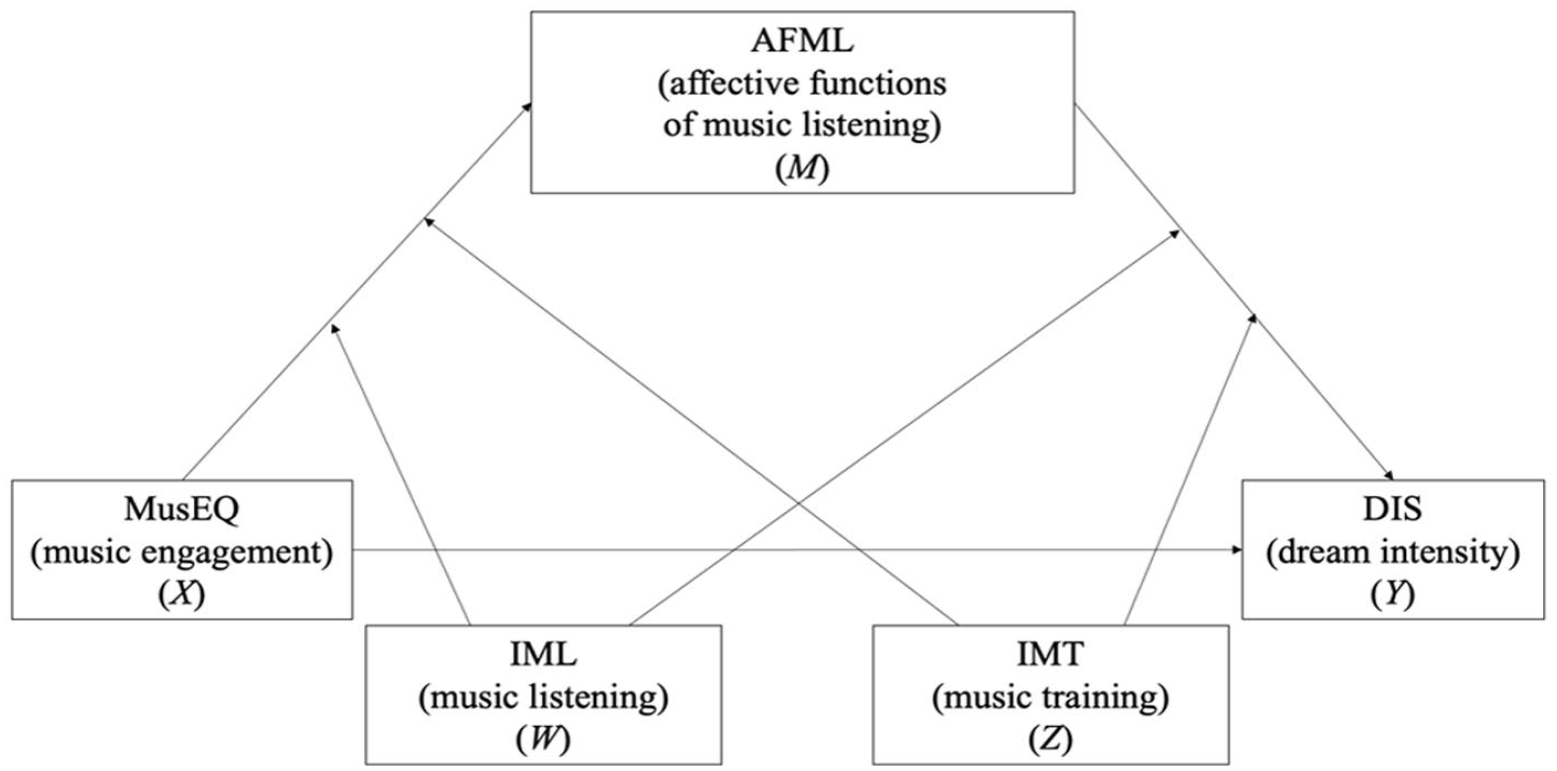
The Moderation Mediation Model of PROCESS Marco Model 75.
Results
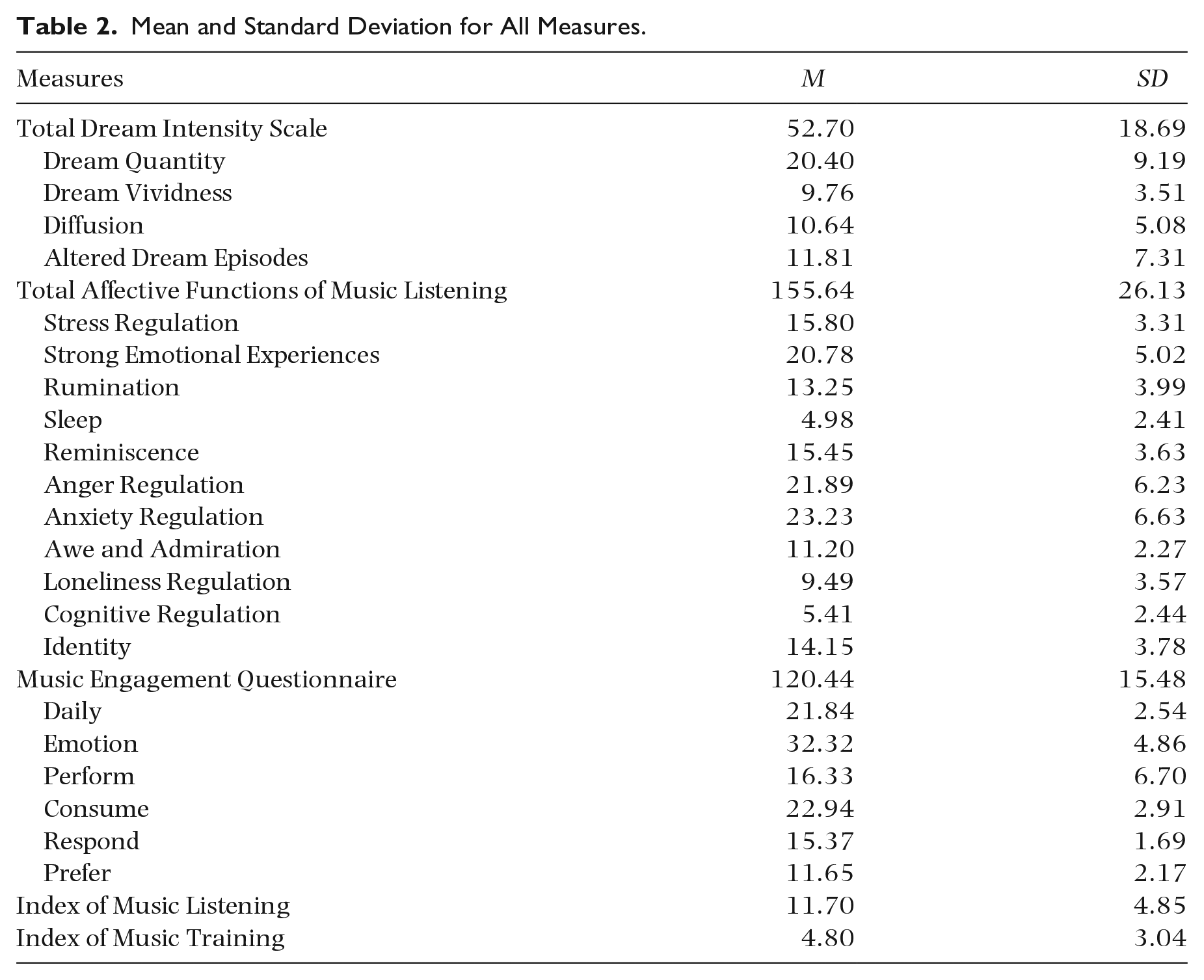
Table 1 presents the correlations among the scores of DIS, AFML, MusEQ, IML, and IMT. For the mean scores and standard deviations of all measures, please refer to Table 2.
Correlational Relationships Among All Measures.
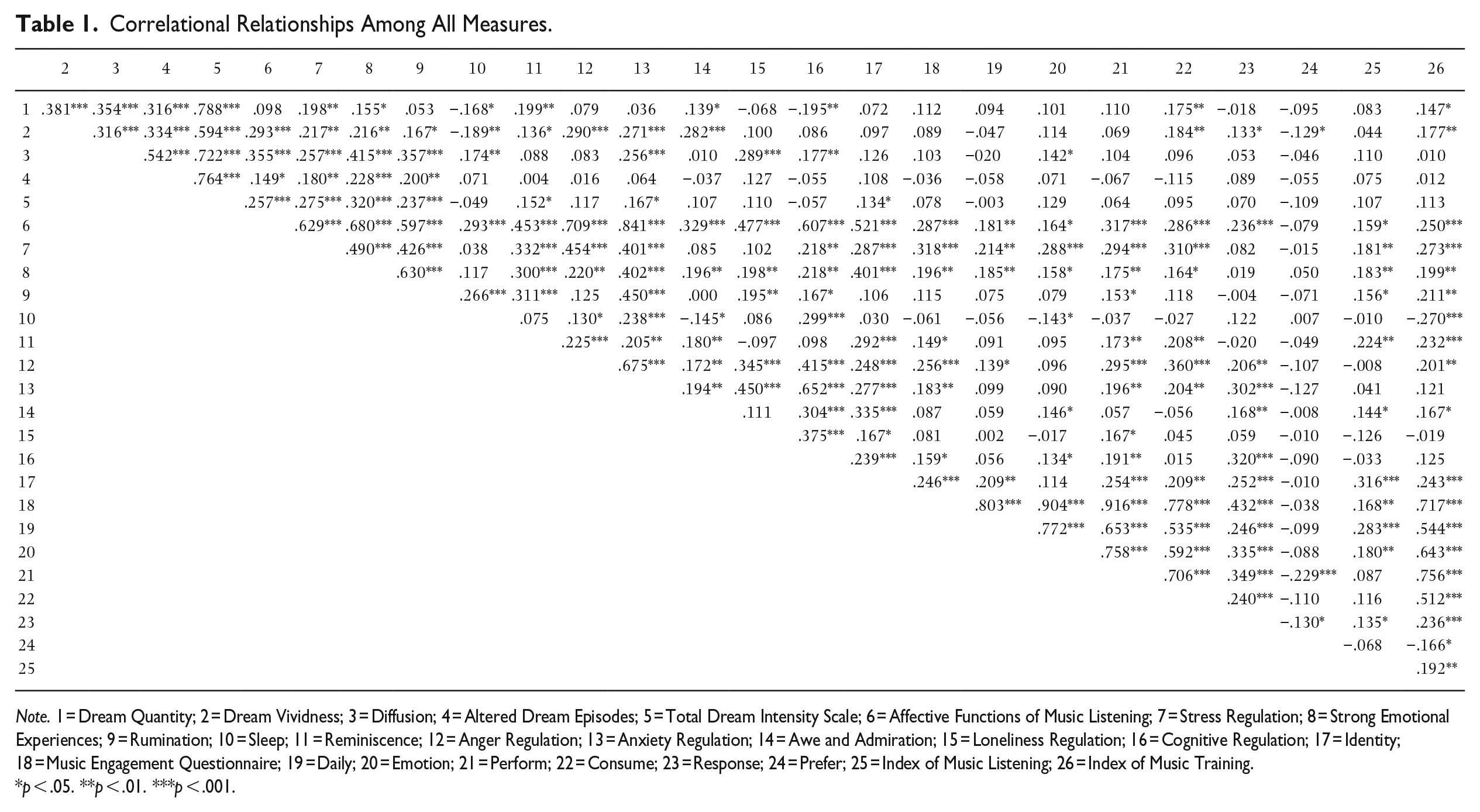
Note. 1 = Dream Quantity; 2 = Dream Vividness; 3 = Diffusion; 4 = Altered Dream Episodes; 5 = Total Dream Intensity Scale; 6 = Affective Functions of Music Listening; 7 = Stress Regulation; 8 = Strong Emotional Experiences; 9 = Rumination; 10 = Sleep; 11 = Reminiscence; 12 = Anger Regulation; 13 = Anxiety Regulation; 14 = Awe and Admiration; 15 = Loneliness Regulation; 16 = Cognitive Regulation; 17 = Identity; 18 = Music Engagement Questionnaire; 19 = Daily; 20 = Emotion; 21 = Perform; 22 = Consume; 23 = Response; 24 = Prefer; 25 = Index of Music Listening; 26 = Index of Music Training.
p < .05. **p < .01. ***p < .001.
Mean and Standard Deviation for All Measures.
Regarding the effect of the demographic factors of age and sex, the results have shown that age was significantly correlated with DIS Diffusion scores (r = −.190, p = .003), the total AFML scores (r = −.270, p = < .001), and the scores of AFML subscales Strong Emotional Experiences (r = −.200, p = .002), Stress Regulation (r = −.224, p = .001), Anger Regulation (r = −.167, p = .010), Anxiety Regulation (r = −.245, p = < .001), and Loneliness Regulation (r = −.241, p < .001). Independent t-tests showed a significant sex effect on DIS Altered Dream Episodes, and some scales of AFML and MusEQ (see Table 3).
Sex Differences in DIS, MusEQ, and AFML.
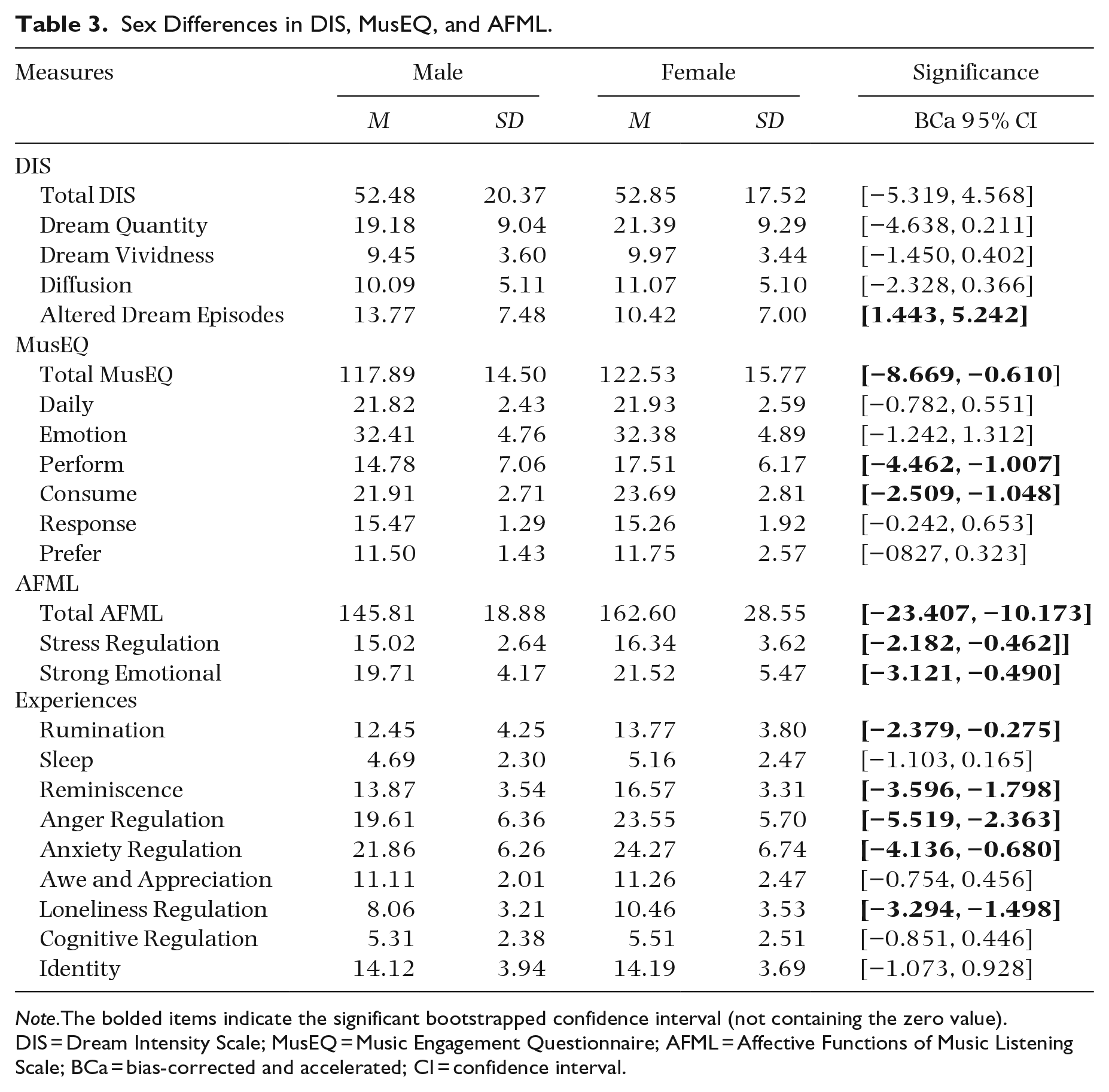
Note.The bolded items indicate the significant bootstrapped confidence interval (not containing the zero value). DIS = Dream Intensity Scale; MusEQ = Music Engagement Questionnaire; AFML = Affective Functions of Music Listening Scale; BCa = bias-corrected and accelerated; CI = confidence interval.
Mediation analyses
As age and sex were significant correlates, they were statistically controlled in the following mediation analyses. The PROCESS Marco Model 4 analyses showed that the total score of AFML significantly mediated the effect of MusEQ on DIS (b = .086, BCa 95% [.037, .1405]), DIS Dream Vividness (b = .019, BCa 95% CI [.009, .031]), DIS Diffusion (b = .029, BCa 95% CI [.015, .048]), and DIS Altered Dream Episodes (b = .032, BCa 95% [.011, .057]). Table 4 presents the model significance of the mediation analyses. All paths a1 and b1 were significant, with the direct effect (path c′) being nonsignificant. These medication analyses demonstrated the relations between the total scores of MusEQ and DIS, and the scores of the three subscales of DIS, namely Dream Vividness, Diffusion, and Altered Dream Episodes, were significantly mediated by AFML. No direct relation between MusEQ and DIS was found. This implied the importance of AFML underlying the relation between MusEQ and DIS.
The Mediation Effects of AFML on Music Engagement and Dream Intensity.
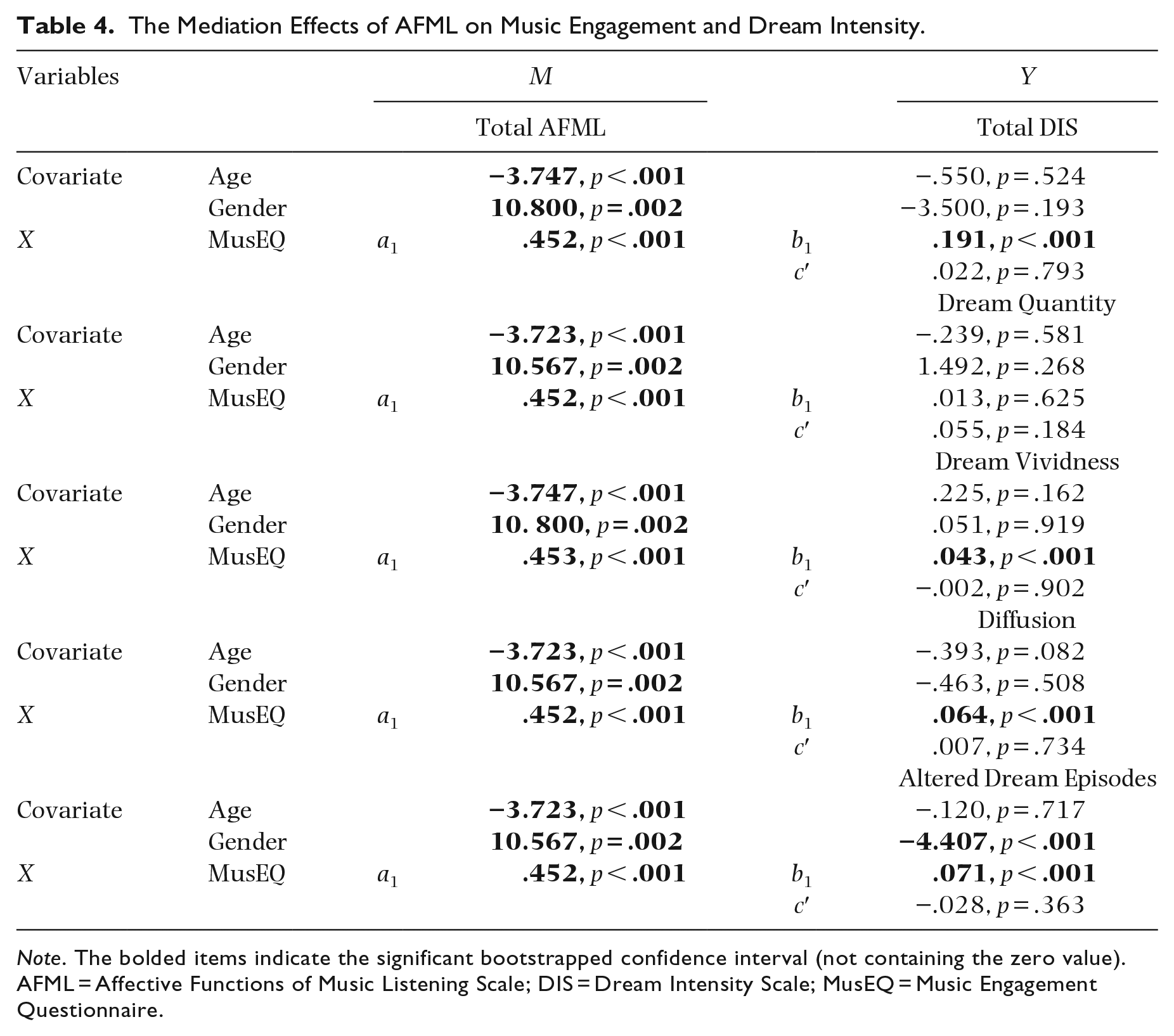
Note. The bolded items indicate the significant bootstrapped confidence interval (not containing the zero value). AFML = Affective Functions of Music Listening Scale; DIS = Dream Intensity Scale; MusEQ = Music Engagement Questionnaire.
Moderated mediation analyses
The PROCESS Marco Model 75 analyses demonstrated that the mediation effect of AFML on the relation between MusEQ and DIS was significantly moderated by IML and IMT, with age and sex being defined as the covariates. Table 5 presents the omnibus parameters of the moderated mediation effects. Consistent with the mediation analyses reported above, the moderated mediation effect was significant for DIS total, DIS Dream Vividness, DIS Diffusion, and DIS Altered Dream Episodes but not for DIS Dream Quantity.
The Significance of the Moderated Mediation Effects.
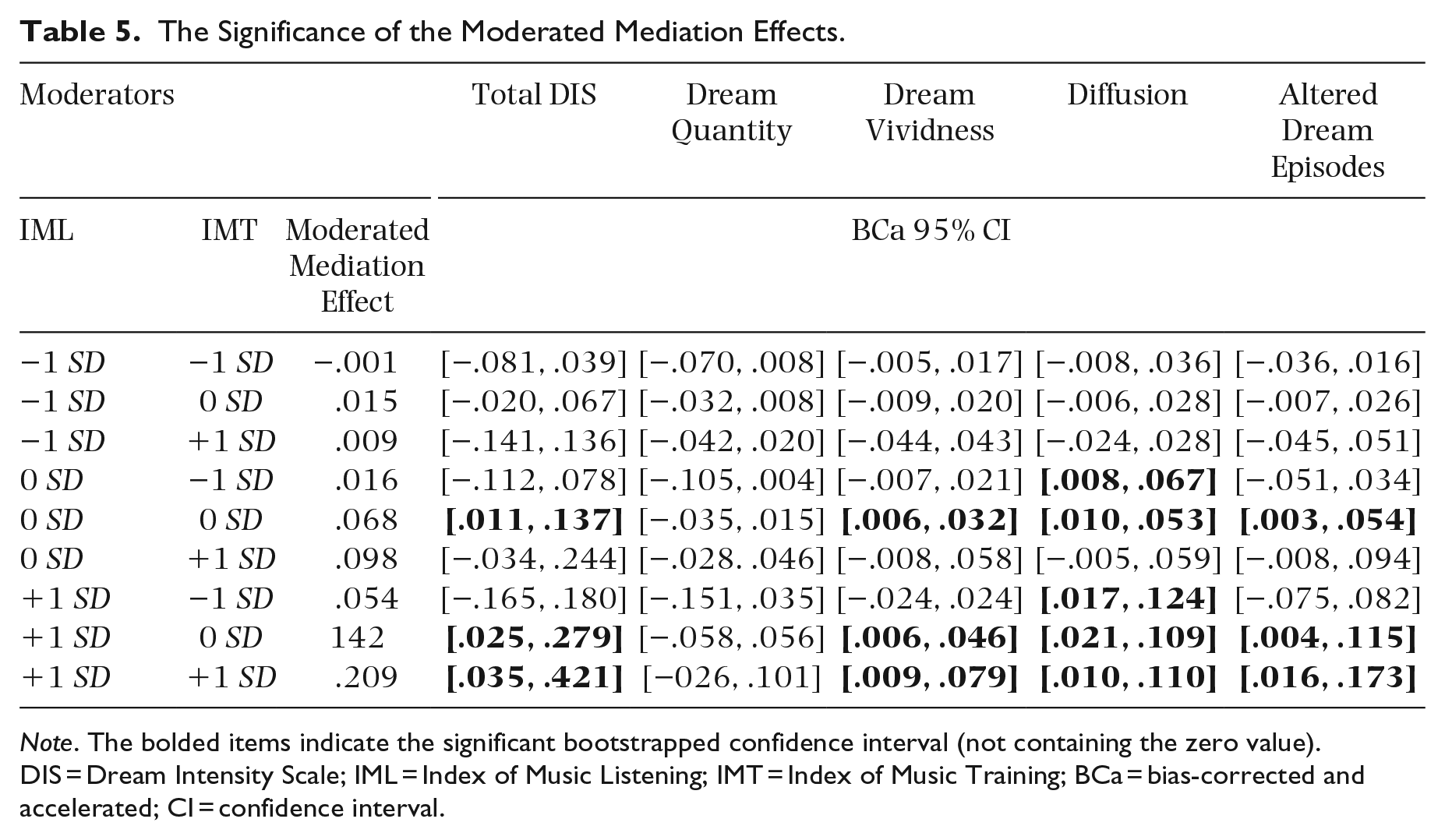
Note. The bolded items indicate the significant bootstrapped confidence interval (not containing the zero value). DIS = Dream Intensity Scale; IML = Index of Music Listening; IMT = Index of Music Training; BCa = bias-corrected and accelerated; CI = confidence interval.
Table 6 presents the model significance of the moderated mediation effects. As indicated by the significant effects of IML (denoted by path a2) and the interaction term of MusEQ X IML (denoted by path a4), the moderation effect of IML was remarkable in the path leading from MusEQ to AFML. On the contrary, the significant effects of IMT (denoted by path b3) and the interaction term of AFML X IMT (denoted by path b5) signified the moderation effect of IMT in the path leading from AFML to the total score of DIS. The same moderated mediation effect also applied to DIS Dream Vividness and DIS Altered Dream Episodes. The direct effect of MusEQ on DIS Dream Vividness was also significant (path c′ = −.043, p = .040).
The Moderated Mediation Effects of IML and IMT.
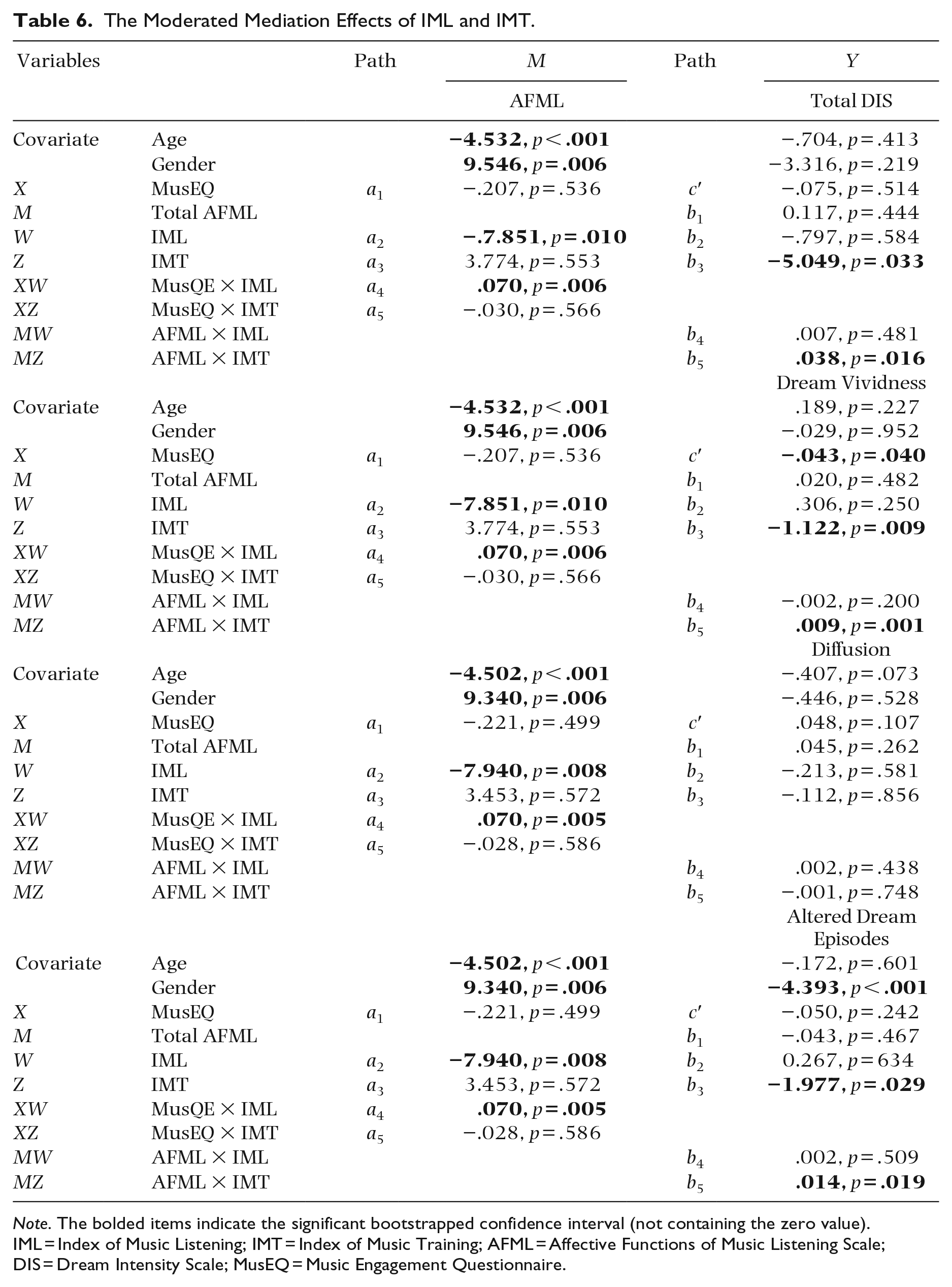
Note. The bolded items indicate the significant bootstrapped confidence interval (not containing the zero value). IML = Index of Music Listening; IMT = Index of Music Training; AFML = Affective Functions of Music Listening Scale; DIS = Dream Intensity Scale; MusEQ = Music Engagement Questionnaire.
As depicted in Figure 2, the positive relation between MusEQ and AFML was significantly strengthened at the medium level and the high level of IML. Similarly, the relation between the total scores of AFML and DIS (DIS Dream Vividness/DIS Altered Dream Episodes) was nonsignificant at the low level of IMT, significantly stronger at the medium level of IMT, and the strongest at the high level of IMT (see Figure 3). The corresponding statistics of the moderated mediation effects of IML and IMT are provided in Table 7. These results demonstrated that the effect of music engagement on adaptive music listening became more robust when the frequency of music listening increased. Likewise, a higher level of music training enhanced the effect of adaptive music listening on dreaming.
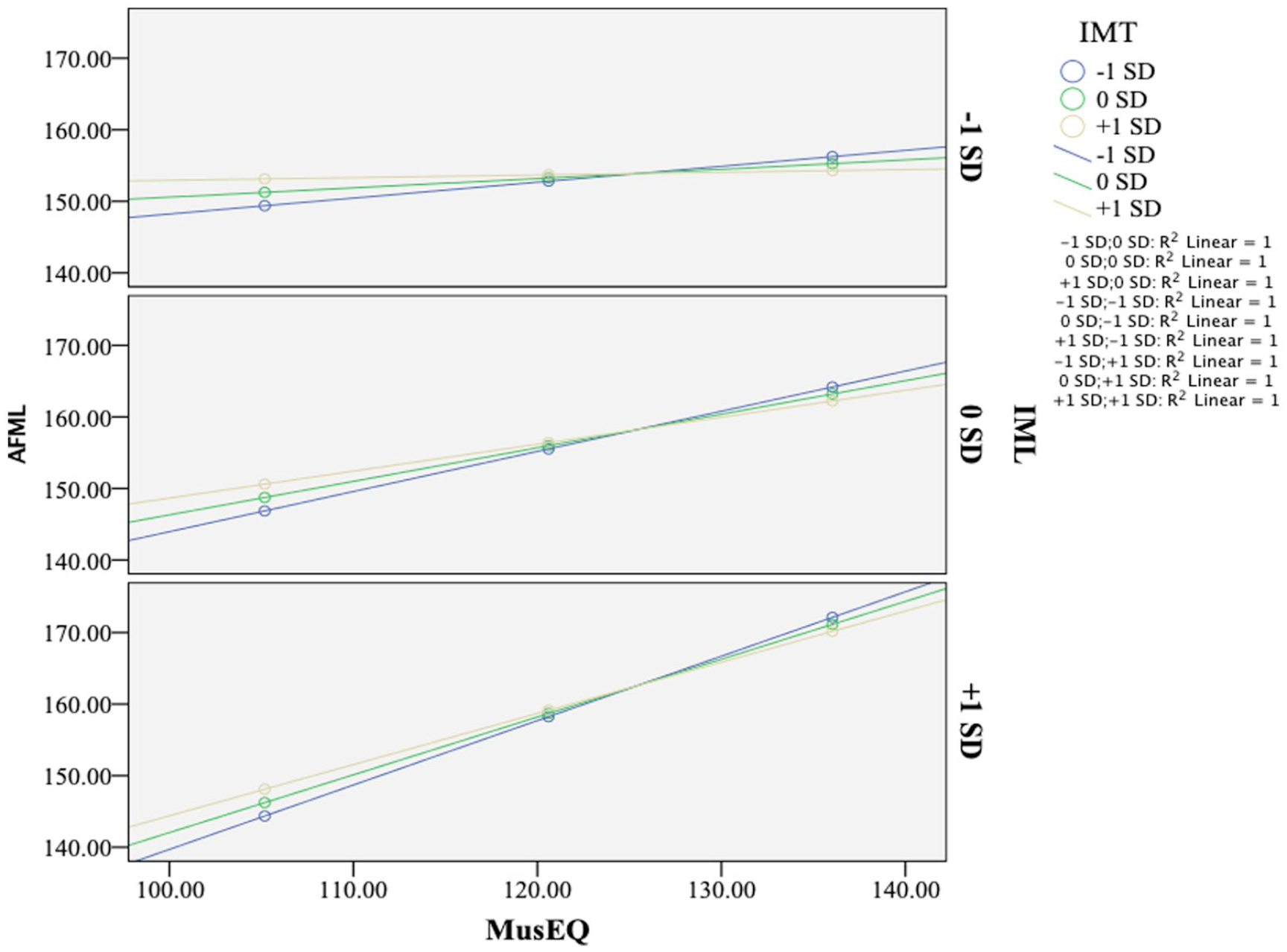
The Illustration of the Moderated Mediation Effects of IML.
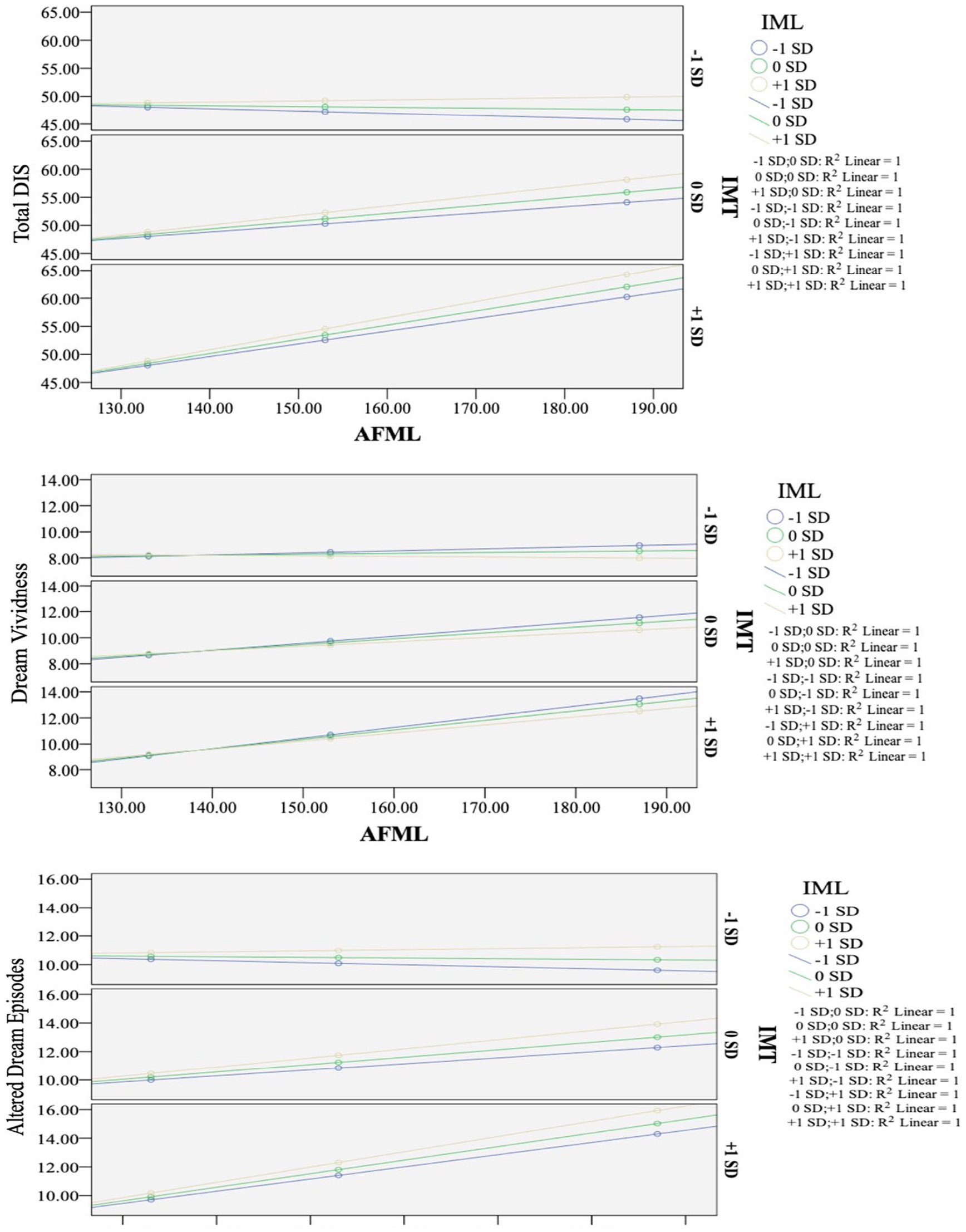
The Illustration of the Moderated Mediation Effects of IMT.
The Parameters of the Moderated Mediation Effects of IML and IMT.
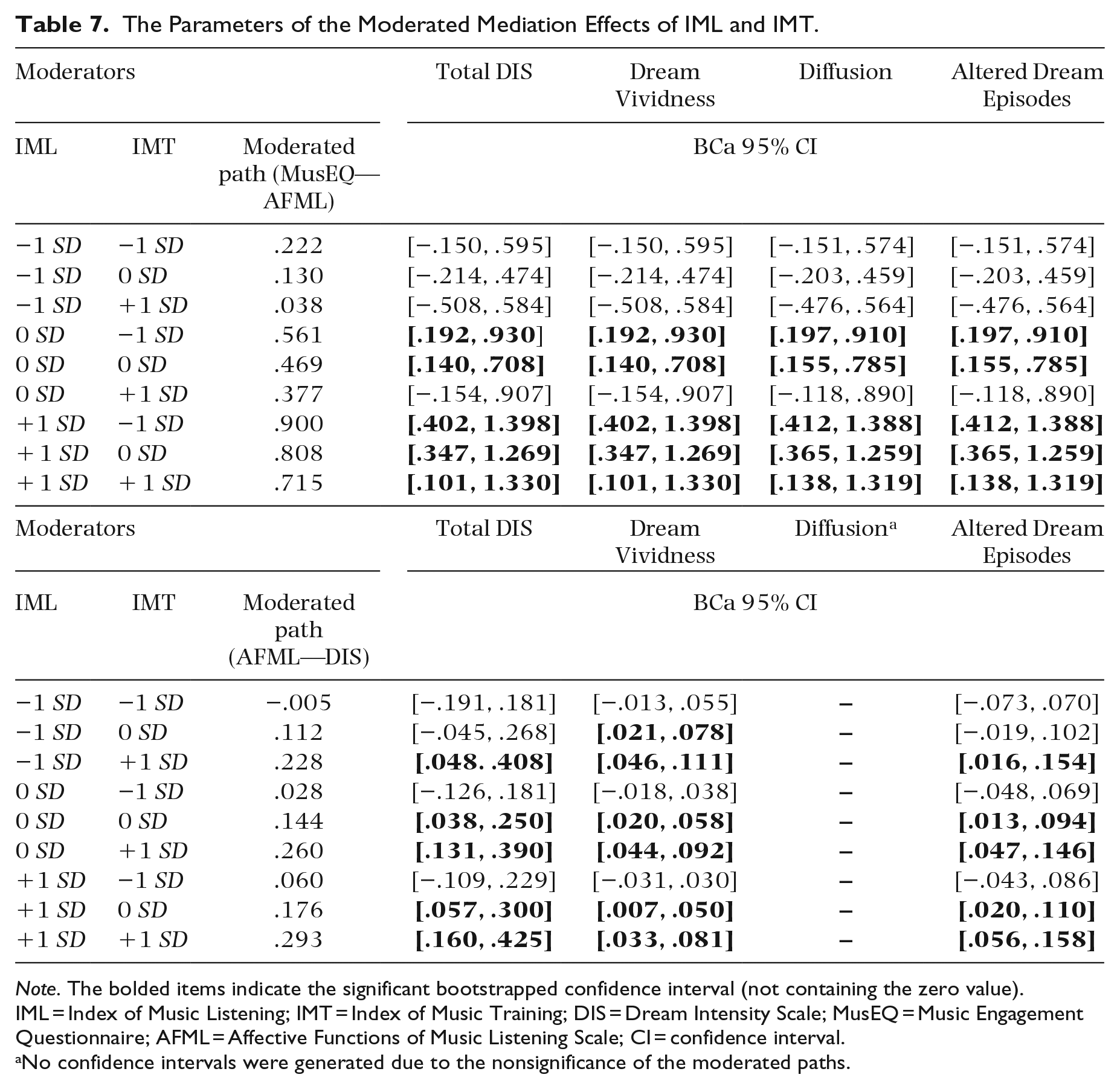
Note. The bolded items indicate the significant bootstrapped confidence interval (not containing the zero value). IML = Index of Music Listening; IMT = Index of Music Training; DIS = Dream Intensity Scale; MusEQ = Music Engagement Questionnaire; AFML = Affective Functions of Music Listening Scale; CI = confidence interval.
No confidence intervals were generated due to the nonsignificance of the moderated paths.
Discussion
This study aimed to examine whether the relation between music engagement and dream experiences can be explained by the adaptive functions of music listening and whether this mediated relation would be subject to the moderation effects of the regularity of music listening and the level of music training. Both hypotheses were supported by the present findings. In addition, this study demonstrated the specific effects of the two moderators—that is, the regularity of music listening significantly uplifted the effect of music engagement on the adaptive functions of music listening, while the level of music training could strengthen the impact of the adaptive functions of music listening on dream experiences.
Previous studies (Kern et al., 2014; König & Schredl, 2021; Uga et al., 2006) consistently demonstrated that musical activities during wakefulness have an impact on the frequency of music dreams but not that of dream recall. This suggests that music engagement does not directly influence the incidence of dream recall. Nevertheless, dream recall frequency is only one of the indicators of the subjective intensity of dreaming (Yu, 2012). Some other important indicators had not been examined in previous studies, such as the sensory experiences during dreaming and the frequencies of lucid dreams and nightmares. Also considering some evidence that both dreaming (Cartwright, 2005; Scarpelli et al., 2019) and music listening (Dingle et al., 2016; Eckhardt & Dinsmore, 2012; Grebosz-Haring & Thun-Hohenstein, 2018) can serve for adaptive purposes, it was hypothesized that active music engagement in waking life can mobilize the adaptive functions of music listening and therefore augment the intensities of dream experiences. The overall findings of the study presented here substantiated this hypothesis.
Some researchers (Juslin et al., 2008; McPherson, 2006; Miranda & Claes, 2009) suggested that music listening could elicit positive emotions. In view of their evidence for the association between waking emotional regulation and nocturnal dreaming, Wong and Yu (2022) conjectured that a greater difficulty in adapting to emotional experiences in the daytime would prompt the emotional regulation function during dreaming sleep to address unresolved emotional experiences. As indicated by the present findings, music engagement may mobilize the affective functions of music listening and therefore affect dream experiences. Taken together, people with less competency in regulating their emotional experiences may be guided to draw on the benefits of music listening as an immediate relief and as a precursor paving the way for a deeper processing of emotions during dreaming sleep.
Besides, the DIS scores were found to be only weakly correlated with the MusEQ scores. The level of music training and the consumption aspect of music engagement were significantly, yet only modestly, correlated with the DIS Dream Quantity and Dream Vividness scores. By contrast, the AFML scores displayed a relatively strong correlation with most DIS scores. Furthermore, music engagement significantly predicted adaptive music listening, which in turn could positively predict dream experiences. This mediation effect of adaptive music listening was significantly moderated by regularity of music listening and level of music training. Specifically, the moderation effect of music engagement on adaptive music listening was reinforced by frequent music listening, while that of adaptive music listening on dream intensity was increased by a stronger background of music training. These moderation effects can be readily interpreted. Without regularly listening to music, the adaptive functions of music listening cannot take effect even if a person is engaged in other music activities. Music training can enhance not only the ability to recognize emotions conveyed by music but also visual imagery ability (Commodari & Sole, 2020). Dreams are susceptible to emotional experiences in waking life (e.g. Gilchrist et al., 2007; Malinowski & Horton, 2014; Yu, 2007, 2015) and primarily transpire in the form of visual imagery (Yu, 2010b, 2012). Accordingly, music training may sensitize affective reactivity to music and facilitate visualization of affective experiences, thereby deepening the functionally reciprocal relationship between adaptive music listening and dreaming.
Both the mediation effect and the moderated mediation effects were observed in the DIS global and Dream Vividness, Diffusion, and Altered Dream Episodes scores but not in the DIS Dream Quantity score. This suggests that the impact of music on dreaming is more of the qualitative aspect than of the quantitative aspect. In other words, active music engagement or adaptive music listening has no substantial effect on how often people experience dreaming at night and recall their dreams next morning. Instead, it seems to amplify lucid dreaming, dream distortion, sensory experiences during dreaming, and permeation across the conscious boundary between reality and dreaming.
A major limitation of this study is its correlational nature. In light of the present findings, future studies might be designed to experimentally test the moderated mediation effect of adaptive music listening on the relation between music engagement and dreaming. For instance, musicians might be instructed to disengage themselves from music activities, especially adaptive music listening, and the impact of the intervention on dream content might be monitored in a sleep laboratory. Similarly, lucid dreams might be induced and compared across musicians and non-musicians. Such experimental procedures might cast light on the potential casual effect of music engagement on dream salience.
The use of self-reported scales in this study is another limitation in that participants’ responses could be biased by their recollections of their dream and music activities. Both dreaming and music listening are characterized by a flow experience in which a person is completely immersed. The retrospective method cannot capture this instant, phenomenological experience. Future researchers might utilize music pieces to elicit emotions and therefore to prime certain dream experiences during sleep. Last, the generalization of the present findings is limited to young adults. Future studies might be conducted to test whether the same moderated mediation models can be applied to other age groups.
Implications for future research
This study lends support to the continuity hypothesis of dreaming (Schredl & Hofmann, 2003) by providing further evidence for the association between waking music and nocturnal dream experiences. Numerous past studies demonstrated how negative waking emotions and events are carried over into dreaming, such as dreams about concerns (Domhoff, 1999) and threats (Revonsuo, 2000) derived from waking life. The present findings inject new life into the positive side of the continuity hypothesis which, however, needs far more empirical evidence than its negative counterpart before any conclusion can be drawn. Music is conceived to be a form of adaptive, positive leisure activity (Bradt et al., 2016; MacDonald et al., 2013) and has been shown to be capable of alleviating mood symptoms (Bradt et al., 2013; Maratos et al., 2008; Laukka, 2007). More research into the psychology of music and dreaming might help establish a complete picture of the continuity hypothesis.
By demonstrating the mediation effect of adaptive music listening and the moderating effects of regular music listening and music training on the relation between music engagement and dreaming, the current study has extended the potential use of music from improving mental health (e.g. Grebosz-Haring & Thun-Hohenstein, 2018; McCaffrey, 2008) to nocturnal affect regulation. Specifically, it appears that regular music listening and more music training can catalyze the effects of adaptive music listening on dreaming, during which affective experiences might be further processed.
Besides adding further substance to the existing evidence for the functions of music (e.g. Dingle et al., 2016; Skånland, 2013; Thoma et al., 2012) and dreaming (e.g. Cartwright, 2005; Scarpelli et al., 2019; Westermann et al., 2013) in regulating emotions, the present study reveals the complex affective interplay between waking and dream activities (Vandekerckhove & Wang, 2018). Dream characteristics can indicate an individual’s competency in emotion regulation and the habitual deployment of adaptive and maladaptive emotion regulation strategies (Wong & Yu, 2022). Also considering the present evidence for the relation of dreaming with the adaptive functions of music in processing emotions, it seems that the mechanisms underlying the therapeutic effect of music for mood disturbance (Eckhardt & Dinsmore, 2012; Miranda et al., 2012) and the significance of dreaming in psychological well-being warrant more empirical attention.
