




Abstract
Music performance anxiety (MPA) affects numerous musicians, preventing them from performing to the full extent of their abilities. A variety of tools are used to cope with MPA among which is meditation. Although research conducted to date has made a distinction between the types of meditative techniques and their effects, this aspect is still not thoroughly investigated. The aim of this qualitative study is to investigate the experience of specialists in the field and identify the meditations employed for counteracting MPA. Sixteen semi-structured interviews were held with experts; recordings and transcripts were verified multiple times and imported into NVivo software. Thematic analysis was conducted, developing three main themes which illustrate how the experts describe MPA, the influencing factors for the effectiveness of meditation, the employed meditative techniques and how they reduce MPA. Within the last theme, body-centered meditations and breathing techniques, along with visualizations and Vipassana meditation, occupy a prominent place. Results show furthermore that affect-centered meditations offer interesting perspectives for counteracting perfectionism and self-criticism. The findings of this study may be of interest to educational institutions and musicians who want to acquire emotional awareness, self-regulation strategies for counteracting MPA, and improving performance skills.
The ability to manage the emotional aspects of a performance is a fundamental skill developed by musicians as part of their musical training to become professionals. Musicians’ emotional arousal is crucial in leading to peak performance and essential for expressiveness and relationship with the audience (Wilson & Roland, 2002). However, when the emotional arousal exceeds certain limits, it can become debilitating and manifest as music performance anxiety (MPA; Lehmann et al., 2007). The phenomenon can be experienced with physiological, cognitive, and behavioral symptoms, requiring multiple tools and approaches to overcome it. Recently, alongside more established treatments like psychological therapy, pharmacology, and combined therapies (Juncos & de Paiva e Pona, 2018; Kenny, 2005; Lehrer, 1987; Nagel et al., 1989; Sweeney & Horan, 1982), meditation has been considered as a valuable tool to counteract MPA (Butzer et al., 2016; Czajkowski et al., 2020; Diaz, 2018; Lin et al., 2008).
The term meditation refers to hundreds of contemplation techniques and mental training which originated as spiritual practices in Hindu and Buddhist traditions (Nash et al., 2013; Sedlmeier et al., 2012). To create a unified taxonomy, researchers developed classification systems ranging from a two-dimensional system (Lutz et al., 2008) to more detailed categorization (Dahl et al., 2015; Nash et al., 2013) up to definition of 20 types of techniques grouped in seven categories (Matko & Sedlmeier, 2019). A number of meditative techniques used to counteract MPA were explored by researchers in the last 20 years, with quantitative and mixed methods. Zen meditation was explored for its effects on MPA, state anxiety, and concentration levels during performance (Chang et al., 2003; Lin et al., 2008). Participants who attended one meditation class per week for 8 weeks showed an improvement in MPA compared with the control group, while there was no substantial difference between the groups in levels of state anxiety and concentration. The effect of yogic practice comprising asana, breathing, and meditation, plus counseling targeting performance problems and music career stress was explored in relation to MPA (Butzer et al., 2016; Khalsa et al., 2009). Statistical analysis showed a significant decrease in MPA, and also in relation to depression, tension, anger, and general anxiety. Hatha yoga practice, including asana, breathing, and meditation showed significant improvements in the levels of MPA and trait-anxiety for 24 students of the Conservatory of Boston who took 9 weeks of yoga classes, approximately 2 per week (Stern et al., 2012). The mindfulness-based stress reduction (MBSR) protocol (Kabat-Zinn, 1994, 2011) comprising formal and informal mindfulness practices to be applied in daily life, was adapted for use by musicians and tested in its effects on singers and instrumentalists in two exploratory mixed-method studies (Czajkowski et al., 2020; Czajkowski & Greasley, 2015). Encouraging results on the enhancement of music and social skills and a beneficial impact on MPA and the quality of performance show that further research detailing the effects of mindfulness on MPA, and the skills involved in musical learning and performance, would be of value to musicians interested in improving their life and performance skills.
In addition, previous research in the extra-musical field has also shown different effects of different meditation techniques in terms of neural activations (Klimecki et al., 2013; Tomasino et al., 2014), confirming the relevance of in-depth future research. In particular, a 9 month longitudinal study (Singer & Engert, 2019), explored the effects of 3 meditation techniques based on presence, socio-affective processes, and meta-cognitive processes with perspective on oneself and others. Results showed the development of different skills depending on the type of meditation practiced, like attentional skills improved with the practice of the presence and affect meditation module but not with the perspective module. Differences were also observed in terms of neuroplasticity: the presence module increased cortical thickness in prefrontal regions, the affect module activated parietal and frontoinsular regions, and the perspective module was correlated with the inferior frontal and temporal cortices activity and increased total gray matter volume.
Method
Aims and study design
Meditation as a tool to counteract MPA is widely employed by professionals helping musicians, therefore, a close investigation of their practical experience can offer interesting insights. Considering previous research, there is still much to be investigated in detail on the use of meditation as a tool to counteract MPA and the effects of different meditative techniques on MPA symptoms. In addition, previous studies have been conducted mainly with a quantitative or mixed-method approach, investigating the experience of students or professional musicians participating in meditation interventions. This study aims to explore the perspective of specialists who teach meditation as a tool to cope with MPA, to identify which meditations they use, and to correlate those meditations with MPA symptoms. A qualitative approach is used to accurately consider their different experiences (Williamon et al., 2021). Semi-structured interviews were conducted with 16 psychologists, teachers, and performance coaches who all include meditation as a tool for helping musicians suffering from MPA. A semi-structured interview approach appeared the most suitable for an exploratory study of specialists’ experiences to deepen the topics of interest in this study but also to allow the experts to enrich the interview with other aspects not included in the schedule (see the appendix). The study obtained ethical approval from the Arts and Humanities Ethics Committee of the University of York.
Participants
The 16 experts were selected for the relevance of their work in the field: they are performance coaches, musicians, teachers, psychologists, and authors, working at music conservatories and universities like the Royal Northern College of Music, University of Cambridge, University of Oxford, Leeds University, Royal Glasgow Conservatoire, Royal Academy of Music, Conservatoire of Music in Milan, Conservatoire of Music in Lugano, the Juilliard School in New York, and Cleveland Institute of Music. Several of them are freelancers and practitioners within the British Association of Performing Arts Medicine (BAPAM). Their professional experience ranges from 5 to over 20 years and includes a variety of approaches including meditation as a tool to counteract MPA (see Table 1).
List of Experts (N = 16), Professional Background, Professional Music Career.
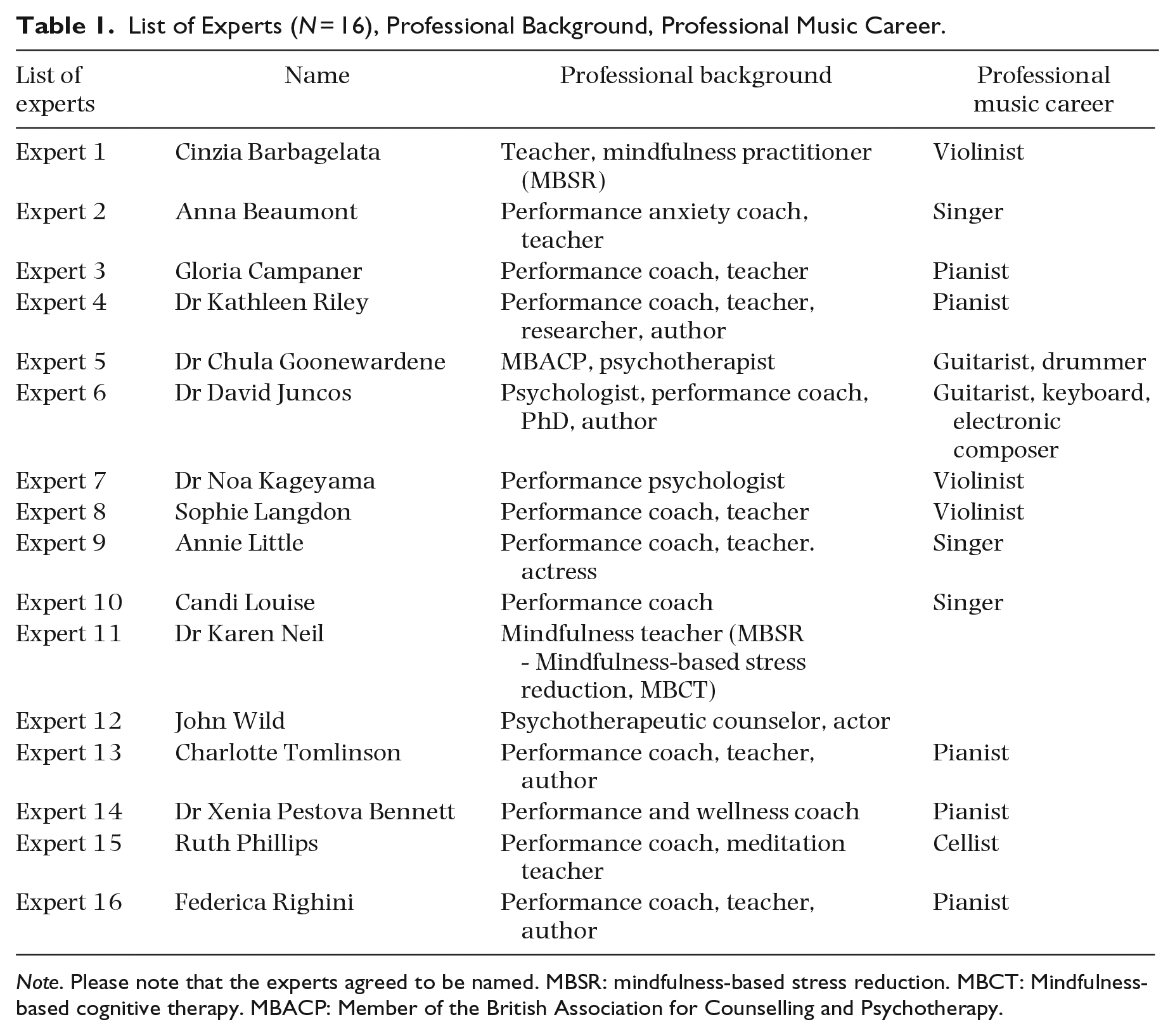
Note. Please note that the experts agreed to be named. MBSR: mindfulness-based stress reduction. MBCT: Mindfulness-based cognitive therapy. MBACP: Member of the British Association for Counselling and Psychotherapy.
Data collection
The interview schedule (see the appendix) comprised 10 questions aimed at investigating the experts’ experiences with musicians suffering from MPA, the effects of meditation techniques on MPA symptoms, present, and future scenarios for the use of meditation as a tool to cope with MPA. The interviews were conducted over 12 months in English and Italian on Zoom and Skype, and recorded after obtaining consent from the experts. The interview schedule was mostly covered in its entirety; in addition, each expert explored detailed aspects of their experience and training that shaped the approach to work with musicians. The total duration of the interviews was 30 to 60 min.
Analysis
The interviews were transcribed and translated from Italian to English where necessary. Recordings and transcripts were verified by the author with multiple listening of recordings and readings of transcriptions, to ensure the accuracy, and to familiarize with the contents. The transcripts were returned to the experts for verification and opportunity for redacting. The documents were subsequently imported into NVivo software by which thematic analysis was conducted with the six-step process (Braun & Clarke, 2006, 2021). Thematic analysis was chosen to understand in depth and flexibly the experiences and thoughts of the participants. The researcher coded the interviews and developed themes engaging in reflexivity by keeping procedural notes on the analysis steps. The consistency of themes and research questions was verified during the coding and theme development phase; researcher’s belief systems and personal experiences with MPA and meditation were also considered and annotated to avoid influencing the results of the analysis and to preserve research validity. Themes were generated with a combined inductive bottom-up approach for investigating the specialists’ experience, and deductive top-down approach for identifying the used meditations grouped within the classification system by Matko and Sedlmeier (2019). This system includes 20 meditative techniques grouped by similarity into seven categories based on two dimensions, the amount of body orientation and body activation: meditation with movement, body-centered meditation, mindful observation, contemplation, visual concentration, affect-centered meditation, and mantra meditation.
Results and discussion
Three main themes were developed and branched into a number of sub-themes (see Tables 2 and 3). Themes 1 and 2 (Table 2) are the result of thematic analysis conducted with a deductive bottom-up approach, showing significant aspects of specialists’ experience related to MPA conceptualization and influencing factors for meditation effectiveness. Theme 3 was developed with an inductive top-down approach, and illustrates the meditations used and considered effective by the specialists. Table 3 illustrates the meditations used by the experts with reference to the MPA symptoms and their main effects.
Themes and Subthemes.
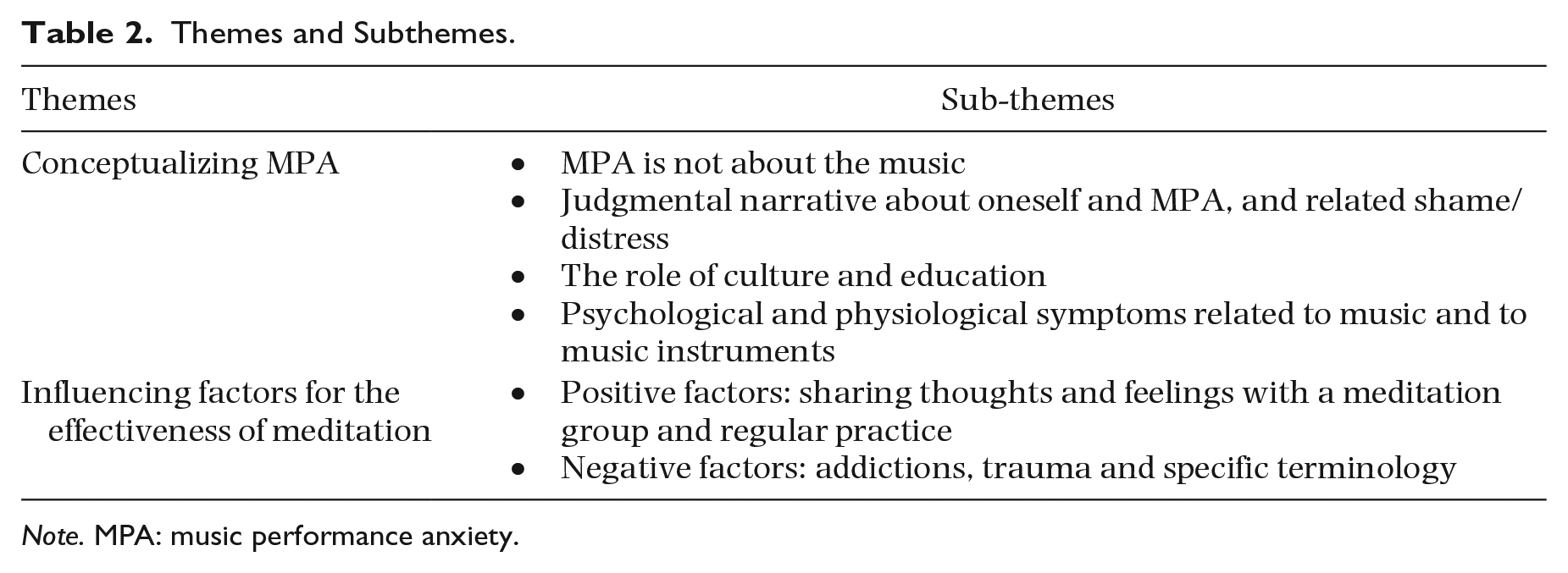
Note. MPA: music performance anxiety.
Summary of Meditations Used by Experts and Main Effects on MPA Symptoms.
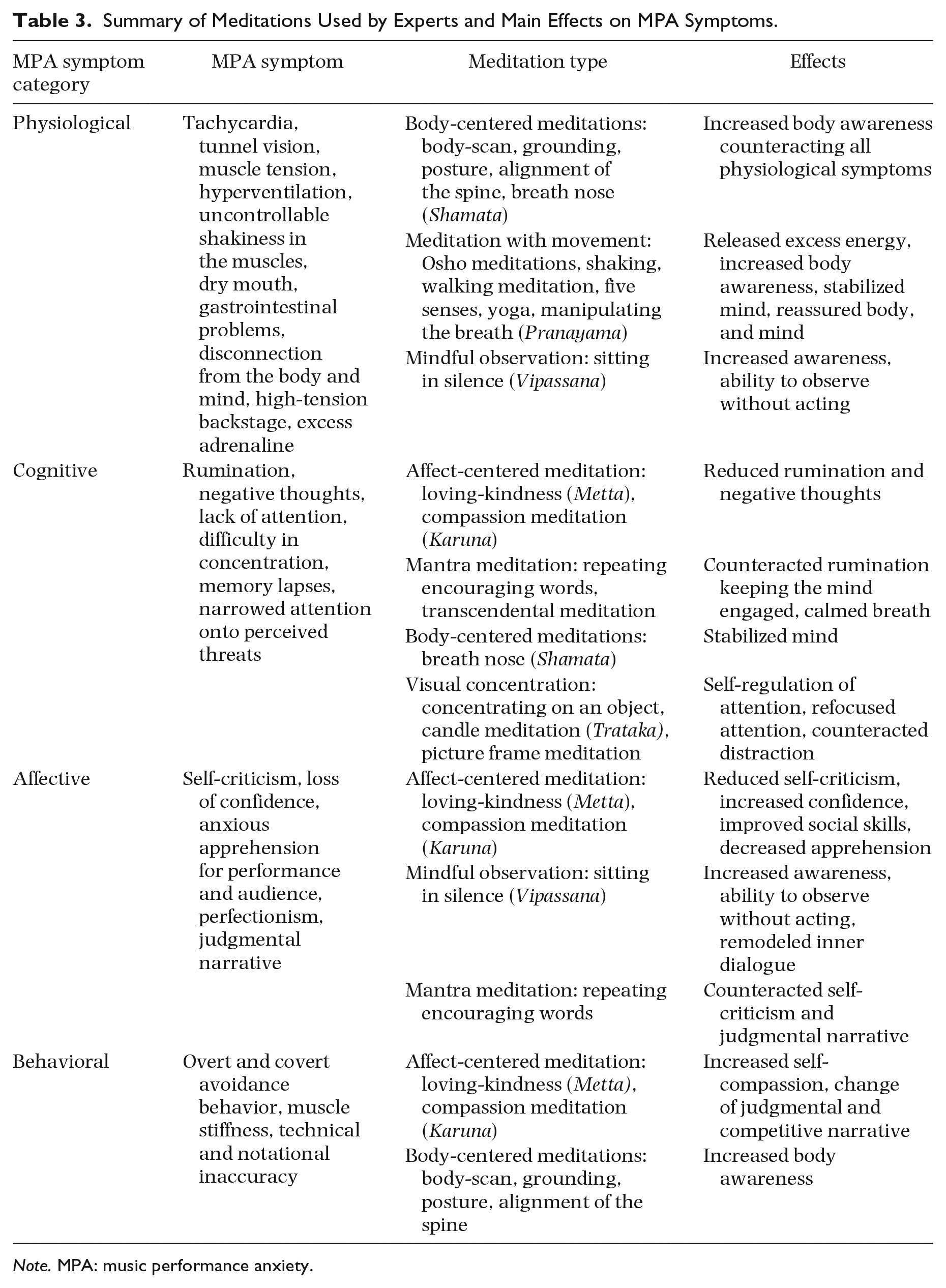
Note. MPA: music performance anxiety.
Theme 1: conceptualizing MPA
Extensive research on MPA has been conducted hitherto with thorough understanding of the phenomenon (Cox & Kenardy, 1993; Kenny, 2011; Kenny & Ackermann, 2015). Kenny’s (2011) comprehensive definition reports that Music performance anxiety is the experience of marked and persistent anxious apprehension related to musical performance that has arisen through underlying biological and/or psychological vulnerabilities and/or specific anxiety-conditioning experiences. It is manifested through combinations of affective, cognitive, somatic, and behavioural symptoms. (p. 433)
Although the purpose of this study was not to further investigate the phenomenon of MPA but to explore the use of meditation as a tool to counteract it, understanding the highlights of MPA according to the interviewed experts was interesting for a potential correlation with the selected meditation types.
MPA is not about the music
“The fears a musician feels while playing are very similar to those felt in life; those fears indicate the inner obstacles that need to be faced, the path ahead” (Righini & Zadra, 2010, p. 111). Expert 12 reported that “after the first or second session you can recognise that the point is not about the work or about performance, it’s about their lives, it’s about what’s going on in the background, what’s going on in the subconscious mind.” Expert 16 confirmed this insight: I think that MPA is a symptom of something that does not work with the relationship with oneself. This aspect could be present at several levels: sometimes there are expectations, sometimes it is indoctrination because people are often heavily influenced.
Previous research shed light on the aspect of self-evaluation rather than social evaluation as a crucial component of MPA, focusing on critical self-perception and fear of making mistakes or failing rather than aspects of social anxiety (Fogle, 1982). “Sometimes people nurture dreams of perfection, in order not to be confronted with the dissatisfaction of being themselves” (Expert 16).
Judgmental narrative about oneself and MPA, and related shame/distress
Expert 7 noted that one of the most dysfunctional patterns influencing the onset of MPA is self-criticism which is deeply rooted in musicians involved in academic training: “usually students can’t play few notes before some sort of evaluative thoughts come in their heads and they realise how difficult it is to avoid self-evaluation when they are playing.” Although evaluation is a fundamental component in instrumental training, it is often confused with judgment. Expert 1 shared that “it is important to work on the difference between a healthy evaluation of the outcomes and automatic judgement, which can cause a decrease in self-esteem, a drive to mental rumination and manipulation or removal of reality.” The judgmental attitude is closely related to shame, which is frequently experienced as a form of distress, also expressed in the language used toward oneself and when experiencing MPA. When someone is ashamed of having performance anxiety, they say things like “It’s my fault, I am a bad performer, I am less than compared to my peers who are better” so you can hear it in their language. And when someone has shame behaviorally, they hide. So someone who is ashamed is not going to challenge themselves to take on more auditions or solos or optional performance opportunities. I believe that is probably the most common expression of distress. (Expert 6)
The role of culture and education
The Western cultural environment and traditional education systems can be influential in modeling musicians’ mindset that can favor the onset of MPA. “I think it’s sadly built into the culture of classical music to feel less than others or to feel ashamed of yourself, sometimes because it’s a very perfectionistic environment” (Expert 6). It’s a problem of our Western classical system of education. In other cultures like among Balinese gamelan players there isn’t any worries about performances going wrong, nobody is sitting and listening to them like this, music is part of their lives. (Expert 13)
Culture and education also play a fundamental role in increasing shame among musicians experiencing MPA, because vulnerability is perceived as weakness with possible influence of a patriarchal perspective. Expert 10 shared that: “as a female you have to work twice as hard to measure up, and it means that you get more nervous because you want to be taken seriously.” Regarding the educational institutions, a number of experts (n = 11) reported a lack of adequate training of emotion regulation skills required for performance management within the academic curriculum, which should be provided in connection with the learning of musical skills.
Psychological and physiological symptoms related to music and music instruments
“My perception of MPA is that stems from a disconnection of the mind and body where the mind is no longer present” (Expert 9). “MPA is when I allow my thoughts to override listening. Through my research I noticed that my students were not hearing things the same, and I began to see them experiencing more anxiety” (Expert 4). This disconnection may start with an obsessive thought of fear with terrifying scenarios that do not necessarily occur but afflict the body and mind. A recurring thought is “what if?”: what if I am judged, what if I am going wrong, what if I lose my career; those scary questions made dangerous also a concert which is perceived as threatening. It is very deep rooted, it is quite primitive. (Expert 13)
Moreover, Expert 13 underlined a relationship of MPA symptoms with the instrument, in line with previous research evidencing the linear association between MPA and playing-related musculoskeletal disorders (Ackermann et al., 2014; Lamontagne & Bélanger, 2014). A lot of people will have negative sensations related to the instrument: a pianist could have cold and sweaty hands and nothing to do with their mouth or their breathing; flutists have sensations of dry mouth but nothing related to the fingers for example. Physiological symptoms are often related to the instrument. (Expert 13).
Theme 2: influencing factors for the effectiveness of meditation
The experts emphasized the importance of monitoring potential influencing components for the effectiveness of meditation, either to prevent detrimental effects or promote optimal results (see Table 2).
Positive factors: sharing thoughts and feelings with a meditation group and regular practice
Sharing emotions and thoughts and meditating together is considered a powerful tool to connect musicians, combat isolation and poor self-esteem (Experts 1, 5, 7, and 10). Indeed, isolation and shame about oneself and MPA are reported as frequent among musicians, and this represents a further detrimental aspect for MPA. Since not enough people are willing to open about their own fragility, musicians look at their peers thinking they are super confident and have no fear, but I think the majority of people suffer with insecurity and anxiety at times. (Expert 5)
The experts (n = 10) consider a regular meditation practice as fundamental for developing skills, as already known to students and musicians from their instrumental training. It must be bearing in mind that meditation is not a fast solution but requires time and constant practice.
Negative factors: addictions, trauma, and specific terminology
Reflecting on the factors that can have a potential detrimental effect on meditation effectiveness, the experts recommended to consider potential trauma or addiction.
Addictive disorders are recognized by experts as one of most debilitating factors for self-esteem and confidence, and also for meditation effectiveness (Experts 5, 13, and 16). As they are widespread and unrecognized, it is even more complicated to deal with them properly. The experts’ suggestion is to investigate the daily habits of the musicians and, if any addiction is detected, to refer them to other specialists or to do dedicated work to eradicate the addiction before meditation can be practiced to resolve MPA. Previous research has confirmed the beneficial effects of meditation in addiction recovery, integrated with therapeutic approaches for an appropriate intervention (Pruett et al., 2007).
Undiagnosed trauma is reported as a cause of the ineffectiveness of meditation in counteracting MPA. As the body itself can be a traumatic place, it is recommended a careful practice of body-centered and breathing meditations (Experts 11, 14, and 15), to avoid reinforcing trauma and eventual adverse effect from meditation (Lambert et al., 2023). The advice of the experts is to listen carefully to the experiences and symptoms reported by musicians who seek help in managing MPA, to identify any components that might make meditative practice ineffective and possibly refer them to other professionals: “If there is underlying trauma or addiction then meditation or mindfulness on its own won’t really remedy the problem but in conjunction with the right therapeutical clinical support I think that it definitely can help” (Expert 5).
Reflecting on a social stigma about meditation, experts consider the use of specific terminology as a barrier to be circumvented to operate in a multicultural context (Experts 1, 10, 14, and 15). The use of familiar words is more appropriate to bypass prejudices about practices derived from spiritual traditions, like focus exercise instead of meditation or body-based intervention instead of yoga, following the example of Kabat-Zinn (1994, 2011).
Theme 3: meditative techniques reducing MPA
The experts indicated the meditations most frequently used in their work with musicians suffering from MPA and what are the main effects they have observed as a result of their practice. Table 3 is summative of the experiences of the specialists, not illustrative in detail of the individual meditations used by each expert.
Body-centered meditations: body-scan, grounding, posture, alignment of the spine, breath nose (Shamata)
Meditative techniques aimed at improving body awareness are the most recommended by the experts (n = 14) to recognize and counteract MPA physiological and body-related behavioral symptoms. Much of the initial work I do with students is about knowing the body, how it speaks to us, learning to listen to feelings. This is an opportunity to learn about the mechanism of the alarm reaction, to realize that you can afford not to be frightened by the accelerated heartbeat that assails you, because you can find small strategies to calm it and overcome the discomfort but, first of all, you need to know what is happening to you. (Expert 1)
Body-scan is considered one of the most effective techniques, also included in the MBSR protocol (Kabat-Zinn, 1994). It consists of bringing attention and scanning in detail the parts of the body in sequence from the feet to the head or vice versa, while inhaling and exhaling. Body-scan helps take people into their bodies and awareness of bodily sensations and that is a practice we start in the first lesson of mindfulness courses. To be able to change your posture when you need to notice it and be aware is the most powerful effect of the body-scan. (Expert 11)
Grounding in the body, alignment and posture are considered fundamental aspects for musicians that can be also consolidated and improved with this type of meditations. Moreover, they represent a proper introduction to more advanced forms of meditation.
Shamata breath nose meditation involves letting the natural breath be and noticing how it moves in and out. To facilitate meditation and avoid mental dispersion, counting of breaths can sometimes be added. All the experts emphasized the importance of this type of meditation in counteracting physiological and cognitive symptoms. “When you breathe deeply and slowly you work on your physiological side, you are telling your body you are safe” (Expert 13); “Being aware of the breath is such a huge teacher in terms of whatever we take in we let go” (Expert 15).
Meditation with movement: Osho meditations, shaking, walking meditation, five senses, yoga, pranayama, and meditations on the breath
Meditations with movement are also recommended (n = 12) as preliminary to static and advanced meditations requiring prolonged attention and stillness. “When young people practice static meditation, they start to feel their heartbeats and sometimes they get scared, so this meditation is not suitable for contacting physical sensations. Meditations with movement could be much more interesting and useful” (Expert 16). Among this category, Expert 16 mentioned the meditations with movement like created by the Indian mystic Osho (2014), which can also be practiced as a suitable preparatory step to static and more advanced meditations.
Shaking is mentioned as an effective technique to release tension and excess adrenaline before the performance (Expert 13). It consists of shaking the body without forcing the movement but simply allowing it. I recommend shaking in situations of panic or when there is too much adrenaline that is overwhelming. What is interesting is that you can observe this action among animals in dangerous situations. After they overcome being chased by bigger animals, when it feels safe they would start shake. What it does is shaking the adrenaline out, all that adrenaline that saved your life was shaken out and when it’s done everything is normal again. (Expert 13)
Walking meditation deriving from the Zen tradition can also relieve anxiety by bringing attention and awareness to the body, and is also practicable anywhere in pre-concert settings. Experts 1 and 12 who teach the MBSR protocol (Kabat-Zinn, 1994, 2011), and the experts using mindfulness practices (Experts 9, 12, and 15) mentioned positive effects on physiological symptoms from the practice of meditations involving daily actions like walking or five senses, as a result of raising awareness from ordinary acts. The MBSR protocol has a significant quality: it allows you to experience mindfulness through different awareness practices. It includes activities capable of evolving awareness: formal practices such as body-scanning, sitting meditation on the breath and other objects of attention, walking meditation, yoga, informal practices based on focusing mindfulness on daily actions. (Expert 1)
The meditation on the five senses consists of connecting to the here and now while maintaining interoceptive and interoceptive awareness through the five senses. In the MBSR protocol (Kabat-Zinn, 1994, 2011), it is known as raisin meditation because a sultana grain is used with the aim of increasing the conscious perception of internal and external reality, with the five senses explored in a specific order (sight, touch, smell, hearing, and taste).
Experts 3, 8, 10, and 14 shared the benefits of yogic practice, in particular forward bendings or yoga poses with a cooling effect, depending on individual needs. Sometimes people need to be energised before their performance and a warming type of practice, so it depends on people’s energy. With the Yin yoga I teach, most of the poses are done on the floor involving a lot of work with the legs, where holding a pose might involve some discomfort. By taking a mindful approach you observe what’s going on in the body rather than fighting against it, which can be helpful and applied to MPA situations. (Expert 14)
The yogic practice of breathing (pranayama) consists of manipulating the breath in a variety of forms with different effects, and it is recommended to cope with physiological symptoms (Experts 3, 10, 11, and 14). With pranayama it is possible to act on the breath at the boundary of the involuntary system, even in situations of high tension such as backstage concert preparation. Highly recommended are the Ujjayi and the Surya Chandra pranayama with alternating nostrils; depending on the need, practising different pranayama can warm, cool, calm or activate the body and mind. (Expert 3)
Reflecting on MPA physiological symptoms and pain-related anxiety (Kenny & Ackermann, 2015), the experts suggest meditations with movement or body-centered, with practices aimed at counteracting specific instrument-related physiological symptoms. Those meditations were reported to be effective in increasing body awareness and reducing MPA, in line with previous research on the effects of meditation on MPA (Butzer et al., 2016; Czajkowski et al., 2020; Czajkowski & Greasley, 2015; Stern et al., 2012). They were recommended by the experts for counteracting physiological, cognitive, and behavioral symptoms in the regular daily practice and also in the moments before the concert; body-centered meditations and meditations with movement were suggested to release tension and excess adrenaline.
Mindful observation: sitting in silence (Vipassana)
Vipassana meditation was reported as one of the most effective meditations to cope with MPA, aimed at observing emotions and thoughts with acceptance (n = 11). With this meditation musicians can look inside, remodel the inner dialogue and recognize judgment, and criticism not identifying with them. The static position teaches to be in the body as it is, and to observe emotions without being attached to them. It is considered useful in counteracting physiological and psychological symptoms. “It is allowing, stopping grasping, stopping pushing, relaxing back, it is so powerful. It is a kind of non-interference, letting the music be, taking ourselves away from our personality and allowing music to live just through us” (Expert 15).
Moreover, mindful observation as well as other mindfulness practices were recommended to improve attention and counteract distraction. Results are in line with previous research in extra-musical field on enhanced attentional skills resulting from meditation practice (Lutz et al., 2008; Malinowski, 2013; Valentine & Sweet, 1999; Van Leeuwen et al., 2012).
Affect-centered meditation: loving-kindness (Metta), compassion meditation (Karuna)
Affect-centered meditations were mentioned for their effect on psychological and behavioral symptoms (Experts 2, 4, 9, 11, and 15). “Once there is compassion towards yourself and even compassion towards your audience, it is no longer an adversary to you and you are not an adversary to yourself either” (Expert 9). By practicing the loving-kindness and self-compassion meditations, musicians develop a compassionate approach and non-judgmental self-narrative, including those rejected emotions which are part of the performance and themselves. In fact, the denial of fear and emotions labeled as negative because associated with MPA, does not improve the ability to cope with a performance; on the contrary, suppressing fear also silences the passion and joy of playing, whereas moderate levels of anxiety positively affect the quality of performance (Steptoe & Fidler, 1987; Wilson & Roland, 2002). If we shut off fear, we also shut love and the desire to connect with music and the audience. I think it is very dangerous when you think you should not feel fear, because it is energy. We need to remember that it comes from love and care. (Expert 15)
In relation to the emotional dimension, setting gratitude as an intention was reported to be helpful with cognitive and affective symptoms. If you are going on the stage with gratitude no one is going to remember wrong notes unless you focus on them and lost your inner hear connection to your present unfolding all the notes; you lose that focus and you can come back having set your intention of gratitude, which brings you back to your purpose and inspiration. (Expert 4)
Specialists’ reflections on judgmental narratives about oneself and shame about MPA, can be correlated with their use of affect-centered meditations. Previous research has shown that only socio-cognitive and compassion-based practices produced positive effects in reducing shame, self-judgment and rumination (Hildebrandt et al., 2017; Klimecki et al., 2013; Singer & Engert, 2019). Self-compassion includes self-kindness, self-acceptance and the ability to consciously contain failure and suffering while feeling oneself as part of a greater whole and not as an isolated being (Neff, 2003). Therefore, affect-centered meditations can be a valuable tool for counteracting MPA affective and behavioral symptoms, in particular within unsupportive and competitive environments which were reported as most negative aspects by musicians (Pecen et al., 2018). Notwithstanding there is growing awareness and support for students’ health within academic institutions (Chesky et al., 2006; Williamon & Thompson, 2006), it is still necessary to provide students with more tools to ensure physical and emotional health (Araújo et al., 2017).
Mantra meditation: repeating syllables or words, transcendental meditation
Mantra meditation was mentioned as effective in dealing with cognitive and affective symptoms (Experts 8, 10, and 13). It consists of repeating syllables or words with or without meaning. For instance, simple words with empowering, compassionate or calming effects are regarded as valuable aids before the performance and can also be employed as daily mental training. “It’s that mental hug that you give yourself to go” (Expert 10); “I just say the word ‘easy’ or ‘let go’ and it is really soothing because it allows me to relax and let go” (Expert 13). On the other hand, meditations using syllables or words with no meaning, like transcendental meditation, exploit the calming effect of repeated sound on the breath, and rumination by keeping the mind engaged (Expert 8).
Visual concentration: concentrating on an object (candle gazing meditation, picture frame meditation)
Expert 13 recommended visual concentration meditation to cope with cognitive symptoms, in particular for attention regulation. I suggest using objects of attention such a candle in order to focus the attention on them; I believe that if you learn to enhance your attentional capability you have great results also on focusing your attention on music during performance. Learning to focus is important and you develop a meditative focus on stage.
This concentrated gazing technique known as Trataka meditation is derived from yogic practice (Iyengar & Menuhin, 1979). It is considered beneficial for vision and physiological aspects in general as well as mental aspects like anxiety, poor concentration, and memory (Svātmārāma & Sing, 1974).
Expert 6 shared his experience with the use of another type of concentrated gazing technique, the picture frame meditation which consists in scanning the perimeter of a picture frame. In my opinion it helps them to self-regulate attention and that’s really the key point of doing mindfulness within therapy and performance. If you can recognize when you are paying attention versus when you are distracted and if you know what to do about when you are distracted, you can just focus and train yourself to overcome the hurdle of distraction and re-engage with a task.
Conclusion
The aim of this interview study was to investigate the experience of specialists in the field and their use of meditation as a tool to cope with MPA. We explored with the experts the essential components of MPA, and which meditative techniques are employed to counteract it, considering influencing factors for their effectiveness. In general, this research contributes to an understanding of a range of meditations used by experts to counteract MPA, that differ in type and effects on body and mind, as demonstrated by research in extra-musical contexts (Singer & Engert, 2019).
The sample was relatively small and although we tried to interview experts with different musical, contemplative, and psychological specializations, some disciplines and meditative traditions may be under-represented. Further qualitative and quantitative research involving more experts and other meditative traditions not mentioned in this study would be important. Furthermore, it should be considered that this study aimed to explore the potential effects and applications of individual meditative practices in more depth, but not to suggest a non-combined practice. In fact, the majority of specialists shared that they use a range of meditations in their work with musicians suffering from MPA, given the multifaceted nature of the phenomenon. Future quantitative hypothesis-testing research correlating the effects of different meditation techniques with MPA symptoms would be valuable for a detailed analysis of their effects and potential application. Findings from this and future research on the topic may be of interest to both musicians who want to acquire emotional self-regulation tools, and to educational institutions keen to provide greater tools and support to their students who are preparing to become professional musicians.
Footnotes
Appendix
Acknowledgements
The authors would like to thank the experts who participated in this study for their time and willingness to share their experiences.
Author contributions
Serena Paese designed and conducted the study, analyzed the data, and created a first draft of the manuscript. Hauke Egermann contributed to the study design, data analysis and presentation, and revised the manuscript. Both authors contributed to the article and approved the submitted version.
Ethical approval
The study involving human participants was approved by the Arts and Humanities Ethics Committee, University of York. The experts provided their oral and written informed consent to participate in this study.
Funding
The author(s) disclosed receipt of the following financial support for the research, authorship, and/or publication of this article: Serena Paese received financial support for the research from the Italian Ministry of Education.
