




Abstract
Current research investigating the functions of music in everyday life has identified cognitive, emotional, and social functions of music. However, previous research focuses almost exclusively on neurotypical people and rarely considers the musical experiences of autistic people. In addition, there is limited research which focuses explicitly on the musical experiences of young people on the autism spectrum. Current research exploring the functions of music may therefore not accurately represent the experiences of the autistic community. This article aims to explore the function of music in the lives of young people on the autism spectrum through a series of interviews. Eleven young people on the autism spectrum age 12 to 25 (M = 19.4) were interviewed about the function of music in their lives. An adaptive interview technique, utilizing multiple methods of communication, was employed to account for the participants’ broad communicative and personal needs. Interpretative phenomenological analysis revealed four key functions of music in the participants’ lives: Cognitive, Emotional, Social, and Identity. Collectively, these results provide a unique insight into the musical experiences of young people on the autism spectrum.
Music is present in the daily lives of the majority of people (DeNora, 2000; Greasley & Lamont, 2011; Hargreaves & North, 1999; Krause et al., 2015). It is unsurprising then that a large body of literature has sought to understand the functions of music in everyday life. These functions can be broadly organized into three key areas. Emotional functions pertain to the function of music to sustain, alter, or induce emotion and/or mood (North & Hargreaves, 1999; Schäfer et al., 2013) and to evoke memories of past events, experiences, and people through reminiscence (Boer & Fischer, 2012; Huron, 2011). Social functions relate to the function of music to build and maintain interpersonal relationships and for identity development through group affiliation and communication of identity to others (Evans et al., 2013; Hargreaves & North, 1999). Finally, cognitive functions pertain to the impact of music on cognitive processes. This includes music for motivation (Dorris et al., 2016) and distraction (Sloboda et al., 2016; particularly in relation to work, study, and exercise) and the function of music to accompany non-musical activities (Sloboda et al., 2001).
Music in the everyday lives of young people
Research suggests that music may play a particularly important role in the lives of young people (Hargreaves & North, 1997). Young people report significantly higher levels of musical engagement than middle-aged adults (Bonneville-Roussy et al., 2013; Hargreaves & North, 1997). Widén et al. (2017) reported that the 17-year-olds involved in their study listened to music for an average of 1.5 hr per day, with 46% of participants reporting that they used their personal music listening device every day.
The high level of music consumption during adolescence appears to coincide with the major life transition from child to young adult. Research suggests that music’s capacity to alter mood, portray emotion, and communicate identity (Laiho, 2004) may mean that it is able to support young people through the physical, psychological, and emotional changes that occur during this transition (Yurgelun-Todd, 2007). Music is also an important influencer for the formation and development of interpersonal relationships in the lives of young people, facilitating important social experiences and providing opportunities to make friends (North & Hargreaves, 1999). Indeed, previous research has found that shared taste in music is a key predictor of liking for a new person and may therefore be particularly influential when making friends (Launay & Dunbar, 2015).
Active participation in musical activities, such as learning to play a musical instrument, is also considered to play an important role in the everyday lives of young people (O’Neill, 2005). Previous research suggests that young people are aware of the potential benefits of participating in musical activities, including for stress relief (North et al., 2000), mood management (Saarikallio & Erkkilä, 2007), identity formation (Laiho, 2004), and emotional expression (North et al., 2000). These findings highlight the various ways in which musical activities can play a key role in the lives of young people and have the potential to support different aspects of their life.
The functions of music in the lives of autistic people
At present, research concerning the functions of music has almost exclusively focused on neurotypical populations and has neglected to explore the function of music in the lives of young people on the autism spectrum. This is, perhaps, due to assumptions regarding the challenges of involving young autistic people in research (Nind, 2008). Research concerning music and autism generally focuses on treating the “symptoms” of autism through musical interventions (e.g. music therapy) which are designed to improve an individual’s functioning in several areas, including communication (Edgerton, 1994; Wan et al., 2010), emotional responsiveness (Kim et al., 2009), and social skills (LaGasse, 2017). While these studies may be helpful in some contexts (e.g. in healthcare and therapeutic settings), they do not account for the functions of music that occur naturally in the majority of people’s lives and the impact that these functions may have on autistic people. Nor do they explore the subjective musical experiences of those diagnosed with autism.
At the time of writing, only one study using exploratory qualitative methodology has considered the subjective musical experiences of autistic people. Allen et al. (2009) interviewed 12 adults on the autism spectrum about their musical experiences. Their research suggests that participants use music to address a number of personal and social needs, including for cognitive, emotional, and social functions. While previous research makes a valuable contribution to our understanding of the importance of music in the lives of people on the autism spectrum (e.g. Allen et al., 2009; Bakan, 2018; Quintin, 2019; Quintin et al., 2011), several gaps in the literature still exist. First, there is very little qualitative research which specifically explore the functions of music in the lives of autistic people. In addition, studies that have recruited autistic people have not included individuals who communicate non-verbally or through non-traditional methods, instead recruiting only individuals who are considered to be “high-functioning” (Allen et al., 2009; Quintin et al., 2011). The limited research involving autistic people therefore only includes a select sample of the autistic community.
The Neurodiversity Paradigm
The medical definition of autism states that autism is a lifelong developmental disorder, characterized by “deficits in social interaction and communication,” and “restricted and/or repetitive patterns of behaviour” (American Psychiatric Association [APA], 2013, p. 50). Autism is considered to be a spectrum condition, whereby each individual may exhibit very different and sometimes highly contrasting “symptoms” (Frith, 2008). A medical diagnosis of autism may be beneficial in order to access appropriate support and therapeutic interventions (The National Autistic Society [NAS], 2016). However, a small but growing body of literature written by autistic authors demonstrates a clear tension between the subjective experiences of autistic people and how they wish their experiences to represent in society versus the generalized medical-based diagnostic procedure. The Neurodiversity Paradigm (Singer, 1999) proposes that neurodiversity is a “natural, healthy and valuable form of human diversity” (Walker, 2012, p. 228), whereby there is no “normal” human brain. From this perspective, autism is a natural neurological variation which results in a different experience of the world (Walker, 2012), including diverse ways of “socializing, communicating and sensing” (Jaarsma & Welin, 2012, p. 23). Although these differences in experience may present challenges for the individual, autistic authors have stressed that they should not be considered as deficits (Walker, 2012). The lack of congruency between the writings of autistic people and non-autistic professionals demonstrates the importance of including people on the autism spectrum in conversations which concern them.
This qualitative study aims to enhance our understanding of the musical experiences of the autistic community by interviewing young people on the autism spectrum with a range of communication needs and preferences. The study addresses the following research questions:
RQ1: How do young people on the autism spectrum engage with music in everyday life?
RQ2: What are the functions of music in the lives of young people on the autism spectrum?
Method
Participants
A total of 11 participants volunteered to take part in this study (9 male, 2 female). Participants were recruited using a snowball sampling method in the areas of London and Yorkshire. Schools, charities, and universities were contacted in these areas and asked to advertise the study in order to recruit participants. All participants were young people, aged 12 to 25 years, who had received a diagnosis on the autism spectrum (M = 19.54; SD = 3.77). Alongside a primary diagnosis of autism, seven participants had also received a secondary diagnosis, for example, learning disabilities. While the sample size is relatively small, this was deliberate to enable collection of in-depth information about each participant and to ensure that the subjective musical experiences of each individual were represented as accurately as possible. The uneven gender split in this study is representative of the gender imbalance in autism diagnoses, whereby males are 4 times more likely to be diagnosed with autism than females (NAS, 2016). Given that a diagnosis of autism was required to participate in this study, the larger number of male volunteers is not surprising. Table 1 provides information about each participant involved in this study, including their age, gender, autism diagnosis, primary methods of musical engagement, and favorite songs and/or artists. All participants have been assigned a pseudonym to protect their identity.
Participant Demographic Information, Diagnosis, Primary Methods of Music Engagement, and Musical Selections.
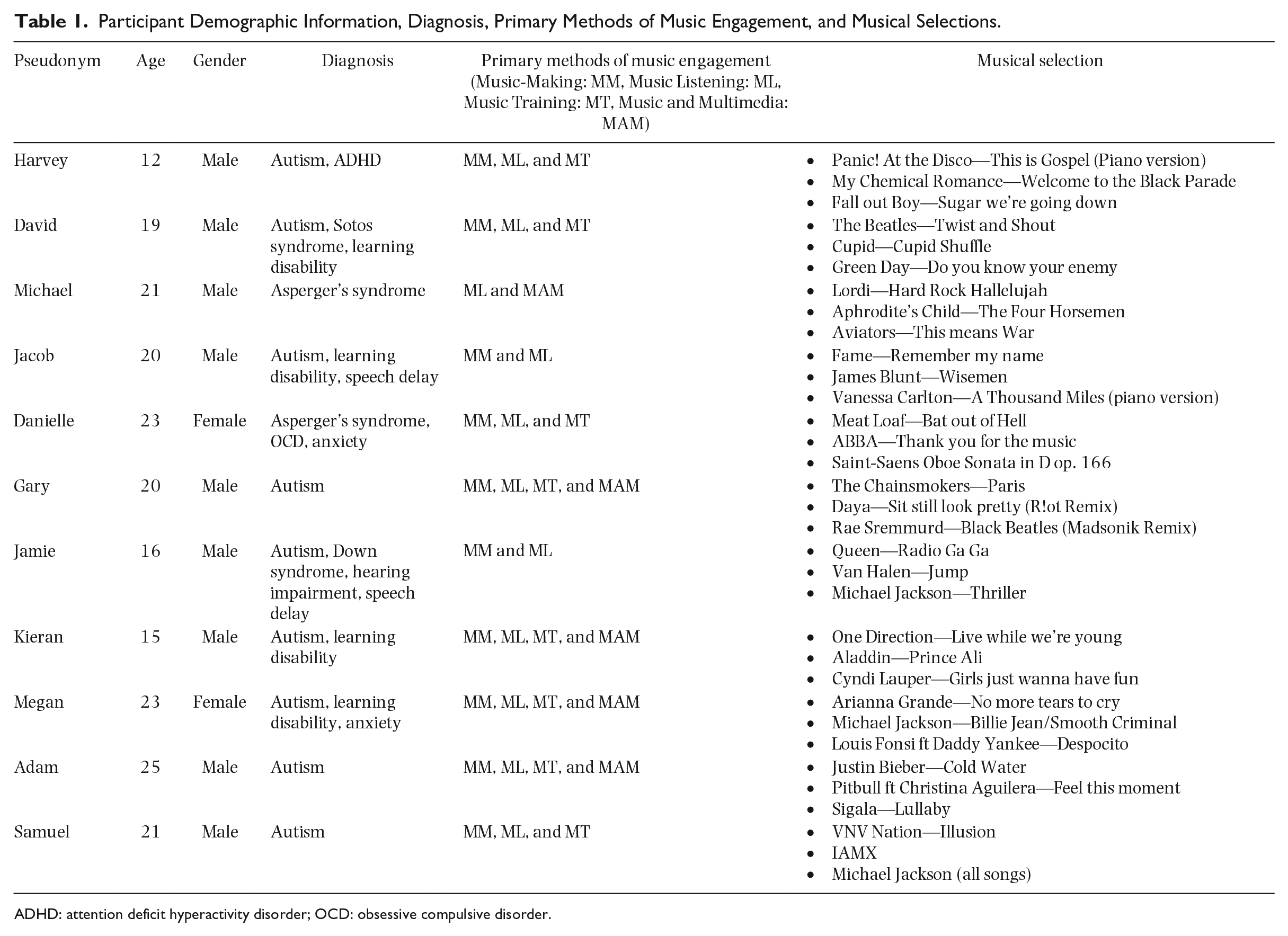
ADHD: attention deficit hyperactivity disorder; OCD: obsessive compulsive disorder.
Materials
Information booklet
An information booklet was created and distributed to potential participants via email. The information booklet included the aims of the study, a list of potential interview questions, and a consent form which participants and/or parents of participants were required to read and sign. Three versions of the information booklet were created: one for parents, one for participants over the age of 18, and one for participants under the age of 18.
Questionnaire
In this study, participants were considered to be the experts in relation to autism and it was therefore deemed important to involve them in the process of designing the interviews. This was achieved through completion of a questionnaire, which was distributed via email to participants who had returned a signed consent form. The questionnaire collected demographic information as well as details about each participant’s diagnosis, communicative needs and preferences, and any topics the participant wished to discuss or avoid. In addition, participants were asked to nominate three preferred pieces of music. These pieces were played in the interview in order to encourage further discussion about music and the participants’ musical experience. This information was used to tailor the interview to the individual’s specific needs and interests.
Interviews
An adaptive style of interviewing, whereby the content and style of the interview were adjusted to meet the individual needs and preferences of each participant, was combined with a semi-structured interview technique. The person-centered nature of these interviews resulted in a flexible and inclusive interview process, which allowed the researchers to gather rich data. An important consideration was to ensure that the interviews would account for the variety of preferred communication methods employed by young people on the autism spectrum (Beresford et al., 2004). Previous research suggests that young people on the autism spectrum may find it difficult to participate in interviews which rely on verbal communication (Preece & Jordan, 2010) and/or that include open-ended questions (Preece, 2002). With this in mind, the researcher used unambiguous language which was appropriate for the participants’ ages and communicative preferences. In addition, a range of communication methods were used to support participants during the interviews. These included the Picture Exchange Communication System (pictures and symbols accompanied by a written label; PECS); typed/written words and questions; Makaton signing and verbal communication. All of the interviews were completed face-to-face in varying locations selected by the participant. Interviews lasted between 10 and 53 min depending on the needs of the individual. Interviews were recorded using a Dictaphone and were subsequently transcribed verbatim.
Procedure
Due to the broad spectrum of needs experienced by those diagnosed with autism, there are no formal guidelines for involving young people on the autism spectrum in qualitative research (Norwich, 1996). However, several measures were put in place to ensure that this study was both ethically sound and an enjoyable experience. First, particular attention was paid to the process of informed consent, as previous research has discussed the consequences of young people (in particular, those with additional needs) providing consent without fully understanding the implications of their involvement in research (Jordan, 1999). The participants were actively encouraged to discuss this study with their parents/friends, before deciding whether or not to take part, and were given the opportunity to ask questions about the study. Once participants had provided their consent, they were asked to complete a questionnaire which would help in the development of the interview. All participants completed the questionnaire, and nine were supported to do so by a parent/support worker. Participants also gave consent on the day of the interview (either verbally or through signing/yes and no options) and were given a further opportunity to ask questions. Participants were reminded of their right to withdraw and to anonymity at all stages of the project and were informed both prior to the interview and during the interview that the conversation would be recorded. Participants under the age of 18 were supported throughout the interview by a responsible adult and those over the age of 18 were given the opportunity to have somebody accompany them during the interview. All participants were offered a break part-way through the interview.
Analysis
Interpretative phenomenological analysis (IPA) was utilized to analyze the data (Smith et al., 2009). IPA is a qualitative analytical approach, which is focused on the subjective experiences of individuals as “self-interpreting beings” (Taylor, 1985, p. 45). IPA has been used successfully with small samples due to its participant-centered approach which allows for detailed exploration of each individual’s subjective experience of the world (Pietkiewicz & Smith, 2014). Due to the lack of previous research in this area, IPA is particularly useful as it allows for in-depth analysis of the musical experiences of autistic people. Following the guidelines of IPA set out by Pietkiewicz and Smith (2014), several close readings of the data were undertaken. At this stage, the researchers took notes regarding the atmosphere and content of the interview, exploring the transcript line by line and coding for any distinct and/or recurring phrases. In the next stage of analysis, these initial notes and codes were transformed into themes, using “a concise phrase at a slightly higher level of abstraction” (Pietkiewicz & Smith, 2014, p. 12). The researchers then explored the connections and relationships between themes, grouping similar themes together and labeling them according to their content. This process revealed four overarching themes (Cognitive, Emotional, Social, and Identity), which will henceforth be referred to as “functions.” Each function contains several sub-themes, and these are discussed below following a brief overview of the four methods of musical engagement that were prevalent across the functions. It is worth noting that where possible the results of this study are discussed in relation to previous literature involving autistic people. However, where this is not possible results are contextualized through the inclusion of literature involving neurotypical populations.
Results and discussion
Engagement with music
Participants in this study were highly engaged with music and reported four key methods of musical engagement which provide useful context for the discussion about the functions of music below: music listening, music-making, music training, and music and multimedia. Music listening was the most frequently reported method of musical engagement with all participants self-reporting as active music listeners (see Figure 1 for reported methods of music listening). Unsurprisingly, online music consumption through streaming services and playlists were most popular among the young people in this study.
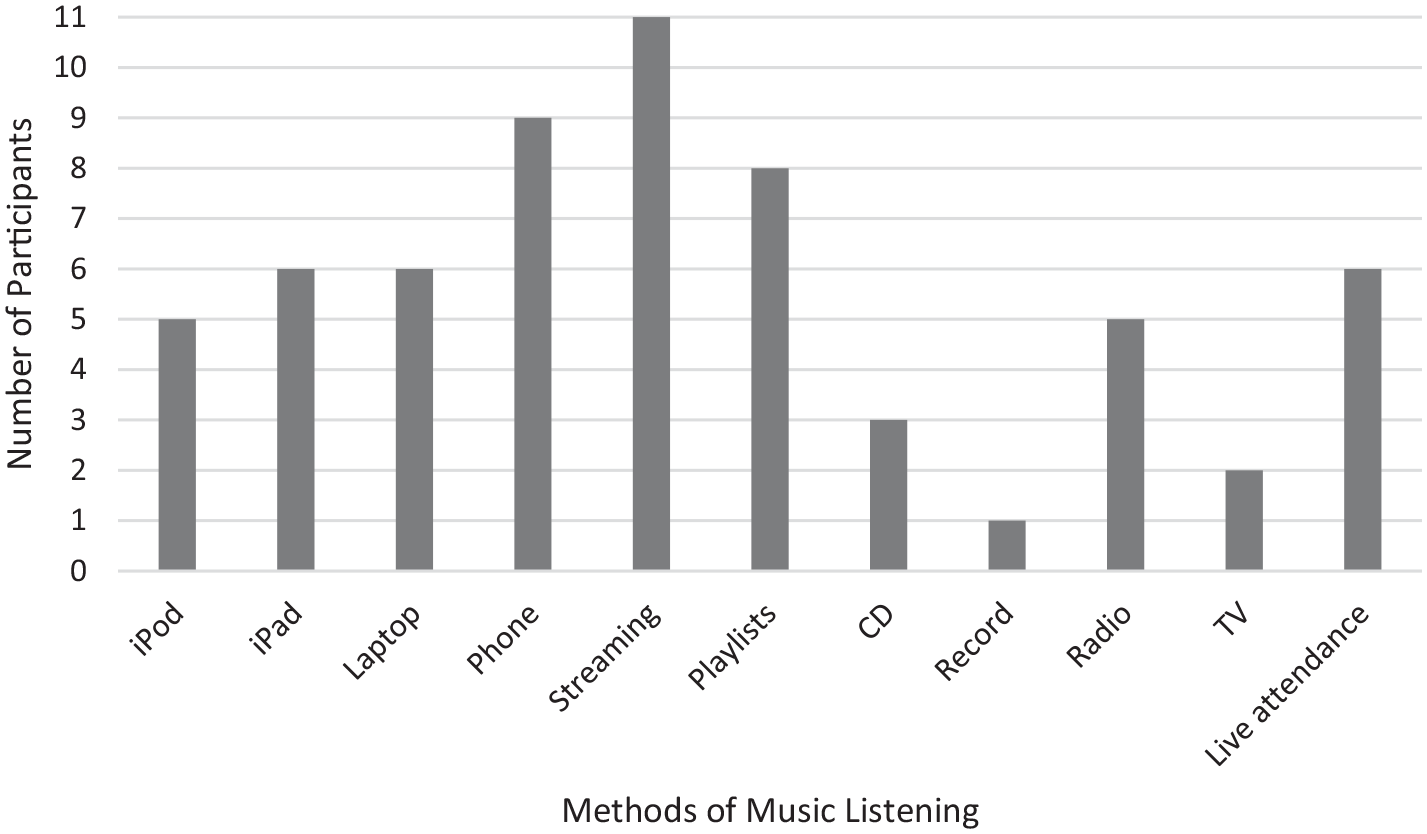
Most Frequently Reported Methods of Music Listening.
Although participants identified their preferred genres of music, many reported listening to a variety of musical genres. This finding appears to contradict the behaviors stereotypically associated with autism. The diagnostic criteria for autism state that “restrictive and/or repetitive patterns of behaviour” are common in individuals on the autism spectrum (APA, 2013, p. 50). It might therefore be expected that young people diagnosed with autism may listen to a restricted and/or repetitive selection of music. However, the results of this study suggest that these restrictive behaviors do not necessarily extend to musical behavior, and therefore may not apply to all aspects of an individual’s life.
Participants who reported music-making cited examples of playing a musical instrument/voice alone or in a group, solo, and/or ensemble performances and creating original music through composition or song writing. Music-making was often reported to co-exist with music training, suggesting that those who engage with practical music-making are more likely to also receive formal training. Musical training was defined as any form of musical engagement which was undertaken with the purpose of improving musical skill, for example, individual/group instrumental lessons, school music lessons, and music outreach programs with a training element. Finally, participants reported engaging with music alongside other forms of multimedia, such as film, television, video games, and music videos.
Functions
Cognitive functions
Music was frequently described by participants as a secondary activity to accompany a wide range of activities (see Table 2). This is in keeping with previous research which suggests that music is often used to accompany a variety of non-musical activities (Greasley & Lamont, 2011; Sloboda et al., 2016). Music was rarely reported to be the main activity, unless the activity itself was performance-related. For this reason, the cognitive functions described in this section were mostly met through music listening. Participants discussed four ways in which music fulfilled a cognitive function in their lives: to distract, to enhance an activity, to motivate, and to inform routine.
Non-Musical Activities and Experiences Frequently Accompanied by Music.
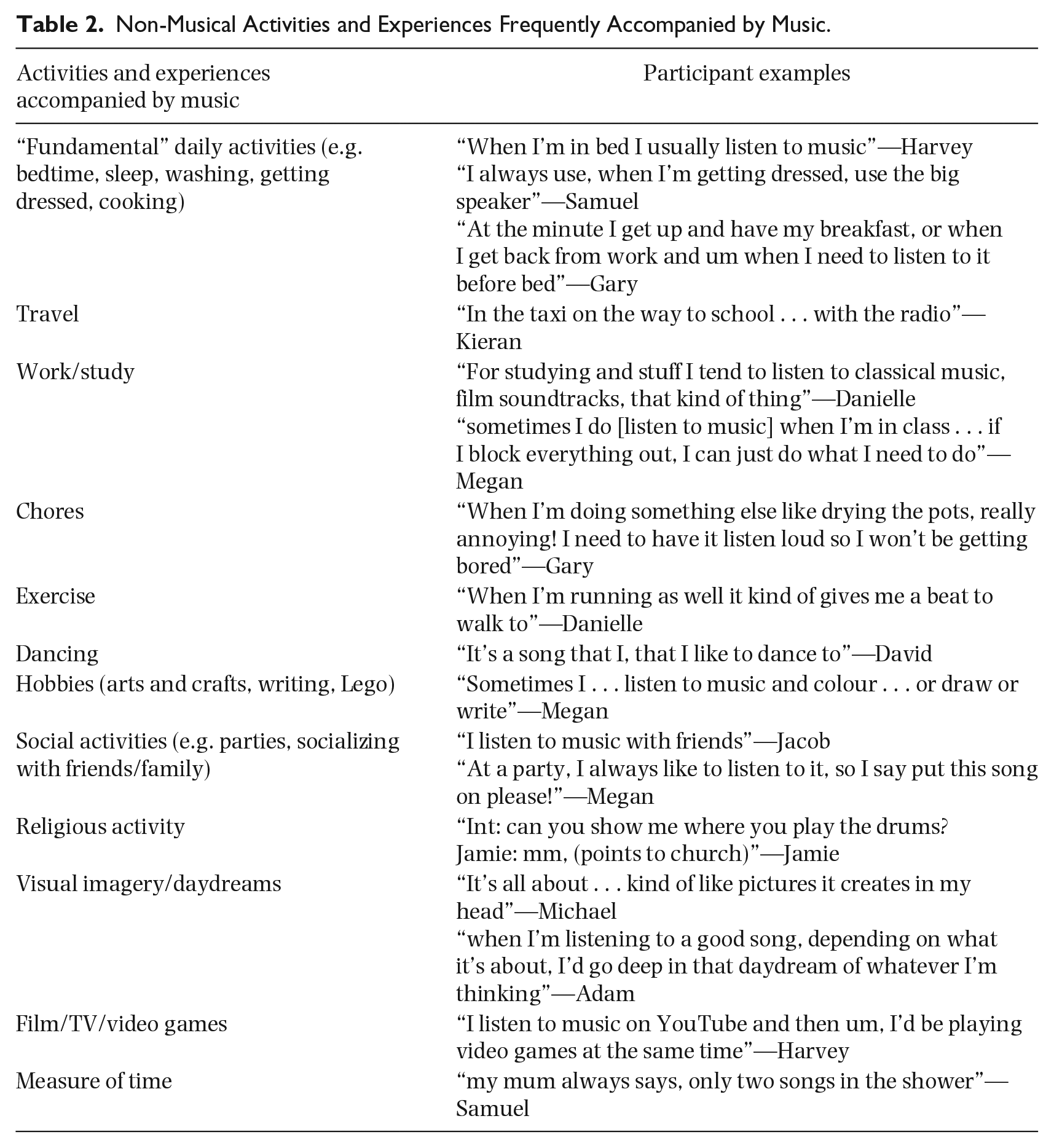
In keeping with previous research, music was frequently reported to serve as a distraction from otherwise boring tasks, thus making them more enjoyable (North et al., 2000). In addition, participants discussed using music as a method of distraction from the troubles of daily life. For Michael, and others in this study, music served as a distraction as well as a form of escapism. It is worth noting that participants’ experiences of escaping reality were also commonly paired with visual imagery and/or daydreams. Both Michael and Adam reported experiencing visual imagery (e.g. visual scenes, characters and stories) while listening to music, as well as purposefully selecting musical stimuli to match and enhance their visual imagery. Young people on the autism spectrum may find daily life stressful or overwhelming, due to the intense way in which they experience audio and visual stimuli (Walker, 2015). Michael and Adam’s reports suggest that music may be used in everyday life to create relaxing and enjoyable experiences with demonstrable mood-enhancing effects, similar to those achieved through music therapy techniques such as Guided Imagery and Music (Bruscia, 2002).
In keeping with previous research, which suggests that music may be chosen for its motivational qualities (Karageorghis et al., 2006), participants discussed choosing music to motivate them to begin or continue an activity, including work/study-based activities and exercise. Participants demonstrated an excellent understanding of the motivational qualities of music and associated these with specific musical characteristics (e.g. tempo). Megan and Danielle also discussed music’s ability to motivate their studies by helping them to focus. The use of music to aid focus may be particularly beneficial for young people on the autism spectrum who find it difficult to process the sights, sounds, and sensations of everyday life (particularly individuals who have been diagnosed with sensory processing disorder; Cesaroni & Garber, 1991). For these individuals, music may serve as a useful tool to “block out” unwanted stimuli and enable greater focus on a given task, particularly in an educational setting.
Music was also reported to aid and inform the participants’ daily routines. One example of this was the use of music to measure the amount of time required to complete an activity. In addition, music was often reported to punctuate an individual’s routine, acting as a musical cue for activities throughout the day. This may be beneficial for young people on the autism spectrum who find changes to routine challenging and/or stressful (Magiati et al., 2017). Finally, participants stated that music enhanced their experience of non-musical activities. When serving as a supplement to a main activity, music enhanced the experience through increasing overall levels of enjoyment.
Emotional functions
The emotional functions of music were varied and highly subjective. However, five emotional functions were identified: mood management, emotional regulation, de-coding emotion, emotional expression, and nostalgia (see Table 3).
Emotional Functions of Music.
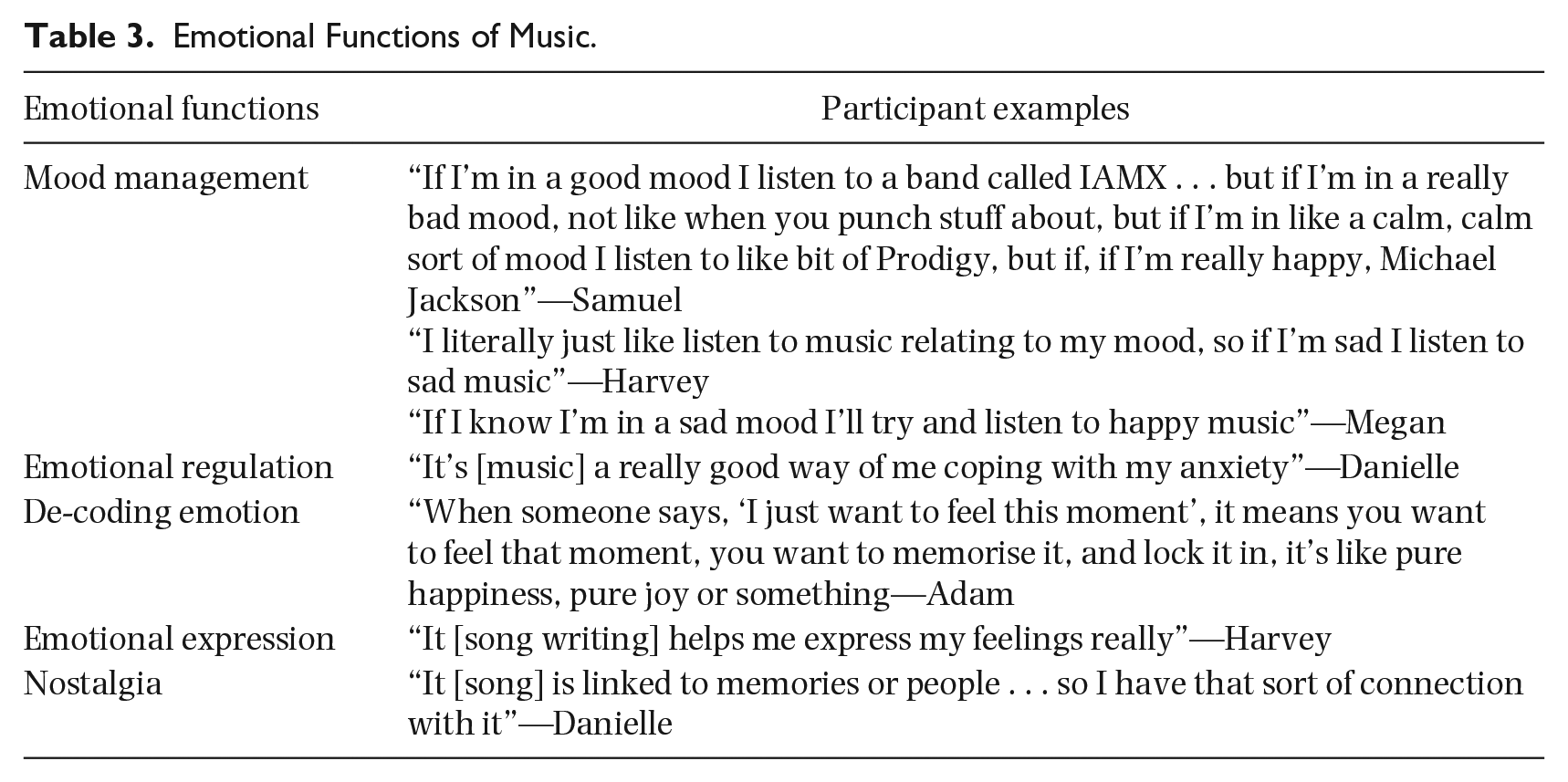
Mood management was the most prevalent emotional function in this study. All participants provided at least one example of using music to maintain or alter mood, usually through music listening. This is in line with previous research involving neurotypical (Schäfer et al., 2013) and autistic (Allen et al., 2009) people. Participants cited specific songs, genres, and artists that they listened to in order to achieve a desired mood state. For some, mood management involved listening to mood-congruent music, while others listened to music that contrasted with their mood, usually in an attempt to alter their mood state. This demonstrates the highly subjective nature of mood management, which requires the individual to understand their current mood, identify a desired mood, and select music which will achieve the target mood. The young people in this study therefore demonstrate a conscious awareness of their own emotions, as well as the potential for music to maintain and/or alter their mood. The findings of this study therefore contradict previous research which suggests that autistic people may struggle to identify and/or respond to emotions (Downs & Smith, 2004). In addition, contrary to previous research which suggests that autistic people may not use emotive language when describing music (e.g. Allen et al., 2009), participants in this study described in great detail the complex emotional responses they experienced when engaging with music. These responses were largely positive (e.g. happy, excited, hopeful); however, a smaller number of negative (e.g. sad, angry) and neutral (e.g. confused) responses were also reported. One explanation for these results is that previous research has neglected to ask young people on the autism spectrum about their experiences and has therefore failed to consider the ways in which autistic people themselves experience and report emotions (Baggs, 2012).
Music was also used to regulate other aspects of an individual’s emotions, including stress and anxiety (e.g. six participants stated that music helped them to feel calmer and more relaxed). The use of music to regulate emotions and promote relaxation may be particularly beneficial for autistic people who are also diagnosed with anxiety. Greater understanding of the function of music for mood management and emotional regulation in the lives of autistic people would be beneficial in order for young people to develop techniques to manage their mood and emotions effectively, particularly in stressful or over-stimulating situations.
A process of “de-coding” emotional content in music was also discussed by the participants. This activity was undertaken by observing the common musical cues which indicate a particular emotion (e.g. lyrics, key, and instrumentation; Juslin, 2005). However, participants also interpreted the emotional content of music more individually, by reflecting on their personal experiences, associations, and beliefs. Several participants discussed their interpretations of the emotional intentions of the songwriter/composer, indicating a conscious attempt to understand the emotional content of the music, while also demonstrating an awareness of the potential of music to express an individual’s emotions. An example of communicating emotions to others and de-coding emotional content in music can occur simultaneously was provided by Harvey, who described song writing as a tool to capture and express his emotions to others (see Table 3). In this example, emotional de-coding occurs for both the songwriter, and the listener who interprets the emotional content of the musical output. It could therefore be suggested that music (in particular, song writing) may be used as a constructive and creative outlet for expressing the complex emotions experienced in adolescence (Baker & Wigram, 2005). Finally, five participants reported nostalgia in relation to music, recalling personal and emotional memories which they associated with a particular piece of music and/or musical experience. These musical memories were mostly positive; however, some instances of negative reminiscence were also reported. This is supported by research which suggests that reminiscence is a common function of music listening, which is often used to connect with past emotions, experiences, and people (Janata et al., 2007).
Social functions
In keeping with previous research involving neurotypical people (e.g. Evans et al., 2013), music was frequently reported as the basis for social communication, providing an opportunity for participants to connect with others and develop new and pre-existing interpersonal relationships. The formation and development of interpersonal relationships was primarily achieved in three ways: highlighting commonalities in musical preference, participating in a shared experience, and collaborating in music-making and performance (see Table 4). By highlighting the similarities between their own musical preferences and those of their peers, participants were able to relate to others and connect over a common interest, thus aiding the development of interpersonal relationships. This in itself is not surprising, as previous research suggests that shared musical interests are a common predictor of liking for a new person (Launay & Dunbar, 2015). Participants reported that sharing experiences with others, at live events, for example, promoted the formation and development of interpersonal relationships and provided opportunities for social interaction (Brown & Knox, 2017). However, some participants also altered their musical behavior in order to appeal to the musical preferences of others. This demonstrates that the participants were aware of the potential for music to relate to others and actively used their musical behavior to facilitate the development of social relationships.
Social Functions of Music.
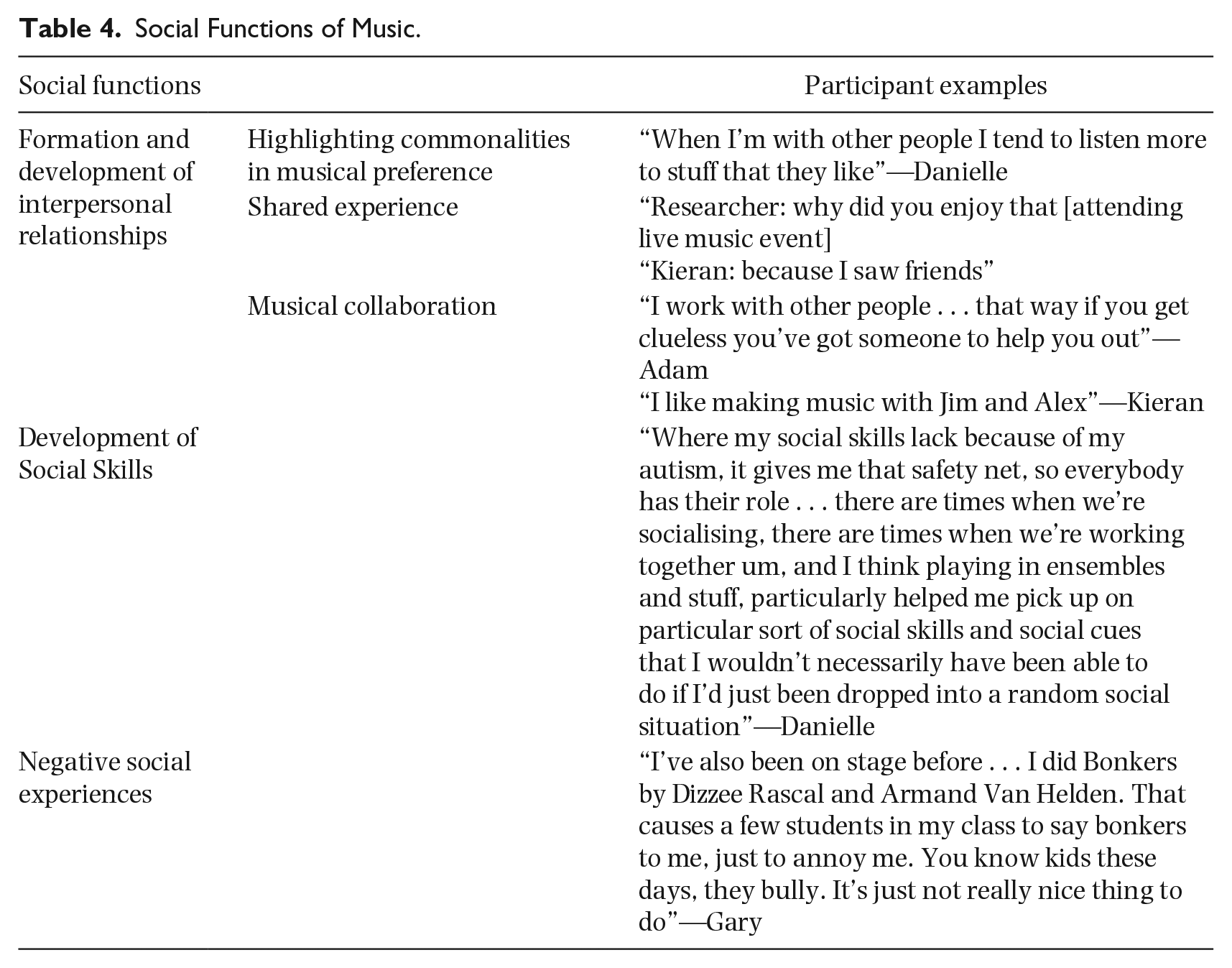
Finally, the collaborative aspect of music-making was also considered by many participants as an opportunity to work, learn, and socialize with others (see Table 5). Making music with others was considered to be an enjoyable aspect of musical engagement, which enabled participants to bond with others within a group. This finding is supported by previous research which proposes that music can be used as a tool for social bonding (Tarr et al., 2014). However, the benefits of group music-making and performance appear to extend beyond social bonding, to the development of an individual’s social skills. This indicates that musical activities can provide individuals on the autism spectrum with an opportunity to build connections with others in a safe environment which is governed by social “guidelines.” These guidelines may enable autistic people to feel more comfortable when interacting with others. A large body of literature has explored the impact of music therapy on the acquisition of social skills (e.g. Duncan & Klinger, 2010; LaGasse, 2017; Pasiali, 2004). However, previous research has rarely considered the potential for engagement with musical activities in a non-therapeutic context to support the social development of young people on the autism spectrum. It is, however, also important to consider that that not all musical experiences result in positive social outcomes, as demonstrated by Gary’s experience of being bullied after his first performance at college. While very few studies address the potential negative outcomes of musical engagement, these negative social experiences should be acknowledged and addressed, so that young people can be supported in their musical engagement.
Identity Functions of Music.
Identity functions
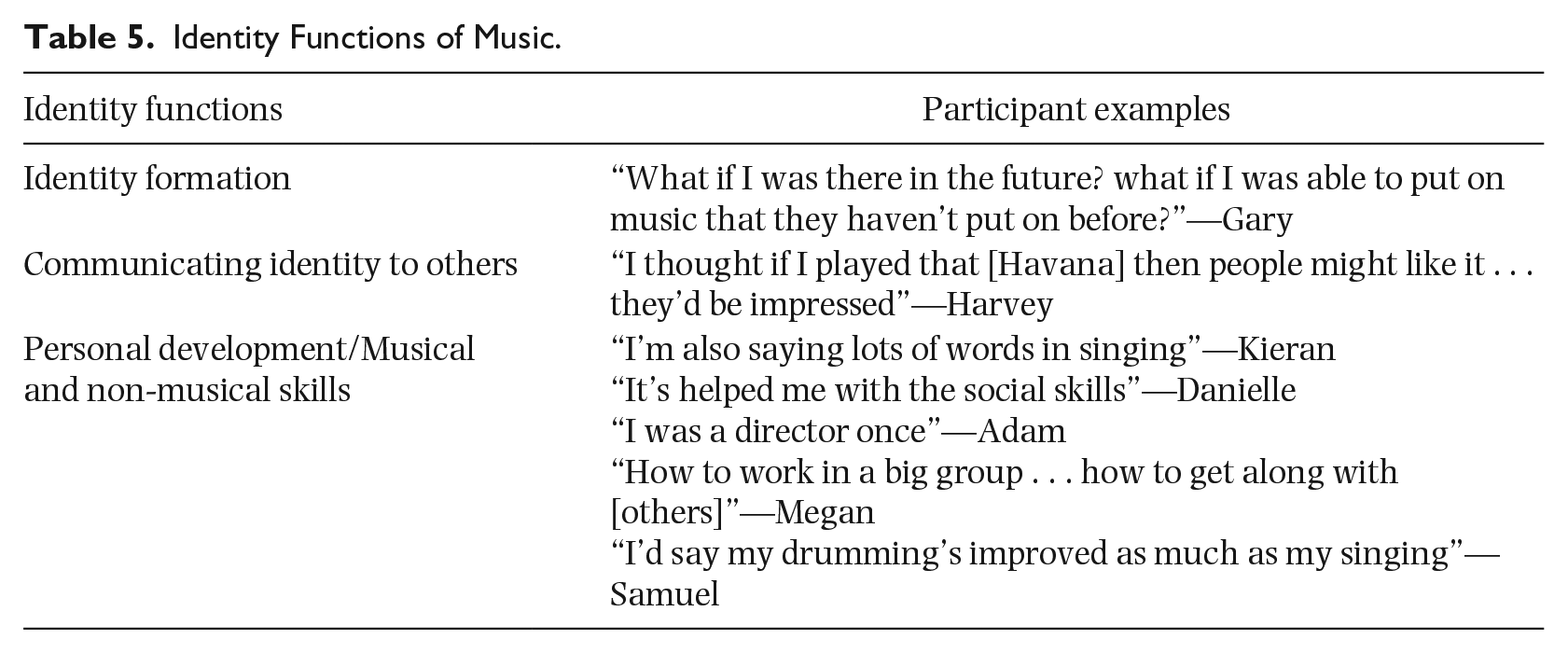
A less frequently discussed, but nonetheless important, function of music was Identity. This function was considered in three ways: identity formation, communicating identity to others, and personal development (see Table 5).
For participants who engaged in music-making, considering themselves as a “musician” appeared to be an important part of their self-identity. However, this was not the case for Michael, who rejected the idea of being a musician due to his belief that he could not be regarded as such, as his sister is considered to be “the musical one of the family.” This demonstrates Michael’s belief that his sister’s musicality prevents him from participating in musical activities and suggests that the musical identity of others may impact the formation and development of an individual’s self-identity. It is also worth noting the impact of music on the individual’s perception of their future self. Gary’s experiences and musical exposure as a child resulted in his dream of becoming a radio DJ. Throughout the interview Gary imagined his future self as a radio DJ, indicating the importance of Gary’s musical interests on the formation of his possible, present, and future identities (cf. Markus & Nurius, 1986). This study therefore supports previous research which suggests that music can play an important role in the construction of identity in adolescence (Evans et al., 2013; Macdonald et al., 2002).
Participants also used music as a way of communicating their identity to others. For example, by performing a popular song in school, Harvey was able to publicly communicate aspects of himself, his interests, and his personality, while simultaneously highlighting his alignment with the musical preferences of others. This finding resonates with Social Identity Theory (Turner & Tajfel, 1986), which highlights that group affiliation plays an important role in identity development. While Harvey’s decision to perform a popular song in school fulfills a specific function in relation to his personal identity, it is clear that this particular musical behavior may also enable him to feel a sense of social belonging or affiliation with a particular group.
Finally, musical engagement aided the acquisition and development of musical and non-musical skills, including communication, social skills, and leadership. Previous research suggests that young people on the autism spectrum are frequently diagnosed with anxiety (Davis et al., 2014) and may struggle with lack of confidence and self-esteem (Williamson et al., 2008). The findings of this study suggest that musical engagement may function as a tool for personal development, by providing opportunities for skills development and encouraging improved self-efficacy for individuals on the autism spectrum (cf. Allen, Walsh, et al., 2013).
Conclusion and implications
This study provides a rare first-person account of the subjective musical experiences of autistic people. The findings suggest that young people on the autism spectrum engage with music in similar ways to neurotypical people, including through music listening, music-making, music training, and music and multimedia. It is clear that music plays an important role in the participants’ lives, fulfilling a range of cognitive, emotional, social, and identity functions. These functions have been discussed extensively in previous research involving neurotypical people, and this study suggests that the functions of music in the lives of autistic people and neurotypical people are similar. This study also demonstrates that young people on the autism spectrum are aware of the functions of music in their lives and actively use music to meet these functions through functional music selection.
Key findings of this study contradict previous research which proposes that individuals diagnosed with autism have a limited emotional understanding (Downs & Smith, 2004; Scambler et al., 2007). Participants reported a range of emotional functions fulfilled by music, including mood management, emotional expression, de-coding emotion, and nostalgia and were able to identify and describe emotion in music. This indicates that, far from not experiencing or responding to emotion in music, autistic people may simply find it more challenging to articulate emotional responses in a “typical” (e.g. verbal) way (Allen, Davis, et al., 2013). When considered through the Neurodiversity Paradigm, whereby there is no “normal” human brain and subsequently no “normal” way to communicate, the problem therein lies in the way in which neurotypical researchers ask autistic people to communicate.
This study utilized an adaptive interview technique designed to include participants with a range of communicative needs. Indeed, many of the participants involved in this study may have been excluded from taking part in traditional interviews due to the misconception that they are “unable to communicate” or “do not have anything to say.” The successful inclusion of these young people in this study demonstrates the value of interviewing autistic people about their lives and the need for further adaptive methodologies.
It is, however, important to acknowledge the limitations of an adaptive approach. An important consideration is that the interview questions were often restricted by the participants’ preferred communication method. For example, individuals who communicated through PECS were only able to answer questions that could be answered through choosing a symbol or picture. Similarly, these participants’ answers were also restricted to the options provided by the researcher. Although this approach was necessary in order to include individuals with a range of communicative needs, this resulted in the collection of less detailed data for these participants. However, perhaps the biggest challenge for this study was the recruitment of participants. The personal nature of the project may have been off-putting for some individuals, particularly as all interviews were conducted face-to-face. Future research could consider using a range of interview methods including videotelephony, telephone interviews, and web chat (see Bakan, 2018).
This study has implications for autistic young people, who may benefit from reflecting on their own musical experiences and the functions of music in their lives. This study suggests that young people on the autism spectrum may make functional musical selections to fulfill their personal and social needs. In particular, music may be used as a functional tool to aid personal development, such as through skills development and improved self-efficacy. Similarly, for music therapists, a greater understanding of the outcomes of functional music engagement may aid the development of practical therapeutic techniques, which fit around an individual’s pre-established lifestyle, musical preferences, and functional musical choices. In particular, music therapists may wish to consider the practical outcomes of functional musical engagement and explore how these outcomes may interact and support the aims of music therapy. For example, it seems that music may be able to assist young people on the autism spectrum in their daily routines. It would be beneficial for further research to explore the potential for music to reduce anxiety and stress related to unexpected changes. In addition, the findings of this study highlight the value of actively supporting autistic young people’s engagement with music. Jacob’s mum stated, “this is a good thing about your project, because it’s giving me ideas.” This demonstrates the potential for research of this kind to have an impact on the lives of autistic people and their families.
The findings of this study challenge common assumptions and misconceptions surrounding autism and autistic people. In particular, it challenges the perception of who can be involved in research, and more specifically, the components of a successful interview. Although the findings of this study are most relevant for music researchers and therapists, the methodological approach of this study has implications for any area of research where hearing directly from the autistic community would be beneficial. In line with the Neurodiversity Paradigm (Singer, 1999), future research should consider actively involving autistic people in research, in order to gain a better understanding of their subjective experiences. Inclusive approaches, such as participatory action research, may be particularly beneficial to aid the development of accessible and inclusive resources, training, facilities, and research methodologies. In centralizing the musical experiences of young people on the autism spectrum, this study seeks to highlight the importance of music in their lives and demonstrate the wide range of functions that everyday musical experiences can fulfill for this under-represented population.
