




Abstract
Affect impacts people’s cognitive processes as well as provides the energy to pursue goals and engage in actions. Research suggests that affect might influence instrumental learning behavior. This review aims to summarize the existing literature concerning the relationship between affect and instrumental practice. In order to determine the role of affect in undertaking instrumental practice and in engagement in practice, we conducted a systematic search via electronic databases and reference lists; we also hand-searched the key journals. Studies were included in the review if they concerned both affect and practicing behavior in musicians and instrumental students across all age groups and if the relationships between the two constructs were investigated. We focused on individual instrumental practice in the classical repertoire. Eleven studies met our inclusion criteria. They reported quantitative relationships between affect and the amount of practice or qualitatively described the role of affect in practice engagement. The results of this systematic review show that practicing a musical instrument is associated with different types of affect—practice-related, performance-related, and context-free affect. Further investigation of affect in the context of music learning may inform future interventions for instrumentalists motivating them to practice.
In order to acquire skills in playing a musical instrument, it is necessary to practice (Jørgensen & Hallam, 2016). More than 25 years ago, researchers suggested that it is possible to directly predict the level of instrumental skills based on the accumulated amount of practice (Ericsson, Krampe, & Tesch-Roemer, 1993). Today we know that other factors, such as the quality of practice and engagement in it, also contribute to a better understanding of individual differences in instrumental performance (Duke, Simmons, & Cash, 2009). Both the amount of practice and engagement in musical learning may be related to students’ affective experience (Hallam et al., 2012). Musicians usually enjoy playing, they tend to derive pleasure and feelings of pride from their activities, but some learners may feel frustrated with difficult tasks, experience a fear of failure, or become disinterested in learning an instrument.
Although there have been many studies on instrumental practice (Jørgensen & Hallam, 2016), the links between affect and instrumental learning remain largely unexplored. Consequently, we lack the knowledge that would be useful in designing interventions regulating emotions and motivation in musicians. So far, there has been no literature review that would summarize knowledge concerning the affective mechanisms involved in musical practice.
The current review is intended to fill this gap and answer the question about the role of affect in undertaking instrumental practice. We first present the concept of musical practice and factors related to motivation. Next, the rationale for linking affect and practice is discussed. Finally, the results of a systematic review are presented and discussed.
The understanding of instrumental practice
Researchers most often understand practicing a musical instrument as a type of learning activity that leads to the acquisition of instrumental skills—for example, technical skills, interpretation, playing from ear or from memory, improvising, rehearsing, and performing with other musicians (Jørgensen & Hallam, 2016). The terms “deliberate practice” (Ericsson et al., 1993) or “formal practice” (Sloboda, Davidson, Howe, & Moore, 1996) are used to refer to structured activity undertaken to increase an individual’s level of performance. Practicing a musical instrument requires setting specific goals to overcome weaknesses and carefully monitoring performance in order to notice what still needs to be improved. Similarly, Hallam (1997, p. 181) described “effective practice” that “achieves the desired end-product, in as short a time as possible, without interfering negatively with longer-term goals.”
There is, however, a different type of activity that should be distinguished: activity which is not undertaken with the intention of improving performance (Lehmann & Jørgensen, 2012) and serves other functions, such as emotional or aesthetic. This informal type of practice is a non-obligatory leisure activity, such as playing by ear or improvising (Sloboda et al., 1996).
There are two main streams of research on musical practice. The older one is focused on the role of the amount of practice, whereas the more recent research stream investigates the role of its quality in the acquisition of expertise. Research on time devoted to practice shows that most advanced musicians had started learning the instrument in their early years (Sosniak, 1985, as cited in Jørgensen & Hallam, 2016) and those musicians accumulated several thousand hours of practice before reaching a high performance level. Also, there is a monotonic relationship between deliberate practice and the acquired level of performance (Ericsson et al., 1993); performers who have practiced more than others at a given point of time tend to attain higher levels of expertise.
Recently, researchers have paid special attention to the fact that learning demands engagement, which is active involvement in instrumental task performance (Berg, 2008; Fredricks, Blumenfeld, & Paris, 2004). Much of the research on issues relating to engagement in instrumental learning has focused on the use of practice strategies (Jørgensen & Hallam, 2016). Practice was studied within the framework of self-regulated learning (McPherson & Renwick, 2011), in order to establish how musicians engage in forethought, performance/volitional control, and self-reflection. Similarly, Jørgensen (2004, as cited in Jørgensen & Hallam, 2016) described planning strategies, strategies for the conduct of practice, strategies to evaluate practice, and meta-strategies. Hallam and colleagues (2012) studied systematic practice strategies such as practicing small sections, the use of recordings for listening and feedback, the use of a metronome, and immediate correction of errors.
Studies show that the amount of daily practice time increases as age increases and expertise develops and declines as performers become professionals (Jørgensen & Hallam, 2016). Additionally, time spent on practice varies across instruments, with pianists and violinists practicing the most and singers practicing the least. There is evidence that, as the level of expertise increases, the adoption of systematic practice strategies increases too (Hallam et al., 2012).
Based on this review of theories and research on musical practice, in our systematic review we consider both formal and informal practice as well as the amount of practice (AM-P) and engagement in instrumental practice (EN-P).
Motivation and instrumental practice
A variety of factors can influence musicians’ motivation (Hallam, 2014). It can be fostered by outside sources, such as parental support or the quality of home environment. Parental musical behaviors influence children’s early interest in music, determine the age at which children start to practice, their choice of instrument, and their level of musical engagement.
Researchers also investigate the role of intrinsic factors in motivation. They distinguish between performance (ability) and learning (mastery) goals (Hallam, 2014; Smith, 2005). In general, successful students, who are motivated to engage in sustained practice, adopt the mastery goal orientation in their learning (Smith, 2005). Self-efficacy, the conviction that one can perform a particular behavior, predicts the musicians’ performance results (McPherson & McCormick, 2006), boosts their engagement in effortful practice, and improves their preparation for examinations (McPherson & Renwick, 2011). There are many other factors that can influence learning motivation. These include affect experienced by musicians. There is evidence that inherent enjoyment during practice maintains intrinsic motivation, AM-P, and EN-P (Renwick & McPherson, 2002); however, the role of affect in instrumental practice has not been clearly articulated so far, and the existing research has not been integrated into a coherent picture.
The role of affect
To refer to emotional phenomena, authors use terms such as affect, emotion, and mood interchangeably (Baas, De Dreu, & Nijstad, 2008). We focus on a specific definition of affect (Fredrickson, 2001) and the circumplex model of affect (Posner, Russell, & Peterson, 2005; Russell, 1980), frequently used in the literature on affective phenomena and actions (e.g., affect and goals, affect and engagement in activity; Laguna, 2018; Plemmons & Weiss, 2013) and in music literature (e.g., Vuoskoski & Eerola, 2011). According to this definition, affect refers to the consciously accessible feelings evident in moods and emotions (Fredrickson, 2001). The circumplex model of affect (Posner et al., 2005; Russell, 1980) characterizes affective experiences using two dimensions, valence (positive or negative) and arousal (high or low), and define specific types of affect, such as enthusiasm or anxiety, as the linear combination of these two dimensions. For example, anxiety involves a combination of negative valence and high arousal.
Affect can influence action in many different ways (Plemmons & Weiss, 2013). It has an impact on information processing, which in turn influences judgments such as decisions to undertake certain activities (Forgas, 2000). Affect helps to focus attention on the goal, thus influencing goal prioritization and maintenance; it also serves to determine the expectancy of goal attainment and has an impact on persistence in action (Plemmons & Weiss, 2013).
Positive affective experiences prompt people to engage with their environments and undertake activities (Fredrickson, 2001). They foster favorable expectancies regarding the outcome of one’s actions, promote setting higher goals, and contribute to continuing effort at goal attainment (Carver & Scheier, 1990; Plemmons & Weiss, 2013). The role of negative affect is less clear. In general, negative affect (e.g., anxiety) diminishes activity engagement and interferes with goal pursuit (Carver & Scheier, 1990; Laguna, Alessandri, & Caprara, 2016). However, some kinds of negative affect (e.g., anger) may intensify efforts to achieve the desired end state.
Since the early 20th century, researchers have investigated affective responses to music (Thaut, 2016). They confirmed that music can evoke a wide range of affective reactions; it has an affective function and operates as “a mood-changer” or “enhancer” (e.g., Sloboda & O’Neill, 2001). In the large body of research on affect and music, relatively little is known about the role of affect in musicians’ practice.
The emotions and feelings that accompany music practice and music performance, as well as context-free affect, can play an important role in directing and maintaining instrumental learning activities (McPherson & Renwick, 2011). Practice-related affect (PC-A) refers to the feelings and emotions experienced when practicing and learning (Evans & Bonneville-Roussy, 2016). Performance-related affect (PF-A) is the emotional experience occurring in the context of public festivals, concerts, or competitions (Biasutti & Concina, 2014). Unlike affect related to practice or performance, context-free affect (CF-A) takes the form of rather pervasive moods that cannot be easily linked to any specific causes (Baas et al., 2008). In our review we consider all: PC-A, PF-A, and CF-A.
Current study
In this systematic review, we explore the relationship between musicians’ affect and practice. We answer two specific questions: Is affect related to the amount and frequency of musical practice undertaken? What is the role of affect in engagement in practicing a musical instrument?
Because the current study is the first systematic attempt to investigate affect and practice, we want our exploration of this topic to be broad. We are therefore interested in studies on musicians of all ages, playing various instruments.
Method
We performed a systematic narrative review of the literature, an approach that enables the accumulation of knowledge about the relationships between variables using data from multiple studies and has been successfully applied in other disciplines (e.g., Koechlin, Coakley, Schechter, Werner, & Kossowsky, 2018). We performed electronic database searching, scanning reference lists, and hand-searching of key journals. The inclusion criteria were as follows: a study reported in English, empirically investigating the relationship between affect and the AM-P or EN-P in musicians or instrumental students across all ages, published before February 2018 (for hand-searching, in journals before 2000).
We excluded studies of vocal practice and studies that assessed “flow” or “passion” but did not report on affect. Following the guidelines for systematic reviews (e.g., Booth, Sutton, & Papaioannou, 2012), we applied replicable procedures; to ensure the explicitness we excluded reviews, theoretical papers, dissertations, and conference materials.
Publications were identified via separate searches in EBSCOhost (ERIC, PsycINFO, and Academic Search Complete), Web of Science, and Scopus. The keywords were instrumental practice or practice in addition to music, affect, emotion, feelings, mood, anger, anxiety, enthusiasm, and happiness. Similar terms had been used in previous reviews (Baas et al., 2008). Additionally, we performed a hand search of key journals: Psychology of Music and International Journal of Music Education and a backward search of the reference section of each article included in the review.
In total, the search generated 6,440 publications (Figure 1). Based on the title search, 213 publications qualified for further abstract screening. As a result of the screening, full texts of 64 publications relevant to the review were read by the first author. We found 11 publications (articles and chapters) that met the inclusion criteria.
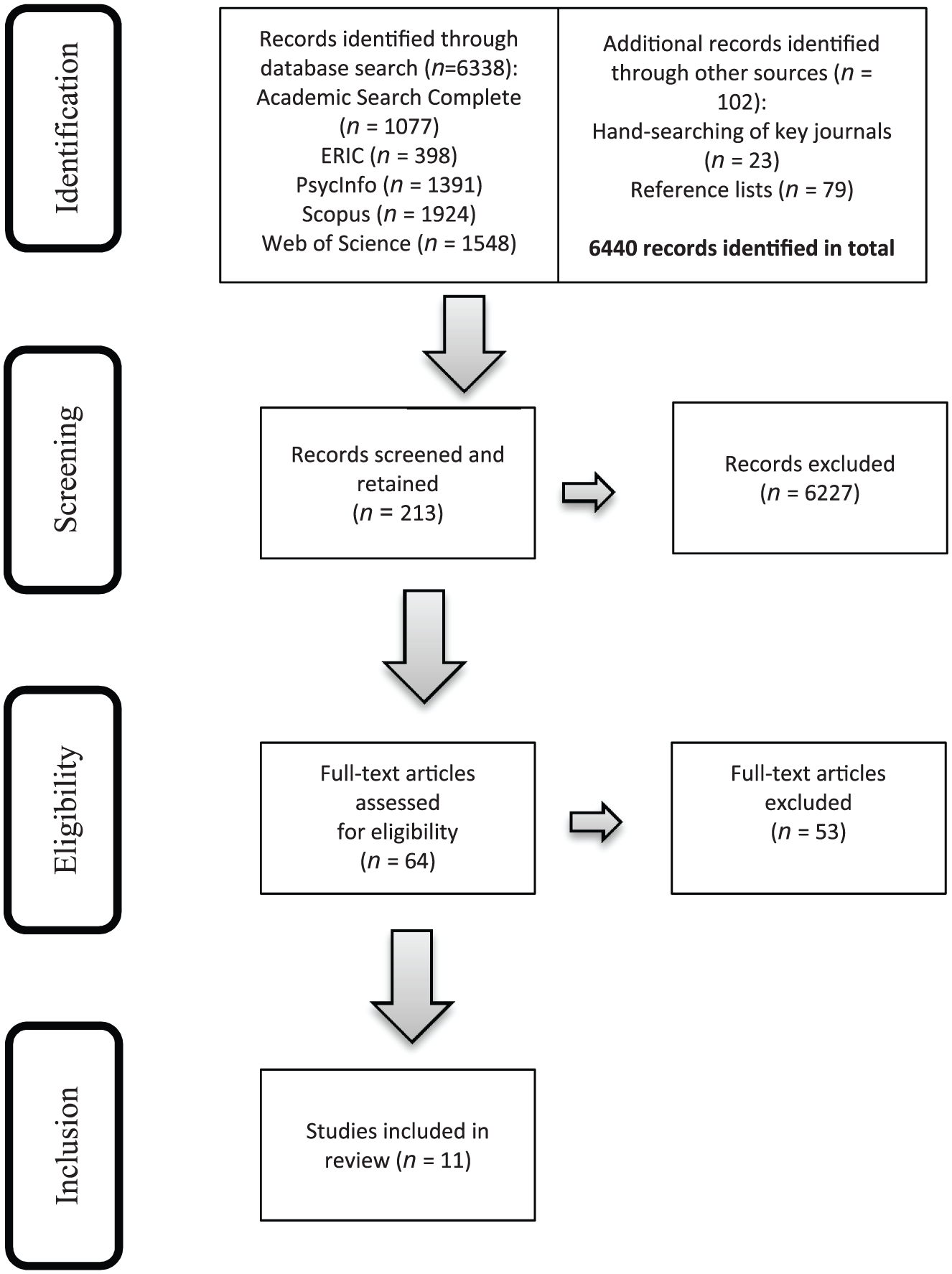
Description of the selection process of studies for review.
Research design and the results concerning the associations between affect and practice were analyzed (Table 1). We categorized studies based on the aspect of practice measured: AM-P (in quantitative studies) or EN-P (in qualitative studies). Affect reported in studies was categorized into PC-A, PF-A, CF-A, and into specific kinds of affect (e.g., anger, happiness, excitement).
Characteristics of samples and methodology of studies included in the review.
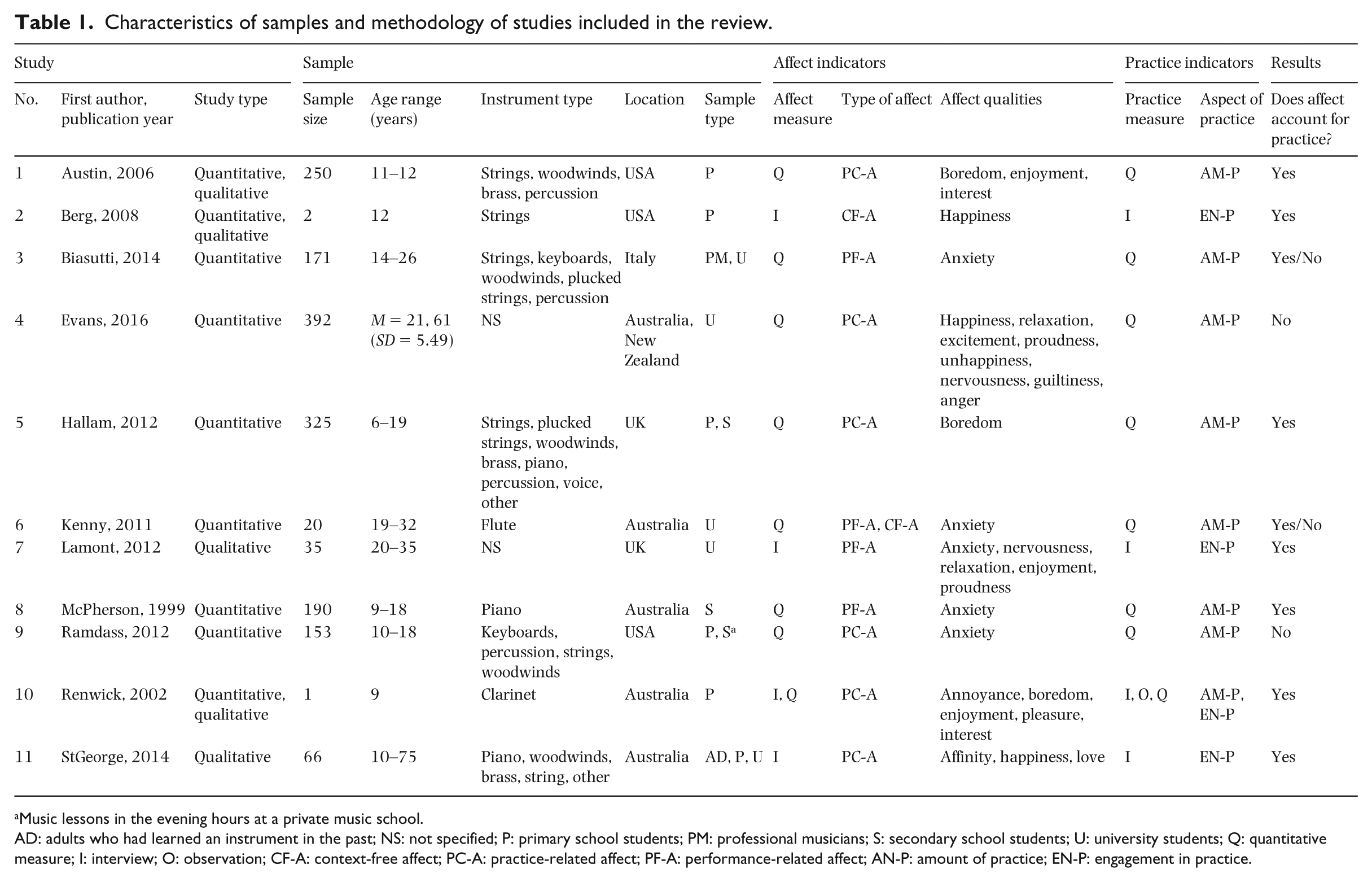
Music lessons in the evening hours at a private music school.
AD: adults who had learned an instrument in the past; NS: not specified; P: primary school students; PM: professional musicians; S: secondary school students; U: university students; Q: quantitative measure; I: interview; O: observation; CF-A: context-free affect; PC-A: practice-related affect; PF-A: performance-related affect; AN-P: amount of practice; EN-P: engagement in practice.
Results
Characteristics of studies
Each publication included in the review presented a single study (Table 1). Studies were conducted in five countries only. The participants were mostly students who learned to play a musical instrument in elementary school (6 studies), secondary school (3), or at university (5), and in three cases, study samples included students from different types of schools. Also, professional musicians (1) and adults who had learned instruments at school age (1) took part in the studies. The participants’ age range was very broad, from 6 to 75 years. Study samples were usually fairly large, above 150 participants (6), but there were also samples with 20 to 66 participants (3) and case studies with 1 or 2 participants (2).
The studies assessed musicians’ affect using quantitative (7) or qualitative measures (3); one study used both. Studies focused on one or more of the following types of affect: CF-A (2), PC-A (6), and PF-A (4). Researchers investigated the relation between practice and anxiety (5), boredom (3), enjoyment (3), happiness (3), interest (2), pride (2), and nervousness (2). Only single studies mentioned feelings such as “affinity”, anger, annoyance, excitement, guilt, love, pleasure, relaxation, or unhappiness.
Two aspects of instrumental practice were assessed: most studies measured the AM-P only, estimated as the average amount of time (days, hours, or minutes) spent on practicing (7), some qualitative studies investigated the relationships between emotions and EN-P using interviews (3). One study used both: a measure of the AM-P and a written description of EN-P.
Affect and the amount of practice
The authors of most studies used self-report measures of AM-P (Table 2), asking participants how many hours or minutes they spent practicing during a typical week (Austin & Berg, 2006; Biasutti & Concina, 2014; Hallam et al., 2012; Kenny, Fortune, & Ackermann, 2011) or a typical day (Ramdass & Bembenutty, 2012). Other researchers collected data on self-reported average weekly practice time during the month leading up to the examination (McPherson & McCormick, 1999). Evans and Bonneville-Roussy (2016) asked participants how many times they had practiced their instruments in the past 7 days. Only one study reported the participants’ actual AM-P, which was coded by a researcher analyzing video recordings and calculating the amount of time spent on practicing a particular single note (Renwick & McPherson, 2002).
Quantitative measures of affect and practice used in studies evaluating amount of practice.
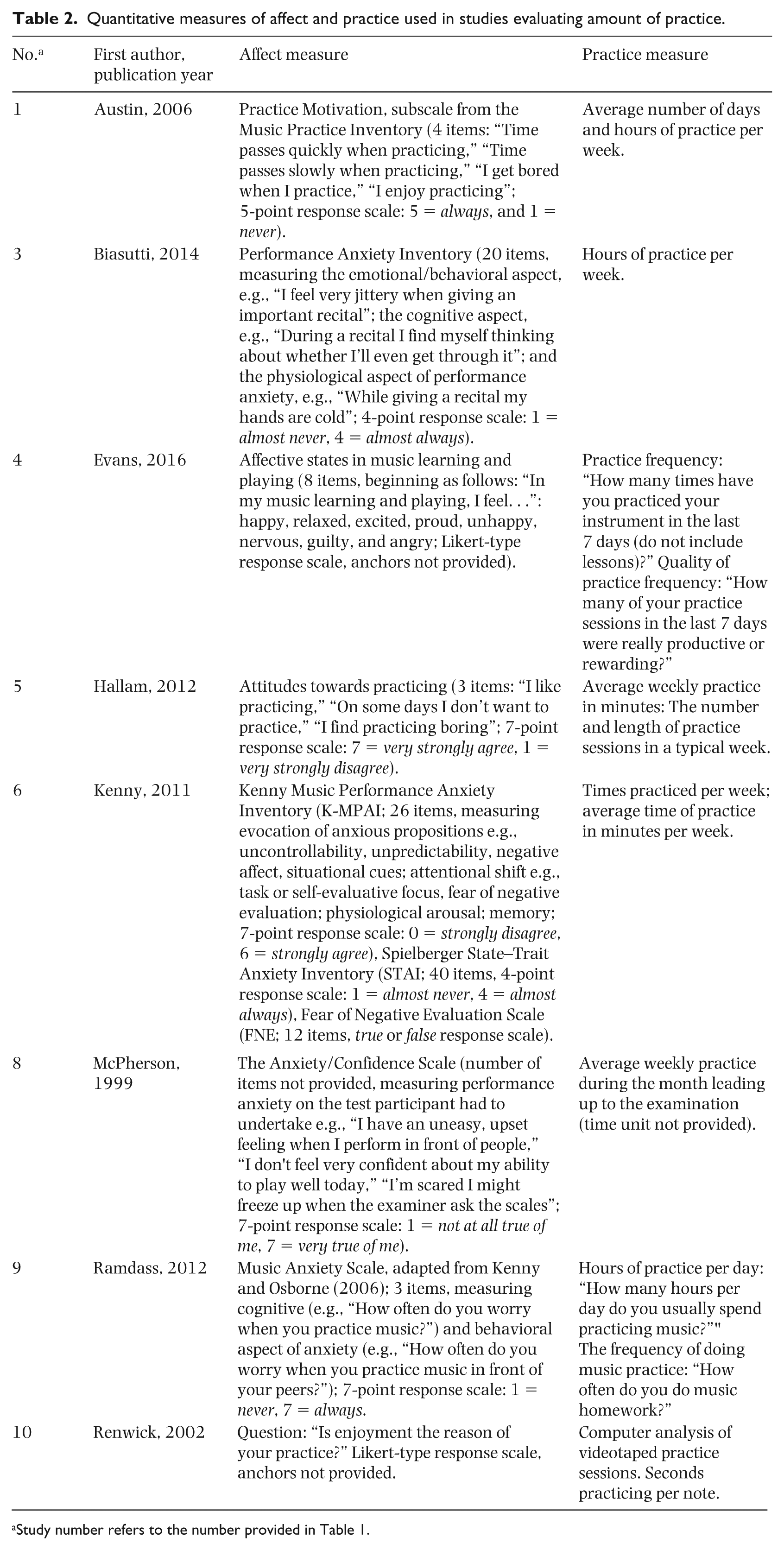
Study number refers to the number provided in Table 1.
Affect was measured with Likert-type scales (Table 2). Participants had to assess to what extent they felt certain emotions in general (Kenny et al., 2011), while learning and playing (Evans & Bonneville-Roussy, 2016), while practicing (Austin & Berg, 2006; Hallam, 2012; Ramdass & Bembenutty, 2012; Renwick & McPherson, 2002), or while performing (Biasutti & Concina, 2014; Kenny et al., 2011; McPherson & McCormick, 1999).
CF-A was assessed in one study, in which Kenny and colleagues (2011) investigated state and trait anxiety in university students. They found no relationship between CF-A and the frequency of practice sessions. Neither did anxiety correlate with the weekly AM-P.
PC-A was analyzed in five studies. Evans and Bonneville-Roussy (2016) asked participants about the positive and negative affect that accompanied their learning and playing. They found no relationship between feeling happy, relaxed, excited, proud, unhappy, nervous, guilty, or angry and practice frequency. Neither did affect correlate with the quality of practice frequency (i.e., how often students practice in a way that they perceive as highly productive or rewarding). Austin and Berg (2006) found that high levels of practice motivation (feelings of time moving quickly or slowly, enjoyment and boredom during practice) was positively correlated with practice frequency, r = .21, p < .01, and the AM-P, r = .17, p < .05. As both enjoyment and boredom were included in a single factor score in that study, the separate effects of each of these qualities of affect cannot be distinguished. Other studies clarified this issue. Hallam and colleagues (2012) reported a negative correlation between evaluating practice as boring and weekly practice, r = -.16, p < .001. In another study, a clarinetist was interviewed before and at the end of each school year, during the 3 years of study (Renwick & McPherson, 2002). She described her high interest in, and pleasure derived from, practicing her favorite songs. Researchers found a twelvefold increase in the time she spent practicing a piece of music which she was interested in compared with songs, which were boring to her. Ramdass and Bembenutty (2012) measured anxiety related to practice. While there was no direct relationship between anxiety and the amount of daily practice, anxiety had an indirect effect on the amount of music practice through stimulating help-seeking behavior (indirect effect = .07, p < .05). There was a positive and direct effect of anxiety on help seeking, β = .30, p < .05, and a positive effect on the hours of music practice, β = .22, p < .05. Due to the cross-sectional study design, however, the conclusions concerning causality between these variables are not definitely proven.
Three studies measured PF-A—namely, music performance anxiety (MPA), “an anxious state of mind, accompanied by cognitive, psychological, and physiological arousal” (Biasutti & Concina, 2014, p. 189). One study (McPherson & McCormick, 1999) reported a significant negative link between MPA and the AM-P—a higher level of anxiety immediately before entering performance examination predicted lower levels of practice in the month before the examination, β = -.22, p < .001. Kenny et al. (2011) found a negative relationship between MPA measured by the Kenny Music Performance Anxiety Inventory (K-MPAI) and the number of times students reported practicing each week: those who reported the highest MPA practiced the least, r = -.46, p = .04. The correlation between K-MPAI and the weekly AM-P was nonsignificant, though. Also fear of evaluation was uncorrelated with the number of practice sessions per week and weekly AM-P. Biasutti and Concina (2014) found a nonsignificant correlation between the weekly AM-P and the cognitive, emotional-behavioral, and physiological aspects of MPA. However, regression analysis revealed that practice was a significant predictor of MPA, β = -.14, p < .05.
To sum up, the emotions experienced in the context of instrumental practice are related to the AM-P undertaken. The more positive emotions (enjoyment, interest) participants reported, the more time they devoted to practicing their instrument. The more negative affect (boredom, annoyance) they felt, the less they practiced. Studies partially confirm that negative PF-A, particularly MPA, is negatively linked to the amount and frequency of practice. Some of the studies show that the more anxious musicians feel about their public performance, the less frequently they practice and the less time they devote to practice. Other studies, however, suggest that the link between negative PF-A and practice is not evident or not direct.
Affect and engagement in practice
Four studies looked at the role of affective experience in EN-P (Table 3) aiming not to find a link between affect and the quantity of practice per se (except in the study by Renwick & McPherson, where the quantity of practice was measured), but rather to describe the participants’ practice motivation (Berg, 2008; Renwick & McPherson, 2002), to explain what kind of feelings contribute to EN-P (StGeorge, Holbrook, & Cantwell, 2014), and to identify the emotions associated with music performance (Lamont, 2012).
Qualitative measures of affect and practice used in studies evaluating engagement in practice.
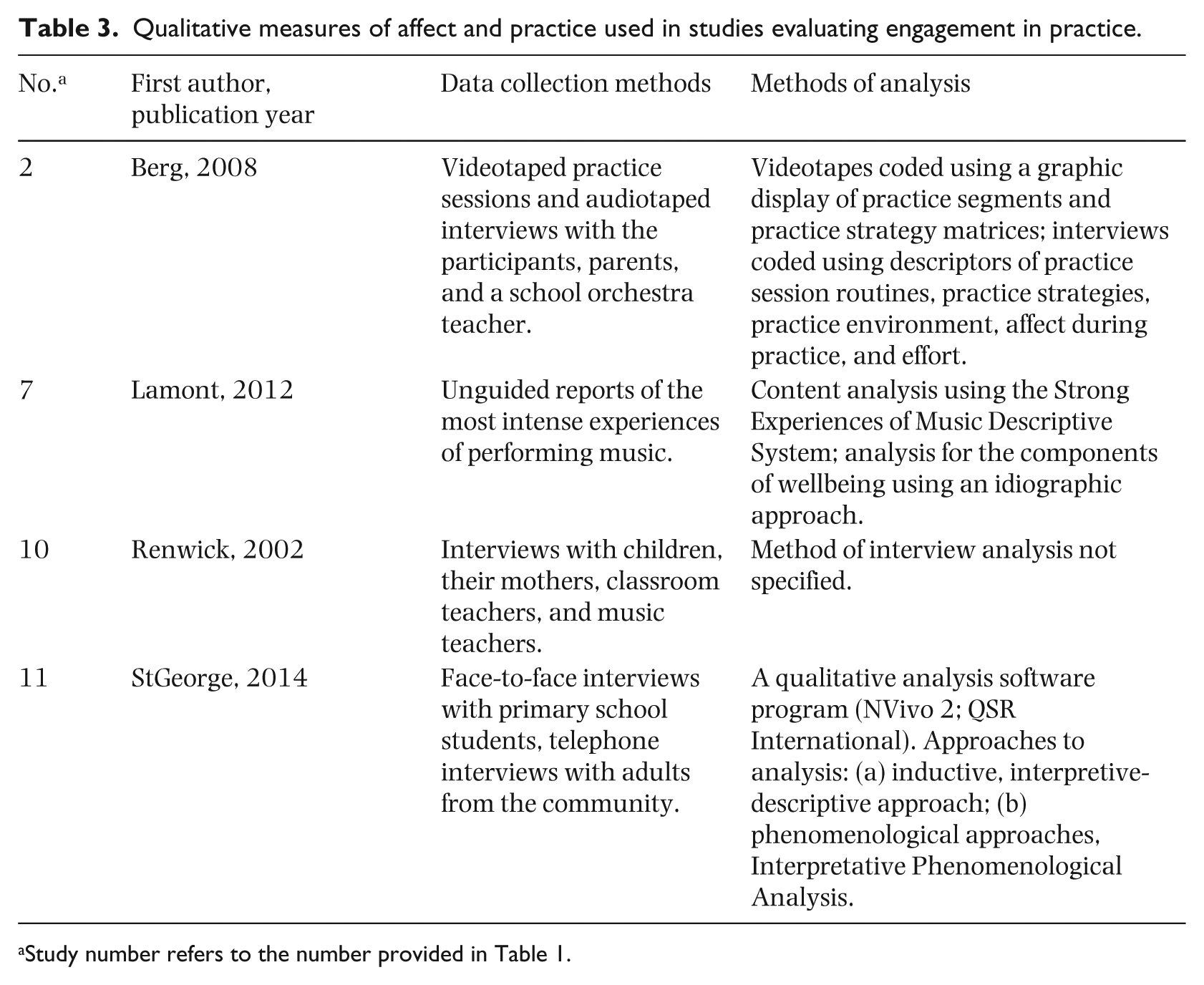
Study number refers to the number provided in Table 1.
One study provided qualitative evidence for the importance of CF-A to EN-P. Berg (2008) interviewed two female string instrumentalists, asking them about their motivation to practice. While one girl was motivated by her teacher’s practice time requirement, the other stated, “There were some nights where I’m willing to practice and practice until I’ve got it down. And then there are other nights where I say ‘no, I don’t want to try it anymore.’ . . .I think it just depends on my mood because some days I’m not in the very best mood. But other days I’m happy and willing to take a challenge” (p. 55). Thus, the experience of positive affect on a particular day may determine whether students engage in practicing their instruments. Still, there might be individual differences in the tendency to be motivated to practice by daily affective states.
Two studies presented the role of PC-A in EN-P. Renwick and McPherson (2002) collected quantitative and qualitative longitudinal data on a young clarinetist’s feelings about practice in general and about playing a particular repertoire. Although she stated that, practice was “more boring than fun” (p. 178), she also added that she liked to learn most of the songs her teacher gave her. She admitted: “I do not like learning hard pieces because I find it annoying” (p. 177) and said that the most important thing to do when practicing was to play her favorite songs. Researchers noticed her high engagement in practicing one piece which she was especially interested in.
In another study, StGeorge and colleagues (2014) cite an adult participant, who had learned an instrument at school: “I just loved it. I just loved it from day one. And used to practice. Mum and Dad didn’t need to push me to practice, I was really happy practicing” (p. 270). This suggests that positive PC-A encouraged EN-P. Based on this, StGeorge and colleagues (2014) defined the concept of “affinity” as the affective connection to music that motivates individuals’ continuing involvement. Enthusiastic feelings in early stages of involvement in music later “changed for some of the learners into a stronger affinity for music, which fuelled greater consistency in reengaging with the instrument through lessons, practice and ensemble participation” (p. 270).
One study investigated the role of PF-A in relation to EN-P. Lamont (2012) asked university students to describe their “most intense experience of music”. Some students reported negative emotions connected with public music performances (anxiety, nervousness). Most of these students engaged in practice in order to release the emotional tension. This engagement led to successful performances and feelings of relaxation, enjoyment, and pride. These, in turn, led them to continue their engagement with music. After a public performance, one of the participants said: “Although it was really hard and pushed me to the limits, I found it amazing fun and felt really proud of myself when I finished” (p. 584). These findings show that PF-A, either negative or positive, can motivate students to practice.
In sum, studies show that CF-A, PC-A, and PF-A contribute to EN-P. Positive mood, interest, and pleasure derived from playing pieces that students like and prefer may help them engage in practice behavior. Negative feelings such as annoyance and boredom connected with particular tasks tend not to lead to EN-P. Nevertheless, by devoting energy and time to practice, students can replace nervousness linked to public performance with pleasant feelings such as confidence, enjoyment, and being proud of themselves.
Discussion
This review examined the relationship between affect and the amount of instrumental practice as well as the role of affect in practice engagement. Given the limited number of studies reported in this review, it is difficult to extrapolate from these findings. For example, while PC-A was investigated in six studies, CF-A was mentioned in two studies only.
Still, most evidence suggests that there is a link between affect and the AM-P and that affect is related to EN-P. The links between PC-A and the AM-P or EN-P have been reported particularly often. The review has shown that positive CF-A (i.e., happiness) contributes to greater EN-P (Berg, 2008). Positive PC-A (enjoyment, interest; Austin & Berg, 2006; Renwick & McPherson, 2002) is linked to a greater AM-P and leads to greater engagement, while negative PC-A (boredom, annoyance) is associated with a smaller AM-P (Austin & Berg, 2006; Hallam et al., 2012) and leads to diminished engagement (Renwick & McPherson, 2002). Findings regarding the link between anxiety (measured as CF-A or PF-A) and the AM-P or EN-P are ambiguous and require further investigation. Thus, apart from revealing the importance of affect for practice, our review clearly shows the limitations of the existing evidence.
Our results show that there is a relative dearth of research investigating the role of a CF-A. Only one study examined the link between negative CF-A (anxiety) and AM-P (Kenny et al., 2011), finding no link between these, and one study showed that positive mood (happiness) reinforced EN-P (Berg, 2008). The samples in these studies were small, and only two affects qualities were analyzed. Studies investigating affect in a more comprehensive manner and on larger samples are needed to determine how CF-A influences instrumental practice.
More studies are also necessary to investigate the role of PC-A. Most of the existing studies have shown that this kind of affect, either positive or negative, is linked with the AM-P and EN-P (Austin & Berg, 2006; Hallam et al., 2012; Renwick & McPherson, 2002; StGeorge et al., 2014). However, these results are not consistent with the widely acknowledged theory of deliberate practice (Ericsson et al., 1993), which suggests that structured and cognitively demanding practice is not inherently enjoyable, as it requires the investment of cognitive or physical effort. As the studies analyzed generally do not specify whether they capture affect related to deliberate practice or to informal practice (Sloboda et al. 1996), this distinction should be taken into account in future research and in theoretical models. The role of affect may be different in effortful deliberate activities and in informal practice undertaken for pleasure.
The analyzed studies showed that whether practice is experienced as boring, interesting, or energetic activity depends on the repertoire that is practiced, as some pieces seem to be more interesting for students than others (Renwick & McPherson, 2002). This should be considered in improving practice measures in future research. Measuring PC-A in general might not be sufficient to explain differences in practice behavior related to specific music pieces. Instead, more specific instruments measuring affect associated with specific tasks and repertoire can be useful.
Finally, there is a need to further explore the role of PF-A, as its role is not clear from the summarized findings. Studies showed that MPA decreased the AM-P (McPherson & McCormick, 1999) and led to greater EN-P (Lamont, 2012), that MPA was negatively linked with the number of times practice was undertaken but not with the weekly AM-P (Kenny et al., 2011), or that there was no correlation between MPA and AM-P but larger amounts of practice decreased MPA (Biasutti & Concina, 2014). More studies employing a longitudinal or experimental design are needed to further test this relationship and uncover potential causal mechanisms.
This review also reveals the need to improve current theories of instrumental practice and motivation to practice. Although researchers have measured different types of affect in musicians (CF-A, PC-A, PF-A), the currently available theories do not describe the role of context-free and context-specific affect in music learning. In the existing models, researchers describe affect as the result of practice or response to music. For example, Hallam (1997) presented a model of musical practice in which practice strategies produce the outcomes of learning, including affect. Hallam (2014) also suggested that “when a learner has completed a learning task successfully this has a positive emotional impact and, subsequently, impacts on self-esteem and motivation . . . Conversely, when learning outcomes are negative, motivation may be impaired” (p. 3). Similarly, in the theory of self-regulated practice (McPherson & Renwick, 2011), affect is a result of performance, with feelings of satisfaction resulting from performing well and dissatisfaction being an outcome of performing poorly. Thus, theories of practice and motivation include affect as an outcome of musical activity and can be expanded to include also the PF-A and CF-A.
In the further development of theories concerning practice, it should be shown how affect impacts particular processes. The model of self-regulated practice (McPherson & Renwick, 2011) suggests that affect may influence processes in the forethought phase of learning (goal setting, strategic planning, and self-motivation beliefs), which in turn impact processes related to performing (attention focusing, task strategies). However, the model does not explain, for example, what kinds of affect influence self-motivation beliefs and what the direction of this influence is. It can be added that affect may also influence the performance phase and the evaluation phase directly, not only through the forethought processes.
This review has several limitations. First, we included only studies reported in English, while it is possible that there are non-Anglophone studies relevant for this subject matter. Although we performed comprehensive searches in databases, due to the time constrains only two journals were hand-searched, and this search covered only issues published in 2000 or later. As journals important for this area of study are generally indexed in databases, we believe that this does not limit our findings severely. Future research may include studies reported in other languages and unpublished studies; additional searches may be carried out in WorldCat or Copac databases and other journals.
Second, we restricted the collected evidence to studies matching the chosen definition of affect (Fredrickson, 2001). Given that there are a variety of ways of defining affect, this issue should be taken into consideration in planning future reviews. Researchers may wish to include elements of affect such as “preference” (Scherer, 2004). However, it is worth checking whether assuming different definitions will make it possible to establish clear inclusion criteria and avoid confusion in the selection of studies.
Third, broad inclusion criteria resulted in diversity in terms of age and instruments learned across the studies. As research shows that age and instrument type are predictors of the AM-P (Jørgensen & Hallam, 2016), this may have had an impact on the results. The heterogeneity of the studies precluded meta-analysis, allowing a narrative review (Booth et al., 2012). Future studies, however, may undertake such quantitative analysis.
Fourth, as this review does not include unpublished materials, we followed other authors of systematic reviews (e.g., Koechlin et al., 2018) and refrained from conducting a quality assessment of the reviewed studies. However, when conducting reviews of all available evidence, researchers can consider using quality assessment checklists (Booth et al., 2012).
We hope that our study will inspire researchers to investigate the affective aspects of motivation in music learning in greater detail. Maintaining motivation and interest is one of the greatest challenges for musicians (Lamont, 2012). It is important to pursue this line of research, as it may help to develop psychological interventions that will help regulate affect, supporting musicians in their learning.
