




Abstract
In order to investigate mental health problems among professional musicians, we estimate the prevalence of symptoms of anxiety and depression (psychological distress) among musicians compared to the general workforce. A total sample of 1,607 musicians from the Norwegian Musicians Union answered an online questionnaire about demographic characteristics, lifestyle and symptoms of anxiety and depression. They were compared to a sample of the Norwegian workforce (n = 2,550) drawn from the Norwegian survey of level of living 2012. Based on logistic regression analysis adjusting for age, sex, education level, smoking status, alcohol usage, use of drugs, physical exercise and financial status, we compared anxiety and depression symptom levels in musicians to a variety of professions. Psychological distress was more prevalent among musicians than in the total workforce sample. Solo/lead performers, vocalists, keyboard instrument players and musicians playing within the traditional music genre reported the highest prevalence. Further research needs to map the psychosocial and personal factors contributing to the higher degree of depression and anxiety symptoms among musicians, as well as establishing evidence-based preventative measures.
In order to succeed in their career, professional musicians have to face a number of physical, social, and psychological challenges (Cooper & Wills, 1989; Kenny & Ackermann, 2009; Vaag, Giæver, & Bjerkeset, 2013), and workers within the creative industries generally have to deal with a high degree of occupational stress (Iñesta, Terrados, García, & Pérez, 2008; Middlestadt & Fishbein, 1988; Smith, Brice, Collins, Matthews, & McNamara, 2000; Wills & Cooper, 1987). Scandinavian (Kyaga et al., 2013; Tynes, Eiken, Grimsrud, Sterud, & Aasnæss, 2008) and international (Ackermann, Kenny, O’Brien, & Driscoll, 2014; Barbar, de Souza Crippa, & de Lima Osório, 2014; Raeburn, 1987; Raeburn, Hipple, Delaney, & Chesky, 2003; Voltmer et al., 2012) studies indicate that mental health problems are reported frequently among musicians and performing artists. Studies also suggest that creativity, which is a prerequisite for many forms of artistic and musical performances, is associated with increased risk of affective disorders (Akiskal, Savino, & Akiskal, 2005; Kyaga et al., 2013; Mula & Trimble, 2009).
Research on physical health among musicians has mainly been carried out within the classical genres; orchestral musicians report musculoskeletal pain as a common problem (Leaver, Harris, & Palmer, 2011; Paarup, Baelum, Holm, Manniche, & Wedderkopp, 2011), as well as high levels of hearing problems (Hagberg, Thiringer, & Brandström, 2005; Hasson, Theorell, Liljeholm-Johansson, & Canlon, 2009; Kähäri, Zachau, Eklöf, & Möller, 2004; Schink, Kreutz, Busch, Pigeot, & Ahrens, 2014), both known to be associated to psychological distress (Bair, Wu, Damush, Sutherland, & Kroenke, 2008; Dersh, Gatchel, Polatin, & Mayer, 2002; Krog, Engdahl, & Tambs, 2010; Tambs, 2004). Similarly, studies on mental health among musicians have also, for the most part, been performed within the classical genres and have typically investigated specific problems such as performance anxiety (Kenny, 2011; Kenny, Davis, & Oates, 2004; Langendörfer, Hodapp, Kreutz, & Bongard, 2006; van Kemenade, van Son, & van Heesch, 1995).
Nevertheless, findings from recent published studies emphasize the need to further investigate occupational and mental health among musicians. A Swedish 40-year prospective population-based study indicated that people within the large spectrum of creative occupations, such as research, arts and music, were more likely to suffer from bipolar disorder than were the matched controls (Kyaga et al., 2013). Further, a study on the mortality of European and North American rock and pop stars showed more than 1.7 times higher mortality rate among artists, 3–25 years post-fame, compared to a demographically matched sample (Bellis et al., 2007). A study from Germany (Voltmer et al., 2012) showed higher prevalence of mental distress among opera and orchestral musicians compared to the general population, yet there were no substantial differences compared to physicians and aircraft manufacturers. A study on the prevalence of performance anxiety and psychopathology indicators, among Brazilian musicians, concluded that there was a high rate of psychiatric indicators among their sample of musicians. Their results showed 13% prevalence of moderate or severe degree of symptoms of general anxiety, 19% prevalence of social anxiety symptoms and 20% prevalence of depression symptoms (Barbar et al., 2014). Finally, a recent study from Australia (Ackermann et al., 2014), screened and found symptoms of social phobia (33%), depression (32%) and PTSD (22%) among their sample of professional orchestral musicians. Even though research suggests that mental health problems are highly prevalent, there is still a lack of studies investigating a wider spectrum of different groups of musicians, comparing the musicians to the general workforce and different professions.
Using data from a large-scale health and work environment study of musicians in Norway, we here investigate the prevalence of symptoms of anxiety and depression among 1,607 part-time and full-time musicians, compared to a sample of the general Norwegian workforce. Within the musicians, we also compare prevalence of anxiety and depression with regard to proportion of music related activity, musical instrument, genre and form of employment. In addition we compare musicians to workers within a variety of other occupational groups.
Method
Participants and setting
Sample of musicians
Between 1 February and 1 April 2013, a total of 4,168 members of the Norwegian Musicians’ Union were invited to participate in an online survey about their mental health and psychosocial work environment. Due to the expected high prevalence of teachers working as part-time musicians, both members listed as musicians and/or music teachers were invited. Three reminders were sent, with 2-week intervals. A total number of 2,121 members (51%) responded. Among them, there were 1,016 (48%) women and 1,105 men, with a mean age of 44.5 years (SD = 10.7). Of these, 1,607 (76%) members confirmed that they had been working as professional performing musicians in the last 12 months. In our data analysis, this group of performing musicians were compared to a workforce sample from the Norwegian survey of level of living (SSB, 2012).
Workforce sample
A total of 9,771 participants (16 years+) were randomly drawn from the Norwegian population register and invited to participate in Norwegian survey of level of living in 2012. The initial data collection was done using computer-assisted telephone interviews, after which the participants were invited to fill in an initial postal or web-based questionnaire. A total of 5,660 people participated in the interviews (58%): of these 4,015 people (71% of those eligible) also completed the questionnaire between October 2012 and January 2013. Of these, 2,610 (65%) were listed as employed with a code based on the latest Norwegian version (STYRK-08) of the International Standard Classification of Occupations from the International Labour Organization (ISCO-08-code). One of the main aims of the ISCO classification system is to create a basis for international reporting, comparison and exchange of data about occupations (http://www.ilo.org/public/english/bureau/stat/isco/index.htm). A total of 60 of the respondents were excluded due to incomplete answers on the mental health questionnaire. The remaining 2,550 workers were included in our analysis. A documentation report describing this survey in more detail is available (Amdam & Vrålstad, 2012).
Among the remaining workforce sample of 2,550 people, 88 respondents had minor missing data on our measure of anxiety and depression symptoms (psychological distress). In total, 121 data points were missing in the study variables (0.2%). The Expectation-maximization technique was performed to impute values on these missing variables.
Measures
Anxiety, depression and psychological distress
Symptoms of anxiety and depression were measured using a 25-item version of The Hopkins Symptom Checklist 25 (Derogatis, Lipman, Rickels, Uhlenhuth, & Covi, 1974; Strand, Dalgard, Tambs, & Rognerud, 2003). HSCL-25 is a self-administered and widely used instrument measuring symptoms of anxiety and depression. It is derived from the HSCL-90 and consists of 25 questions. It consists of two subscales, anxiety (10 items) and depression (15 items). However, research has shown that the instrument is primarily suitable to provide information on clinical symptoms of depression (Sandanger et al., 1998). Each item (symptom) is measured on a Likert-scale from 1 to 4, where 1 indicates no symptoms, 2 slight presence, 3 substantial presence, and 4 indicates a severe presence of the symptom. An index variable based on the mean score of HSCL-25 symptoms was created (α = .93). A mean score above 1.75 was used as a cut-off defining prevalence of psychological distress and dummy-coded for our analysis, based on recommendations from previous research (Strand et al., 2003). The same cut-off was also used for the subscales of anxiety and depression.
Socio-demographic characteristics and lifestyle
Socio-demographic variables known to be associated with anxiety and depression, like sex (Leach, Christensen, Mackinnon, Windsor, & Butterworth, 2008; Rosenfield & Mouzon, 2013), age (Jorm et al., 2005), educational level (Drapeau, Marchand, & Beaulieu-Prévost, 2012), and cohabitation status (Hope, Rodgers, & Power, 1999), were included as covariates in the analysis. In addition, a variable measuring recent financial strain (Hamilton, Noh, & Adlaf, 2009), drawn from ‘The List of Threatening Experiences’ (Brugha, Bebbington, Tennant, & Hurry, 1985) was included. Further, lifestyle variables, known to be associated with distress, such as amount of physical exercise (Mammen & Faulkner, 2013) (never / < 1 day a week / > 1 day a week), smoking status (Lawrence, Mitrou, & Zubrick, 2009) (never / sometimes / daily), use of cannabis (during last year), drugs (during last year) and high alcohol consumption (Mathiesen, Nome, Eisemann, & Richter, 2012) (on average drinking more than 6 units of alcohol, 2 days a week, during the last year) were included. In addition, in our sample of musicians, we collected information about form of employment, role as musician, instrument type and genre. All variables, except for our continuous age variable, were dummy-coded and included in analysis (Table 1).
Prevalence estimates and distribution of demographic characteristics.
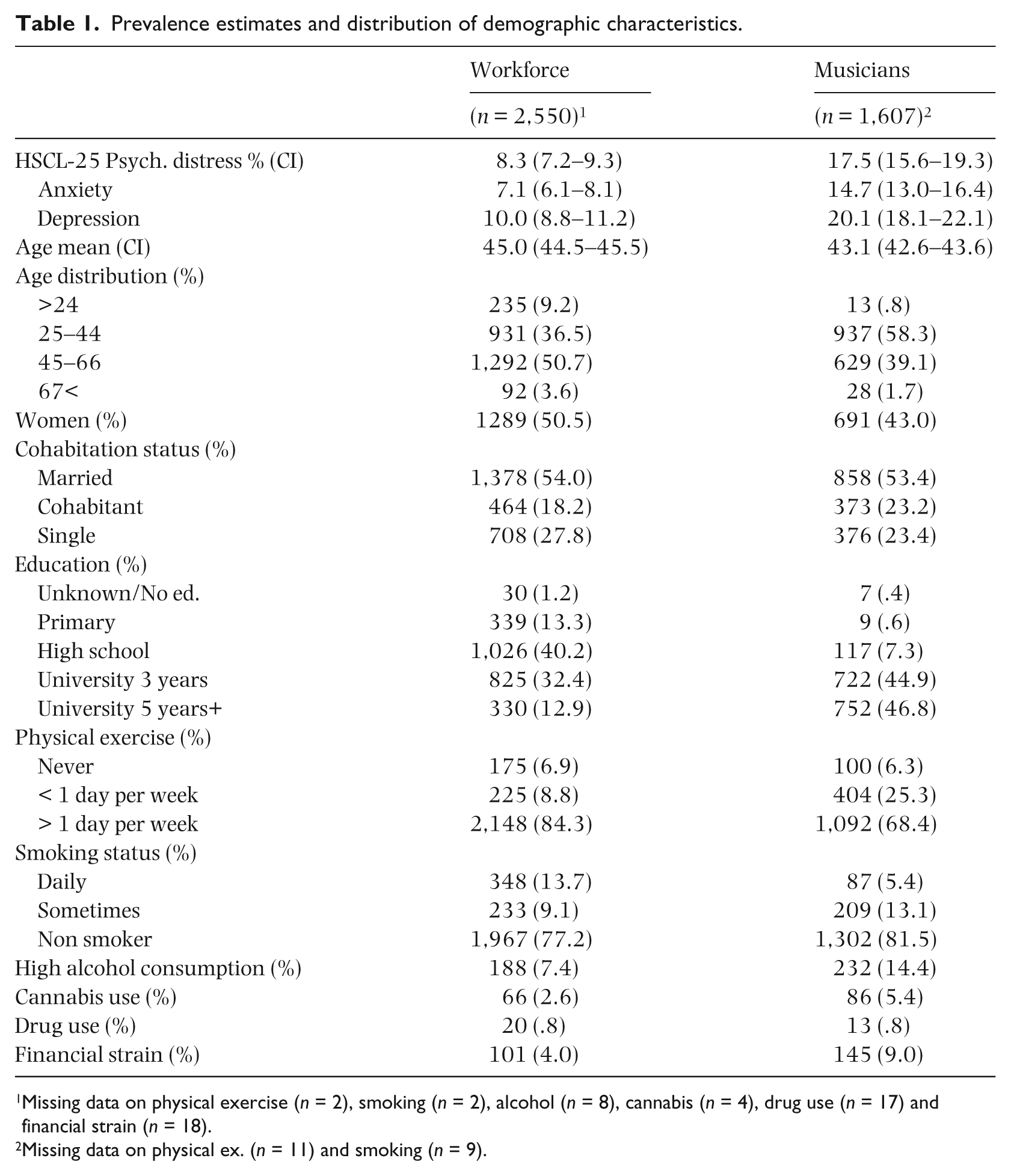
Missing data on physical exercise (n = 2), smoking (n = 2), alcohol (n = 8), cannabis (n = 4), drug use (n = 17) and financial strain (n = 18).
Missing data on physical ex. (n = 11) and smoking (n = 9).
Occupational groups
Based on the International Standard Classification of Occupations (ISCO-08), adapted for the Norwegian workforce (STYRK-08), we divided our workforce sample into Managers (n = 244), Professionals (n = 813), Technicians (n = 450), Clerical support workers (n = 151) and Service and sales workers (n = 441). Agricultural/Forestry/Fishery workers and Craft and related trades workers (n = 232) were merged into the same category; the same was done to Machine operators, Elementary occupations and Military occupations (n = 219).
Statistics
Data were analysed using STATA, version 12.0 (StataCorp, 2011). Using psychological distress as a dependent variable, we conducted a logistic regression analysis, comparing all musicians, and then different subgroups of musicians (based on employment, setting, composer, instrument and genre), with the workforce sample. Both crude and adjusted analyses were done, including the aforementioned variables describing demographic characteristics and lifestyle. In addition to calculating odds ratios (OR), we also estimated prevalence differences (PD) with 95% confidence intervals (CI). The prevalence differences were estimated holding other variables constant at mean levels.
When comparing musicians to different professions, we used the different ISCO-08-coded occupational groups as references, compared to all musicians.
Results
The sample of musicians was mainly within the ages of 25–66 years; they were slightly younger and reported higher levels of education compared to the general workforce (Table 1). There were also a higher proportion of men (57% vs. 51%) in the sample of musicians. Psychological distress was reported in 18% of the musicians, and in 8% in the workforce sample. More women than men had symptoms of distress (female musicians: 21% / workforce: 10% and male musicians: 15% / workforce: 7%).
Psychological distress, form of employment and role as musician
The adjusted prevalence difference of psychological distress was 8.2 percentage points (95% confidence interval (CI) 5.6–10.8) higher among musicians compared with the total workforce sample (Table 2). The amount of time related to work as musicians did not substantially influence the prevalence of psychological distress.
Logistic regression analysis of psychological distress according to type of work. Estimated odds ratio (OR) and prevalence differences (PD) with 95% confidence intervals.
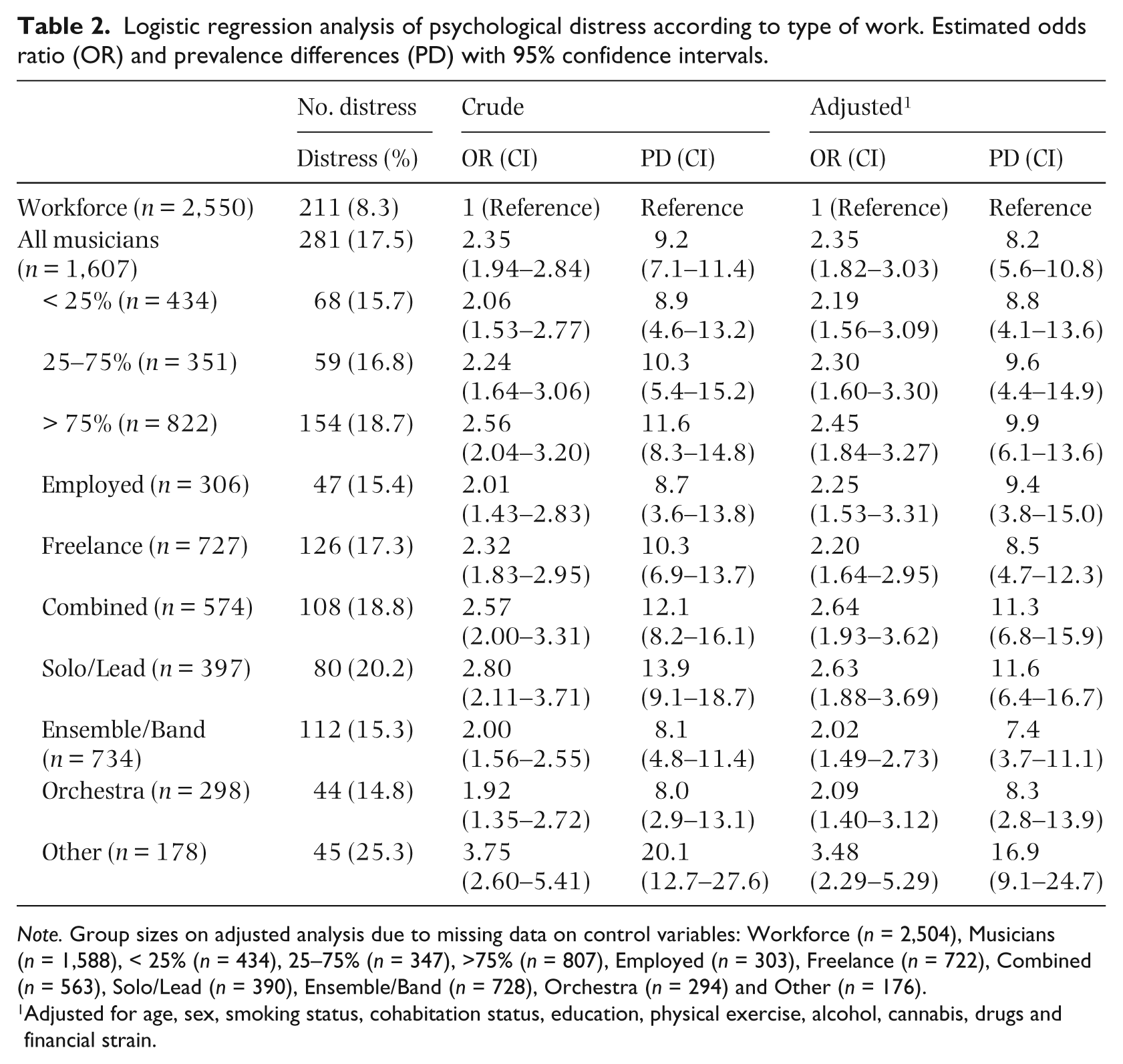
Note. Group sizes on adjusted analysis due to missing data on control variables: Workforce (n = 2,504), Musicians (n = 1,588), < 25% (n = 434), 25–75% (n = 347), >75% (n = 807), Employed (n = 303), Freelance (n = 722), Combined (n = 563), Solo/Lead (n = 390), Ensemble/Band (n = 728), Orchestra (n = 294) and Other (n = 176).
Adjusted for age, sex, smoking status, cohabitation status, education, physical exercise, alcohol, cannabis, drugs and financial strain.
Musicians combining both employment and freelance work as musicians (PD 11.3, 95% CI 6.8–15.9) and soloists and lead performers (PD 11.6, 95% CI 6.4–16.7) reported the highest adjusted prevalence differences, compared to the general workforce. But the differences were also substantial among the other groups of musicians (Table 2).
Instrument and genre
Compared with the total workforce sample, vocalists (PD 12.0, 95% CI 6.4–17.5), keyboard instrument (PD 14.0, 95% CI 7.2–20.9) and string instrument players (PD 11.5, 95% CI 5.0–17.9) reported the highest prevalence of psychological distress among instrumental groups (Table 3). Musicians who played an instrument within the violin-family (PD 10.1, 95% CI 4.0–16.1) also had a substantially higher prevalence of psychological distress compared to the workforce sample. There was no clear statistical evidence of differences between musicians playing woodwind (PD 5.4, 95% CI −.6–11.4), brass (PD 5.6, 95% CI −.4–11.7) and drums (PD 1.6, 95% CI −5.3–8.5), and the total workforce sample.
Logistic regression analysis of psychological distress according to type of instrument. Estimated odds ratio (OR) and prevalence differences (PD) with 95% confidence intervals.
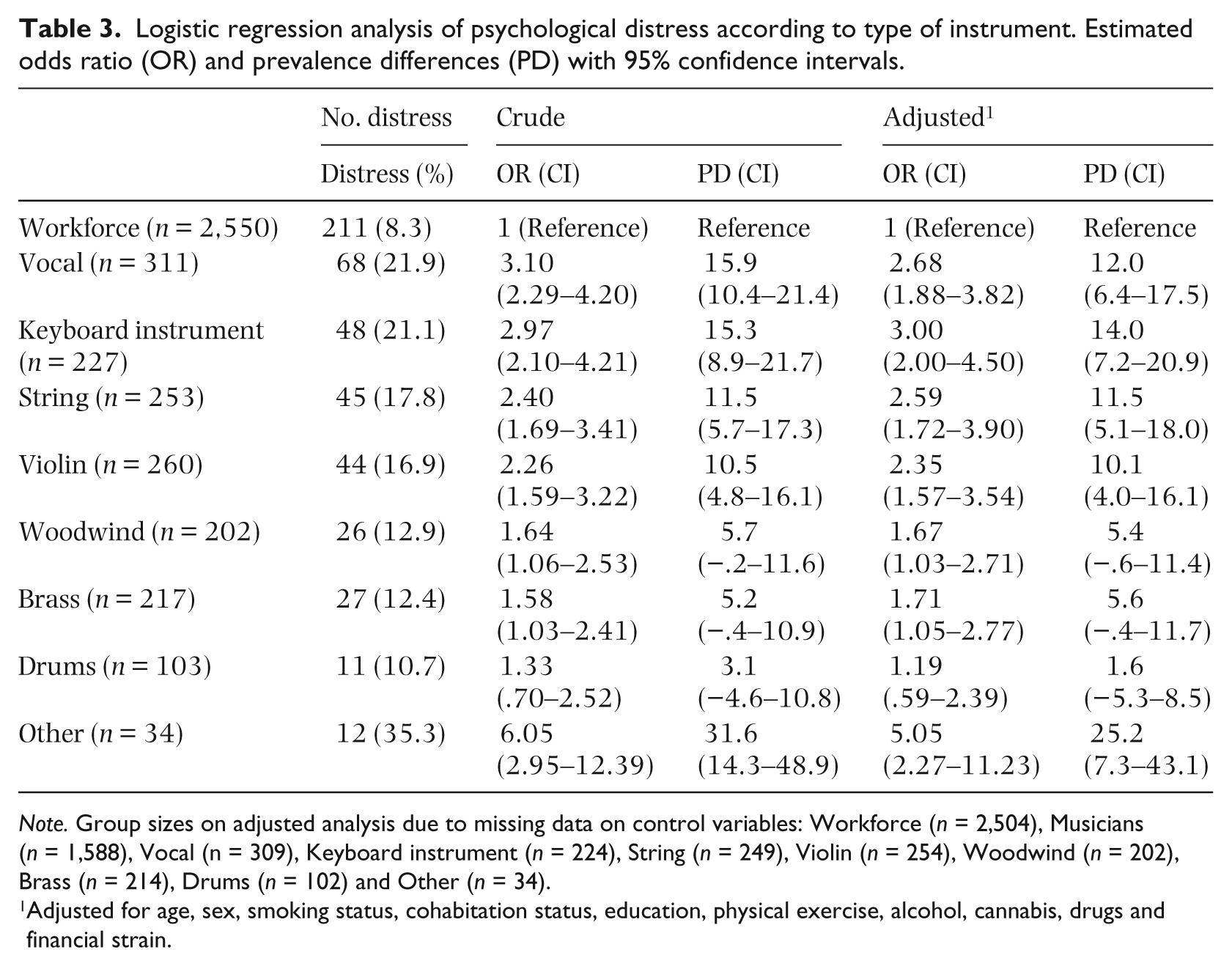
Note. Group sizes on adjusted analysis due to missing data on control variables: Workforce (n = 2,504), Musicians (n = 1,588), Vocal (n = 309), Keyboard instrument (n = 224), String (n = 249), Violin (n = 254), Woodwind (n = 202), Brass (n = 214), Drums (n = 102) and Other (n = 34).
Adjusted for age, sex, smoking status, cohabitation status, education, physical exercise, alcohol, cannabis, drugs and financial strain.
With regard to genre (Table 4), musicians performing mostly within the traditional music genre had higher prevalence of psychological distress (PD 18.5, 95% CI, 7.9–29.0), as did classical musicians (PD 9.4, 95% CI 5.5–13.4) and musicians mixing and/or playing crossover genres (PD 15.9, 95% CI 7.5–24.2), compared to the general workforce.
Logistic regression analysis of psychological distress according to musical genre. Estimated odds ratio (OR) and prevalence differences (PD) with 95% confidence intervals.
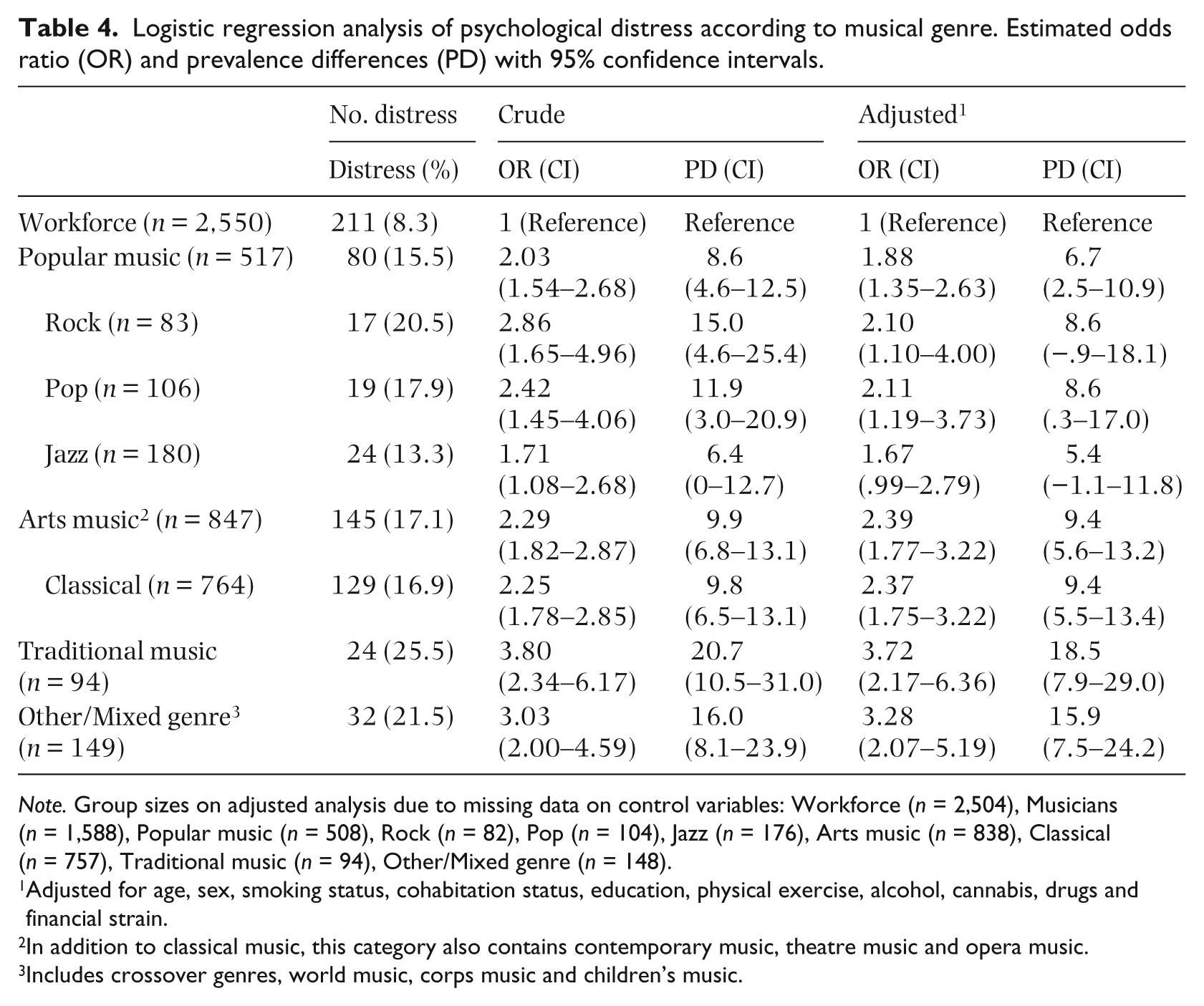
Note. Group sizes on adjusted analysis due to missing data on control variables: Workforce (n = 2,504), Musicians (n = 1,588), Popular music (n = 508), Rock (n = 82), Pop (n = 104), Jazz (n = 176), Arts music (n = 838), Classical (n = 757), Traditional music (n = 94), Other/Mixed genre (n = 148).
Adjusted for age, sex, smoking status, cohabitation status, education, physical exercise, alcohol, cannabis, drugs and financial strain.
In addition to classical music, this category also contains contemporary music, theatre music and opera music.
Includes crossover genres, world music, corps music and children’s music.
Musicians compared to other professions
Using different professions (according to ISCO-categories) as reference groups (Table 5), adjusted analysis showed substantial differences between musicians and managers (PD 12.8, 95% CI, 5.0–20.7), technicians (PD 12.5, 95% CI 7.0–18.0) and academic professionals (PD 9.1, 95% CI 5.7–12.5), while there were smaller differences between musicians and clerical workers (PD 6.3, 95% CI .2–12.4), service personnel (PD 1.8, 95% CI −1.8–5.5), crafts professions (PD 2.1, 95% CI −2.6–6.7) and other occupations (PD 3.7, 95% CI −1.4–8.7) (Table 5).
Logistic regression analysis of psychological distress among musicians, compared to different professions. Estimated odds ratio (OR) and prevalence differences (PD) with 95% confidence intervals.
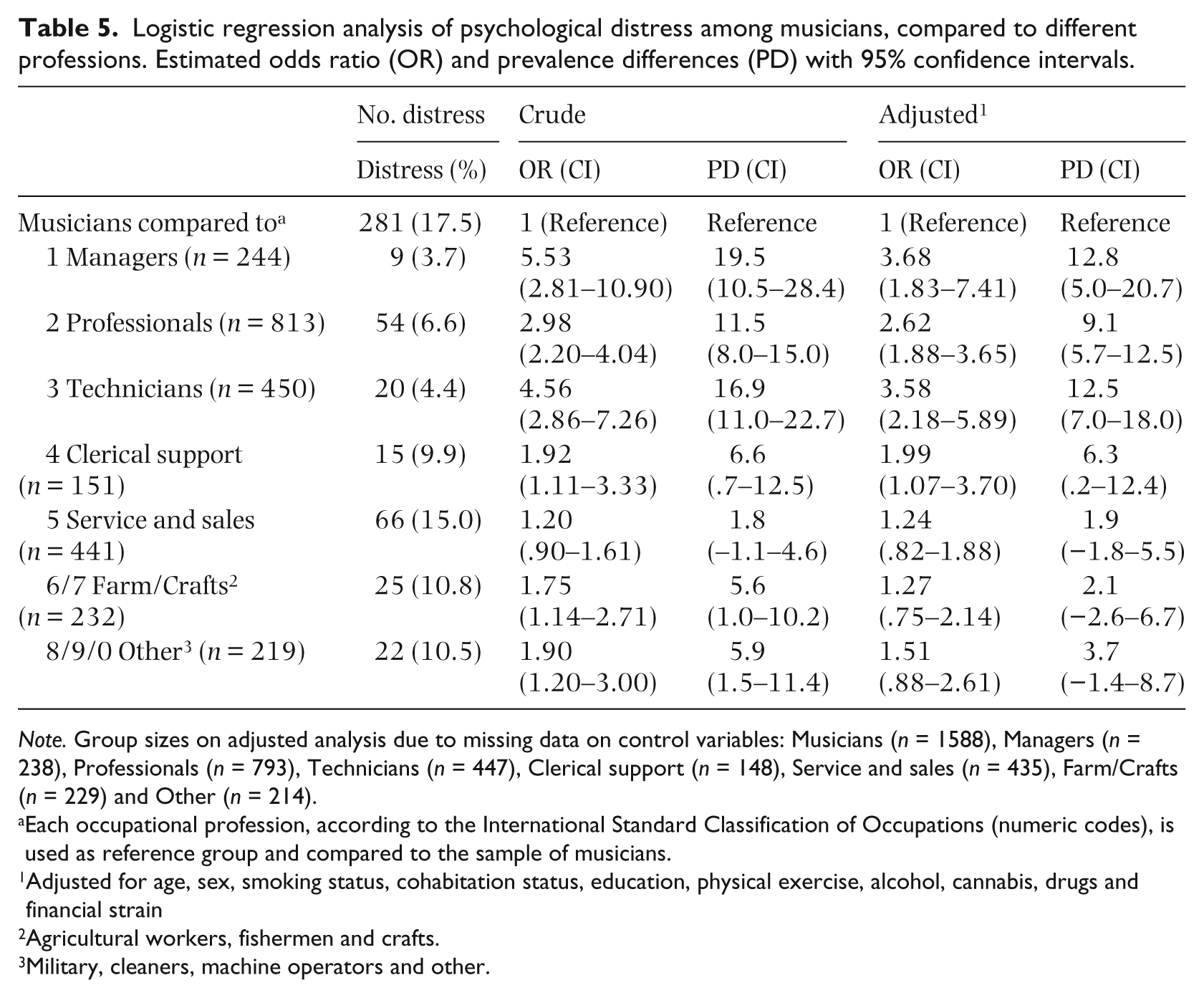
Note. Group sizes on adjusted analysis due to missing data on control variables: Musicians (n = 1588), Managers (n = 238), Professionals (n = 793), Technicians (n = 447), Clerical support (n = 148), Service and sales (n = 435), Farm/Crafts (n = 229) and Other (n = 214).
Each occupational profession, according to the International Standard Classification of Occupations (numeric codes), is used as reference group and compared to the sample of musicians.
Adjusted for age, sex, smoking status, cohabitation status, education, physical exercise, alcohol, cannabis, drugs and financial strain
Agricultural workers, fishermen and crafts.
Military, cleaners, machine operators and other.
Discussion
In this study, symptoms of anxiety and depression (psychological distress) were highly prevalent among musicians compared to a sample of the Norwegian workforce. Soloists/lead performers, vocalists, keyboard instrument players, string players and musicians within the traditional music genre reported the highest prevalence rates. The same effect was not seen among jazz musicians. When comparing with specific groups of professions, musicians differed substantially from managers, technicians and academic professionals.
Strengths and limitations
This is the first large-scale survey on mental health comparing different groups of musicians to a workforce sample. A large sample size made it possible to look at type of employment, instrument and genre-related differences. In addition, we were able to compare musicians directly to other groups of professions (according to the International Standard Classification of Occupations), using a validated measure of anxiety and depression symptoms (Strand et al., 2003). The data collections were conducted with close proximity in time (Workforce sample: October 2012–February 2013 / Musician sample: February–April 2013) and the same questionnaire was used in both samples, making it possible to control for variables related to mental health.
A major limitation in this study, however, was the cross-sectional design. The lack of repeated measures impairs the possibilities to establish firm conclusions regarding causal relationships and underlying mechanisms behind the observed associations. The use of only online questionnaires in the sample of musicians, in comparison to the use of both online and postal questionnaires in the workforce sample, may also have contributed to bias. Also, the categorization of musicians into several, and sometimes small, subgroups would necessarily influence the precision of the results. Hence, we cannot rule out chance influencing the results of differences between the different musician categories.
Psychological distress in musicians compared to previous studies
In the triennial Norwegian health-related surveys of level of living, used for recruitment of the general workforce sample in our study, the prevalence of psychological distress as defined by SCL-25 has varied between 9% and 12% (1998–2012) (SSB.no). The estimate in the general workforce was only 8.3%, and the main reason is probably the exclusion of those not listed with an occupation, mainly due to long-term sick-leave, unemployment and disability pension, who are known to have poorer mental and physical health. Previous research in the Norwegian working population, using the same type of instrument, shows considerably higher estimates; a study of bullying and psychological distress in 1,775 employees (Nielsen, Hetland, Matthiesen, & Einarsen, 2012) found a prevalence of 13%, using the same number of items and cut-off. Another study on mental distress in 6,506 employees, from 48 Norwegian organizations, found a prevalence of 12.9%. However, this study used a 10-item version of SCL and 1.85 points as cut-off (Finne, Christensen, & Knardahl, 2014), compared to the 25 items and 1.75 point cut-off used in our study. In order to compare our sample of musicians to the latter study, we conducted a secondary analysis of our dataset, applied the same SCL-10 scale and cut-off, and found a prevalence of 19.4% (not shown) in the musicians. In addition, women were overrepresented in both aforementioned studies (55% and 65%), making it difficult to compare to our sample of musicians where women were underrepresented (43%). Nevertheless, these studies may indicate a smaller discrepancy in psychological distress between musicians and the general workforce than found in our study.
With regard to sex differences, female musicians reported higher prevalence of psychological distress than males, which is in accordance with previous research on internalizing disorders such as anxiety and depression in the general population (Rosenfield & Mouzon, 2013; Strand et al., 2003). Compared to other professions, musicians reported substantially higher prevalence rates than managers, technicians and academic professionals in our study. The latter are all occupations typically associated with high degree of decision latitude (Karasek & Theorell, 1990), while the groups that did not significantly differ from musicians are known to report poorer quality in the psychosocial work environment and long-term sick leave (such as sales, elementary occupations etc.) (Burr, Bjorner, Kristensen, Tüchsen, & Bach, 2003; Sterud, 2014).
There are some studies on psychological distress in specific occupations. A study on female cleaning professionals (N = 374), found a prevalence of 17.5% (Gamperiene, Nygård, Sandanger, Waersted, & Bruusgaard, 2006), in comparison, our female musicians had a prevalence of 21.3%. A study on American construction workers (N = 172), in a sample mainly consisting of men (93.5%), found a prevalence of 16%, using a lower cut-off than in our study (Jacobsen et al., 2013). Using this cut-off on our dataset, the prevalence among male musicians was 28.3% (not shown). Among workers in the Norwegian petroleum industry (N = 741), the prevalence was 9% (Nielsen, Tvedt, & Matthiesen, 2013). Findings from these studies support our findings that psychological distress is highly prevalent among musicians, both generally and when compared to other demanding professions.
Possible mechanisms
Most of the research on the psychosocial stressors among musicians has been done in classical orchestras. A Danish cross-sectional study (Holst, Paarup, & Baelum, 2012), among symphony orchestra musicians, found a higher degree of perceived demands and stress among females. The same study found that orchestral musicians, compared to the general Danish workforce, reported higher emotional demands, lower decision latitude, lower social support, lower sense of community and lower job satisfaction. In keeping with this, a study on 12 Swedish classical orchestras (Johansson & Theorell, 2003) also showed the aforementioned gender difference. In addition, the study found that musicians in elite orchestras reported lower well-being than non-elite orchestras.
A Finnish study (Kivimäki & Jokinen, 1994) that compared musicians from two orchestras, with other occupations, found that the musicians were exceptionally satisfied with their line of work (90% reporting high job satisfaction), which was a significantly higher result than clerical workers (40–70%), human relation workers (70%) and industrial workers (50–60%). In spite of this, orchestral musicians reported high levels of job-related strain; perceived stress was comparable to human relation workers, but higher than clerical and industrial workers. A study based on in-depth interviews of 70 popular male musicians (Cooper & Wills, 1989) underlined work over- or underload, public ignorance and strained relationships at work as major external sources for stress. In addition, more individual factors such as career development worries, low self-esteem and performance anxiety were also mentioned. Longitudinal studies are needed to more thoroughly investigate the role of the psychosocial work environment on psychological distress among professional musicians.
Personality research, on smaller samples, has shown that musicians tend to score high on neuroticism (Cooper & Wills, 1989; Gillespie & Myors, 2000; Kemp, 1996), which in turn is strongly associated with anxiety and depression symptoms (Kotov, Gamez, Schmidt, & Watson, 2010; Malouff, Thorsteinsson, & Schutte, 2005). It has also been suggested that musicians tend to be more introvert than others (Kemp, 1996), a trait which is also related to psychological distress (Kotov et al., 2010; Malouff et al., 2005). Nevertheless, further research on larger samples, with relevant groups of comparison, is needed before one may conclude that there are personality differences between musicians and the general workforce.
Although statistical evidence is borderline; vocalists, solo and lead performers seem to experience the highest prevalence of psychological distress. Given these artists’ individual exposure to media and audience, it is reasonable to expect elevated levels of anxiety in this group of musicians. This assumption was supported in a review of the epidemiology of Music Performance Anxiety (MPA) (Brugués, 2011). In keeping with this finding, an Australian study (Kenny et al., 2004) on the prevalence of MPA among opera chorus singers, found a higher degree of trait anxiety and occupational personal strain among singers than the normative samples, where results indicated that trait anxiety and MPA were closely related.
Conclusion
Our results show considerably higher prevalence of anxiety and depression symptoms (psychological distress) among musicians compared to a sample of the general Norwegian workforce. The highest prevalence rates are seen among vocalists, solo/lead performers, keyboard instrument players and musicians playing within the traditional genre. Further research needs to map the possible psychosocial and personal factors and mechanisms contributing to this discrepancy, considering causal relationships as well as establishing evidence-based preventative measures.
Footnotes
Acknowledgements
This project has been financially supported by the Norwegian ExtraFoundation for Health and Rehabilitation through EXTRA funds. Some of the data applied in the analysis in this publication are based on ‘Survey on living conditions, health, care and social contact 2012’. The data are provided by Statistics Norway, and prepared and made available by the Norwegian Social Science Data Services (NSD). Neither Statistics Norway, nor NSD are responsible for the analysis/interpretation of the data presented here. The authors would like to thank the Norwegian Musician’s Union and Performing Arts Health Norway for their cooperation during the project.
Ethical approval
Ethical approval for this research project was given by the Norwegian Committees for Medical and Health Research Ethics – REK North under the name: ‘Musikerhelseprosjektet – kvantitativ del’.
Funding
This project has been financially supported by the Norwegian ExtraFoundation for Health and Rehabilitation through EXTRA funds.